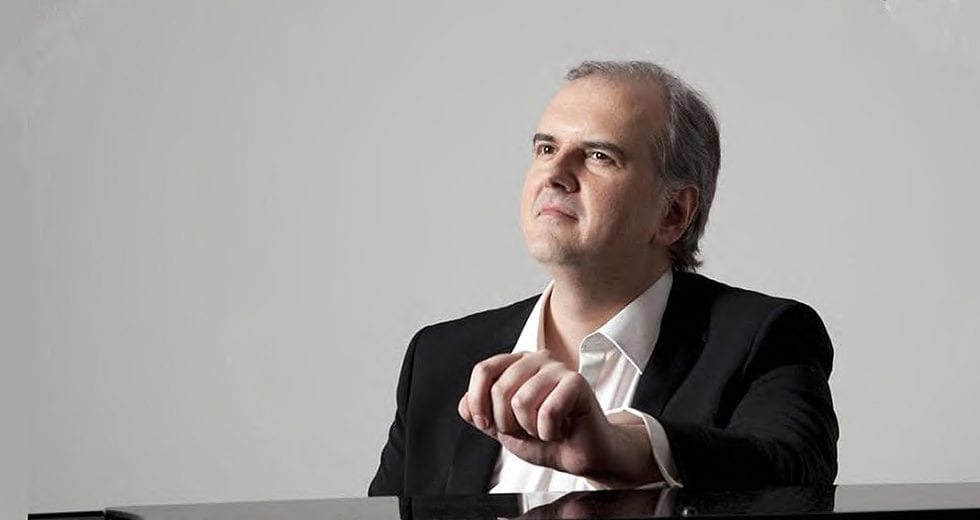
Earlier this week the very sad death of Nicholas Angelich was announced, at the age of just 51. Thankfully the highly-regarded pianist made a good deal of recordings for Virgin Classics and later Warner, many of which included the music of Beethoven and Brahms, at whom he excelled.
This playlist includes the late set of Fantasias published by Brahms as Op.116, then a sparkling clip from Prokofiev’s arrangement of music from his ballet Romeo and Juliet. I was lucky to see Angelich perform Brahms’s Piano Quartet no.1 in G minor at the Wigmore Hall with violinist Renaud Capuçon, viola player Antoine Tamestit and cellist Gautier Capuçon, around the time of their excellent recording for Virgin Classics. You can hear that as part of the playlist, which ends with Angelich in Beethoven’s Emperor Concerto, a lean account with the Insula Orchestra and Laurence Equilbey:
Yesterday was a particularly sad day in the world of classical music, and over the next few days Arcana will be paying tribute to three musical figures.
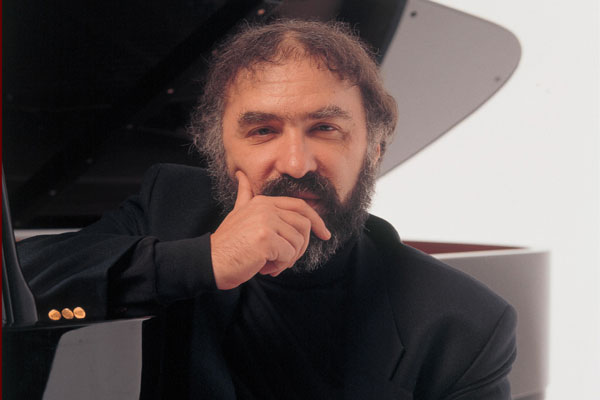
Sadly the death of Romanian pianist Radu Lupu (above) was announced, at the age of 76. A full tribute can be found on the Gramophone magazine website, where Lupu’s standing as an artist of great repute and dignity can be fully appreciated.
I did not see him perform live, sadly, but have looked back over Lupu’s relatively small and perfectly formed discography to choose a few personal favourites. I have chosen purely solo piano music, as this is where I have encountered his wonderful storytelling most often – and include music by Schubert, Schumann and Brahms. Here the extent of his storytelling ability can be witnessed – not to mention his instinctive musical phrasing.
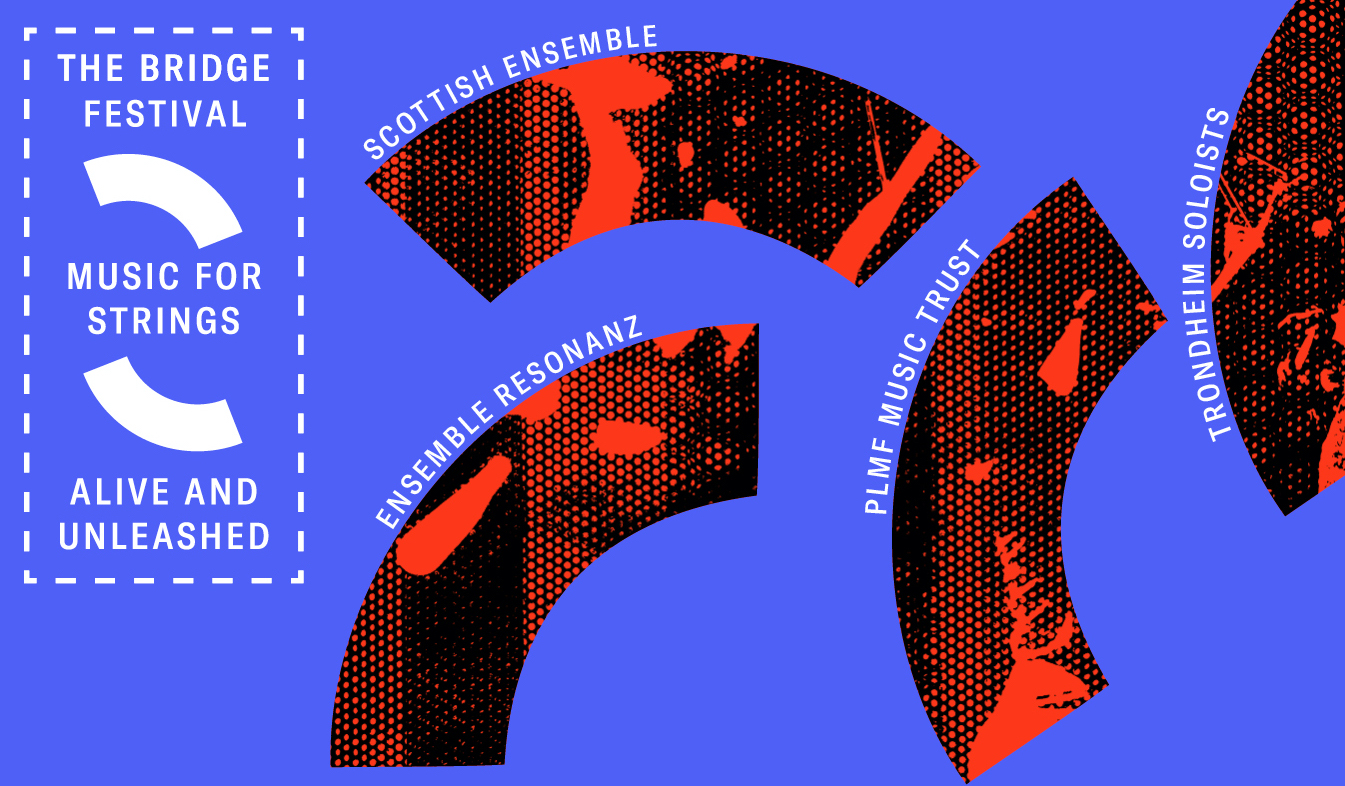
We bring news of an exciting new festival coming to Glasgow this week. The Bridge Festival, originally scheduled for May 2020, is bringing some of Europe’s finest string-playing ensembles together for a four-day program of inspiring music.
Hosting the event are the Scottish Ensemble, who will be joined by the Trondheim Soloists, Ensemble Resonanz and the Estonian PLMF Music Trust, a talent development organisation offering opportunities for musicians without setting age limits.
The concerts are fascinating. Thursday 21 April will see a combined opening concert, all ensembles joining for a programme of Nachtmusik at the Barrowland Ballroom, with music from Hildegard von Bingen to Jonny Greenwood by way of two world premieres. These are commissions from Mica Levi (Flag) and Erkki-Sven Tüür (Deep Dark Shine), and the works are complemented by Penderecki’s Polymorphia – for 48 solo strings – and Greenwood’s 48 Responses to Polymorphia.
On Friday 22 April a lunchtime concert from the PLMF Music Trust showcases their home country. The trust, now nearly 20 years old, supports the development of talented professional musicians by organizing master classes, opportunities to perform and by introducing them internationally. Estonia! will include more Tüur (Symbiosis) and the Concerto for Chamber Orchestra from Jaan Rääts, while looking at the Estonian classical heritage through the eyes of Artur Lemba’s String Sextet and Heino Eller’s Five Pieces for Strings.
Later that day the Scottish Ensemble will perform Anna Meredith’s Anno at Tramway, with performances at 6pm and 8pm. Anno was written for the group, after an observation by the ensemble’s artistic director Jonathan Morton that Meredith’s style had similarities to Vivaldi. In response she wove an original work into Vivaldi’s Four Seasons, a clever interpolation that provides an invigorating live experience. The performances will be complemented by work from visual artist Eleanor Meredith, the composer’s sister.
Later still – at 9.30pm – there will be a chance to enjoy Ensemble Resonanz’s club night urban string, which will transform the Glad Café into a hotbed of minimalism. Music by Lou Reed, John Cage, Julia Wolfe and Glaswegian DJ Charlie Knox is promised.
Saturday 23 April offers what looks like a special concert of Nordic music old and new, given by the Trondheim Soloists. The ensemble will bring with them more traditional Nordic classical fayre – Grieg’s Two Nordic Melodies and Peer Gynt Suite, with the latter in a version featuring the sounds of the Norwegian national instrument, the Hardingfele. Sibelius’s Valse Triste will also appear, contrasted with Britta Byström’s A Walk To Gade.
Finally, on Sunday 24 April, comes a fascinating musical melting pot in Saint Lukes at 8pm. Ensemble Resonanz will be joined by guest performers including Hamburg-born bağlama player and vocalist Derya Yildirim and duduk player Deniz Mahir Katal. Twelve composers were asked to write a new work, with new compositions incorporating traditional Turkish, Anatolian, Kurdish and Greek songs, as well as new works for Derya’s voice, the bağlama (a Turkish stringed instrument, similar to the lute) and the string players of Ensemble Resonanz.
The result is a new, trans-cultural song cycle, combining old folk songs and new music, performed in modern cultural settings and creating a new experience of music from across Europe and across the centuries.
It should be a fascinating and inspiring four days of music – and for more information and tickets for each of The Bridge Festival concerts, you can head to the dedicated website
This joyful piece of music was written by Bach in Leipzig, in April 1725. It has four vocal soloists, who take on the parts of Mary Magdalene (alto), the ‘other’ Mary (soprano) and the apostles Simon Peter (tenor) and John (bass).
It is a relatively short work, with a bright orchestra consisting of trumpets, timpani, wind and strings, and its celebratory air is perfect for the festival as it tells of the events of the first Easter day.
Pejačević Verwandlung, Op. 37b (1915), Liebeslied, Op. 39 (1915), Zwei Schmetterlingslieder, Op. 52 (1920) Sibelius Violin Concerto in D minor Op. 47 (1903-04, rev. 1905) Mahler Symphony no. 1 in D major (1899 version)
Marija Vidović (soprano), Tamsin Waley-Cohen (violin), Zagreb Philharmonic Orchestra / Jan Latham-Koenig
Cadogan Hall, London Thursday 13 April 2022
Written by Richard Whitehouse. Photos (c) Patrick Allen (Tamsin Waley-Cohen), Paul Persky (Jan Latham-Koenig)
Visits from overseas orchestras are only now getting into their stride following the abeyance caused by the pandemic, so credit to the Zagreb Philharmonic for having undertaken its first UK tour in over half a century with a programme whose challenges were not to be gainsaid.
A recent BBC performance of her Symphony confirmed the significance of Dora Pejačević (1885-1923) in European music of the early 20th century, and it was a pleasure to encounter these four orchestral songs from her maturity. A setting of Karl Kraus’s Transformation won grudging admiration of Schoenberg; here, even more so in that of Rainer Maria Rilke’s Love Song with its winsome violin solo and fervent orchestral interlude, the influence of Strauss is directed towards audibly personal ends. Marija Vidović (above) gave them with no mean eloquence and did comparable justice to those charms of Karl Henckell’s verse in Two Butterfly Songs – the elegance of ‘Golden stars, little bluebells’ then the poise of ‘Flutter by, butterfly, flutter away’, each of them benefiting from especially deft contributions by the Zagreb musicians.
Tamsin Waley-Cohen duly joined the orchestra for Sibelius’s Violin Concerto – likely more popular than ever these days, here receiving a confident and forthright account that was at its most persuasive in a trenchant and cumulative take on the developmental cadenza toward the centre of the first movement, then an Adagio more than usually restive and even ominous as it unfolded. The soloist’s astringent tone might not be to all tastes, but it effectively banished any risk of expressive blandness while maintaining an impulsive interplay with the orchestra – not least in that opening Allegro’s combative coda or a finale which, while its Allegro was not ideally ‘non tanto’, generated an impressive momentum which carried through to a truly visceral close. Some solo Bach enabled Waley-Cohen to demonstrate a more inward touch.
A pity Jan Latham-Koenig (above) rarely appears in the UK, as his engagements seldom disappoint. For all its rawness and passing inelegances, this was as gripping an account of Mahler’s First Symphony as one is likely to encounter. Its opening movement was evocatively launched, the sounds of nature gradually admitting of a human presence such as filters through in its lilting exposition (not repeated) then comes to the fore with joyous immediacy in the coda. Robust and forthright, the scherzo’s outer sections found contrast in the ingratiating charm of its trio.
A symphony with a complex gestation (admirably set out in Timothy Dowling’s programme notes), its ensuing fantasy on a well-known children’s song is shot through with elements of klezmer and art-song in a portrayal of a huntsman’s funeral vividly ironic in its tragicomedy. Latham-Koenig was almost as persuasive in the lengthy finale – its Dante-esque contrasts of violence and supplication channelled convincingly to the spellbinding recollection of earlier motifs which made way for a chorale-dominated apotheosis of notably unsparing immediacy.
Few countries have yet had a composer for president, but Ivo Josipović served Croatia during 2010-15 and the encore of his Prelude to the Millenium sounded redolent of early Ligeti or Lutosławski in its uninhibited verve. The Zagreb musicians gave their collective all – to his evident pleasure.
For further information on the Zagreb Philharmonic Orchestra, click here – and for information on the artists, click on the names to find out more about Marija Vidović, Tamsin Waley-Cohen and Jan Latham-Koenig. Meanwhile for more on composer Dora Pejačević, click here



 Arcana.fm