In concert – Nicola Benedetti, BBC Symphony Orchestra / Sakari Oramo: Romantics in Exile – Korngold & Langgaard

BBC SO/Oramo & Benedetti - Romantics in Exile

Korngold Violin Concerto in D major Op.35 (1945)
Langgaard
Symphony no.1 in B minor BVN32, ‘Mountain Pastorals’ (1908-11)

Nicola Benedetti (violin, below), BBC Symphony Orchestra / Sakari Oramo

Barbican Hall, London
Friday 8 April 2022

Written by Richard Whitehouse. Concert photos by James Watkins / BBC

Sakari Oramo has certainly blazed a trail for tackling little-known symphonic works during his tenure at the BBC Symphony Orchestra – witness his recent revival of the Symphony by Dora Pejačević and now that of the First Symphony from Danish anti-hero Rued Langgaard.

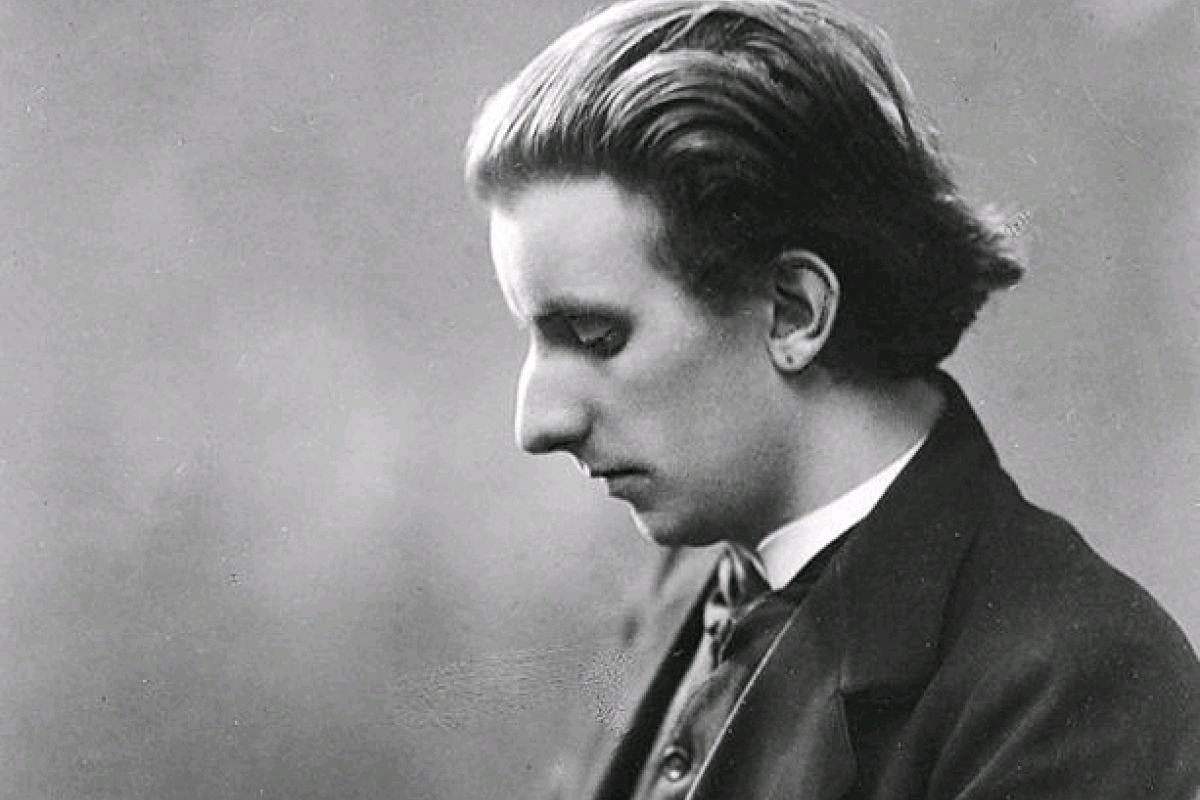
One who frequently snatched defeat from the jaws of victory, Langgaard (below) could not have had a better start to his career than its premiere with the Berlin Philharmonic and Max Fiedler on 10th April 1913, just before his 20th birthday. Its enthusiastic reception was never repeated in his remaining four decades, the composer traversing various stylistic phases while fighting a psychological battle with the Danish musical establishment. With its inspiration in Sweden’s Kullaberg peninsula, this work remains testament to the vaunting ambition of his younger self.
Steering a cohesive course across this almost hour-long piece whose sizable forces (not least four Wagner tubas) is no easy task, but Oramo succeeded more convincingly than on any of the three commercial recordings. Not least in a first movement, Surf and Glimpses of Sun, whose elongated sonata design and increasingly histrionic climaxes could so easily veer into overkill, rather than yielding a recklessly if purposefully cumulative momentum. Mountain Flowers is a slow movement of no mean eloquence, not least with Oramo encouraging the strings to relish the limelight over its opening and closing stages then towards its expressive apex. The undoubted highlight is Legend, less an intermezzo than a dark-hued formal crux whose ominous atmosphere looks on toward those anguished confessionals which lay ahead.

More conventional is Mountain Ascent, a lively and often playful scherzo whose impetus finds ready contrast with the wistful trio at its centre. Rendered here with suitable deftness, this made an admirable foil to Courage – an expansive finale not without its longueurs yet whose development affords some strikingly evocative orchestration, then an apotheosis for which Oramo not only prepared judiciously, but that the BBCSO kept within focus even as the addition of off-stage brass threatened to send those closing pages spinning out of orbit.

An experience, then, such as only a live performance can provide, and which demonstrably played to the strengths of this partnership. Might one hope that Oramo and the BBCSO give Langgaard’s Sixth, arguably his symphonic masterpiece, at a Proms concert in due course?

A thought occurred that had the Danish film industry maintained its promise prior to the First World War, Langgaard might have found as productive an outlet for his abilities as Korngold had for his during the golden age of Hollywood. The latter’s Violin Concerto was not always the familiar item it has now become, and Nicola Benedetti’s rendering assuredly conveyed its essence. Pointing up the discreet contrast between the themes of its opening Moderato, with a trenchant account of its cadenza, she gave a finely shaped if overly generalized account of its central Romance, then projected the final Allegro’s incisiveness and high-flown melodrama with relish. Nor did she undersell the suavity of Jacob Gade’s tango Jalousie – a piece which, 97 years on, confirms what is possible if a composer does not entirely eschew popular appeal.

For further information on the BBC Symphony Orchestra’s 2021/22 season, click here For more on Erich Korngold and Rued Langgaard, click on the composer names – and click on the artist names for more information on Nicola Benedetti and Sakari Oramo
In Gratitude – David Fraser, Stewart Brown & John Bourke

by Ben Hogwood

I wanted to place on record my appreciation for three very different but fiercely passionate musical contacts we have very sadly lost in recent weeks.

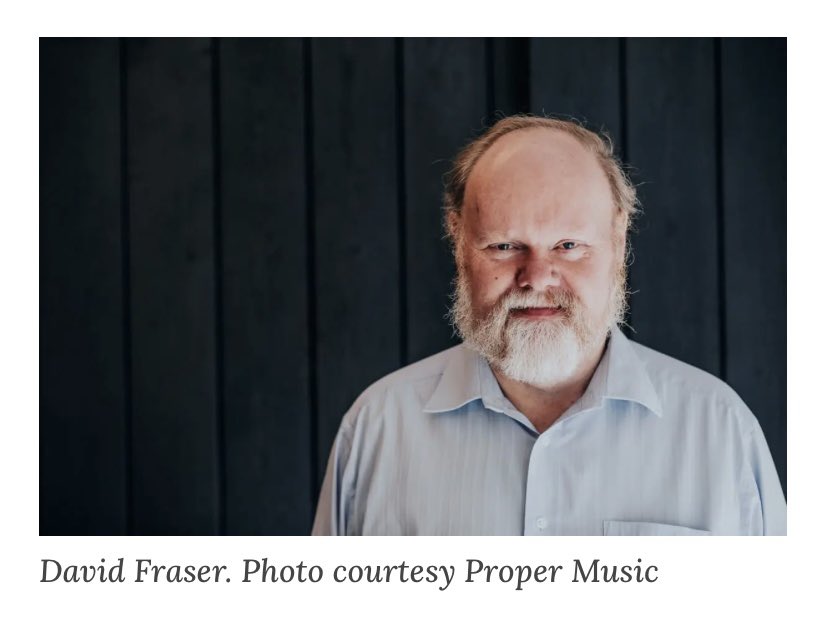
My heartfelt condolences go to the family and friends of David Fraser, who until recently worked for the excellent distributor Proper Music. David headed the press and marketing facility in the UK for the prestigious ECM label, a position from which he was able to make many enlightening musical recommendations. I remember him as a generous, kind-hearted contact who was always pleased to talk and continually modest about his vast musical knowledge. Thank you, David – I shall miss our chats, and include one of our mutual loves, the music of György Kurtág – one of his Bach arrangements – below:

The world of classical music has also been paying tribute to Stewart Brown, who died earlier this month at the age of 69. Stewart founded and ran the Testament label from 1990 onwards, creating an important resource of historical recordings that were largely remastered on his watch. Many an EMI recording was enhanced at Stewart’s hand, and we will greatly miss the excellence of the projects he oversaw.

I only know a fringe of the Testament catalogue well, but the recordings I have reviewed and enjoyed include Erich Leinsdorf conducting Prokofiev, Carlo Maria Giulini’s Bruckner, Sir John Barbirolli’s Mahler, a chamber recital from David Oistrakh, Mstislav Rostropovich and Benjamin Britten in recital at the Aldeburgh Festival, one of the label’s most recent releases, and a wonderful series of Clemens Krauss conducting Richard Strauss. All those recordings are testament (pun intended) to Stewart’s eye for a valuable recording, and us record collectors owe him heartfelt thanks for his achievements. Most importantly – as his close friends have confirmed – he was a lovely man.

The third of my musical musketeers is John Bourke. I never met John, but while he was running his own music PR enterprise we built up that most modern of musical friendships, a regular e-mail and social media correspondence. Whenever he had something he genuinely thought I would enjoy, John would be on the virtual blower.

That is the key element – John was never too pushy with the music he was promoting, unless he felt the listener / reviewer would appreciate it, and our friendship grew on that assumption. Several of Arcana’s interviews and playlist features are the result of John’s thoughtful prompting, while a great many more of my musical discoveries, especially the Glacial Movements label – were made possible through John’s correspondence. Thank you John – and I hope that wherever you are resting now that you have the most ambient of electronic music to keep you company.

Online concert – English Symphony Orchestra / Kenneth Woods: Elgar Festival Highlights

eso-woods

Smyth The Wreckers – Overture (1906)
Elgar Variations on an Original Theme, Op. 36 ‘Enigma’ (1898-9)

English Symphony Orchestra / Kenneth Woods

Live performances at Worcester Cathedral, Saturday 30 October 2021

One of 2021’s welcome returns to the musical calendar, following its cessation in ‘lockdown year’, was the Elgar Festival – highlights from the final concert held at Worcester Cathedral last October comprising this latest in the English Symphony Orchestra’s digital online series.

The new production at this year’s Glyndebourne Festival should provide Ethel Smyth’s opera The Wreckers with a suitable reassessment. Never having entirely fallen out of the repertoire, the overture affords a decent overview of the emotional impulses found therein and makes for a forceful curtain-raiser. If its headlong opening pages and plangent ensuing melody – shared between cor anglais and oboe – set up a promise not entirely fulfilled, the hymnic fervour of its climax and the impetuous final surge were keenly projected in this forthright performance.

Elgar’s Enigma Variations has been a staple of British music since its premiere 123 years ago and, by definition, a regular feature of this festival. Neither time nor familiarity has (or should have) detracted from the originality of both its underlying conception and its musical content – attributes to the fore with this engrossing account. Kenneth Woods pointed up those formal divisions into which the 14 variations fall, prefaced by the hushed rendering of a theme whose mingled wistfulness and pathos set the tone not just of this work but also for Elgar’s maturity.

On to the first stage with the searching emotion of ‘C.A.E’ – followed by the quick succession of capriciousness in ‘H.D.S-P.’, insouciance in ‘R.B.T.’, then impetus in ‘W.M.B.’. The next three variations opened-out the expressive range accordingly – hence the alternation between the earnest and playful in ‘R.P.A.’, gentle whimsy of ‘Ysobel’ with its teasing viola part, and headlong energy of ‘Troyte’. The next two variations contrast genial elegance in ‘W.N.’ with rapt eloquence in ‘Nimrod’, here rightly conveying ardent passion instead of nostalgic regret.

The following two variations yield studies of a more complementary nature – thus the halting piquancy of ‘Dorabella’ during what becomes a relatively extended intermezzo, to which the swift animation of ‘G.R.S.’ (more probably his bull-dog Dan) functions as a decidedly terse scherzo. Especially persuasive was the next brace of variations – the thoughtful undulations of ‘B.G.N.’ as framed by its haunting cello solos, then the imaginative ‘***’ which romanza takes in easy affability and aching rumination over its unpredictable and speculative course.

Its considerable expanse (though how right Elgar was to extend those concluding stages from the perfunctory end he first envisaged) makes equating the final ‘E.D.U.’ variation with what went before a test of interpretive skill. Suffice to add this performance met its challenge head on – Woods gauging that initial crescendo as a basis from which the ensuing festivities could take off, allowing necessary breathing-space for the inward central interlude to leave its mark prior to resuming the earlier extroversion, then upping momentum for the opulent peroration.

Needless to add, the organ of Worcester Cathedral made its presence felt with those weighty pedals in the work’s closing bars – setting the seal on a memorable reading which benefitted from as spacious and well-balanced sound as has been achieved with this venerable acoustic.

You can watch this concert on the English Symphony Orchestra website, with free public viewing from 8-12 April 2022. The concert is available thereafter only to ESO Digital supporters.

For further information on the 2022 Elgar Festival click here, and for more on composer Dame Ethel Smyth click here Meanwhile for more on Kenneth Woods, click here

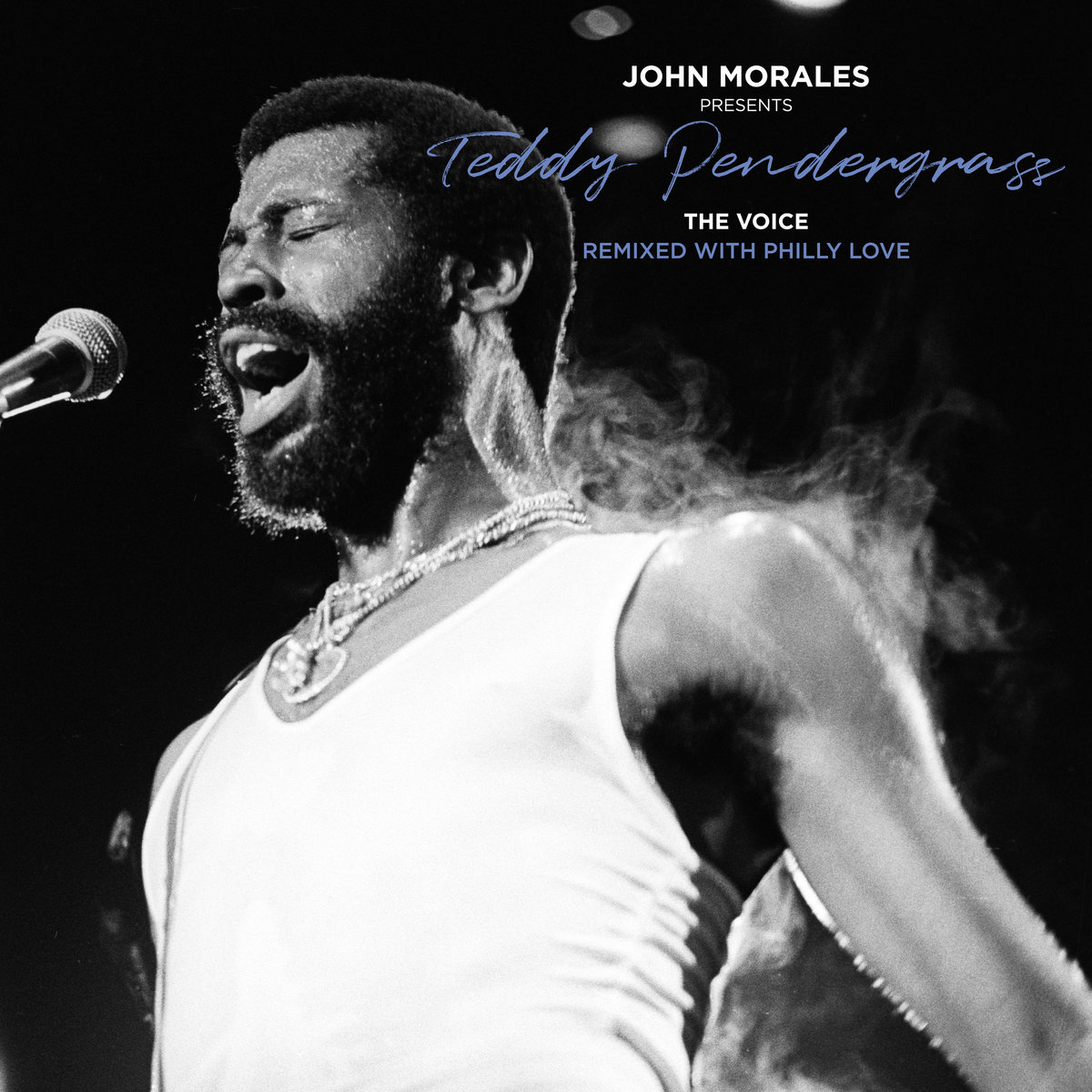
On Record – John Morales Presents Teddy Pendergrass – The Voice – Remixed With Philly Love (BBE)

teddy-pendergrass

written by Ben Hogwood

What’s the story?

Teddy Pendergrass was the main voice of Philadelphia soul in the 1970s, whether as front man of Harold Melvin & the Blue Notes or as a solo singer. Remix engineer John Morales has looked to recognise that in the latest installment of his remix projects with BBE Music, keen to bring improved clarity to each of the 18 songs he has selected. This involves highlighting individual musical contributions without losing the spirit of the original, while keeping the utmost respect for the principal instrument – which of course is Teddy’s voice.

The project has the blessing of Gamble & Huff, founders of Philadelphia International Records in 1971, and the Teddy Pendergrass estate.

What’s the music like?

Once you’ve experienced Teddy Pendergrass as a singer, you don’t forget it – and John Morales ensures each of these tracks captures that formative experience.

He gets the good vibes flowing immediately, with arrangements that give the music all the breathing space it needs. There is a sumptuous orchestral introduction bookending Don’t Leave Me This Way, while the piano powering If You Don’t Know Me By Now is the icing on the cake where the pleading vocals are the star of the show. Two classic songs, with their instrumental craft illuminated by Morales. The Love I Lost may be a bittersweet song but it is wholly uplifting here, while the impassioned vocal of Where Are All My Friends is given an active counterpoint from brass and strings that respond to its changing harmonies.

These instrumental touches elevate the songs still further. Do Me has a nicely pointed sax solo. I Don’t Love You Anymore has a brilliant vocal hook, the strings bubbling under. There are some lovely string flourishes taken up by the brass on If You Know Like I Know, and a beautifully crafted orchestral intro to Now Is The Time. Some of the songs are still powered by their meaningful lyrics – with Life Is A Song Worth Singing and Is There A Place For Me especially pertinent.

Morales has chosen carefully, selecting some of the outright classics from this era, but also delving deeper to bring out lesser-known songs such as Come And Go With Me and If You Don’t Love Me.

Does it all work?

Very much so. The love John Morales has for these tracks is clear in the painstaking work bringing each component to the fore – and his work is rewarded with some noteworthy tracks, giving this music wonderful clarity and renewed energy.

Is it recommended?

Yes – Morales fans will already be on it, but fans of soul music in general will love the collection in its sparkly new clothing.

Stream

Buy

You can purchase this compilation at the BBE Music website, where you can hear more clips and read more about the project.

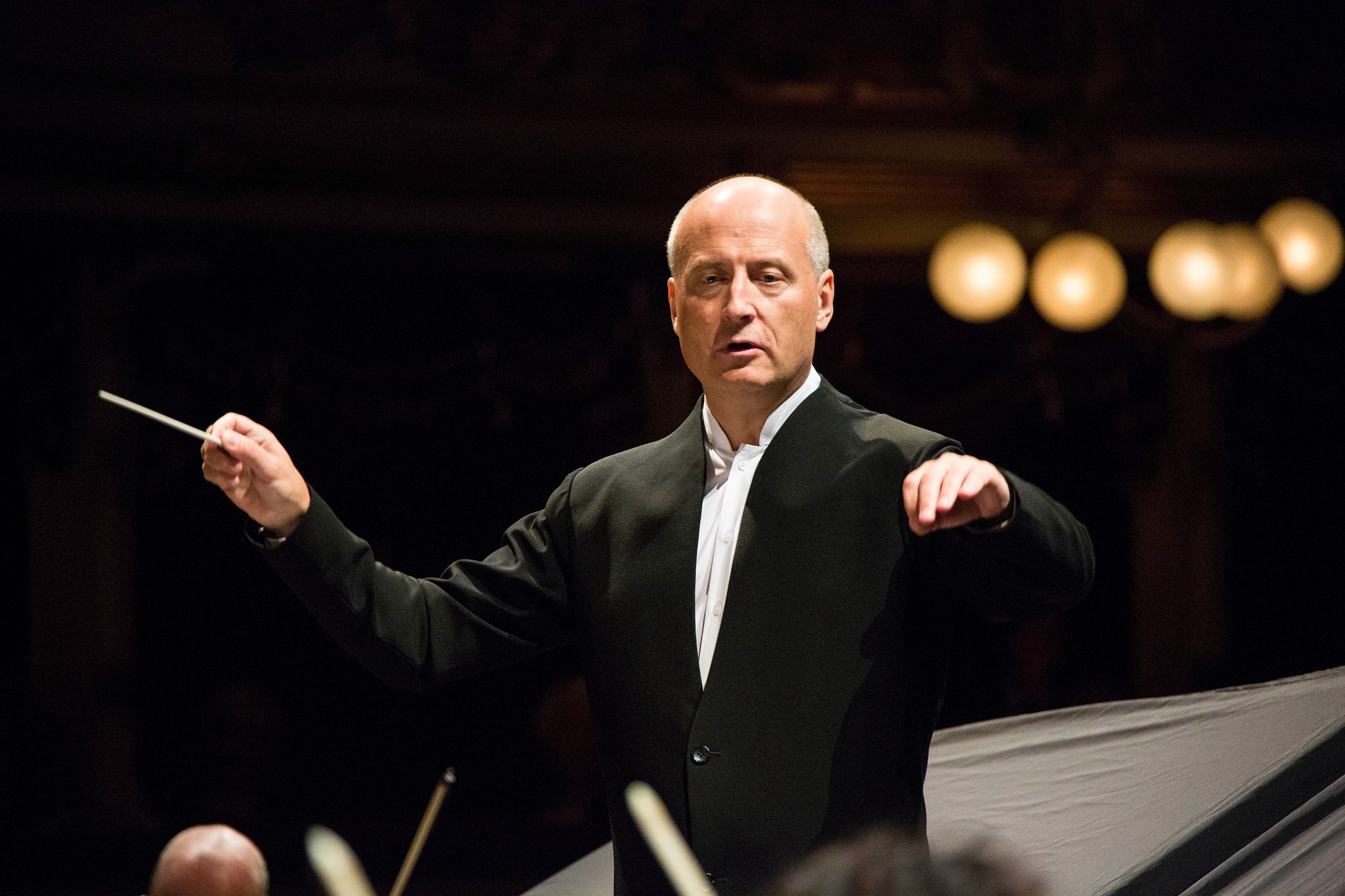
In concert – Tonhalle Orchester Zürich & Paavo Järvi: Sibelius Symphony no.2

paavo-jarvi-tonhalle

Sibelius Symphony no.2 in D major Op.43 (1901-2)

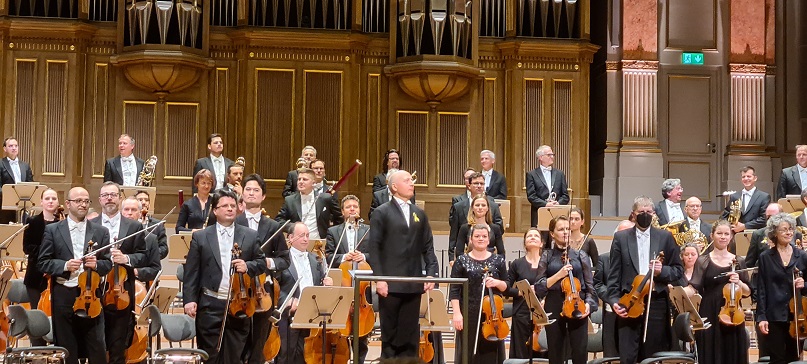
Tonhalle-Orchester Zürich / Paavo Järvi

Grosser Saal, Tonhalle, Zürich
Tuesday 5 April 2022

Written by (and photos below) Ben Hogwood

Sometimes a single work in a classical concert is enough – especially if that work has the lasting power of Sibelius’s Second Symphony.

Paavo Järvi certainly thought so, programming the 45-minute work as part of a concert celebrating the visit of the annual IAMA conference. IAMA – International Artist Managers’ Association – is a vital industry body representing the interests not just of artist managers but of artists themselves, liaising with creative spaces such as the resplendent, refurbished Zürich Tonhalle. Their conference moves around Europe, so a visit from them is a great opportunity for the ‘host’ city to exhibit their creative wares.

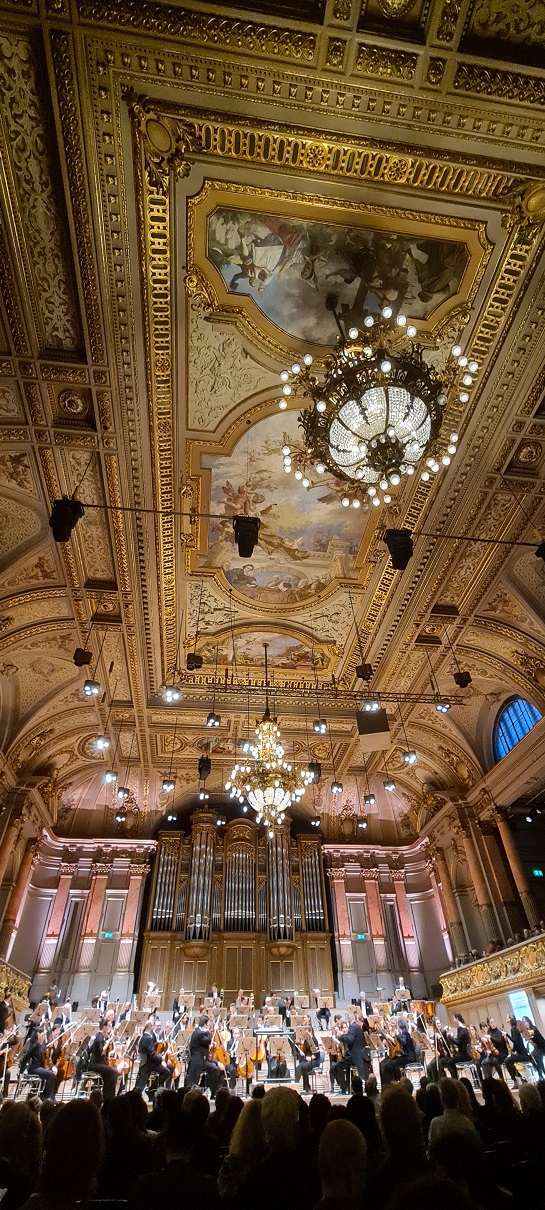
The Tonhalle-Orchester did that in this concert with some aplomb, performing as they were in a venue opened by Brahms himself in 1895. The composer appears as part of a mural (partially visible in the photograph above) on the ceiling in the resplendent company of Haydn, Mozart, Beethoven and Gluck. Sibelius was too late for inclusion, of course.

In their company, his Second Symphony received a performance of poise and power, the music on occasion appearing to issue from the very earth beneath our feet. This was most notable in the second movement, whose sequence of tempo changes and shifts of mood was the defining feature of this performance. The Tonhalle-Orchester wind shone out, especially the bassoon’s main theme, while the double basses and cellos used their wonderful grainy sound to provide the most solid undercarriage for the white-hot exchanges above.

The orchestra are a technical powerhouse, their ensemble well-nigh perfect, as was demonstrated in the unity of the strings’ pizzicato in the second movement, and the cushioned, velvety tones with which the work began, a similar effect to waves lapping the shore of a lake.

After the emotional tumult of the second movement the third sprang forward almost in alarm, scurrying figures nervously bouncing off each other until the gradual crescendo to the start of the finale itself. This was carefully managed, and although you could argue Järvi and his charges peaked too soon they just kept getting louder and ever more exultant, aiming always at the end goal. The orchestra forged a fiery path, propelled by the lower strings but with searing contributions from brass and wind, not to mention rumbling timpani, all these elements once again tracing back to the earth itself.

Järvi led his charges with clear, largely cool direction, though his love of the music was clear in more animated sections, driving the orchestra on. They responded with clear and obvious enjoyment to his direction, the team reflecting Sibelius’ ultimately victorious charge to the finish in that glorious final cadence. A special performance with which to mark an auspicious occasion, as in that night conducted by Brahms 127 years ago.