Let’s Dance – DJ Spen: Eye Of The Storm (Quantize Recordings)

dj-spen

reviewed by Ben Hogwood

What’s the story?

Eye of the Storm is a remix album, a track by track reconstruction of DJ Spen‘s successful 2021 album Soulful Storm. It calls on a starry house music guestlist.

What’s the music like?

Very, very good. In each case the choice of remixer and original song seem to fit hand in glove, with properly uplifting results.

The collection starts with a classy deep house groove from Jovonn, and the organ-led title track, before we hear from DJ Meme for a broader, funky version of You Are My Friend, vocalist Michelle John on hand to ‘turn my frown upside down’. Kerri Chandler is smooth as silk in his take on Goin’ Home (To See My Savior) before DJ Spen himself references Chicago house in a lovely, late-night take on Nobody But You.

Everywhere you look on the 18 tracks, house or disco music royalty can be found. John Morales turns in a stellar take on Wish I Didn’t Miss You; meanwhile David Morales gets a thoroughly enjoyable bounce to two versions of I Got The LoveMichael Gray does a lovely line in piano-led house for Party People, while Ralf Gum gives plenty of room to Brandon Yancey’s vocal on Perfect Timing. DJ Spen himself brings a chunky beat to The End Of It All, and while we’re talking chunky you couldn’t get much better than Mike Dunn recasting Crystal Waters‘ vocals on Party People.

Does it all work?

Yes, handsomely. When good news and feelings are in short supply, a blast of any number of these tracks will provide the uplift required.

Is it recommended?

Yes – there is some quality vocal house music here, guaranteed to lift the spirits! Even if you already have Soulful Storm, this is an ideal complement.

Stream

Buy

You can listen to clips and purchase this release at the Traxsource website



Switched On – John Tejada: Sleepwalker (Palette Recordings)

john-tejada-2022

written by Ben Hogwood

What’s the story?

John Tejada’s new album picks up where 2021’s Year Of The Living Dead left off. Sleepwalker was written at the turn of the year, when the status of the pandemic was completely uncertain. Tejada turned to music to express what everyone was feeling, showing at the time more of his continual creativity.

What’s the music like?

John Tejada is such a consistent writer, and Sleepwalker teems with activity, with melodic and rhythmic interest aplenty.

Shattered buzzes like an approaching insect, while Excursion has busy activity with some nice spatial effects, giving different perspectives around the stereo picture. When We Dead Awaken bounces ideas around like pinball but over a broad background, and Whip Hand feels like the components of a machine combining productively, with several rhythms and riffs to latch on to. Isolate is quite playful, a light response to the conditions of the pandemic, with chopped-up riffs. Arguably the pick of the eight is Unafraid, whose combination of calming harmonies, offbeat rhythm and bell-like background are beautifully managed

Does it all work?

Yes. The busy workings of Sleepwalker reflect a creative mind, eager to make new music and press on with positive resolve.

Is it recommended?

Like all of John Tejada’s albums, this one has a great deal going for it, not least the most positive of resolutions to create, inspire and press on. This is techno at its most free flowing and is a subtly inspiring experience.

Stream

Buy

Let’s Dance – Various Artists: Darkroom Dubs Vol. 5 – Compiled and Mixed by Silicone Soul (Darkroom Dubs)

darkroom-dubs-5

reviewed by Ben Hogwood

What’s the story?

Glasgow duo Silicone Soul have been running Darkroom Dubs for two decades now, which is a lifetime in house music – and it is great to report the long running series celebrating the achievements of the label is back for a fifth instalment. As with previous releases there is a mix from the duo, which is complemented by separate unmixed tracks and a number of bonus remixes.

What’s the music like?

The mix is compelling, and as good as anything Silicone Soul have put together in their time. It is ideally paced, moving surely through the gears and upping the intensity with each new track. The strong opening section hits a peak with Sigward’s remix of Id!r’s Monday, a smoky torchbearer that has long, held drone chords and a cutting bass. This segues nicely into the Shall Ocin remix of Silicone Soul’s own Farenheit 625, featuring Franklin Fuentes on some excellent vocals, and in turn this moves to a white hot cover of the Blancmange classic Living On The Ceiling from Skinnerbox.

Things turn darker and more acidic from here, through Dino Lenny’s Chained To A Ladder, but the sun soon reappears in the heat-flecked Undo track Acid Summer and Amount’s Kreuzberg. The more acidic direction is enhanced by two tracks from Justin Robertson’s Deadstock 33s, the second one – The Music Is Madness (To Those Who Cannot Hear It) – a particular treat.

With a little more acid in the mix, it’s good to find warmth again with Undo’s Tempesta, nocturnal atmospherics from Mariano Mellino’s Mubarak, and then something completely different in the slower but sharply defined electro beats of Am$trad Billionaire’s Outer Limits (Part 1). Wrapping up the selection are two more hot weather winners, Eduardo De Le Calle’s Breatharian and the DJs Pareja remix of Alejandro Paz & Local Suicide’s quite creepy but effective Splish Splash.

The beat patterns of the mix are largely four to the floor, but as the mix progresses there is greater room for manoeuvre, especially as the keyboard lines take on strobe-like patterns.

Does it all work?

It does, especially if you listen to the mix the whole way through without swerving. Only then will you get the best sense of the pacing of these tracks, which is pretty much nailed down to perfection.

Is it recommended?

Yes – whether you have followed the Darkroom Dubs story from the early days or whether you are just pitching in to their newest chapter. Silicone Soul clearly retain their appetite for new house music, while staying true to the principles that have made their label a solid and assuring presence in British house music and beyond.

Buy


On Record – Francesco Tristano: On Early Music (Sony Classical)

francesco-tristano

by Ben Hogwood

What’s the story?

On Early Music is a blend of past, present and future. On the face of it the appearance is a deep dive into nostalgia, exploring Francesco Tristano’s love of very early keyboard music in new recordings of Gibbons, Bull, Philips and the pioneering Frescobaldi, who holds a particularly special place in the Luxembourg pianist’s heart.

Yet this is only a small part of the story, for Tristano’s own compositions are included, complementing the older pieces while functioning as more than mere pastiche. In addition to that, some gentle manipulations of studio technology ensure the ‘cover versions’ of the especially early material are given a subtly different sonic clothing.

What’s the music like?

A rather winsome blend of peace and energy. Tristano plays with energy and enthusiasm in the faster music, while his melodic phrasing has a winning instinct when the music gets slower. He also displays a keen air for instinct, bringing an improvisatory feel to some of this music that makes it feel fresh off the page.

On early music is especially good when the keyboard tones are softened, or when extra rhythm is added as on Ground. Toccata is brisk, plenty of positive energy, the first part of a trilogy spending its time in the tonality of D. The second is a winsome set of thoughts on a Galliard in D by John Bull, while the third, a Fantasy in D minor by Peter Philips, allows for more florid musical thoughts.

Bull’s Let ons met herten reijne has a stately opening paragraph before moving into faster material, with the spirit of the dance invoked. Tristano has a nice lift to his playing when the dance rhythms are more obvious in this collection, and he brings this into his own writing too. His compositions have an enjoyable freedom, allowed to wander through different musical byways in a fantasia style. Serpentina meanders in the form of a free flowing stream, while On Girolamo Frescobaldi’s Quattro correnti works in the percussive sound of the hammers on the keyboard. Frescobaldi himself appears as a complement, Aria la folia. The final Aria for RS, is a beauty, slow but very meaningful.

Does it all work?

Yes. Headphones reveal extra layers to Tristano’s sonic thinking, with some really nice touches of detail in the meticulously mixed final cut. The playing is affectionate, beautifully phrased, and the warmest compliment you can give to Tristano’s own material is that it is not always obvious which of the recordings are early and which are late.

Some piano recordings of early music end up being rather dry to the touch, but not this one.

Is it recommended?

Yes. Initially it looked as though this album might be a step backwards in its musical slant, but it actually continues Francesco Tristano’s onward journey through some fascinating musical pastures

Stream

Buy

You can hear more clips and read more information about the release, as well as purchasing options, on the Sony Classical website.

Listening to Beethoven #207 – Andante in F major, ‘Andante favori’ WoO 57

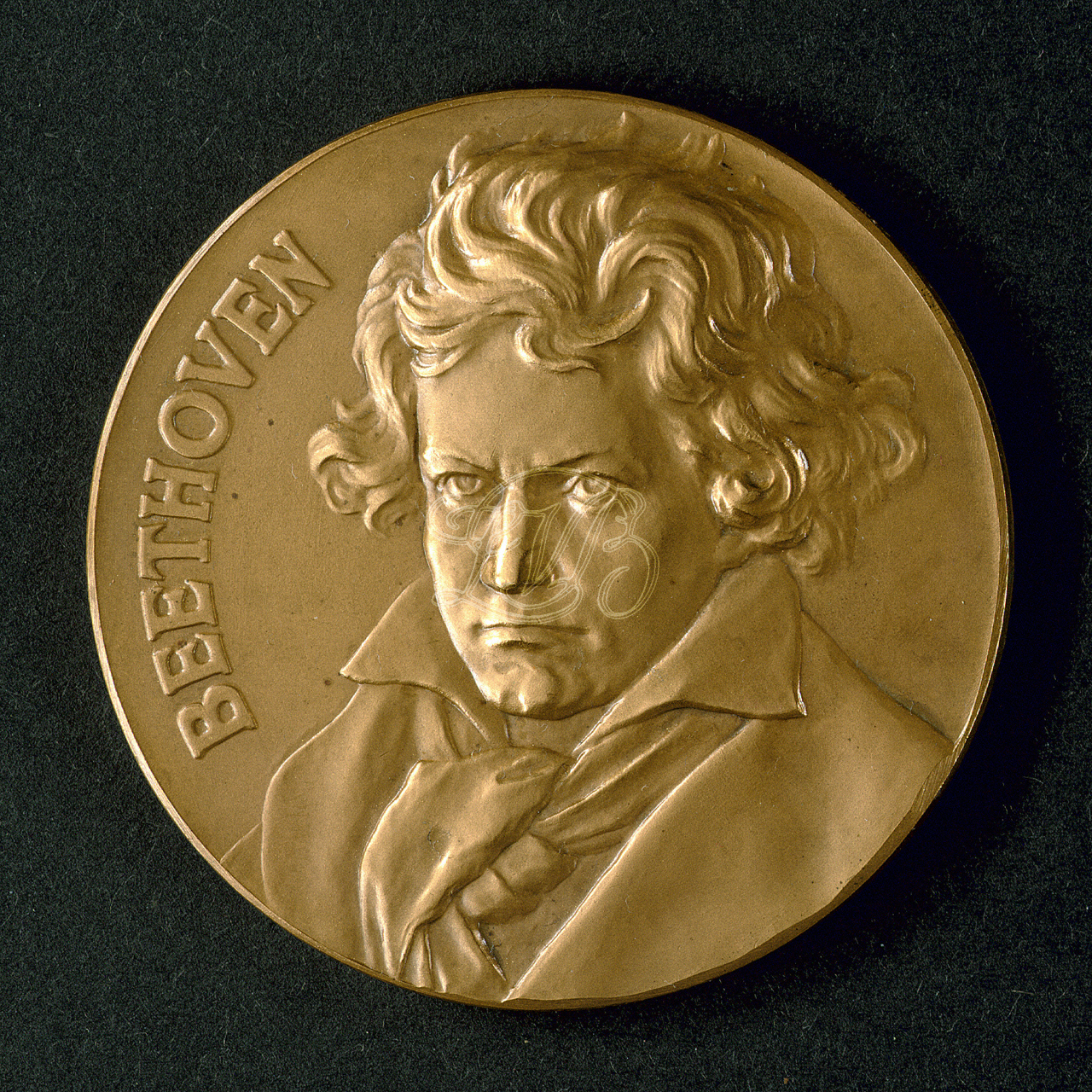
Commemorative medal for Ludwig van Beethoven, 1927 – Bronze medal from the Hungarian Ministry of Culture based on a design by József Reményi

Andante in F major WoO 57, ‘Andante favori’ for piano (1803, Beethoven aged 32)

Dedication not known
Duration 9′

Listen

written by Ben Hogwood

Background and Critical Reception

The origins for this single-movement piece lie in Beethoven’s forthcoming Waldstein piano sonata. A substantial Andante was composed as the central movement for the piece, seemingly begun in late 1803 – but was thought by many of Beethoven’s contemporaries to be too long.

Lewis Lockwood gives interesting detail on the construction of the sonata, describing the movement as ‘smooth and ingratiating’. He considers the reasons for the movement’s omission…that ‘keeping this big Andante along with the finale would have resulted in two long rondos in succession. Another was that although this ornate and conventional Andante would have furnished a quiet contrast to the dynamic first and third movements, it fell below their level of interest’.

The piece was published as a standalone work in 1804/5, gaining its title Andante favori for a second release in 1807, and won critical acclaim even as a ‘bleeding chunk’. It was replaced with a much shorter – and highly original – Introduzione.

Thoughts

It seems a little unfair to describe the Andante as ‘conventional’ and as ‘below the level of interest’ of the other two Waldstein sonata movements. It does however suit its publication as a single work, standing on its own as a subdued but subtly emotional piece of work.

There is a prayerful quality to its slowly unfolding contours, Beethoven seemingly taking tame out for deep contemplation. Once again however he delivers a main theme of melodic interest that stays in the mind soon after the first hearing. Development of this theme is typically assured, and there are contrasting elements – a faster section moving towards C major, and another where Beethoven beautifully displaces the key in to B flat major and a brightly voiced theme in octaves. There is a ‘false’ end, too, where the piece threatens to finish but has one final statement to make.

It is easy to see why the Andante favori has become a popular piece, with its thoughtful undertones easy to interpret as romantic, lovelorn thoughts. It feels, even with the restraint on show here, as though we are close to the heart of Beethoven’s matter.

Recordings used and Spotify playlist

Ronald Brautigam (BIS)
Jenő Jandó (Naxos)
Mikhail Pletnev (Deutsche Grammophon)
Alfred Brendel (Philips)
Sviatoslav Richter (Warner Classics)

Andras Schiff (ECM)

Boris Giltburg (Naxos)

There are some excellent recordings of this piece. Perhaps predictably Sviatoslav Richter finds an inner spirituality to the work, stretching it out in an almost imperceptible way. Alfred Brendel delivers a beautifully phrased and nuanced performance. Andras Schiff also finds the emotional centre of the piece, while Ronald Brautigam, playing on a ‘period’ instrument, plays more quickly but lovingly too.

You can chart the Arcana Beethoven playlist as it grows, with one recommended version of each piece we listen to. Catch up here!

Also written in 1803 Crusell Clarinet Concerto no.3 in B flat major

Next up Symphony no.3 in E flat major Op.55 ‘Eroica’