Sibelius Symphony no.6 in D minor Op.104 (1923); Tapiola Op.112 (1926)
English Symphony Orchestra / Kenneth Woods
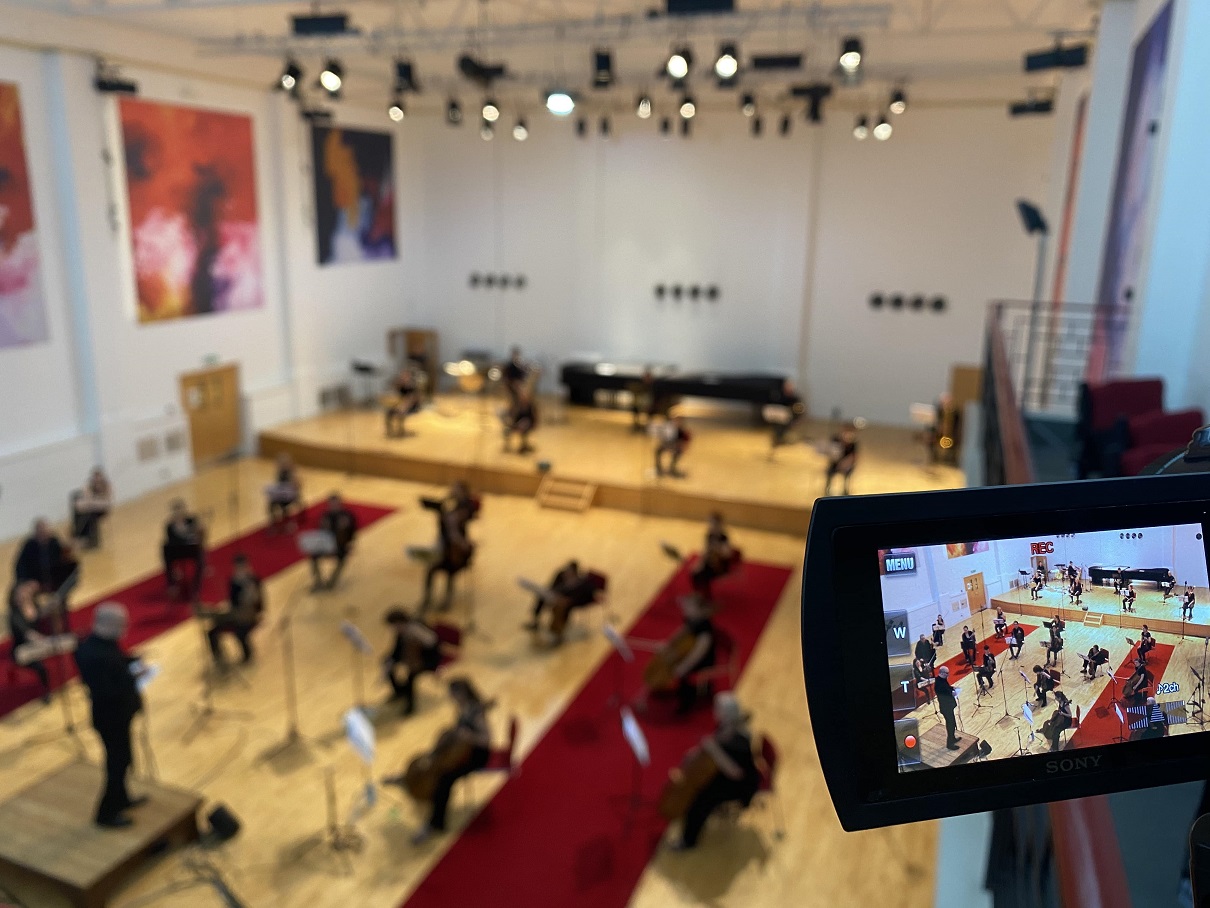
Recorded at Wyastone Concert Hall, Monmouth, 1-2 March 2022
by Richard Whitehouse
A cycle of Sibelius symphonies by the English Symphony Orchestra got underway last year with an impressive account of the Seventh, making this second instalment the more pertinent for showing just how the composer had arrived at that work and where he went from there.
Only if the Sixth Symphony is viewed as neo-classical does it feel elusive, rather than a deft reformulation of Classical precepts as here. The first movement duly unfolded as a seamless evolution whose emotional contrasts are incidental – Kenneth Woods ensuring its purposeful course complemented the circling repetition of the following intermezzo, with its speculative variations upon that almost casual opening gesture. Ideally paced, the scherzo yielded a more incisive tone which the finale then pursued in a refracted sonata design as gained intensity up to its climactic mid-point. Tension dropped momentarily here, quickly restored in a disarming reprise of its opening and a coda whose evanescence was well conveyed; a reminder Sibelius Six is as much about eschewal of beginnings and endings in its seeking after a new cohesion.
A suitably expanded ESO then tackled Tapiola – Sibelius’s last completed major work, whose prefatory quatrain implies an elemental aspect duly rendered through the near/total absence of transition in music of incessant evolution. A quality to the fore in this perceptive reading with Woods finding the right balance between formal unity and expressive diversity throughout its underlying course. Just occasionally there was a lack of that ‘otherness’ as endows this music with its uniquely disquieting aura, yet a steadily accumulating momentum was rarely in doubt towards the seething climax, then a string threnody whose anguish can bestow only the most tenuous of benedictions. A reminder, too, that not the least reason Sibelius might have failed to complete his Eighth Symphony was because he had already realized it in the present work.
The ESO being heard to advantage in the spacious clarity of Wyastone Hall, these accounts will be worth getting to know on commercial release (with the Seventh Symphony) early next year, when this cycle will itself continue with recordings of the Fourth and Fifth Symphonies
The Hostile Powers. Far wall, detail from the Beethoven-Frieze (1902) by Gustav Klimt
Symphony no.3 in E flat major Op.55 ‘Eroica’ for orchestra (1800-1802, Beethoven aged 31)
Dedication Prince Joseph Franz Maximilian Lobkowitz Duration 48′
1. Allegro con brio 2. Marcia funebre: Adagio assai 3. Scherzo: Allegro vivace 4. Finale: Allegro molto
Listen
Background and Critical Reception
In October 1803, when Beethoven had completed his third symphony, his world was about to change. His friend, the composer Ferdinand Ries, declared, “In his own opinion, it is the greatest work he has yet written. Beethoven played it to me recently, and I believe that heaven and earth will tremble when it is performed.”
Jan Swafford dedicates a compelling chapter to this work, which was to be one of the very first ‘program’ symphonies. Its dedicatee was to be Napoleon Bonaparte, but in a daring step his heroic character and achievements were to be the subject of Beethoven’s symphonic thoughts, built as they were on thematic cells from music previously written to celebrate Prometheus. Rather than be called Bonaparte, however, the Third took the term Eroica, for Beethoven was horrified by Napoleon’s proclamation as Emperor in May 1804. This was the nickname applied when the symphony was published in October 1806, with the dedication changed to Prince Lobkowitz.
Swafford presents a thoroughly absorbing dissection of the piece in his book, showing how Beethoven’s seemingly innocent sketches and musical cells take wing, blossoming into seamless 20-minute sections of music. The fourth movement, a theme and variations, takes its lead from a melody already used in Die Geschöpfe des Prometheus, completed in 1801, and also from the Eroica Variations for piano.
As Swafford writes, Beethoven “is more interested in flow than in eighteenth-century formal clarity”. At the end of the Eroica’s first movement, “the hero has come into his own, but his task is unfinished”. The symphony is now telling its story about an explicit subject, not just looking to impress on musical terms.
This first movement has a scale and ambition not seen before, as does the second movement funeral march. Berlioz, writing of the whole work, surely had this movement in mind when he declared, “I know few examples in music of a style in which grief has been so consistently able to retain such pure form and such nobility of expression.” The third movement continues Beethoven’s move away from the classical minuet towards the full-blown symphonic scherzo of the 19th century, but it is the finale where all Beethoven’s thoughts are clearly headed.
Swafford explains how Beethoven’s thoughts always had this movement at the head of proceedings, with finale-weighted works still relatively rare at the time. He applauds Beethoven’s innovations for the orchestra, with writing for horns and cellos of a standing not previously experienced. Barry Cooper declares this movement “an extraordinary fusion of musical arts, including variation, fugue, march and slow procession, in a symphonic finale of unprecedented formal complexity despite the apparent simplicity and regularity of its main theme. No wonder Beethoven’s admirers were so thrilled by the work, and the general public so perplexed.”
They were indeed, as Alexander Thayer recounts the puzzlement of an early appraisal. “The reviewer belongs to Herr van Beethoven’s sincerest admirers, but in this composition he must confess that he finds too much that is glaring and bizarre, which hinders greatly one’s grasp of the whole, and a sense of unity is almost completely lost.” Swafford has its measure, however. “The final pages are what the unfulfilled end of the first movement was waiting for, the true victory, the completion of the Hero’s task.”
Thoughts
It is rare indeed to be able to pinpoint an exact moment where art moves from one chapter to the next. Beethoven’s Eroica symphony gives us one such moment, a pivot where the whole notion of the symphony changes for ever and the composer strides forward to a new plain.
So many things about this work are new, exciting, and – for the time – dangerous. The first change is length, for this work often clocks in at near to 50 minutes if the repeats are used, twice the length of a Haydn or Mozart symphony. The first two movements alone are half an hour, making Beethoven’s first two symphonies feel like mere warm-ups in comparison. We also have an increasingly large orchestra to go with the bigger structures, and instruments such as the horn, oboe and cello take on an unprecedented status for their time.
Something is up right from the two brisk chords at the start, a call to attention before the main theme itself. The cellos get their moment, setting the heroic nature of the music in E flat major – which is, as we have seen, one of Beethoven’s key centres for power and positivity. As the massive first movement progresses, the composer goes through intricate yet wholly logical forms of developing his material. There is a new level of emotion here too, for this is a symphony from the heart. Its resolve gives the listener a mental picture of Beethoven beating his chest, giving himself a motivational call to arms as part of an emergence from the terrible days and morale of the Heiligenstadt testament.
The second movement, a funeral march, is one of the most profound utterances we have yet heard from Beethoven. This is the first time he has used the orchestra for such sombre means, other than a few isolated passages in the early cantatas, and the depth of feeling is well beyond previous symphonic thought, bringing closely guarded emotions from the intimacy of the piano to the wide open canvas of the orchestra. This is also a long movement, but the tension is sustained throughout. We feel Beethoven’s grief, his wounds, and also, in the C major ending, a semblance of hope.
The Scherzo picks up on this, easing the tension with its initial subject. It packs a punch recalling the heroism of the first movement, especially with the no-nonsense syncopations. No notes are here for the sake of it, all are fulfilling what feels like an inevitable destiny.
The finale, as Jan Swafford observes, brings everything to a head in a climactic fourth movement not experienced since Mozart’s Jupiter symphony. Few symphonic finales are as thrilling, as Beethoven assembles his melodic material and the music grows in stature at every turn, coming to a peak with a triumphant horn theme. The theme ends with a cadence that shows how Beethoven’s harmonic thinking is advancing with every piece – and indeed caps the sharp dissonance experienced near the start of the first movement. With this and many other elements, you can only imagine what the first audience would have thought, having grappled with the sheer scope of the first three movements. Where was this composer going with his music? Can we take the plunge with him? We will soon find out!
Spotify playlist and Recordings used
NBC Symphony Orchestra / Arturo Toscanini (RCA) Cleveland Orchestra / George Szell (Sony Classical) Orchestra of the Eighteenth Century / Frans Brüggen (Philips) Berliner Philharmoniker / Herbert von Karajan (Deutsche Grammophon) Vienna Philharmonic Orchestra / Claudio Abbado (Deutsche Grammophon) Danish Chamber Orchestra / Ádám Fischer (Naxos) Minnesota Orchestra / Osmo Vänskä (BIS) Berliner Philharmoniker / Rafael Kubelik (Deutsche Grammophon) Anime Eterna Brugge / Jos Van Immerseel(ZigZag Territories)
The recorded history of the Eroica deserves a much longer article, but safe to say the versions included here represent part of the vast array of available recordings. The smaller scale takes, such as Dausgaard, have plenty to say, as do the lavish accounts from Karajan and dfgd, where the score’s latent power is always in evidence. Accounts from Vänska and dfgd forge a middle ground, while the ‘period instrument’ versions from Brüggen and Jos van Immerseel give us a sense of what the first audience might have experienced, with thrillingly rough edges to the sound and the melodies.
To listen to clips from the recording from the Scottish Chamber Orchestra conducted by Sir Charles Mackerras on Hyperion, head to their website
You can chart the Arcana Beethoven playlist as it grows, with one recommended version of each piece we listen to. Catch up here!
Also written in 1803 HaydnString Quartet in D minor Op.103 (unfinished)
Next upNotturno for viola and piano in D major, Op.42
Margot la Rouge (1902) Lyric Drama in One Act – music by Frederick Delius; Libretto by Rosenval Sung in French with English surtitles
Margot – Anne Sophie Duprels (soprano), Sergeant Thibaud – Samuel Sakker (tenor), L’Artiste – Paul Carey Jones (bass-baritone), Lili Béguin – Sarah Minns (soprano), Nini – Laura Lolita Perešivana (soprano), La Patronne – Laura Woods (mezzo-soprano), Totor – David Woloszko (bass)
Le Villi (1883) Opera-Ballet in Two Acts – music by Giacomo Puccini, Libretto by Ferdinando Fontana Sung in Italian with English surtitles
Anna – Anne Sophie Duprels (soprano), Roberto – Peter Auty (tenor), Guglielmo – Stephen Gadd (baritone)
Martin Lloyd-Evans (director), takis (designer), Jake Wiltshire (lighting), Jami Read-Quarrel (movement) Opera Holland Park Chorus, City of London Sinfonia / Francesco Cilluffo
Opera Holland Park, London Thursday 21st July 2022 [7.30pm]
review by Richard Whitehouse Photos (c) Ali Wright
Delius and Puccini are unlikely operatic bedfellows (as anyone who recalls a near-disastrous ENO staging of Fennimore and Gerda with Gianni Schicchi three decades back will surely concur), but this double-bill by Opera Holland Park has an undeniable logic given both works started out as entries in the competition for one-act operas held on four occasions by Edoardo Sonzogno to encourage young talent (so gaining the upper hand against his established rival Ricordi). That neither proved successful at the time need not detract from the merits of either and if the concept of the one is, with hindsight, as uncharacteristic as that of the other appears immature, both contain more than enough worthwhile music along with arresting stagecraft to vindicate their revival in an imaginative production such as they receive on this occasion.
At the time he finished Margot la Rouge, Delius already had four operas behind him so was hardly unequipped for the task at hand. The challenge lay rather in adapting his increasingly personal, even metaphysical approach to the hard-hitting realism – not abetted by a libretto (written pseudonymously by Berthe Gaston-Danville) which reduces its characterization to stereotypes throughout. Yet the best of Delius’s music rises well above any one-dimensional sordidness – the plaintiveness of its prelude and mounting eloquence of its love scene (both refashioned as the Prelude and Idyll which was the composer’s final collaboration with Eric Fenby) equal to anything from his maturity. Had one or another of those earlier operas been acclaimed, the chances for Margot to reach the stage would have been appreciably greater.
The simple but effective revolving set favoured by Martin Lloyd-Evans presents this drama the more effectively for its unfussiness, enhanced by takis’s set designs and Jake Wiltshire’s resourceful lighting. Casting-wise the stage is dominated, as it needs to be, by Anne Sophie Duprels’s assumption of the title-role – emotionally guarded in its earlier sullenness, before ascending to heights of rapture once her identity becomes known. Samuel Sakker evinces the necessary ardency as Thibault and though Paul Carey Jones is a little too suave to convey the viciousness of The Artist, his commanding presence is never in doubt. Sarah Minns has just the right coquettishness as Lili, while there are telling cameos from Laura Lolita Perešvana, Laura Woods and, especially, David Woloszko among those (too?) numerous smaller roles.
Whereas Delius’s opera had to wait 82 years for its premiere, Puccini’s Le Villi hit the stage within a year of completion then was revived twice before the end of the decade – by which time, this ‘opera-ballet’ had expanded to two acts. Therein lies the problem, as Ferdinando Fontana’s modish libretto seems stretched beyond its effectiveness as drama, the threadbare nature in much of the latter scenario requiring a narrative element merely to hold it together. That said, there are various opportunities for characterizing the three protagonists of which Puccini made the most, with the central symphonic intermezzo L’abbandono e La tregenda (the latter still heard as an encore) confirming a new orchestral sophistication in Italian opera. Theatrically flawed as it may be, Le Villi is an auspicious and undeniable statement of intent.
Here, too, the Lloyd-Evans-takis-Wiltshire staging works to the advantage of this drama, yet without over-egging the supernatural shenanigans; credit, also, to Jami Reid-Quarrell for his utilizing the relatively restricted stage-space such that the dance element seems both alluring and more than compensates for the flailing narrative. Vocally, Anne Sophie Duprels has the measure of Anna as she traverses the gamut of emotions from diffidence, through heartbreak to revenge, with a continuity of expression not to be taken for granted. Peter Auty has made a speciality of high tenor roles, but his Roberto needs greater fervency and warmth to offset its shrillness. Not so Stephen Gadd, whose Guglielmo has a burnished humanity that commands attention on his (too few?) appearances and a clarity ideally suited to delivering the narrative.
The latter opera also gains from a typically lusty contribution by Opera Holland Park Chorus – and, in both works, the City of London Sinfonia responds with commitment to the dynamic direction of Francesco Cilluffo, who teases out the many dramatic nuances with alacrity. The orchestral reductions by Andreas Luca Beraldo have been judiciously gauged in both cases -that for Margot ironically closer to the orchestration undertaken by Eric Fenby in the absence of Delius’s score and which was soon mothballed once the original had been relocated. The relative unfamiliarity of these operas is a coup such as OHP has regularly delivered over the years, and one which is well worth the attention of more than just those drawn to rare opera.
Further performances take place on 29 July, 31 July [2pm], 2, 4 and 6 August. For more information visit the Opera Holland Park website
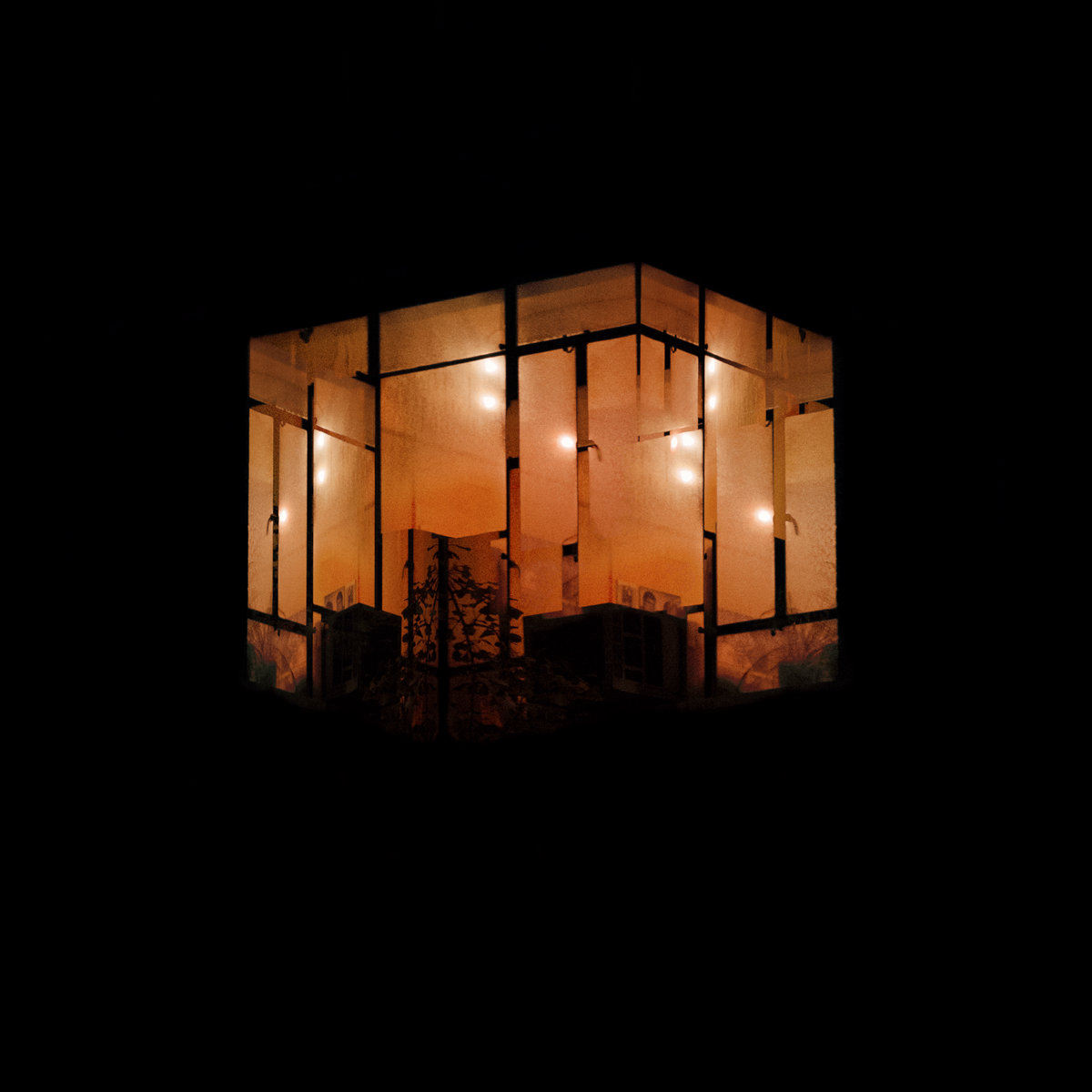
Next Light has a deeply personal resonance for CoastalDives, the pseudonym under which Ohio’s Casey J Cooper operates.
His father had to undergo emergency brain surgery around the time of his 75th birthday, and Cooper wrote wanted to create an ambient work to transport the listener to another place. He does this with the help of field recordings from St. Joseph Cathedral in his home city of Columbus. Placed at the beginning and end of the album, these give an idea of the space in which Cooper will operate, and the natural noise of people coming and going gives a communal feel to proceedings before the music itself gets underway.
What’s the music like?
Consoling. Using analogue synthesizers only, Cooper achieves his aim through music of elegance and poise. The grandeur of the cathedral is immediately evident on Dark Spots, where hints of Vangelis and Angelo Badalamenti can be heard as the stately chord progressions move slowly on their way. Splitter has more movement, taking on the profile of softly ringing bells as crossrhythms are worked in.
The title track is solemn and lost in thought but with an underlying strength, suggesting the power of recovery, while Rewire builds up thick textures, a powerful swell of sound. 75 eases a little, still suggesting the slow progress of an object, while Black Pearls has a majestic profile and an analogue timbre harking back to Jean Michel Jarre. Finally Reservoir has lovely mellow tones, a suitable epilogue arriving at a settled place, the preceding music having done its job.
Does it all work?
It does. Listening to this when even slightly under the weather has a calming yet strongly uplifting effect, the writing acknowledging nervous tension and anxiety but presenting a clear way forward and out at the end.
Is it recommended?
It is, for all the reasons above – and for the fact that First Light has some very fine writing for keyboard that brings some of the greats of the instrument to the surface. CoastalDives has achieved his aim of strength and resolution from hardship, with plenty to spare.
Glinka Ruslan and Lyudmila (1842) – Overture Smyth Concerto for Violin and Horn (1926-7) Rachmaninoff Symphony No. 2 in E minor, Op. 27 (1906-7)
Elena Urioste (violin), Ben Goldscheider (horn), City of Birmingham Symphony Orchestra / Kazuki Yamada
Symphony Hall, Birmingham Sunday 24 July 2022
Written by Richard Whitehouse
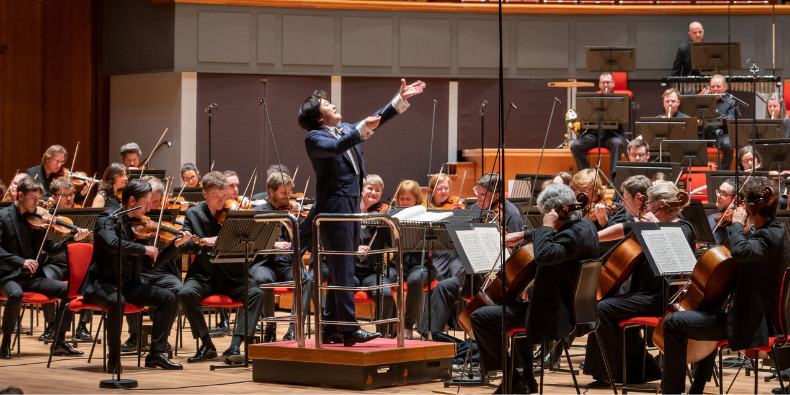
It might have been a ‘warm up’ for tomorrow night’s Proms appearance, but this afternoon’s concert by the City of Birmingham Symphony Orchestra with its Chief Conductor designate Kazuki Yamada gave ample indication of what to expect of this partnership during 2022/23.
On one level, this was an appealingly old-fashioned programme in consisting of an overture, concerto and symphony. The former was that to Glinka’s opera Ruslan and Lyudmila, always an effervescent curtain-raiser which here unfolded at a lively but never headlong tempo that brought out the formal precision of this piece with its deft sonata design. Neither did Yamada under-characterize the amiable second theme, while the strangely ominous atmosphere of the development was made more so through a telling contribution by timpanist Matthew Hardy.
Ethel Smyth is a notable presence at this year’s Proms, the CBSO tackling her Concerto for Violin and Horn. Among her last major works (encroaching deafness saw her write little over the next 18 years), its nominally Classical trajectory belies a formal freedom as extends to an orchestration evoking her French contemporaries as much as her German forebears. Not least the initial Allegro with its trenchant and stealthily imitative writing for the soloists against an orchestral texture at once intricate and luminous. Yamada marshalled his forces accordingly, before giving Elena Urioste and Ben Goldscheider the stage for the ensuing Elegy whose ‘In memoriam’ marking encouraged a response of real eloquence. Robust yet never unyielding, the final Allegro took in a combative cadenza before striding forth to its decisive peroration.
Rachmaninoff’s Second Symphony has moved to the very centre of the repertoire in the four decades since Simon Rattle made it a signature piece with this orchestra. Yamada holds it in equally high esteem – witness the finesse with which he built the first movement introduction to its impassioned apex, before subsiding into an Allegro which drew anxiety and grace into a purposeful accord heightened by the development’s surging inevitability then a coda of terse finality. Unfolding at an animated while not unduly hectic tempo, the scherzo was marginally over-indulged in its lilting second theme, but this did not pre-empt an incisive response in the central fugato – the CBSO strings at their collective best – nor a transition back into the main theme of irresistible verve. The coda exuded a fugitive inwardness that was no less arresting.
Ubiquitous these days as a radio staple, the Adagio needs astute handling if its rapture is not to become cloying and Yamada responded accordingly – not least in his attentive pacing of the main theme with a contribution from clarinettist Oliver Janes of melting poignancy, then a climax whose emotional intensity never became hectoring. The slightly too flaccid tempo for its easeful central span meant that the finale lacked the ultimate in cohesion, but Yamada balanced this elsewhere with an energy which carried through into a scintillating apotheosis.
So, an eminently worthwhile concert beyond merely enabling those who are unable to attend that Royal Albert Hall performance to hear Yamada with the CBSO in a programme such as played to both their strengths. Much to look forward to, then, over the course of next season.




 Arcana.fm