
Listening to Beethoven #207 – Andante in F major, ‘Andante favori’ WoO 57

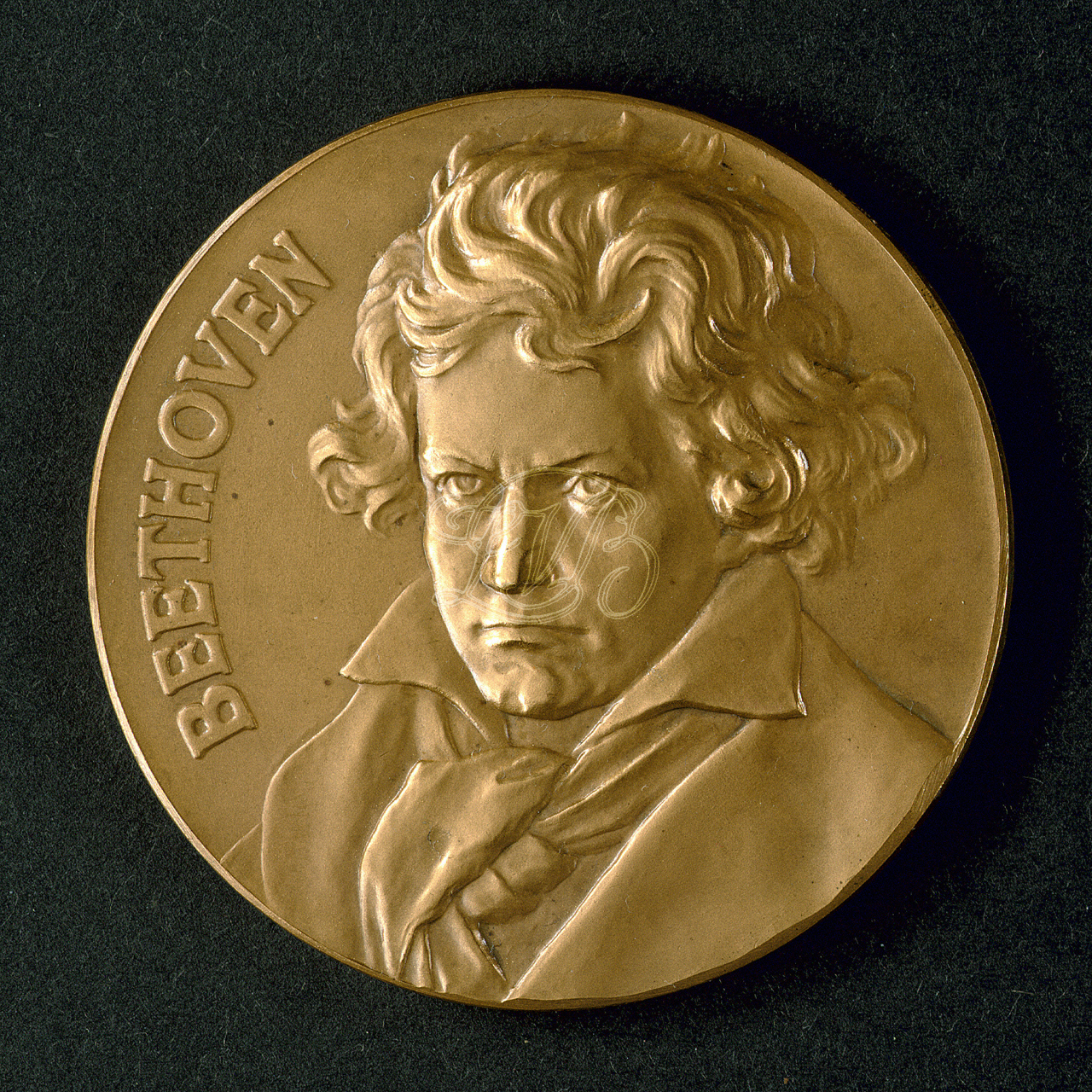
Commemorative medal for Ludwig van Beethoven, 1927 – Bronze medal from the Hungarian Ministry of Culture based on a design by József Reményi

Andante in F major WoO 57, ‘Andante favori’ for piano (1803, Beethoven aged 32)

Dedication not known
Duration 9′

Listen

written by Ben Hogwood

Background and Critical Reception

The origins for this single-movement piece lie in Beethoven’s forthcoming Waldstein piano sonata. A substantial Andante was composed as the central movement for the piece, seemingly begun in late 1803 – but was thought by many of Beethoven’s contemporaries to be too long.

Lewis Lockwood gives interesting detail on the construction of the sonata, describing the movement as ‘smooth and ingratiating’. He considers the reasons for the movement’s omission…that ‘keeping this big Andante along with the finale would have resulted in two long rondos in succession. Another was that although this ornate and conventional Andante would have furnished a quiet contrast to the dynamic first and third movements, it fell below their level of interest’.

The piece was published as a standalone work in 1804/5, gaining its title Andante favori for a second release in 1807, and won critical acclaim even as a ‘bleeding chunk’. It was replaced with a much shorter – and highly original – Introduzione.

Thoughts

It seems a little unfair to describe the Andante as ‘conventional’ and as ‘below the level of interest’ of the other two Waldstein sonata movements. It does however suit its publication as a single work, standing on its own as a subdued but subtly emotional piece of work.

There is a prayerful quality to its slowly unfolding contours, Beethoven seemingly taking tame out for deep contemplation. Once again however he delivers a main theme of melodic interest that stays in the mind soon after the first hearing. Development of this theme is typically assured, and there are contrasting elements – a faster section moving towards C major, and another where Beethoven beautifully displaces the key in to B flat major and a brightly voiced theme in octaves. There is a ‘false’ end, too, where the piece threatens to finish but has one final statement to make.

It is easy to see why the Andante favori has become a popular piece, with its thoughtful undertones easy to interpret as romantic, lovelorn thoughts. It feels, even with the restraint on show here, as though we are close to the heart of Beethoven’s matter.

Recordings used and Spotify playlist

Ronald Brautigam (BIS)
Jenő Jandó (Naxos)
Mikhail Pletnev (Deutsche Grammophon)
Alfred Brendel (Philips)
Sviatoslav Richter (Warner Classics)

Andras Schiff (ECM)

Boris Giltburg (Naxos)

There are some excellent recordings of this piece. Perhaps predictably Sviatoslav Richter finds an inner spirituality to the work, stretching it out in an almost imperceptible way. Alfred Brendel delivers a beautifully phrased and nuanced performance. Andras Schiff also finds the emotional centre of the piece, while Ronald Brautigam, playing on a ‘period’ instrument, plays more quickly but lovingly too.

You can chart the Arcana Beethoven playlist as it grows, with one recommended version of each piece we listen to. Catch up here!

Also written in 1803 Crusell Clarinet Concerto no.3 in B flat major

Next up Symphony no.3 in E flat major Op.55 ‘Eroica’

Switched On – Methyl Ethel: Are You Haunted? (Future Classic)

methyl-ethel

written by Ben Hogwood

What’s the story?

The fourth album from Methyl Ethel sees a slight shift in direction. Announced in January, it sees the band break from the 4AD label to move to Future Classic, and it sees an elevation for Jake Webb to take a more prominent role of front man, not too dissimilar to Oli Alexander’s way of thinking with Years + Years.

Are You Being Haunted? looks to bring out more of the band’s electronic side, while returning to the studio where they made their first records. This is a significant nod to the passing of a dear friend who Webb recorded with at the time.

What’s the music like?

Smart, chic and extremely enjoyable. There are some excellent songs here, tightly packaged and produced with a knowing hand. Proof is especially good, its winning couplet “What can you see now?” dressed with sweeping strings. “My head is heavy, I’ve had awful dreams!” sings Webb. Something To Worry About is great power pop on a larger scale, strutting its stuff with a stately tread. Kids On Holiday is similarly inspired, with torch song lyrics and occasionally irregular rhythms.

Neon Cheap is if anything even better, making a lasting impression with its sharp couplets and catchy hooks. Matters zips along, showing the strength in depth of the album as it leads onto the epic Castigat Ridendo Mores, which has a wall of sound at the heart of its chorus. Finally In A Minute, Sublime, offers a questioning coda, by turns elegant and powerful.

Does it all work?

Yes – because the Methyl Ethel approach is an ‘all killer, no filler’ variety. The album is a compact design, clocking in at around 40 minutes, and packs plenty of incident and verve into that time.

Is it recommended?

Yes, enthusiastically. The new chapter looks set to be a fruitful one for Methyl Ethel, and with Are You Being Haunted? it is off to an auspicious start.

Stream

Buy

Switched On – Vanessa Wagner: Study of the Invisible

Take some time out this weekend – three minutes and forty-one seconds to be precise – and enjoy this video, a taster of pianist Vanessa Wagner‘s new album Study of the Invisible.

Released today on InFiné Music, the album is a carefully constructed suite of modern piano music, taking in minimal approaches but casting its net wider to hear from composers such as Caroline Shaw, Julia Wolfe and Harold Budd.

Arcana will carry a full review of the album, and an interview with Vanessa where we discuss the recording of the album and her approach to the piano. For now, though, enjoy the peace and stillness of this video!


You can read more about Vanessa Wagner at her website – and to hear more from the album, listen on by using the Bandcamp link below:

Switched On – Amphior: Another Presence (Glacial Movements)

amphior

reviewed by Ben Hogwood

What’s the story?

This was made during the first Covid lockdown, described by its author as ‘a strange vacuum of feeling lonely and isolated’. However Amphior – aka Mathias Hammerstrøm – emerged from the period with a positive outcome, connecting with himself as a person and addressing some long-held feelings on introversion and sensitivity. Another Presence allowed him to express those feelings and be more himself in the process.

What’s the music like?

Haunting. It is possible to hear what sound like disembodied voices in many of these tracks, and though they are not noticeably lyric-based there is a primeval vocal quality to a lot of Amphior’s writing.

Void, the first track, has wisps of sound in the middle ground, some of them vocal, above a distorted and cracked profile underfoot, like standing on a large geological feature in a cold wind. The voices become more ominous in the course of the second track Phantasm, as does the darker musical language. After these two heavier pieces of music, Imaginary Shelter is just what’s needed, a comforting wash of sound and soothing harmonies. Dream Traveler offers the same welcoming cushion, though is consciously on the move, with that sounds like slow footsteps in the snow. The slow walking continues, with gradually changing vistas, as Sleepwalker takes in a range of colours both dark and light, before Pathfinder pans right out again. The warm colours of Another Presence find Amphior returning to a settled harmonic base, from which What Was Lost offers thick ambience if a hint of unresolved conflict, before ultimately fading away on the wind.

Does it all work?

Yes. Through the eight tracks here Amphior captures both the claustrophobia and strange, twisted freedom lockdown seemed to offer in equal measure, the qualities complementing each other while never becoming fully satisfying. Here the music is ultimately satisfying, finding its resolution from darker thoughts and feelings earlier on.

Is it recommended?

Yes. Another Presence is an affecting and occasionally disquieting listen, moving at a very slow pace as it examines feelings and experiences held deep beneath the surface. Ultimately those examinations bring forward a positive and deeper calm, the listener able to appreciate the long form ambience of this extremely descriptive album.

Stream

Buy


Online concert – English Symphony Orchestra / Kenneth Woods: Adrian Williams: Symphony no.1

English Symphony Orchestra / Kenneth Woods

Adrian Williams Symphony no.1 (2018-19, rev. 2021)

Wyastone Concert Hall, Monmouth
Studio recording 1-2 December 2021

Written by Richard Whitehouse

The 21st Symphony Project, launched five years ago by the English Symphony Orchestra and Kenneth Woods, has seen several impressive premieres – with this First Symphony by Adrian Williams its most ambitious yet, whether in terms of underlying conception or overall impact.

Now in his mid-60s, Williams has been a notable presence – albeit on the periphery – of music in the UK for several decades (more information can be found via the web references below); his advocates including Raphael Wallfisch and the Amsterdam Sinfonietta. Regular listeners to the ESO’s digital concerts will have encountered his striking Chamber Concerto ‘Portraits of Ned Kelly’ and intricately wrought eloquence of Migrations for strings; aspects from both resurfacing here, if on a considerably larger scale and exuding correspondingly greater force.

Playing almost 50 minutes and scored for a sizable orchestra including triple woodwind, five horns, four trumpets and four percussionists with harp, piano and celesta, the present work is evidently a summation of where its composer has reached over the course of his musical (and likely extra-musical) odyssey. Not that there is anything gratuitous or self-indulgent about the outcome; indeed, for all its formal complexity and emotional reach, this is music created out of inherently basic motifs – its initial three notes and their rearrangement generating the first movement’s main themes as well as outlining a long-term tonal trajectory which, though not pursued as systematically as in the earlier symphonies of Robert Simpson, remains as a focus throughout the intervening activity and the focal-point toward which such activity is directed.

From its imposing Maestoso epigraph, the opening Stridente unfolds against the background of, without thereby adhering to, sonata-form principles – its motivic components drawn into a continuous and frequently combative evolution necessarily left unresolved at the close. There follows a Scherzando that eschews ternary design for a through-composed format proceeding by tension and release to its decisive ending. To say the ensuing Lento is the expressive crux of this work might detract from the plangent, desolate tone of music whose frequently sparse textures and elliptical harmonies re-affirm that ‘less is more’. Despite its Energico marking, the finale unfolds with slow-burning momentum made cumulative by channelling its motivic evolution towards a Dolente apotheosis whose outcome is as inevitable as it is transcendent.

An impressive piece in terms not only of ambition but also realization. There are considerable technical challenges on route, but these are met with conviction and no little resourcefulness by an expanded ESO often tested while never fazed during its eventful course. Woods directs with his customary discretion and an attention to detail that goes a long way toward clarifying music which feels ‘complex and luminous’ as much in spirit as by design. Whether or not the outer movements might yield greater panache could only be determined under live conditions.

It might also be noted the designation is no idle boast, Williams having been commissioned to write a successor the ESO will schedule at a future date. Even were it to pursue a wholly different course, the achievement of this First Symphony is one not likely to be diminished.

You can view this concert from 25-29 March at the ESO website, and thereafter for ESO digital supporters here. For more information on Adrian Williams, head to his website or an extensive biography on the MusicWeb International site