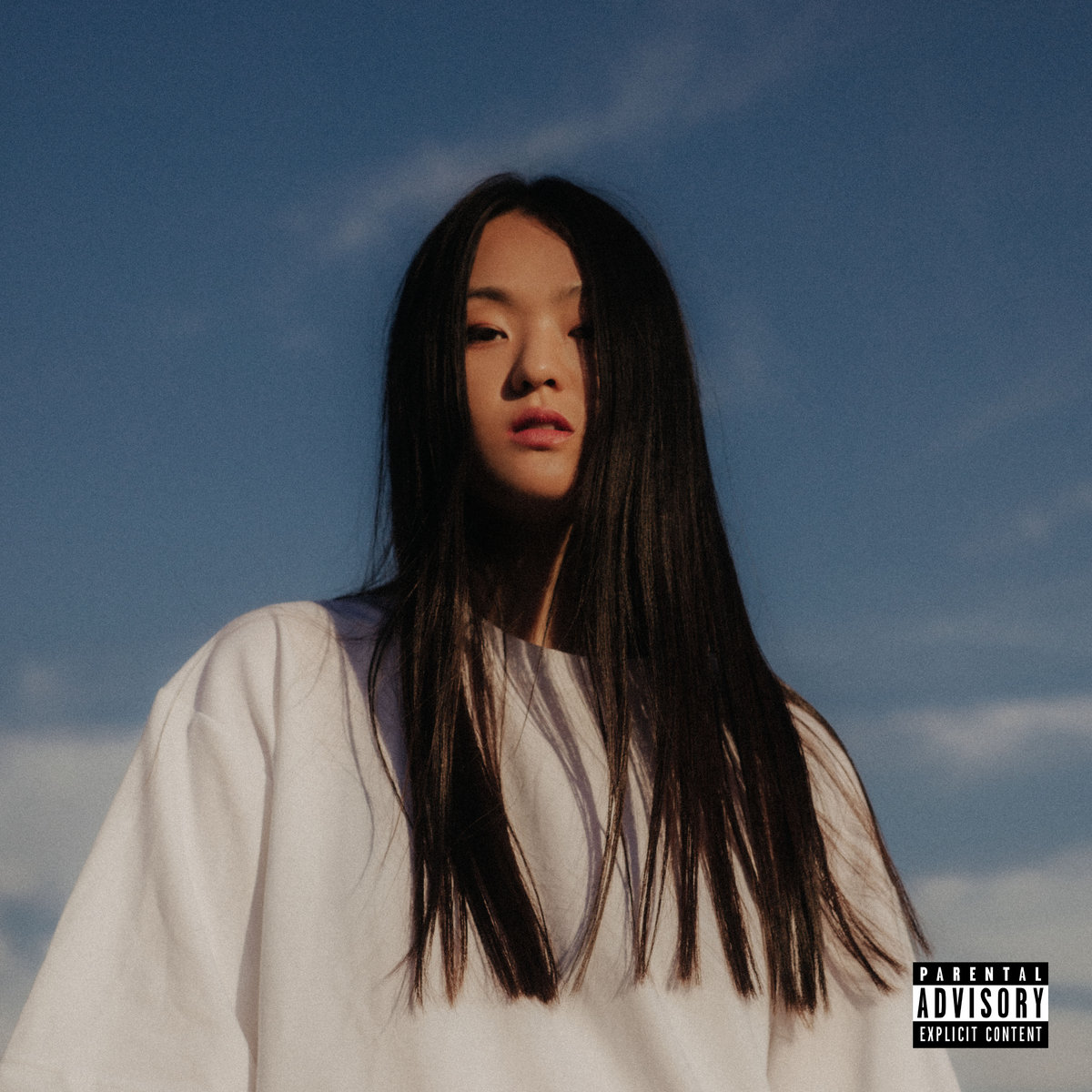
Park Hye Jin releases her first album on Ninja Tune, the culmination of a whirlwind couple of years for the South Korean. Now based in Los Angeles, she has built up a strong reputation for original electronic music through collaborations with Blood Orange, Nosaj Thing and Clams Casino & Take A Daytrip – their track Y Don’t U being especially successful.
Perhaps her biggest calling card yet however is the track Like this, caught by BBC Radio 1 and 6 Music and chosen for the soundtrack of FIFA 2021. It is one of the many reasons Before I Die is so highly anticipated.
What’s the music like?
Extremely varied. Pigeon holes don’t exist with Park Hye Jin around, for she can effortlessly turn her hand to so many styles, reflecting the human condition through a wide range of moods. While that might sound like a lazy observation, few artists can rise to this challenge with such infectious confidence.
She moves from the deadpan rap of Never Give Up to the direct come-on of Can I Get Your Number, from down tempo R&B numbers like the slightly warped Sunday ASAP to big dancefloor gunners such as Hey, Hey, Hey. Sometimes the lyrics involve straight-to-camera honesty, like I Need You, which is dressed with an old-style piano and briefly drenched in nostalgia.
This direct approach runs through the album, which is highly entertaining, often funny, sometimes tender – but almost always hitting the mark with its sharp riffing and clever beatmaking.
Does it all work?
It does. Before I Die is over in a flash, with many of the tracks well under three minutes – showing Hye Jin’s ‘all killer and no filler’ approach, which works really well. In the course of the 15 episodes you really feel like you get to know her as a person, what makes her tick and what pisses her off, and to end with the level-headed i jus wanna be happy is right on the money.
Is it recommended?
It is. Park Hye Jin’s original approach takes dance music back to its first principles, working through an often thrilling range of beats and emotions. She is without question an artist to watch.
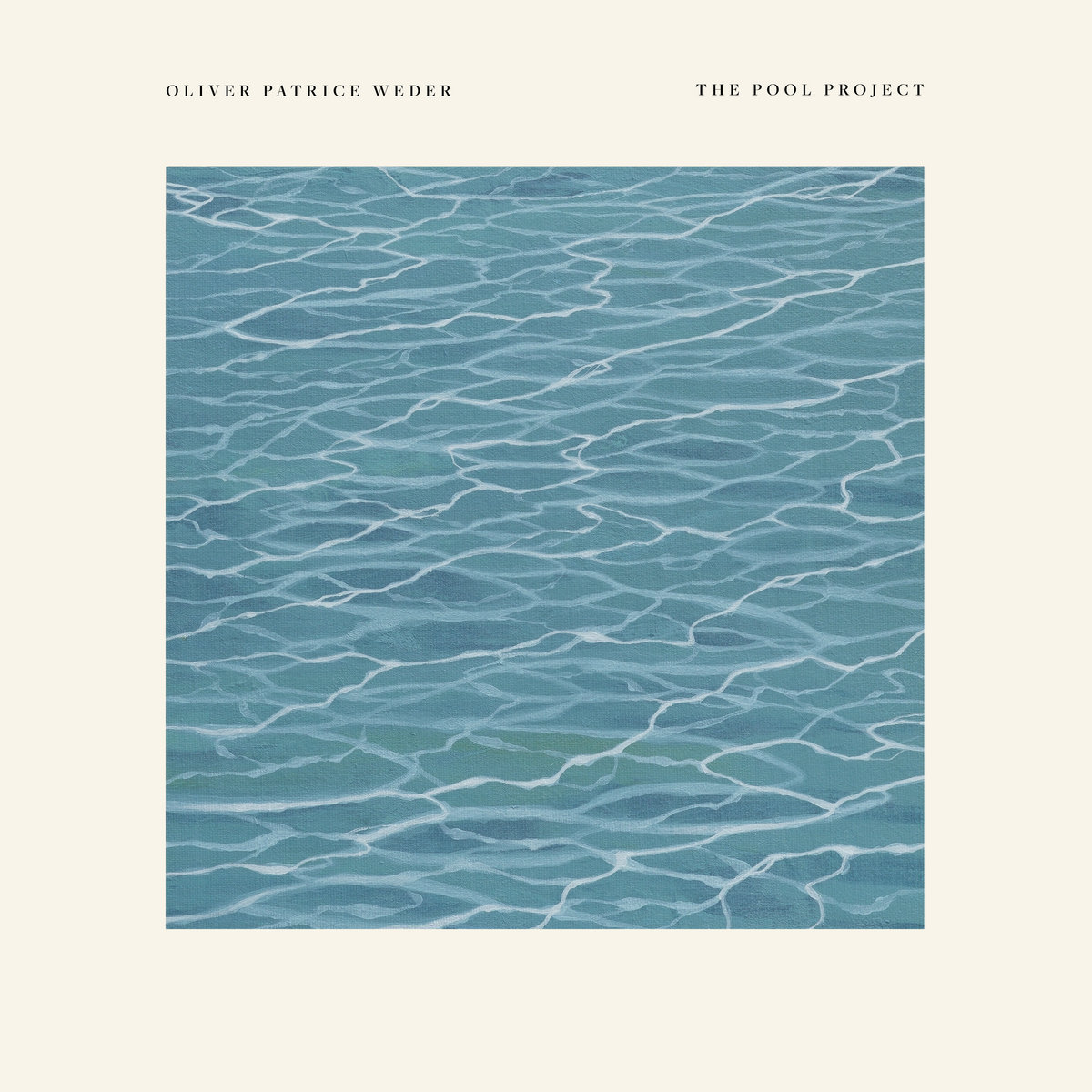
It is helpful to know where The Pool Project was recorded. Oliver Patrice Weder, a Swiss composer residing in Spain, recorded the album with friends in a pool house, surrounded by an evergreen oak tree forest, just outside of Madrid.
Weder has an intriguing musical history, channeling his love for The Doors‘ keyboard-based work into more classical and jazz-orientated work. Keeping this open musical policy, he sketched the music for The Pool Project in this restful area, before bringing friends in to contribute. The instrumentation speaks more of jazz, including voices, alto flute, bass clarinet and percussion, with Weder himself providing keyboards and electronics.
Weder’s own company Spitfire Audio are simultaneously releasing a sound library, giving composers and producers the opportunity to manipulate the sounds from the album for their own purposes. The toolkit offers an extension of these sounds, capturing the acoustics of the pool house, and is offered as an easy-to-use plug-in.
What’s the music like?
As restful as can be. The lapping of the water and the soft, Satie-like piano loop used in Rainbow Fish are indications of the pace at which Weder is going to operate. Satie is a good point of reference, for this piece operates along the line and rhythmic cadence of his Gymnopédies, developing its ideas subtly.
Weder uses imaginative orchestration to allow his ideas to bloom. The winsome bass clarinet in Lala, or the mellow alto flute on Rainbow Fish are really nice touches, as is the older, slightly untempered quality he gives to the piano, with its soft undercurrents of melody. This gives the chromatic line on Encina a displaced quality, also adding a mellow tone to the soft oscillations of Peter.
Forest Glade bubbles with life, introducing a steady but unobtrusive beat to go with its softly reverberating phrases, secured from a delayed Wurlitzer electric piano.
Does it all work?
It does. Everything about this meditation is unforced, Weder’s ideas allowed to pursue a naturally evolving path until they come to rest. Sometimes the listener is invited to sit back and enjoy the lightly applied jazz flavourings to the melodies, but then on occasion Weder complements the slow, quiet music with pockets of reviving energy.
The guest instrumentalists pitch their contributions just right, and deserve to be credited – Clara Gallardo on fulsome but mellow alto flute, while Joaquín Sánchez Gil moves from light meanderings on Peter to more outright, jazz-influenced work on Lala. Guitarist David del Cerro Turner frames the closing Distant Island beautifully, while percussionist Juan Espiga brings the necessary movement to Forest Glade.
Is it recommended?
It is. The Pool Project is a beautifully executed piece of communal meditation, its simple phrases blossoming into restful tableaus of music.
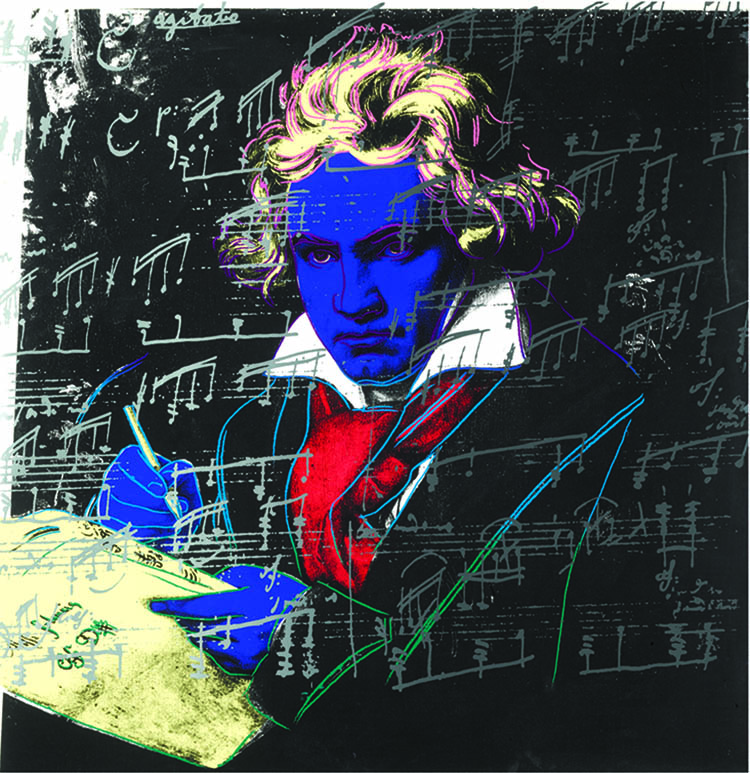
Beethoven (1987) by Andy Warhol – colour screenprint on Lenox Museum Board
Piano Concerto no.3 in C minor Op.37 for piano and orchestra (1796-1803, Beethoven aged 32)
Dedication Prince Louis Ferdinand of Prussia
Duration 37′
Listen
Background and Critical Reception
Beethoven is thought to have begun the third piano concerto as early as 1796, finishing the majority of the work in 1800 but waiting until 5 April 1803 for the first performance at the Theater an der Wien in Vienna. It was quite a concert, beginning with the Symphony no.2 and ending with the newly composed Christus am Ölberge, in its first version.
Beethoven had to rush the concerto to get it ready in time, and as a result the solo part was unfinished. An account from the composer’s friend and page turner Ignaz von Seyfried found him effectively turning empty pages during the first concert, Beethoven having committed the solo part to memory.
Many writers recognise the lineage of this work. Charles Rosen, in The Classical Style writes, “The C minor is full of Mozartean reminiscences, in particular of the concerto in the same key, K491, which Beethoven is known to have admired.” Barry Cooper, writing for Hyperion, notes that ‘there is little, if any, direct influence from Mozart’s work, although the similarities show how thoroughly Beethoven had absorbed Mozart’s style.’
The first movement is Beethoven’s weightiest movement yet, clocking in at over 17 minutes in some performances. It is followed by a Largo in the unexpectedly remote key of E major, which would have come as a surprise to the audience in 1803. This tonality is referred to in a ‘dream-like recall’ in the finale (writes William Kinderman). This movement is a Rondo, where after some tense episodes in the minor key, Kinderman writes how “comic wit and jubilation crown the dénouement of this drama in tones”.
Perhaps surprisingly, one of the most guarded verdicts on the third concerto came from Brahms. Comparing it to the Mozart, “a marvellous work of art and filled with divine ideas”, he said “I admit that the Beethoven concerto is more modern…but it is not significant!”
Thoughts
The third of Beethoven’s five published piano concertos is a different animal entirely from the first two. Confirmation of this is felt in the opening bars, with a tense first theme outlined by the strings. Whereas the first two concertos were light on their feet and relatively frothy, this one has a serious countenance, like its counterpart C minor concerto from Mozart in 1784.
The comparisons made between the two are certainly valid, for they occupy a similar emotional space and use almost identical orchestral forces. Beethoven tends to focus in on daring harmonies, creating tension between his much-used C minor and the major key. The soloist has some juicy discords too, to keep the listener on the edge of their seat.
The drama starts with that first theme on the strings and does not let up in the first movement, which despite its length is tautly argued. The arrival of the piano, with stern scales in C minor, is arresting, and in his own written-out cadenza completed in 1808 Beethoven brings in the intimacy of his sonatas, before a series of trills lead to a sparse conclusion from the orchestra. I think Brahms was doing it a disservice!
Perhaps the biggest raise of the eyebrows, however, comes with the first notes of the slow movement, which introduces a whole new key of E major. It is a surprise to the ear which, taking previous examples from the composer, might expect A flat major or F. Beethoven uses this new area to explore a thoughtful, tender side, giving himself and the solo pianist free reign. There is mystery and poetry here, and some sublime contributions from the orchestra.
The final movement is where Beethoven and Mozart are closer aligned, with quite an oblique melody that becomes surprisingly catchy – and which completes its own ‘darkness to light’ journey in the closing passages. The composer even works in a short fugal episode to the energetic movement with effortless ease. In this piece Beethoven has served notice of his intentions to move the piano concerto on to more Romantic territory, both in musical style and emotion.
Spotify playlist and Recordings used
Wilhelm Kempff, Berliner Philharmoniker / Ferdinand Leitner (Deutsche Grammophon) Robert Levin, Orchestre Révolutionnaire et Romantique / Sir John Eliot Gardiner (Arkiv) Mitsuko Uchida, Bavarian Radio Symphony Orchestra / Kurt Sanderling (Philips) Rudolf Serkin, Bavarian Radio Symphony Orchestra / Rafael Kubelik(Orfeo) Claudio Arrau, Royal Concertgebouw Orchestra / Bernard Haitink (Philips) Ronald Brautigam, Die Kölner Akademie / Michael Alexander Willens (BIS) Stephen Hough, Finnish Radio Symphony Orchestra / Hannu Lintu (Hyperion) Stephen Kovacevich, BBC Symphony Orchestra / Sir Colin Davis (Philips)
There are some wonderful accounts of this piece. While writing about the work I have especially enjoyed the versions with soloists Mitsuko Uchida, Wilhelm Kempff and Stephen Kovacevich, while on the fortepiano Robert Levin creates lean drama with Sir John Eliot Gardiner. Uchida is magical at the beginning of the slow movement, which becomes the dream Beethoven surely meant it to be.
To listen to clips from Stephen Hough’s new recording on Hyperion, head to their website
You can chart the Arcana Beethoven playlist as it grows, with one recommended version of each piece we listen to. Catch up here!
Also written in 1803 BoieldieuClarinet Concerto no.1 in E flat major Op.36
Local Valley is the first we have heard from José González in six years. His fourth album, it draws on his previous solo work for inspiration, but also his work with Junip, the duo he is part of with Tobias Winterkorn.
González is a modest music maker, by which I mean that he never shouts from the rooftops about his new work. He could have done this after the success of his cover of The Knife’s Heartbeats in 2003, harnessed by Sony for a TV commercial with thousands of bouncing balls on the streets of San Francisco. Yet he chose to let his music do the talking, and continues to do that in such a way that repeatedly draws his loyal listeners in.
What’s the music like?
Like a familiar jacket you find in the wardrobe after a few years without wearing, José González immediately gives comfort to the wearer. His music should not be pushed straight into the easy listening bracket, mind. Although it certainly fulfils that function, there is a lot more depth to Local Valley. It is the sound of a songwriter content with his style but pushing subtly at the limits of his capabilities.
El Invento is immediately back into the familiar González territory of slightly honeyed vocals and languid guitar, casting a heat haze over the listener, before Visions heads outdoors. To the sound of blackbirds, González takes stock of his surroundings. ‘We are here together’ is the mantra at the end, to increasingly dreamy accompaniment.
Once again, José uses his guitar as a miniature orchestra, complementing the vocals with grace and assurance. Horizons is an obvious example, a rippling tremolo from the instrument accompanying the repeated murmur ‘to be at peace’, the listener effectively placed next to a bubbling stream. The following Head On is more animated, the ideal injection of energy at this point, the guitar now turning over its countermelodies.
Freshly energised, González diversifies to include more electronic beats. The hypnotic Tjomme works brilliantly in its combination of soft voice and surprisingly propulsive Afrobeat, while the up tempo Valle Local and Lilla G are similarly enjoyable. The latter, with its easy going loop, could easily spin out for more than double its two minutes.
Does it all work?
Yes. González sees no reason to change his winning formula, but he never rests on his laurels either. His style is at ease with itself but increasingly extravert, intimate but casting its gaze further afield.
Is it recommended?
Definitely. Local Valley offers a valuable respite from our increasingly rabid civilization. It casts a spell immediately, returning the listener 42 minutes later in a far more relaxed condition than when it picked them up. It is a musical therapy session with repeatedly good side effects.
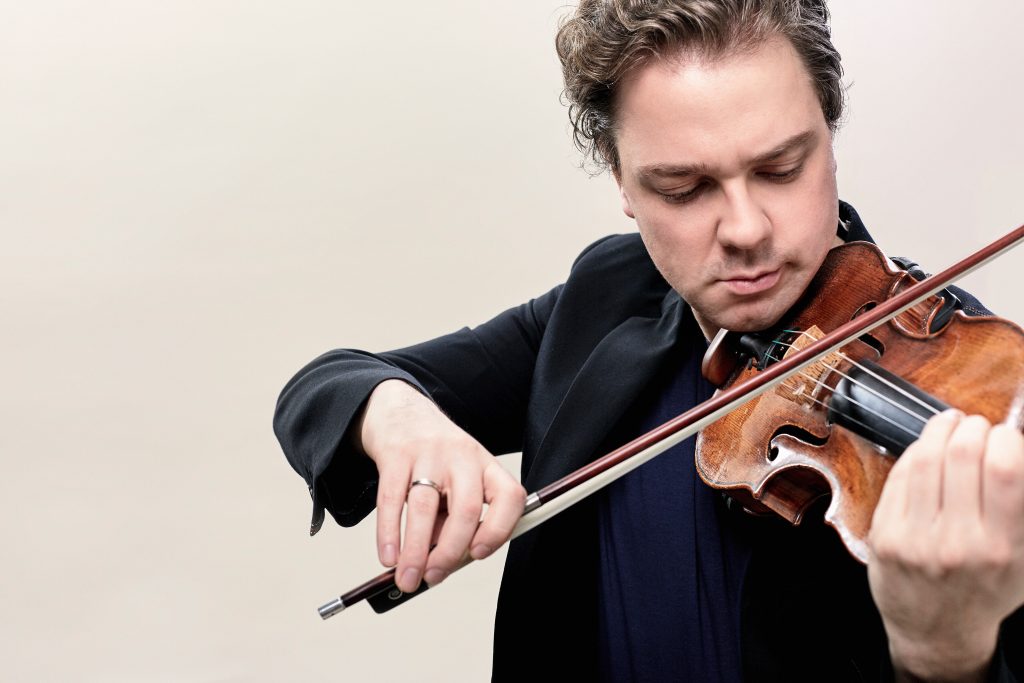
Alexander Sitkovetsky (violin, above), English Symphony Orchestra / Kenneth Woods
Mendelssohn Symphony no.4 in A major Op.90 ‘Italian’ (1833 rev.1834) Carwithen arr. Woods: Lento for Strings (1945 arr. 2020) Beethoven Violin Concerto in D major Op.61 (1806)
St. Peter’s Church, Hereford Sunday 26 July 2021 (3.30pm) (Concert reviewed online via ESO Digital)
Written by Richard Whitehouse
For this first concert in its 2021/22 season, the English Symphony Orchestra was heard at St. Peter’s Church, Hereford in a concert combining familiar classics with an arrangement of the kind that has been a hallmark of its programming under principal conductor Kenneth Woods.
The piece in question was a Lento for Strings that began as the slow movement of the First Quartet by Doreen Carwithen. Although she left a notable output of concert and film music, Carwithen (1922-2003) is remembered mainly through her association with William Alwyn – being his amanuensis from 1961 and second wife from 1975 for the final decade of his life. At the time of this quartet, she was a promising composer in her own right, as confirmed by Woods’s adaptation of the slow movement so that its prevailing intimacy and introspection lose none of their acuity. The ESO played it with requisite poise and finesse, not least those plangent solos for viola and violin that were eloquently rendered here by Matt Maguire and Kate Suthers, thereby resulting in an atmospheric miniature which warrants frequent revival.
Mendelssohn was just a year older when he completed his Italian symphony, long among his most popular works even if heard a mere handful of times then withheld from publication in his lifetime. Maybe the touristic nature of its conception or its unlikely tonal trajectory (A to A minor) created issues he was unable to resolve, but in creating this symphonic suite he had unconsciously set a precedent. Woods undoubtedly had its measure – whether in an Allegro (exposition repeat included) whose joyousness did not exclude more combative energy from its development and coda, an Andante whose journeying pilgrims were evoked with no little pathos, an intermezzo deftly revisiting the wide-eyed enchantment of the composer’s youth, or a finale whose interplay of saltarello and tarantella rhythms surged on to a decisive close.
Beethoven’s Violin Concerto is one of a select few in its genre whose weight and substance justifies its occupying the whole second half. Alexander Sitkovetsky responded accordingly – the opening movement long-breathed but sustaining itself at least until the latter stages of the development, when a sense of expectancy rather failed to materialize. Momentum picked up thereafter, not least during a finely projected account of the (Kreisler) cadenza whose tensile rhetoric subsequently made the orchestra’s heartfelt re-entry in the coda seem more telling.
The highlight of this performance came with the Larghetto, slower than is often now the case but its sequence of variations melding into each other with seamless elegance, with a rapport between soloist and conductor at its most tangible in the theme’s hushed reiteration prior to a spirited transition into the Rondo. This did not lack for impetus, and if Sitkovetsky was most perceptive in the intervening episodes, the anticipation generated as the main theme steals in on the approach to the final tutti carried through to the nonchalant pay-off of the closing bars. An appealing and enjoyable concert in which, moreover, the ESO sounded not at all fazed by the vagaries of the acoustic. It continues its current schedule on October 10th with music by Mendelssohn, Mozart and Schubert – plus a mystery piece ‘‘to be announced on the night’’!
Further information on the ESO’s next concert can be found at their website. For more on Doreen Carwithen, visit the MusicWeb International page here


 Arcana.fm