Listening to Beethoven #154 – String Quartet in G major Op.18/2

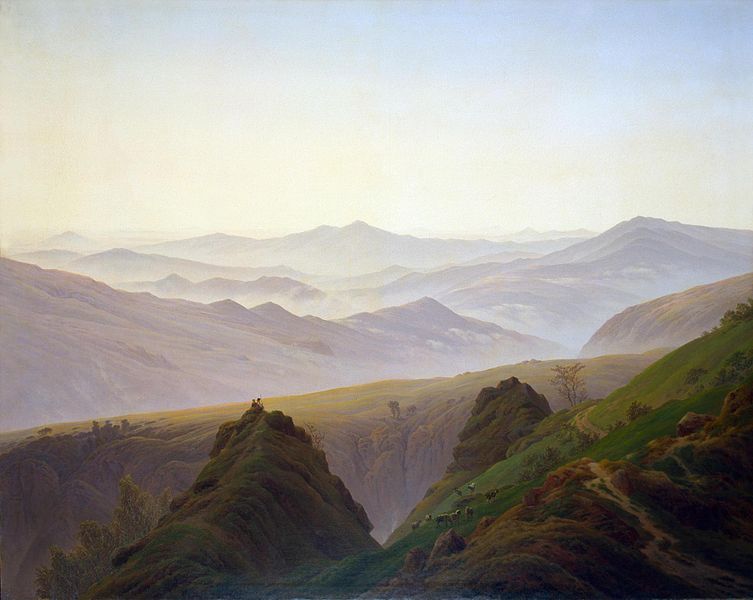
Op182-Friedrich,_Morgen_im_RiesengebirgeMorning on the Riesengebringe, by Caspar David Friedrich (1810)

String Quartet in G major Op.18/2 (1798-1800, Beethoven aged 29)

Dedication Count Johann Georg von Browne
Duration 25′

1. Allegro
2. Adagio cantabile – Allegro – Tempo I
3. Scherzo: Allegro
4. Allegro molto, quasi presto

Listen

written by Ben Hogwood

Background and Critical Reception

‘The jester of the set’, says Daniel Heartz of the second of Beethoven’s first published string quartets. Op.18/2 was actually written third, but is carefully placed by the composer to keep a satisfactory flow between the works. In Germany it acquired the occasional nickname ‘Komplientierquartett’, for what Ludwig Finscher calls the ‘graceful principal theme’. The nickname reflects on the quartet too, ‘not merely to compliment but to greet with formal respect and ceremony’.

Commentators identify more links with the past in this work than the forward looking first – yet the links do not mean the work itself is unadventurous. Finscher writes of how the first movement ‘reaches back beyond Haydn to the preclassical realm, but technically, in its almost parodic succession of two-bar groups and tiny, conventional motives, it is a dazzling tour de force, building on the achievements of the Haydn quartet style and simultaneously providing an ironic comment on them’.

Heartz draws close links with Haydn’s String Quartet Op.33/2, also in G major – and gives several examples on how the first and second movements draw on Haydnesque qualities. Finscher extends his observations, concluding that ‘in artistic skill of that order the work is also a celebration of the level of musical culture in Vienna around 1800’.

Thoughts

It is true that the second of Op.18 is very different from the first – but in a complementary way. The mood is amiable and often comedic, the first violin taking the lead in a cheery second theme, where it ascends to the heights like a bird. Some of the harmonic movements are adventurous in the development, showing that if Beethoven is influenced by Haydn he is channelling the composer’s inventive powers too. The viola and cello take the lead in a striking build to a recap of the main theme.

There are more powers of invention in the slow movement, where tender moments give way to an unexpected, capricious section in the middle. The scherzo third movement is another advance on the traditional minuet, light in mood before cutting to an elusive trio section.

At this point it suddenly feels like the work is finishing, but then Beethoven surges forward with an assertive finale, led off by the cello and featuring busy interactions between the four instruments.

Beethoven has fun with this piece, and given the right performance the listener will do too. The Haydn influences are welcome and well-managed, because the quartet never sounds derivative, and its frequent but subtle inventions keep the listener on their toes. A joy from start to finish.

Recordings used and Spotify links

Quatuor Mosaïques (Andrea Bischof, Erich Höbarth (violins), Anita Mitterer (viola), Christophe Coin (cello)
Melos Quartet (Wilhelm Melcher and Gerhard Voss (violins), Hermann Voss (viola), Peter Buck (cello) (Deutsche Grammophon)
Borodin String Quartet (Ruben Aharonian, Andrei Abramenkov (violins), Igor Naidin (viola), Valentin Berlinsky (cello) (Chandos)
Takács Quartet (Edward Dusinberre, Károly Schranz (violins), Roger Tapping (viola), Andras Fejér (Decca)
Jerusalem Quartet (Alexander Pavlovsky, Sergei Bresler (violins), Ori Kam (viola), Kyril Zlotnikov (cello) (Harmonia Mundi)
Tokyo String Quartet (Peter Oundjian, Kikuei Ikeda (violins), Kazuhide Isomura (viola), Sadao Harada (cello) (BMG)
Végh Quartet (Sándor Végh, Sándor Zöldy (violins), Georges Janzer (viola) & Paul Szabo (cello) (Valois)

The Végh Quartet give a delightful account of this piece, light on their feet and pretty quick, but still with plenty of room for their phrasing. The Tákacs Quartet are often brisk, but similarly enjoyable, while the Quatuor Mosaïques are slower and emphasise the graceful interplay between the quartet. Finally the Tokyo String Quartet are nicely poised and enjoy Beethoven’s flights.

You can chart the Arcana Beethoven playlist as it grows, with one recommended version of each piece we listen to. Catch up here!

Also written in 1800 Krommer String Quartet in A major Op.18/2

Next up String Quartet in D major Op.18/3

Switched On – Sunroof: Electronic Improvisations Vol. 1 (Mute)

sunroof

reviewed by Ben Hogwood

What’s the story?

Sunroof is surely the longest running collaboration in electronic music yet to have released an album….until now. The duo, Daniel Miller and Gareth Jones, have long traded Improvisations in private using modular synths, a practice dating back to 1982 when the pair worked together on Depeche Mode’s Construction Time Again.

Miller, who has run the Mute label for four decades, and Jones, a prolific producer, engineer and artist, used Sunroof as a remix project from the 1990s onwards but now, with their friendship about to begin its fifth decade, we finally hear the fruits of their original electronic labours.

What’s the music like?

Timeless – in the sense that this is music borne of the 1980s but feels like it was only made yesterday. The easy style in which the two composers work leads to music that unfolds naturally but still has a keen structure.

Each title is marked by the date of its inception, and the eight tracks vary between deep, moody drones (1.1 – 7.5.19 and 1.3 – 30.5.19) to flickering lights of treble, which we get in 1.2 – 30.5.19 and 1.6  – 7.5.19.

The drones have a little interference around them with white noise, but the harmony is generally consonant. The lighter tracks have more wandering melodies and move on a whim, 1.6 with a motorised movement that becomes more probing and then vanishes into thin air. 1.7 – 30.5.19 a Star Trek like noise on a loop, burning a trace on headphones, then.
1.4 – 18.6.19 is really excellent and could develop into a powerful club track twice its length, while 1.8 – 2.3.19 is the closest we get to a drum beat, a squelchy thud beating moments in time, underneath a bubbling bass and busy treble.

Does it all work?

Yes – and the more you listen, especially on headphones, the more you appreciate the expert layering of parts and intersection of the musical motifs.

Is it recommended?

Yes, enthusiastically. It is great to have Miller and Jones committing their friendship to record in this way, and the musical chemistry between them is clear. Hopefully this will lead to further installments!

Stream

Buy


Listening to Beethoven #153 – String Quartet in F major Op.18/1

Op181-Morning_in_the_Mountains

Morning in the mountains, by Caspar David Friedrich (1822-23)

String Quartet in F major Op.18/1 (1798-1800, Beethoven aged 29)

Dedication Count Johann Georg von Browne
Duration 24′

1. Allegro con brio
2. Adagio affettuoso ed appassionato
3. Scherzo: Allegro molto
4. Allegro

Listen

written by Ben Hogwood

Background and Critical Reception

Beethoven’s entry into the string quartet arena was carefully calculated – as it was with the symphony and the piano concerto. As Ludwig Finscher writes in an absorbing booklet note for Deutsche Grammophon’s recording from the Melos Quartet, no fewer than 18 young contemporaries published a set of string quartets as their Op.1 in the two decades leading up to 1800.

Beethoven’s set of six was no accident, taking a format used by Haydn (Op.76) and Mozart (the ‘Haydn’ quartets). The order in which the six works were placed was no accident either – with Op.18/3 completed ahead of this piece. Yet Op.18/1 was considered the best with which to start, as ‘the most modern of the six in form and content’, according to Finscher.

He talks about the work achieving ‘an originality of musical language which goes far beyond the personal tone of earlier chamber music’, citing how the piece made unusual demands on its audience – ‘basing an entire movement on the elaboration of a single two-bar motive was something completely new’. The slow movement, too, ‘intensifies the language of the classical quartet to the point where it becomes a medium of immeasurable emotional expression’. Here Beethoven is said to have been thinking about the scene at the tomb in Shakespeare’s Romeo and Juliet.

The third movement is now a fully-fledged scherzo, where once a minuet would have been the norm, Beethoven now taking the opportunity to use this movement as a springboard for radical new ideas rather than conforming to a dance. Only the last movement, says Finscher, is ‘relatively innocuous’.

Thoughts

It is indeed striking how assured Beethoven’s command of the string quartet is from the off in this piece, as though it is a moment he has been waiting on for a long time. His careful preparation by writing extensively from string trio has helped enormously, and the interplay between the instruments is that of an experienced hand rather than a beginner.

Although Haydn and Mozart provide inspiration for certain elements of his quartet writing, and a tradition he can append to, this is a wholly new direction for the string quartet. As Finscher says, the use of small motifs – as well as silence – from the off is striking. The first few bar seem innocuous to begin with but they power the whole piece, and once heard a few times cannot be forgotten. The first movement unfolds in such a fluent fashion that each development of the theme feels inevitable, even when Beethoven is achieving unusual harmonic movements for the day.

Those movements play a big part in the Adagio, set in the darker key of D minor. It is uncommonly expressive from the outset, building on some of Haydn’s late slow movements but setting an emotional bar which looks back to some of the outpourings of a composer such as C.P.E. Bach. The movement is lengthy but as it develops the intensity grows still further. Such is the strength of feeling the listener does not notice that the formal constraints have become secondary to the notes themselves.

The shadowy features of the scherzo are fascinating, certainly not music for the dancefloor of the newly arrived nineteenth-century with their syncopations, still less the dramatic trio section in the middle. The finale may be less radical but we almost need that reassurance from Beethoven, and in any case it has an attractive, florid violin line of Italian flavour to begin with. Audiences of the day would surely have taken reassurance that the form hadn’t lost sight of its roots – but would be under no illusion of Beethoven’s intentions to develop it beyond all recognition.

Recordings used and Spotify links

Quatuor Mosaïques (Andrea Bischof, Erich Höbarth (violins), Anita Mitterer (viola), Christophe Coin (cello)
Melos Quartet (Wilhelm Melcher and Gerhard Voss (violins), Hermann Voss (viola), Peter Buck (cello) (Deutsche Grammophon)
Borodin String Quartet (Ruben Aharonian, Andrei Abramenkov (violins), Igor Naidin (viola), Valentin Berlinsky (cello) (Chandos)
Takács Quartet (Edward Dusinberre, Károly Schranz (violins), Roger Tapping (viola), Andras Fejér (Decca)
Jerusalem Quartet (Alexander Pavlovsky, Sergei Bresler (violins), Ori Kam (viola), Kyril Zlotnikov (cello) (Harmonia Mundi)
Tokyo String Quartet (Peter Oundjian, Kikuei Ikeda (violins), Kazuhide Isomura (viola), Sadao Harada (cello) (BMG)
Belcea Quartet (Corina Belcea, Axel Schacher (violins), Krzysztof Chorzelski (viola), Antoine Lederlin (cello) (Zig Zag)

Edward Dusinberre, violinist in the Takács Quartet, is the author of a fascinating book called Beethoven for a Later Age: The Journey of a String Quartet, where he talks about the particular pleasures and challenges of playing Beethoven. It provides a fascinating guide to the music and to their own version, which captures the forward-looking elements of which Finscher writes.

However the Quatuor Mosaïques, one of the only period-instrument ensembles to tackle Beethoven thus far, give a wonderful account, with searching depth in the slow movement and light-fingered panache in the quick music elsewhere. There are too many other recordings of the quartets to include here, but other very fine readings exist from the Melos, Jerusalem, Belcea and Borodin String Quartets. You can try all these for yourselves below!

You can chart the Arcana Beethoven playlist as it grows, with one recommended version of each piece we listen to. Catch up here!

Also written in 1800 Krommer String Quartet in D major Op.18/1

Next up String Quartet in G major Op.18/2

Listening to Beethoven #152 – Sonata for piano and horn in F major Op.17

giovanni-punto

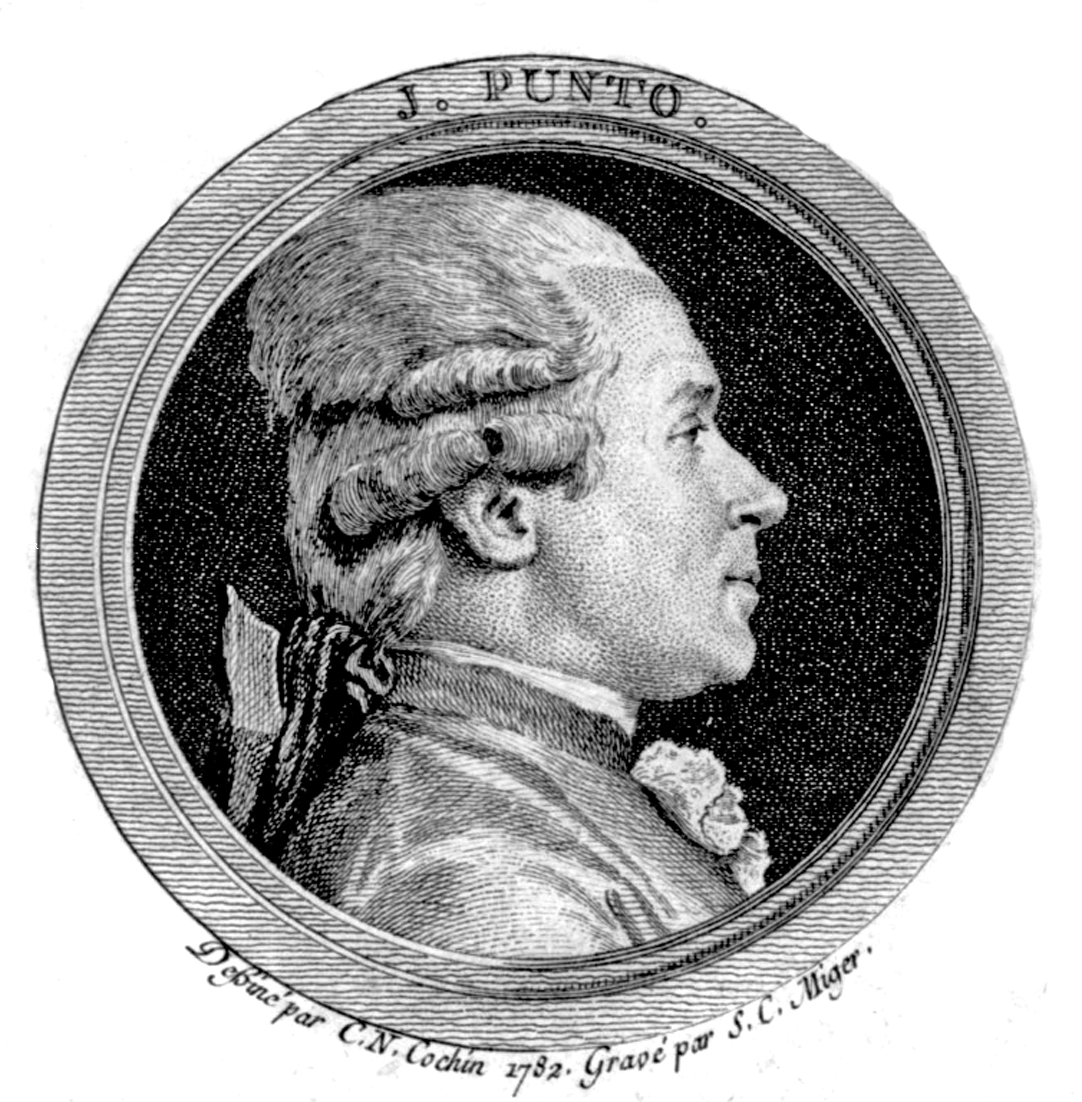
Giovanni Punto, the dedicatee of Beethoven’s Horn Sonata. Artist unknown

Sonata for piano and horn in F major Op.17 (1799-1800, Beethoven aged 29)

1. Allegro moderato
2. Poco adagio, quasi andante
3. Rondo. Allegro moderato

Dedication Giovanni Punto
Duration 15′

Listen

by Ben Hogwood

Background and Critical Reception

Although Beethoven had written a good deal for wind instruments up until now, this was the first time he had written a solo sonata for one. However as horn player Richard Watkins notes, it is ‘typical of Beethoven’s sonatas in that it could easily be described as a piano sonata with a horn obligato.’

There is a definite date for the first performance of this work, given by Czech horn player Jan Václav Stich (better known in Vienna as Giovanni Punto) and Beethoven on the piano at Vienna’s Burgtheater on 18 April 1800 in Vienna. Punto had also played Mozart’s work, so had an impressive musical pedigree. The story runs, however, that Beethoven arrived in Vienna the day before giving a concert with Punto to find a new horn sonata advertised – which he had not yet written! The next day he had completed a horn part, improvising his own role at the piano. The audience warmed to the new music so much that there was a standing ovation and a repeat performance.

There is a cello arrangement of the work, made by Beethoven himself, which falls easily into the stringed instrument’s range. Steven Isserlis, while noting that it is ‘certainly not a profound work’, enjoys the fun as much as the composer himself. ‘This could not be by anybody else’, he says.

Thoughts

The horn begins with a breezy call, to which the piano responds – and then the two engage in lively dialogue, which the piano begins to dominate. Beethoven’s writing is exuberant, sometimes reckless for the piano – no doubt with his audience in mind. The freshness of his invention is clear, the two players pulling back the volume for a soft-hearted second theme in the first movement. There are some lovely rasps from the horn at the end.

Things take a solemn turn for a very short while, Beethoven slipping into the minor key for a plaintive statement from the horn. Rather than a slow movement proper, however, this acts as a short introduction to a fast third movement. This one is a little more poised than the first but still good fun, with Beethoven asking plenty of the horn player with some wide leaps in the melody.

Overall this is a light-hearted piece, which no doubt made a strong impression at its premiere in spite of the haste with which it was written. It’s good fun and not to be taken too seriously!

Recordings used and Spotify playlist

Dennis Brain (horn), Denis Matthews (fortepiano) (EMI)
Hermann Baumann (horn), Stanley Hoogland (fortepiano) (Teldec)
David Pyatt (horn), Martin Jones (piano) (Erato)
Richard Watkins (horn), Julius Drake (piano) (Signum Classics)
Barry Tuckwell (horn), Vladimir Ashkenazy (piano) (Decca)

There are some very fine versions of this piece, with the Tuckwell – Ashkenazy and Pyatt – Jones partnerships standing out as particularly fine. Yet Dennis Brain is in a league of his own, with a superb account matched by Denis Matthews.

You can chart the Arcana Beethoven playlist as it grows, with one recommended version of each piece we listen to. Catch up here!

Also written in 1800 Gyrowetz – Divertissement for piano, violin or flute and cello Op.50

Next up String Quartet in F major Op.18/1

In concert – Stephen Hough, CBSO / Edward Gardner: Saint-Saëns, Mazzoli & Debussy

hough-gardiner

Stephen Hough (piano), City of Birmingham Symphony Orchestra / Edward Gardner

Saint-Saëns Piano Concerto no.4 in C minor Op. 44 (1875)
Mazzoli Violent, Violent Sea (2011)
Debussy La Mer L109 (1903-05)

Symphony Hall, Birmingham
Wednesday 19 May 2pm

Written by Richard Whitehouse

It may have been almost six months since the City of Birmingham Symphony last played to live audiences, but the frisson of expectation was palpable as the orchestra gradually took the stage for this first of nine concerts that, at around an hour’s duration, are being heard at 2pm then again at 6.30. The design of Symphony Hall’s platform makes it possible, moreover, to take out the raised platforms and so accommodate a larger number of musicians than would otherwise be possible in what is (hopefully!) a transitional period out of lockdown. Current restrictions still entail the spreading out of listeners, a small price to pay given the quality of acoustic at almost any point in this auditorium, while the rapid entry and exit procedures also enabled punters to assess the remodelled catering areas in advance of their June reopening.

As conducted by Edward Gardner, this programme featured works by two French composers with more in common than either could have suspected. Saint-Saëns nearly always brings out the best in Stephen Hough, and so it proved in this regrettably rare revival of the Fourth Piano Concerto. Its four sections grouped into two movements (a design the composer returned to a decade on with greater panache if less subtlety in his Third Symphony), the piece touches on aspects of sonata, variation and rondo procedures while its plain-spun material is developed in various and intriguing ways. This plus the close integration of soloist and orchestra often makes for a sinfonia concertante than concerto per se, yet there is no lack of virtuosity such as Hough despatched with alacrity – not least the cascading passagework in the final Allegro.

Saint-Saëns and Debussy evinced no mutual esteem, but as the former integrated symphonic elements into his concerto, so did the latter in his ‘three symphonic sketches’ which comprise La Mer. Here the CBSO came into its own, not least in the purposefully contrasted sequence of From Dawn to Midday on the Sea with its crepuscular writing for solo wind and divided strings through to a climactic chorale of visceral immediacy. Perhaps interplay of timbre and texture in Games of the Waves could have been more deftly handled, but Gardner exerted a firm grip over its course then drew real pathos from the final bars. He also found a persuasive balance between the volatile and poetic aspects in Dialogue of the Wind and the Sea, while maintaining steady momentum as issued forth in the chorale on its proudly affirmative return.

Between these works, Violent, Violent Sea by the highly regarded American composer Missy Mazzoli elicited a wholly different response as to its marine concept. Here it is the constant yet rarely insistent melding of translucent harmonies and pulsating rhythms (stemming from marimba and vibraphone) as underpin this music; the sustaining of whose atmosphere is the keener for its succinct duration. The ranging of its relatively modest forces across the extent of the platform also made for rather greater impact than might otherwise have been the case. It certainly added to the attractions of a programme which launched this series of concerts in impressive fashion. The CBSO returns next Wednesday with Nicholas Collon at the helm for a sequence that ends with the uncompromising defiance of Shostakovich’s Fifth Symphony.

For further information about the CBSO’s current series of concerts, head to the orchestra’s website

For further information about Missy Mazzoli, click here