Live review – Henry Goodman, English Symphony Orchestra / Kenneth Woods: The Art of Storytelling – Lubin from Chelm

David Yang (above, music), Alisa Snyder (illustrations) Henry Goodman (narrator), English Symphony Orchestra / Kenneth Woods

Wyastone Concert Hall, Monmouth
Friday 4 December 2020 (online)

Written by Richard Whitehouse

Following on last week’s arresting version of The Ugly Ducking, the English Symphony Orchestra continues its series of pieces for virtual storytelling in the guise of an old English tale here given an inimitably Jewish twist to result in the ‘morality’ fable Lubin from Chelm.

While the tale of Lazy Jack might hardly have seemed other than an English story, it works well when relocated within Ukrainian Jewish environs then decked out with Yiddish turns of phrase and Klezmer stylings. The anti-hero Lubin – put to work only at the prompting of his aging mother, who is incapable of holding on to his wages, but who enchants the daughter of Chelm’s wealthiest family – could be interpreted in various ways; that of fortune smiling on those who least expect it, yet are by no means the least deserving, is the most straightforward.

Henry Goodman certainly makes the most of this barbed whimsy, relating the narrative with audible enjoyment as he assumes the role of Yiddish storyteller with aplomb. He is abetted by David Yang’s direct and characterful score, engagingly conducted by Kenneth Woods (who undertook the expert orchestrations) and illustrated by Alisa Snyder with a true appreciation of what line drawings are capable of conveying in this context. A few linguistic ‘curve-balls’ are thrown in, without detracting from the self-effacing directness of the unfolding narrative.

The ESO musicians (shots of whom alternate with the illustrations) play with their customary skill and sensitivity, and the whole production ought to amuse as well as provoke children and adults alike. As usual with ESO, a range of supporting material enhances the total experience.

You can watch the concert on the English Symphony Orchestra website here

For more information on the English Symphony Orchestra you can visit their website here

For information about Auricolae, visit Kenneth Woods’ website here

Listening to Beethoven #96 – Wind Quintet in E flat major


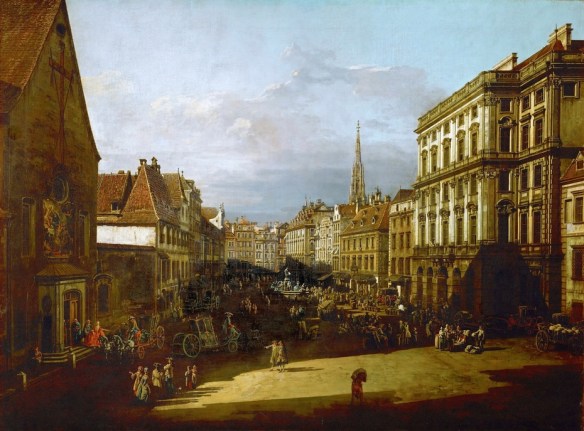
Vienna, Panorama from Palais Kaunitz by Bernardo Bellotto (1759)

Quintet in E flat major Hess 19 for 3 horns, oboe and 2 bassoons (1796, Beethoven aged 25)

1. Allegro
2. Adagio maestoso
3. Minuetto

Dedication unknown
Duration 15′

Listen

Background and Critical Reception

Beethoven’s preoccupation with wind instruments continues with this incomplete quintet, written for the unusual combination of three horns, oboe and bassoon. The unfinished work sits in three movements, the bones of which were seemingly sketched out in 1796 or 1797. The first movement autograph score begins at bar 158, the second movement is complete but only a fragment of the third, a Minuet, remains.

Keith Anderson, writing in the booklet notes for Naxos’ recording of the Quintet, details how the first movement was reconstructed by Leopold Zellner and first played in 1862, while the celebrated Beethoven scholar Willy Hess edited the work for publication. In its surviving form it is top heavy, with a first movement more than double the length of the second and third combined.

Thoughts

We are once again in E flat major, Beethoven’s ‘key of choice’ for wind instruments – and his most-used up until now. The colouring is slightly different here though, the full-bodied horns dominating in a largely mellow texture, until the oboe pokes its head above the parapet. The melodic material is less distinctive than the preceding Sextet but is pleasant all the same.

The slow movement stays in the ‘home’ key and again has lovely sonorities but feels lacking in the craft a finished version from the composer would surely have brought. A perky Minuetto tails off all too soon.

Recording and Spotify link

Jeno Keveházi, János Keveházi, Sándor Berki (horns), Ottó Rácz (oboe), Jozsef Vajda (bassoon)

A nicely balanced account from the Hungarian soloists, recorded by Naxos in Budapest in 1994.

You can chart the Arcana Beethoven playlist as it grows, with one recommended version of each piece we listen to. Catch up here!

Also written in 1796 Boieldieu Duo no.2 in B flat major for harp and piano

Next up Erlkönig

Listening to Beethoven #95 – Sextet in E flat major Op.71


Mehlmarkt in Vienna by Bernardo Bellotto (1758)

Sextet in E flat major Op.71 for 2 clarinet, 2 bassoons and 2 horns (1796, Beethoven aged 25)

1. Adagio – Allegro
2. Adagio
3. Menuetto quasi allegretto
4. Rondo. Allegro

Dedication unknown
Duration 21′

Listen

Background and Critical Reception

Beethoven wrote his Sextet for an established combination of clarinets, bassoons and horns – two of each – in 1796. However it appears not to have been performed until 1805, at a concert for the benefit of his violinist friend Ignaz Schuppanzigh, and another five years elapsed until it was published.

Reviewing the benefit concert, Allgemeine musikalische Zeitung spoke of ‘lively melodies, unconstrained harmonies, and a wealth of new and surprising ideas.’

When handing it over to his publisher, Beethoven is said to have described it as ‘one of my earlier works, written in one night, and one can only say that it is written by an author who has brought out at least some better works’.

The quick composition time explains the fluent writing through four traditional movements, Beethoven thinking in a form that would please Viennese audiences.

Thoughts

The Sextet starts with what feels like a very basic introduction, a slow and simple statement of the notes of the E flat triad. From these less memorable beginnings comes a first movement of charm, rooted in the dance – which the bassoons are intent on reminding us about with a spring in the step of their accompaniment. Burbling clarinets help the inner workings as the piece trips along, the sonority of the ensemble in itself a lovely tonic to the ear. Beethoven gradually develops his material, moving to keys further afield, before reasserting E flat with the jauntier fast theme.

The slow movement is lovely, giving the bassoon an unusual prominence for its songlike first them, echoing the male baritone voice. The Menuetto brings the horns forward, and is more staccato in tone as a result, with a central trio section of lovely colours that is the ideal complement. Finally a Rondo, easy on the ear, makes the most of ensemble teamwork with its busy exchanges.

Recordings used and Spotify links

Academy of St. Martin-in-the-Fields Chamber Ensemble (Philips)
Scottish Chamber Orchestra Winds (Linn)
L’Archibudelli (Sony Classical)
Gerd Seifert, Günter Piesk, Henning Trog, Karl Leister, Manfred Klier, Peter Geisler (Deutsche Grammophon)

Some very fine performances here. The ASMF winds are immaculate, and so too are the Scottish Chamber Orchestra ensemble, who benefit from Linn’s superb recording. L’Archibudelli, playing on period instruments and a slightly lower pitch, have a coarser sound that proves every bit as enjoyable as their modern counterparts. The starry team of soloists from the Berlin Philharmonic on DG are not as consistent with their use of Beethoven’s repeated sections.

The Spotify playlist below collects the recordings used:

You can chart the Arcana Beethoven playlist as it grows, with one recommended version of each piece we listen to. Catch up here!

Also written in 1796 Haydn Trumpet Concerto in E flat major Hob. VIIe/1

Next up Quintet for wind in E flat major H19

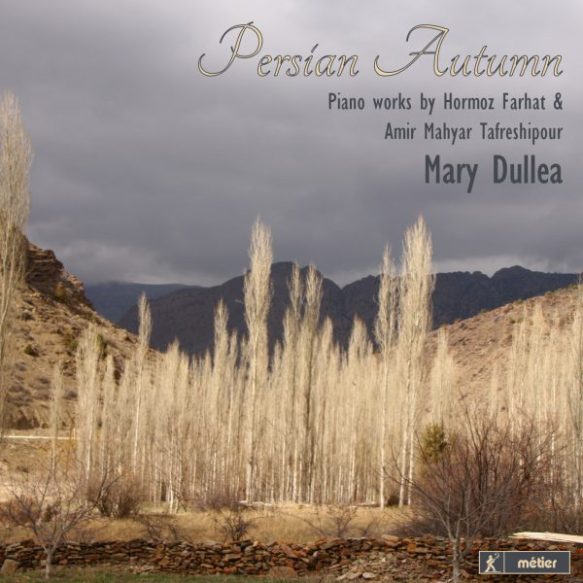
On record – Persian Autumn: Mary Dullea plays piano music by Farhat and Tafreshipour (Métier)

Mary Dullea (piano)

Farhat
Toccata (1952)
Piano Sonata no.1 (1955-7)
Piano Sonata no.2 (2010)
Tafreshipour
Yasna (1999)
Pendar (2013)
Shabahang (2017)
Celebration at Pasargadae (2006)

Métier MSV28610  [72’32”]

Producers Adaq Khan, Amir Mahyar Tafreshipour

Recorded 20-21 December 2019 at Menuhin Hall, Cobham

Written by Richard Whitehouse

What’s the story?

The always enterprising Mary Dullea releases an album of piano music by Iranian composers of the older and middle generations, both having been acclaimed on either side of the Atlantic for their highly contrasted yet equally imaginative amalgam of Eastern and Western sources.

What’s the music like?

Hormoz Farhat (b1928) received his musical education in the USA and has resided in Ireland over four decades. Composing in all the main genres, he has also researched extensively into the Persian modal system, whose influence is evident throughout those works of his maturity.

Premiered by pianist and composer Alexander Tcherepnin, Toccata is among Farhat’s earliest acknowledged works – its alternating declamatory and ruminative manner resulting in music whose virtuosity gained widespread attention. Farhat was fortunate in his exponents, the First Piano Sonata being premiered and advocated by his teacher Lukas Foss – doubtless attracted by its formal rigour and tensile emotional trajectory. A restive opening Allegretto is followed by a subdued if hardly serene Adagio then a Moderato that quizzically elides between scherzo and intermezzo, before the final Rondo draws on motivic elements from earlier movements in its oblique while purposeful course toward the peremptory close. Coming over a half-century later, the Second Piano Sonata is more expansive but never unfocussed in its conception. The initial Allegretto outlines without articulating a sonata design, in what feels closer to a freely unfolding fantasia, then the central Largo yields an improvisatory and often confessional aura, countered by the final Animato in waves of tension and release on the way to a pensive close.

Having pursued musical studies in Esbjerg and London, Amir Mahyar Tafreshipour (b1974) has written a significant amount of chamber and instrumental music – as well as the first harp concerto by an Iranian composer. Recently, he has turned his attention to the operatic domain.

The four pieces recorded here attest to their composer’s acute sense of evocation and formal cohesion. Yasna refers to the Zoroastrian act of worship over an intensifying span as is both hieratic and incantatory, while Pendar – a term implying ‘thought’ and which is also the title of a series of pieces for solo instruments – unfolds as though a stream of consciousness that plays on listeners’ expectations in numerous and intriguing ways. Its title meaning ‘nocturne’, Shabahang was inspired by the crashing of waves against the coasts of the west of Ireland as also the south-east of Iran; its encroaching remoteness finding contrast with the often festive spirit, tempered by more contemplative aspects, of Celebration at Pasargadae – whose outer sections finding this composer at his most emotionally outgoing and uninhibitedly virtuosic.

Does it all work?

Yes, given the highly differentiated yet inherently personal manner by which both composers channel aspects of their heritage via overtly if never inflexibly European means. It helps that Dullea is so attuned to the musical idioms of these composers as also their technical demands.

Is it recommended?

Indeed. Sound is a little hard in more forceful or energetic passages, while remaining clear and well balanced throughout. Notes on each of these pieces are succinct but informative, and this is music which inquiring listeners and pianists alike should certainly find worth investigation.

Listen & Buy

You can get more information on the disc at the Divine Art website, where you can also purchase the recording. Meanwhile for more information on Amir Mahyar Tafreshipour, head to the composer’s website. For more on Mary Dullea click here

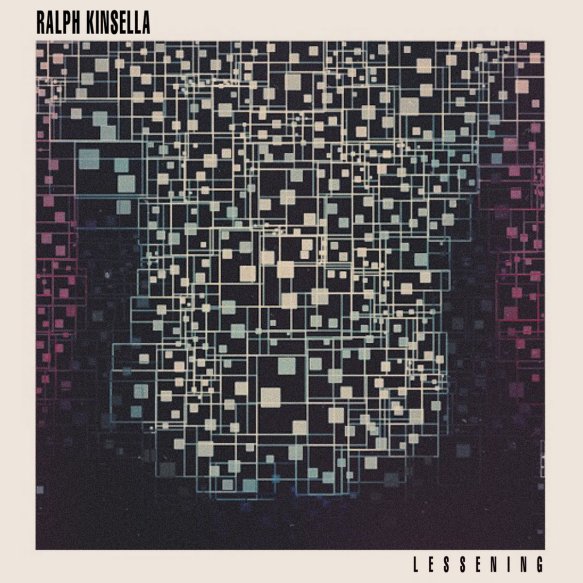
Switched On – Ralph Kinsella: Lessening (8D Industries)

reviewed by Ben Hogwood

What’s the story?

If you are a home producer you will immediately relate to the thoughts behind Ralph Kinsella’s debut album Lessening. Kinsella refers to ‘the poetics of the bedroom’, capturing the intimacy of our most private room for listening to and creating music.

The confined space is the stimulus for the ten tracks of Lessening, all recorded through lockdown in Kinsella’s Dumfries and Galloway. He talks of ‘the boondocks, interspersed with fragments of debris and flickering housing scheme street lights.’

What’s the music like?

Lessening is a set of ten tableaus with varying degrees of ambience and animation. Kinsella’s guitar is the main instrument, but he uses it sensitively among more ambient effects that often give a much bigger sound picture.

The subtly varied guitar sounds provide close up attention to detail or far off wisps of colour, and when the two elements come together, as they do in The Angel Of Raasay, the listener has the feeling of becoming airborne, especially with the ambient surrounds on headphones. That feeling is heightened on In The In-Between Light, where the music soars overhead on a bank of slowly changing effects, panning out to even wider vistas.

On the darker side the slow moving Suffuse has a similarly wide picture to go with its brooding harmonic backdrop, while the expansive Lung Noise, the album’s emotional centre, is similarly introspective but has a lovely mixture of cloudy keyboards to complement the bowed instrument in the foreground.

The layers of white noise laced around T(h)reads work as a comforting blanket, an explicit suggestion of shoegaze acts such as Slowdive, while Born On The Cusp works well with widescreen reverberation. Conversely the studied ambience of Gallows Hill has beautiful details for the ear to focus in on, with intricately picked guitar and woozy atmospherics working together.

Does it all work?

It does, because the structure of Lessening is ideal, giving the music a natural ebb and flow. Kinsella creates a winning mixture of blurred forms and much more studied portraits, portraying both the intimacy of the bedroom where the music will have been made but also the Dumfries and Galloway vistas outside.

Is it recommended?

Very much so. Any lovers of 1990s shoegaze will find much to dive into here, but so will those admiring more recent, post-classical efforts from the likes of Nils Frahm or A Winged Victory For The Sullen. It will be interesting to see what Kinsella turns his guitar to next, for his form of localized ambience creates memorable images of both time and place.

Stream

Buy