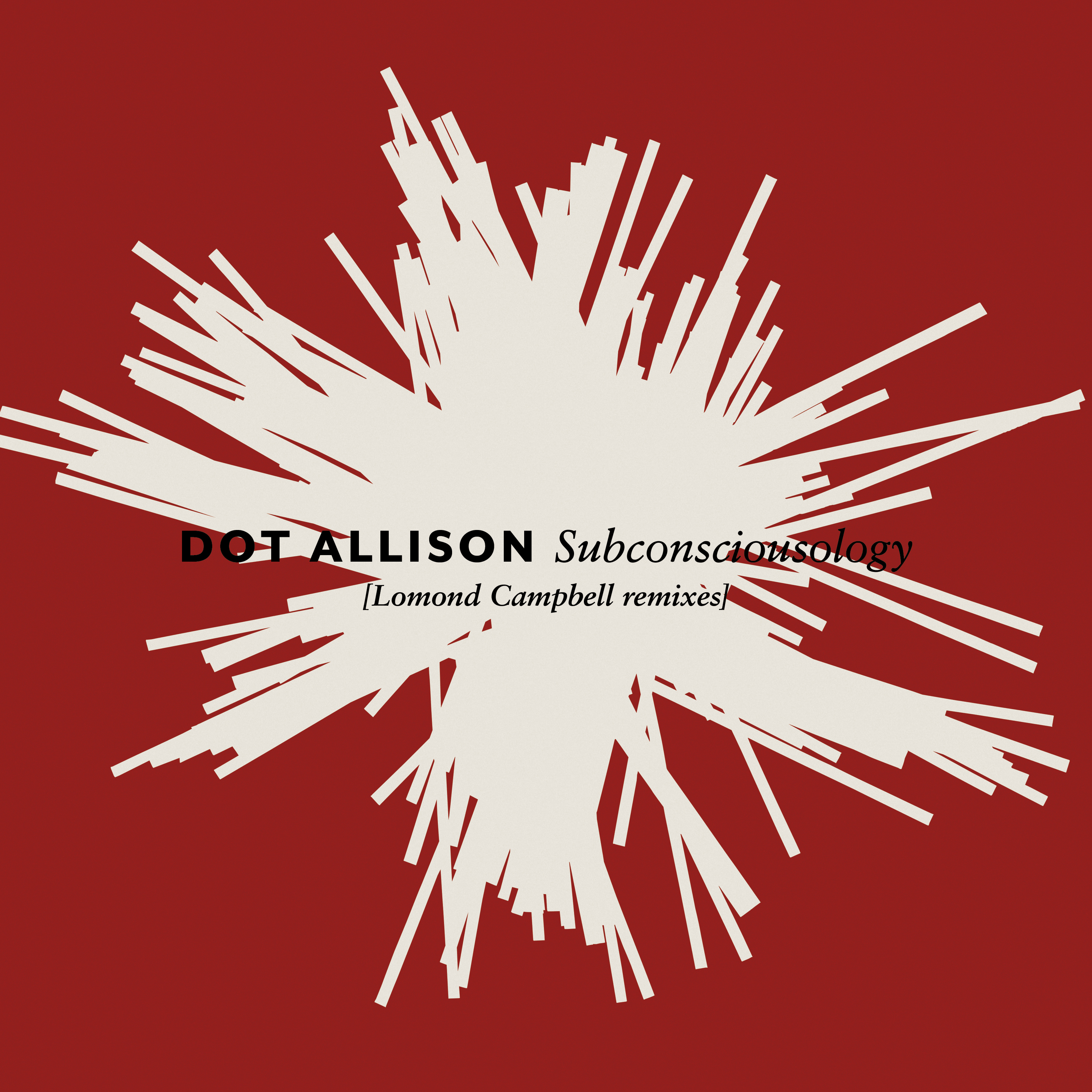
Switched On – Carl Craig: Landcruising (Expanded Edition) (Cherry Red)

by Ben Hogwood

What’s the story?

The durability of techno as a form of music is emphasized by the fact that some of the landmark albums in its recent history are reaching significant landmarks. Carl Craig’s Landcruising is one such long player, the Detroit producer’s debut album, originally released on Blanco Y Negro, clocking up 30 years in the game. In a sense the album is a response to classic electronic travel albums such as Kraftwerk’s Trans Europe Express, but was apparently conceived as a soundtrack to driving round his home city of Detroit.

What’s the music like?

Thirty years old it may be, but Landcruising still has the air of the future about it. He achieves this through a combination of movement and serenity that gives the music a rarefied light. Mind Of A Machine has a distinctive snare drum pattern and floating synths, while a free form jazz makes itself known over the contours of Science Fiction, along with a subtle homage to Jean-Michel Jarre.

Technology is more imposing, a little bit threatening even, as is Landcruising itself, though both capture the movement and ever-changing panorama of the window views. Meanwhile Einbahn’s minimal profile and the urgency of They Were are also captivating. Although some of the rhythms are forward and dominating there is also an intricacy at work in Craig’s compositions, the music carefully and delicately shaded at times.

As bonus material there are four added mixes of Science Fiction, with a particularly good contribution from Kenny Larkin, and some evocative notes in suitable font from Bill Brewster, whose note – “the point is not the destination but the journey” – sums the album up perfectly.

Does it all work?

It does. The idea that techno could not create music of meaning or emotion is never further from the truth than it is here.

Is it recommended?

It is – one of the essential documents in Detroit’s storied musical history, and a landmark album in the history of techno. It sounds as modern as it ever did!

Listen / Buy

For more information, head to the Cherry Red Records website

Published post no.2,619 – Thursday 7 August 2025

On Record – Various Artists: Histoire De Couer (Caroline True Records)

by Ben Hogwood

What’s the story?

In the words of the press release:

France-the 1980s. A local radio and studio system almost unsurpassed in Europe – add brilliantly inventive labels and producers with a sense of fun & adventure & the result?

A golden age of Synth-Pop – Post-Disco..inventing the future…celebrating the chanson of the past. Updating that for a new generation & a new dancefloor. Virtually neglected until now – only the heads knowing…

Presented in the classic 45 (Quarante Cinq) 7″ format – the way that these great records were produced for the radio & were meant to be heard at that moment. Curated & with sleeve notes By John Kertland Of CTR, in English and French.

Now, the “savoir” is yours also. Hard to find 7″s by elusive artistes…Tangui/Kelly Way/Generation Egoiste & More…Glorious vocals ,soaring synths and irresistible basslines it’s all here ..

Bon écoute !

What’s the music like?

Tres bien! There is a lot of fun in store here, with some brilliantly bonkers synth pop, bursting with tunes and good vibes. The title track from Corinne Tell gives us a flavour of what to expect, before the brilliantly mad chorus of Fabienne Stoko’s Poupee.

Valene’s Sauve Moi has a great riff, while Tangui’s Amour Combat has a big chorus Kim Wilde would be proud of. Generation Egoiste (Tout Tout D’Suite) Egoiste is a lot of fun, from Generation Egoiste, while Kira’s Vacances A Deux is an appealing and humourous quicker disco march. The compilation signs off with Nani Antoni’s excellent Faites Vos Jeux.

Does it all work?

It does. There are some rough edges here, too, which only add to the listening appeal.

Is it recommended?

Enthusiastically. Loads of smiles and good times to be had with this compilation! Packed with riffs and a lot of dance appeal.

For fans of… Desireless, Brigitte Bardot, Imagination, Shakatak

Listen / Buy

Published post no.2,618 – Wednesday 6 August 2025

In concert – Soloists, BBC Symphony Chorus & Orchestra / Hannu Lintu @ BBC Proms: Mahler Das klagende Lied & Boulez Rituel in memoriam Bruno Maderna

Natalya Romaniw (soprano), Jennifer Johnston (mezzo-soprano), Russell Thomas (tenor), James Newby (baritone) Carlos González Nápoles (treble), Malakai Bayoh (alto), Constanza Chorus, BBC Symphony Chorus, BBC Symphony Orchestra / Hannu Lintu

Boulez Rituel in memoriam Bruno Maderna (1974-75)
Mahler Das klagende Lied (1878-80)

Royal Albert Hall, London
Tuesday 4 August 2025

Reviewed by Richard Whitehouse Photos (c) BBC Proms (from the festival’s uncredited Facebook upload)

Boulez and Mahler may not seem an obvious coupling, until one recalls the would have-been centenarian regularly conducted all the latter’s major works including that heard tonight – as well having made the first recording of its original three-part version more than 55 years ago.

When it appeared in 1975, Rituel in memoriam Bruno Maderna was thought something of an anomaly in Boulez’s output – its hieratic aura and structural (if never literal) use of repetition a homage more to his teacher Messiaen than his late colleague who, revealingly perhaps, had grown disenchanted in the avant-garde project of the post-war era. To which this work might seem an envoi – one eschewing any trace of nostalgia as it pursues its inevitable course from the response of the individual to that of the collective then (almost) returning to the singular.

Outwardly Rituel unfolds a series of litanies from one to seven players and refrains for a 14-piece brass ensemble, but such distinctions increasingly merge towards its mid-point so that its latter half is an intricate mesh of overlaid textures, moving around those groups arrayed on stage. Maintaining audible balance is crucial – in which respect, Hannu Lintu succeeded admirably, as in pacing the overall sequence (memory recalls Boulez as opting for a discreet acceleration across the later stages) so its ending conveyed arrival though hardly fulfilment.

What marked a crucial juncture for Boulez was no less evident, almost a century before, for Mahler. The virtual absence of any previous music only makes Das klagende Lied the more remarkable for conveying the essence of what its composer, barely out of his teens, went on to achieve. At this time, he aspired to opera and though this cantata was never envisaged for staging, its scenic evocation and its dramatic immediacy suggest that, had he been awarded the 1881 Beethoven Prize for his entry, his creative priorities could have been very different.

The work has fared well at the Proms, this being its seventh hearing and the third to use the edition of the original version that restores the first of its three parts and enables the latter to be heard as conceived, thereby making musical as well as dramatic sense. A leisurely course through Waldmärchen enabled Lintu to highlight the motivic richness of its prelude, and if the alternation of solo verses with choral refrains felt a little stolid, the latter stages with the discovery of the flower, the fratricide and a desolate postlude were consummately rendered.

With its anticipations of later Mahler (via Wagner and Bruckner), Der Spielmann is the most characteristic part as it pivots deftly yet pointedly between genial whimsy and ominous dread. That this latter gains the upper hand with discovery of the ‘singing bone’ is offset by the blaze of glory with which Hochzeitstück begins; the offstage orchestra – head to advantage in the gallery – underpinning an increasingly desperate course of events as the fratricide is revealed and the wedding descends into mayhem, with deathly stillness pervading those final minutes.

There was some persuasive solo singing, notably Jennifer Johnston who carries the primary narrative thread; Russell Thomas was fervent if slightly strained and James Newby warmly eloquent, with Natalya Romaniw conveying real dramatic acuity. Treble and alto roles were poignantly taken, while Lintu drew an assured response from sizable choral and orchestral forces – the latter’s quartet of harps assuming a concertante role in an orchestration whose encompassing of dramatic impetus and intimate reflection is already that of Mahler alone.

Playing for around 70 minutes, Das klagende Lied seems as rich in incident as any Mahler symphony; not all of which, whatever their greater stylistic assurance or maturity, feature a conclusion as spine-tingling as this – and one which certainly drove its point across tonight.

You can listen back to this Prom concert on BBC Sounds until Sunday 12 October – or listen to recordings of the two works conducted by Pierre Boulez on Tidal here

Click on the artist names to read more about the Constanza Chorus, BBC Symphony Chorus and BBC Symphony Orchestra, conductor Hannu Lintu and soloists Natalya Romaniw, Jennifer Johnston, Russell Thomas and James Newby. Click also for more on the BBC Proms

Published post no.2,617 – Tuesday 5 August 2025

Summer music – Delius: Summer Evening

In an attempt to reclaim summer in Western Europe, as it seems to have temporarily disappeared, here is a warm-hearted piece from Delius to take the edge off Monday evening:

Published post no.2,616 – Monday 4 August 2025

In concert – Three Choirs Festival: Three Choirs Festival Chorus, Philharmonia Orchestra / Adrian Partington – Howells Hymnus Paradisi & Bliss Mary of Magdala

Rebecca Hardwick (soprano), Dame Sarah Connolly (mezzo-soprano), Michael Bell (tenor), Malachy Frame (baritone), Three Choirs Festival Chorus, Philharmonia Orchestra / Adrian Partington

Howells Paradise Rondel (1925)
Bliss Mary of Magdala (1962)
Howells Hymnus Paradisi (1936-38)

Hereford Cathedral
Wednesday 30 July 2025

Reviewed by Richard Whitehouse Photos (c) Dale Hodgetts (Dame Sarah Connolly, Festival Chorus), James O’Driscoll (Hereford Cathedral, Rebecca Hardwick, Adrian Partington)

Interesting that all three works comprising this concert were premiered at the Three Choirs in Gloucester or Worcester but they were, for the most part, admirably suited to the less opulent while always spacious ambience of Hereford Cathedral in what was a welcome retrospective.

Upsurge of Arthur Bliss performances in this fiftieth anniversary of his death continued with Mary of Magdala, essentially a cantata albeit with an element of operatic scena in the intense characterization of its title-role. Compiled by Christopher Hassall (the last collaboration with Bliss before his untimely death), its text finds Mary approaching the sepulchre where Christ’s body has been placed after crucifixion only to find it gone – Christ having assumed the guise of a gardener who bestows his blessing upon this most maligned yet most loyal of his circle.

The main part was given by Dame Sarah Connolly (above) with her customary fervour and insight, not least in the final stages after recognition when the music exudes a radiant gentleness rarely, if ever, encountered in Bliss hitherto. Malachy Frame drew an understated strength from the brief yet crucial role of Christus, but excessively large choral numbers rather compromised the relative intimacy of the music. Not that it seriously undermined the conviction of a timely revival for what is one of the least known though inherently personal among the composer’s later works.

It stayed under-wraps for over a decade after completion, but Hymnus Paradisi has long been the best known of Herbert Howells’s larger pieces and something like a ‘sacred text’ in Three Choirs culture. Written after the death of the composer’s son, it is avowedly music within the English choral tradition; not least that Gerontius-like aura of a Preludio (actually written last) whose yearning theme pervades what follows. The Requiem aeternam further intensifies such introspection, and if a setting of Psalm 23 tends towards the discursive, even generalized, that of Psalm 121 has a rapture that builds on an effervescent Sanctus in what is the most arresting section. A ruminative setting from The Burial Service precedes the impulsiveness of that from Salisbury Diurnal, with the return of the Requiem aeternam bringing about a fatalistic repose.

Something of a staple at these festivals it might be, Hymnus Paradisi is never an easy work to sustain in performance and tonight’s was a notable though not unqualified success. The vocal parts were well taken, Rebecca Hardwick’s occasional shrillness ostensibly a price to be paid for surmounting those often dense choral textures and Michael Bell making up for in accuracy what he lacked in personality. The sizable orchestral forces of the Philharmonia proved more than equal to the task, not just of balancing but in opening-out the expressive power of choral writing where the Three Choirs Festival Chorus was wholly in its element. Adrian Partington secured an interpretive focus that gained in conviction as the performance unfolded, making for an account which underlined the strengths yet also the weaknesses of this singular work.

It was the earlier and uninhibited Howells which ushered in proceedings. With its translucent orchestration and, at times, almost concertante-like piano part, Paradise Rondel makes for as irresistible a curtain-raiser as it no doubt was evoking that Cotswold hamlet of a century ago.

Published post no.2,615 – Sunday 3 August 2025