Switched On – Special Request: Offworld (Houndstooth)

reviewed by Ben Hogwood

What’s the story?

Paul Woolford’s third album of the year under the Special Request moniker attempts to answer a question. What if Jam & Lewis signed to Metropolis?

The thought of one of soul music’s finest production duo hanging out with Juan Atkins at the beginning of another era in Detroit musical history in the mid-1980s is an irresistible one, and Woolford’s ambitious attempt to bring the combination to life is what powers Offworld.

What’s the music like?

There are seven expansive tracks, mostly instrumental and rich in analogue colour, put together with Woolford’s trademark instinctive approach.

Immediately it finds the sweet spot with the booming bass, analogue highs and strong vocal of 237,000 miles. More typical of the album are the vast spaces evoked by Offworld Memory 3. Front Screen Projection looks back to Jean Michel Jarre with its synth sound and riff, but forward with its no-nonsense breakbeat, while Arse End Of The Moon, a classic Woolford title, has sharper sounds and clattering, big beat percussion. Morning Ritual is also a lovely track, a brooding instrumental, before a rather fine remix of The Grid’s Floatation, signing off with an affectionate quarter-hour of expansive ambience and a nicely done retro beat.

Does it all work?

Once again – yes. Woolford never pads his albums out too much, either in texture or duration, so while Offworld is not much longer than an extended EP without the Grid remix, it works brilliantly well.

Is it recommended?

Yes indeed – as much as the first two albums of this year’s crop did. Paul Woolford is on a roll right now and it’s up to us to keep up!

Stream

Buy

Floating Points releases new album ‘Crush’

For the first time in four years, Floating Points – aka Sam Shepherd – is releasing an album.

For those who love to anticipate a book on the strengh of its cover, Crush looks like it will be a remarkable listen indeed. The signs are good, too – with three peaks of swirling electronica already made available in the last few months. These were capped by Anasickmodular, whose video Shepherd posted a couple of days ago:

The highly acclaimed video for Last Bloom is full of colour, reflecting the accelerated growth of the music:

Meanwhile LesAlpx gets straight down to action with an urgent beat, its video a set of some of the most colourful bubbles you could imagine:

If they take your fancy, head to the Floating Points Bandcamp site to explore the album further.

As a companion piece, Shepherd’s contribution to the Late Night Tales compilation series is highly recommended – a chance to broaden your mind with some after hours treats!

Switched On – Conforce: Dawn Chorus (Delsin Records)

reviewed by Ben Hogwood

What’s the story?

Conforce is the work of Dutch producer Boris Bunnik, who comes from the island of Terschelling, near Rotterdam. He has a good deal of previous in electronic music, working under the Versalife and Severnaya pseudonyms. This is his fifth album for the Delsin label.

Previous Conforce albums have included references to AI and machine learning, but retain their personal edge through Bunnik’s more ambient dressing and the packaging, which often includes his own photography.

What’s the music like?

Dawn Chorus moves at two different speeds. The foreground is rich with percussion, with rolling breakbeats that generate plenty of energy. This gives the music much more of a human element, ensuring it doesn’t sound too processed. Behind all the rhythmic activity sit slow moving sets of chords, subtly changing shape like clouds in the sky or mist over a lake.

Throughout there are references to the role of electronics in everyday life, with chattering loops and bleeps. Marooned feels remote in spite of its squelchy bass, while Axis Perpendicular packs more of a bunch with its offbeat breaks. Avoid is roomy and heavily percussive, while iO also has increased activity. Void and Umbra are both excellent tracks, the latter taking on an eerie edge by the end.

Does it all work?

Yes. Without being too ground breaking, Conforce has a style that is immediately identifiable and extremely listenable. With ambience and energy combined his is a style that works on two different levels for Dawn Chorus.

Is it recommended?

Yes. Anyone following the Delsin label will want to get involved, as it maintains their quality-rich approach.

Stream

Buy

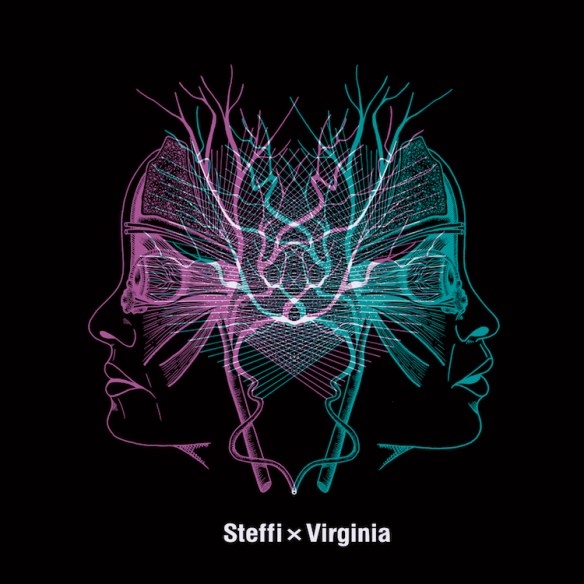
Switched On – Steffi x Virginia: Work A Change (Ostgut Ton)

reviewed by Ben Hogwood

What’s the story?

Steffi & Virginia have been regular collaborators ever since 2011, when their vocal track Yours surfaced on the Ostgut Ton label. I use the term ‘Vocal track’ rather than ‘song’ advisedly, because the two DJs and vocalists find that their vocal work complements the instrumental craft, the two elements becoming inseparable.

Eight years on and their musical chemistry remains, sparking eight track EP Work A Change.

What’s the music like?

Every bit as vital as the pair’s first work. Steffi x Virginia, as the name implies, are an incredibly cohesive unit, finishing each other’s musical sentences on tracks that exist somewhere between techno, electro and pop. They manage to satisfy the elements of each style while being difficult to pin down to a single genre.

Beats bubble below the surface while cool keyboards float above on Be True To Me, which kicks in with a catchy chorus, while the two standouts Help Me Understand and Work The Change have a great sense of urgency. Both exist in instrumental form to show just how good they are.

Sight From Above, meanwhile, has a closer harmony which leads to a warmer sound, while Until You’re Begging has a conversational style over a busy beat. Only Internal Bleeding doesn’t quite hit the spot, though the harmonies are as effective as ever.

Does it all work?

Yes, because the blend of processed electronica with a freedom of spirit is irresistible. Work A Change, Help Me Understand and Be True To Me are big hitters that repay many repetitions (from experience!)

Is it recommended?

Without hesitation. These two spark off each other to brilliant effect, and the natural creation of this album has led to some brilliant vocal and instrumental sparring. It brings forward high quality music with energy and positivity.

Stream

Buy

Wigmore Mondays – Barry Douglas & Borodin Quartet – Shostakovich: Piano Quintet

Barry Douglas (piano, above), Borodin Quartet [Ruben Aharonian and Sergei Lomovsky (violins), Igor Naidin (viola), Vladimir Balshin (cello)] (below)

Wigmore Hall, Monday 14 October 2019 (lunchtime)

You can listen to this concert on the BBC Sounds app here (opens in a new window)

Review and guide by Ben Hogwood

For the 2019-20 season many of the BBC Radio 3 lunchtime concerts at the Wigmore Hall have taken on a playlist appearance. This all-Russian programme was no exception, with Tchaikovsky miniatures acting as a prelude to Shostakovich’s most successful chamber work, the Piano Quintet.

Tchaikovsky‘s The Seasons are a lovely set of miniatures for piano, characterising each month of the year rather than the four seasons. Barry Douglas, who has recently recorded the cycle, clearly holds the collection dear, and his accounts of March (the Song of the Lark) and October’s Autumn song were haunting and thoughtful by turn.

The Borodin Quartet followed with Tchaikovsky’s famous Andante cantabile for strings. The previous week they had given it in context, the second movement of four in the composer’s String Quartet no.1 in D major Op.11, where it is most effective. Here the silvery, muted textures were lovely, and the central section evoked a light dance, but the work’s placement felt constricted knowing the main act was still to come.

All that was emphatically put to bed by a storming performance of the Shostakovich Piano Quintet, as authentic an account as you could wish to hear. The first incarnation of the Borodin Quartet worked closely with the composer on many of his string quartets, and they performed the quintet with the composer on several occasions. The first-hand experience of their predecessors has not diluted the intensity of the experience in transition, and this was a searing account of one of 20th century chamber music’s most powerful utterances.

The Prelude (20:36) and Fugue (25:27) dovetailed beautifully, the former section imposing and powerfully wrought, the latter gathering a mood of grim resilience as the elements of its theme became ever more closely interwoven. This carried through to the outburst that is the Scherzo (35:28). Here Douglas came to the fore, striking the octaves in the upper right hand with shrill clarity, the quartet responding in kind as the textures veered towards the orchestral.

A graceful Intermezzo (39:12) was deeply poignant, the combination of bittersweet violin and simple plucked cello affecting from the outset. Emotions bubbled just under the surface throughout this movement, threatening to break loose at any moment. As the music slipped effortlessly into the finale (45:17) it shifted up a gear, with time for another big theme (46:35) before navigating to the calmer waters of the coda, where resolution was finally found in spite of the slightly ghostly string tone.

This was a tremendous performance, with every ounce of feeling communicated to the audience, occasionally at the expense of tuning in the upper violin area but with an unwavering intensity. The audience loved the repeat of the Scherzo as an encore.

Repertoire

This concert contained the following music (with timings on the BBC Sounds broadcast in brackets):

Tchaikovsky The Seasons Op.37a: March (2:00), October (4:31) (Barry Douglas solo)
String Quartet no.1 in D major Op.11, Second movement (Andante cantabile) (11:12) (Borodin Quartet)
Shostakovich Piano Quintet in G minor Op.57 (1940) (20:36) (Barry Douglas, Borodin Quartet)

Further listening

You can hear the music from this concert on the Spotify playlist below, containing recorded versions by the artists. The Borodin Quartet released Shostakovich’s Piano Quintet with pianist Alexei Volodin for Decca in 2018 – and here it is prefaced by one of the group’s several recorded versions of the Andante cantabile. Barry Douglas’s Tchaikovsky is part of an album of the complete cycle of The Seasons:

Another Russian chamber music powerhouse can be heard below. Tchaikovsky’s Piano Trio, written in memory of pianist Nikolai Rubinstein, is a deeply expressive piece full of pain and resilience. Here it is from Trio Wanderer:

Shostakovich was not done with his piano-based chamber music, adding a substantial Second Piano Trio four years later. You can hear it below with pianist Vladimir Ashkenazy, violinist Zsolt-Tihamér Visontay and cellist Mats Lidström – part of a very impressive all-Shostakovich disc: