In concert – Ruby Hughes, Natalie Clein & Julius Drake: Schubert and Other Folksongs @ Queen Elizabeth Hall

Ruby Hughes (soprano), Natalie Clein (cello), Julius Drake (piano)

Schubert arr. Jones Der Hirt auf dem Felsen (The Shepherd on the Rock) D965 (1828)
Kodály Sonatina for cello & piano (1922)
Tavener Akhmatova Songs: Dante, Boris Pasternak, Dvustishie (Couplet) (1993)
Brahms 2 Songs Op.91 (1884)
Trad arr. Britten I wonder as I wander (1940-41), At the mid hour of night (Molly, my dear), How sweet the answer (The Wren) (both 1957)
Deborah Pritchard Storm Song (2017)
Janáček Pohádka (Fairy tale) (1910, revised 1923)
Ravel Kaddisch from 2 Mélodies hébraïques (1914)
Bloch From Jewish Life (1924)
Schubert Auf dem Strom (On the river) D943 (1828)
(Encore) Berlioz La Captive

Queen Elizabeth Hall, London, 27 June 2025

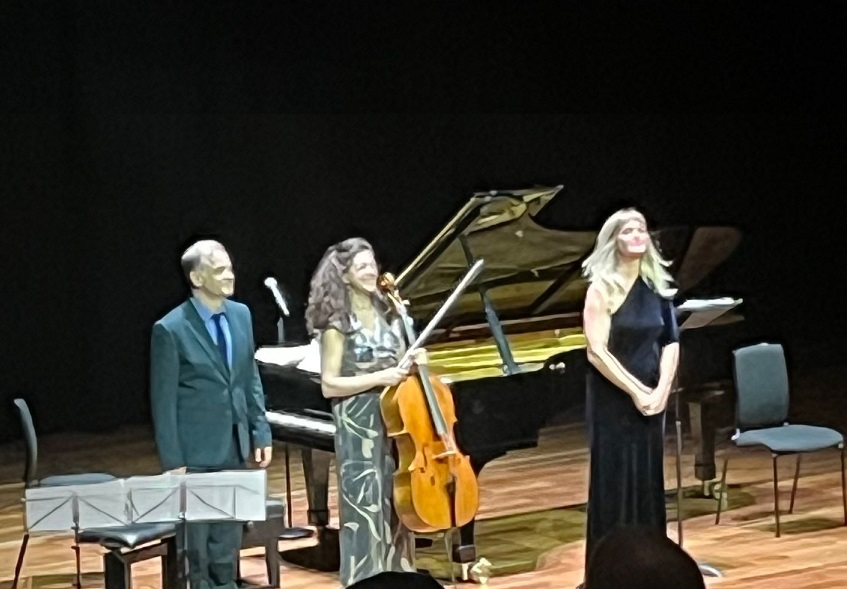
by John Earls. Photo credits (c) Philip Sharp (above), John Earls (below)

Two of the most affecting sections of Ruby Hughes’ excellent 2024 album with the Manchester Collective End of My Days are three of John Tavener’s Akhmatova Songs (Dante, Boris Pasternak and  Couplet) and Maurice Ravel’s Kaddish (from 2 Mélodies hébraïques).

These also featured to dramatic effect in this fascinating concert programme of Schubert and Other Folksongs spanning two centuries, where Hughes was joined by Natalie Clein (cello) and Julius Drake (piano).

In this performance the Tavener song miniatures were performed for voice and cello and were at turns powerful, beautiful and urgent across their nine-minute duration. The prolonged silence from the audience afterwards was noticeable. Ravel’s lament-like Kaddish, this time for voice and (sparse) piano, was similarly respectfully performed and observed.

There were non-vocal pieces for cello and piano where Clein and Drake displayed what a well matched duo they are. Zoltán Kodály’s Sonatina was luminescent, Leoš Janáček’s Pohádka absorbing (not least the cello bowing and pizzicato) and Ernest Bloch’s From Jewish Life was both lovely and mournful.
But this was a concert where Ruby Hughes’ amazing voice was to the fore but often in an understated, but no less impactful way. The captivating trio of Benjamin Britten folksong arrangements with their minimal piano trills were a case in point.

The trio performances were also impressive in their delivery and range. Brahms2 Songs (Op.91) were both gorgeous, while Deborah Pritchard’s Storm Song (from 2017, the most recently written piece) was powerfully unnerving between its haunting start and end (the composer was in the audience to take a well deserved bow).

The concert was bookended by two songs written by Franz Schubert shortly before his death in 1828 at the age of just 31. As David Kettle remarks in his excellent programme notes, to call them simply songs is to do them a disservice. Der Hirt auf dem Felsen (The Shepherd on the rock), arranged by Peter Jones for voice, cello (replacing the clarinet) and piano, traversed a journey of yearning and joy that was both delicate and impassioned. The closing Auf dem Strom (On the river) saw Hughes capturing the drama convincingly throughout.

An encore of Berlioz’s La Captive concluded this concert that combined fascinating and thoughtful programming with performances of beautifully judged expression.

John Earls is Director of Research at Unite the Union and posts at @johnearls.bsky.social on Bluesky and @john_earls on X. You can subscribe (free) to his Hanging Out a Window Substack column here: https://johnearls.substack.com/

Published post no.2,579 – Sunday 29 June 2025

On Record – Chu-Yu Yang & Eric McElroy – An English Pastoral (Somm Recordings)

Venables (arr. composer) Violin Sonata Op.23a (1989 arr. 2018)
Finzi Elegy Op.22 (1940)
Gurney ed. Venables Eight Pieces (1908-09)
Bliss Violin Sonata B12 (c1914)
Venables Three Pieces Op.11 (1986)

Chu-Yu Yang (violin), Eric McElroy (piano)

Somm Recordings SOMMCD0700 [75’45”]
Producer Siva Oke Engineer Adaq Khan

Recorded 13-14 April 2024 at St Mary’s Church, St Marylebone, London

Reviewed by Richard Whitehouse

What’s the story?

Although the Taiwanese violinist Chu-Yu Yang and the American pianist Eric McElroy have found success independently, their appearances as a duo have firmly established them before the public across a wide repertoire, not least the music which is featured on this new release.

What’s the music like?

The title of this album might be thought to speak for itself, yet An English Pastoral amounts to more than an exercise in wanton nostalgia. Alongside early if not wholly uncharacteristic music by Ivor Gurney and Arthur Bliss – contemporaries whose outlooks were transformed through war service – it takes in one of Gerald Finzi’s most affectingly realized instrumental pieces and works by Ian Venables whose 70th birthday is just weeks away at time of writing. A programme, moreover, as cohesive in recorded terms as it would be heard as a live recital.

The centrepiece here is a sequence of pieces by the teenage Gurney such as demonstrates no mean assurance in this testing medium. Hence the Elgarian wistfulness of Chanson Triste or respectively poetic and bittersweet evocations as are In September and In August. A winsome Romance is the most elegantly proportioned of these eight pieces, with the elaborate Legende more discursive in its (over-) ambition. The poignant A Folk Tale and an engaging Humoreske have a succinctness to confirm that, with Gurney as with most composers, less is often more.

The players seem as emotionally attuned to this music as they are when mining the expressive subtleties of Finzi’s Elegy which, composed barely a year into the Second World War, offsets its yielding nostalgia with passages of simmering anxiety. Nor do they disappoint in the single movement that was all Bliss completed – if, indeed, he ever envisaged any successors – of his wartime Violin Sonata; its cautious if never inhibited handling of ‘phantasy’ form implying a transition from his earlier Pastoralism to the innovation of those pieces which came afterward.

Venables proves no less adept combining violin and piano, not least when adapting what was previously his Flute Sonata as to emphasize the pensive raptness of the first movement or its alternately playful and plaintive successor. Witness, moreover, the astutely judged trajectory of his Three Pieces as it moves from the blithe lyricism of its initial Pastorale, through the unforced eloquence of its central Romance, to the incisive energy of its final Dance – thus making for a sequence that could have been a ‘sonatina’ had the composer designated it thus.

Does it all work?

Pretty much always. Nothing here sounds less than idiomatic in terms of being conceived for this medium, a tribute to the skill of these players in realizing the intentions of the composers in question. For those listeners who still (rightly) attach importance to such things, the layout is viable but it might have been improved by interpolating the Gurney pieces – most of which are what might be termed ‘medium slow’ – across the release as a whole rather than grouping them all together at its centre, but this is relatively less of a consideration in streaming terms.

Is it recommended?

Indeed it is. The recorded ambience could hardly be bettered in terms of this medium, while Yang contributes detailed and informative annotations. Hopefully he and McElroy will have a chance to record further such collections, whether or not in the ‘English Pastoral’ tradition.

Listen / Buy

You can read more about this release and explore purchase options at the Somm Recordings website

Published post no.2,578 – Saturday 28 June 2025

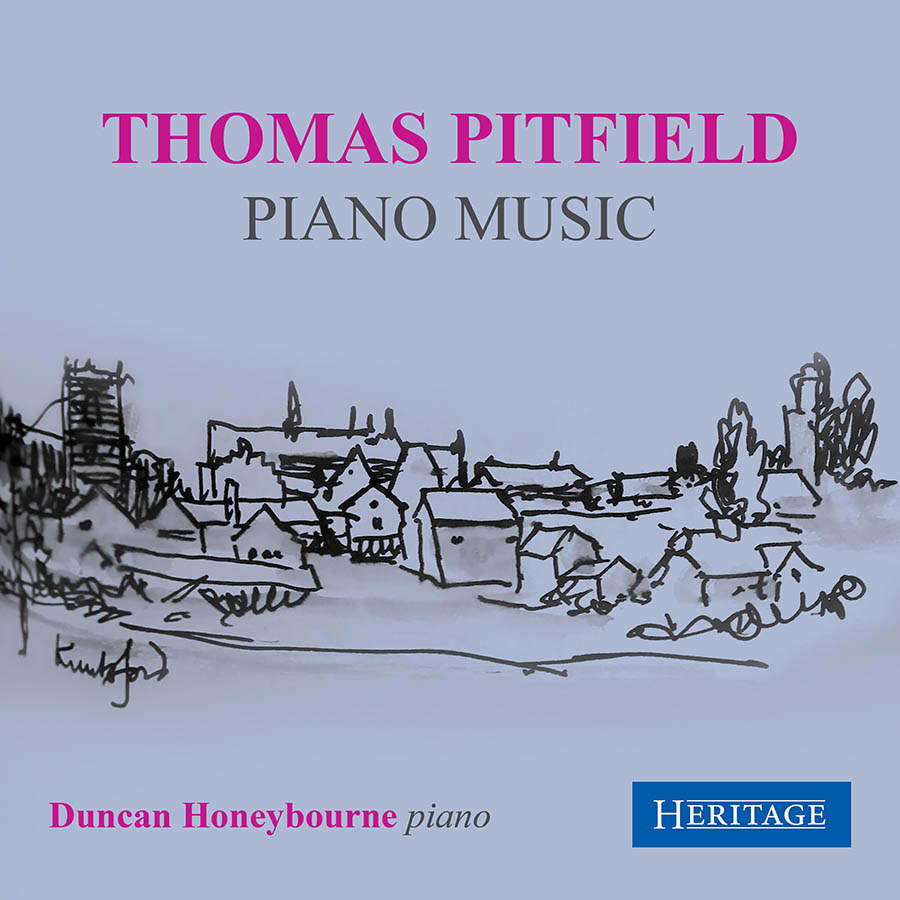
On Record – Duncan Honeybourne: Thomas Pitfield Piano Music (Heritage Records)

Thomas Pitfield
Toccata (1953)
Solemn Pavane in F minor (1940)
Circle Suite (1938)
Capriccio (1932)
Diversions on a Russian Air (1959)
Novelette no.1 in F major (1953)
Bagatelles – no.1 in E flat major (1950); no.2 in C major (1952); no.3 in F major (c1995)
Impromptu on a Tyrolean Tune (1957)
Two Russian Tunes (1948)
Sonatina no.2 (c1990)
Five Short Pieces (1932)
Prelude, Minuet and Reel (1932)
Little Nocturne (c1985)
Humoresque (1957)
Homage to Percy Grainger (1978)
Cameo and Variant (1993)

Duncan Honeybourne

Heritage Records HTGCD132 [68’40”]
Producer / Engineer Paul Arden-Taylor

Recorded 7-8 September 2024 at Wyastone Concert Hall, Wyastone Leys, Monmouth

Reviewed by Richard Whitehouse

What’s the story?

Heritage continues its coverage of Thomas Pitfield (1903-99), following a reissued volume of chamber music (HTGCD210)) with this well-rounded and representative overview of his piano output, performed with his customary flair and conviction by Duncan Honeybourne.

What’s the music like?

The programme launches in fine style with a Toccata whose sheer rhythmic incisiveness and unforced joie de vivre makes it an ideal encore, and to which the pensive understatement of Solemn Pavan affords pertinent contrast. Written as homages to (and likely evocations of) a close-knit group of musical colleagues, The Circle Suite draws on Baroque dance forms in characterful and always personable terms; while the Capriccio underlines that, throughout his composing, Pitfield allied a deft pianistic technique to a highly appealing musical voice.

Centred on a Russian folksong ‘The Blacksmith’, no doubt conveyed to the composer by his Russian wife, Diversions on a Russian Air packs a diverse range of variants into its modest duration, while the Novelette (at 4’36’’ the longest single item here) unfolds as a rumination audibly in the English ‘pastoral’ tradition. Although they were not written concurrently, the Three Bagatelles amount to an effective sequence – their respectively nonchalant, capering then genial demeanours evoking more than a touch of early 20th century French influence.

The Central European-ness of Impromptu on a Tyrolean Tune makes it surprising this lively tune was encountered in a collection housed at a stately home in Chesire, while Two Russian Tunes comprise a playful ‘Nursery Song’ and plaintive ‘Cossack Cradle Song’. Actually, the third of three such works, the Second Sonatina separates its lively Allegro and rumbustious Finale with a ‘Threnody’ as finds the composer at his most confiding, whereas the engaging Five Short Pieces are pithy miniatures whose pedagogical function is anything but didactic.

Prelude, Minuet and Reel was Pitfield’s earliest success and has (rightly) retained a degree of popularity through its melodic insouciance and rhythmic verve. From among the remaining four pieces, Little Nocturne is most likely an intimate reflection from its composer’s old age, while Humoresque contrasts its expected levity with a surprisingly plangent middle section. Homage to Percy Grainger is a ‘take off’ idiomatic and engaging, while the alternate poise then suavity of Cameo and Variant rounds off this collection in the most disarming fashion.

Does it all work?

It does, accepting those formal and expressive limits within which Pitfield operated. For all that his performers comprised a significant roster of pianists (among them John Ogdon and John McCabe), this is music written for the composer’s pleasure and it eschews profundity without thereby lacking in depth. That he was invited to record this selection by the Pitfield Trust and researched the manuscripts at Manchester’s RNCM says much for Honeybourne’s dedication to the Pitfield cause, reinforced with playing of unfailing perception and finesse.

Is it recommended?

It is and not least as these pieces, few of them previously recorded, offer much of interest to performers and listeners alike. John Turner contributes extensive notes while Honeybourne adds his own observations, enhancing a release that warrants the warmest recommendation.

Listen / Buy

You can read more about this release and explore purchase options at the Heritage Records website

Published post no.2,577 – Friday 27 June 2025

Playlist – CRD Records @ 50

by Ben Hogwood

This year CRD Records are marking their 50th anniversary as a label with something of a refresh. Whereas the initials once stood for Continental Record Distributors, they are now undergoing a subtle rebrand to stand for Classical ReDefined.

I wanted to take this opportunity to pay tribute to an excellent label, particularly in the fields of chamber, instrumental and choral music, by way of a celebratory playlist which you can find on Tidal by clicking on the link below.

It includes some cornerstones of the repertoire from established CRD artists, such as pianist Paul Crossley in Ravel, Fauré and Takemitsu, Hamish Milne in Weber and Medtner, and an early Nash Ensemble treasure, their recording of Hummel’s ‘Military’ Septet.

Also appearing are L’Ecole D’Orphée, with cellist Susan Sheppard starring in Vivaldi, and some English gems from New College Choir Oxford under Edward Higginbottom. You can listen here:

https://tidal.com/playlist/95ca9d8e-07a6-42b9-8341-f2aa5e3b08a9

For more information on new releases and the label rebranding, head to the CRD Records website

Published post no.2,576 – Thursday 26 June 2025

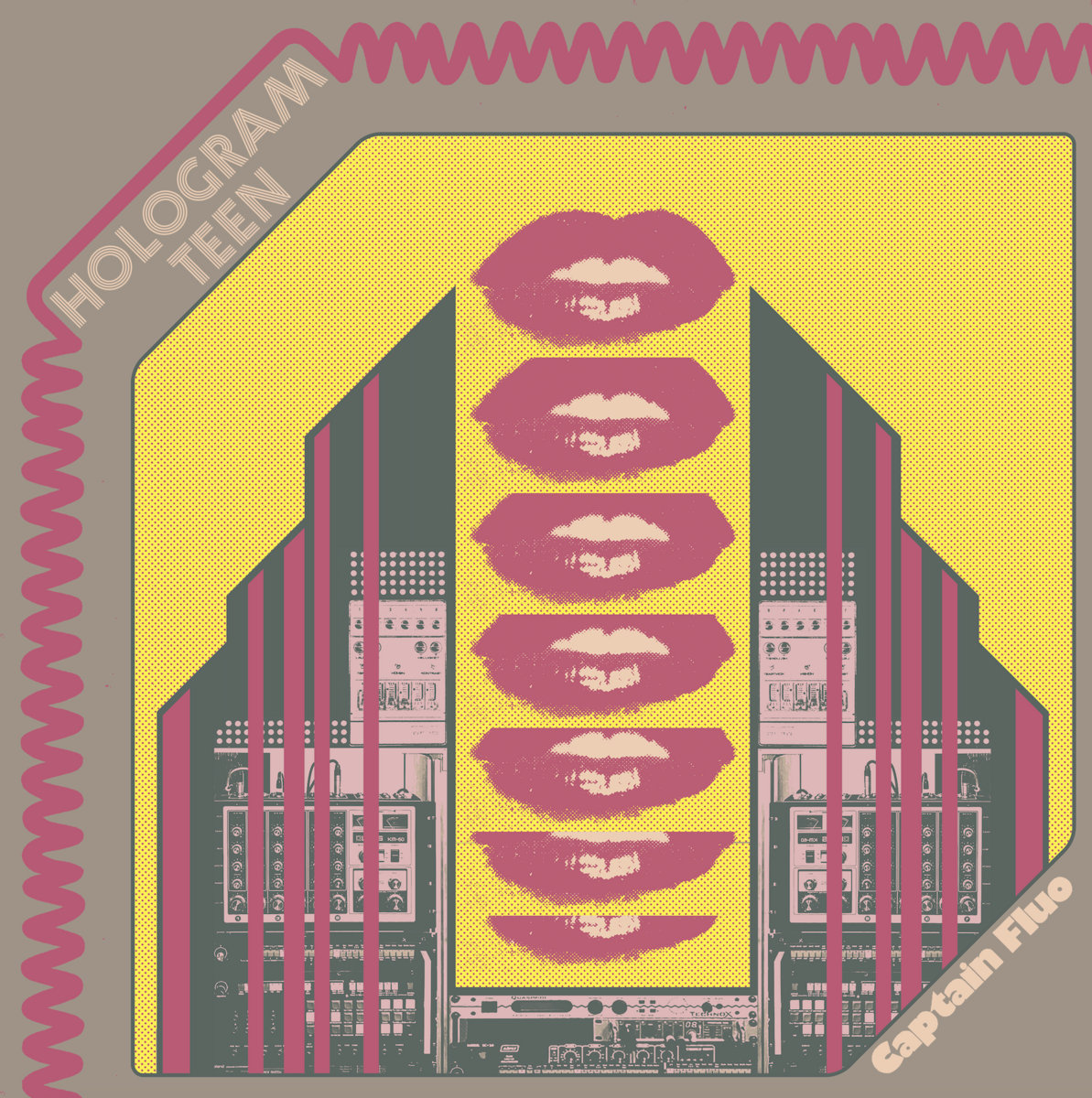
Switched On – Hologram Teen – Captain Fluo (Hologram Opera)

by Ben Hogwood

What’s the story?

Morgane Lhote returns as Hologram Teen, the alias under which she has shown her enjoyment of electrofunk and disco. Captain Fluo is described as ‘a love letter to the Paris of the 1980s’, where slinky disco was the order of the day.

Lhote was once the keyboardist with Stereolab, from 1995-2001, a period many would consider to be the group’s imperial phase. Alongside the musical project Garden with James Ford (Simian Mobile Disco), she established Hologram Teen ten years back, in 2015.

What’s the music like?

Two words – breezy and summery. There is a broad sense of musical enjoyment here, immediately transmitted through a selection of dancefloor instrumentals and quality vocal guest slots.

Occasionally Lhote enjoys flirtations with the 1990s – Pack Ur Patience having a riff Electronic would have been proud of – but more often than not her joyous reference points are the 1980s.

She heads straight for the disco dancefloor with Actarus, staying there for a change of tempo as the low-slung funk of Connection transpacifique kicks in, here with a confidential but confident vocal from Sandra Zettpunkt, the nearest we get to Stereolab in musical form.

Zettpunkt appears again on the fun Pack Ur Patience, where chimes and chunky basslines trade off, while Eric D. Clark appears for an oblique Why Ya Wanna Wait? Frêquence Gaie, with Maxwell Farrington, is a richly scored slow disco number, its deadpan vocal making Phil Oakey prick up his ears.

Chunky groovers abound on the instrumental tracks, with Walkman, Lust Pill! and Memphis Sounds all good fun, the latter a quickstep with bubbly keyboards.

Does it all work?

It does. Hologram Teen treads just the right line between confidence and vulnerability, enjoying itself along the way.

Is it recommended?

Heartily. Summery sounds that raise a smile from the outset, with a blend of sassy songwriting and instrumental craft. Captain Fluo will raise many smiles.

For fans of… Stereolab, Human League, Can, Lipps Inc., Eurythmics

Listen / Buy

Published post no.2,575 – Wednesday 24 June 2025