
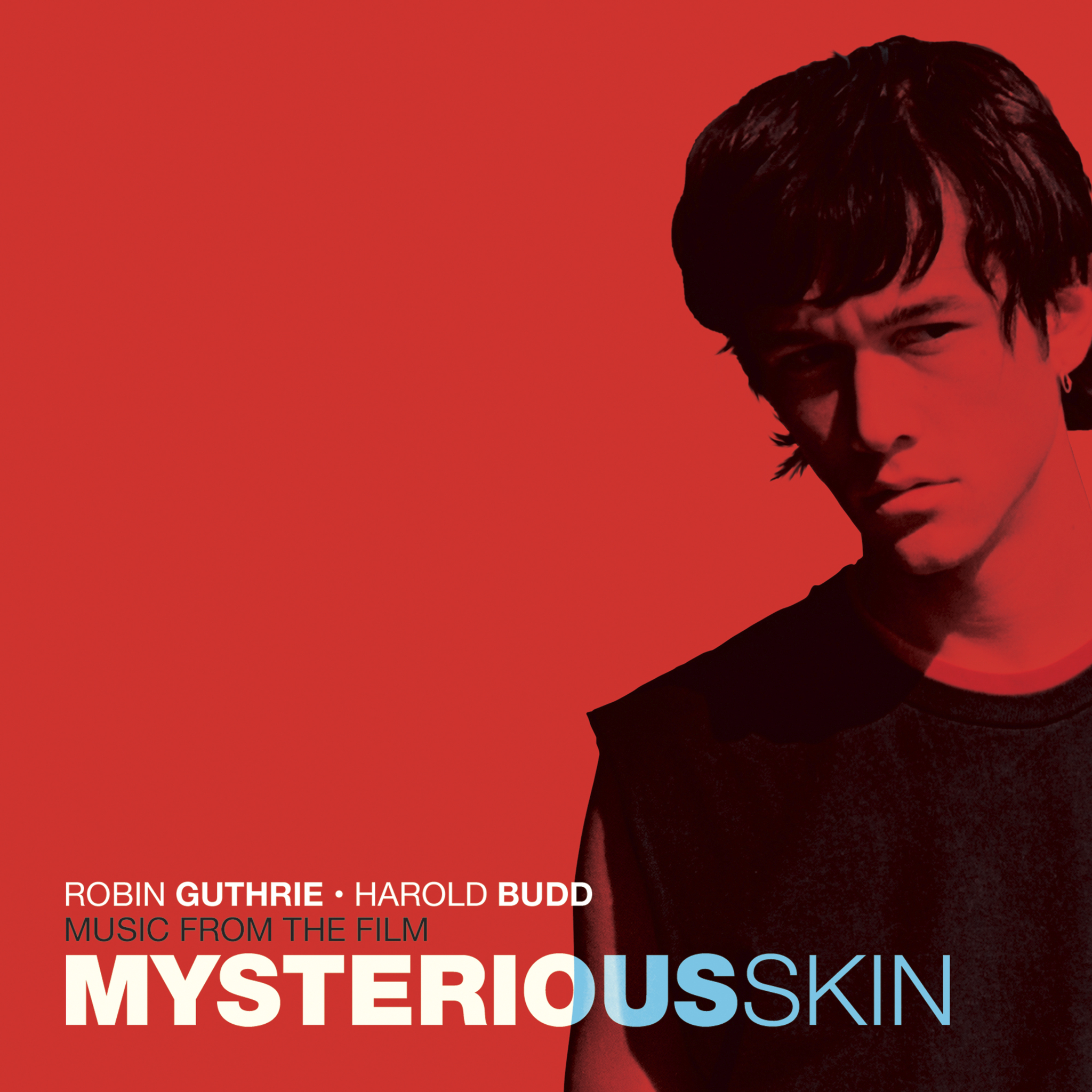
New music – Robin Guthrie & Harold Budd: Music from the Film ‘Mysterious Skin’ – Reissue (4AD)

posted by Ben Hogwood text from press release

Harold Budd and Robin Guthrie‘s iconic score for Gregg Araki’s Mysterious Skin (2004) joins the 4AD catalogue with its first vinyl release and CD reissue, which has been long out of print, on 29 January 2027. Along with the release, two ‘Mysterious Skin’ ringer t-shirts will be available exclusively via the 4AD store.

Remastered for 24-bit audio by Guthrie and cut to vinyl by Rashad Becker, Mysterious Skin’s sound-world is at once crystalline and ensconced in reverb – the result of two artists with distinct voices dovetailing, creating as one. Budd and Guthrie’s use of sustained chords, sympathetic drones, and delays created a unique musical language for Araki’s meditation on trauma and memory, acting in both sympathy and counterpoint.

An original proponent of the New Queer Cinema, Araki’s simultaneously sensitive and disquieting treatment of trauma in Mysterious Skin has proved resonant with today’s film lovers. A recent 4k restoration and re-release of the film to celebrate its 20th Anniversary also prompted a whole new audience to find succor in its soundtrack. Originally only released on CD and now long out of print, the music can at present only be heard on widely-streamed, unofficial YouTube uploads, prompting an official remaster and reissue by 4AD in 2027.

Gregg Araki said: “I’ve been a huge fan of Robin and Harold’s since the 80’s glory days when 4AD, Cocteau Twins and The White Arcades ruled and shaped my world. This music has been such an essential part of my life and such a profound influence on me and my work. I always listen to music when I write – as does Scott Heim, author of the original novel Mysterious Skin – so this soundtrack is much, much more than mere background music: it’s the heart and soul of the whole movie. The dreamy poetic nature of both the book and the film comes directly from this style of music – and the incredible score Robin and Harold have composed is so evocative and breathtakingly gorgeous, it literally brought me to tears the first time I heard it.”

The pair’s working practices informed Mysterious Skin‘s deeply evocative music. The cues in the film were recorded by each artist remotely before being woven together by Guthrie for the soundtrack. Budd focused primarily on piano and synthesizer, while Guthrie employed his trademark shimmering guitar and subtle electronic treatments. The seamless, cohesive universe created by the artists is testament to the way they fit together as personalities. Working independently to pre-audio cuts of the film, the musicians composed the cues which would be the basis of the soundtrack album. Harold Budd’s playing – instantly recognizable and influential – unfurls like pillows of cushioned memory over the film. Robin Guthrie performs his signature processed guitars, at times more structured with beats and other instruments, and exploits his already-iconic musical language.

Indeed, the sensitive, spacious music created by Budd and Guthrie creates a womb-like safety in which Mysterious Skin‘s narrative unfolds. A film about the complex consequences of childhood trauma, the plot follows the two main characters’ differing journeys following the same event. On Neil’s Theme, Guthrie’s chiming notes and chordal shimmer dance with light and shade, mirroring Araki’s subtle tonal shifts in the film. Waterfalls of guitar sparkle against smeared reverb, ghostly drones and overtones seeping into the spaces between the notes on Twilight. Budd’s sparse piano introduces moments of tension and dissonance: on The Discovery, piano notes dance over clouds of echo, unresolved notes hinting at the sense of unease that is sewn into the film’s fabric. In the heartbreaking final scene, Snowfall echoes the snow falling on screen as layers of guitar and reverb trails mirror the humanity portrayed.

Throughout the extended soundtrack, the reciprocity and deep respect the artists have for each other created a mutual language that only grew over time, resulting in another two decades of albums, soundtracks and performances. On Mysterious Skin, their music serves as a guiding hand to the narrative – an integral element of the storytelling that also stands alone as a venerated cult album that is finally being made available in new and remastered formats.

Music from the Film Mysterious Skin will be available on CD and Standard Black LP from 29 January 2027. Mysterious Skin ringer t-shirts (navy/white and white/red) and a very limited number of hand-stamped white labels will be available exclusively via the 4AD store. For more information, and to order, head to the 4AD Shop

Published post no.3,082 – Wednesday 18 November 2026
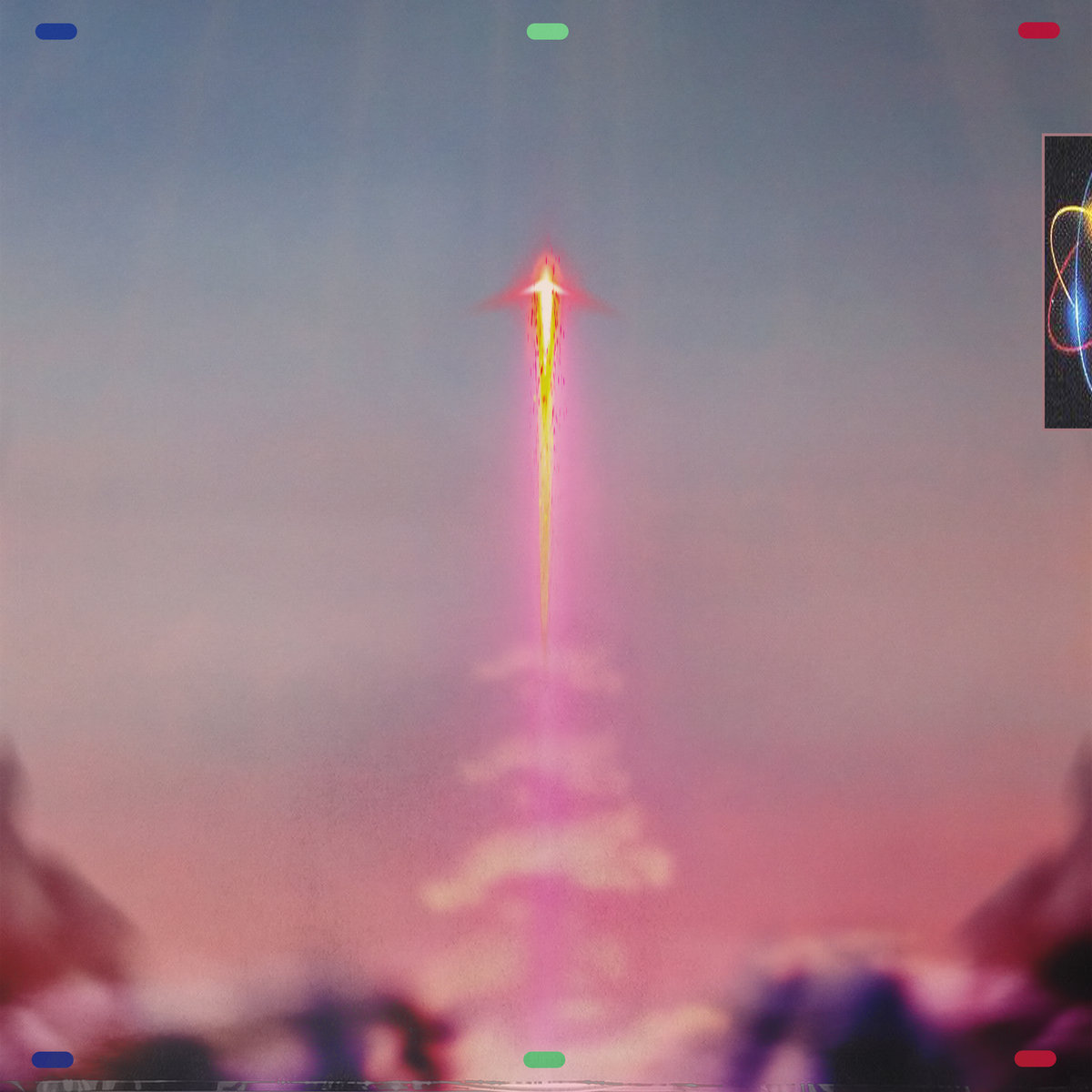
Switched On – OR: Music For Empty Stadiums (4AD)

Reviewed by Ben Hogwood

What’s the story?

Music For Empty Stadiums is the work of Oriol Riverola, better known to electronic music fans as John Talabot – whose ƒIN was one of the albums of 2012.

His approach here is very different to that winning hybrid of disco and house, with a 95-minute album whose roots are in lockdown. Initially Riverola would listen to music at full volume in his studio in Barcelona, looking to fill the void that had opened up in place of DJing and live appointments, but then he realised that a ‘new normal’ might only mean music of an ambient persuasion. He therefore sought a way of dressing the euphoria of full-blooded dancefloor action in ambient clothes.

What’s the music like?

Remarkably, for those familiar with Riverola’s previous work, Music For Empty Stadiums is almost entirely beatless. Yet somehow those beats are implied, the rhythms fully present in music that dances at a much higher frequency.

Listening to the album is like walking out into bright sunlight, for there are some striking strobe effects present in tracks like Barroque, or a constant, insistent flickering of light that runs through the likes of Terrace. Often Riverola’s music behaves like an elusive butterfly (Where’s The Melody) but can also evoke images with uncanny accuracy, such as Ginger & Miyake, which has the feel of listening to the buzz of friendly crickets on holiday.

There are thrills and spills to be had here – the rush of Supper Bowl, for instance – while Maracaná is like hearing the club from a distance – killer riffs, snatches of treble, but very little bass. Fractal Love Odyssey is an epic along similar lines, while the busy Strings Of Death flickers hypnotically.

Does it all work?

It does – the rarefied, dreamy atmosphere holds the whole way through. It is a remarkable balancing act between restful states and rest…and also begs the question of how a remix album of these productions would work. It would be intriguing to see if Riverola already has that up his sleeve.

Is it recommended?

Enthusiastically. This is a unique album, of equal parts energy and ambience, and it leaves a lasting spell. A go-to listen for colour and positivity.

For fans of…Daniel Avery, John Hopkins, Lindstrøm, HAAi

Listen / Buy

Published post no.3,081 – Tuesday 17 November 2026

#AmbientAugust no.7 – Michael Brook: Breakdown

by Ben Hogwood

Michael Brook’s Cobalt Blue album from 1992 has just been re-released by 4AD, bringing his form of studied guitar ambience to new audiences, while reminding those who listened the first time around just how good it is.

Brook played the ‘infinite guitar’, an instrument he created that could sustain notes indefinitely. He was joined by ambient music royalty, with Brian and Roger Eno contributing, along with Daniel Lanois. The result is a rather beautiful long-form composition dividing nicely into 12 parts. The second, Breakdown, is particularly blissful:

Published post no.2,972 – Friday 6 August 2026

New music – Michael Brook: Cobalt Blue / Live At The Aquarium (4AD)

by Ben Hogwood, from the press release

Today, Canadian musician Michael Brook, Grammy-nominated film composer (Heat, The Perks of Being a Wallflower, Into the Wild) and inventor of the ‘infinite guitar’, releases the first vinyl reissue of his 1992 4AD record Cobalt Blue and the vinyl debut of Live at the Aquarium.

These underrated gems from the 4AD catalogue have been newly remastered by Rashad Becker and are presented on Crystal Clear 2×LP and 2CD with artwork by Alison Fielding based on the original v23 designs.

Cobalt Blue is a timeless and quietly stunning collection of instrumental pieces and shimmering dreamscapes, featuring contributions from ambient music pioneer Brian Eno, composer & multi-instrumentalist Roger Eno, and Grammy-winning producer Daniel Lanois. Recorded later that year, Live at the Aquarium captures Brook’s rare solo performance in London, highlighting the hypnotic sustain and atmosphere that define his work. 

Michael Brook’s Cobalt Blue & Live at the Aquarium is available from today, 10 July, digitally, on Crystal Clear 2xLP and 2xCD. To order, and for more information, head HERE.

Published post no.2,943 – Friday 10 July 2026

On Record – Dry Cleaning: Secret Love (4AD)

Reviewed by Ben Hogwood

What’s the story?

South London quartet Dry Cleaning have been establishing themselves as a unique and original voice in pop music. Their first two albums, New Long Leg and Stumpwork, reveal a band whose many distinctive features are headed by vocalist Florence Shaw, with a largely spoken word delivery, backed by a fulsome instrumental section that features at its root the sonorous bass of Lewis Manyard.

For their third album they undertook sessions in Dublin and Chicago before hooking up with fellow leftfield popster Cate Le Bon in the Loire Valley, where she produced the record.

What’s the music like?

As distinctive as ever. Dry Cleaning have an unusual ability among pop bands to keep you hanging on every word and every note, and manage to make even their most oblique melodies and harmonies make sense.

Under Le Bon’s production, they are very much playing to their strengths here, if anything encouraging their unpredictable side to be let loose on the listener, confounding and delighting at equal measure.

The compelling vocals from Shaw are mostly spoken but have a pitch that gives them unexpected melodic meaning, with leftfield lyrics that are original, wirry and meaningful. Cruise Ship Designer is one of the best examples where everything comes together, but the loose funk of Hit My Head All Day, with the supple bass of Manyard is also notable. Shaw’s directness pays dividends on Let Me Grow And You’ll See The Fruit, where lovely guitar lines are spun above the vocal while the fulsome, dubby bass operates down below.

Sometimes Dry Cleaning’s music resembles a coiled spring, like a sotto voce version of Pixies, and Shaw’s quieter vocals, such as “Fuck the world”, in the coda of I Need You, are as effective as a full-blown shout.

Does it all work?

It does. Avant Garde pop is scarcely as rewarding as this, and yet none of it feels contrived. This is where Dry Cleaning are meant to be.

Is it recommended?

Very much so. Secret Love is a peak in the Dry Cleaning output so far, a natural progression from their first two albums and one that leaves you scratching your head, tapping your feet and smiling – all at the same time. The first must-hear album of 2026.

For fans of…Stereolab, Jane Birkin, Broadcast, Cate Le Bon

Listen / Buy

Published post no.2,773 – Tuesday 20 January 2026