

In concert – Raphael Wallfisch, BBC Concert Orchestra / Martin Yates: English Music Festival opening concert

Raphael Wallfisch (cello, below), BBC Concert Orchestra / Martin Yates

Lewis A Celebratory Overture (2023) [EMF commission: World premiere]
Lloyd Webber (orch. Yates) Scenes from Childhood (c1950) [World premiere]
Moeran Cello Concerto in B minor (1945)
Alwyn Serenade for Orchestra (1932) [World premiere]
Delius Two Pieces for Small Orchestra (1911-12)
Vaughan Williams (arr. Adrian Williams) A Road All Paved with Stars (1929/2016) [Public premiere]

Dorchester Abbey, Dorchester-on-Thames
Friday 26 May 2023

Reviewed by Richard Whitehouse

The breezy ebullience of Paul Lewis’s A Celebratory Overture (redolent of Malcolm Arnold without any risk of expressive ambiguity) launched this latest English Music Festival in fine style, with its crisp and precise playing from the BBC Concert Orchestra under Martin Yates.

As so often in these concerts, world premieres were not lacking and the first brought hitherto unknown partsongs by William Lloyd Webber arranged into suite-form then orchestrated by the conductor. If the resultant Scenes from Childhood adds but little to the reputation of this not inconsiderable figure, the Prelude yields appealing poise while Serenade is a waltz of no mean suavity, then the Finale nimbly combines elements of fugue and waltz on its way to a rousing close. Worth hearing, and not least when rendered with such obvious enjoyment.
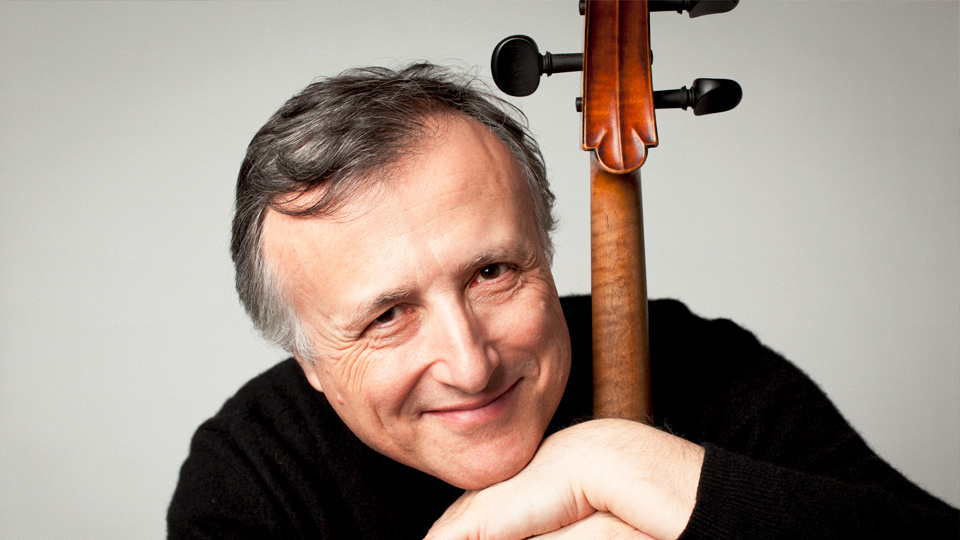
The emotional weight of this first half inevitably fell upon the Cello Concerto by E.J. Moeran. Completed in the aftermath of the Second World War, it was the composer’s first large-scale piece for his wife Peers Coetmore; her belated and often approximate recording likely having deterred others from taking it up. Not so Raphael Wallfisch (above), his belief evident from the outset of a Moderato whose confiding eloquence is not without undercurrents of unease. These latter are made explicit at the start of the Adagio, otherwise centred on one of the composer’s most affecting melodies and building with due inevitability to a cadenza whose growing animation carries over to the final Allegretto. Here a jig-like main theme denotes an Irish influence that offsets any tendency to introspection as it guides this engaging movement to a decisive close.

Quite a performance, then, which was complemented after the interval by a first hearing for the early(ish) Serenade by William Alwyn. Written while on examination duties in Australia, this undemanding piece moves from a (mostly!) tranquil Prelude, through a stealthy and by no means uninhibited Bacchanale then a serene Air which could yet find favour as a radio staple, to a Finale that, as Andrew Knowles rightly indicated in his programme note, betrays more than a hint of Czech folk-music across its insouciant and ultimately boisterous course.
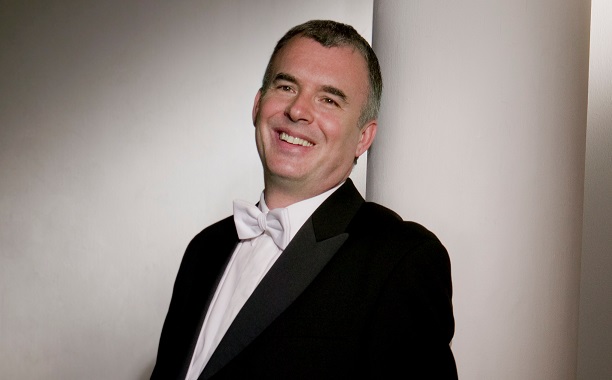
Hardly an interlude, the brace of pieces by Delius fairly encapsulate the inward rapture of his maturity. Yates (above) brought just the right lilt to the dancing gait of On Hearing the First Cuckoo in Spring, while the subtle eddying of Summer Night on the River was effortlessly conveyed.

The final premiere tonight came in the guise of A Road All Paved with Stars – the ‘symphonic fantasy’ as arranged by Adrian Williams (a notable composer in his own right) from Vaughan Williams’ comic opera The Poisoned Kiss. Occasionally revived, its dramatic prolixity rather obscures its musical highpoints – emphasized here in what is both a chronological overview and cumulative paraphrase that also adds a non-symphonic orchestral work to its composer’s output. The surging emotion of those final stages could hardly leave an audience unmoved. This vivid reading concluded a memorable concert in which the Moeran was dedicated to the memory of Michal Kaznowski – who, as cellist of the Maggini Quartet and formerly section-leader at the City of Birmingham Symphony Orchestra, has left a legacy worth remembering.

To read more about the festival, visit the English Music Festival website. For information on the performers, click on the links to read more about cellist Raphael Wallfisch, conductor Martin Yates and the BBC Concert Orchestra, and for more information on composer and arranger Adrian Williams and composer Paul Lewis

On Record – English Symphony Orchestra / Kenneth Woods – Adrian Williams: Symphony no.1, Chamber Concerto (Nimbus Alliance)

Adrian Williams
Symphony no.1 (2020)
Chamber Concerto: Portraits of Ned Kelly (1998)

English Symphony Orchestra / Kenneth Woods

Nimbus Alliance NI6432 [70’31’’]
Producers/Engineers Phil Rowlands, Tim Burton
Recorded 8 April 2021 (Chamber Concerto), 1-2 December 2021 (Symphony) at Wyastone Concert Hall, Monmouth

Reviewed by Richard Whitehouse

What’s the story?

This latest release in the English Symphony Orchestra’s 21st Symphony Project features its most ambitious instalment yet in the First Symphony by Adrian Williams (b1956), coupled with a no less eventful piece by this ‘dark horse’ among British composers of his generation.

What’s the music like?

Although having written various orchestral works, Williams had never tackled the symphonic genre before prior to being the ESO’s John McCabe Composer-in-Association in 2019 (he is currently its Composer Emeritus) but has confronted the challenge head-on. Playing almost 50 minutes and scored for an orchestra including triple woodwind, five horns, four trumpets and four percussionists with harp, piano and celesta, the work is evidently a summation of where its composer felt he had reached over the course of his musical odyssey. Yet for all its textural complexity and its pervasive richness of thought, this is music created out of basic motifs; the initial three notes generating the first movement’s main themes, as well as essentializing that longer term tonal goal as remains a focal point towards which intervening activity is directed.

From its imposing Maestoso epigraph, the opening Stridente unfolds against the background of (without necessarily adhering to) sonata-form design – its motivic components drawn into a continuous and frequently combative evolution purposefully unresolved at the close. There follows a Scherzando that eschews ternary design for a through-composed format proceeding by tension and release to a decisive ending. The expressive crux of the whole work, the Lento evinces a plangent and desolate tone whose sparse textures and elliptical harmonies re-affirm that ‘less is more’ maxim. Despite its Energico marking the finale unfolds with slow-burning momentum, made the more cumulative by channelling its motivic evolution toward a Dolente apotheosis whose outcome proves as inevitable formally as it feels transcendent emotionally.

The artist Sidney Nolan was latterly a neighbour of Williams, his powerfully un-romanticized evocations of famed Australian outlaw Ned Kelly directly influencing this Chamber Concerto. Its pungent opening sets wind quintet against string quartet, with double-bass and harp adding subtle contributions as the piece unfolds. The inward central section builds towards a febrile culmination – after which, wind and strings are drawn into a monody which brings a resigned though hardly serene ending. A purposeful overall trajectory ensures cohesion at every stage.

Does it all work?

Absolutely. These are impressive piece in terms of their ambition but also realization. There are considerable technical challenges on route, but they are met with conviction and no little resourcefulness by an expanded ESO which is often tested but never fazed. Kenneth Woods directs with his customary attention to detail as goes a long way toward clarifying music that is ‘complex and luminous’ in spirit as by design. Williams has evidently been waiting for this opportunity to contribute to the symphonic tradition and his execution rarely, if ever, falters.

Is it recommended?

Indeed. The recording is as focussed and spacious as is necessary, and there are informative notes from composer and conductor. Next from this source is a release of concertos by Philip Sawyers, then one of symphonic works by the current Composer-in-Association Steve Elcock.

This recording is released on Friday 7 October 2022.

You can watch the world premiere of Adrian Williams’ Symphony no.1 on the English Symphony Orchestra website, and you can listen to clips from the recording at the Presto website. For more information on the composer, visit the Adrian Williams website – and for more on Sidney Nolan click here. Click on the names of Kenneth Woods and English Symphony Orchestra for their websites.

Online concert – English Symphony Orchestra / Kenneth Woods: Adrian Williams: Symphony no.1

English Symphony Orchestra / Kenneth Woods

Adrian Williams Symphony no.1 (2018-19, rev. 2021)

Wyastone Concert Hall, Monmouth
Studio recording 1-2 December 2021

Written by Richard Whitehouse

The 21st Symphony Project, launched five years ago by the English Symphony Orchestra and Kenneth Woods, has seen several impressive premieres – with this First Symphony by Adrian Williams its most ambitious yet, whether in terms of underlying conception or overall impact.

Now in his mid-60s, Williams has been a notable presence – albeit on the periphery – of music in the UK for several decades (more information can be found via the web references below); his advocates including Raphael Wallfisch and the Amsterdam Sinfonietta. Regular listeners to the ESO’s digital concerts will have encountered his striking Chamber Concerto ‘Portraits of Ned Kelly’ and intricately wrought eloquence of Migrations for strings; aspects from both resurfacing here, if on a considerably larger scale and exuding correspondingly greater force.

Playing almost 50 minutes and scored for a sizable orchestra including triple woodwind, five horns, four trumpets and four percussionists with harp, piano and celesta, the present work is evidently a summation of where its composer has reached over the course of his musical (and likely extra-musical) odyssey. Not that there is anything gratuitous or self-indulgent about the outcome; indeed, for all its formal complexity and emotional reach, this is music created out of inherently basic motifs – its initial three notes and their rearrangement generating the first movement’s main themes as well as outlining a long-term tonal trajectory which, though not pursued as systematically as in the earlier symphonies of Robert Simpson, remains as a focus throughout the intervening activity and the focal-point toward which such activity is directed.

From its imposing Maestoso epigraph, the opening Stridente unfolds against the background of, without thereby adhering to, sonata-form principles – its motivic components drawn into a continuous and frequently combative evolution necessarily left unresolved at the close. There follows a Scherzando that eschews ternary design for a through-composed format proceeding by tension and release to its decisive ending. To say the ensuing Lento is the expressive crux of this work might detract from the plangent, desolate tone of music whose frequently sparse textures and elliptical harmonies re-affirm that ‘less is more’. Despite its Energico marking, the finale unfolds with slow-burning momentum made cumulative by channelling its motivic evolution towards a Dolente apotheosis whose outcome is as inevitable as it is transcendent.

An impressive piece in terms not only of ambition but also realization. There are considerable technical challenges on route, but these are met with conviction and no little resourcefulness by an expanded ESO often tested while never fazed during its eventful course. Woods directs with his customary discretion and an attention to detail that goes a long way toward clarifying music which feels ‘complex and luminous’ as much in spirit as by design. Whether or not the outer movements might yield greater panache could only be determined under live conditions.

It might also be noted the designation is no idle boast, Williams having been commissioned to write a successor the ESO will schedule at a future date. Even were it to pursue a wholly different course, the achievement of this First Symphony is one not likely to be diminished.

You can view this concert from 25-29 March at the ESO website, and thereafter for ESO digital supporters here. For more information on Adrian Williams, head to his website or an extensive biography on the MusicWeb International site

Live review – English Symphony Orchestra / Kenneth Woods: Composer Portrait: Adrian Williams


English Symphony Orchestra / Kenneth Woods
Composer Portrait – Adrian Williams
Chamber Concerto ‘Portraits of Ned Kelly’ (1998)
Russells’ Elegy (2009/11)
Migrations (1998)
Wyastone Concert Hall, Monmouth
Recorded September 21 2020 and 8 April 2021 for online broadcast
Written by Richard Whitehouse. Photo credit (c) Keith Bramich / http://www.classicalmusicdaily.com

The English Symphony Orchestra’s latest online concert was devoted to the music of Adrian Williams (b1956), a composer whose long and wide-ranging career has resulted in an output -championed by the likes of cellist Raphael Wallfisch and the Amsterdam Sinfonietta – which covers almost all the major genres and with a stylistic diversity that does not preclude a more unified or personal manner from emerging. Such was evident from the three highly contrasted works featured in this programme which, between them, constituted a most revealing portrait.
A programme, moreover, which was launched ‘at the deep end’ with the Chamber Concerto ‘Portraits of Ned Kelly’. The artist Sidney Nolan was during his later years a neighbour of the composer, his powerfully imagist and pointedly un-romanticized evocations of the Australian outlaw directly influencing this music. Its pungent opening sets out the basic premises – not least the pitting of wind quintet (with doublings) against string quartet, with double-bass and harp adding subtle contributions as the piece unfolds. A more inward central section builds to a febrile culmination – after which, the wind and strings are gradually drawn into a monody that brings about a resigned if hardly serene close. Impressive, too, is Williams’s handling of often fractious material such that a clear formal and expressive trajectory is always evident.
Williams has already contributed several works as the ESO’s current John McCabe Composer -in-Association, Russells’ Elegy likely one of his most directly appealing as well as being a commemoration of the pianist-conductor John Russell and the director Ken Russell (thus the plural of the title). Audibly in a long lineage of British works for strings, it alternates between passages for the ensemble and those in which solo strings dominate with no mean subtlety or finesse – before culminating in a sustained tutti that fades longingly if inevitably into silence.
That the ESO’s music director Kenneth Woods should have described Migrations as ‘‘one of the very greatest works in the rich canon of string music’’ is not mere hyperbole. Scored for 22 solo strings and inspired by migratory patterns of birds in the environs of the composer’s Herefordshire home, this substantial piece unfolds with a seamlessness of purpose in which cluster-like outbursts of great emotional force are integrated into melodic writing of distilled poignancy. The textures are highly variegated while always consistent – not least in the final minutes when, after a fateful pause, solo strings exchange interjections of an intensity which gradually subsides into fatalistic acceptance. In conception if not in content, Migrations can be compared to Strauss’s Metamorphosen for the sheer precision and eloquence of its writing.
It helped, of course, that here (as throughout the programme) the ESO was so committed to this idiom, rendering the often dense and exacting nature of its writing with an unwavering commitment. All three works are to feature on a future release of the composer’s music, and Williams has recently completed a large-scale symphony that is scheduled for this orchestra’s 21st Century Symphony Project towards the end of this year. In the meantime, listeners yet to make the acquaintance of his distinctive and emotionally engaging music are urged to do so.
You can watch the concert on the English Symphony Orchestra website here
For more information on the English Symphony Orchestra you can visit their website here, and you can read about their latest recording, Fiddles, Forests and Fowl Fables, here. For more on Adrian Williams, click here

Live review – Emily Davis, English Symphony Orchestra / Kenneth Woods: A Portrait of Steven R. Gerber

Emily Davis (violin), English Symphony Orchestra / Kenneth Woods

Gerber (arr. Hagen) Sinfonietta No. 1 (1991)
Gerber (arr. Williams) String Sinfonia No. 1 (1995)
Gerber Two Lyric Pieces (2005)
Gerber (arr. Williams) String Sinfonia No. 2 (2011)
Gerber (arr. Williams) Sinfonietta No. 2 (2000)

Wyastone Concert Hall, Monmouth
Recorded in 2020 for online broadcast, Wednesday 26 February 2021

Written by Richard Whitehouse

The English Symphony Orchestra’s online (hopefully not too much longer!) season continued tonight with this portrait of American composer Steven R. Gerber (1948-2015). Little heard in the UK (but extensively in Russia during the immediate post-Soviet era), his output follows a not unusual trajectory for someone of his generation – that from serialism to a rapprochement with tonality, though his evident success over these nominally opposing aesthetics is far rarer and confirms a creative zeal as was underlined by the works featured in this ESO programme.

Although he essayed a sizable number of orchestral works (including two symphonies), those pieces heard here were arrangements of chamber pieces. Not that they were at all unidiomatic or lacking impact – witness that of his Piano Quintet by Daron Hagen as the First Sinfonietta, whose five movements evolve in opposition between a pungent incisiveness and an emotional plangency which finds its culmination in the powerfully sustained fourth movement. Kenneth Woods secured a trenchant response from an ESO likely at or near its socially distanced limit.

The other arrangements were all undertaken by Adrian Williams, himself a notable composer of whom the ESO will be playing more in due course. Derived from Gerber’s Fourth Quartet, the First String Sinfonietta is notable for the comparable intensity of its central movements – a Lento then a Maestoso which might have functioned as a finale had not the composer opted, effectively as it turned out, to let such emotions subside over the curse of a brief yet affecting Postlude. It was astute programming to follow this with the Two Lyric Pieces for violin and strings, the only item played in its original guise and one whose mingling of wistfulness and eloquence finds the composer at his most approachable; not least when Emily Davis rendered the solo part with such fluency and poise. These pieces could yet enjoy a widespread success.

As derived from Gerber’s Sixth Quartet, the Second String Sinfonia appears to be among his more quizzical works – the angular while not a little ambivalent opening movement making way for a quizzical Intermezzo, then a closing set of variations that does not so much reach a climax as wind down into an uncertain repose. A more elaborate and methodical take on the Variations template is pursued by the second and final movement of Gerber’s Fifth Quartet, here arranged as the Second Sinfonietta which again has recourse to a fuller instrumentation and more charged expression. Notably the opening Fantasy, whose stark contrasts of mood make for a disjunctive overall trajectory as is subsequently countered, if not wholly resolved, through a steady and always inevitable build-up of the finale towards its forceful apotheosis.

Intriguing and engaging music which, if tending to an unrelieved earnestness, could hardly be faulted for emotional immediacy. It certainly found worthy exponents in the musicians of the ESO, directed by Woods with his customary conviction, while hopefully the tendency of the sound to distort in louder or more fully scored passages – what used to be termed ‘flutter’ in recorded parlance – was a factor of the online broadcast and not of the actual session. Those coming anew to Steven R. Gerber will doubtless have responded to his unwavering sincerity.

You can watch the concert on the English Symphony Orchestra website here

For more information on the English Symphony Orchestra you can visit their website here For more on Steven R. Gerber, visit his website