
In concert – Viktoria Mullova & Alasdair Beatson @ Wigmore Hall: Beethoven & Schubert

Viktoria Mullova (violin), Alasdair Beatson (fortepiano)

Beethoven Sonata for piano and violin no.6 in A major Op.30/1 (1802)
Beethoven Sonata for piano and violin no.8 in G major Op.30/3 (1802)
Schubert Rondo brillant in B minor D895 (1826)

Wigmore Hall, London
Monday 7 April 2025 (1pm)

by Ben Hogwood

Violinist Viktoria Mullova and pianist Alasdair Beatson have been exploring Beethoven’s works for piano and violin for a while now, and this concert demonstrated the rapport they have built with the music – and the Wigmore Hall audience.

On a bright March day in London the Spring Sonata might have been the most appropriate choice – more of which later – but instead we enjoyed an unsung gem among Beethoven’s works for this combination. This was the Sonata for piano and violin no.6 in A major Op.30/1, the least heard of the trio published as Op.30 and a work brimming with good spirits in this performance.

As our BBC Radio 3 host Andrew McGregor informed us, Alasdair Beatson was playing a fortepiano copy of a Conrad Graf instrument, and it brought a wide range of tonal colour to the hall, with mottled treble and a wonderfully grainy lower register. Beatson and Mullova played as one, finishing each other’s sentences, or joining in unisons which could not be split. Op.30/1 warmed to this treatment, its bursts of energy complemented by tender, charming asides. Mullova’s intonation took a little while to settle, but once secured her phrasing was a delight. The soft centred, sweetly toned second movement was followed by an Allegretto con variazioni finale with terrific energy, driving up to and through a sparkling finish.

The Sonata for piano and violin no.8 in G major Op.30/3 followed – a charming work, especially in a performance such as this. Mullova and Beatson were on the edge, justifying a daringly fast tempo choice for the first movement with tight ensemble and drive, Mullova exaggerating the louder notes to put the listener in mind of the sort of sound Beethoven himself would surely have loved. The bubbly first movement was charming, its confidential asides well worth savouring, the togetherness between the two musicians truly admirable. The Tempo di minuetto explored darker moods, notably its brief passage in the minor key which cast a shadow over the return of the previously sunny first theme. The irrepressible finale enjoyed its humourous ‘wrong’ notes, recalling Haydn’s ‘Bird’ string quartet in their impudence.

It is hard to imagine a better performance of Schubert’s Rondo brillant, with which the concert ended. Here the two performers were like dancers in hold as they explored the composer’s unusual rhythmic terrain, bringing a sense of occasion to the introduction and an attractive sway to the dance rhythms as Schubert’s abundant melodies unfolded. A strong central section set up a series of virtuoso heroics towards the end, falling comfortably under Mullova’s fingers, while Beatson prompted with equal dexterity. The performance was a thrill from start to finish. As an ideal encore we did finally hear from Beethoven’s Spring Sonata – the beautiful second movement Adagio, given a charming lilt from Mullova’s phrasing and Beatson’s flowing accompaniment.

Listen

You can listen to this concert as the first hour of BBC Radio 3’s Classical Live, which can be found on BBC Sounds

Published post no.2,499 – Wednesday 9 April 2025
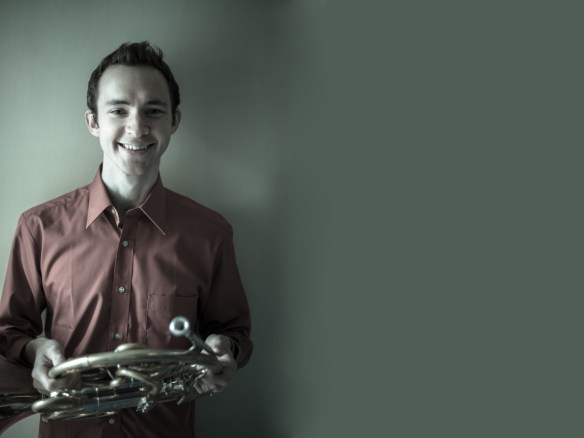
Wigmore Mondays – Alec Frank-Gemmill & Alasdair Beatson: John Casken world premiere

Horn player Alec-Frank Gemill and pianist Alasdair Beatson give the world premiere of a new work by John Casken at the Wigmore Hall

alec-frank-gemmillWigmore Hall, London, 1 February 2016

written by Ben Hogwood

Audio (open in a new window) – available until 3 March

http://www.bbc.co.uk/programmes/b06yrgk5

What’s the music?

James MacMillan – Motet V from ‘Since it was the day of Preparation’ (for solo horn) (2010-11) (8 minutes)

Beethoven – Horn Sonata in F major Op. 17 (1800) (16 minutes)

John Casken – Serpents of Wisdom (world première, 2015) (12 minutes)

Schumann – Adagio and Allegro in A flat major Op. 70 (1849) (9 minutes)

Spotify

Unfortunately neither the MacMillan nor the Casken pieces are available to stream at present. However you can hear the Beethoven and Schumann on the link here:

About the music

There is a pleasing amount of recent music written for the solo horn – and Alec-Frank Gemmill begins this concert with an extract from a much larger work by Sir James MacMillan. Since it was the day of Preparation… is a large, 70-minute piece using texts from St John’s Gospel – but within it are sections for solo instruments from the ensemble, using the sort of structure a composer like Benjamin Britten would have employed. A substantial one of these, for solo horn, is heard here.

John Casken wrote Serpents of Wisdom for this concert and these players, and was inspired by the imagery of a serpent primarily through the poem Celtic Cross by Norman MacCaig. As he wrote he was taken through the idea of a musical representation of the coils of brass that make up the horn. Through the piece he uses some unusual effects such as natural harmonics, which make the horn sound out of tune but are intended.

Beethoven wrote one of the very first sonatas for horn and piano, a three-movement construction that he started – and finished – the day before giving it in concert with the horn player known as Giovanni Punto. Meanwhile Schumann’s only work for horn and piano, the Adagio and Allegro, was written for a member of the Dresden Court Orchestra. It has been a little unfairly taken on by viola and cello players, and is more commonly heard in that version. Reverting to horn and piano enables us to hear why the theme for the Allegro works so well in its original form.

Performance verdict

A pleasant change for a Monday lunchtime from the Wigmore Hall – the first horn recital they have programmed at such a time for years. It was made all the better by the choice of a world premiere, and by the artistry of Alec Frank-Gemmill and Alasdair Beatson, an exciting duo fully justifying their billing as young musicians well worth experiencing live.

Frank-Gemmill is a really excellent player, and took on the Casken with impressive belief and skill. While clearly not an easy piece to play it made a powerful impression – equally so in the piano part, where Beatson had to work hard with some tricky passage work. Although inspired by the coils of brass, Casken’s piece often felt to me as though it was craggy in outline, and while its impression was largely gruff and unforgiving, there were some surprisingly tender asides.

The MacMillan was a striking piece, clearly in homage to Britten – and reminiscent of some of his writing for Dennis Brain – but also showing how it is possible to write quietly for the horn without losing any expression. Frank-Gemmill managed the low notes brilliantly here.

The Beethoven and Schumann were much more conventional but equally enjoyable. Beethoven writes for the horn without any inhibitions and there was plenty of gusto in the outer movements of this performance. The Schumann is a glorious piece, a true musical evocation of happiness, though this account did not completely lift itself off the printed page. No matter, for the new pieces had already left a lasting imprint – and an encore, Glazunov’s Rêverie, made for a lovely finish.

What should I listen out for?

MacMillan

1:41 – MacMillan’s piece has a soft and reverential opening which gives the piece a tonality and also a very low main note, which makes a lovely sound on the horn.

The melody has the appearance of plainchant, and gradually it grows in breadth and confidence. Then around 7:20 the music takes a confrontational approach, whooping excitedly and going all the way up to a remarkably high note at 8:04 – before its relatively calm finish.

Beethoven

11:58 – a brief yet quite understated fanfare from the horn begins the work – and it receives ample support from the more graceful piano theme behind it. A thoughtful second theme is heard at 12:55 before the first section of the first movement is repeated at 14’29. After a short development we hear the main tune once again at 18:15, and the second theme – now in the same key as the main one – at 18:59.

21:04 – a slower movement that begins with a soft and slightly sad air – but it doesn’t last long, as essentially it serves as a long introduction to the final movement, beginning at…

22:30 – quite an angular main tune for this movement, which proceeds in high spirits. The main theme comes back again, signs off brilliantly around 27:27

Casken

29:39 – a brisk start, energetic too. The first of the ‘natural’ notes is heard at 30:13 – you can hear it is out of tune but it is meant to be. The slower music at 30:44 is brooding and paints a relatively austere picture. As the music gets quieter the horn turns to the mute.

There is then an extended piece of writing with impressive energy and stature from the horn, which is required to perform a number of very difficult tasks, usually in cahoots with the piano, which itself has a jagged outline to its music. A slower section runs around 38:30, but then the piece gathers itself for a big finish at 40:15.

Schumann

42:42 – a slow and romantic Adagio, led by the horn, which is largely graceful but has some tricky high notes. This leads into the exuberant Allegro at 46:59. This has a tricky theme with a wide range.

Encore

53:19 – as a soft-hearted encore the pair play the Rêverie in D flat major by Glazunov, which is a warm piece, even when it reaches the depths at 54:55. (4 minutes)

Further listening

This very fine disc from Richard Watkins, on the NMC label, brings together writing for horn from a number of highly respected modern composers, among them Gerald Barry, Peter Maxwell Davies, Robin Holloway, Colin Matthews, David Matthews, Mark Anthony Turnage and Huw Watkins. You can listen here: