Arcana at the BBC Proms: Simone Lamsma, Royal Liverpool Philharmonic Orchestra / Andrew Manze – Vaughan Williams, Britten & Smickersgill

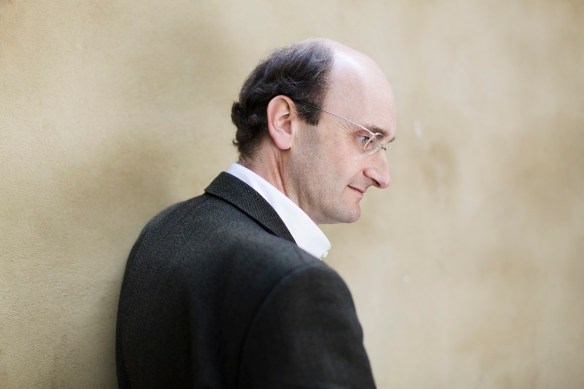
Simone Lamsma (violin), Royal Liverpool Philharmonic Orchestra / Andrew Manze

Vaughan Williams Fantasia on a Theme by Thomas Tallis (1910)
Britten Violin Concerto in D minor Op.15 (1938-9)
Smickersgill A Brick Thrown with Love (2026) [BBC co-commission: World premiere]
Vaughan Williams Symphony No. 9 in E minor (1956-7)

Royal Albert Hall, London
Friday 4 September 2026

Reviewed by Richard Whitehouse Photos (c) BBC / Chris Christodoulou

Andrew Manze’s eleventh appearance at the Proms, during which 28 years he has moved from being a Baroque violinist and director to a symphonic conductor, drew on just over a century of British music for what proved a typically thoughtful and absorbing programme.

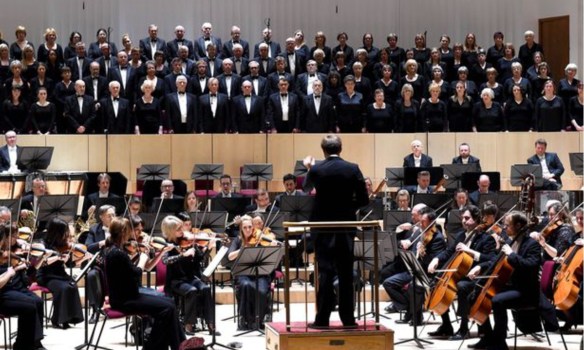
Not consistently successful, though – hence an account of Vaughan WilliamsTallis Fantasia whose avoiding of old-school eloquence leant it a certain uniformity of expression. In particular, the second (nine-piece) orchestra sounded rather un-atmospheric placed just behind the main body, leaving it to the solo quartet to instil a degree of intensity as the piece built toward its fervent if generalized climax before heading into subdued retrospection. Assured playing among the ranks of the Royal Liverpool Philharmonic Orchestra strings did not make it other than an unexceptional reading.

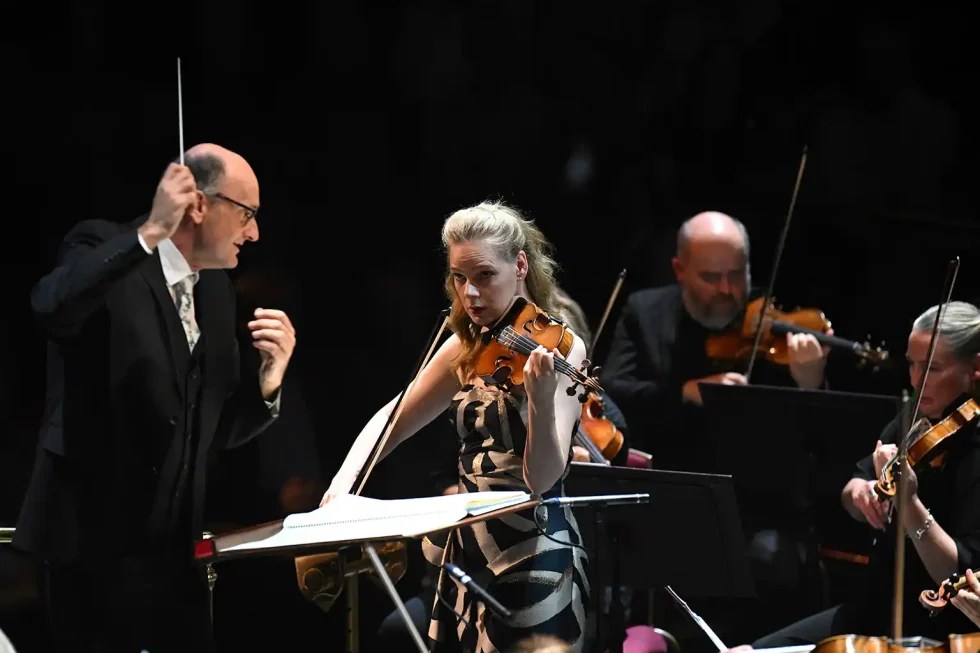
The surprise about Simone Lamsma’s Proms appearance was this being her first, but anyone having heard her in Saint-Saëns’s Third Concerto knows her to be a soloist of the first order -as was the case with Britten’s Violin Concerto. The Moderato’s alternating of enervation and incisiveness was deftly handled, then the Vivace’s impetus did not omit a soulful response in its central episode with a magical transition on piccolos and tuba back to its initial animation. Nor was the cadenza other than integrated thematically into an overall structure as concludes with one of Britten’s most deeply felt passacaglias. Spanish elements which keenly offset any formal severity with expressive spontaneity bring about its powerful climax; the equivocation between hope and resignation unerringly judged at the end of what was a memorable reading.

Those responsive to her earlier ensemble works should have found Carmel Smickersgill’s new Proms piece no less intriguing. Its three (more or less) continuous sections of A Brick Thrown with Love provide an unforced trajectory where reckless negativity is countered with diverse responses, before the coming together in a mood of determined positivity. Lucid textures and iridescent scoring banish any hint of agit-prop with an appealing demonstration of orchestral prowess; one whose warm reception the composer chose to acknowledge from the rear stalls.

Vaughan Williams’s Ninth Symphony receives more hearings than ever in the seven decades since it premiered to a lukewarm response. Manze had the measure of the opening Moderato with its luminous scoring for three saxophones and a restiveness allayed if not resolved by its twilit coda. The ensuing Andante drew potent contrast from its hieratic and human elements, thrown into relief by a flugelhorn refrain (evocatively played by Tom Fountain) that reaches back into the composer’s distant past, then the Scherzo purposefully offset its capricious and militant aspects with a haunting lyricism as comes into its own in the finale. Less protracted than on Manze’s recording (Onyx), this unfolds in ever more elaborate arcs of accumulating activity to what is less a coda than an apotheosis which here was inevitable and unequivocal.

Just what those closing bars are conveying has been the subject of considerable speculation over time. Without overstating his case, Manze allowed this ‘journey of a life’ to envelop the Albert Hall’s expanse in what was an affecting end to a memorable evening’s music-making.

You can listen to this Prom on BBC Sounds until the end of September 2026.

Published post no.3,012 – Wednesday 9 September 2026

In concert – Daniel Pioro, London Philharmonic Orchestra / Andrew Manze – Vaughan Williams: Symphony no.9, Lark Ascending & Tallis Fantasia; Tom Coult Violin Concerto

Vaughan Williams Fantasia on a Theme by Thomas Tallis (1910)
Tom Coult Pleasure Garden: Concerto for Violin and Orchestra (2020) (London premiere)
Vaughan Williams The Lark Ascending (1914-20); Symphony no.9 in E minor (1956-57)

Daniel Pioro (violin), London Philharmonic Orchestra / Andrew Manze

Royal Festival Hall, London
Wednesday 26 October 2022

Reviewed by Ben Hogwood. Concert pictures with thanks to the London Philharmonic Orchestra; picture of Andrew Manze (c) Benjamin Ealovega

Subtitled Visions of England, this concert from the London Philharmonic Orchestra and Andrew Manze was a celebration of Vaughan Williams, marking 150 years since the composer’s birth. As part of an extremely full conducting CV, Manze has a recently recorded cycle of the composer’s nine symphonies under his belt with the Royal Liverpool Philharmonic Orchestra, and clearly holds a special affection for his music.

Two of RVW’s most popular pieces began each half of the concert, but the main act was a relatively rare encounter with composer’s final symphony, completed a year before his death. The Ninth Symphony is a work needing repeated listening before its treasures can be fully revealed, but more recently it has started to get the performances it needs to make an impact. As Manze himself told us from the platform, it also has a deep resonance for the London Philharmonic Orchestra themselves. On the morning of 26 August 1958 they were rehearsing with the composer’s friend and advocate, Sir Adrian Boult, when news came through that Vaughan Williams had died.

This performance delved into the spidery textures that seem to provide a link to the afterlife itself, rather like one of Holst’s later Planets. Also evident were a series of cloudy, watery vistas, such as those found in Debussy’s Nocturnes. Manze probed deeply into the first movement, helped by the baleful colouring of three saxophones, beautifully managed by Martin Robertson, Tim Holmes and Shaun Thompson to enhance the unusual orchestral textures. The tension between the ‘home’ note of E and its immediate neighbour F was ideally weighted, the thoughtful mood tinged with a sense of foreboding.

These emotions underpinned a convincing performance, with references to earlier, angrier music from the Sixth symphony sharply noted and delivered. There were also moments of calm acceptance, as though the composer was reappraising his life with some satisfaction, the darkness held at bay by silvery strings and consoling woodwind.

The second movement, with its curious rhythmic profile, had nicely balanced syncopations, while the scherzo danced as though in an empty room, the music never quite leaving the leash on which it was held. Segueing directly to the finale, Manze’s control and passion could be felt in equal measure, a sense of resolution hard to come by but ultimately found as the music headed for its final three chords, the ‘E’ and ‘F’ finally resolving their dispute. This beautiful symphonic ending offered genuine light in the darkness, a similar sensation to Shostakovich’s final symphonic statement if seen through very different eyes.

The concert opened with the ubiquitous Fantasia on a Theme by Thomas Tallis, less elusive music perhaps but equally profound when casting its eyes back over time. This ideal concert opener speaks as loudly as it surely did in 1910, providing consolation for the fevered brow through subtle but far-reaching statements. On this occasion the performance did not quite have the ‘tingle’ factor, but it did feature beautiful string playing and finely wrought balance between the ‘choir’ of ten instruments, elevated a little at the back of the stage. Meanwhile the main orchestra could boast excellent contributions from four section principals, Pieter Schoeman and Tania Mazzetti (violins), Richard Waters (viola) and Pei-Jee Ng (cello).

The Lark Ascending holds a similarly treasured status among lovers of Vaughan Williams, remaining one of the calling cards of 20th century English music. In the right performance it creates a magical evocation of George Meredith’s lark, as it ‘drops the silver chain of sound’. Daniel Pioro played the solo part with great sensitivity and more than a little panache, choosing not to overindulge in a relatively straightforward opening sequence, but appearing to add a few extra ‘blue’ notes as the violin warmed to its characterisation, ‘lost on his aerial wings’. Manze’s pacing, initially quite fast, settled to a satisfying pace, with ideal balance between soloist and orchestra. The hall responded with commendable silence to the absolute quiet at the end.

A busy evening for Pioro included a role as soloist in the first London performance of Tom Coult’s Pleasure Garden. A four-movement concerto for violin and carefully chosen orchestra, it is effectively a compilation of four very distinct tableaus, taking its lead from constructed ‘natural spaces’ in and around congested living areas.

The first movement, Starting to rain – Zennyo Ryuo appears, found as vivid a portrayal of rain as you could wish to hear – in my mind I was checking the roof for a leak! Throughout the concerto Coult’s keen ear for orchestral colour was evident at every turn, as was his assured writing for violin, brilliantly played by Pioro. The coloristic effects were enjoyable and easy on the ear, harmonies largely consonant but never over-simplified, and the description of events in Dyeing the lake blue for Queen Victoria, Francesco Landini serenades the birds and The art of setting stones was easy to follow. The birds in particular were vividly portrayed by the soloist.

There was however a fragmented feel to the green spaces, as though they had not fully germinated, and this was exaggerated by the stopping of each movement to pause the descriptive process. When the piece did finally finish there was still an element of unfinished business, in spite of its 27-minute length. Repeated hearing would be welcome to give a more thorough appraisal and understanding, as the warm reception would suggest Coult hit the mark for the vast majority of listeners. His music has many attractive traits and he is a gifted orchestrator, so his is most definitely a space to keep under watch.

James Ehnes, Royal Liverpool Philharmonic Chorus & Orchestra / Andrew Manze – Vaughan Williams’ ‘Sea Symphony’ & A Lark Ascending

James Ehnes (violin), Sarah Fox (soprano), Mark Stone (baritone), Royal Liverpool Philharmonic Choir and Orchestra / Andrew Manze (above)

David Matthews Norfolk March (2016)
Vaughan Williams The Lark Ascending (1914)
Hamish MacCunn Overture, The Land of the Mountain and the Flood (1887)
Vaughan Williams A Sea Symphony (Symphony No. 1) (1903-1909)

Philharmonic Hall, Liverpool; Thursday 9 November 2017

Written by Ben Hogwood

This live encounter with Vaughan WilliamsSymphony no.1 (A Sea Symphony) was an unforgettable experience. Under Andrew Manze the Royal Liverpool Philharmonic Orchestra are working their way through a recorded cycle of the composer’s nine symphonies, and this performance was the only chance to catch the fruits of their labours in the live concert hall.

There was a last-minute change to the solo ranks, baritone Mark Stone replacing the indisposed Andrew Foster-Williams, but his voice was perfectly suited to the occasion. It was twinned with the ringing soprano of Sarah Fox, and the two dovetailed beautifully in the outer movements. One of many highlights of the performance was the nocturnal glint of the moon on the waves for the second movement, On The Beach At Night Alone, which was evocatively cast.

The Royal Liverpool Philharmonic Choir – over 100strong in this performance – were on superb form, sharply rehearsed and clear in diction, meaning there was no need for the accompanying words. They found the swell of the waves with unerring confidence and passion. Manze clearly loves this music, and brought the Scherzo to a half with shattering precision before grasping the last movement’s ebb and flow to great satisfaction, making good sense of what can be a long movement in the wrong hands.

Prior to this we enjoyed another encounter with the raw elements through Hamish MacCunn’s overture, The Land of the Mountain and the Flood. A tuneful work, it was immediately appealing through the tasteful ornamentation of the Scotch snaps in the cellos’ melody at the start. The music blossomed under Manze’s direction, though could have been even more exuberant in its closing pages.

Perhaps this was because it followed a rapt and incredibly restful performance of Vaughan Williams’ A Lark Ascending, his famous response to the George Meredith poem of the same name. Under the spell of James Ehnes‘ violin, we climbed effortlessly into the sky, ending the ascent in barely audible song as the bird disappeared from earshot. It was proof that despite the ubiquity of the ‘Lark’, Vaughan Williams still holds the ability to stop the listener in their tracks.

The first item in the concert was deceptively named as David MatthewsNorfolk March. It was in fact a concert performance of Vaughan Williams’ Norfolk Rhapsody no.3, a piece lost in the wake of its first performance in 1906. Matthews however had a detailed programme note about the piece with which to work, describing its structure and folksong origins, and responded with a piece that was well above mere pastiche. In fact it proved a poignant reminder of the climate in which it was written, anticipating World War I in eight years’ time. There, alongside the cheery and resolute folk tunes, was uncertainty and barely concealed dread. Just over 100 years on it proved a timely reminder for many of those in the audience young and fortunate enough not to have experienced such times.

Further listening and reading

You can read in more detail about David Matthews’ Norfolk March here

Photos of Andrew Manze and James Ehnes (c) Benjamin Ealovega

Meanwhile a Spotify playlist with music from the concert (with the exception of the Matthews, which has not yet been recorded) can be accessed below: