This week we learned the very sad news of the death of talented cellist David Watkin, at the age of 60. Watkin had to stop playing cello 11 years ago due to scleroderma, but as this moving tribute from fellow Scottish Chamber Orchestra cellist Su-a Lee shows, he was a much-loved character whose influence continued to be an overwhelmingly positive one.
I had the good fortune to witness David in action for the Scottish Chamber Orchestra, and his charismatic playing – with good humour clear to see – left a lasting mark. I am sure that in addition to the Scottish Chamber Orchestra the members of The Academy of Ancient Music, The King’s Consort and the Orchestre Révolutionnaire Et Romantique – to name just three ensembles Watkin played with – would concur.
Watkin made relatively few commercial recordings, but it is very much a case of quality over quantity. His collection of VivaldiCello Sonatas for Hyperion is proof of that:
Even more deserving of praise is his cycle of BachCello Suites, made for Resonus and carrying remarkable poise and personality, which these two excerpts illustrate:
Strings of the City of Birmingham Symphony Orchestra / Eugene Tzikindelean (above)
Schubert arr. Mahler String Quartet no.14 in D minor D810 ‘Der Tod und das Mädchen’ (1824, arr. 1896) Vivaldi Le quattro Stagioni Op.8 nos. 1-4 (1718-20) Piazzolla arr. Desyatnikov Cuatro Estaciones Porteñas (1965-9, arr. 1996-8)
Town Hall, Birmingham Saturday 22 April 2023
Reviewed by Richard Whitehouse
Acoustically transformed following its refurbishment some 15 years ago, a commendably full Town Hall proved to be the ideal venue for this judiciously balanced programme featuring the strings of the City of Birmingham Symphony Orchestra with its leader Eugene Tzikindelean.
Mahler never fully completed his arrangement of Schubert’s Death and the Maiden quartet, but this has enjoyed not a few hearings since its realization by David Matthews with Donald Mitchell four decades ago. Tzikindelean presided over a brisk, incisive opening Allegro (its exposition-repeat not unreasonably omitted), and if the 30-strong ensemble had not quite the tonal depth or dynamic range that Mahler likely envisaged, there was no lack of immediacy – at least until momentum faltered slightly in the later stages of the reprise then into the coda.
No such uncertainty affected the Andante (the only movement elaborated by Mahler), whose variations on Schubert’s earlier song exuded a cumulative intensity up to the theme’s soulful reappearance toward the close. Nor did the Scherzo lack for truculence over its brief yet vital course, assuaged by the trio’s wistful elegance, while the final Presto unfolded as a tarantella as agile as it was malevolent. Tzikindelean kept his players on a tight if never inflexible rein through to a coda that brought this (for the most part) powerful reading to its decisive close.
Tzikindelean having vacated the leader’s chair for centre-stage, the second half consisted of Vivaldi’s The Four Seasons interspersed with Astor Piazzolla’s take on the seasons from the perspective of Buenos Aires. Brought together a quarter-century ago (at the behest of Gidon Kremer for his group Kremerata Baltica) by Leonid Desyatnikov, with numerous references to the Baroque master, the outcome is a provocative amalgam between ‘ancient’ and ‘modern’ which the CBSO strings rendered with alacrity. Among the highlights from the Vivaldi might be mentioned the plaintive eloquence of the Largo from Spring, the coursing impetus of the Presto from Summer, alternation of the robust and poetic in the initial Allegro of Autumn, or that discreetly alluring interplay of legato and pizzicato writing in the Largo from Winter.
Heard in the sequence ‘Summer-Autumn-Winter-Spring’, the tangos by Piazzolla offer any number of anticipations whether melodic or textural. A significant feature of Desyatnikov’s arrangement is the prominence accorded to the leaders from each section which were seized upon gratefully – not least by cellist Eduardo Vassallo, whose Piazzolla recordings with his ensemble El Ultimo Tango are a masterclass in performance from the chamber perspective. While each of the present pieces is more than the sum of its parts, surely the most arresting instance is that towards the close of ‘Spring’ when the harpsichord (ably taken by Masumi Yamamoto) emerges with an allusion to Vivaldi’s opening theme – a coup de théâtre that is seldom less than spellbinding, and duly worked its magic as part of tonight’s performance.
An impressive showing, then, for the CBSO strings and Tzikindelean – who will hopefully be making further appearances both as soloist and director in the coming season. Certainly, the repertoire for string orchestra is one whose exploration should prove well worthwhile.
You can read all about the 2022/23 season and book tickets at the CBSO website. You can read more about Eugene Tzikindelean here, and more about El Ultimo Tango here
G. Gabrieli Canzoni – primi toni a 8; duodecimi toni a 8 (c1597) Vivaldi Concerto for Four Violins in B minor RV580 / Op.3/10 Petrassi Concerto for Orchestra No. 5 (1954-5) Puccini Capriccio sinfonico (1883) De Sabata Juventus (1919)
Benjamin Gilmore, Julia Ungureanu, Julián Gil Rodríguez, Thomas Norris (violins), London Symphony Orchestra / SirAntonio Pappano
Barbican Hall, London
Thursday 2 June 2022
Written by Richard Whitehouse
What better way to mark Queen Elizabeth II’s Platinum Jubilee than with two concerts providing a decent overview of Italian orchestral music with the London Symphony Orchestra and its chief conductor designate Sir Antonio Pappano. That relatively little of this music has managed to enter the standard repertoire only makes revivals such as these the more worthwhile.
Tonight’s programme began off-stage with two Canzoni by Giovanni Gabrieli played by LSO brass from the centre of the lower circle – Pappano facing the audience to conduct. Although a more spacious and terraced acoustic would have presented these to better advantage, their hieratic grandeur as well as intricately contrapuntal texture was an admirable foil to Vivaldi‘s Concerto for Four Violins which followed onstage. Published in his ground-breaking collection L’estro armonico, its bracing outer Allegros frame a brief while unpredictable Largo whose disjunctive contrasts of tempo and technique brought the best out of a quartet drawn from the LSO front desks and notably well-matched in temperament.
From the early 18th to mid-20th century was less of an aesthetic wrench than might be thought, the Fifth Concerto for Orchestra by Goffredo Petrassi embodying various of those facets as set out by his musical antecedents. Written for the Boston Symphony and long-serving director Charles Munch, this is arguably the most representative of its composer’s eight such works in its amalgam of technical virtuosity with that personal adaptation of serial thinking which Petrassi pursued during the post-war era. Moreover, its outwardly simple format of two movements each following a slow-fast trajectory belies a subtler and more organic evolution – such that an atmospheric prelude intensifies into a capricious scherzo whose provisional close makes possible what follows. Here, an increasingly restive intermezzo elides into a Dionysian toccata with brass and percussion to the fore – then a pensive epilogue returns the music to the inwardness from which it had emerged. A superb performance from the LSO, and a timely revival of this not so minor masterpiece.
His operas brought the orchestral component of Italian opera to a new level of sophistication, but Puccini wrote little for orchestra alone. Essentially his graduation exercise, Capriccio sinfonico is equally a ‘statement of intent’ with its unfolding from a sombre opening (later to be redeployed in Edgar), through an energetic central phase (its main idea familiar as the opening of La bohème), to a modified reprise of that first section which brings about a gently fatalistic close. Pappano duly guided the LSO through an assured reading of music known ‘by default’, making one regret that Puccini’s later focus on opera to the virtual exclusion of all else left no comparable orchestral work from his maturity.
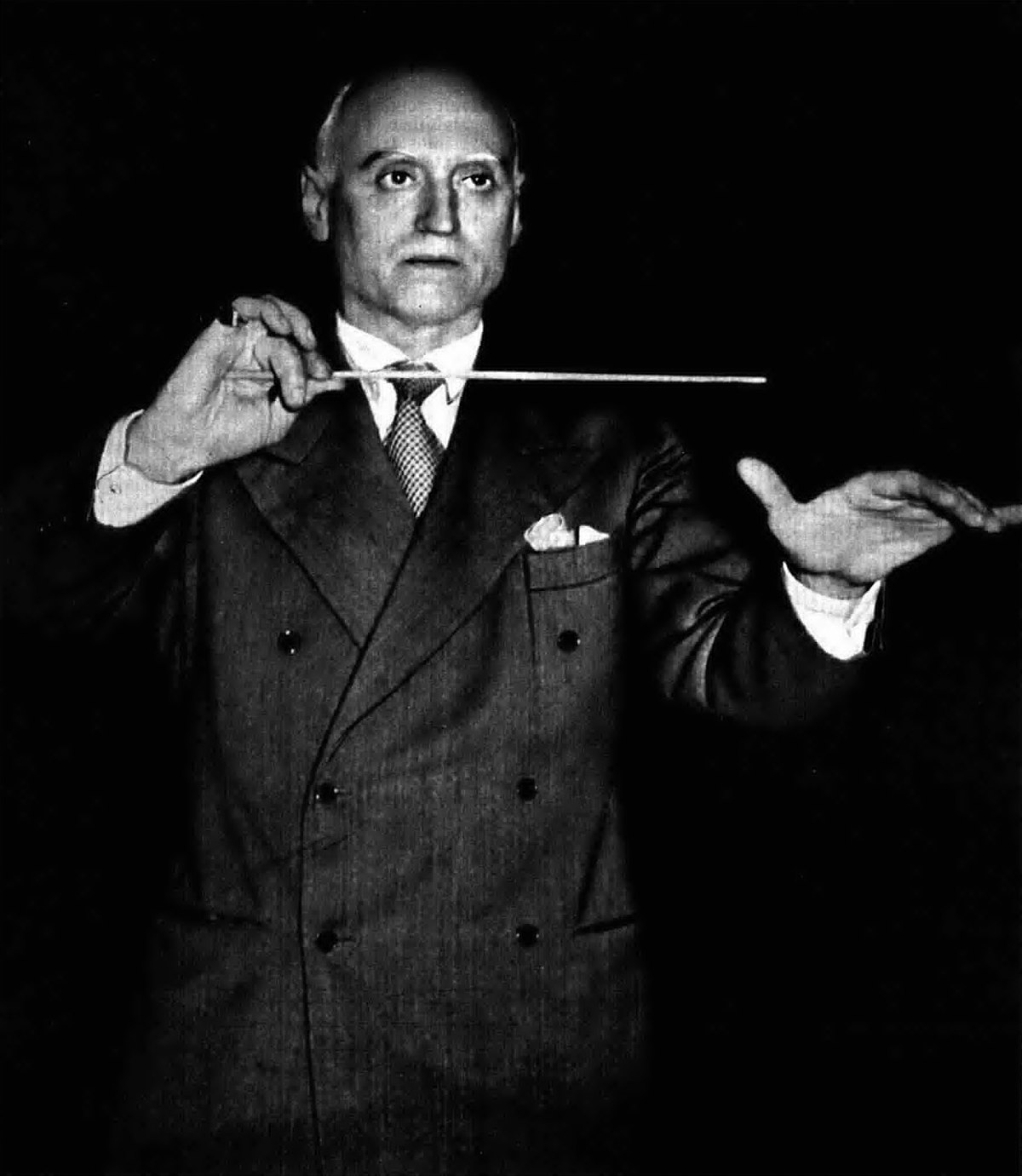
Much the same might be said of Victor de Sabata (above), whose international career as a conductor from his late thirties left him with little time or inclination to compose. A sequence of symphonic poems from around the early 1920s confirms sure mastery of the orchestra, and if Juventus is hardly the deepest of these, its dramatic flair and gestural immediacy are not to be gainsaid. Here, too, there is a three-part structure – the vaunting aspiration of youth becoming subsumed into the trials and setbacks which come with experience, before a revival of those earlier convictions ensures a close of blazing affirmation. Other composers might have invested such a sequence with a dialectical sense of change and attainment, but de Sabata is content to take these implications at face value – while investing his music with a greater subtlety and resourcefulness than it has often been credited for (not least by the writer of this evening’s programme note). This was certainly evident in Pappano’s take on a piece which could yet attract plaudits for other than its name.
As if mindful of the context in which this concert was heard, Pappano opened the second half with a rendering of the National Anthem – somewhat to the surprise of an audibly bemused audience, and presumably not to be repeated for Sunday’s follow-up programme that features Respighi and Dallapiccola at their (very different) communicative best.
To read more on the London Symphony Orchestra’s current season, visit their website
Parry I Was Glad (1902, revised 1911) Vivaldi Gloria in D major RV589 (c1715) Eugene Butler Song of Mine, Depart (unknown) Fanny Mendelssohn Overture in C major (c1830-32) Felix Mendelssohn Symphony no.3 in A minor Op.56 (1831-42)
Chapel of St Augustine, Tonbridge School, Tonbridge Saturday 20 November 2021
Written by Ben Hogwood
There was a keen air of expectation in the regal surroundings of the Chapel of St Augustine at Tonbridge School. The pandemic has wrought havoc with choral and orchestral plans over the last two years, and as such this was the first opportunity for the Tonbridge Philharmonic Society to celebrate their 75th anniversary. They did so with a new music director, Naomi Butcher (below) at the helm – and she delivered a typically enterprising programme.
There could hardly have been a more appropriate way to start than with Parry‘s jubilant anthem I Was Glad, the choir singing the opening line as one. This was a terrific performance, the audience in spatial stereo as the sound of the organ, commandingly played at the south end by Julian Thomas, and the choir, at the north end, met in the middle. That both forces were so closely aligned said much for Butcher’s musical instincts.
The new music director – the Philharmonic Society’s first woman conductor – introduced herself, in the process revealing the enthusiasm and passion at the heart of her conducting. There was great musicality, too, evident throughout a vibrant and magnificently sung account of Vivaldi’s Gloria. The daring choice of a fast tempo for the Gloria itself was a challenge met head on by the choir, while the fugue of Cum Sancto Spiritu was given impressive authority by the spirited bass section.
The two soloists, soprano Rebecca Milford and mezzo-soprano Katie Macdonald, found the ideal balance with a reduced orchestra to fill the chapel in the arias. The Et in terra pax section was suitably darker in colour, prompted by Vivaldi’s minor-key harmonies, before Macdonald’s fulsome mezzo came into its own for the Qui sedes section. Meanwhile Milford’s clear soprano was the ideal foil for the sensitively played continuo group in the Domine Deus, giving full voice to Vivaldi’s inspiration.
To finish the first half we heard Eugene Butler’s Song of Mine, Depart, a setting by the prolific American composer of verse by Paul Verlaine. This made an attractive encore piece, its lilting refrain nicely phrased by the choir with melodic keyboard accompaniment.
Tonbridge Philharmonic concerts are known for their original repertoire selections, and the inclusion of Fanny Mendelssohn’s Overture in C major – her only known orchestral piece and seemingly a recent discovery – made for a bracing beginning to the second half. The orchestral writing is surprisingly full for its time, to these ears even pointing the way towards Tchaikovsky and Sibelius, but there was still room for the attractive melodies to make themselves known, especially the balletic second theme.
The Overture led straight into the Scottish Symphony by Fanny’s brother, FelixMendelssohn – the siblings closely linked throughout their personal and professional lives. The Scottish, third of five in Felix’s symphonic canon, is one of the jewels in his output. Its craft and wholesome melodic invention were brought to the fore here, with tempo choices from Butcher (above) that felt just right. These included the solemn opening – where the woodwind choir deserve great credit for their phrasing – to the open-air scherzo, where the violins and solo clarinet (Amanda Curd) were especially good. The Scottish outdoors was painted vividly here, its fresh air palpable – as was also the case in a heartfelt slow movement where Butcher cajoled some lovely phrasing from the orchestra. The finale was a darkness to light experience, thoughtful to begin with but blossoming as the music moved into the major key and an ultimately triumphant conclusion.
It is worth allowing for the fact that many musicians may have lost the ability or even motivation to practice during the pandemic – but there was no evidence of standards having changed here. Rather, with passionate performances from choir, orchestra and conductor alike, Naomi Butcher has brought a breath of fresh air to the Tonbridge Philharmonic Society. Her next few concerts include Prokofiev, Rachmaninov, Duruflé and Sibelius, and if they live up to the standards set by this enticing opener they will be well worth catching.
For further information on the Tonbridge Philharmonic Society clickhere
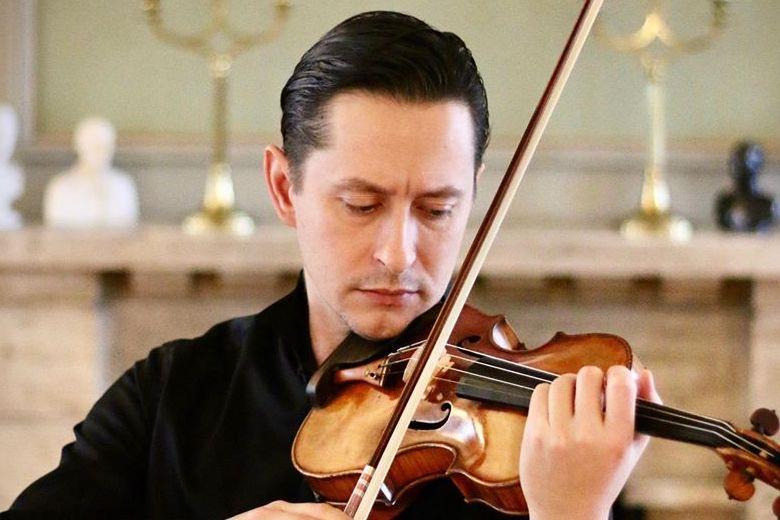
Jonathan Martindale (violin, below), City of Birmingham Symphony Orchestra / Michael Seal (above)
Dvořák Carnival Op.92 (1891) Vaughan Williams The Lark Ascending (1914/20) Elgar Chanson de matin Op.15/2 (1889) Grieg Peer Gynt Suite no.1 Op.46 (1875/88) – no.1, Morning; no.4, In the Hall of the Mountain King Mendelssohn A Midsummer Night’s Dream Op.21 (1826) Vivaldi The Four Seasons Op.8 (1718/20) – no.2 in G minor RV315 ‘Summer’ Price Symphony no.1 in E minor (1931-2) – Juba Dance Tchaikovsky The Nutcracker Op.71 (1892) – Waltz of the Flowers
Symphony Hall, Birmingham Friday 2 July 2021 (2pm)
Written by Richard Whitehouse Photo of Jonathan Martindale courtesy of Upstream Photography
The penultimate event in the City of Birmingham Symphony Orchestra’s current season, this afternoon’s Summer Classics featured a wide-ranging selection of pieces that between them spanned over two centuries, and whose ‘feel good’ factor at no time precluded stylish or committed playing.
With longstanding associate director Michael Seal at the helm, the orchestra made the most of Dvořák’s effervescent Carnival overture; the alluring pathos of its central interlude accorded due emphasis, and with some eloquent woodwind solos. Its popularity during recent years has made Vaughan Williams’s The Lark Ascending a regular inclusion in such programmes, and Jonathan Martindale (below, who also led the concert) gave a thoughtful while never flaccid reading – most perceptive in the middle section with its folk-like whimsy and fanciful evocations of birdsong. The CBSO responded with limpid dexterity, the whole performance a reminder that this work is best tackled as a concertante piece and by a player (recalling such as Hugh Bean, Iona Brown and, more recently, Richard Tognetti) who knows the orchestra from the inside.
Next came an ingratiating take on Elgar evergreen Chanson de matin, then excerpts from the First Suite of Grieg’s incidental music to Peer Gynt – a rapturous Morning and stealthy In the Hall of the Mountain King skirting headlong terror at the close. Mendelssohn’s overture to A Midsummer Night’s Dream made for an unlikely but effective centrepiece – the highlight being those fugitive imaginings towards its centre, along with the disarming eloquence of its final bars where the teenage composer conjures a fulfilment he was only rarely to recapture.
The Summer concerto from Vivaldi’s The Four Seasons again saw Martindale as soloist in an account that lacked little of that rhythmic vitality his contemporaries (notably Bach) seized on with alacrity; nor was there any absence of poise in its atmospheric second movement. One who has come in from the cold partly through the recovery of her manuscripts, Chicago-based Florence Price broke with convention by introducing the Juba Dance into her symphonies in lieu of a scherzo; the CBSO responding in full measure to its rhythmic verve. A winning harp solo from Katherine Thomas launched Waltz of the Flowers from Tchaikovsky’s ballet The Nutcracker and ended the main programme in fine style – Seal and the CBSO acknowledging the applause with the final ‘galop’ from Rossini’s William Tell overture as a dashing encore.
Throughout the concert, film expert Andrew Collins interspersed proceedings with his remarks and recollections (not least on that seminal 1970s supergroup The Wombles). The music itself was accompanied by varying shades and colours of lighting, but these rarely seemed intrusive – not least compared to the garish ‘Moulin Rouge’ effects routinely encountered nowadays at the Proms. Certainly, anyone in the process of getting the know just what classical music was all about, and those merely in search of a pleasurable afternoon’s listening, were well served.
Next Wednesday brings the last in this current series of concerts, the CBSO being conducted by Joshua Weilerstein (who is replacing an ‘unable to travel’ Edward Gardner) in an enticing programme of Judith Weir, Prokofiev (with the violinist Alina Ibragimova) and Beethoven.
You can find information on the final concert in the CBSO’s season at their website. For more information on composer Florence Price, click here






 Arcana.fm