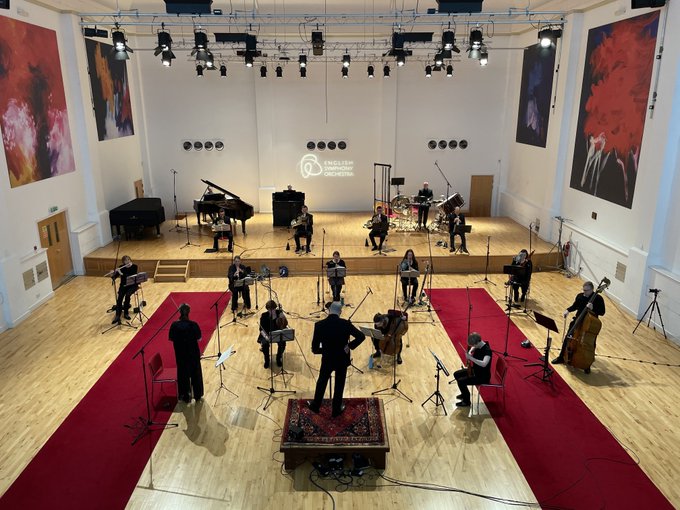
Online Concert – April Fredrick, Stacey Rishoi, Brennen Guillory, Gustav Andreasson, Colorado MahlerFest Orchestra / Kenneth Woods: Mahler’s Liederabend

Mahler’s Liederabend: A Recreation of Mahler’s Concert in Vienna on 29th January 1905

Mahler
Des Knaben Wunderhorn – selection (1892-1901)
Kindertotenlieder (1901-4)
Vier Rückert-Lieder (1901)

April Fredrick (soprano), Stacey Rishoi (mezzo-soprano), Brennen Guillory (tenor), Gustav Andreasson (bass), Colorado MahlerFest Orchestra / Kenneth Woods

Macky Auditorium, 1595 Pleasant Street, Boulder CO (Links to concert sections embedded below)
Saturday 20th May 2023

by Richard Whitehouse

In an event as inclusive as Colorado’s MahlerFest, it was happily inevitable the Liederaband Mahler gave in Vienna on 29th January 1905 be recreated and, while the decision to distribute these songs between four singers was not strictly ‘authentic’, it yet emphasized their variety of thought and expression more readily than had one vocalist been present throughout. What remained consistent was the creative zeal of Mahler at a crucial juncture in his composing, as he left behind the fantastic realm of his earlier music for greater realism and even abstraction.

The first half was of seven songs from Des Knaben Wunderhorn, which collection dominated Mahler’s thinking the previous quarter-century. Two of them are ostensibly dialogues, but the absence of a second singer mattered little when April Fredrick rendered that interaction of the yearning woman with her condemned lover in Lied des Verfolgten im Turm so graphically; as too the more wistful imaginings of separated lovers in Der Schildwache Nachtlied. She also underlined the glancing irony of Des Antonius von Padua Fischpredigt and the playful whimsy of Rheinlegendchen with understated assurance. Brennen Guillory pointed up the deadpan humour of Trost im Unglück and if Der Tamboursg’sell felt a little too earnest, the stridency that increasingly borders on aggression of Revelge was bracingly delivered.

Here, as elsewhere, adherence to Mahler’s scoring, with its emphasis on woodwind and brass, brought out its evocative quality which outweighed any passing thinness of tone in the strings. This was even less of an issue during the sparser textures of Kindertotenlieder, whose songs find universal truths in Friedrich Rückert’s intimate ruminations. Gustav Andreasson seemed a little raw of timbre in Nun will die Sonn’ so hell aufgeh’n, though the yearning fatalism of Nun seh’ ich wohl, warun so dunkel Flammen was tangibly conveyed, as too was the aching poignancy of Wenn dein Mütterlein. The bittersweet elegance of Oft denk’ ich, sie sind nur ausgegangen felt slightly undersold, but not those contrasts of In diesem Wetter as this final heads from fraught anguish toward a repose from which all dread has been wholly eradicated.

Kenneth Woods directed the Colorado MahlerFest Orchestra with that unforced rightness evident from his earlier Mahler performances. Never more so than the four Rückert-Lieder which ended this programme – albeit in a discreet but effective reordering from that of 118 years before. Thus, the capricious whimsy of Blicke mir nicht in die Lieder! preceded the deft enchantment of Ich atmet einen Linden duft; Stacey Rishoi proving as responsive to these as to Um Mitternacht, with its crepuscular winds and majestic climax with swirling arpeggios on harp and piano. Fittingly, the sequence closed with Ich bin der Welt abhanden gekommen – the finest of Mahler’s orchestral songs in its rapt serenity, Rishoi’s conveying of Rückert’s otherworldly sentiments more than abetted by Lisa Read’s eloquent cor anglais. If recreating the Liederabend meant no place for Liebst du um Schönheit (now available in a far more idiomatic orchestration by David Matthews), which might have made a pertinent encore), its absence did not lessen the attractions of this enterprising and successful concert.

Click on the name for more information on Colorado MahlerFest 2024, and on the artist names for more on Kenneth Woods, April Fredrick, Stacey Rishoi, Brennen Guillory and Gustav Andreasson
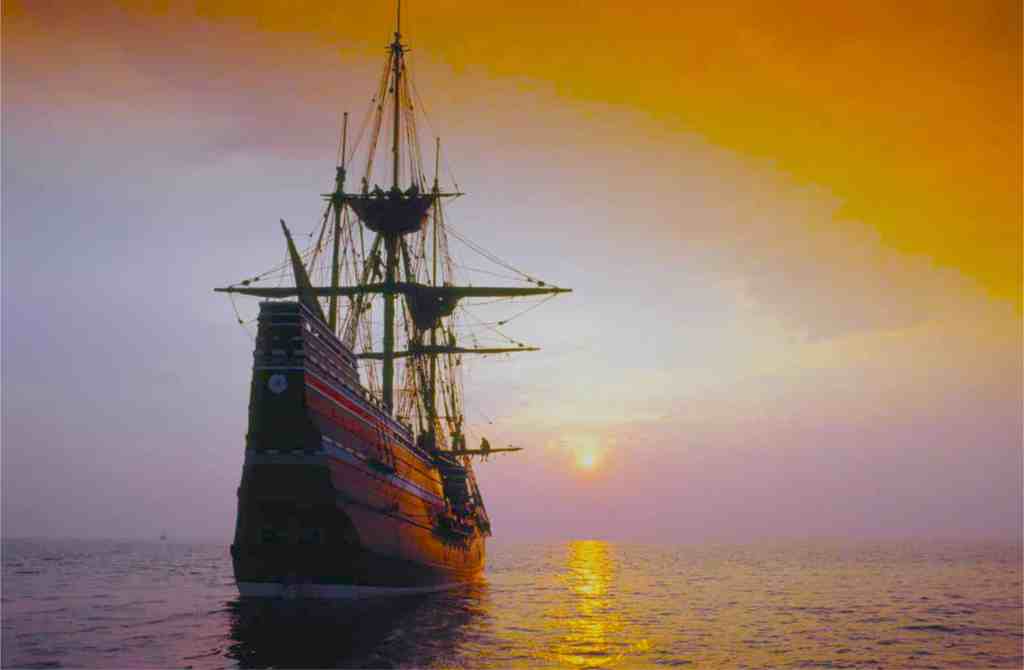
Online now – Philip Sawyers’ Mayflower on the Sea of Time

The latest addition to the English Symphony Orchestra library of online music is the first performance of Philip Sawyers‘ major choral work, Mayflower on the Sea of Time.

With its ‘luminous and ecstatic choruses’ picked out by Richard Whitehouse in his review of the initial concert, this is an affirmative and major piece by one of the finest contemporary English composers.

Soprano April Fredrick and baritone Thomas Humphreys are joined by the ESO Chorus and English Symphony Orchestra in the premiere from Worcester Cathedral, given on 17 June this year.

You can watch a preview clip below, and access the full performance at the English Symphony Orchestra website.

In concert – April Fredrick, Thomas Humphreys, English Symphony Chorus & Orchestra / Kenneth Woods: Voyage to America

April Fredrick (soprano), Thomas Humphreys (baritone), ESO Chorus, English Symphony Orchestra / Kenneth Woods

Dvořák Symphony no.9 in E minor Op.95 ‘From the New World’ (1893)
Sawyers Mayflower on the Sea of Time (2018) [World Premiere]

Worcester Cathedral
Saturday 17 June 2023

Reviewed by Richard Whitehouse

This final concert of the season by the English Symphony Orchestra brought us the premiere of a piece delayed from three years ago. Philip SawyersMayflower on the Sea of Time was to have been launched at the Three Choirs Festival in April 2020, but the pandemic derailed this as so many other events. Happily, the tenacity of conductor Kenneth Woods has paid off such that the composer’s largest work so far was finally heard, and in the venue originally intended, making for a notable addition to the English choral tradition and one wholly on its own terms.

Commissioned to mark the 400th anniversary of the sailing of the Mayflower from Leiden to Plymouth and thereby founding the United Sates of America, this is an oratorio in concept but equally a choral symphony in its overall design and thematic cohesion. Its libretto, mainly by the artist Philip Groom, features set-pieces for various figures from the Old and New Worlds duly taken by soprano and baritone soloists (those for treble being allotted to sopranos in the chorus), but these along with ones for chorus are drawn into an inherently musical evolution.

Formally, there are four continuous parts. Persecution and Journey, a sonata design such as informs the Pilgrims’ flight from religious persecution and their decision to cross the Atlantic; Arrival in the New World, a slow movement charting their embarkation and tentative initial interaction with native peoples; Survival and Making our Community, a scherzo where the Pilgrims’ industriousness and idealism quickly becomes its own justification; and Our New World, a rondo-finale whose looking to the future is framed by choruses of growing fervour.

As befits such a work, the choral writing is both extensive and resourceful – not least when it elides between depicting Pilgrims or Natives, and that of a more abstract commentary. No less assured, the writing for soprano and baritone allows Sawyers’ lyrical impulse free reign – not least in extended sections toward the end of the second and fourth parts; the latter, especially, rendering comparable passages by Delius or Tippett from a perspective wholly of the present. On either side, luminous and ecstatic choruses accentuate an essentially affirmative message.

The contributions of April Fredrick (no stranger to Sawyers via her long association with the ESO) and Thomas Humphreys could hardly be faulted for commitment or insight, while that of the ESO Chorus exuded a power and immediacy amplified by the resonance of Worcester Cathedral’s acoustic as to belie its relatively modest numbers. The ESO gave its collective all throughout, projecting the textural intricacy and emotional heft of music whose longer-term formal integration was securely conveyed through Woods’s precise yet unobtrusive direction.

Before the interval, Woods gave a notable account of Dvořák’s Ninth Symphony. The poised anticipation of its introduction and visceral drama of its coda were highlights of the opening Allegro, proceeded by a Largo of an eloquence epitomized by rapt cor anglais playing from Louise Braithwaite. Contrast between the incisiveness of the Scherzo’s outer sections and the lilting delicacy of its trio was pointedly underlined, then the final Allegro surged onward to a coda paying tribute to 19th-century symphonism while blazing a trail for what was to come.

Further information on the ESO’s latest Philip Sawyers release (Nimbus NI6436) can be found at the English Symphony Orchestra website. For more on the artists in this concert, click on the names of April Fredrick, Thomas Humphreys, Kenneth Woods and the English Symphony Orchestra themselves – and click here for more on composer Philip Sawyers.

In concert – April Fredrick, English Symphony Orchestra / Kenneth Woods: Mozart, Richard Strauss, Doolittle & Dvořák

Mozart Adagio and Fugue in C minor K546 (1783, rev 1788)
Richard Strauss (arr. Burke) Morgen! Op.27 no.4 (1894)
Doolittle A Short, Slow Life (2011)
Dvořák (arr. Burke) Rusalka B203 – Song to the Moon (1900)
Mozart Symphony no.39 in E flat major K543 (1788)

April Fredrick (soprano), English Symphony Orchestra / Kenneth Woods

Great Malvern Priory, Malvern
Wednesday 15 June 2022

Written by Richard Whitehouse

This latest concert in its current season found the English Symphony Orchestra back at the Priory in Great Malvern in a programme with, at its centre, a contrasting triptych of vocal items from April Fredrick which continued her Affiliate Artist role in impressive fashion.

At its centre was a performance (the UK premiere?) of A Short, Slow Life, Emily Doolittle’s setting of a poem which finds Elizabeth Bishop at her most Dickinson-like with its reflection on growing up in a seeming Arcady latterly undone as much by existential as environmental factors. Enfolding and intricate, its scoring for nine instruments offers an evocative context for the vocal line to emerge from and with which to interact – Fredrick making the most of their dialogue in this winsome and, thanks to Kenneth Woods, finely co-ordinated reading.

Either side came chamber reductions from Tony Burke. In Morgen!, Strauss’s setting of John Henry Mackay, it was the understatement of Fredrick’s approach that compelled by drawing this relatively early song into the emotional orbit of those from half-a-century later. In ‘Song to the Moon’ from Dvořák’s opera Rusalka, her unaffected eloquence arguably came through more directly in an arrangement that (rightly) predicated the soloistic nature of the orchestral writing. Technically immaculate, Fredrick’s artistry was itself never less than life-affirming.

Framing this programme came two not unrelated works by Mozart. Written in 1783 when the composer was extending the formal and expressive weight of his music by intensive study of Bach and Handel, this C minor Fugue’s two-piano austerity took on a greater richness when arranged for strings and prefaced by a brief if searching Adagio which throws its successor’s contrapuntal density into greater relief. The ESO duly responded with playing of sustained trenchancy that incidentally reminded one no less than Beethoven took its example to heart.

Having given perceptive accounts of Mozart’s 40th and 41st symphonies earlier this season, it made sense that Woods and the ESO to include the 39th as opens what increasingly seems a symphonic triptych in design and intent. This performance was no less idiomatic – the first movement’s introductory Adagio imposing yet flexible so that its ‘heroic’ quality with those wrenching harmonies was never in doubt, the main Allegro building up tangible momentum through a tensile development then an even briefer coda decisive in its impetus and sweep.

Even more than its successors, the Andante is the heart of the work – among the most striking instances of that ineffable pathos Mozart made his own. Inward while with no lack of forward motion, it made a telling foil to the Menuetto with its bracing outer sections and a trio which featured a delectable expressive pause prior to a last hearing of the clarinet’s amiable melody. Nor was there any lack of wit in the scintillating finale, the repeat of its second half necessary for one of Mozart’s rare incursions into the ‘false ending’ beloved of Haydn to leave its mark. A fine conclusion, then, to another worthwhile concert by the ESO which returns early next month for a very different, all-American programme that includes a rare outing for the full-length version (including the ‘hurricane’ episode) of Copland’s ballet Appalachian Spring.

For further information on April Fredrick, click here, and for more on Emily Doolittle click here. To find out more about the artists, click on the names for more Kenneth Woods and the English Symphony Orchestra.

Live review – April Fredrick, David Stout, English Symphony Orchestra / Kenneth Woods: Bartók – Bluebeard’s Castle

mahler-9-woods

April Fredrick (soprano, Judith), David Stout [baritone (Bluebeard) / speaker (Prologue)], English Symphony Orchestra / Kenneth Woods

Bartók arr. van Tuinen / Karcher-Young Bluebeard’s Castle (1911/12)

Wyastone Concert Hall, Monmouth
Recorded June 16-17 2021 for online broadcast, premieres 13 August 2021

Written by Richard Whitehouse

The English Symphony Orchestra’s season of online concerts drew to its close tonight with a performance of Duke Bluebeard’s Castle, the only opera by Bartók and seminal work on the cusp between the late-Romanticism and nascent Modernism from the early twentieth century.

While its libretto by Béla Balázs is susceptible to interpretation, that concerning the ultimate impossibility of meaningful human communication is surely the decisive factor for Bartók’s setting of what became his longest work and his most explicitly personal statement. Yet this emotional scope never results in a lack of formal cohesion or expressive focus, ensuring that the duo-drama unfolds both inevitably and inexorably towards a fateful denouement that – by no means coincidentally – brings the piece full circle in terms of its underlying introspection.

A piece, then, of epic sweep but whose climactic moments only rarely dominate music that is (surprisingly?) well suited to reduction of a kind undertaken here by Christopher van Tuinen and revised by Michael Karcher-Young. The 25-strong ESO copes ably with those undulating contrasts in mood and texture that underpin the traversal of the protagonists through the castle and its environs, through to a culmination whose outcome feels no less tragic for having been ordained almost from the outset – a fable of disillusion whose impact comes across unscathed.

Of course, such considerations are relative to the success of the two singers in conveying the range of their respective roles. Whether or not she had previously sung that of Judith, April Fredrick has its full measure as she moves from confidence, via wariness and imploration, to reluctant acceptance of the part she must play in the completion of a journey that other wives have undergone before her. Rendered with vibrancy but no lack of finesse, this is a perceptive assumption, and one which Fredrick will hopefully be able to repeat on stage before too long.

Not that David Stout is necessarily upstaged in his portrayal of Bluebeard – emerging here as no misogynist, still less a murderer, than a conflicted figure whose avowals of love can never outweigh those inherent failings of self that have led to his repeating the same pattern of loss as before. Having previously taken on the spoken Prologue with thoughtful anticipation, Stout projects the role with no mean impetus as well as a keen eloquence that comes to the fore in those fateful later episodes when the sixth and seventh doors have almost to be prized open.

Otherwise, the ESO plays to its customary high standards throughout a score which, if never as radical as works of this period by Schoenberg or Stravinsky, remains a testing assignment with the integration of overtly expressionist tendencies into music of a Straussian opulence. This reduction loses little in either respect, due notably to a piano part as achieves more than textural filling-in then a harmonium part adding substance and atmosphere in equal measure. Kenneth Woods paces these 65 minutes with an acute sense of where the drama is headed.

Indeed, the only real proviso is the end-credits being accompanying by music from earlier in the opera. Surely it would be possible to have silence for the one minute it takes for these to ‘roll’? Otherwise, this is an excellent conclusion to a worthwhile season of online concerts.

You can watch the concert on the English Symphony Orchestra website here

For further information on future English Symphony Orchestra concerts, click here. ‘Fiddles, Forests and Fowl Fables’ is now available from the English Symphony Orchestra Website.