In concert – Strings of the CBSO / Eugene Tzikindelean: Four Seasons

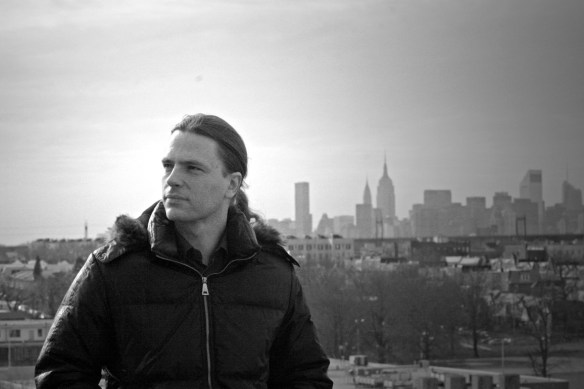
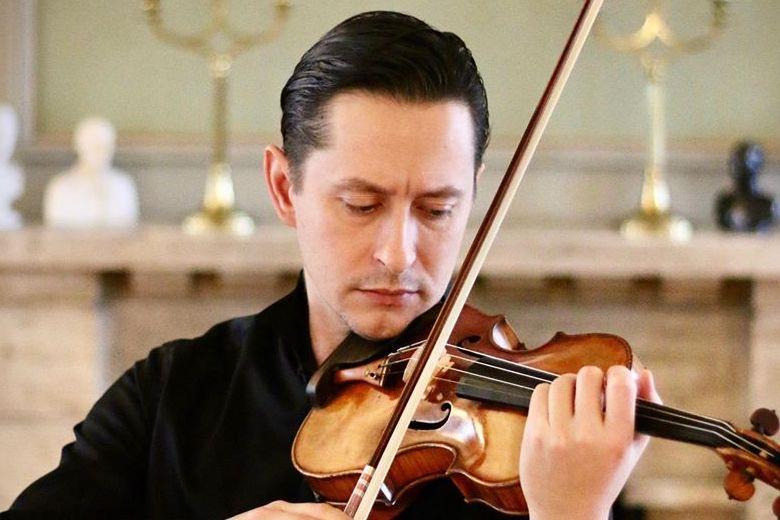
Strings of the City of Birmingham Symphony Orchestra / Eugene Tzikindelean (above)

Schubert arr. Mahler String Quartet no.14 in D minor D810 ‘Der Tod und das Mädchen’ (1824, arr. 1896)
Vivaldi Le quattro Stagioni Op.8 nos. 1-4 (1718-20)
Piazzolla arr. Desyatnikov Cuatro Estaciones Porteñas (1965-9, arr. 1996-8)

Town Hall, Birmingham
Saturday 22 April 2023

Reviewed by Richard Whitehouse

Acoustically transformed following its refurbishment some 15 years ago, a commendably full Town Hall proved to be the ideal venue for this judiciously balanced programme featuring the strings of the City of Birmingham Symphony Orchestra with its leader Eugene Tzikindelean.

Mahler never fully completed his arrangement of Schubert’s Death and the Maiden quartet, but this has enjoyed not a few hearings since its realization by David Matthews with Donald Mitchell four decades ago. Tzikindelean presided over a brisk, incisive opening Allegro (its exposition-repeat not unreasonably omitted), and if the 30-strong ensemble had not quite the tonal depth or dynamic range that Mahler likely envisaged, there was no lack of immediacy – at least until momentum faltered slightly in the later stages of the reprise then into the coda.

No such uncertainty affected the Andante (the only movement elaborated by Mahler), whose variations on Schubert’s earlier song exuded a cumulative intensity up to the theme’s soulful reappearance toward the close. Nor did the Scherzo lack for truculence over its brief yet vital course, assuaged by the trio’s wistful elegance, while the final Presto unfolded as a tarantella as agile as it was malevolent. Tzikindelean kept his players on a tight if never inflexible rein through to a coda that brought this (for the most part) powerful reading to its decisive close.

Tzikindelean having vacated the leader’s chair for centre-stage, the second half consisted of Vivaldi’s The Four Seasons interspersed with Astor Piazzolla’s take on the seasons from the perspective of Buenos Aires. Brought together a quarter-century ago (at the behest of Gidon Kremer for his group Kremerata Baltica) by Leonid Desyatnikov, with numerous references to the Baroque master, the outcome is a provocative amalgam between ‘ancient’ and ‘modern’ which the CBSO strings rendered with alacrity. Among the highlights from the Vivaldi might be mentioned the plaintive eloquence of the Largo from Spring, the coursing impetus of the Presto from Summer, alternation of the robust and poetic in the initial Allegro of Autumn, or that discreetly alluring interplay of legato and pizzicato writing in the Largo from Winter.

Heard in the sequence ‘Summer-Autumn-Winter-Spring’, the tangos by Piazzolla offer any number of anticipations whether melodic or textural. A significant feature of Desyatnikov’s arrangement is the prominence accorded to the leaders from each section which were seized upon gratefully – not least by cellist Eduardo Vassallo, whose Piazzolla recordings with his ensemble El Ultimo Tango are a masterclass in performance from the chamber perspective. While each of the present pieces is more than the sum of its parts, surely the most arresting instance is that towards the close of ‘Spring’ when the harpsichord (ably taken by Masumi Yamamoto) emerges with an allusion to Vivaldi’s opening theme – a coup de théâtre that is seldom less than spellbinding, and duly worked its magic as part of tonight’s performance.

An impressive showing, then, for the CBSO strings and Tzikindelean – who will hopefully be making further appearances both as soloist and director in the coming season. Certainly, the repertoire for string orchestra is one whose exploration should prove well worthwhile.

You can read all about the 2022/23 season and book tickets at the CBSO website. You can read more about Eugene Tzikindelean here, and more about El Ultimo Tango here

Online Concert: Tine Thing Helseth & Kathryn Stott @ Wigmore Hall

Tine Thing Helseth (trumpet), Kathryn Stott (piano)

Nordheim Den første sommerfugl (1982)
Martinů Sonatina for trumpet and piano (1956)
Shostakovich 4 Romances on Poems by Alexander Pushkin Op. 46 (1936-7)
Piazzolla Café 1930 from Histoire du Tango (1986)
Grieg 6 Songs Op. 48 (1884-8)
Gershwin Prelude No. 2 in C sharp minor (c1923-6); By Strauss (1936)
Weill Youkali (1934)
Kreisler Toy Soldiers March (1917)

Wigmore Hall, Monday 6 March 1pm

by Ben Hogwood

What a joy to see the partnership of trumpeter Tine Thing Helseth and pianist Kathryn Stott renewed at Wigmore Hall, united in an original program of trumpet originals and imaginative arrangements from vocal sources.

Dreamy lines from the piano introduced the concert’s first item, Arne Nordheim’s Den første sommerfugl (The First Butterfly), full of spring promise as the insect’s flight gracefully orbited the hall. Helseth’s trumpet line was a lyrical one, speaking faintly of folk song. From here the pair moved straight into the compact and winsome Sonatina for trumpet and piano, one of the Czech composer Martinů’s miniature gems. Written while experiencing homesickness in New York, the work began with a gruff introduction from the piano, its repeated note figurations taken up by the trumpet in fanfare-like salvos generating a good deal of energy. Gradually this subsided into more poignant thoughts, the composer revealing his softer centre, and by the bittersweet chorale with which the work ends the sense was that of a composer looking for his fortunes to change. Both performers caught that shift of focus.

Next up was an imaginative choice, an arrangement of Shostakovich’s Four Pushkin Songs. The vocal lines transfer to the trumpet with surprising accuracy, both artists playing in such a way that the original spirit of the songs was fully maintained. Regeneration, the first song, was thoughtfully done, held notes on the trumpet carrying above delicate figuration on the piano. Premonition was an easy amble in triple time, but the fourth song, Stanzas, held the cycle’s emotional centre. A substantial song, as long as the other three combined, it began with a stern introduction from Stott before a compelling dialogue unfolded.

Complementing this was a beautifully floated account of Piazzolla’s Café 1930, tastefully augmented by Stott’s rhythmic attention to detail. The melodies really sang from Helseth’s trumpet, any breathing challenges overcome with deceptive ease. As she said at the end, a bit of Piazzolla is never wrong!

Helseth’s announcements between the groups of pieces were nicely done, with an easy charm that also showed how much the two artists were enjoying themselves. This much was clear again in six songs by Grieg, grouped together as Op.48 but once again transcribing with relative ease for the trumpet. Gruss (Greeting) featured a lovely depiction of bells, an outdoor scene, while Lauf der Welt was a rustic march. Helseth’s characterisation of Die verschwiegene Nachtigall (The secretive nightingale) was nicely done. Zur Rosenzeit (Time of roses) presented bright colours, while the final Ein Traum (A dream) was especially full of feeling.

We moved to a stylish Gershwin duo, starting with an account of Prelude no.2 that was especially enjoyable when the main theme returned with the mute in the trumpet. By Strauss was also a highlight, enjoying the Viennese waltz send-up, while Weill’s Youkali was a soave tango. Finally Kreisler’s Toy Soldiers March was a perky account, led off by the piano with crisp fanfares. Topping a highly enjoyable concert was an encore of Piazzolla’s Libertango, led off with a swing by Stott and played with great panache by Helseth, including pitch slides to perfection.

For more livestreamed concerts from the Wigmore Hall, click here

In concert – Mischa & Lily Maisky play Beethoven, Britten & Piazzolla @ Wigmore Hall

mischa-maisky-lily-maisky

Beethoven 7 Variations on ‘Bei Männern, welche Liebe fühlen’ from Mozart’s Die Zauberflöte WoO 46 (1796)
Britten Cello Sonata in C major Op.65 (1961)
Piazzolla Le grand tango (1982)

Mischa Maisky (cello), Lily Maisky (piano)

Wigmore Hall, London
Monday 1 November 2021

Written by Ben Hogwood

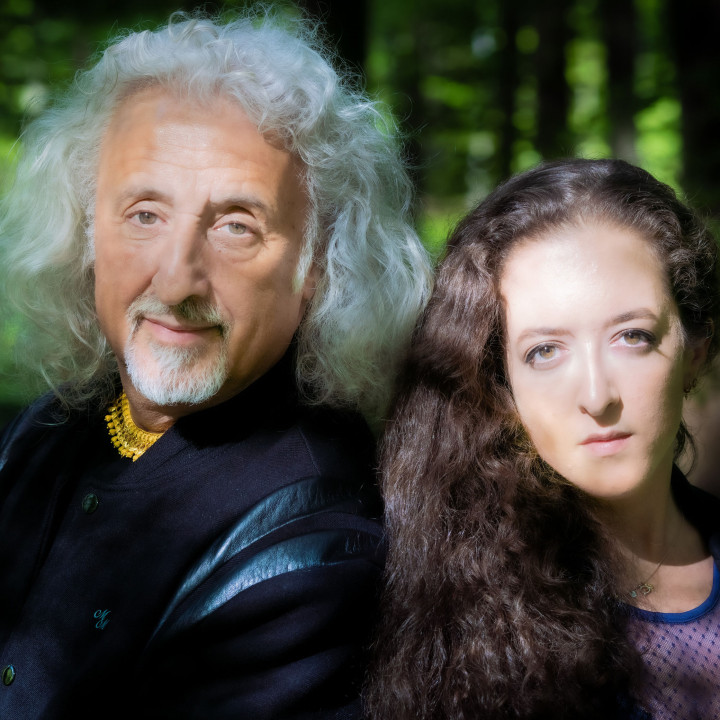
Father and daughter duo Mischa and Lily Maisky presented an imaginative program of works for cello and piano in this BBC Radio 3 Lunchtime Concert, where it was gratifying to note a full attendance at the Wigmore Hall.

They immediately found the light-hearted spirit of Beethoven’s 7 Variations on Bei Männern, welche Liebe fühlen, an aria from Mozart’s Die Zauberflöte. The piano takes the lead for much of this work, and Lily’s phrasing was subtle yet nicely shaped. The burnished tone of Mischa’s cello was a feature in the minor-key fourth variation, while Lily’s sensitive ornamentation at the start of the sixth was especially attractive.

A compelling performance of Britten’s Cello Sonata followed. As a former pupil of Mstislav Rostropovich, Mischa Maisky effectively has a direct line to a work that started the beginning of an extremely fruitful musical friendship between Britten and Rostropovich that lasted up to the composer’s death 15 years later. This performance inhabited the spirit of the work from first note to last, with the feeling in the first movement Dialogo that we were eavesdropping on a private conversation. Britten’s frequent but subtle references to Shostakovich were nicely highlighted here, with a few witty asides.

In the second movement Scherzo the Maiskys were dancing a balletic routine, Mischa’s pizzicato questions finished off by Lily’s featherweight answers. The tempo was slightly slower than is often used here, but in this way the pair effectively pointed out the work’s proximity in Britten’s output to the opera A Midsummer Night’s Dream. The sombre third movement Elegie had a silvery tone from the cello, while the following Marcia dealt in sardonic humour. The finale was a tour de force, featuring low notes from Mischa’s cello capable of rattling the windows, before powering through to an emphatic finish.

Piazzolla’s Le Grand Tango celebrates the dance form with which the Argentinian composer became obsessed, though as he stated the preoccupation was in his mind rather than the dancing feet. This was a passionate performance, the Maiskys in hold throughout as they maintained their close musical chemistry, right from the full bodied notes with which the cello began to a red-blooded dance for the closing pages. In between we had music of great tenderness and affection, not to mention rhythmic persuasion.

The duo gave us two encores, the first of which was a heartfelt tribute to the recent passing of Nelson Freire, clearly a dear friend. Bloch’s Prayer, from the short suite From Jewish Life, was an ideal choice, reverently played and with a searing tone quality to the highest register. It was a moving tribute that could hardly be bettered. There was also an ideal response in the form of Mischa’s own transcription of Brahms’s Lerchengesang Op.70/2, where Lily’s piano took the expressive lead.

You can hear the music played by Mischa and Lily on the Spotify playlist below, compiling Mischa’s recordings for Deutsche Grammophon of all the repertoire:

For more information on Mischa Maisky you can visit his artist page

In concert – Jess Gillam, CBSO / Jaume Santoja Espinós: Jess Gillam’s American Roadtrip

Jess-Gillam

Gershwin Cuban Overture (1932)
Villa-Lobos
Fantasia for Saxophone W490 (1948)
Copland
Danzón cubano (1942)
Milhaud
Scaramouche Op.165c (1937/9)
Copland
Appalachian Spring – Suite (1944/5)
Barber
Symphony No. 1, Op. 9 (1935-6, rev, 1942-3)

Jess Gillam (saxophones, above), City of Birmingham Symphony Orchestra / Jaume Santoja Espinós (below)

Symphony Hall, Birmingham
Wednesday 20 October 2021

Written by Richard Whitehouse

This evening’s concert by the City of Birmingham Symphony Orchestra took a break from ‘standard’ repertoire to focus on music by composers either American or with an American focus, in a programme which rung the changes to often vibrant and always appealing effect.

A familiar radio presence, Jess Gillam has already encouraged renewed interest in the music for classical saxophone, as her contributions amply demonstrated. Little heard in his lifetime, the Fantasia by Villa-Lobos is among those more modest creations of a composer known for his (over-reaching) ambition – its three short movements drawing animated and ruminative responses from the soloist enhanced by a restrained orchestration. Swapping soprano for the alto instrument, Gillam returned for Milhaud’s Scaramouche which was no less engaging in this arrangement than the original for two pianos; whether in its incisive opening movement, soulful central interlude or its final Brazileira which could hardly fail to provoke a response from orchestra and audience – the latter evidently appreciative of such an infectious display.

The CBSO captured the spirit of both pieces, thanks not least to former assistant conductor Jaume Santoja Espinós, who had opened the concert with Gershwin’s Cuban Overture – the percussion-clad exuberance of its outer sections a telling foil to the haunting pathos of those canonic textures at its centre. Copland’s Danzón Cubano can seem irritating in its rhythmic over-insistence, but Espinós brought an unsuspected wit and subtlety to this amalgam of coy nonchalance with an orchestration recalling Stravinsky’s forays into ‘crossover’ at this time.

Latin-American traits made way for those of a Europeanized East Coast after the interval, Espinós directing the suite from Copland’s Appalachian Spring with a cohesion as brought out expressive contrasts between the various sections without these becoming too episodic. The idealization inherent in this ‘Ballet for Martha’ can hardly be gainsaid, yet the chaste eloquence of its musical content came through no less affectingly – not least as the familiar ‘Variations on a Shaker Hymn’ subsided into the serene inevitability of the final evocation.

The highlight was a welcome revival for Barber’s First Symphony, whose continuous design marries Sibelian formal precision with that unabashed emotionalism closer to Russian music from this period, with a cumulative impact to its four-in-one trajectory which was palpably in evidence. From the stark foreboding with which it begins, through the relentless impetus of its ‘scherzo’ and consoling poise of its ‘slow movement’ (felicitous oboe playing by Emmet Byrne), to the inexorable force of its closing passacaglia, this was a performance to savour.

An eventful evening, then, and was more to come with a post-concert informal performance from the quintet El Ultimo Tango, familiar from its several recordings and here providing a 30-minute overview of Astor Piazzolla for what was a – necessarily – belated tribute in the year of his centenary. Those wanting a longer selection can hear this group at CBSO Centre next February, while the CBSO returns next week for a programme of mainly French music from conductor Kevin John Edusei with Kirill Gerstein in both of Ravel’s piano concertos.

Further information on the CBSO’s current season can be found at the orchestra’s website. For more on Jess Gillam, click here – and for more on El Ultimo Tango, here. For more information on Jaume Santoja Espinós, head to the conductor’s website

Wigmore Mondays – Artemis Quartet and Markus Groh: In Memoriam Friedemann Weigle

artemis-quartet

Artemis Quartet – with Friedemann Weigle (viola) on the far right.

Markus Groh (piano), Members of the Artemis Quartet – Vineta Sareika (violin), Gregor Sigl (viola), Eckart Runge (cello) – Wigmore Hall, London, live on BBC Radio 3, 30 November 2015

Listening link (open in a new window):

http://www.bbc.co.uk/programmes/b06qjz7t

on the iPlayer until 30 December

Spotify

In case you cannot hear the broadcast, here is a Spotify playlist of the Brahms played in this concert, from available versions on Spotify:

What’s the music?

Bach/Piazzolla, arr. Eckart Runge: Partita for StringTrioIn Memoriam Friedemann Weigle (18 minutes)

Brahms: Piano Quartet No. 3 in C minor, Op. 60 (1875) (35 minutes)

What about the music?

This concert was a tribute to the violist Friedemann Weigle, a member of the Artemis Quartet who sadly died at the age of 53 earlier this year. The quartet write this about the Bach / Piazzolla suite with which they begin, arranged by their cellist Eckart Runge:

“Featuring excerpts from Bach‘s Goldberg Variations, the English Suite BWV808 and the Sinfonia BWV795, as well as two fragments from Piazzolla‘s Oblivion and Fuga 9, the Partita for Trio spans the lifetime of Friedemann, from his beginnings as a church musician’s son to his time as a member of the Artemis Quartett. In 2012, when we were conceptualising our Bach-Piazzolla suite, Friedemann was devoted to arranging the works of Johann Sebastian Bach. He had a special affinity for the music of Bach, music that had accompanied him since his childhood. At the same time, he had been fascinated by pop music – from rock to jazz – since his youth. Indeed, he often proudly said that his first public musical performance was as a drummer in a rock band. Friedemann’s curiosity for new musical forms once again became apparent when he learned – and learned to love – Piazzolla’s Tango Nuevo through the Artemis Quartett.

We performed the Aria from the Goldberg Variations at Friedemann’s funeral. The idea then came about for us to honour Friedemann through the arrangement of a Partita, which would bring together these two aspects of his musical interests and, as a trio, to show the absence of a beloved friend.”

Performance verdict

Sometimes in a concert it almost does not matter what the standard of performing is like, and this was one such occasion. Unfortunately Arcana was unable to attend but I am sure you will be able to gauge the depth of feeling immediately from the sensitive Bach arrangements, which are arranged into a very effective suite.

The BBC Radio 3 announcer Sara Mohr-Pietsch tells us that the last recording at which Friedemann was present was of Brahms String Quartets – and so the group have been performing Brahms with guest pianists on their tour. There is an extra poignancy and potency to their performance of the C minor Piano Quartet No.3, with a depth of feeling that even over the radio is very intense. The resilience and power of the outer movements is most impressive, the rhythms are sharply defined and the slow movement is the soft, beautifully played centre of the performance.

What should I listen out for?

Bach / Piazzolla

1:40 – a solemn opening passage of music, where the held notes on the string trio could be mistaken for the sonorities of the bandoneon – an instrument Piazzolla often used.

5:54 – a fugue – presumably from Bach’s English Suite BWV808 – begins, the players using next to no vibrato and keeping their bows near the bridge of their instruments by the sound of things, to secure quite a coarse sound – but then there is much more of Piazzolla appearing as the music moves into a characterful dance at 7:30. Then at 8:06 the mood changes abruptly again, returning to sorrowful memories.

17:18 – the Aria from the Goldberg Variations signals a switch from the sorrowful minor key to a much more optimistic major. With it the instruments bring more vibrato. The versatility of Bach’s music is very clear in this arrangement, the parts beautifully even in their distribution.

Brahms

markus-groh

Markus Groh (piano)

23:23 – the piece begins with a slow introduction, where a single unison from the piano brings in the strings with their theme. This call and response is repeated. At 24:22 the first movement proper begins, and is notable for its full texture and big musical statement. The music then subsides a little to softer, undulating thoughts and a second theme at 25:30 from the piano. Brahms continues with some powerful statements from both forces. At 31:42 the music is more graceful, led by the piano, but soon the fraught atmosphere returns, and at 32:57 the mood of the slow introduction returns, and the first movement finishes.

33:52 – the Scherzo, which as so often with Brahms features nervy crossrhythms and the feeling of piano versus strings. At 35:12 there is a flowing passage but still the nervousness is present – and at 36:34 the main theme returns, with razor sharp accuracy from the players, before an emphatic finish moves the music from C minor to C major.

38:21 – the slow movement begins with the cello softly playing, an elegiac line that is beautifully rendered here by Eckart Runge over a quiet piano accompaniment. Soon he is joined by the violin and the pattern for this deeply felt piece of music is set, the instruments sticking closely together but playing music of great tenderness and feeling. The movement ends quietly and thoughtfully at 47:45.

47:58 – the finale begins with a sense of nervousness again, the piano figuration dancing around the violin theme, before the music really cuts loose with all four instruments, Brahms unleashing the power at his disposal. In this performance the group take the repeat at 50:00. Then the music moves farther afield, in terms of its distance from the harmonies Brahms uses for the main key – before returning around the 53:35 mark – where we hear another account of the main melody on a lower part of the violin. The work as a whole leaves a strong impression, with a thoroughly convincing finish.

Further listening

Brahms enjoyed writing for the piano with stringed instruments, and his other two Piano Quartets are massive works but ones that repay repeated listening. The more popular of the two is the Piano Quartet No.1 in G minor, a really impressive structure that is one of the composer’s earliest large scale chamber works. The Piano Quartet No.2 in A major followed soon after…and both are given excellent performances on this album from pianist Nicholas Angelich, string playing brothers Renaud and Gautier Capuçon (violin and cello respectively) and Gérald Caussé (viola):