Wigmore Mondays: Andrei Ioniţă & Itamar Golan – Bach, Shostakovich & Bartók

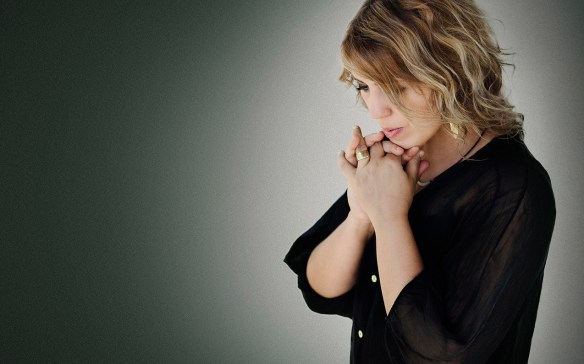
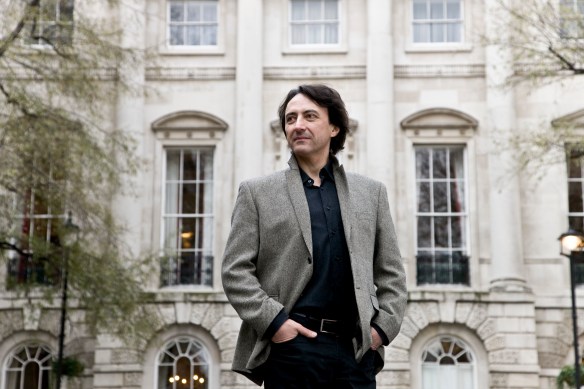
Andrei Ioniţă (cello, above – picture Daniel Delang), Itamar Golan (piano, below)

J.S. Bach Cello Suite no.1 in G major BWV1006 (c1720)
Shostakovich Cello Sonata in D minor, Op.40 (1934)

Wigmore Hall, London; Monday 27 November 2017

Written by Ben Hogwood

The broadcast can be heard on the BBC iPlayer by clicking here

There is a frustrating lack of information around J.S. Bach’s music for solo cello. Frustrating because the music itself is so good, a cornerstone of the instrument’s repertoire that satisfies experienced players and novices alike. In an interesting program note for this concert Richard Bratby outlined how Bach’s Six Suites for solo cello could indeed have a biblical theme running through them, a conviction that the cellist Steven Isserlis holds, though as he is the first to admit there is no hard and fast evidence for this.

The Suites are beautifully structured, with a Prelude giving way to five different dances – two relatively quick (in this case Allemande and Courante) – then one slow (always a Sarabande) and then two more quick (here two Bourrées) and always ending with a triple time Gigue.

The first cello suite has music you may recognise from Master and Commander among many other film and TV uses.

The Shostakovich is one of the most-played works for cello and piano from the 20th century, and it is easy to see why when you hear it – packed full of incident and tunes. It was written at the start of a new era for the composer, his wife having just moved out – and found him in a particularly rich vein of creativity, completing the half-hour work in just over a month in 1934. It was written for the cellist Viktor Kubatsky, who with the Stradivarius Quartet had taken part in the premiere of the composer’s 2 Pieces for String Octet in 1925. Shostakovich had yet to write any of his 15 string quartets, or his concerti for violin and cello, so this marks his first large scale writing for a stringed instrument. It received a mixed reception, some of its critics branding it too simplistic, but its lyricism and humour have given it a wide audience.

Follow the music

The times used relate to the broadcast link above.

J.S. Bach Cello Suite no.1 in G major BWV1006 (c1720) (1:47) (16 minutes)

The suite follows the outline described above, beginning with an expansive Prelude (1:47) that uses a series of arpeggios to plot its harmonic and melodic course. The dance movements begin with a fairly relaxed Allemande (4:02), where the steps are relatively slow, but steps up in pace with a Courante (7:52).

A slow and gorgeous Sarabande follows (10:20) where the cello uses a lot of ‘multiple stopping’ – playing more than one note with the bow simultaneously – before we move to a pair of Bourrées. The first one (13:14) is boisterous, the second (14:22) more withdrawn – but the first is repeated (15:32) to reclaim the upbeat mood. Then the distinctive triple time of the Gigue (16:09) closes out the suite.

Shostakovich Cello Sonata in D minor Op.40 (from 20:20) (28 minutes)

The Sonata begins in relatively genial mood, with a legato approach to the cello, as lyrical as anything Shostakovich has written. Soon, however, the clouds begin to form – though they are not visible anywhere when the cello gives out the second main theme of the first movement (22:35), a beautiful moment where it sounds suspended in mid-air. The movement ends deep in thought, but with a little frisson of worry around the edges.

That worry is emphatically thrown off in the bold as brass second movement (32:20) where both instruments go at it hammer and tongs. After that outburst we return to quiet and an introspective slow movement (from 35:45), where Shostakovich captures that exquisitely private intimacy only he can in a chamber setting.

When we emerge from deep thought the piano gives out a witty theme (44:06) to signal the start of the finale, where both players duck and dive through a set of highly enjoyable tunes and countermelodies. This is Shostakovich having fun – but even then there is a note of caution in the background.

Thoughts on the concert

Andrei Ioniţă gave a thoughtful performance of the Bach First Cello Suite, though could perhaps have shown us more of the sunnier side of the music, which can come through in the Courante, first Bourrée and Gigue especially. The Courante felt too fast – certainly something you’d have trouble dancing to! – though it did show off his quickfire technique, of which more later. The Sarabande could perhaps have been more outwardly expressive too, though the Gigue had a nice rustic feel.

The Shostakovich was a different story, Ioniţă and Itamar Golan straight to the heart of the work with an intimate yet wholly involving performance. The cellist’s tone was ideal, and so was the balance struck with the piano, who intervened in crushing style where necessary but drew back in the quieter moments. The bracing second movement was powerfully wrought, both players sparring with the gloves off, but the slow movement was especially affecting, helped by Ioniţă’s control of the high melodic line. The finale was brilliantly done, bringing just the right measure of humour and introspection to the performance.

With some time left Ioniţă and Golan gave a generous encore, an arrangement of Bartók’s Six Romanian Folk Dances for cello and piano (from 49:43 on the broadcast). This had all the flair and pizazz you would expect from a native Romanian, brilliantly played and with all the melodic inflections beautifully realised. The accuracy of the harmonics in the third dance (51:41) had to be seen to be believed!

All in all an excellent concert from a prodigious talent, who can only benefit from having someone as experienced as Golan – who has in his time accompanied Mischa Maisky and Maxim Vengerov – alongside him.

Further listening and reading

You can watch Ionita in the final of the 2015 Tchaikovsky competition below, where he plays more Shostakovich:

Meanwhile the pieces making up the concert are grouped in the following Spotify playlist
Wigmore Mondays: Meccore String Quartet – Szymanowski & Sibelius

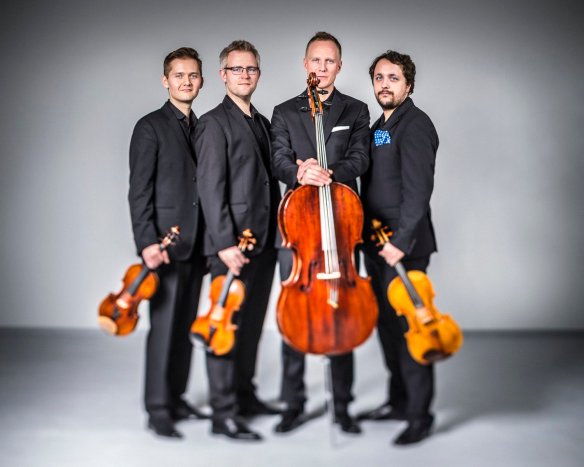
Meccore String Quartet (above – Jarosław Nadrzycki, Wojciech Koprowski (violins), Michał Bryła (viola), Karol Marianowski (cello)

Szymanowski String Quartet no.1 in C major, Op.37 (1917)
Sibelius String Quartet in D minor, Op.56 ‘Voces intimae’ (1909)

Wigmore Hall, London; Monday 20 November 2017

Written by Ben Hogwood

The broadcast can be heard on the BBC iPlayer by clicking here

Szymanowski’s two String Quartets took a while to establish themselves in the string quartet repertory, but certainly not on grounds of quality. The first anticipates the composer’s biggest stage work, King Roger, and has music of great depth with a relatively exotic harmonic language.

Sibelius wrote his only published string quartet – there are three other unpublished works – at his new home of Ainola, where he moved with his wife in 1903. At this point the composer was suffering from the effects of alcoholism and debt, and needed to move away from Helsinki and temptation. Ultimately this did not provide full relief, but he was at least able to move on with composition, and the Symphony no.3, written just before the quartet, offers more optimism. The quartet however is dark and unforgiving.

Follow the music

The times used relate to the broadcast link above.

Szymanowski String Quartet no.1 in C major, Op.37 (from 1:51) (17 minutes)

At 1:51 the quartet begins as though in a time warp, the soft harmonies in a chorale from the four instruments harking back to a much earlier time. Gradually the music establishes its rich harmonies, helped by added notes from the instruments using double stopping (playing more than one note at once), which gives added density to the music.

The added note harmonies are a big part of the composer’s newer style, where he does still on occasion imitate Debussy but where he now has one foot planted relatively firmly in the explorer’s camp. The music goes through some unexpected harmonic shifts towards the end, but then from 9:27 feels on firm grounds once more with the luxurious beginning to the slow movement.

This features soaring melodies from the first violin and higher playing from the rest of the instruments towards the end, where the listener feels suspended in the air.

A different air altogether hangs in the third movement (15:07) where the music is quick, urgent and full of smaller phrases passed between the instruments. At 17:19 a dance section gives cut and thrust, before the quartet wraps up with surprising haste.

Sibelius String Quartet in D minor, Op.56 ‘Voces intimae’ (from 21:24) (28 minutes)

The theme from the violin (21:24), answered by the cello, is the melodic material on which the first movement is based. The phrases are restless, passed between the instruments and often overlapping with little pause for breath. There is a sense of the wide open countryside in which Sibelius now finds himself, but also of the dark days. This comes to a head around 26:48, a sparse cadence played by the quartet, before they move on to the second movement with flitting motifs from each instruments, creating a vision of circling birds.

The slow movement (29:36, marked Adagio di molto) is the centre of the work both emotionally and musically, deeply emotional but also offering resolution. Here the quartet are closely together, and the main theme, which comes back several times, has a deep yearning.

From 39:00 the fourth movement begins, and here the quartet digs in as though searching for strength and resolve. Gradually the individual lines become restless again, the melodies increasingly fractured, and the textures are heavy. Leading on from this is an even faster movement (44:35), where the instruments become even more reckless and desperation sets in (especially from 46:17). There are fleeting glimpses of folk melodies but the momentum carries all before it to a dazzling flurry of semiquavers at the end.

Thoughts on the concert

A powerful concert from the Meccore String Quartet. Their Syzmanowski felt utterly authentic, played with style and feeling, and with the quartet full in voice. They took a standing position for the concert (except the cellist of course) and this suited their freedom of expression.

The quartet tended to take the fast music at daringly fast tempi, especially in the Sibelius, where the second and fifth movements seemed to be gone in a flash of breakneck speed. Despite the technical brilliance this did mean a few musical statements were swept up in the sheer momentum of it all. However the quartet were more measured for the slow movement, where emotion was concentrated and intonation wonderfully secure. There was a feeling throughout that the interpretations from the quartet were singular in voice, and watching them in person made the experience much more meaningful.

As a substantial encore it was nice to hear the second movement (a Romanze) from Grieg‘s String Quartet in G minor, Op.27 (51:00), which the quartet have recently recorded, and which here provided a reminder of the melodic gifts of the Norwegian composer, whose music seems to have fallen off the radar a little bit of late. The cello is particularly beautiful in its melody here.

Further listening and reading

Here is the first movement of the Grieg String Quartet, performed by the Meccore String Quartet live from the Polish Radio in 2015.

For a further taster of their Szymanowski, here is the third movement of the String Quartet no.2, part of a disc of the composer’s quartets recently released on Warner Classics:

Meanwhile for further listening on Spotify, in the absence of the Meccore versions, here are the Emerson String Quartet in a winning combination of the Sibelius and Grieg Quartets, with a little Nielsen for good measure:

Meanwhile both Szymanowski Quartets can be found here, in a version from the Goldner String Quartet:

Wigmore Mondays: Gabriela Montero plays Schumann, Shostakovich and her own improvisations

Gabriela Montero (above, piano)

Schumann Kinderszenen (Scenes from Childhood), Op.15 (1838)
Shostakovich Piano Sonata no.2 in B minor, Op.61 (1943)
Gabriela Montero Improvisations (2017)

Wigmore Hall, London; Monday 13 November 2017

Written by Ben Hogwood

The broadcast can be heard on the BBC iPlayer by clicking here

Schumann’s piano pieces were written for his beloved Clara to play, in the early stages of their courtship – when he was far from flavour of the month in the Wieck household. They are reminiscences of childhood life and were not intended for children to play as such. Happily some of them are a bit easier, but they are viewed through adult frames.

Shostakovich, meanwhile, wrote his Piano Sonata no.2 in memory of his former Leonid Nikolayev, at a time of particular hardship with World War II at its height. The substantial work a much more mature piece than his First Sonata, set in one movement, and it sits between two massive symphonies in the Seventh (Leningrad) and Eighth. Perhaps because of the enormous dimensions of those pieces the Sonata is a thoughtful and almost fiercely intimate work that has the listener subconsciously leaning in to listen to the quieter moments.

Gabriela Montero is one of the few classical pianists to actively practise the art of improvisation in concert, and as she told the booklet writer Jessica Duchen she finds a ‘different state of consciousness…like an open vessel’.

Follow the music

The times used relate to the broadcast link above.

Schumann Kinderszenen, Op.15 (from 1:52) (20 minutes)

Rather than describe each piece for you, I have elected simply to list the titles Schumann assigns the pieces and the time at which they appear in the broadcast. His writing is so descriptive it will conjure all sorts of pictures in the imagination! The movements are:

  1. Von fremden Ländern und Menschen (Of Foreign Lands and Peoples) (from 1:52)
  2. Kuriose Geschichte (A Curious Story) (3:49)
  3. Hasche-Mann (Blind Man’s Bluff) (4:56)
  4. Bittendes Kind (Pleading Child) (6:21)
  5. Glückes genug (Happy Enough)
  6. Wichtige Begebenheit (An Important Event) (7:32)
  7. Träumerei (Dreaming) (8:32)
  8. Am Kamin (At the Fireside) (11:30)
  9. Ritter vom Steckenpferd (Knight of the Hobbyhorse) (12:26)
  10. Fast zu Ernst (Almost Too Serious) (13:03)
  11. Fürchtenmachen (Frightening) (15:17)
  12. Kind im Einschlummern (Child Falling Asleep) (16:53)
  13. Der Dichter spricht (The Poet Speaks) (19:22)

Shostakovich Piano Sonata no.2 in B minor, Op.61 (1943)

The sonata starts like a cold wind blowing into the concert hall, with rapid figurations in the left hand, but soon develops into a driving march (around 24:00) with the right hand of the piano striking notes an octave apart. At 26:53 it comes back to an emphatic statement of the main tune, now lower in the left hand, before an introspective passage of thought and then an emphatic finish

The second movement, marked Largo (29:47) is one of Shostakovich’s characteristically intimate elegies, notable for its slow tempo and recurring pulse. The performer here is lulled into quiet thought.

In the third movement Shostakovich delivers one of those nagging themes in which he excels, given out by the right hand alone (from 36:27). Once heard it dominates proceedings, no matter what other music Shostakovich introduces – it all comes back to that theme, blurring the boundaries between minor and major keys and wavering uncertainly whenever it appears. The melodic material is made up of variants on that tune, the music becoming increasingly twisted and anguished before burning out, spending time in downcast thought and then recovering for a final, furtive statement of the theme.

Gabriela Montero Improvisations (from 50:34) (4 minutes)

In a spoken introduction, Venezuelan pianist Montero describes the improvisation offered here as a reaction to ‘my broken country’. It adopts the same tonality of the Shostakovich, B minor, and sets out its thoughts in a way that the Russian composer would surely recognise. The fluid and heartfelt musical progressions are all the more meaningful for being of the moment.

Thoughts on the concert

A recital of contrasts from Gabriela Montero. Schumann’s Kinderszenen provided the audience with a lot of fun through its wistful reminiscences, though at times Montero did stretch out the tempo rather, especially in the opening number. The characterisations were very enjoyable though, and Wichtige Begebenheit had a proud step, while Träumerei was appropriately dreamy. Montero also captured the melancholy that can come with rose-tinted recollections such as these, especially in Schumann, and the final Der Dichter spricht was ideally pitched.

Shostakovich’s Second Sonata crackled with atmosphere, and the presence of an unnamed menace that marks his most private works was here throughout. The bluster of the first movement was fooling nobody with its resolve, for the heart of Shostakovich’s music here lay in the bare outlines of the finale, where Montero excelled, and in the unexpected ghostly chord that arrives just before the end.

It was refreshing to hear an improvisation from Montero that seemed to take its lead from this work in professing its despair at the political and economical state of her home country, and this music was made all the more memorable by her relative restraint in its execution. More performers would do well to follow her lead.

Further listening and reading

You can read more about Gabriela Montero at her website, while the Spotify album below couples her interpretation of Rachmaninov‘s Piano Concerto no.2 with three of her Improvisations:

Montero has not recorded the Shostakovich sonata, but you can hear a new album from Peter Donohoe that brings both concertos and sonatas together in one collection:

Wigmore Mondays: Florilegium visit Paris and Germany

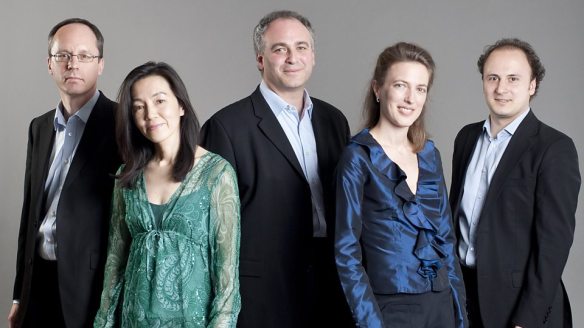
Florilegium (Ashley Solomon (flute, director), Bojan Čičić (violin), Reiko Ichise (viola da gamba), Stephen Devine (harpsichord)

Telemann Paris Quartet No.4 in B minor, TWV43:h2 (1738)
J.S. Bach Trio Sonata in G major, BWV1038 (1732-35)
Rameau Pièces de clavecin en concerts – Suite No.5 in D minor (1741)
Rebel Les caractères de la danse (1715)

Wigmore Hall, London; Monday 30 October 2017

Written by Ben Hogwood

The broadcast can be heard on the BBC iPlayer by clicking here

This year marks the 250th anniversary of the death of Georg Philipp Telemann. If that name doesn’t mean anything to you, then perhaps it should – especially if you are a follower of the music of Bach or Handel. Telemann, so the concert note for this recital informed us, wrote more than the two composers combined – an extraordinary feat when you think that he wrote a number of large scale stage and sacred works.

Some of his most admired works are on a smaller scale however, such as the collection of Paris Quartets he published in two parts, in 1730 and 1738. They are intimate works for flute, violin, viola da gamba and continuo (usually harpsichord) that allow a great deal of flexibility for the performers, subtly pushing the boundaries Baroque chamber music was exploring at the time.

Complementing the Telemann in this concert are works by J.S. Bach – a Trio Sonata co-written with son Carl Philipp Emanuel – and works by the Frenchmen Rameau and Rebel, each bringing the spirit of the dance to an intimate grouping of musicians.

Follow the music

Telemann Paris Quartet No.4 in B minor, TWV43:h2 (from 1:41) (19 minutes)

A bright and brisk Prelude gives a good illustration of how Telemann writes so well for strings and wind, but the performers often have difficult lines to play, as in the passage from 5:09 where the tempo quickens. After the Prelude the quartet moves into a series of dances, with an elegant Coulant led by the flute (7:26), then movements entitled Gai, Vite (11:18), Triste (a sombre, melancholy dance from 13:19) and finally a Menuet (15:55) that proves to be much lighter on its feet, especially in its quick middle section.

J.S. Bach Trio Sonata in G major, BWV1038 (from 23:32, 7 minutes)

Bach was always aware of musical developments in his age, and with this particular Trio Sonata it appears he only wrote one part of the three, delegating the other two for son Carl Philippe Emmanuel to complete. Although there are three parts, typically with Baroque instrumental pieces there are actually four instruments taking part – the harpsichord and viola da gamba (an early form of cello without a spike, and in this case with five strings) share the bass / harmony roles.

This piece starts with an attractive, languid line on the flute that the violin shadows. The mood is – perhaps for Bach – surprisingly relaxed. A quick movement, marked Vivace (lively) follows from 26:42, but it’s gone in a flash – and a much slower Adagio movement begins at 27:38, with thoughtful interplay between flute and violin. Then at 29:40 a more substantial quicker movement, marked Presto, features typical Bach figures passed between each of the four instruments.

Rameau Pièces de clavecin en concerts – Suite No.5 in D minor (from 32:31, 13 minutes)

Rameau named the three movements of this suite after his fellow composers, although it doesn’t suggest in the concert note if he was painting a character portrait of each. If he was, then Forqueray, the first subject, would be a genial sort with a memorable hook – in this case introduced by the harpsichord from 32:31. Cupis (from 37:10) would be a thoughtful, deep kind of person, prone to a few bouts of melancholy, while Marais (42:34) would be a bright, energetic figure, again with a catchy tune with frequent and highly enjoyable repeats!

Rebel Les caractères de la danse (from 46:00, 8 minutes)

An early medley, if you like – a collection of short dances all rolled up into one. In the course of a fun-packed eight minutes, Rebel fills the music with eleven different dance forms, both slow and fast, giving his ensemble plenty to do. The harpsichord provides the crisp rhythmic emphasis, along with the viola da gamba, but is also given the tune at times, and invited to show off. The piece ends with a rapid dance with which only the quickest of feet could keep up!

Encore

A Bolivian dance from one of Florilegium’s three albums of Bolivian Baroque music (55:10), with some lively lines for violin and flute – and Reiko Ichise ditching the viola da gamba for shakers!

Thoughts on the concert

This was a very stylish and enjoyable concert. Florilegium have been together since 1991, and their performing style shows them totally at ease with the music of the Baroque period. Here they flourished especially in the Rameau and Rebel dance-based works, where harpsichordist Stephen Devine prompted and probed with tasteful, rhythmic playing.

The Telemann was a charming performance, the seriousness of its home key of B minor given a lift in the dance movements, while the Bach was unusually lyrical for the trio sonata form. A concert played with good humour and considerable panache, topped off by the exoticism of the Bolivian encore.

Further listening and reading

You can hear Florilegium’s recordings of the complete Telemann Paris Quartets in three volumes on Spotify. The third volume includes the quartet heard in this concert:

Meanwhile their explorations of the Bolivian Baroque can also be heard here, a first disc of three:

Telemann’s Water Music is one of his best loved works, and makes an excellent companion piece to the Handel. From experience I can say it is a thrilling work to be part of, as this performance from the Musica Antiqua Köln and Reinhard Goebel illustrates!

Jean-Efflam Bavouzet, BBC SO / Sakari Oramo – Schmitt, Franck, Ravel & Sibelius Symphony no.3

Jean-Efflam Bavouzet (piano), BBC Symphony Orchestra / Sakari Oramo (above)

Barbican Hall, London; Friday 27 October 2017

Schmitt Symphony No.2 in E flat major, Op.137 (1957)

Franck Variations symphoniques (1885)

Ravel Piano Concerto in D ‘for the Left Hand’ (1930)

Sibelius Symphony No. 3 in C major, Op.52 (1907)

You can listen to the broadcast on BBC Radio 3 by clicking here (available until 26 November)

Reviewed by Richard Whitehouse

Sakari Oramo‘s Sibelius cycle continued as part of a judiciously balanced programme which opened with a rare revival of the Second Symphony by Florent Schmitt. This continues the French symphonism of Roussel and Honegger; albeit with a quirkiness of melodic thought and virtuoso handling of sizable forces to confirm Schmitt as no mere epigone. Indeed, the angular wit of the first movement suggests his willingness to confront post-war modernism head on, and if the central Lent admits warmer and even tender emotion, the finale resumes the assaultive mood with an unremitting intent through to its scabrous close. Oramo and the BBC Symphony Orchestra had the measure of this unsettling piece throughout; their responsiveness underlining that Schmitt was not one to accept the passing of his own era with even a hint of good grace.

Jean-Efflam Bavouzet (below) then joined the orchestra for two staples from the French concertante repertoire, separated in time by almost half a century. Good to see that Franck‘s Variations symphoniques has now re-established itself in UK concert programmes, as this unlikely yet successful hybrid of elements from symphony and concerto, as drawn into the pithiest of its composer’s cyclical designs, has a substance more than equal to its entertainment. Bavouzet and Oramo were especially fine in the expressive contrasts of its opening minutes, and if the rhapsodic musing at its centre seemed a little inflexible, then the effervescence of its final section too forcefully projected, there was no doubting the coherence and the ingeniousness of its composer’s response to a piano-virtuoso tradition he spent much of his life despising.

That the Franck outlines a ‘three movements in one’ formal design makes it a more than likely precursor to Ravel‘s Piano Concerto in D major, the most enduring of those left-hand works written for the redoubtable (if frequently wrong-headed) Paul Wittgenstein. Not the least attraction of tonight’s performance was its emphasizing the canniness of the balance between soloist and orchestra, such that the former was never less than audible in the context of what is the most overtly rhetorical and combative of all Ravel’s works. Add to this Bavouzet’s limpidity in the eloquent theme which returns intensified in the cadenza, not to mention Oramo’s control of momentum in the jazz-inflected animation of the scherzo, and what resulted was a reading attentive to every aspect of this masterpiece: one that justifiably brought the house down.

Sibelius’s Third Symphony is easy to underestimate as a transitional work poised between overt romanticism and renewed classicism. It was to Oramo’s credit that elements of both aesthetics were not only evident but also reconciled – not least in an opening Allegro which moved between fervency and incisiveness with no mean purpose. The highlight came with a central Andantino whose quasi allegretto marking may have been minimal, but whose opening-up of emotional space made for a riveting listen. The final movement was hardly less impressive in its purposeful equivocation between scherzo and finale, Oramo teasing resolve out of uncertainty so the hymn-like theme that eventually emerges built to a powerful apotheosis. A gripping performance, reinforced by the conviction of the BBCSO’s response.

For more concert information on the BBC Symphony Orchestra, head to their website

You can hear a recording of the Florent Schmitt made by Leif Segerstam on Spotify below: