Listening to Beethoven #92 – 9 variations on ‘Quant’e piu bello’

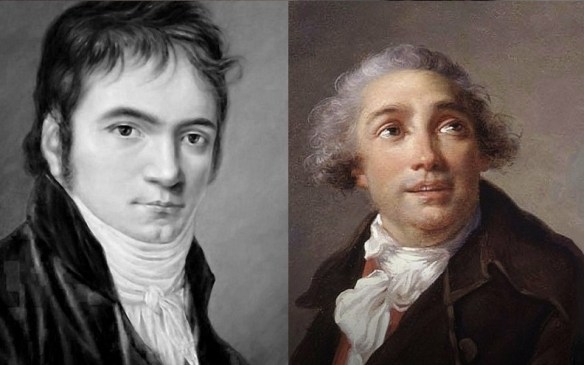
The young Ludwig van Beethoven (left) and Giovanni Paisiello

9 variations on ‘Quant’e piu bello’ WoO 69 for piano (1795, Beethoven aged 24)

Dedication not known
Duration 12′

Listen

What’s the theme like?

The theme is relatively simple but attractive, and a little playful towards the end.

Background and Critical Reception

This is another set of variations from Beethoven using a contemporary source for the theme. In this case it is an aria, Quant’e piu bello (How much more beautiful) from Paisiello’s opera L’amor contrastato (Doubtful Love). It is a bright theme in the key of A major.

Thoughts

These variations trip along very naturally, with more than a hint of play in each. Beethoven creates an illusion of the fingers of the right hand falling over each other in the first variation, but cannot resist the temptation to open up the accelerator for the second!

The fourth variation takes a serious countenance and moves to the minor key, but no sooner has it done that then the smile is back and the music is tripping along.

Recordings used and Spotify links

Cécile Ousset (Eloquence)

Rudolf Buchbinder (Warner Classics)

Ronald Brautigam (BIS)

Three excellent versions. Ousset’s recordings of Beethoven variations are some of her finest achievements, and her poise here is enviable. Ronald Brautigam offers a direct contrast on the fortepiano, though he suffers a little from a very roomy acoustic.

Also written in 1795 Hummel Piano Sonata no.8

Next up 6 Variations on ”Nel cor piu non mi sento”
Listening to Beethoven #91 – 12 variations on a Menuett à la Vìganò


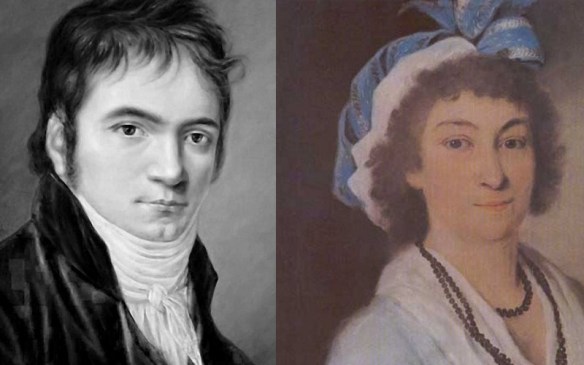
The young Ludwig van Beethoven (left) and Maria Sophia Weber, wife of the composer Jakob Haibel, for whom no picture could be found

12 variations on a Menuett à la Vìganò WoO 68 for piano (1795, Beethoven aged 24)

Dedication not known
Duration 12′

Listen

What’s the theme like?

Despite being called a Menuett, and having a triple time lilt, the theme actually has four beats in the bar. This creates a bit of tension but some intriguing cross rhythms too.

Background and Critical Reception

It has been a little while since we heard from Beethoven in the ‘Variations’ discipline, for piano at least. He had certainly not forsaken the form, however, this set being one of at least four he completed in 1795. The theme is from a Menuet from the successful ballet Le nozze disturbate, written by Jakob Haibel (1762-1826) in the same year. Haibel was an Austrian composer, tenor and choirmaster.

Jean-Charles Hoffelé, writing in the booklet note for Cécile Ousset’s superb Decca recordings of variations by Beethoven, gives out plenty of compliments. For him, the variations ‘apply a piquant inventiveness to this dance, popularised at Vienna’s Theater auf der Wieden, beyond the city’s fortifications. Beethoven transforms the ternary rhythm of the dance into an astonishing scherzo’.

Thoughts

Another terrifically entertaining set of Beethoven variations. The first variation is like a peal of bells, then a flurry of right hand activity takes us into a thrilling second variation, Beethoven really pressing down on the accelerator. The tempo choices vary wildly as we progress, moving through a solemn but quite stilted minor key variation (no.4) and a brisk march (no.5).

The eighth variation has an attractive lilt, but no.9 could hardly be more different as it hits some really gruff, bass heavy chords that feel like pure Beethoven – and which are further emphasised by the pause written by the composer to make them last longer.

Sparkling interplay between the hands characterises variation no.10, before the twelfth and final variation plays out between two very different voices, one serene and the other impatient. The coda settles to a quiet and rather moving conclusion

Recordings used and Spotify links

Cécile Ousset (Eloquence)

Rudolf Buchbinder (Warner Classics)

Mikhail Pletnev (Deutsche Grammophon)

All three of these recordings are excellent, but Ousset just has the extra magical touch, the listener hanging on every note of her 1975 Decca recording.

Also written in 1795 Hummel Piano Sonata no.8

Next up 9 Variations on ‘Quant’e piu bello’

Listening to Beethoven #90 – 12 German Dances (piano version)

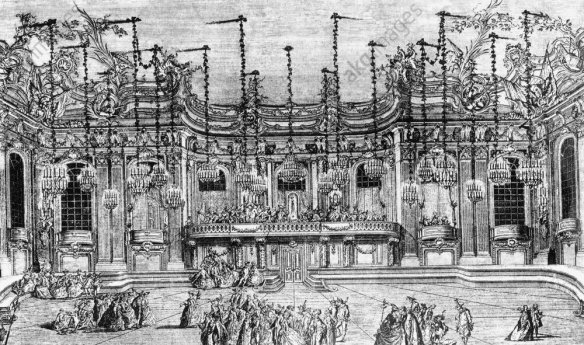
Masked Ball in the Großen Redouten-saal, Hofburg (by Markus Weinmann, 1748)

12 German Dances, WoO 8 for piano (1795, Beethoven aged 24)

no.1 in C major
no.2 in A major
no.3 in F major
no.4 in B flat major
no.5 in E flat major
no.6 in G major
no.7 in G major
no.8 in C major
no.9 in A major
no.10 in F major
no.11 in G major
no.12 and Coda in C major

Dedication Vienna Artists’ Pension Society
Duration 20′

Listen

Background and Critical Reception

This is the piano version of the German Dances Beethoven wrote for the Redoutensaal ball of November 1795 in Vienna.

Thoughts

The dances work really well for piano, ad while they may not be as colourful as the orchestral version the keyboard brings out the crisp nature of the composer’s dance rhythms.

Recordings used and Spotify links

Jenő Jandó (Naxos)

Jandó plays with a nice lilt to the rhythms, showing how the dances are clearly for communal use. Having one follow the other so immediately works well in an energetic account. The final dance tails off rather movingly at the end.

You can chart the Arcana Beethoven playlist as it grows, with one recommended version of each piece we listen to. Catch up here!


Also written in 1795 Gyrowetz Three Flute Quartets Op.11

Next up 12 Variations on ‘Menuet a la Vigano’ WoO 68

Listening to Beethoven #89 – La Partenza WoO 124


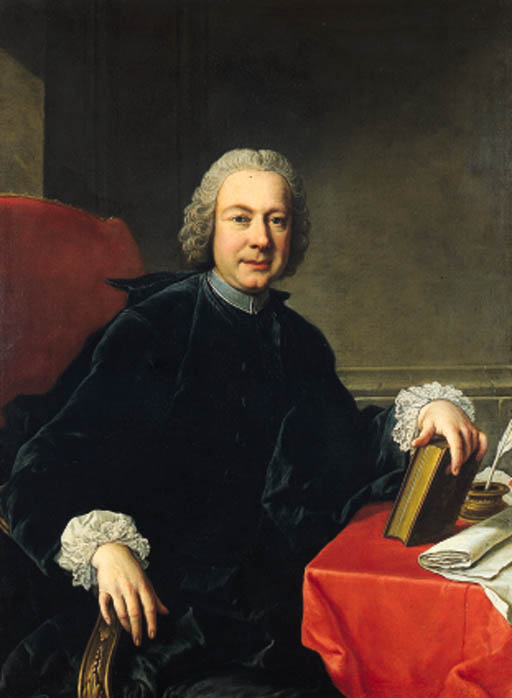
Portrait of Italian poet Pietro Metastasio (1698-1782) Image used courtesy of Wikipedia

La partenza WoO 124 for voice and piano (1795, Beethoven aged 24)

Dedication not known
Text Pietro Metastasio
Duration 1’10”

Listen

Background and Critical Reception

Beethoven joined a prestigious list of composers in setting Pietro Metastasio’s canzonetta from 1749. Paisiello and Mozart had already taken the text as inspiration, but now Beethoven – setting Italian again – took the plunge. This would appear to be a result of his continuing training with Salieri, who was encouraging the setting of songs in his native language.

Thoughts

Beethoven shifts from the G major of previous song Zärtliche Liebe to A flat major, a tonal centre that would inspire some of his best and most contemplative music over the years. It is a shift in mood, too – the previous song a declaration of love, this one (translating as The Departure) sat in the cloud of departure and loss.

It is a relatively simple setting, and a short one too at just over a minute. A flowing piano is the bedrock for a smooth, mid-range melody, but the overriding mood is sombre and relatively downcast.

Recordings used and Spotify links

Dietrich Fischer-Dieskau, Hartmut Höll (Warner Classics)

Hermann Prey, Leonard Hokanson (Capriccio)

Cecilia Bartoli, Andras Schiff (Decca)

Both Fischer-Dieskau and Prey give this song a good deal of gravitas, their pianists providing solid support. However the bright tones of Cecilia Bartoli and the light-fingered accompaniment of András Schiff give the song a new lease of life.

Also written in 1795 Salieri “Armonia per un tempio della notte” in E flat major for 2 oboes, 2 clarinets, 2 bassoons and 2 horns

Next up 12 German Dances WoO8 (piano version)

Listening to Beethoven #88 – Zärtliche Liebe WoO 123


Peanuts comic strip, drawn by Charles M. Schulz (c)PNTS

Zärtliche Liebe WoO 123 for voice and piano (1795, Beethoven aged 24)

Dedication not known
Text Karl Friedrich Herrosee
Duration 2’20”

Listen

Background and Critical Reception

The seemingly uncredited booklet-writer for Beethoven’s complete songs as released on the Capriccio label is unequivocal in their praise for this song for higher voice and piano. They describe it in the company of two others as “masterpieces in the restrained use of musical means, a particular feature applicable to more than merely a few of Beethoven’s songs for voice and piano. This characteristic is not easily incorporated in the prevalent image of Beethoven, but it is nonetheless indispensable if the full scope of Beethoven’s art is to be appreciated.”

Leslie Orrey, writing in The Beethoven Companion, sits firmly on the other side of the fence. “There could hardly be…a much less ardent protestation of love than Ich liebe dich…” which he describes with a number of other songs as “looking over their shoulders to another age, to the artificial Arcadian poetry of nymphs and shepherdesses”.

Thoughts

Less is indeed more where this song is concerned. The singer has the first note, an upbeat to a graceful song that proceeds smoothly and largely without incident. There is room to accommodate both the views above, though my thoughts fall with the ‘restraint saying more’ than the Orrey view that Beethoven’s version of love is completely removed.

The gently undulating piano as the singer grows more ardent helps the restrained approach, but does enhance the emphasis on the words and stepwise melody.

Recordings used and Spotify links

Dietrich Fischer-Dieskau, Jörg Demus (Warner Classics)

Ian Bostridge, Julius Drake (Warner Classics)

Fritz Wunderlich, Hubert Giesen (Deutsche Grammophon)

Fritz Wunderlich is the tenderest of the three male singers chosen here, his smooth line beautifully phrased. Dietrich Fischer-Dieskau sings down a tone and with characteristic strength of feeling. Ian Bostridge has a leaner tone but shapes the phrasing affectionately. All three are convincing advocates of a song dividing opinion.

Also written in 1795 Salieri Palmira

Next up La Partenza (Der Abschied)