
BBC Proms 2017 – Edgar Moreau and Il Pomo d’Oro at the Cadogan Hall

Edgar Moreau (cello), Il Pomo d’Oro / Maxim Emelyanychev (harpsichord)

Hasse Grave and Fugue in G minor (c1735)

Platti Cello Concerto in D major (c1724)

Vivaldi Cello Concerto in A minor, RV419 (c1725)

Telemann Divertimento in B flat major (c1763-6)

Boccherini Cello Concerto in D major, G479 (c1760)

Cadogan Hall, Monday 7 August 2017

Listen to this concert on the BBC iPlayer

Fresh performances of seldom-heard repertoire. That sums up the fourth of the BBC Proms’ weekly visits to Cadogan Hall, downsizing as they do on a Monday lunchtime.

This was an invigorating hour, documenting the emergence of the cello as a solo instrument in the 1700s. Until then it was largely used as part of the ‘continuo’ – that is, the small section of instruments responsible for providing the harmonic base of the music – but thanks to composers such as Platti, Vivaldi and Boccherini the instrument’s own melodic potential began to be fully realised.

The first item in the concert provided some helpful context, a lean performance of the stern Grave by Johann Adolf Hasse, followed immediately by a Fugue rooted in dance forms. The authorship of this remains in doubt – Hasse is a contender, but a more likely composer was Franz Xaver Richter, a fellow Mannheimer. Whatever the outcome, the two pieces dovetailed nicely, setting the scene for the much brighter Cello Concerto in D major by the Italian composer Giovanni Benedetto Platti, employed in the German city of Würzburg.

His bright and breezy work showed off the cello’s new capabilities, if not quite raising it above the level of the surrounding violins. Edgar Moreau brought plenty of energy and pizzazz to the performance, however, with brilliant technique and studious interaction with the finely honed instrumental sextet Il Pomo d’Oro, and their charismatic leader Maxim Emelyanychev. His contribution on the harpsichord was a constant delight, punctuating the music and cajoling his players.

Vivaldi was next, one of the 20+ concertos he completed with the cello centre stage. This one, in A minor, had some tricks up its sleeve in the outer movements that Moreau enjoyed showing off, but the serene and rather beautiful melody in the central Andante stole the show.

Il Pomo d’Oro then took over for some forward looking music by Telemann. The German master’s Divertimento in B flat major contains glimpses of classical practice with its use of five light hearted ‘scherzo’ movements out of the six in total. There was plenty of variety within them however, and the poise and dexterity of the ensemble was a joy to watch.

Finally the cello got its best workout in one of Italian composer Luigi Boccherini’s 12 concerti. This one, the Cello Concerto in D major G479, sparked into life immediately, helped by Moreau’s immaculate control in the higher register, where most of the writing for cello could be found. This was a striking change in comparison to the Platti, the cello now much more dominant, and the duet with Zefira Valova’s violin in the slow movement felt more like a ballet score. Boccherini relocated to Spain, and the last movement betrayed this somewhat in its Fandango flavouring, where Moreau enjoyed the rapid dancing and energetic conclusion.

To bring us back to earth there was an encore of solo Bach, the Sarabande from the Solo Cello Suite no.3 in C. If Boccherini and co raised the cello to the heights in the concerto, then it was Bach who revolutionised the instrument in a solo capacity – and it was a nice touch to include that point here.

Ben Hogwood

BBC Proms 2017 – I Fagiolini introduce Monteverdi to the Cadogan Hall

I Fagiolini / Robert Hollingworth (above) Photo (c) BBC/Chris Christodoulou

Monteverdi Cruda Amarilli; Sfogava con le stele; Longe da te, cor mio; Possente spirto from Orfeo, Chiome d’oro, Vorrei baciarti, o Filli

Roderick Williams Là ci darem la mano (BBC commission: world premiere)

Monteverdi Laudate pueri Dominum a 5 (concertato); Volgendo il ciel per l’immortal sentiero

Cadogan Hall, Monday 17 July 2017

Listen to this concert on the BBC iPlayer

As an introduction to the wide musical canon of Claudio Monteverdi (1567-1643), there is surely no better place to start than with this vividly coloured concert from I Fagiolini and their quirky leader Robert Hollingworth.

They gave the Cadogan Hall – and BBC Radio 3 listeners – an insight into his daring harmonic world, showing just how keenly Monteverdi could respond to the challenges of word setting. They also showed how he could operate equally effectively in a reverent sacred setting, using the same imagination as in the wild and wonderful secular works.

Monteverdi, who was born 450 years ago to the year, is essentially a ‘Renaissance’ composer (the period running very roughly from 1400 to 1600) but he wrote in such an original way that even now his music sounds forward-looking.

The first trio of madrigals in this concert showed the composer’s skill with unaccompanied voices, and the clarity with which I Fagiolini could deliver them. Cruda Amarilli (from 2:14 on the broadcast link) Sfogava con le stele (5:17) and the darker Longe da te, cor mio (8:45) were all performed with the utmost clarity.

Monteverdi is also the acknowledged father of opera, with L’Orfeo (1607) the first example in the form. It is a remarkable work, and this lengthy excerpt (from 13:09 to 22:30) shows why. Tenor Matthew Long held his notes with impeccable control, but also showered them with the composer’s written embellishments, fluctuating the note ever so slightly to give extra expression. He was shadowed by violins (Rachel Podger and Kati Debretzeni) and cornetts (Gawain Glenton and Conor Hastings).
Back to the madrigals, and the seventh book Monteverdi published in Venice in 1613. Chiome d’oro (Golden tresses) (24:14) had an attractive introduction with the two violins dovetailed, a sign of things to come from the sopranos Anna Crookes and Ciara Hendrick, and their beautiful duet from 25:06. From 27:37-32:32 the spotlight changed to Hollingworth, whose nervous lover was characterised to perfection, and Kendrick, his intended. As the song progressed so he moved progressively closer to her, and by the end the two leaned in towards s kiss – a simple but extremely effective staging!

From 35:30-42:13 we heard a new work, Roderick Williams imaginatively setting Lorenzo da Ponte’s words used by Mozart in the famous Don Giovanni aria Là ci darem la mano, here set for a five-voice choir. Williams writes through the eyes and ears of Monteverdi and the results were intriguing and often laced with humour. In the middle he added a clever invention, the reading of a letter from Monteverdi while the singers tried to outdo each other in the background. The madrigal ended in a flurry of sexual tension.

Roderick Williams takes the applause with I Fagiolini and Robert Hollingworth after the world premiere of his interpretation of Là ci darem la mano.

Finally a pair of real wonders, a setting of Laudate pueri Dominum (from 44:33) and then an extended madrigal, Volgendo il ciel per l’immortal sentiero (52:42–1:03:13), designed for the praise of the Emperor in spite of the Thirty Years War. It is a mini-masterpiece, capped by the central dance (59:10) and its lilting rhythms begun by theorbo player Eligio Quinteiro. In these capable hands we enjoyed the complete purity of C major, beautifully spun by Monteverdi’s hand.

A wonderful concert, then, performed in the vivacious spirit that I Fagiolini bring to all their performances, celebrating the humour and quirky rhythms within the music, but bringing the seriousness of Monteverdi’s invention to play also. I urge you to hear it!

Ben Hogwood

Mariinsky Orchestra with Valery Gergiev – Prokofiev Symphonies (3)

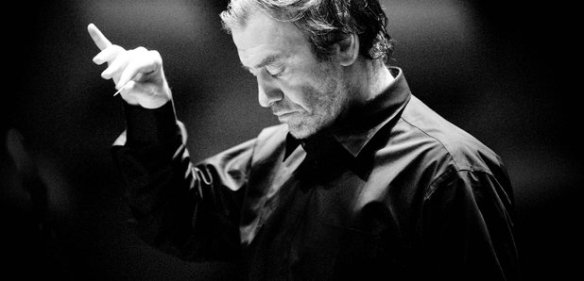
valery-gergiev-3

The final instalment of Valery Gergiev’s Prokofiev symphony cycle with the Mariinsky Orchestra shed light on the composer’s late works, and was as illuminating as the previous two concerts in the series.

Late in life Prokofiev’s works took a darker turn, and while his characteristic humour is still present there are more threats in the shadows, particularly where the Symphony no.6 is concerned. This is increasingly regarded as the masterpiece of the seven, and in the right performance it carries a shattering impact.

This was the right performance emotionally, if not always in terms of ensemble. Gergiev has been unfairly criticised this week for fielding unrehearsed performances – there was absolutely no evidence to these ears in the first two concerts of that! – but in the first movement of the Sixth a few things went awry, particularly with extraneous noise from a violin and a number of flat horn solos.

The emotional content, however, was not affected, and as the symphony wore on so did the feeling of impending dread. Brief consolation was offered by the lovely, chant-like theme given to flute and oboe, but the lower end of the orchestra worked hard in punching their rhythms to the front of the performance, the sound of a machine going wrong. As the final movement started its jolly approach soon emptied, and after the brief reappearance of the consoling theme some shattering chords signalled the descent into absolute darkness. It was an incredibly powerful moment from both conductor and orchestra, and no wonder there was a pause before the applause began.

Watch a performance from 2012 of Gergiev conducting the Mariinsky Orchestra in the Symphony no.6.

The Symphony no.7 has a similarly awkward ending, though here the composer is more resigned to his fate, for illness was now taking over Prokofiev’s life. The lovely unison tune that is the symphony’s calling card was beautifully sung by much of the orchestra, while the quick step theme for the last movement was impishly done, but again the sense of emptiness came through, the ticks and tocks of the final page leaving a sour taste. Prior to this the second and third movements felt like barely finished sketches, but Gergiev characterised them as he would a ballet score. It was a performance notable for its beauty – much of the ensemble problems had been restored – and also its thoughtfulness.

Watch a performance from 2012 of Gergiev conducting the Mariinsky Orchestra in the Symphony no.7.

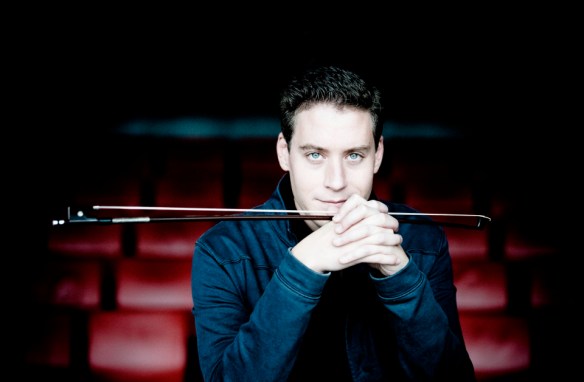
Between the two symphonies there was an extraordinary performance of the Sinfonia concertante for cello and orchestra. This marked the UK debut of the Russian cellist Alexander Ramm, and on this evidence he will be back very soon. His intonation was incredibly secure and his virtuosity almost beyond question, even in the most demanding passages where the cello sits at the very top of its register.
alexander-rammPower, pace and passion were the features of the fast music, but when this briefly relented there was a real depth of feeling to the soaring, chant-like melody of the second movement. Gergiev and the orchestra gave crisp accompaniment, but Ramm was the star for this incredibly assured and most musical performance, redolent of Steven Isserlis in his youth!
Gergiev and the Mariinsky Orchestra have given us a Prokofiev season to relish here, reminding us of the composer’s melodic gifts, his flair when writing for orchestra and his good humour. The darker undercurrent beneath these pieces has also been fully explored, revealing Prokofiev in all his guises – occasionally rash, but often deeply profound. It has been a pleasure to be part of the experience.

Ben Hogwood

Mariinsky Orchestra with Valery Gergiev – Prokofiev Symphonies (2)

Gergiev conducts Prokofiev 2 – Kristóf Baráti (violin), Mariinsky Orchestra / Valery Gergiev (above)

Cadogan Hall, London; Tuesday 27 September 2016

The second part of this week’s heavyweight Prokofiev triptych was even more rewarding than the first.

Having been blasted into limp submission by the composer’s Second and Third Symphonies – the ‘roaring twenties’ in musical form! – it was time to move into the next decade with the much more delicate Symphony no.4.

Among the seven Prokofiev symphonies this is probably the least understood, partly because it exists in two versions. The first version, heard here, was finished in 1930 and runs for 25 or so minutes. The second, revised version is a different animal altogether, with a bigger orchestra and augmented structure that make the resultant 37-minute work a heavyweight in comparison.

It was rewarding, then, to experience the delicacy and lyricism Gergiev brought to the original score. Based on themes from the ultimately unsuccessful ballet The Prodigal Son, Symphony no.4 was full of grace and shimmering textures, with particularly excellent contributions from flute, oboe and clarinet. The plot of the ballet was on occasion directly imported, so the third movement scherzo was essentially a seduction with imaginative orchestral colour, while the slow movement was both ardent and moving. The outer movements featured a more brash approach, but one that Gergiev held together well.

Watch a performance from 2012 of Gergiev conducting the Mariinsky Orchestra in the Symphony no.4.

There was then a second chance to enjoy the playing of violinist Kristóf Baráti (below), who if anything outdid his first night performance. His interpretation of the Violin Concerto no.2 (1935) shone brightly, especially in the gorgeous tune of the slow movement, where a light waltz found the Mariinsky Orchestra stripped down to their bare essentials, suiting the Cadogan Hall acoustic perfectly.

The slightly drunk demeanour of the last movement was enjoyable, both violin and orchestra messing about with the rhythms to enhance the off-beat experience, while the first movement, beginning carefully on solo violin, expanded convincingly. Baráti gave us an encore of a movement from the Second solo violin sonata by Ysaÿe, but which time he had comfortably proved his stature as a very fine violinist.

Gergiev saved the best for last, a white hot performance of the Symphony no.5 (1944). On the face of it this work is an affirmative wartime symphony, but like so many pieces by Prokofiev and his contemporary and colleague Shostakovich there is a thinly veiled undercurrent of unease and turmoil. Gergiev found it immediately and pressed home the point throughout, either by making fast tempo choices for the second movement Scherzo and finale, or by deliberately leaning on some of the more painful outbursts of the slow movement.


Watch a performance from 2012 of Gergiev conducting the Mariinsky Orchestra in the Symphony no.5.

The Mariinsky orchestra were superb, led once again by some of the most authoritative and technically proficient violinists I have ever seen. Their unity of sound took the breath away at the higher points of Prokofiev’s writing, and was complemented by outstanding contributions from clarinet, flute oboe, trumpet and even orchestral piano. Gergiev could not have overseen a better performance; that it was capped with an encore of Masks from the ballet Romeo and Juliet showed us how close Prokofiev the symphonist and stage composer stayed together throughout his musical life.

Ben Hogwood

Mariinsky Orchestra with Valery Gergiev – Prokofiev Symphonies (1)

gergievIt might surprise you to learn that Prokofiev is big business right now! So much so that the forthcoming Robbie Williams single, Party Like A Russian, credits the composer as its inspiration.

It is assumed the source material will be Dance of the Knights, from Romeo and Juliet (otherwise known as The Apprentice theme tune!) but hopefully it will lead to an increase in curiosity around the composer and his music.

With unexpectedly impeccable timing, all seven of Prokofiev’s symphonies are being performed at the Cadogan Hall this week, with the best possible combination of conductor and orchestra. Valery Gergiev (above) has been leading celebrations in Russia of the 125th anniversary of the composer’s birth, and for three nights he has welded together a program of the symphonies, the two violin concertos and the Sinfonia Concertante for cello and orchestra.

A bruising first-night encounter boldly included the Second and Third symphonies, their sheer volume fairly peeling a layer off the ceiling of the hall. Both works are from the 1920s, when, like many composers, Prokofiev was intent on making as much noise as possible, working his ideas in a mechanical fashion with little room for warmth or respite.

Aggression coursed through the Symphony no.2 (1924-25), the piercing brass and biting string lines cutting through the dry acoustic and making a powerful impact. There were brief moments of respite, but even then – such as the first movement’s thump of double basses and bassoons – these were a change in colour rather than mood.

The second movement broadened its scope however, and the soaring tune Prokofiev gives to the violins offered a graceful if cold alternative. The piece is rarely heard in public and it was easy to see why, for its lopsided form and constant attack make it a challenging listen even today – but few could deny its impact.

Watch a performance from 2012 of Gergiev conducting the Mariinsky Orchestra in the Symphony no.2.

The Symphony no.3 (1928) is cut from similar cloth, but has a greater dramatic impulse. This is due to its operatic origins, with much of the source material drawn from Prokofiev’s opera The Fiery Angel. Once again the Mariinsky orchestra were superb, but the violins were sensational in their precision, playing their melodies from on high with searing intensity.

The machine of the first movement ground into action but there was deep seated passion here too, and the swooning violins took over the second movement with some weird yet rather sensual portamenti. The third movement packed a punch and led to another bruising but utterly thrilling last movement climax, where Gergiev cajoled every sinew of his orchestra to contribute. Wind and brass – especially bassoons, trumpet and horn – were all at the peak of their form.

Watch a performance from 2012 of Gergiev conducting the Mariinsky Orchestra in the Symphony no.3.

Some contrast to all this bombast was welcome in the form of Prokofiev’s Symphony no.1 (‘Classical’) (1916-17). Exquisitely crafted, it is one of his best loved pieces, with not a note out of place as it completes a wonderful modern pastiche of a Haydn symphony. Often Prokofiev’s tunes feel like they have included bags of wrong notes, but they are all so memorable – and with some well-chosen speeds Gergiev brought out the invention if not quite all of the charm.

Watch a performance from 2012 of Gergiev conducting the Mariinsky Orchestra in the Classical Symphony.

The Violin Concerto no.1 (1917-23) was equally soothing in comparison to its neighbours, and Hungarian violinist Kristóf Baráti played with assurance, charm and a frisson of attitude when the going got faster. It was the more delicate music that made this performance memorable, however, with some lovely sonorities from the orchestra as together with the violinist they painted a bright, wintry landscape.

Kristóf Baráti Photo: Marco Borggreve

Kristóf Baráti
Photo: Marco Borggreve

With a generous and challenging concert lasting more than two and a half hours you would think an encore would be far from Gergiev’s mind, but no – we were in for a final treat courtesy of Liadov’s shimmering symphonic poem The Enchanted Lake. It was a soothing come down from the emotional highs and lows of the symphonies – and only heightened the expectations for the second and third parts of this so-far exhilarating voyage.

Ben Hogwood