
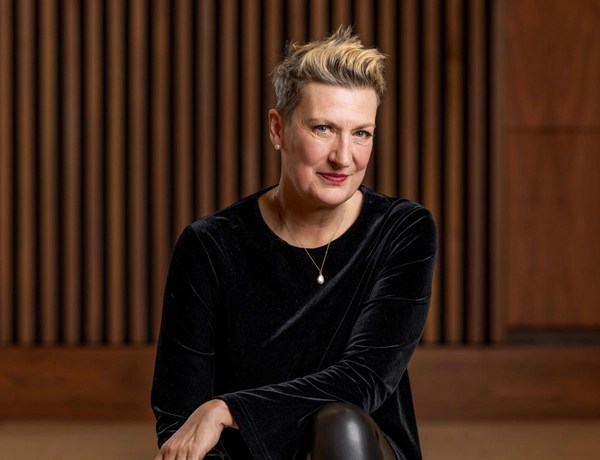
In concert – Dame Sarah Connolly, CBSO Choruses, CBSO / Sofi Jeannin: The Music Makers

Dame Sarah Connolly (mezzo-soprano), CBSO Children’s Chorus, CBSO Youth Chorus, CBSO Chorus, City of Birmingham Symphony Orchestra / Sofi Jeannin

Weir Music, Untangled (1992)
Muhly Friday Afternoons (2015, orch. 2019) [UK Premiere]
Britten The Young Person’s Guide to the Orchestra Op.34 (1945)
Elgar The Music Makers Op.69 (1912)

Symphony Hall, Birmingham
Wednesday 20 November 2024

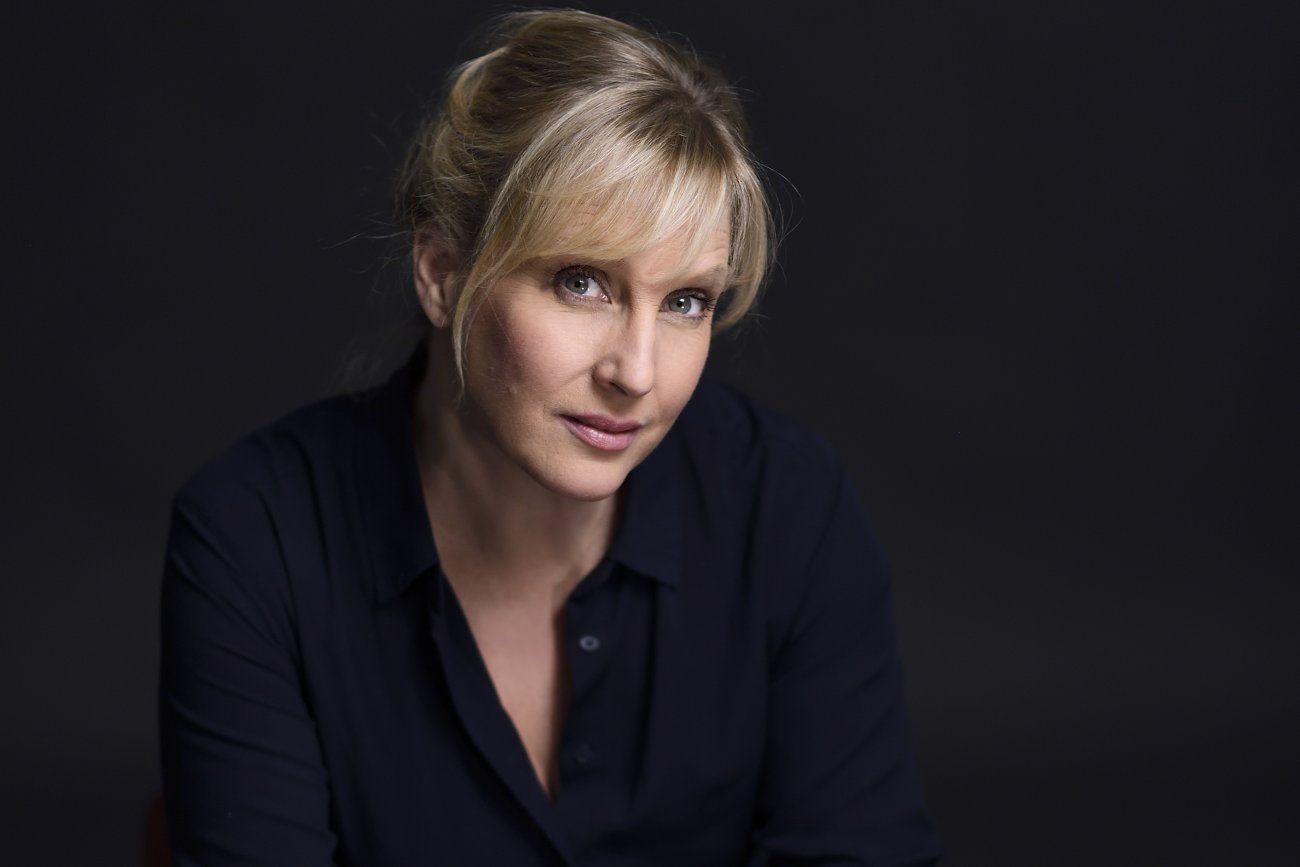
Reviewed by Richard Whitehouse Pictures (c) Andrew Crowley (Dame Sarah Connolly), (c) Radio France / Christophe Abramowitz (Sofi Jeannin)

Under the capable direction of Swedish-born Sofi Jeannin (below), the City of Birmingham Symphony Orchestra tonight took on a varied if cohesive programme featuring two composers with direct links to the city, one of whose works had been performed for the first time here 112 years ago.

Although he might not be so associated with Birmingham, Nico Muhly is hardly an unknown quantity. Friday Afternoons proved a diverting and enjoyable traversal across eight traditional poems – directly yet unaffectedly recalling Britten in their simplicity of choral writing with, in this instance, a resourceful and often evocative orchestration that brought out subtle and quite unexpected nuances from these texts. Qualities that the combined CBSO Youth and Children’s Choruses responded to with alacrity, doubtless owing to the astute guidance of Julian Wilkins.

Beforehand, the orchestra made no less favourable a response in Music, Untangled by Judith Weir, former Master of the Queen’s Music and composer-in-association to the CBSO during 1995-98. Written for the Boston Symphony, this not unreasonably American-sounding piece takes extracts from melodies emanating from the Western isles of Weir’s native Scotland as the basis for a compact if eventful piece where said melodies are gradually fined down from sonic diversity to a single strand through a process of ‘less is more’ typical of this composer.
Closing the first half, what had started out as Britten’s ‘Variations and Fugue on a Theme of Purcell’ received an engaging performance at its best in those variations highlighting specific instruments – in the course of which the excellence of the individual CBSO sections came to the fore. Presentation of the theme itself was a little on the portentous side, a quality which re -surfaced in a fugue whose clarity of texture seemed at the expense of that exuberance when Britten puts his orchestra back-together. An enjoyable take on a timeless masterpiece even so.

Despite its high-profile launch at the 1912 Triennial Festival, Elgar’s The Music Makers has struggled to find general favour – his setting of Arthur O’Shaughnessy’s Ode intensifying the text’s ambivalence and introspection via a wealth of self-quotation such as renders several of his most acclaimed pieces from an unlikely or even disturbing perspective. Together with its near-contemporary work, the symphonic study Falstaff, this is Elgar at his most searching as well as confessional – qualities such as the encroaching ‘Great War’ would duly exacerbate.

Despite its modest (35-minute) duration, The Music Makers is a difficult work to pace and to make cohere and, while Jeannin (an experienced choral conductor) did not wholly succeed in these respects, there was no doubt as to her insight into its content or defining of its emotions. Prepared by Simon Halsey (who first ‘gave’ this work with Simon Rattle some 40 years ago), the CBSO Chorus lacked little in conviction or finesse – and, if Dame Sarah Connolly was not quite at her most assured, the sheer eloquence and conviction of her singing could never be denied.

A fine account, then, of a work still in need of such advocacy for its inherent greatness to be acknowledged. Interesting also that audience response was warm if undeniably muted – as if to confirm, on this occasion at least, the music’s ‘message’ had got through to those listening.

For details on the 2024-25 season A Season of Joy, head to the City of Birmingham Symphony Orchestra website. Click on the names to read more about soloist Dame Sarah Connolly, conductor Sofi Jeannin and composers Nico Muhly and Dame Judith Weir

Published post no.2,372 – Sunday 24 November 2024

In concert – City of Birmingham Symphony Orchestra: A Covid Requiem

mirga-grazinyte-tyla

Adès O Albion (1994, arr. 2019)
Pärt
Fratres (1977, arr. 1991)
Purcell (arr. Britten)
Chacony in G minor Z730 (c1680, arr. 1948)
Barber
Adagio in B flat minor Op.11 (1935, arr. 1936)
interspersed with poetry readings by Casey Bailey
Fauré
Requiem in D minor Op.48 (1887-90, rev. 1893)

James Platt (bass), Casey Bailey (poet), CBSO Children’s Chorus, CBSO Youth Chorus, CBSO Chorus, City of Birmingham Symphony Orchestra / Tomo Keller (violin/director), Mirga Gražinytė-Tyla (conductor)

Symphony Hall, Birmingham
Saturday 6 November 2021

Written by Richard Whitehouse

Even if live music-making has gradually been returning to how it was, the (ongoing) legacy of Coronavirus could hardly be overlooked, thus a concert such as that given this evening by the City of Birmingham Symphony Orchestra was a necessary act of remembrance for all the many concertgoers to have been affected by the pandemic. As befitted such an occasion, no speeches or prefatory remarks were needed, with the darkening of the auditorium during the performance a simple but effective gesture which helped focus musicians and listeners alike.

Strings only were onstage in the first half – Tomo Keller directing a sequence as began with O Albion, Thomas Adès’s arrangement of the sixth movement from his quartet Arcadiana, whose gentle pathos made for the ideal entrée. Arvo Pärt has written numerous memorials and while Cantus might have been more appropriate in this context than Fratres, the latter’s sparing deployment of percussion as to underline its ritualistic emergence then withdrawal conveyed no mean eloquence. Surprising, perhaps, that Britten’s arrangement of Purcell’s Chacony is not heard more frequently on such occasions, its expressive intensification here informed by an acute rhythmic clarity. Barber’s Adagio is, of course, a staple at these times – the visceral emotion of its climax and subdued fatalism that ensues audibly conveyed here.

Interspersed between these pieces were poems by Casey Bailey, currently Birmingham Poet Laureate and whose readings were undeniably affecting in their sincerity – whether the heady reportage of 23.03.21 (a date no-one in the UK could hope to forget), the intimate evocation of Weight or graphic remembrance of Once. His appearances on stage were precisely judged as to segue into then out of the music either side and it was a pity when he did not take a call at the end of this first half, alongside the CBSO strings, given his contribution to proceedings.

Tomo Keller remained for the second half – adding ethereal counter-melodies to two of the sections in Fauré’s Requiem, whose 1893 version is without violins but with divided violas and cellos along with reduced woodwind and brass to make for a reading closer to the initial conception and certainly more apposite tonight. Her credentials in the choral repertoire well established, Mirga Gražinytė-Tyla conducted with a real sense of this work’s essential poise but without neglecting any deeper emotions. James Platt brought a ruminative warmth to the Hostias and Libera me, and it was an inspired touch to have the Pie Jesu sung in unison by the Children’s Chorus; its plaintiveness offsetting those richer tones of the Youth Chorus and CBSO Chorus, while opening-out the music’s textural and expressive range accordingly.

In one sense it would have been better had this concert not had to take place, given the legacy it commemorated (as was witnessed by the personal recollections occupying five pages of the programme) and yet, as those ethereal strains of the In Paradisum receded beyond earshot, a feeling of the Covid crisis having been recognized then overcome was palpable on the part of those present. Moreover, the CBSO’s next event is a performance of Janáček’s The Cunning Little Vixen – surely as transcendent and life-affirming an experience as could be hoped for.

Further information on the CBSO’s current season can be found at the orchestra’s website. For more on Casey Bailey, click here, for James Platt click here, and for Tomo Kellner here