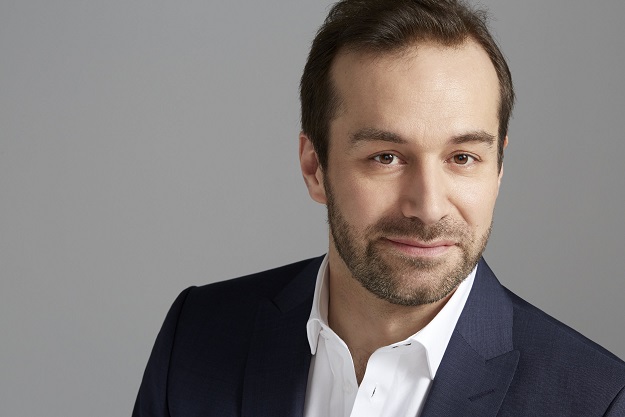
In concert – Soloists, CBSO Chorus, CBSO / Joshua Weilerstein: Robert Nathaniel Dett – The Ordering of Moses

Ives (orch. Schuman) Variations on ‘America’ (1891/1962)
Bernstein (orch. Ramin & Kostal)
 Symphonic Dances from ‘West Side Story’ (1957/61)
Dett
The Ordering of Moses (1937) [UK premiere]

Nadine Benjamin (soprano), Chrystal E Williams (mezzo-soprano), Rodrick Dixon (tenor), Eric Greene (baritone), CBSO Chorus, City of Birmingham Symphony Orchestra / Joshua Weilerstein

Symphony Hall, Birmingham
Wednesday 23 February 2022

Written by Richard Whitehouse

This evening’s concert by the City of Birmingham Symphony Orchestra was an all-American programme, centred as it was upon the first performance in this country for what is likely the most ambitious work by the African/American composer Robert Nathaniel Dett (1882-1943).

Although he gained prominence as a choral conductor (his Hampton Choir having performed for President Hoover and Britain’s Prime Minister Ramsay MacDonald), Canadian-born Dett failed to make a lasting breakthrough as composer – his death when barely 61 confining him to a footnote in American cultural history. The ‘sacred cantata’ The Ordering of Moses was a statement of intent when submitted for his MMus in June 1932. Adapted from Exodus and Lamentations, its text describes the Hebrews escaping slavery in Egypt by the parting of the Red Sea over the course of 55 eventful minutes. The brooding prelude is rich in atmospheric writing for lower woodwind and brass, while the climactic sequence draws wordless chorus and orchestra into a graphic depiction of the ‘crossing’; after which, thanks is rendered unto God in suitably festive terms – Walton’s Belshazzar’s Feast an audible precedent. Much has been made of the use of spirituals but, apart from the rallying presence of ‘Go down, Moses’, they serve more a textural and harmonic role in heightening the music’s expressive potency.

A potency owing in no small part to its vocal and choral forces. Eric Greene was predictably sonorous in his eloquence when setting the scene as ‘The Word’, while Chrystal E Williams made the most of her small if crucial part as ‘The Voice of Israel’. Most memorable, though, were those contributions of Rodrick Dixon as the impulsive and ardent Moses, then Nadine Benjamin whose Miriam exuded poignancy and fervour in equal measure. The CBSO Chorus represented ‘The Children of Israel’ in suitably implacable and ultimately affirmative terms.

The whole performance was ably handled by Joshua Weilerstein, who ensured certain more discursive episodes in the cantata’s earlier stages never hung fire and drew a lusty response from the CBSO. Astute programming, moreover, in preceding a still little-known work with staples from the American repertoire. It might not encapsulate the whole of the musical, but Bernstein’s Symphonic Dances from ‘West Side Story’ captures its essence via orchestration (with judicious assistance from Sid Ramin and Irwin Kostal) as made a suitable impact here.

Surprising that William Schuman’s bracing orchestration of the teenage Charles Ives’s bravura organ piece Variations on ‘America’ does not enjoy more regular performance this side of the pond, or perhaps the quirky and increasingly uproarious incarnations of what Weilerstein pointedly referred to as the National Anthem of Lichtenstein still rankles with home-grown listeners? Whatever the case, the conductor made a persuasive case for this engaging and effervescent music to be heard more frequently – the CBSO players remaining straight-faced throughout.

It certainly provided an irreverent curtain-raiser to an engrossing programme as may yet have blazed a trail. More little-known American music on Sunday when Weilerstein directs only a second UK outing for Florence Price’s Piano Concerto, alongside Korngold and Tchaikovsky.

For more information on the next CBSO Youth Orchestra concert, click here. For more on the composer Robert Nathaniel Dett, head to a website devoted to his work. Meanwhile click on the links for information on the artsts – Joshua Weilerstein, Nadine Benjamin, Chrystal E Williams, Roderick Dixon and Eric Greene

In concert – Sunwook Kim, CBSO Youth Chorus, CBSO / Mihhail Gerts: Kodály, Rachmaninoff, Debussy & Stravinsky

Mihhail-Gerts

Kodály Dances of Galánta (1933)
Rachmaninoff
Rhapsody on a Theme of Paganini, Op. 43 (1934)
Debussy
Nocturnes – Sirènes (1899)
Stravinsky
The Firebird – Suite (1919)

Sunwook Kim (piano, below), CBSO Youth Chorus, City of Birmingham Symphony Orchestra / Mihhail Gerts

Symphony Hall, Birmingham
Thursday 17 February 2022

Written by Richard Whitehouse

As Mihhail Gerts (taking over at short notice from Lionel Bringuier) said in his initial remarks, all four pieces in this concert by the City of Birmingham Symphony Orchestra were written by composers born within 20 years of each other and made for some intriguing interconnections.

Youngest of these composers, Kodály’s piece was on one level the most traditional – Dances of Galánta looking back to the Hungarian Rhapsodies of Liszt with its bringing together folk melodies in a free flowing fantasia whose larger paragraphs were judiciously shaped by Gerts so that a cumulative overall structure was always evident. The CBSO responded with alacrity to Kodály’s vivid if sometimes workaday orchestration, Oliver Janes making the most of the clarinet solo as stealthily sets the course for all that follows through to a teasing final pay-off.

By the time of Rhapsody on a Theme of Paganini, Rachmaninoff’s music had all but shed its earlier opulence for a tensile, even sardonic quality pointing up expressive contrasts between the 24 variations which fall naturally while ingeniously into a three-movement continuity. It helped that Sunwook Kim constantly brought out those subtle changes of emphasis to which the theme is put, not least when combined with the Dies irae plainchant as if to underline the darker ambivalence at work in this music. That said, the 16th and 17th variations might have been probed even more deeply, so making the famous 18th more affecting in its catharsis, but the six variations of the ‘finale’ headed with unfailing panache to the suitably deadpan close – Kim responding to the enthusiastic applause with a limpid take on Brahms’s Intermezzo in A.

Whether or not it was the earliest piece to use wordless voices as a facet of the orchestration, Debussy’s Sirènes provided a template for numerous comparably innovative works across the next quarter-century and beyond. Gerts was scrupulous as to his enfolding of the textural strands into a cohesive and diaphanous whole; one to which the CBSO Youth Chorus made a suitably ethereal contribution. Nor was this too passive a reading as it moved with notably restive intent toward a culmination which brought a necessary measure of emotional repose.

But (and to misquote Ronald Reagan’s immortal words) ‘where was the rest of it’? Debussy’s Nocturnes being as integrated a triptych as his later La Mer or Ibéria, it seemed unfortunate to jettison Nuages and Fêtes – especially as they would have added no more than 15 minutes to a relatively short programme rounded off with Stravinsky’s The Firebird. This was heard in its 1919 suite, currently returning to favour given the over-exposure of the complete ballet over recent decades. Gerts duly encouraged the CBSO to give its all – whether in the sombre Introduction and a dextrous Dance of the Firebird, the affecting poise of The Princesses’ Khorovod or animated virtuosity of Kashchei’s Infernal Dance, then a Berceuse of real pathos as merged seamlessly into a Finale which conveyed the necessary emotional frisson.

A fine showing for Gerts who, as artistic director of the TubIN Festival, ought to be invited to schedule the Estonian’s Sixth Symphony on a future appearance. The CBSO returns next week in a concert featuring a UK premiere for R. Nathaniel Dett’s oratorio The Ordering of Moses.

For more information on the next CBSO concert, visit their website. Meanwhile click on the links for information on conductor Mihhail Gerts and Sunwook Kim.

In concert – CBSO Centre Stage: Schubert String Quintet

cbso-centre-stage-schubert

Schubert String Quintet in C major D956 (1828)

CBSO Soloists [Kate Suthers and Bryony Morrison (violins), Amy Thomas (viola), Miguel Fernandes and Helen Edgar (cellos)]

CBSO Centre, Birmingham
Thursday 10 February 2022 2pm

Written by Richard Whitehouse

Just one work in this afternoon’s Centre Stage but, given this was Schubert’s String Quintet, no-one could complain of being short-changed. Music, moreover, that has featured regularly in recitals given by members of the City of Birmingham Symphony Orchestra over the years (not least the first live performance for this reviewer, given at the Birmingham and Midland Institute in the early 1980s as the second half of an imposing programme which opened with Brahms’s First Sextet) and that remains an emotionally involving experience like few others.

Pacing this work so its textural richness is allowed full rein without any loss of momentum is at least half the story, not least an opening movement whose contrasting themes need to find expressive accord from the outset. The present account succeeded handsomely in this respect, not least by varying the balance between these themes in the repeat of the exposition, and if the development marginally lost focus in its earlier stages, the heightened lead-back into the reprise brought an emotional frisson almost matched by the stark conclusiveness of the coda.

Whether or not the finest movement as to actual content, the Adagio is often the highlight of a performance – those outer sections shot through with a yearning regret which was tangibly in evidence. While the central episode could have been even more agitated, the spellbinding transition into the initial music was unerringly judged. Nor was anything amiss in the contrast between the Scherzo and its trio; the former bracingly impetuous, the latter inwardly fatalistic (and making the most of those rapturous two-cello sonorities) without ever becoming turgid.

If the finale often feels anti-climactic, this is not because of its relative concision but through an inherently Viennese ingratiation as was rightly played down in preference for a rhythmic forthrightness maintained through to a close that conveyed defiance as much as decisiveness. It duly set the seal on an impressive reading as drew an enthusiastic response from the near-capacity house. Hopefully an equally sizable attendance will be in evidence for next Friday evening’s recital, featuring Bach and Piazzolla, which comes courtesy of El Ultimo Tango.

You can read more about that next Centre Stage recital, and book tickets, on the CBSO website

In concert – Daniel Lozakovich, CBSO / Fabien Gabel – Beethoven Violin Concerto & Berlioz Symphonie fantastique

daniel-lozakovich

Beethoven Violin Concerto in D major Op. 61 (1806)
Berlioz
Symphonie fantastique Op. 14 (1829-30)

Daniel Lozakovich (violin, above), City of Birmingham Symphony Orchestra / Fabien Gabel

Symphony Hall, Birmingham
Wednesday 2 February 2022

Written by Richard Whitehouse. Photo credit (Lozkanovich) Maison Simons

Juxtaposing these works in a single concert made good sense such that one wonders why this coupling has not been played more often, not least when the City of Birmingham Symphony Orchestra sounded fully aware of the very different motivations which lay behind each piece.

One of several concertos in-itself a first half, Beethoven’s Violin Concerto was performed by Daniel Lozakovich – who, just into his 20s, already has a worldwide reputation. His finespun if never meagre tone proved eminently suited to this most inward of its composer’s orchestral works, as was his deftly inflected vibrato. The expansive first movement proceeded securely, Fabien Gabel galvanizing tuttis and preventing the development from losing momentum (due credit to Matthew Hardy’s immaculate timpani playing) before a heady surge into the reprise.

Any sense of Lozakovich – who gave the Kreisler cadenza with real fervour – eschewing ‘give and take’ with the orchestra had gone by the Larghetto, its variations unfolded eloquently and with no lack of expressive contrasts, abetted by felicitous playing from the CBSO woodwind. His impulsive approach to the linking passage into the ensuing Rondo then set the course for a finale which, though just a shade headlong compared with what went before, had a vitality and insouciance such as carried through to the close. The pathos that Lozakovich brought to its central episode and whimsy teased out of its coda (whose closing chords were a little too emphatic) were undoubted highpoints, and the soloist returned to acknowledge considerable applause with an artless reading of the Allemande that commences Bach’s Second Partita.

Whereas Beethoven’s concerto took over half a century to enjoy wider acceptance, Berlioz’s Symphonie fantastique was immediately recognized (however grudgingly) as a trailblazer in the emergent Romantic aesthetic. It was left to later generations to equal out its ‘symphonic’ undertow with its ‘fantastic’ overlay, Gabel’s astute handling of the prolix if never unwieldy structure making for the best of both worlds – not least his conveying the sonata design that focusses the alternate dejection and elation of Rêveries-Passions, or those ominous asides which offset the ingratiating charms of Un bal. The highlight, though, was an unfailingly cohesive Scène aux champs – its fraught culmination emerging inevitably from then back into the evocative outer sections with plangent cor anglais playing from Rachel Pankhurst.

Having (rightly) included the first movement’s repeat, Gabel did not take that in the Marche au supplice which consequently was over all too soon, though its high drama prepared well for a final Songe d’une nuit du Sabbat whose heightened flights of fancy were once again held in check by a sure sense of where this music was headed. Offstage contributions were convincingly drawn into the overall texture, and if the closing pages can yield even more of a ‘white-knuckle ride’, the visceral impact of Berlioz’s garish imaginings was never in doubt.

Nor, for that matter, was the sheer unanimity of the CBSO’s response across what is so much more than an extended showpiece. After next week’s Rush Hour Concert, the orchestra can be heard in a scarcely less virtuosic programme that concludes with Stravinsky’s Firebird suite.

For more information on the current CBSO season, visit their website. Meanwhile click on the links for information on the artists Daniel Lozakovich and Fabien Gabel.

In concert – CBSO Centre Stage: Mozart and Brahms Quintets

cbso-centre-stage-horn

Mozart Horn Quintet in E flat major K407 (1782)
Brahms
String Quintet no. 1 in F major Op. 88 (1882)

CBSO Soloists: Mark Philips (horn), Philip Brett and Charlotte Skinner (violins),Christopher Yates and Catherine Bower (violas), Arthur Boutillier (cello)

CBSO Centre, Birmingham
Thursday 3 February 2022 2pm

Written by Richard Whitehouse

The Centre Stage series, featuring musicians from City of Birmingham Symphony Orchestra, continued this afternoon with an attractive coupling of quintets written exactly a century apart and which are among the most characteristic works of their respective composers’ maturities.

His first piece for the virtuoso Joseph Leutgeb (quite frequently the butt of Mozart’s scabrous humour, though for whom he went on to write four concertos) the Horn Quintet remains one of Mozart’s most engaging chamber pieces – not least through the presence of two violas that yield additional tonal depth to the lively outer Allegros, besides reinforcing the limpid pathos of the Andante. A little reticent toward the outset, Mark Philips came into his own during that central movement with its wistful poise and elegant interaction with those middle registers of the strings. Nor was there any lack of wit in the scintillating finale, its writing for the horn of no less agility than that found in the parallel movements of Mozart’s concertos; all the while suggesting the association between composer and musician was, after all, an endearing one.

Although he had originally intended his Piano Quintet to be a string quintet with two cellos, Brahms only got round to composing what became his First String Quintet as he was nearing fifty. Eschewing both the immediacy of his sextets and the austerity of his quartets, this piece typifies the ruminative warmth but also the expressive ambivalence of his music henceforth – not least an opening movement whose emotional surges are kept in check by the burnished richness of ensemble. The highlight, of the work as of this performance, is a slow movement that offsets its underlying introspection with two scherzo-like episodes whose effervescence carries over the finale – an Allegro of an impetus not so often encountered in Brahms’s later music, while culminating in a coda such as reinforces the home-key with exhilarating effect.

Such, at any rate, was the impression left by an assured and involving performance of a piece which conveyed the extent of this ‘dark horse’ among Brahms’s chamber compositions. Next week sees an ensemble from the CBSO tackle the epic expanse of Schubert’s String Quintet.

You can read more about that next Centre Stage recital, and book tickets, on the CBSO website