In Praise of Shostakovich’s String Quartets: The Carducci String Quartet @ Wigmore Hall, London

By John Earls

The string quartets of Dmitri Shostakovich (1906-1977) hold a special place in my heart. At various times they have moved, inspired and consoled me.

Of course, it’s not just me. Wendy Lesser has written an outstanding book about the quartets, Music for Silenced Voices, in which she considers the great Russian composer’s life through the quartets whilst examining the music through a non-musician’s lens.

The quartets have featured amongst the Desert Island Discs selections of castaways as varied as Sheila Hancock, Tariq Ali and Marcus du Sautoy.

Stephen Joseph has written a powerful, honest and compelling essay on the composer, How Shostakovich Changed My Mind, and how his music helped with Joseph’s mental illness, which includes a section on the “exceptional phenomenon” that is the Eighth Quartet.
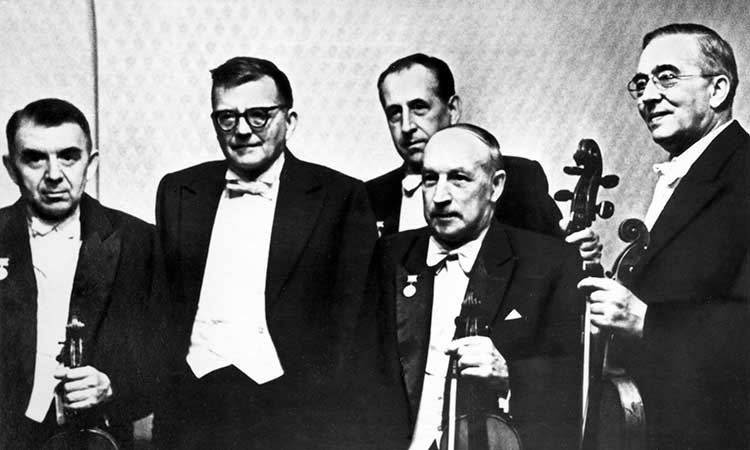
Shostakovich (seen above with the Beethoven Quartet) is renowned for the range of his symphonic work. He completed his first symphony in 1926 and his final symphony (there were also fifteen) was completed in 1971. He worked under the Soviet system and after early official recognition often fell out of favour with the Communist regime including denunciation during the Stalin era. The quartets were written over the period 1938-1974 and are often said to reveal a more personal side of Shostakovich in a way that his symphonies, which were subject to greater scrutiny by the Soviet authorities, don’t. One shouldn’t overstretch this, but there is certainly a deep sense of his own voice in the quartets.

There are a number of recordings of the complete cycle of quartets and amongst the most cited are those by the Emerson String Quartet, the Beethoven Quartet and the Borodin Quartet. All are worth your time – the Emersons (recorded before live audiences) being a good place to start:

Meanwhile the Beethovens are of significant interest because of the special relationship they had with the composer (they premiered most of the quartets):

I have a soft spot for the Borodins, who provided my introduction to the quartets (I still have the brilliantly designed box set of recordings from 1978-1983 reissued in 2006 by the Russian Мелодия label)

Wendy Lesser writes that Shostakovich always knew how his music should sound and her book contains a wonderful story from Valentin Berlinsky, cellist of the Borodin Quartet, concerning one of the  quartets that illustrates this perfectly. Recalling preparing for a performance of the Third Quartet in the company of Shostakovich some years after its premiere, Berlinsky states:

“I said…’we’ve given it some thought…It seems to us that pizzicato [rather than arco] sounds better here.’

‘Yes, yes,’ he hastily interrupted, pizzicato is much better, but please play arco all the same.'”

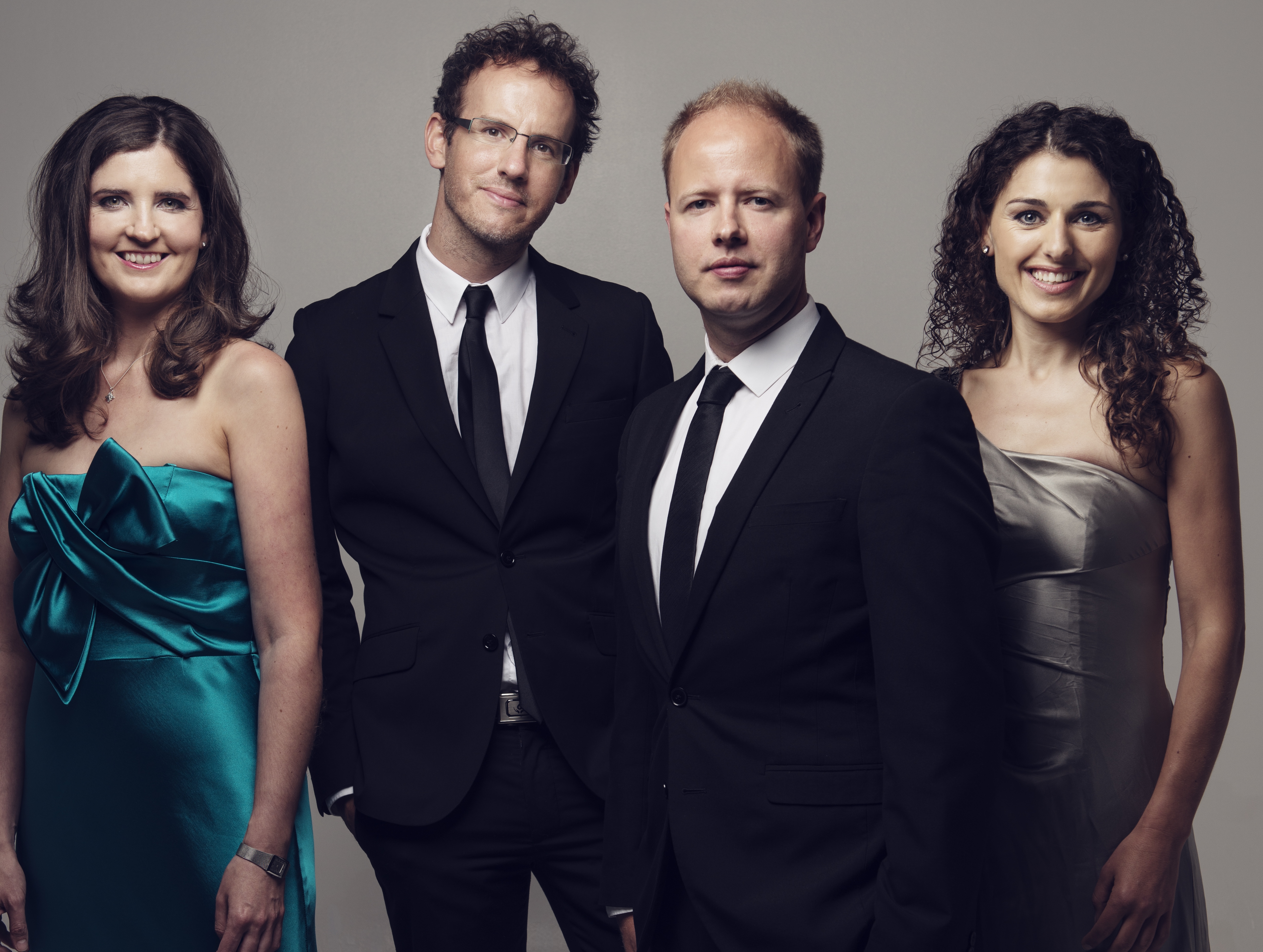
Of course, each of the quartets can be appreciated as an individual piece of music in its own right. But there is also something about hearing them played in one chronological series that gives something of a narrative thread. Lesser also writes of the “vital power” of Shostakovich’s quartets in live performance “that makes any interpretation seem incomplete until it is played before an audience”. Which brings me to the incredible feat that was the Carducci String Quartet – Matthew Denton (violin), Michelle Fleming (violin), Eoin Schmidt-Martin (viola) and Emma Denton (cello) – performing the full cycle of all fifteen quartets in chronological order in five magnificent concerts over two days on the weekend of 22-23 January 2022 at London’s Wigmore Hall.

Total admiration must go to the Carduccis for the dedication and application sustained over the two days and evident from the very first concert starting at 11:30 in the morning on the Saturday. Comprising of the first four quartets, it was for me probably the pick of the (pretty consistently impressive) bunch. The First Quartet was bright before the opening of the Second Quartet gripped with its bold first movement and a second movement featuring some absolutely yearning and sorrowful first violin. The stabbing ‘forces of war unleashed’ (to cite Shostakovich’s supposedly original subtitle) in the third movement of the Third Quartet was another arresting highlight.

More has been written about the Eighth Quartet than all the others combined and it has acquired a special status not least because, although dedicated ‘to the victims of fascism and war’, it is often considered to be Shostakovich’s memorial to himself, featuring as it does not only quotations from some of his other works, but his famous ‘DSCH’ musical monogram. It ended the second of the concerts with the Carduccis giving full musical and dramatic effect to the fevered second movement and forceful fourth movement.

Indeed, there were times when watching the Carduccis perform was just as gripping as listening to them play. This was the case in the ‘furioso’ second movement of the Tenth Quartet, which was near-exhausting to watch and featured in the third concert of the series which opened Sunday’s proceedings, as did the Eleventh Quartet with a deft dealing of its repetitions.
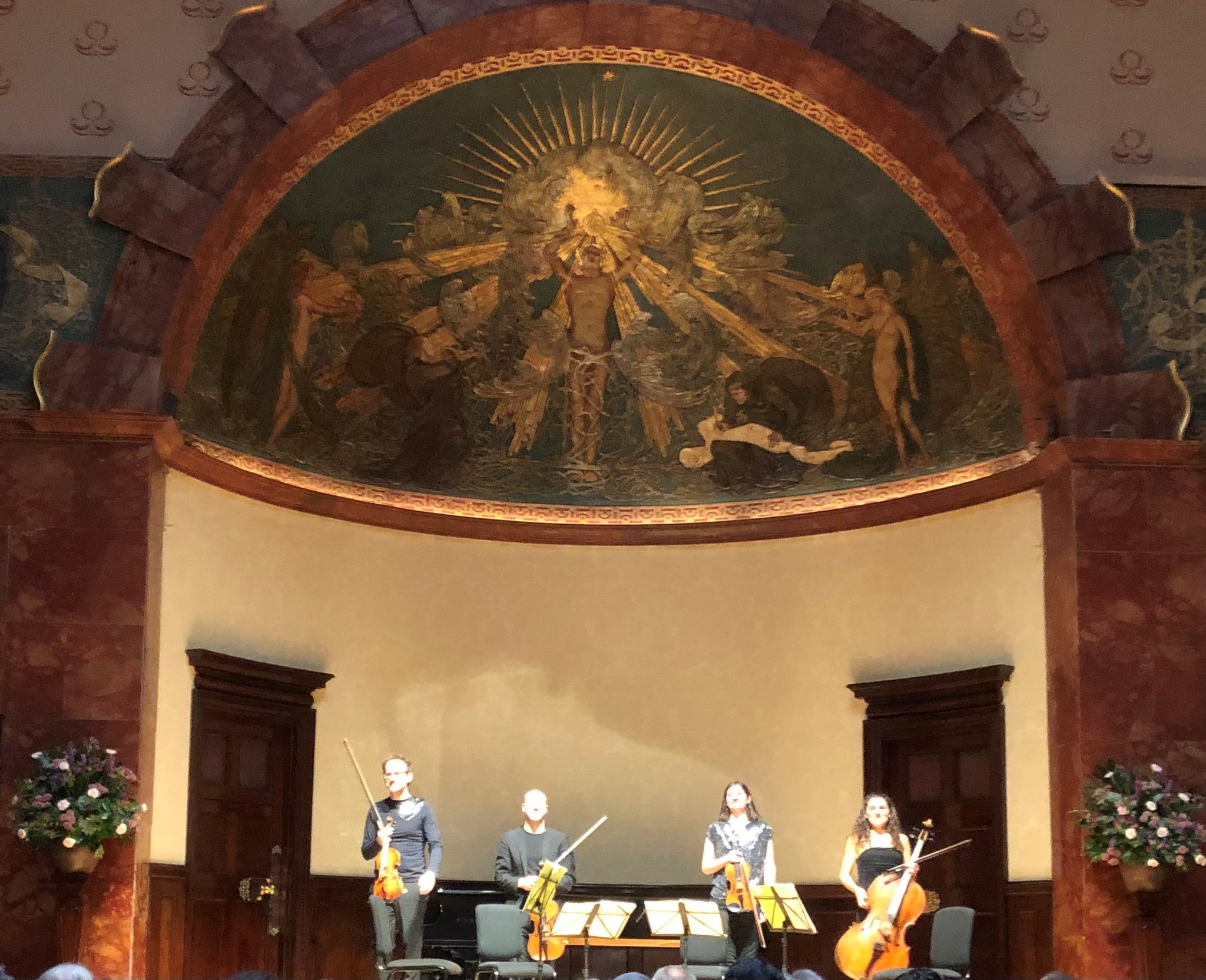
Picture (c) John Earls

The fourth concert gave particular effect to Shostakovich’s inventiveness showcasing the Twelfth Quartet with its mixing of Schoenberg’s twelve-tone serialism and more familiar harmony as well as the unsettling Thirteenth Quartet with the Carduccis opting to tap the fingerboards of their instruments with their fingers rather than bodies of the instruments with bows for the percussive elements. The Thirteenth Quartet also featured some enthrallingly eerie sliding on the viola as well as a wonderfully dramatic finale.

The final concert comprised of the last two quartets ending with the Fifteenth Quartet. The longest of the quartets it was completed in 1974 when Shostakovich was in hospital having been diagnosed with lung cancer. Its six desolate slow movements give a sense of mortality and the lack of a dedication has led to a notion that Shostakovich may have written it as an unofficial elegy for himself. It was played with appropriate respect and sensitivity, something that was recognised by the sustained silence from the audience following its – and the cycle’s – completion before generous and well-earned applause.

This remarkable series of concerts was a precious reminder of what an exceptional body of work Shostakovich’s string quartets are and how any one of them can stand on its own. But there is definitely something special about hearing them together and the Carducci String Quartet in this unforgettable weekend of concerts demonstrated how both hold true. However, it is the full cycle that I want and what I will be asking for on Desert Island Discs.

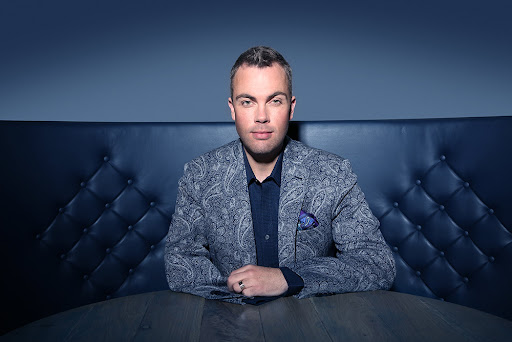
John Earls is Director of Research at Unite the Union and tweets at @john_earls

posted on 27 January 2022
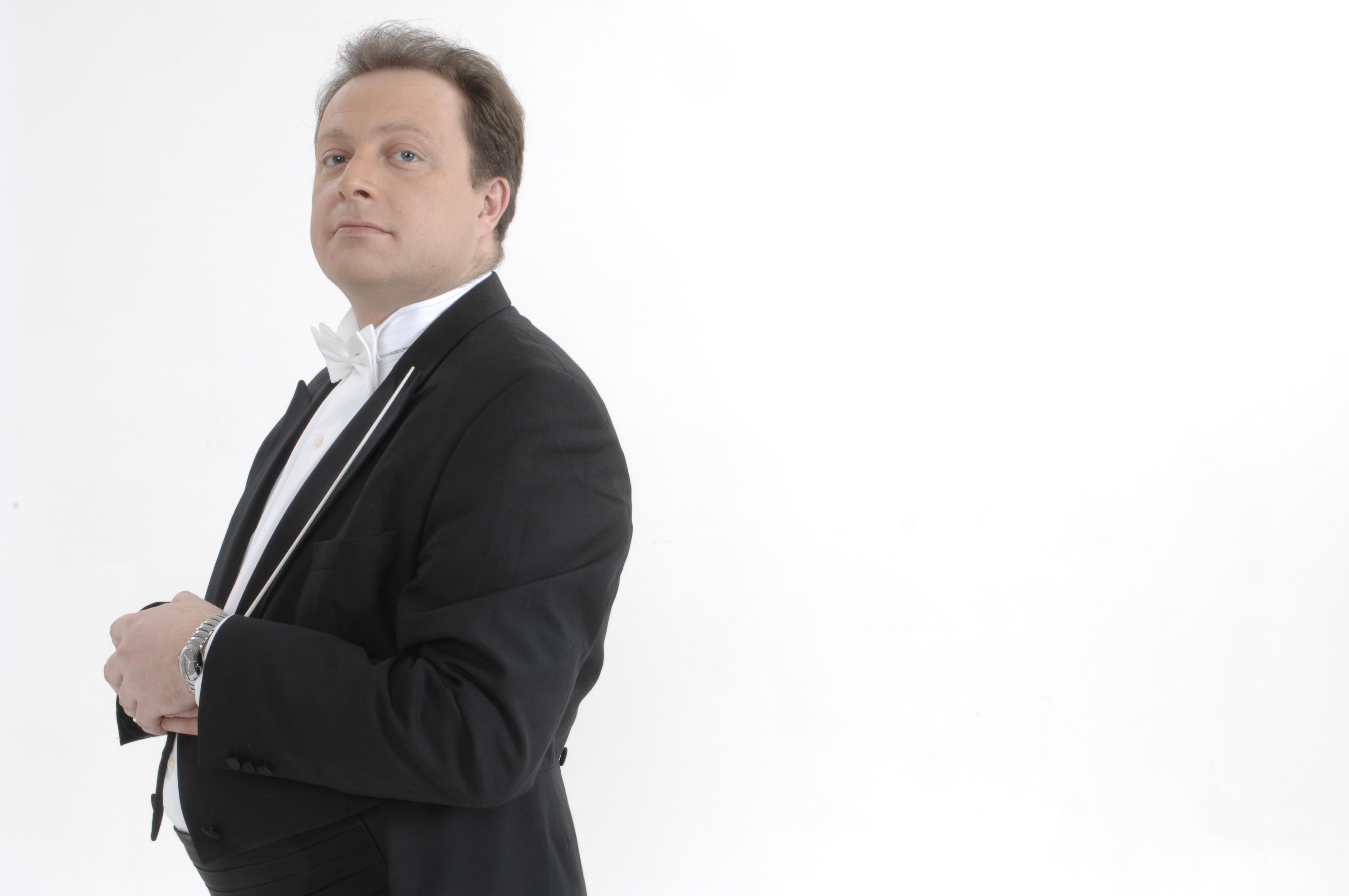
In concert – CBSO Youth Orchestra plays Shostakovich with Michael Seal

michael-seal-bcsoyo

Howard Argentum (2017)
Britten
Diversions Op.21 (1940, rev. 1954)
Shostakovich
Symphony no.10 in E minor Op.93 (1953)

Nicholas McCarthy (piano, below), CBSO Youth Orchestra / Michael Seal (above)

Symphony Hall, Birmingham
Sunday 31 October 2021 (3pm)

Written by Richard Whitehouse

It seems quite a while since the CBSO Youth Orchestra was last in action – this afternoon’s concert playing to its strengths with a programme as featured respectively early and mature works from Britten and Shostakovich, while beginning with a recent piece by Dani Howard.

Now in her late twenties, Howard is one among several British composers who have come to prominence in the past five years. Written to commemorate the silver-wedding anniversary of two close friends, the appropriately named Argentum is in a lineage of curtain-raisers by such as John Adams or Michael Torke – drawing audibly yet productively on such post-minimalist traits in music whose unbridled animation subsides towards a mid-point stasis, before rapidly regaining its previous energy over the course of a build-up to the pointedly affirmative close.

The CBSOYO evidently enjoyed making its acquaintance, then seemed no less attuned to the eclecticism pursued by Britten in his Diversions. Written for Paul Wittgenstein, who had lost his right-arm in the First World War, it takes the form of 12 variations on a theme announced by the orchestra whose faux-portentousness determines what follows. Prokofiev is the main influence (Britten could not have known his left-hand Fourth Concerto, written for but never played by Wittgenstein and unheard until the 1950s) on music of an inventiveness and verve admirably conveyed here by Nicholas McCarthy; his characterizing of each variation astutely gauged through to a scintillating ‘Toccata’ cadenza, with Michael Seal similarly judicious in the mock-solemnity of the ‘Adagio’ then a final ‘Tarantella’ of suitably uproarious humour.

Over his years as Associate Conductor of the CBSO, Seal has gained a formidable reputation in symphonic repertoire, with his account of Shostakovich’s Tenth Symphony never less than satisfying in its long-term cohesion. Not least the opening Moderato, unfolding at an almost unbroken pulse with the stark main theme powerfully wrought and its successor lacking only a degree of irony. The central development exuded palpable impetus and while the climactic arrival of the reprise could have been even more shattering, the wind-down into the musing coda was ideally judged. Taken at a swift if never headlong tempo, the Scherzo was suitably graphic in its evoking of violence (whether, or not, a ‘portrait’ of Stalin is beside the point), then the ensuing Allegretto was poised unerringly between slow movement and intermezzo.

This most intriguing portion of the work again lacked little in insight – with due credit to first horn Alex Hocknull for coming through, almost unscathed, in one of the lengthiest and most testing solos of the orchestral literature. A pity that Seal did not head straight into the finale, but his handling of its Andante introduction astutely mingled pathos with anticipation – the main Allegro itself pivoting between nonchalance and defiance through to a conclusion in which any thought of triumph over adversity was – rightly- withheld until the closing bars.

All in all, a gripping performance of a symphonic masterpiece and a fine demonstration of the CBSO Youth Orchestra’s collective prowess. The CBSO returns this Wednesday for Mozart and Mendelssohn frère et soeur, with Benjamin Grosvenor in Beethoven’s First Concerto.

Further information on the CBSO’s current season can be found at the orchestra’s website. For more on Michael Seal, click here – and for more on pianist Nicholas McCarthy, click here

BBC Proms – Víkingur Ólafsson, Philharmonia / Paavo Järvi: Bach, Mozart, Prokofiev & Shostakovich

olafsson-jarvi

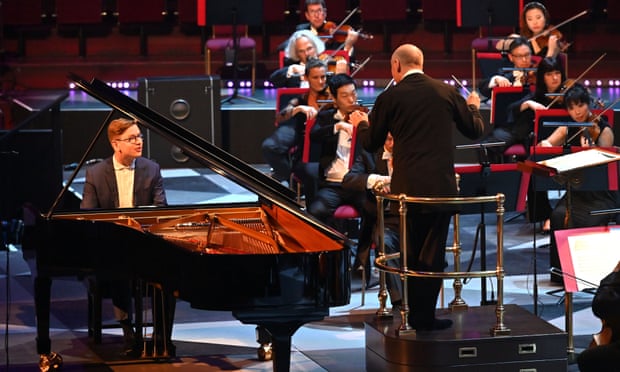
Víkingur Ólafsson (piano), Philharmonia Orchestra / Paavo Järvi

Prokofiev Symphony no.1 in D major Op.25 ‘Classical’ (1916-17)
J.S. Bach Keyboard Concerto in F minor BWV1056 (c1738-9)
Mozart Piano Concerto no.24 in C minor K491 (1786)
Shostakovich Symphony no. 9 in E flat major Op.70 (1945)

Royal Albert Hall, London
Saturday 14 August 2021

Written by Richard Whitehouse

Tonight’s Prom brought change of conductor, the always reliable Paavo Järvi stepping in for Santtu-Matias Rouvali in what would have been the latter’s Proms debut, but not of soloist – Icelandic pianist Víkingur Ólafsson duly making his first appearance at these concerts with concertos which, for the most part, played to his strengths.

The number of times that Bach’s keyboard concertos have been heard here on piano in recent decades can be counted on the fingers on one hand (Tatiana Nikolayeva’s D minor resonates in the memory), but that in F minor was a good choice in terms of its succinctness – the outer movements pitting soloist and (sizable body of) strings against each other with a trenchancy as was vividly conveyed here, with the central Andante an oasis of serenity that was not without its plangent asides.

Placing this piece before the interval, however, made for a distinctly short first half – given the relative length of Mozart’s C minor Concerto after the interval. There were many good things in this latter, Ólafsson keeping the first movement on a tight yet never inflexible rein so that its inclination to pathos – if not always its portentous undertones – came through in ample measure; not least in a coda that had been cannily prepared by the soloist’s cadenza. The central Larghetto was none the less the highlight – Ólafsson varying his tone such that piano melded into the woodwind for an early and defining instance of timbral colouration, with its limpid elegance never undersold. Maybe the finale was a little staid in the overall unfolding of its variations, but the coda’s strangely ambiguous poise was tangibly realized.

An auspicious debut, then, for Ólafsson, who underlined his prowess with affecting readings of the slow movement of Bach’s Fourth Organ Sonata (BWV526) in August Stradal’s chaste transcription and Liszt’s not unduly mawkish version of Mozart’s Ave Verum Corpus (K617). These further extended the disparity between each half – the first of which had commenced with Prokofiev’s ‘Classical’ Symphony, not in the least small of scale or mimsyish as Järvi heard it; witness his acerbic and impetuous take on the initial Allegro, trumpets and timpani to the fore, then a Larghetto whose swift underlying tempo left little room for any harmonic piquancy to emerge. The Gavotte was slightly marred by several mannered agogics which tended to impede its rhythmic profile, but the Finale lacked little in sparkle or insouciance.

Among the most travelled and recorded conductors of today, Järvi can seem detached or even aloof in manner – but there was no such reticence evident in Shostakovich’s Ninth Symphony as ended this programme. After a tensile and assertive Allegro, which audibly benefitted from the sizable forces onstage, the Moderato recalled Efrem Kurtz’s classic recording as to overall restraint and a dark-hued introspection rising to anguish in its twin climaxes. Playing without pause, the other movements were of a piece with the foregoing – a driving and almost manic Presto subsiding into a Largo, whose ruminative bassoon soliloquys were eloquently taken by Emily Hultmark, then an Allegretto whose capriciousness was acutely gauged through to its bitingly sardonic climax and breathless final payoff. Undoubtedly a performance to savour.

You can find more information on the BBC Proms at the festival’s homepage

In concert – Lawrence Power, CBSO / Nicholas Collon: Stravinsky, Britten & Shostakovich

nicholas-collon

Lawrence Power (viola), City of Birmingham Symphony Orchestra / Nicholas Collon (above)

Stravinsky Symphonies of Wind Instruments (1920, revised 1947)
Britten Lachrymae Op.48a (1950, orch. 1976)
Shostakovich Symphony no.5 in D minor Op.47 (1937)

Symphony Hall, Birmingham
Wednesday 26 May 2pm

Written by Richard Whitehouse

This second in the City of Birmingham Symphony Orchestra’s live concerts, heading out of lockdown, featured works from the first half of the last century – focussing on wind then strings, before bringing the whole orchestra into play for one of the defining symphonies from this period.

It was an astute move to open with Stravinsky’s Symphonies of Wind Instruments as, 14 days short of the centenary of its premiere to a bemused London public, the extent of its innovation and influence was there for all to hear. The performance was attuned to its bracing alternation of diverse musical types, and while the elongated platform layout might have caused passing uncertainties, Nicholas Collon made a virtue of its fluid continuity right through to the final chorale which ‘remembers’ Debussy with an emotion the more acute for its hieratic restraint.

It may have entered the repertoire but slowly, Britten’s Lachrymae is now well to the fore of the viola’s still limited concertante output and Lawrence Power gave a potent rendering of a piece conceived for William Primrose then orchestrated for Cecil Aronowitz. The evocative if sparse writing for strings is a reminder this was Britten’s final creative act, bringing out the ambiguous shadings of these variations on Dowland’s Flow my tears (played and sung at the outset by Power) which culminate with a rendering of the full song in all its grave elegance.

Speaking beforehand, Collon (who gave a perceptive account of the Ninth Symphony with the CBSO some years back) spoke of his pleasure in utilizing the extent of Symphony Hall’s platform to programme a work on the scale of Shostakovich’s Fifth Symphony. Accordingly, this was a performance whose impact and intensity were evident from the outset; the opening movement unfolding gradually but with keen underlying intensity though its searching, then wistful main themes, to a surging development and climactic reprise before subsiding into a fateful coda. If the scherzo was less capricious than it often is, Collon’s trenchant handling   of its outer sections exuded an acerbic charm – offset by the trio’s deadpan humour (with an airily whimsical solo from leader Jonathan Martindale), before a pay-off of ominous import.

The ensuing Largo is the work’s emotional heart in every sense, and this afternoon’s reading made the most of its fraught eloquence with some limpidly unforced string playing then, in the mesmeric central episode, woodwind soliloquys of a spectral remoteness. Nor was there any lack of gravitas as the movement reached a baleful culmination, and from where Collon oversaw a faultless transition through to those consoling final bars. Always difficult to bring off, the finale had the virtue of almost seamless progression through its high-octane opening stages then the musing introspection at its centre – Collon making light of some tricky tempo changes on the way to an apotheosis of unremitting focus. The tonal ambivalence between triumph and tragedy might have been more acute, but its inevitability was never in doubt.

An impressive way to conclude what was almost a full-length concert (and one these players had to repeat just three hours later). The CBSO returns next Wednesday with a less strenuous programme which will include a welcome outing for Mendelssohn’s Reformation Symphony.

For further information about the CBSO’s current series of concerts, head to the orchestra’s website

For further information about the next concert on Wednesday 2 June, click here

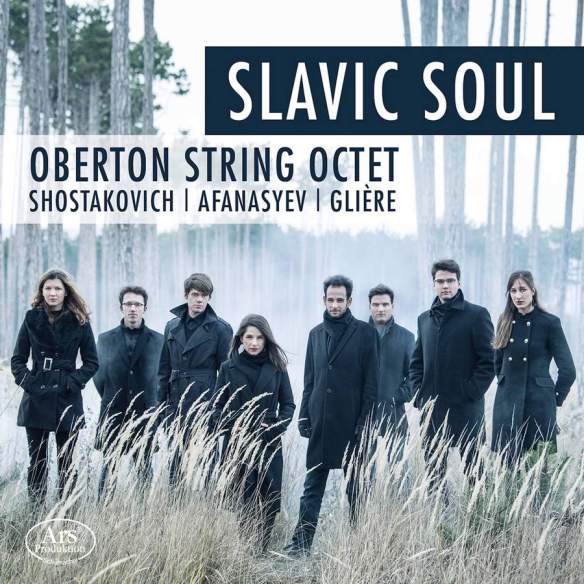
On record – Oberton String Octet – Slavic Soul (ARS Produktion)

Oberton String Octet [Jevgēnijs Čepoveckis, Veronika Brecelj, Andrii Uhrak and Alberto Stiffoni (violins), Serhii Zhuravlov and Hanga Fehér (violas) Floris Fortin and Dorottya Standi (cellos)]

Shostakovich Two Pieces for String Octet Op.11 (1924/5)
Afanasyev Double Quartet in D major ‘Housewarming ‘(1872)
Glière String Octet in D major Op.5 (1902)

Ars ProduktionARS38305 [59’26”]

Producer Anette Schumacher
Engineer Daniel Comploi

Recorded 19-21 December 2019, Florentinersaal, University of Arts, Graz

Written by Richard Whitehouse

What’s the story?

The debut release from this ‘purpose built’ string ensemble which intends to encompass the repertoire for octet and double quartet, examples of both being featured here together with music by a composer whose ‘enfant terrible’ phase proved as reckless as it was short-lived.

What’s the music like?

Long since a footnote in musical history, Nikolay Afanasyev (1821-98) became a pioneer in Russian opera and chamber music, likely composing this Double Quartet for the inauguration of the St Petersburg Society for Chamber Music. Taking his cue from those four pieces with which Spohr had intended to launch a new medium, it follows an outwardly classical format while being permeated by aspects of Russian folk music. Best are an animated Scherzo with its stately trio, then an Andante of suffused pathos. Both outer movements betray a degree of formal uncertainty, a reminder that Afanasyev (as with Glinka before him) was essentially an autodidact, yet their energy and charm override such failings. Certainly, the Oberton sounds captivated by the qualities of this ‘Housewarming’ which it is (rightly) intent on championing.

Whereas Afanasyev writes for four parts, Glière writes for eight voices in his Octet. One of several works for string ensembles from the outset of his career, this follows audibly in the lineage of Mendelssohn with its emphasis on intensive dialogue and textural richness, even if both its formal layout and tempo indications indicate knowledge of his Russian forebear. Here, too, the middle movements – the second poised between scherzo and intermezzo, and the third an eloquent ‘song without words’ – are highlights, though the initial Allegro yields telling understatement while the finale builds a cumulative momentum that carries all before it. The Oberton are unfailingly alive to its contrapuntal energy and often orchestral sonority, adding another piece to the roster of Octets such as marked their composers ‘coming of age’.

As curtain-raiser, Shostakovich’s Two Pieces duly launches the programme in unequivocal fashion. Written either side of his seminal First Symphony, the ‘Prelude’ fairly abounds in volatile emotion while the ‘Scherzo’ evinces a coursing energy and caustic dissonance that points unerringly to those works immediately following it. What a pity the intended fugue never progressed beyond the sketch stage, though the work as stands remains testament to the ‘confidence of youth’ and the Oberton’s charged reading assuredly takes no prisoners.

Does it all work?

As a programme, undoubtedly. The repertoire for string octet and double string quartet is a select yet significant one, and the Oberton is evidently on a mission to convey this in both performance and recording. Hopefully, this release will be the start of a project as could do worse than to couple each double quartet by Spohr with those octets of Mendelssohn, Gade, Svendsen and Enescu. Moreover, the logistics involved in bringing together eight musicians based around Western and Central Europe will hopefully not limit their live music-making.

Is it recommended?

Very much so. The SACD sound has exemplary definition if almost too great an immediacy in more demonstrative passages, while the booklet notes are succinctly informative. Strongly recommended, with the hope further releases from this ensemble will not be long in coming.

Listen

Buy

You can listen to clips from the recording and purchase, either in physical or digital form, at the Presto website

Read

You can read more about the Oberton String Quartet at their website