Talking Heads: Ryan Wigglesworth

In the first of two interviews themed around the Aldeburgh Festival, Featured Artist Ryan Wigglesworth talks to Ben Hogwood about the influence of his mentor, Oliver Knussen, and the inspiration he takes from the music of Britten, Debussy and Bruckner.

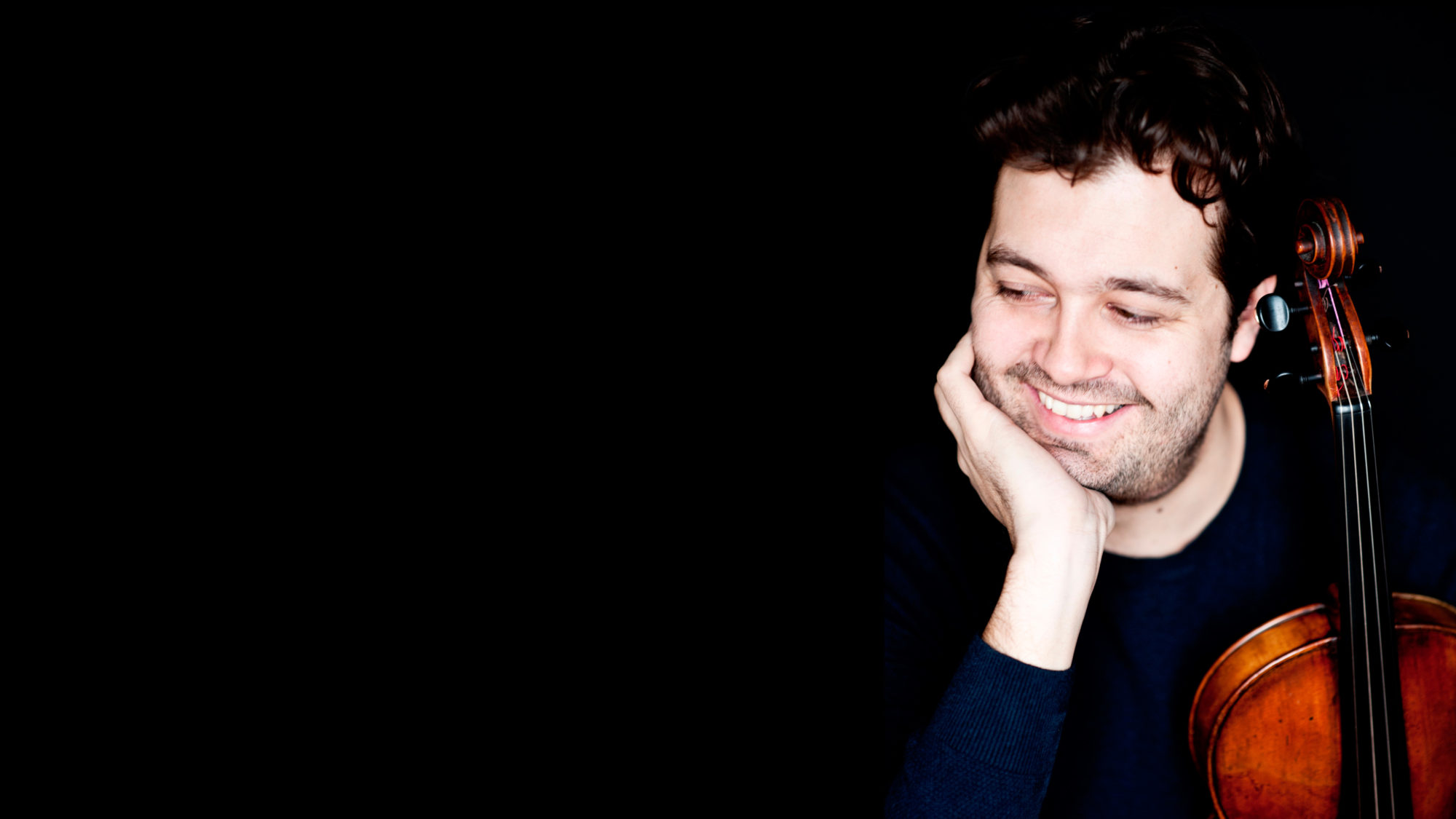
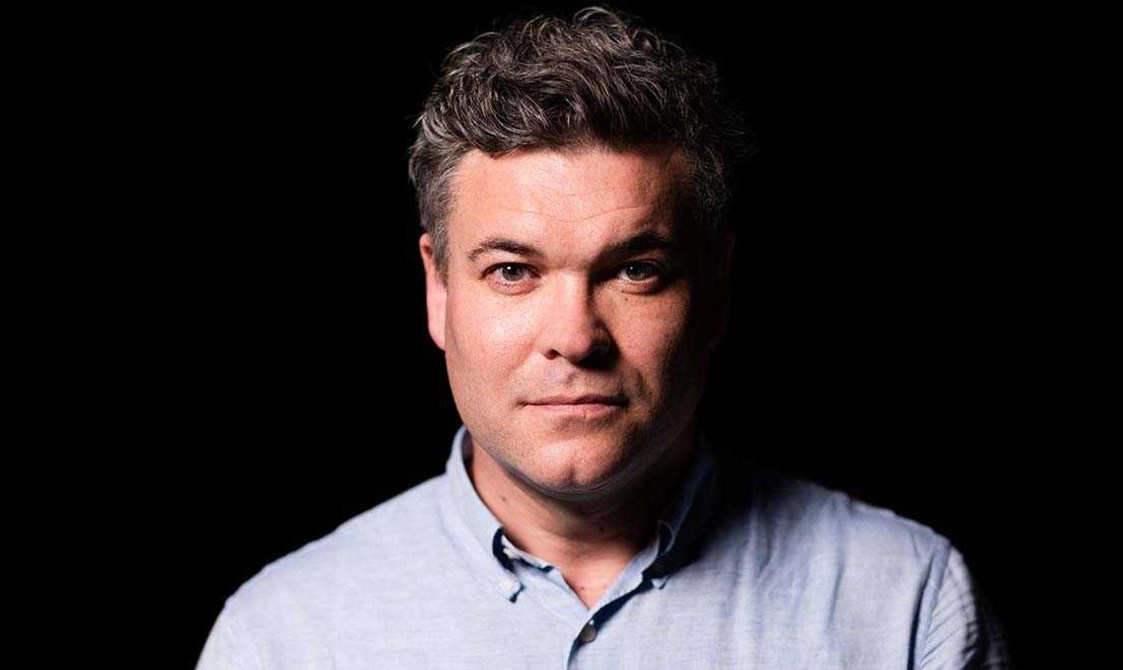
Picture credits: Benjamin Ealovega (Ryan Wigglesworth, Steven Osborne), Mark Allan (Oliver Knussen), Sussie Ahlberg (Sophie Bevan), Lawrence Power (Giorgia Bertazzi)

Ryan Wigglesworth is a musician of many disciplines – and for half an hour he has joined us to talk about his work as a composer, conductor and pianist, specifically within the rarefied world of the Aldeburgh Festival, where he is a Featured Artist for 2026.

The festival has played a key part in his career, as I ask him to cast his mind back to the first time he visited. “My first contact with Aldeburgh was through the young artists programme, which is where I first met Ollie Knussen – that would have been 2000 or 2001. I had forced my parents, when I was much younger, to take me to Aldeburgh. It must have been the time when the Humphrey Carpenter biography of Britten came out. I read that biography and begged my parents to drive from Sheffield so I could see the place and go on a pilgrimage. It’s been a very special place to me for such a long time, and since the turn of the century, when I met Ollie, that became the most important musical friendship and mentorship of my life. I spent so much time there and was virtually living at his house for a period. It’s a home to me.”

It is striking in conversations with artists that worked with Knussen, the speed with which his name comes up, and the affection it provokes. In this case, Wigglesworth met his mentor through the soprano Claire Booth. “Claire and I were undergraduates together”, he says, “and she was on the course at Snape. I tagged along, because I wasn’t officially there as a student that first year. Claire and I had already learned his Whitman Settings, and we kept asking if we could sing it to him. He was dreading it was going to be awful, but he finally caved in, and we performed it. I think he was very touched, and I think that was the beginning of him thinking, “Maybe they’re not so bad, these two!”

As with fellow-students, Knussen (above) left a lasting musical and personal footprint. “It was my education. I must have sat in hundreds of hours of rehearsals with the London Sinfonietta and the BBC Symphony Orchestra. I could never understand why no-one else was there, and it was the same when I used to go to Boulez’s rehearsals. That was my education, because Ollie’s rehearsals were masterclasses in time management, efficiently sorting our problems, and that pristine conducting technique. I’m so grateful to have had that as my starting point, and with such a dominant creative force in your life, it takes a while to free yourself from their way of doing it, and finding your own way, but it still informs everything I do. When it comes down to it, it’s still about respect for the text, and that the composer is the most important thing – not the performer’s ego!”

He considers further. “You couldn’t not be learning, just spending time with him, sitting at the kitchen table. As everyone knew him understood, he had obsessions at a particular moment in time. He would be gorging on the music of Busoni, or whatever it happened to be that week, so we’d go through tonnes of his music – and that’s an incredible education, going through those scores together – and learning how he marked up scores. It was my starting point, and I’ve developed it in how to learn a score thoroughly, especially when I’ve had to learn something quite quickly, stepping in for a cancellation. I remember having to learn Elgar’s The Dream of Gerontius in two days, and it was incredible to fall back on that technique of inhabiting a score.”

The influence of Knussen spreads to the programming for the 2026 Aldeburgh Festival, where his innovations can be felt in Wigglesworth’s repertoire choices – such as the pairing of his own Piano Concerto and that by Ravel, both to be performed with Steven Osborne (above) as soloist. “It’s a bit of a risk, that one!” laughs Ryan, “putting your piece alongside one of the greatest concertos ever written. That was something I began to think about much more deeply spending time with him, the way pieces resonate together. It’s a very subtle and complex business, and of course you get it wrong sometimes, but that’s fine because you don’t know until you do it, very often. It’s one of the great pleasures to have the freedom you have at Aldeburgh where your wings aren’t clipped. It’s worrying that so much of concert life is becoming so narrow, reduced in its scope and imaginative adventure.”

We reflect on his role as Featured Artist at Aldeburgh this year – a chance to spread musical wings? “It’s very special to be able to think about bringing the different aspects of what I do under one roof, because they’re all sides of the same business of making music. Of course they feature in different ways. Playing chamber music is so important because it’s my only direct contact with producing the sound, and I need that. Yet at the same time, if I’m conducting Pelléas et Mélisande, I hope I’m becoming a better composer as a result!”

His reference is to Debussy’s only opera, with which the festival opens on Friday 12 June. “You can’t not learn from every page of a score like that”, he says, “about how to be a better composer and holding the mystery. I don’t think I’ve ever met a composer for whom that’s not the greatest opera ever written, because it’s so difficult to fathom how he did it! It is so elusive, you can’t see how he put it together. The more time you spend in the orbit of masterpieces like that, it’s stimulating for me as a composer, and to spend time with the orchestra. It’s such an organism, this group of individual musicians with a collective personality, sound and ethos – it’s extremely mysterious! That was the great thing about spending all those hours in rehearsal with Ollie”, he reflects, “that’s what you’re soaking up, how these groups function, and how you balance the double basses and harps – what needs to be done on the most basic practical level.”

The orchestra to which he refers in Pelléas is the BBC Scottish Symphony Orchestra, of whom he has been chief conductor since September 2022. “They are uniquely versatile”, he says, “When you think of what they do in the Tectonics festival, with Ilan Volkov, from the most experimental new music – from that to Bruckner’s Seventh Symphony – and they approach it with care and flair. City Halls is so good for classical repertoire, too, and they are incredibly stylish in Mozart, which is such a difficult thing. It’s incredible what they can do, and in such short spaces of time. To be able to flick the switch is amazing, with something like Birtwistle’s Earth Dances, which we performed with Beethoven’s Eroica Symphony at the BBC Proms last year. To achieve that in such little rehearsal time would have been almost unimaginable in the mid-1980s. The speed with which things are inhabited is incredible.”
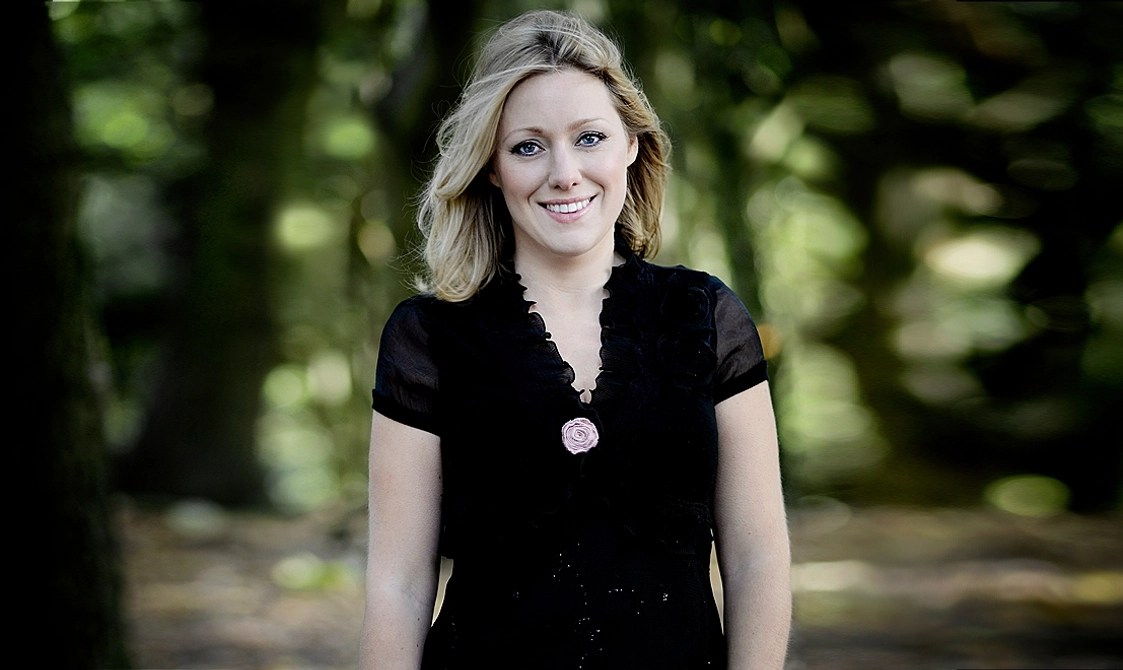
On a much smaller scale is The Poet’s Echo, a concert where Wigglesworth will take to the piano, joining soprano Sophie Bevan – his wife – in a programme marking the centenary of the birth of Russian powerhouse Galina Vishnevskaya. Along with her own husband, Mstislav Rostropovich, Galina played an important role in the career and life of Benjamin Britten. Britten’s song cycle The Poet’s Echo was completed in 1965 for Vishnevskaya, and will feature alongside Wigglesworth’s own settings of George Herbert, Till Dawning – written for Sophie (above). “The Poet’s Echo is new for both of us”, he says, “and it is wonderful to have a major work of Britten’s to come to fresh and learn together. We’ve done selections of the folksongs for a good few years, now.”

He has great affection for them. “I love them so much – and those accompaniments in the Britten folk song arrangements, each one is a sort of bull’s eye! There are one or two very focused, simple ideas, and it comes back to Britten’s economy.” A quality Britten and Knussen shared? “Exactly – a supremely practical approach. I learned from Ollie, and almost at Britten’s feet. Ollie’s Dad was so involved with Britten as a conductor, taking part in the premiere of works like Curlew River, and Ollie was there as a kid, taking all this up. He always said about Britten that he could have been a grandmaster chess player, or even an army general. The ability to move things in the abstract, in his head, was so strong, and that extends to planning the entire act of an opera in his mind before committing it to paper. He had an extraordinary ability to manipulate things in space and knowing, in the operas, when to introduce a colour, treating the instruments of the orchestra like individual characters, and knowing when to hold one back for dramatic purposes.”

He reflects further. “It’s about finding the off-kilter but logical solution. A great example is the ‘interview chords’ in Billy Budd – they’re every way of harmonising the F major triad. He’s working through a secret, and it’s absolutely right, a key emotional part of the opera.”
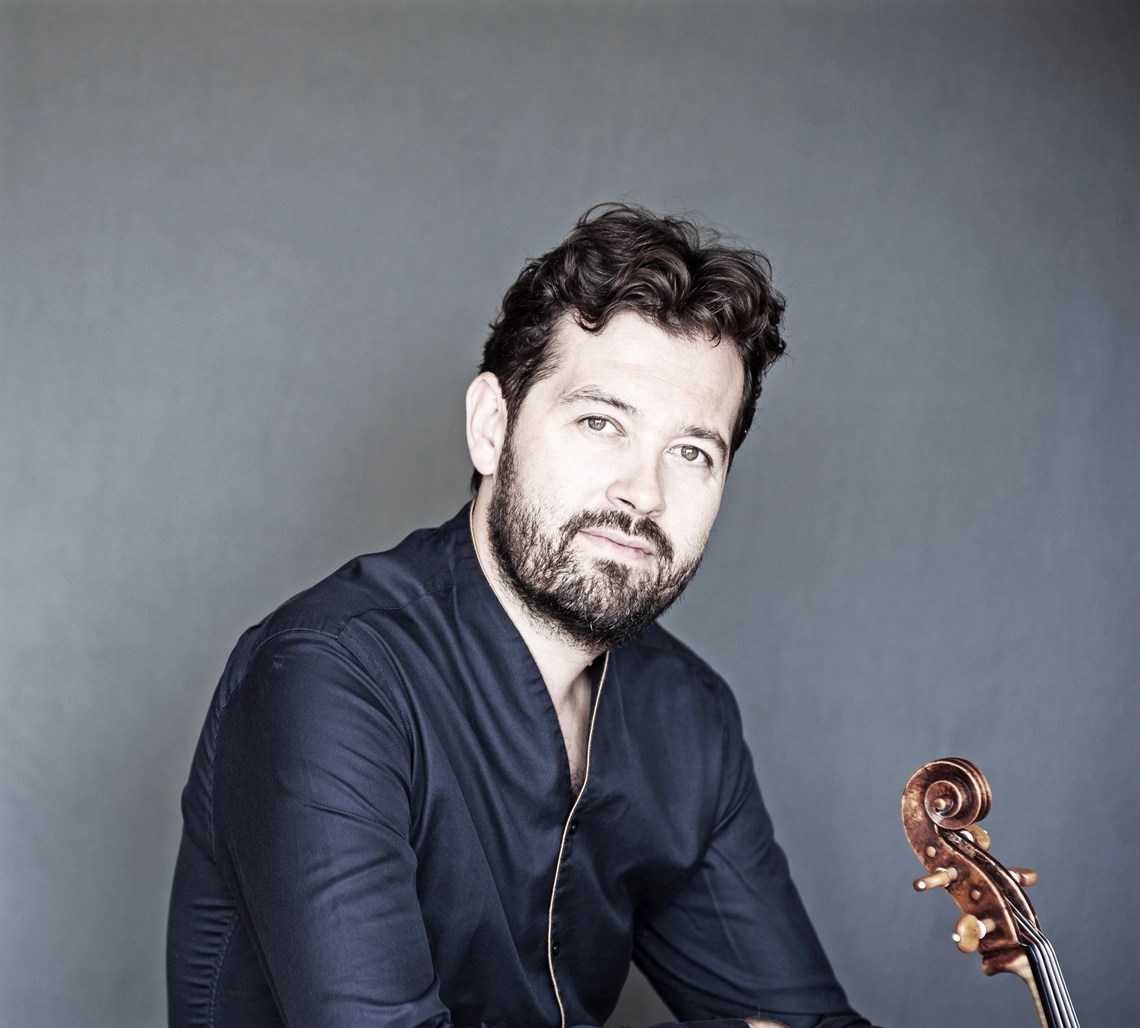
Returning to Wigglesworth’s own music, there is a significant premiere with the Knussen Chamber Orchestra on Saturday 27 June, in the form of his Viola Concerto, written for Lawrence Power (above). “It’s quite difficult to talk about, because I’ve not long finished it!” he confesses. “I’m still too close to the process of having written it, but I haven’t heard it yet. Like all of my recent pieces, and I hope my pieces in the future – they’re all my reactions to who is performing, and who I’m writing for. I think I would struggle now if I were commissioned by a musician or orchestra I don’t know, I’d struggle to have ideas. I’m so lucky with Sophie, or Steven Osborne, who’s playing my piano concerto at the beginning of the festival, to have these long term, meaningful relationships. With Laurence, we first worked together years ago. I wrote these Five Little Waltzes for him during lockdown. He’s such a one-off, and his artistic personality is so strong. He has this incredible sound, and variety of colour, and the piece came from my reaction to that.”

He describes the work. “It’s slightly unusual – in three movements, which sounds very standard, but it’s slow-fast-slow. It was a deliberate attempt to try to achieve something a bit more spacious than anything I’ve attempted before. I suppose it allows the viola to occupy a lyrical space. It’s not a battle between soloist and orchestra, more a fluid relationship. It comes back to the music that becomes more meaningful as a performer. Like Bruckner – I love this music so much, and what can I learn from it? Bruckner’s vision is so personal, but there are things to be learned – how to create a long wave, a big paragraph. It’s finding the things that challenge you, because in the past I’ve struggled to create a genuinely long line. You could say Britten concentrated on little cells of ideas, but it’s nice to think about how to achieve something that doesn’t come naturally, that can become more a part of your make-up.”

Debussy comes to mind as a composer capable of uniting the two ways of working, which returns us to the festival’s opening night. “To have created Pelléas as his first dramatic work, and to have got it that right… it was a long gestation process written it a long time before it was premiered, but it’s unlike anything else!” he says, under Debussy’s spell. “As he admitted himself there is a lot of Mussorgsky’s Boris Godunov in it, but these scenes tend to be conversations between two characters, with the function of these orchestral interludes, which seem so necessary. To think they were added so late on in the process, just to cover the stage move time, is remarkable – but you need them because of the intensity of each scene. You need the space afterwards to process what you’ve just heard, for the brain to catch up. It’s an incredible living organism, when you’re in it – and it really does grip you! This score is just as much like a drug as Wagner is said to be. The more you spend time with it, the more you need it!”

You can read more about this year’s Aldeburgh Festival at the Britten Pears Arts website, with full concert information and details. For biographical information on Ryan Wigglesworth himself, you can visit his artist page

Published post no.2,915 – Friday 12 June 2026

In concert – Lawrence Power, CBSO / Nicholas Collon: Stravinsky, Britten & Shostakovich

nicholas-collon

Lawrence Power (viola), City of Birmingham Symphony Orchestra / Nicholas Collon (above)

Stravinsky Symphonies of Wind Instruments (1920, revised 1947)
Britten Lachrymae Op.48a (1950, orch. 1976)
Shostakovich Symphony no.5 in D minor Op.47 (1937)

Symphony Hall, Birmingham
Wednesday 26 May 2pm

Written by Richard Whitehouse

This second in the City of Birmingham Symphony Orchestra’s live concerts, heading out of lockdown, featured works from the first half of the last century – focussing on wind then strings, before bringing the whole orchestra into play for one of the defining symphonies from this period.

It was an astute move to open with Stravinsky’s Symphonies of Wind Instruments as, 14 days short of the centenary of its premiere to a bemused London public, the extent of its innovation and influence was there for all to hear. The performance was attuned to its bracing alternation of diverse musical types, and while the elongated platform layout might have caused passing uncertainties, Nicholas Collon made a virtue of its fluid continuity right through to the final chorale which ‘remembers’ Debussy with an emotion the more acute for its hieratic restraint.

It may have entered the repertoire but slowly, Britten’s Lachrymae is now well to the fore of the viola’s still limited concertante output and Lawrence Power gave a potent rendering of a piece conceived for William Primrose then orchestrated for Cecil Aronowitz. The evocative if sparse writing for strings is a reminder this was Britten’s final creative act, bringing out the ambiguous shadings of these variations on Dowland’s Flow my tears (played and sung at the outset by Power) which culminate with a rendering of the full song in all its grave elegance.

Speaking beforehand, Collon (who gave a perceptive account of the Ninth Symphony with the CBSO some years back) spoke of his pleasure in utilizing the extent of Symphony Hall’s platform to programme a work on the scale of Shostakovich’s Fifth Symphony. Accordingly, this was a performance whose impact and intensity were evident from the outset; the opening movement unfolding gradually but with keen underlying intensity though its searching, then wistful main themes, to a surging development and climactic reprise before subsiding into a fateful coda. If the scherzo was less capricious than it often is, Collon’s trenchant handling   of its outer sections exuded an acerbic charm – offset by the trio’s deadpan humour (with an airily whimsical solo from leader Jonathan Martindale), before a pay-off of ominous import.

The ensuing Largo is the work’s emotional heart in every sense, and this afternoon’s reading made the most of its fraught eloquence with some limpidly unforced string playing then, in the mesmeric central episode, woodwind soliloquys of a spectral remoteness. Nor was there any lack of gravitas as the movement reached a baleful culmination, and from where Collon oversaw a faultless transition through to those consoling final bars. Always difficult to bring off, the finale had the virtue of almost seamless progression through its high-octane opening stages then the musing introspection at its centre – Collon making light of some tricky tempo changes on the way to an apotheosis of unremitting focus. The tonal ambivalence between triumph and tragedy might have been more acute, but its inevitability was never in doubt.

An impressive way to conclude what was almost a full-length concert (and one these players had to repeat just three hours later). The CBSO returns next Wednesday with a less strenuous programme which will include a welcome outing for Mendelssohn’s Reformation Symphony.

For further information about the CBSO’s current series of concerts, head to the orchestra’s website

For further information about the next concert on Wednesday 2 June, click here

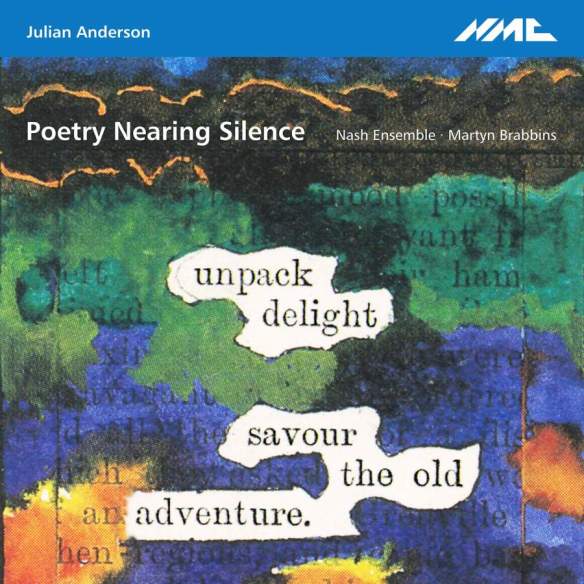
On record – Nash Ensemble – Julian Anderson: Poetry Nearing Silence (NMC)

Nash Ensemble / Martyn Brabbins

Julian Anderson
Ring Dance (1987) Benjamin Nabarro, Michael Gurevich (violins)
The Bearded Lady (1994) Richard Hosford (clarinet), Ian Brown (piano)
The Colour of Pomegranates (1994) Philippa Davies (alto flute), Ian Brown (piano)
Prayer (2009) Lawrence Power (viola)
Poetry Nearing Silence (1997) Benjamin Nabarro (violin, triangle), Michael Gurevich (violin, triangle), Lawrence Power (viola), Adrian Brendel (cello), Philippa Davies (flute, piccolo), Richard Hosford (clarinet, E-flat clarinet), Hugh Webb (harp)
Another Prayer (2012) Benjamin Nabarro (viola)
Van Gogh Blue (2015) Ian Brown (piano), Graham Mitchell (double bass), Marie Lloyd (clarinet, bass clarinet), Lawrence Power (viola), Adrian Brendel (cello), Philippa Davies (flute, piccolo), Richard Hosford (clarinet, E-flat clarinet), Hugh Webb (harp)

Producer and Engineer David Lefeber
Digital Editing Susanne Stanzeleit

Recorded 1-3 April 2019 at Menuhin Hall, Yehudi Menuhin School, Cobham, Kent

Written by Ben Hogwood

What’s the story?

Back in 2007 NMC released a disc called Book of Hours, a highly enjoyable compendium of the work of Julian Anderson, where smaller-scale music rubbed shoulders with ambitious works like the Symphony and the Book of Hours itself, which combined an ensemble and electronics to fascinating effect.

Poetry Nearing Silence is to all intents and purposes a follow-up release to that Gramophone Award winner, and features the Nash Ensemble and their members in short works by Anderson. They range from solo instrumental pieces to suites for ensemble, written from 1987 to 2015.

What’s the music like?

Concentrated, effective and stimulating. It is great to have such variety within a disc the listener can either dip into or experience in full. Either approach brings dividends.

Ring Dance, for two violins, opens the collection with the instruction that it should ‘be played with unimaginable joy!’ The open string drones with which the piece starts give a penetrating sound, and this approach is consistent with the piece. The instruction with some of the bowing is often to dig in hard near the strings, which gives an extra scratchy timbre. The sound is also striking when the open strings shift up a fifth, accentuating the positive if not always obviously joyful.

The Bearded Lady is next, receiving a tour de force account from clarinetist Richard Hosford and pianist Ian Brown. After the bold opening it becomes more lyrical if still high in its register, defiant yet mournful in its regret at how characters such as the bearded lady – in this case, Baba the Turk from Auden’s The Rake’s Progress – have been portrayed on stage. The uncompromising notes from the piano at the end speak plenty here.

It is surprising not more composers write for alto flute, for the instrument has a really appealing sonority. Anderson writes enchantingly on his nocturne The Colour of Pomegranates, aided by a richly coloured performance from Philippa Davies and Ian Brown, which builds to the sound of tolling bells on the piano and sharper, bird like squawks from the flute. This piece sounds a lot further East than England – and indeed is named after an Armenian film.

Another change of sound brings in the husky viola of Lawrence Power for Prayer, a more recent piece in which Anderson enjoys writing for the instrument he learned briefly in his teens. Here is a reminder that the instrument has a much bigger range than composers often use, grainy in its lower register but with a penetrating line higher up where Anderson capitalises for his melodic material. You might expect Prayer to be a contemplation but this one lets its thoughts unravel and regroup.

After four pieces bringing forward solo instruments, the disc moves to the ensemble number that gave its name. Poetry Nearing Silence is for seven players and runs through eight short movements, where Anderson reacts to the unusual drawings and words therein of Tom Phillips. The crisp chords that open Muse in Rocks or Pebbles or Clouds or Foliage are immediately appealing for their watery colours, and the suite continues to deliver keen illustrations of its subject matter. Anderson writes dreamy lines through Know Vienna, while the intriguing buzzing of a ratchet, played by the second violin, adds mystery to the bigger ensemble number My Future as the Star in a Film of My Room. As the suite progresses Anderson makes keen use of his resources in concentrated, expressive music that charms and impresses in equal measure. Shrill clarinet and gritty strings make notable colours, yet when the piece collapses as the bell tolls in Tall Rain Rattled Over Paris, the music subsides into silence. A dramatic piece well worth returning to.

Another Prayer returns us to solo instruments, this time for violin. It is around the same length as its viola counterpart heard earlier on, and shares some melodic material. It shares its restlessness too, forthright from the start and buzzing with nervous energy. Benjamin Nabarro rises to its challenges comfortably, but also creates a rarefied atmosphere with the harmonics of the central section.

Finally the most substantial piece, Van Gogh Blue, based on the painter’s letters that relish ‘the sheer stuff of which his own art is made’. This is the most obviously expressive piece of the collection, with clarinet-rich sonorities and expansive piano teamed to immediate effect in L’Aube, soleil naissant. Second movement Les Vignobles invokes the dance, while Les Alpilles teems with activity and life, the painter seemingly writing faster than his pen will allow. The clarinets dominate here. Eygalieres is a heat haze, with lovely colours emanating from the suspended chords of the ensemble, expanded by the piano. They create fuzzy yet bright sound worlds. Finally la nuit, peindre les étoiles is more playful, pizzicato violin and clarinet often in cahoots. There is a bigger scope to this movement, the recording playing effectively with perspective as some of the group sound detached and distant, almost bickering in the room next door.  The sparring, completed over solemn piano notes, completes an eventful and compelling piece.

Does it all work?

Yes. It is well worth giving the disc several airings so the works make themselves clear. It will be apparent that Julian Anderson is capable of writing concentrated music that sticks, and that he is incredibly versatile in his writing either for alto flute, viola or even the ratchet. Martyn Brabbins conducts superb accounts of the ensemble pieces, technically fault free in the way the Nash Ensemble tend to be – but also finding the sensitive centre of Van Gogh Blue in the beautifully voiced Eygalieres.

Is it recommended?

Yes, very much so. While Anderson’s orchestral works have rightly enjoyed good exposure of late, the chamber music has tended to drift under the radar. What it needed was a collection like this to push it into the spotlight.

Listen

Buy

You can listen to clips from Poetry Nearing Silence and to purchase a copy at the Presto website here

Wigmore Mondays – Lawrence Power & Simon Crawford-Phillips: Le tombeau

Lawrence Power (viola, above), Simon Crawford-Phillips (piano, below)

Wigmore Hall, Monday 21 October 2019 (lunchtime)

You can listen to this concert on the BBC Sounds app here (opens in a new window)

Review and guide by Ben Hogwood
Photo credit (Lawrence Power) Giorgia Bertazzi

BBC Radio 3’s curious title for this concert was Adventures with a viola, despite Lawrence Power spending the last third of the concert playing the violin. Such is his talent on both instruments that the switch appeared to be effortless, part of an adventurous programme exploring the idea of paying musical homage.

To that effect, the first three pieces in the concert were linked. François Couperin’s expansive Prélude from the Première Suite pour viole (from 3:09 on the broadcast) exploited the lovely tone Power could get from the lower reaches of his viola, which helped accentuate the composer’s chromatic writing. A joint arrangement with Simon Crawford-Phillips of Ravel’s Menuet from the wonderful Le tombeau de Couperin followed (6:40), a fitfully effective version that was perhaps too fast in its execution, rather glossing over the cold central passage and the charm of the Menuet theme itself. The lack of repeats in this gorgeous piece of music accentuated the pair’s quick approach, despite a clever pairing of themes towards the end.

Australian composer Arthur Benjamin is not at all well known in these parts, but has an important role in musical history as a tutor of some repute. His own music can be overlooked because of that, and on this evidence unreasonably so – for Le tombeau de Ravel (10:58) was a pretty adventurous collection of a prelude, six waltzes and a coda, extremely well performed by the duo here. Having originally written it for clarinet and piano, Benjamin followed Brahms’s example by producing a viola and piano version, the instruments having a very similar range. The gruff start leads way to contrasting dances of affection and a quickfire number (17:00) requiring (and receiving) great virtuosity and dexterity from Power. There is charm in this music, too, as the next pizzicato waltz indicates, with tumbling figures from Crawford-Phillips, before a ghostly waltz with harmonics at 20:17 offers a starker picture. This is contrasted by a rousing finish.

We then heard a striking version for viola and piano of Three Berceuses from Thomas Adès’ opera The Exterminating Angel. They are based on two of the duets from Beatriz and Eduardo, the opera’s doomed lovers, and an eerie cradle song. These brought a wide range of colour and virtuosity from Power, with Crawford-Phillips providing expertly judged punctuation. The first Berceuse movement (26:30) was down at heel, with wispy outlines from the viola, then the second (29:44) had more expansive phrases, ending with crushing left hand octaves from Crawford-Phillips. The ghostly ‘round’ of the third (34:04) had the most memorable melody, ending on a decidedly macabre note as a mother cradling a dead lamb rather than her son attempted to rock it to sleep. Power’s harmonics on the viola were cold indeed.

A second group of homages followed, Power switching to violin for the duration. It was piano alone for Stravinsky’s brief but poignant Le tombeau de Claude Debussy (39:56), setting the chorale theme from his Symphonies of Wind Instruments. Crawford-Phillips managed the voicing of the parts beautifully. Tributes to Debussy followed from Erik Satie and the poet Federico Garcia Lorca, Power reading the poem Debussy before Crawford-Phillips played the Satie Élégie (41:59). We then moved to a much more substantial tribute to the Spanish poet in the form of Poulenc’s troubled Violin Sonata.

The work itself had a tricky germination, its composer rejecting a couple of versions while not settling for the completed work either, returning to it in 1949. It is a dramatic piece, paying homage to the poet Lorca in assertive music that spills over into aggression in the first movement (44:10). In the second, an Intermezzo (50:37), Power and Crawford-Phillips painted exquisite shades through the bittersweet musical language, while the finale (56:38) was powerfully wrought, even more so when apparently hitting a wall (59:58) and sinking into desolation. A commanding performance proved Power’s aptitude in switching between musical instruments.

Repertoire

This concert contained the following music (with timings on the BBC Sounds broadcast in brackets):

François Couperin Prélude from Première Suite pour viole (1728) (3:09)
Ravel, arr. Power & Crawford-Phillips Menuet from Le Tombeau de Couperin (1914-17) (6:40)
Benjamin Le tombeau de Ravel (1958) (10:58)
Adès Three Berceuses from The Exterminating Angel (2018) (UK premiere) (26:30)
Stravinsky Le tombeau de Claude Debussy (1920) (39:56)
Lorca Debussy (1921-24) & Satie Élégie from Quatre petits melodies (41:59)
Poulenc Violin Sonata (1942-3, rev. 1949) (44:10)

Further listening

You can listen to most of the music heard in this concert in the available versions on Spotify below, with the exception of the Adès, which has understandably not yet been recorded:

Meanwhile Lawrence Power and Simon Crawford-Phillips can be heard in Arthur Benjamin’s Le tombeau de Ravel as part of this collection on Hyperion, where Power once again switches instruments for the composer’s violin works.

Poulenc‘s instrumental sonatas represent some of his very finest work, and this collection from the London Conchord Ensemble brings them all together:

Wigmore Mondays – Marwood, Power and Crawford-Phillips play Brahms

Anthony Marwood (violin), Lawrence Power (viola) and Simon Crawford-Phillips (piano) perform music by Rebecca Clarke, Martinů and Brahms

Wigmore Hall, London, live on BBC Radio 3, 28 September 2015

Listening link (open in a new window):

http://www.bbc.co.uk/programmes/b06dbdk3

on the iPlayer until 27 October

Spotify

In case you cannot hear the broadcast, here is a Spotify playlist of the music in this concert, from available versions on Spotify. The Horn Trio is very rarely heard in the version for violin, viola and piano, but a recent recording from Maxim Rysanov and friends is included:

What’s the music?

Rebecca Clarke: Dumka for Violin, Viola and Piano (1941) (8 minutes)

Martinů: Three Madrigals for Violin and Viola (1947) (16 minutes)

Brahms: Trio for Violin, Viola and Piano (1884) (28 minutes)

What about the music?

rebecca-clarke

The music of Rebecca Clarke has taken a long while to reach our concert halls, but thankfully it is not the rarity it once was. A viola player of some distinction, she wrote a wonderful competition-winning Sonata for viola and piano in 1919. This Dumka comes towards the end of her career as a composer, though she lived for nearly 40 more years without consistent inspiration to compose. The piece alternates slow, melancholic figures with an attractive and dramatic dance.

Like Clarke, Czech composer Bohuslav Martinů had relocated to New York, and his Three Madrigals for violin and viola, essentially a late wartime work, were inspired by hearing the English Singers in concert in Prague. They were written for the brother and sister duo of Joseph and Lilian Fuchs. Though instrumental the pieces are clearly written with voices in mind, and through clever use of double stopping techniques (where the instruments play more than one string at once) it often feels as though more instruments are in the room.

Brahms wrote his Horn Trio, for horn, violin and piano, in memory of his recently-departed mother. A profound work, it contains a passionate and often stormy pair of slow movement, placed first and third, and two faster movements – a triple time Scherzo of more lyrical design and then a finale tailor made for the horn, sending the audience away with a vision of adversity conquered by strength.

Performance verdict

This was a very well-chosen program by the three friends, and it was especially rewarding to hear the music of Rebecca Clarke, a composer who is gradually feeling her way back to the exposure she deserves.

The Dumka performance was deeply felt, the slower music elegiac in tone through Marwood and Power’s closer harmonies.

These two excelled in Martinů’s Three Madrigals, which were surprisingly vigorous in content. The central madrigal was the charmer, its trills like autumn leaves in the breeze, calm but yet strangely restless.

The Brahms is an emotional work that tugs at the heart strings in the third movement Adagio, where the trio found the depth of the composer’s feeling. Yet the horn, for which this piece was ultimately written, was conspicuous by its absence and the viola – nicely played as it was by Lawrence Power – could not hope to fully deputise. Without the horn the fast music felt too polite, with no brassy rasp to enjoy in the Scherzo, nor fullness of tone towards the climax of the first movement. The finale was too fast, and although it is great ‘chase music’ this was a helter-skelter dash, the strings skating swiftly over thin ice rather than ducking and diving.

What should I listen out for?

Rebecca Clarke

2:13 – the stringed instruments are in close unison at the start, with a gentle melancholy running through their musical thoughts.

4:03 – the pace quickens and now the music dances, the stringed parts moving more independently of each other but still in close musical discussion. Their destination is less certain, as though dancing around the room unpredictably, and the mood becomes fractious.

7:58 – after the music reaches an emotional high – though not wholly positive – we return to the relative calm of the opening music, violin and viola back in close harmony.

Martinů

13:10 – the first madrigal is typical of Martinů, bustling into action with busy figurations from both instruments. There is energy aplenty, and it sounds as though both instruments are engaged in deep and earnest conversation. Martinů throws in some unexpected harmonic diversions to keep the listener on their toes. There is no let up, the music rushing towards a bright conclusion at 17:03.

17:27 – a complete change of mood for the second madrigal, a mysterious and enchanting piece that often sounds like the rustle of wind in branches. Martinů uses double stopping and trills here to give a fuller sound. Gradually the music becomes more positive and full in texture, Martinů working around to the same key of the first madrigal. The close harmony mirrors the brother-sister relationship of the dedicatees. The trills return at the end but are now settled.

23:51 – the third and final madrigal, an open-air burst of positivity! Again the music is busy, and here as elsewhere Martinů seems to be thinking of the dances of his home country. The trills return briefly at 27:41, before Martinů launches back into his main idea. In this performance the tempo is quick!

Brahms

32:33 – the first movement begins, marked Andante (at a walking pace). This is a slow walk at the beginning, with serious thoughts at a subdued volume. Soon the music becomes more animated, supported by a characteristically full-bodied and flowing piano part. In this version the violin and viola are close in harmony and dynamic; when the horn is involved it takes a greater lead. At 36:14 the viola introduces a halting second idea.

Around 37:00 the tone darkens, anticipating the sombre mood of the third movement, but this does not last too long – and at 39:02 Brahms can be heard at his most passionate before the movement ends.

40:09 – the second movement, a Scherzo. The restless piano establishes the triple time while the strings pull against the rhythm with syncopations – all typical Brahms qualities. The theme appears again at 41:41, then receives a stern development. At 42:45 Brahms effects a transition into the Trio section, which is slower, darker and reflective – and then at 44:26 the Scherzo returns.

47:29 – the mood darkens considerably for one of Brahms’s most profound utterances. This is the only instance in his music where Brahms uses the term Adagio mesto (slow and sad), and the heavy tread of the piano, and the instance at 49:19 where the stringed instruments are alone, are both instances that tell of the grief felt at losing his mother. It is not all doom and gloom however, for there are shafts of light at 52:08 – before the heavy heart is laid bare again towards the end.

54:26 – in which Brahms swiftly clears away his grief to write a wonderfully positive finale with a spring in its step, the three instruments seemingly chasing each other in flight. Nothing more to be said, except enjoy the wonderful music!

Further listening

There are not many opportunities to hear horn, violin and piano together – and since that combination is the original trio Brahms wrote for, the recommendation is for that version in a recording made for the Swedish record company BIS, by Marie-Luise Neunecker, Antje Weithaas and Silke Avenhaus.

Also on that recording is the trio for the same combination by Ligeti, which makes a vivid and intriguing contrast – titled as it is Hommage a Brahms: