

On Record – The Peter Jacobs Anthology: Twentieth Century British Piano Music (Heritage Records)

Peter Jacobs (piano)

Bax Winter Waters (1915)
Baines Preludes nos.1,3 & 6 (1919)
Benjamin Scherzino (1936)
Bliss Suite: Polonaise (1926)
Britten Sonatina Romantica: Moderato (1940)
Hold Tango (1975)
Howells Procession (1920)
Leigh Eclogue (1940)
Mayer Three Pieces from Calcutta-Nagar (1993)
Parry Scherzo in F major (pub 1922)
Quilter Summer Evening (1916)
Scott Egyptian Boat Song (1913)
Searle Vigil: France 1940-1944 (1944)
Seiber Scherzando Capriccioso (1953)
Shaw Roundabouts (1925)
Sterndale Bennett Presto agitato in F# minor Op.24/5
Stevenson A Wheen Tunes for Bairns Tae Spiel (1967)
Warren Second Sonata: Monody (1977)
Woodferne-Finden Kashmiri Song (1903)

Heritage Records HTGCD159 [76’40”]
Producer / Engineer Paul Arden-Taylor

Recorded 25 May 2021 at Wyastone Concert Hall, Wyastone Leys, Monmouth

Reviewed by Richard Whitehouse

What’s the story?

Besides reissuing his already extensive catalogue for other labels, Heritage has also made a number of new recordings by Peter Jacobs, with this album the first in what so far amounts to three volumes of miniatures and standalone pieces as drawn from his extensive repertoire.

Regular readers of Arcana will have come across reviews of the second and third volumes in this series, to which is now added this first instalment that ranges across the extent of Jacobs’ interest in and inclination towards unfamiliar though rewarding music by British composers.

What’s the music like?

Launched by Martin Shaw’s ebullient encore alighting on all two-dozen keys, this anthology continues with the harmonically acerbic second movement (of four) from Arthur Bliss’ early Suite, followed by music of elegant poignancy by Walter Leigh. John Mayer is heard in three from his 18 vignettes evoking sights and sounds of Calcutta (sic), with that by Roger Quilter a minor masterpiece of serenity infused with regret.

Màtyás Seiber contributes music whose liveliness and recalcitrance are entirely characteristic, with something ‘completely different’ in Amy Woodforde-Finden’s appealingly descriptive and once-ubiquitous number. Few are likely to recognize Herbert Howells as composer of a rhythmically combative piece that is (relatively) better known in its orchestral guise, while that from Arthur Benjamin could be no-one else given its playful insouciance. Dedicated ‘‘To my friends of the Fighting French Forces’’, Humphrey Searle’s evocation of war is the more powerful for its overall restraint and could well be considered the single-most impressive piece featured on this collection.

Hubert Parry is heard at his most vivacious and uninhibited; an ideal foil to Cyril Scott who, though he associated Egypt with (his own) past existences, focusses on melody of the most poetic. Much the earliest piece here, that by William Sterndale Bennett is the fifth in a six-movement suite – its deftness and agility in telling contrast to the incremental display of the opening movement from Raymond Warren’s Second Sonata. Three out of a larger sequence of preludes by William Baines constitute an object-lesson in making more out of less, while the first movement of Benjamin Britten’s never-quite-completed Sonata Romantica evinces ingenuity and didacticism in equal measure. Ronald Stevenson often aspired to the lofty or profound in his music, but the four pieces in the suite recorded here are epigrams as laconic as they are engaging. The longest single item here, Arnold Bax’s piece is at once a visceral seascape, revealing psychological study or resourceful passacaglia – the climax of an album that ends in a disarming item by Trevor Hold such as ought to win its composer new friends.

Does it all work?

As an overall sequence, undoubtedly. Jacobs is as inclusive in his interpretative acumen as   in the breadth of his musical sympathies – thereby making for a collection that plays to his strengths as convincingly as it does to those of the 19 composers who are featured herein.

Is it recommended?

Very much so, not least in the knowledge this release was merely the first in an ongoing and most valuable series bringing unfamiliar music to the attention of inquiring listeners. Sound of clarity and definition, along with Jacobs’ detailed booklet notes, are further enhancements.

Listen / Buy

You can explore purchase options at the Heritage Records website. Click on the name to read more about pianist Peter Jacobs

Published post no.2,889 – Saturday 16 May 2026
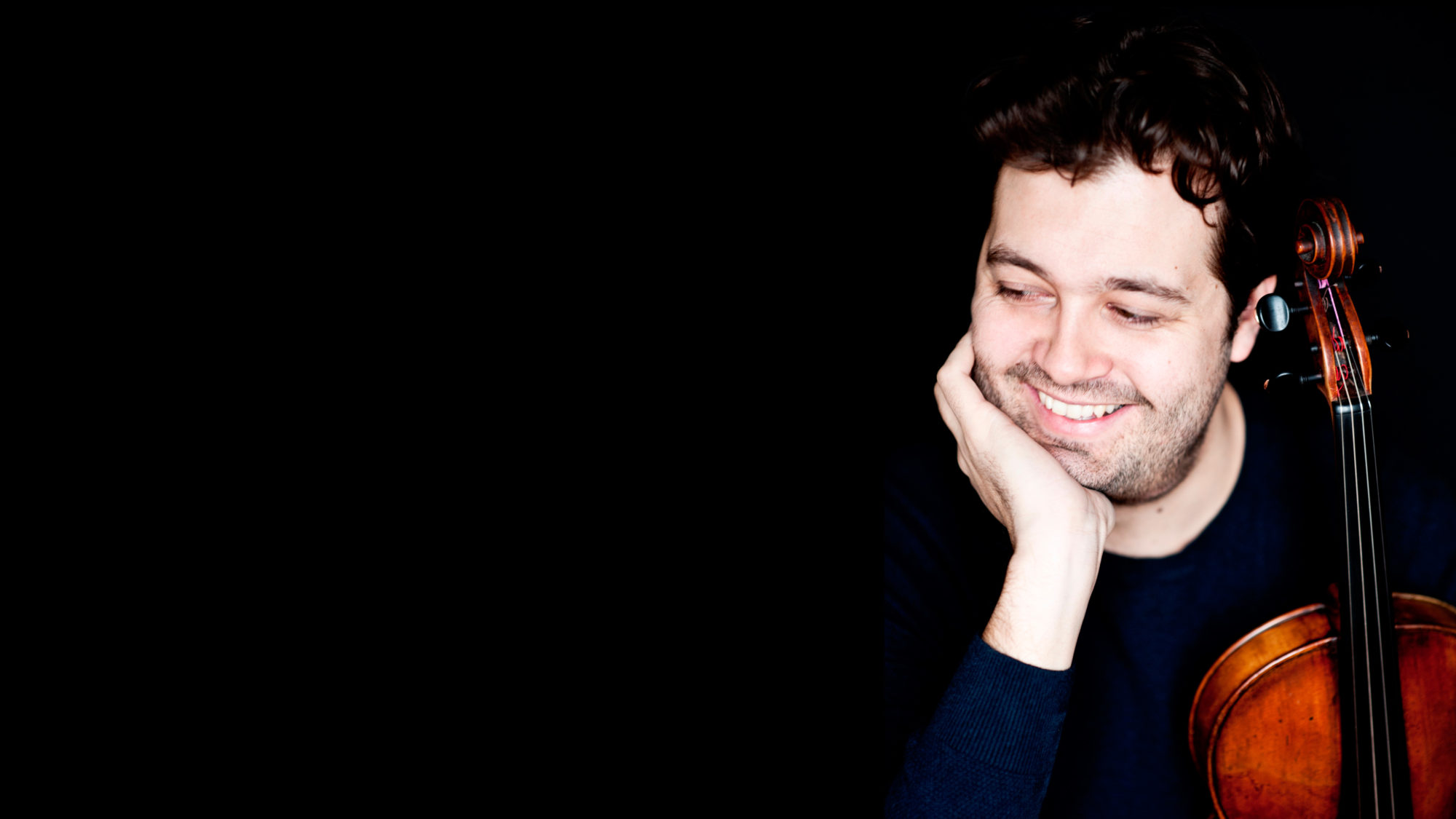
Wigmore Mondays – Lawrence Power & Simon Crawford-Phillips: Le tombeau

Lawrence Power (viola, above), Simon Crawford-Phillips (piano, below)

Wigmore Hall, Monday 21 October 2019 (lunchtime)

You can listen to this concert on the BBC Sounds app here (opens in a new window)

Review and guide by Ben Hogwood
Photo credit (Lawrence Power) Giorgia Bertazzi

BBC Radio 3’s curious title for this concert was Adventures with a viola, despite Lawrence Power spending the last third of the concert playing the violin. Such is his talent on both instruments that the switch appeared to be effortless, part of an adventurous programme exploring the idea of paying musical homage.

To that effect, the first three pieces in the concert were linked. François Couperin’s expansive Prélude from the Première Suite pour viole (from 3:09 on the broadcast) exploited the lovely tone Power could get from the lower reaches of his viola, which helped accentuate the composer’s chromatic writing. A joint arrangement with Simon Crawford-Phillips of Ravel’s Menuet from the wonderful Le tombeau de Couperin followed (6:40), a fitfully effective version that was perhaps too fast in its execution, rather glossing over the cold central passage and the charm of the Menuet theme itself. The lack of repeats in this gorgeous piece of music accentuated the pair’s quick approach, despite a clever pairing of themes towards the end.

Australian composer Arthur Benjamin is not at all well known in these parts, but has an important role in musical history as a tutor of some repute. His own music can be overlooked because of that, and on this evidence unreasonably so – for Le tombeau de Ravel (10:58) was a pretty adventurous collection of a prelude, six waltzes and a coda, extremely well performed by the duo here. Having originally written it for clarinet and piano, Benjamin followed Brahms’s example by producing a viola and piano version, the instruments having a very similar range. The gruff start leads way to contrasting dances of affection and a quickfire number (17:00) requiring (and receiving) great virtuosity and dexterity from Power. There is charm in this music, too, as the next pizzicato waltz indicates, with tumbling figures from Crawford-Phillips, before a ghostly waltz with harmonics at 20:17 offers a starker picture. This is contrasted by a rousing finish.

We then heard a striking version for viola and piano of Three Berceuses from Thomas Adès’ opera The Exterminating Angel. They are based on two of the duets from Beatriz and Eduardo, the opera’s doomed lovers, and an eerie cradle song. These brought a wide range of colour and virtuosity from Power, with Crawford-Phillips providing expertly judged punctuation. The first Berceuse movement (26:30) was down at heel, with wispy outlines from the viola, then the second (29:44) had more expansive phrases, ending with crushing left hand octaves from Crawford-Phillips. The ghostly ‘round’ of the third (34:04) had the most memorable melody, ending on a decidedly macabre note as a mother cradling a dead lamb rather than her son attempted to rock it to sleep. Power’s harmonics on the viola were cold indeed.

A second group of homages followed, Power switching to violin for the duration. It was piano alone for Stravinsky’s brief but poignant Le tombeau de Claude Debussy (39:56), setting the chorale theme from his Symphonies of Wind Instruments. Crawford-Phillips managed the voicing of the parts beautifully. Tributes to Debussy followed from Erik Satie and the poet Federico Garcia Lorca, Power reading the poem Debussy before Crawford-Phillips played the Satie Élégie (41:59). We then moved to a much more substantial tribute to the Spanish poet in the form of Poulenc’s troubled Violin Sonata.

The work itself had a tricky germination, its composer rejecting a couple of versions while not settling for the completed work either, returning to it in 1949. It is a dramatic piece, paying homage to the poet Lorca in assertive music that spills over into aggression in the first movement (44:10). In the second, an Intermezzo (50:37), Power and Crawford-Phillips painted exquisite shades through the bittersweet musical language, while the finale (56:38) was powerfully wrought, even more so when apparently hitting a wall (59:58) and sinking into desolation. A commanding performance proved Power’s aptitude in switching between musical instruments.

Repertoire

This concert contained the following music (with timings on the BBC Sounds broadcast in brackets):

François Couperin Prélude from Première Suite pour viole (1728) (3:09)
Ravel, arr. Power & Crawford-Phillips Menuet from Le Tombeau de Couperin (1914-17) (6:40)
Benjamin Le tombeau de Ravel (1958) (10:58)
Adès Three Berceuses from The Exterminating Angel (2018) (UK premiere) (26:30)
Stravinsky Le tombeau de Claude Debussy (1920) (39:56)
Lorca Debussy (1921-24) & Satie Élégie from Quatre petits melodies (41:59)
Poulenc Violin Sonata (1942-3, rev. 1949) (44:10)

Further listening

You can listen to most of the music heard in this concert in the available versions on Spotify below, with the exception of the Adès, which has understandably not yet been recorded:

Meanwhile Lawrence Power and Simon Crawford-Phillips can be heard in Arthur Benjamin’s Le tombeau de Ravel as part of this collection on Hyperion, where Power once again switches instruments for the composer’s violin works.

Poulenc‘s instrumental sonatas represent some of his very finest work, and this collection from the London Conchord Ensemble brings them all together: