On Record – James Yorkston, Nina Persson & The Second Hand Orchestra: The Great White Sea Eagle

by Ben Hogwood

What’s the story?

James Yorkston had no plans for a sequel to his 2021 album with The Second Hand Orchestra – but on writing new songs on his piano, and sharing them with the orchestra’s leader Karl-Jonas Winqvist, they realised the opportunity was ripe for a guest singer to enhance the music – and Winqvist suggested The Cardigans’ singer Nina Persson.

The pairing operated in relatively relaxed conditions, with no overriding concept other than the wish to sing a collection of folk-based songs. The orchestral parts are fresh, semi-improvised by the players on the day of recording.

What’s the music like?

This is a joyous collaboration, one that finds the singers and musicians finishing each other’s sentences as though they have been working together all their lives.

Both Yorkston and Persson are natural storytellers, and from Nina’s first verse on Sam and Jeanie McGreagor, the listener hangs on each tale and musical nuance. As the album progresses we get to know their vulnerable sides, but also some touches of light humour, the two singers bouncing off each other’s musical qualities. Try Mary and you will see how well their voices are matched.

There are singalong refrains in a lot of the songs, with the communal Peter Paulo Van Der Heyden a favourite, and in Keeping Up With The Grandchildren an extended guitar soliloquy to complement the vulnerable vocals. Most of the songs have the sort of childlike simplicity you might associate with folk music at its most raw, but the arrangements can propel these through unexpectedly complex forms, as they do in The Heavy Lyric Police.

As for The Second Hand Orchestra, their fresh contributions are beautifully delivered – notably the violin in An Upturned Crab, and Karl-Jonas Winqvist ensures total respect for the lyrical material throughout, moving from a single, plaintive instrument to the full force of an orchestra rich with woodwind colour.

“This is the time”, they sing on the winsome Hold Out For Love – the most wonderful, singalong moment, where everything is suddenly right with the world.

Does it all work?

Yes – mostly because the collaboration is so unforced, and the music making relaxed. That shouldn’t, however, be mistaken for complacency, for both singers deliver deeply felt songs, their voices ideally matched. The orchestrations are beautiful and consistently rewarding.

Is it recommended?

It is – an ideal match of musicians from the northern territories, doing what they do best – and clearly enjoying it immensely.

Listen

Buy
Switched On – Hot Chip: Freakout/Release (Domino)

Reviewed by Ben Hogwood

What’s the story?

When Hot Chip reassembled after the enforced lockdowns of the Coronavirus pandemic, they found a rich vein of creativity. Much of the inspiration for this came from their live cover of Beastie Boys’ Sabotage, a setlist favourite that explores the idea of being out of control in dance music.

With guitarist Al Doyle putting together a new studio in East London for the band to use, they set about losing control together and making their next album. The idea of losing control, however, extends to human emotions and specifically those that were on the edge in those dark years. That means while some of the music on this album is slower, its lyrical content and resolve is deeper too.

What’s the music like?

Multilayered. Hot Chip are masters at making pop music that works brilliantly on its own terms out front, but which has a number of different messages when you delve deeper into it.

Freakout/Release is no exception, addressing issues such as confidence within ageing, the changing habits of consumption in music and emotional fragility.

The album struts confidently onto the floor with Down, immediately showing the double meaning potential, but giving a tonic to the album which is immediately reinforced with the warm-hearted Eleanor. By this point the music has a feel reminiscent of a returning old friend, but soon the tone changes.

The title track has much more anguish about it, and a darker tone. “Music used to be a love, now people leave it or take it” is the pointed observation. The clever wordplay on Hard To Be Funky, featuring Lou Hayter, reveals a vulnerable centre. “Ain’t it hard to be funky, when you’re not feeling sexy?”, go the words, then immediately, “And it’s hard to feel sexy when you’re not very funky”.

Not Alone draws on the band’s softer side, a warm blanket of a song. “Anxiety can only kill a man if he always turns away the helping hand”, sings Alexis Taylor, “I still long for your voice”. After this the album takes an assured, soulful voice towards the finish. A particular highlight is The Evil That Men Do, where Cadence Weapon offers a great complement to Taylor’s vocal.

Does it all work?

Yes, it does – bringing the realisation that Hot Chip always secure more emotional depth than your average ‘dance’ album. The band knit together beautifully, with warm soulful flourishes making this a safe place to explore emotions, fears and – ultimately – togetherness.

Is it recommended?

Unhesitatingly. It’s great to have Hot Chip back, and with every album they become a more complete outfit, both musically and lyrically. The dancefloor is still the centre of their attention, but the recognition and ultimate acceptance of the problems life can bring around it is beautifully realised.

Listen

Buy

You can explore purchase options for Freakout/Release at the Piccadilly Records website

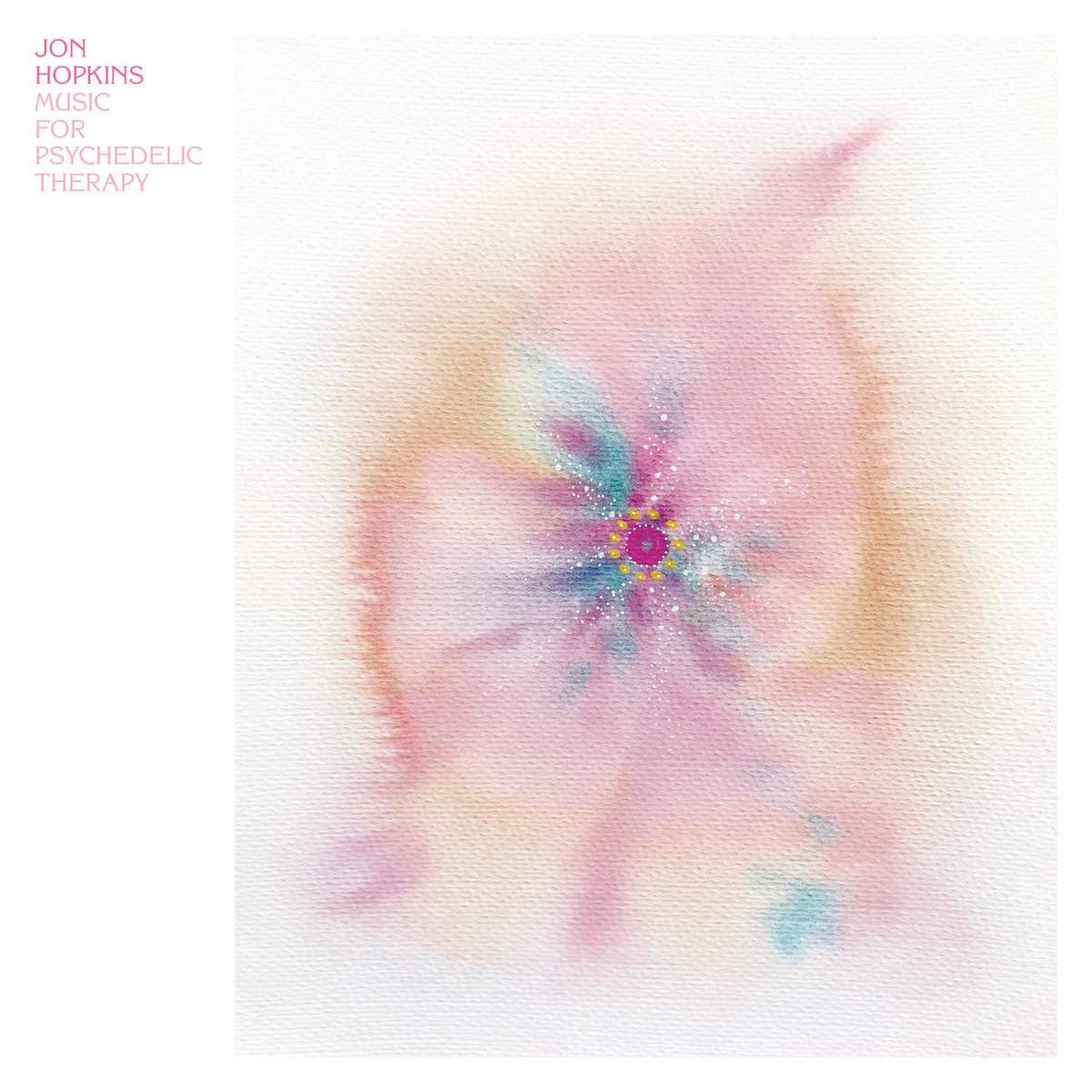
Switched On – Jon Hopkins: Music for Psychedelic Therapy (Domino)

jon-hopkins

reviewed by Ben Hogwood

What’s the story?

After two albums driven by rhythm (Immunity and Singularity) Jon Hopkins had the wish to branch out in a different musical direction, turning his focus away from a ‘cosmic party or a set of festival bangers’.

His musical direction took him to a more classical approach, with no electronic drums in evidence and a musical language operating under much larger structures. Hopkins has openly admitted that the resultant workings are “more emotionally honest than I had been comfortable making before”, and has talked about the liberation of being cast free of traditional rhythmic structures.

The music was recorded in the dark of winter in early 2021, looking for brightness amongst the gloom. It is instructive to hear from the composer again: “Psychedelic-assisted therapies are moving into legality across the world, and yet it feels like no one is talking about the music. but the music is as important as the medicine.”

What’s the music like?

Right from the start it is clear Jon Hopkins is ploughing a very different furrow with this album. A treble-rich texture, with the regular ‘tsing’ of a tuning fork, sets out a scene more like the beginning of an extended yoga or pilates session. Woozy background textures blend with primary colours in the foreground, as musical phrases make themselves loosely known.

There is an immediate warmth to Hopkins’ musical language, and as we move into Tayos Caves, Ecuador i, the natural world takes over. A rush of water places the listener right in the middle of the action, with drips from the ceiling of the cave, a torrent of constant spray and the calling of a bird. The simplest of drones and long, drawn out phrases is added by Hopkins, but here we are all travelling together well beyond the studio.

We are in fact in the first part of a near 20-minute suite in three parts, which gradually introduces the thick ambience more common to Hopkins’ earlier work. The second part is a single, slowly shifting melodic sequence, while the third brings in a resonant treble sound. The structure is ideally paced, the listener slowing to the natural rhythms of the cave.

The album takes on the form of an entirely through-composed affair, lending weight to Hopkins’ observation of the similarity with classical music forms. Love Flows Over Us In Prismatic Waves is every bit as serene and comforting as its title suggests, while Deep In The Glowing Heart is the resultant balm, sat squarely in the tonal centre we have occupied for the last half-hour.

Such slow-moving music has a deep, rapturous message to the listener, and the more you become immersed in Hopkins world, the more intense the session. Ascending, Dawn Sky takes a step back, surveying the scene from a greater distance with the cool lapping of a quiet piano, and segues gently into Arriving, where the sound of chimes is complemented with a softly humming vocal – the nearest we get to words on the album so far. It is in effect a gentle warning for Sit Around The Fire, where we get the closing thoughts of Ram Dass, who speaks on the importance of inner connection in the company of meditative thoughts from musician East Forest. If Hopkins’ music has done its job, that has already been achieved.

Does it all work?

It does. Hopkins has a natural instinct for large structures but can also break them into smaller units, so there is enough going on in the short and the long term to keep the listener compelled. The hour passes just like a yoga session, so you may arrive feeling fraught and stressed, but you will leave with your mind on a higher plane.

Is it recommended?

Very much so. Jon Hopkins has been threatening this album ever since he signed to Domino, and it is gratifying to see him make it. A document for our stress-filled times.

Stream

Buy

You can listen to clips from the album and purchase in CD or download form at the Domino website


On record – Devonté Hynes: Queen & Slim: Original Motion Picture Score (Domino)

Written by Ben Hogwood

What’s the story?

It has been quite a year for Devonté Hynes. While keeping his Blood Orange pop persona very much in the foreground through touring and the new Angel’s Pulse mixtape, he has really furthered his ambitions to be a composer of soundtrack and ultimately classical material. The latter projects have borne fruit with the Third Coast Percussion Ensemble, but the soundtrack ventures have also progressed with this, his second soundtrack commission after Palo Alto, completed for Gia Coppola in 2013.

Directed by Melina Matsoukas to a script from Lena Waithe, Queen & Slim has been well-received, a romantic drama with an undoubtedly tragic overtone. Without giving away too much of the plot, that is the loose blueprint from which Hynes’ score evolves.

What’s the music like?

With 20 tracks spread over little more than 36 minutes, it is perhaps inevitable that Queen & Slim feels a little fragmented at times. Yet as Hynes has already shown us in his pop music that he is capable of setting a scene with very little padding to his structures, and so it proves here.

Kids may be just over a minute but even in that time it shows a tender heart to its string scoring. This cuts to the rather more sombre piano of Hair, but here too Hynes expands the sound with a doleful saxophone. Opening then shows his ease with analogue or digital sources, teasing out threat-ridden music with little more than dissonant drones and a bass drum.

Of the more substantial numbers on the soundtrack most stick in the memory. A Couple Deer has a lovely calming sonority, while Love Theme makes much from little material, not greatly substantial but hitting the right emotional spot.

Slim Calls Home spreads out its perspective to big reverberation but then Uncle’s House reintroduces the ominous drums of Opening, which Get Upstairs and Start The Car take a step further. Hynes has a distinctive way of pointing his strings and the textures bode ill rather than good.

Sneak Out is perhaps the most distinctive and unnerving track of all, and at four minutes has time to develop. It begins with rough tremolos from solo string instruments that provide eerie outlines rather than solid shapes, the uneasy atmosphere not helped by the introduction of a wavering bass line.

A resolution is ultimately found, but despite its initially consonant chords the music of Arrival is bittersweet, with booming percussion and string-based dissonances returning to cloud the picture. The closing track Kissed All Your Scars remains affected by this but provides more respite.

Some of the snippets of music are little more than descriptive postcards in the style of Max Richter, forming briefly sketched portraits but unable to say much more than that in half a minute. They do still show Hynes’ deft way with scoring, however.

Does it all work?

Yes, largely. Some of the promising material is frustratingly short but necessarily so, meaning the listener has to deal with occasionally being sold short when enjoyable scenes or moods move on abruptly.

With that taken in to account, Hynes sets his scenes with very little fuss and plenty of flair. As an orchestrator he is of the ‘less is more’ approach, which gives him plenty of room for manoeuvre.

Is it recommended?

Yes. If you are following Hynes’ work on all fronts then this will be essential listening, and it serves as an exciting pointer to show where he might go next. His is one of the most inquisitive minds in music currently, and the ease with which he moves across genres is rare indeed. It will be interesting to see if he moves on to bigger structures in the future.

Stream

Buy

You can purchase this release from the Domino website

Switched On – Blood Orange: Angel’s Pulse mixtape (Domino)

Blood Orange Angel’s Pulse mixtape (Domino)

reviewed by Ben Hogwood

What’s the story?

Ahead of his first foray into classical waters with Third Coast Percussion, Devonte Hynes – the man behind Blood Orange – releases a companion piece to last year’s Negro Swan album. It is a habit the producer has developed, making a set of ‘offcuts’ available to friends in the wake of a bigger release, but given that in his own words ‘I’m older now though, and life is unpredictable and terrifying’, he has made it available to the wider public.

What’s the music like?

Cool and compact, but emotional too. Hynes has always possessed the knack of expressing himself keenly through music that does not have to be loud or brash, and the level of Angel’s Pulse even drops to a murmur at times. In doing so it draws the listener in, through songs that never outstay their welcome. Of the 14 tracks here, only two are over three minutes in length.

Musically the mood is consistent with Negro Swan but has more room in its texture – which takes it closer to the 2016 album Freetown Sound. Cool soul and funk mix freely, with the odd hint of West Coast rock. Textures are dreamy but lyrics are on point.

Taking individual tracks, the sonorous speaking voice on Berlin comes from Ian Isiah, with Porches also contributing – as with Freetown Sound, the guests easily accommodated into the album. BennY RevivaL contributes an urgent rap on Seven Hours Pt.1, while Birmingham brings a flourish from vocalist Kelsey Lu. Meanwhile Toro y Moi brings a sense of yearning to Dark & Handsome, at which point the album behaves like a radio station, switching with background fuzz to Benzo, which evokes Hynes’ home city of New York through a soft, nocturnal sax. Baby Florence (Figure) crackles with a sudden momentum from its samba-like beat.

Some of the songs on Angel’s Pulse feel half finished, but the mixing effect links them seamlessly. If anything their shorter form makes it easier for the listener to get to their essence.

Does it all work?

Yes. While not as concentrated a listen as the Freetown Sound and Negro Swan albums, Angel’s Pulse does still hang together beautifully. There is perhaps room for the songs to have been further developed, but if anything this heightens their immediacy.

Is it recommended?

Yes – followers of Hynes and Blood Orange will lap it up, while looking forward with great intrigue to the Third Coast Percussion collaboration Fields, due for release on the Cedille label on October 11.

Stream

Buy