

Michael Collins (clarinet), BBC Concert Orchestra / Martin Yates
Carwithen Suffolk Suite (1964)
Delius Idyll de Printemps, RTVI/5 (1889)
Stanford Clarinet Concerto in A minor Op.80 (1902)
Vaughan Williams Richard II: A Concert Fantasy (1944) [World Premiere Performance]
Holst Symphony in F major H47 ‘The Cotswolds’ (1899-1900)
The Abbey, Dorchester-on-Thames
Friday 25 May 2024
Reviewed by Richard Whitehouse
This latest edition of the English Music Festival, also the first to take place entirely within the spacious ambience of the Abbey at Dorchester-on-Thames, began with the customary concert from the BBC Concert Orchestra and Martin Yates. As conceived for amateur players, Suffolk Suite by Doreen Carwithen feels nothing if not resourceful – whether in the regal opulence of Prelude, evocative poise of Orford Ness then the alternately rumbustious or genial humour of Suffolk Morris; the martial tread of Framlingham Castle bringing about a resolute close.
Recent years have seen renewed interest in Delius’ early orchestral work, Idylle de Primtemps an appealing instance of the composer harnessing Nordic influences to the impressionist style then emerging in his adopted home of Paris – resulting in this short yet atmospheric tone poem.

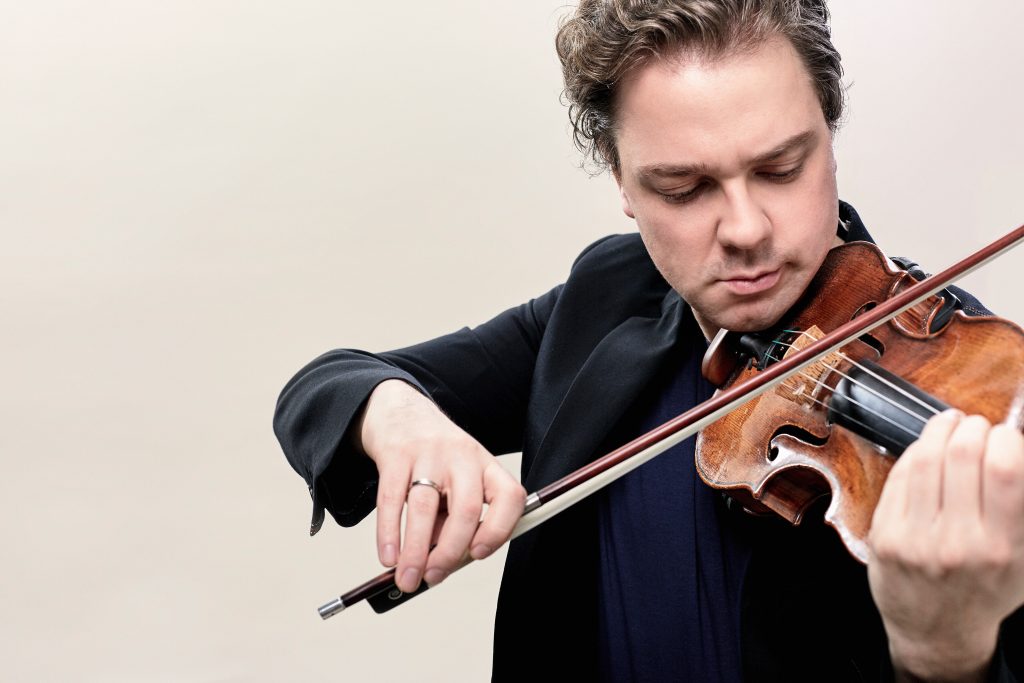
It was enticingly given by the BBCCO, which then partnered Michael Collins (above) for a revival of the Clarinet Concerto by Stanford. As with numerous concertante works from the period, this is a three-movements-in-one design. The preludial Allegro introduces two main themes, their development continued (albeit understatedly) in a central Andante that unfolds with mounting eloquence, before the final Allegro brings a transformed reprise of the initial themes on route to its decisive ending. As with the First Cello Concerto of Saint-Saëns or the Violin Concerto of Glazunov, this is a piece the accessibility of whose idiom belies the ingenuity of its formal thinking or appeal of its ideas, and Collins (who evidently last played the piece four decades ago) brought subtlety and insight to music which ultimately delivers more than it promises.

These EMF opening concerts regularly feature first performances, and this evening brought that of the ‘Concert Fantasy’ as adapted by Yates (above) from Vaughan Williams’ incidental music to a production of Richard II for a BBC radio production and subsequently shelved. As might be expected, this abounds in allusions to earlier VW works from the period (notably Job and the Fifth Symphony), but the skill by which the composer reflects salient events in Shakespeare’s play and ease with which these fuse into a relatively continuous whole is its own justification.
It made sense to feature a major work by Holst in this, the 150th anniversary-year of his birth as well as the 90th of his death, with his Cotswolds Symphony certainly a welcome inclusion. If the weight and intensity of its second movement, Elegy (In Memoriam William Morris), rather dwarfs those other three, this is less an issue when the overall sequence was as astutely balanced as here. Yates secured a keen response in the opening Allegro, the personality of its ideas here outweighing any short-windedness, while there was no lack of verve and grace in the Scherzo or of animation in the Finale. That Elegy, though, is the real highpoint and the BBCCO did not disappoint with the sustained plangency of its playing. Numerous of Holst’s early pieces qualify as his primary achievement pre-Planets and this is arguably the greatest.
It duly rounded-off a fine opening to this year’s EMF. Maybe a future such occasion could see the revival of Stanford’s once popular Third ‘Irish’ Symphony or, even more pressingly, the first hearing for over a century of Holst’s doubtless unfairly derided suite Phantastes?
Click to read more about the English Music Festival 2024 – and on the names for more on the artists Michael Collins, Martin Yates and the BBC Concert Orchestra. For more detail on the composers, click on the names to read more about Carwithen, Delius, Stanford, Vaughan Williams and Holst
Published post no.2,186 – Wednesday 22 May 2024
 Arcana.fm