Electronic beatsmith Lomond Campbell, however, has seen the potential to make this album “deeper, darker and dancier”, departing from the pastoral outdoors to take the music underground to a club. The pair were introduced by Hannah Peel, after which Campbell remixed Ghost Orchid, from her previous album Heart-Shaped Scars. So impressed was Allison that she asked him to remix the whole of Consciousology.
What’s the music like?
Campbell is notable for his consistently inventive approach to beat making and colour shading, and that is certainly the case here.
He has a refreshing originality that complements Allison’s thoughts and lyrics, too. Double Rainbow shifts restlessly, with added colour from arpeggiated synths. Allison’s haunting voice suits Campbell’s inventive beatmaking on Bleached By The Sun, which harks memories of Kavinsky’s Night Call – in a good way. Meanwhile Mother Tree breaks out into a psychedelic, dubby groove Andrew Weatherall would be proud of.
Weeping Roses is the real eyeopener, as it unexpectedly opens up into a big room floor filler, with what Allison notes is the “light and dark clash of worlds and sounds that Lomond has created from the roots and stems of the original.”
Comparisons are inevitably drawn with Allison’s work as part of One Dove, and in a good way – for electronic music feels not only like Dot Allison’s home turf, but an essential part of her musical make-up that drives a great deal of creativity.
Does it all work?
Yes – and it there is something refreshingly rugged about the end result, putting Dot Allison’s voice through a very different emotional wringer.
Is it recommended?
It is – but should be heard right next to the original, to appreciate Lomond Campbell’s creativity and Dot Allison’s emotional connections. Both forces are extremely well matched here.
Listen / Buy
Published post no.2,639 – Wednesday 26 August 2025
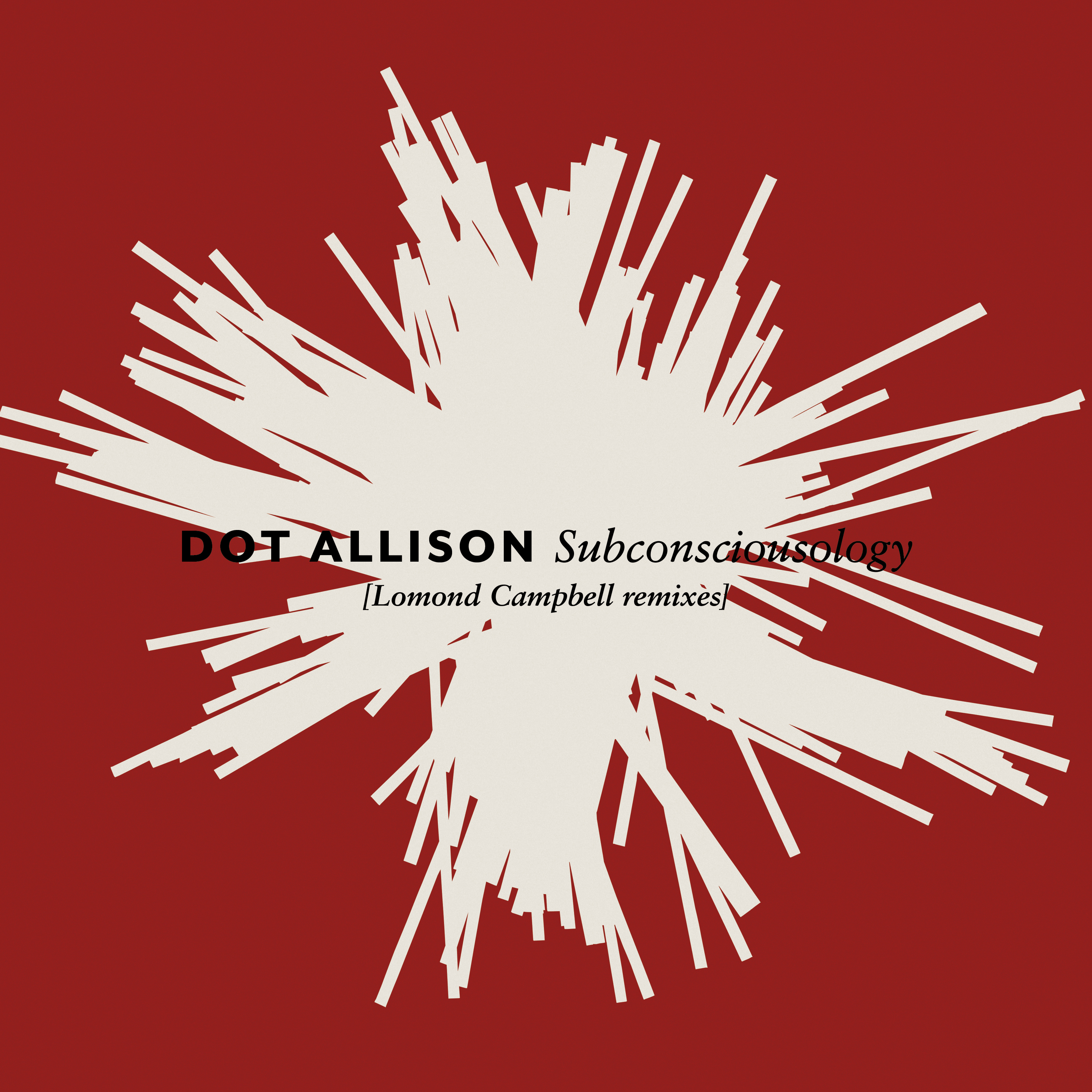
Dot Allison releases a new album, Subconsciousology, via Sonic Cathedral on 25 July. It’s a full reworking of 2023’s Consciousology, by electronic producer and machine-maker Lomond Campbell, who, as the title suggests, has made it deeper, darker and dancier.
The first single,Weeping Roses, has been twisted from its original incarnation as a Tim Hardin-style folk lament into the most unlikely acid house banger.
“It began on a guitar with the two verse chords and grew from there,” says Dot of the song’s germination. “I wanted it to have a deep heartbreak and rawness, and now I love the surreal and beautiful, light and dark clash of worlds and sounds that Lomond has created from the roots and stems of the original.”
“It was the last one I remixed, possibly because it was the only track I wasn’t entirely sure what to do with,” explains Lomond. “At the risk of sounding obvious, I decided the best thing was to work on it somewhat subconsciously. I like that some of the bonny twists and turns of the original song haven’t been entirely corroded away by acid.”
Watch the stunning visualiser by Studio Sparks – using the artwork of Maria Mochnacz and Marc Jones – below:
While the original Consciousology was all ornate avant-garde folk and psychedelic explorations, this new take is as hard-hitting as it is heavenly, as beat-driven as it is beautiful.
Crucially, it finds Dot re-embracing the electronic music with which she first made her name in One Dove.
“I think electronic music will always be a key part of my music-making DNA,” she explains. “I see all instruments as possibilities with which to voice ideas, so I’d never want to cloister myself in a genre or feel I couldn’t return to any genre. Whether the sound source is from vibrations or a voltage, I don’t really see any limitations or rules.”
It was this open-minded approach that led to Dot and Lomond working together in the first place. After being introduced to his music by Hannah Peel, Dot asked him to remix Ghost Orchid, a track from her previous album, Heart-Shaped Scars. In the meantime, he’d already been listening to the album and had noticed the similarities between it and some of his own music.
There was an element of synchronicity, which extended to them both having mutual friends where they hang out in the Highlands and islands in the west of Scotland. The remix was also so good that it inspired Dot to ask Lomond to rework a whole album.
“I knew Dot would be encouraging of experimentation as I strayed pretty far off the mark with the remix of Ghost Orchid and she loved it, so I felt I could be playful,” explains Lomond. “However, I’ve never remixed an entire album before and was keen to make it work as a standalone piece with a vibe of its own. Dot’s vocals are so impressive that I felt anything could work around them, even atomising the recordings into abstract micro samples. It also amazes me how much grime, distortion and dense sound you can throw at Dot’s voice, yet it remains so bright and salient. I loved all of Hannah Peel’s string arrangements, too, so I made heavy use of them.”
“I love that he has brought a rich musicality and has created wild universes around the elements he has chosen to retain in the various songs,” adds Dot. “It reminds me of working with Andrew Weatherall in a way, where the mixes were bold and reinventive departures.
“I wanted an album through the looking glass, in a way. In my mind, it was going to be a mirror version of Consciousology. The whole concept of the original record is about interconnectivity and the electromagnetic aspects to consciousness, so the remixed version should be like a diffracted version of the original, like a rainbow diffracted from a beam of light!”
The end result is the pot of gold at the end of that rainbow – everything sounds and feels at once familiar but different – from the chugging electro of Unchanged and Bleached By The Sun, to the almost absurd, Aphex Twin-like shock of 220Hz.
“It’s landed exactly where I hoped it would,” says Lomond. “I like that each track has its own identity yet there’s a clear thread running through it all. Dot has a real knack for creating striking melodies that hit quickly and stay with you. I tried to build different chord structures around these vocal lines, re-harmonising to take it to darker places.”
The good news is that they are planning on working together again in the future, and have already collaborated on Lomond’s new album.
“I think it would be remiss of us not to build on everything that we’ve done so far,” concludes Lomond. “Stay tuned!”
Andy Bell is on a creative roll these days. While it’s not clear if the Ride guitarist will become part of the Oasis live tour later in the year, he is pressing ahead as he hits a rich vein of form in his solo career. Whether under his own name or the GLOK alias, where he operates more electronically, Bell has maintained a satisfying blend of recent past and future, bringing together song-based material with experimentation and the joy of repetitive beats.
pinball wanderer looks set to further his enjoyment in these areas, with a busy year ahead!
What’s the music like?
Bell achieves a really satisfying blend of electronic and acoustic here, bringing in some elements of the GLOK alias – especially an enjoyment of Krautrock – to rub shoulders with influences from early 1990s Manchester and, further back, a healthy dash of Byrds.
The result is music that is never short of a hookline, but adds some really interesting and rewarding quirks when the mood takes it. A great example is the groovy Apple Green UFO, a track aware of the groovier side of Stone Roses’ repertoire, but striking out through dropping a beat in the bar, giving it a subtle edge the likes of A Certain Ratio would enjoy.
Panic Attack is equal parts Krautrock and Manchester, promising warmer climes, while a well judged cover of The Passions‘ I’m In Love With A German Film Star features ideal guest turns from Dot Allison and Michael Rother. The title track is a brightly coloured groove, while the dreamy Space Station Mantra allows the mind to wander at the cosmic close.
Does it all work?
It does – and with repeated listens, Bell’s music grows in stature and impact. Be warned, there are many earworms in this album!
Is it recommended?
It is. Andy Bell is clearly relishing his music making at the moment, and this meeting of his different musical minds is thoroughly enjoyable, laden with grooves, riffs and good times.
For fans of… A Certain Ratio, Neu!, Andrew Weatherall, Primal Scream
The solo renaissance of Dot Allison continues, the singer – once of the much-loved dance outfit One Dove – releasing her second solo album in two years.
Allison actually began the album back in 2021, as previous opus Heart-Shaped Scars was being released. The song Double Rainbow was the first to be completed, and Consciousology – described by its author as ‘an imagined voice of a conscious universe expressed through music’.
The album has grown to be just that, taking the electrical activity of a plant and translating it into pitch – a ‘botanical session player’, as Allison labels it, to sit alongside the talents of guitarist Andy Bell and the London Contemporary Orchestra, heard in arrangements made by Hannah Peel.
What’sthemusiclike?
Allison’s vocal has a beautiful fragility on the surface, but is supported by an instrument of deceptive strength beneath. Her hushed tones are ideally complemented by string arrangements made once again by Hannah Peel, who shows an instinctive understanding of the balance between the two, so that the words can be clearly heard at all times.
The London Contemporary Orchestra play like a dream, matching Allison’s feathery vocal on the gorgeous Shyness of Crowns, which slides into Unchanged, whose dreamy guitar from Andy Bell gains in strength as it progresses.
Bleached By The Sun features more exquisite word painting, the sighing strings and whispered vocal painting a heat-soaked, drowsy scene, while Moon Flowers is similarly enchanted.
Unchanged has impressive inner strength, while Bleached By The Sun has delicate multitracked vocals, in something of a fever dream, and is complemented by winding string contours. Moon Flowers is an enchanting song, as is Mother Tree – shot through with slightly psychedelic effects on percussion and harp.
Meanwhile inner strength comes to the fore on Double Rainbow, and Weeping Roses forms a pictorial coda in the company of sleepy guitar and piano accompaniment.
Does it all work?
It does, thanks to Allison’s enchanting voice, which harks back to some of the memorable folk-inflected voices of the 1960s and 1970s. The impression remains that she has more power available should she need it, but these songs are beautifully sung as they are.
Is it recommended?
It is. Consciousology will take its listeners to a place far from where they actually are, its dreamy textures and contours providing enchantment and, ultimately, escapism.
Mark Peters has enjoyed a richly creative year. A key member of the band Engineers, he has seen his own solo work flourish for the Sonic Cathedral label. His 2018 album Innerland made a strong impression, and now it has a complementary work in this year’s release Red Sunset Dreams, creating sonic vistas from the other side of the Atlantic Ocean.
Arcana sat down to talk about the new album, its sense of time and place, its guest musicians – and how Peters has sparked creatively from them. It is a record working on several levels – on one hand you could bask in its Mediterranean warmth, while on the other it creates vivid imagery of a British summer. “It’s probably no accident,” says Peters, “as a lot of it was done at the back end of last year in the UK, and some of the tracks – the title track and one called Tamaroa that was done quite quickly, were done just as Autumn started.” Music experiences a resurgence as the seasons change. “It’s funny”, he says. “I think my music definitely suits the autumn, and I feel you get more attuned to your rhythms as an artist. It has a lot to do with visual aspect, and how we naturally hunker down.”
Peters grew up in Wigan, where he still lives – and where he had his musical epiphany. “I think the key moment for me was in a science class, and someone played me a record which I don’t regard as the greatest record ever, The Delicate Sound of Thunder by Pink Floyd. It was so different to anything I knew. I was into pop music like every other kid, towards more indie music like Echo & The Bunnymen. It really struck me as a wow moment, where things changed. It was the combination of a frivolous band name and the stark, gloomy presentation – and how relatable the lyrics were, with me being at school and questioning everything! It was “Oh, right – I’m not alone.”
This gateway moment led to the purchase of a guitar. “Wigan was a really fertile area for music then, with a lot of crate-digging. I think a lot of that culture gets attributed with funk and soul, but I was listening to Can at the age of 16, and Aphrodite’s Child, the band Vangelis was in. The doors opened and it’s carried on ever since as a massive melting pot!”
Peters’ music has a strong sense of time and place – which can be said for Innerland as well as Red Sunset Dreams. Does he have an image in his head when writing music? “I don’t know, but I am a very visual person, and I get a lot out of imagery and the natural world. Just looking at the sky, it does have a massive influence on me and my mood. It motivates me to write, record and mix, which is a big part of it for me – for some people it’s a more prosaic part of the process. Rather than a particular image in my head I think it’s more of a feeling, and then I start to work on something.”
The feelings can be personal in other ways. “These days I start to think about a feeling that others may have had, an essence of something or things that I’ve read or seen historically. Those things have quite a big influence on me. I did a project with Ulrich Schnauss in response to local landmarks, and I really got into the research, looking at things locally and in more depth rather than the everyday person in the car. That’s honey to the bees for me for creativity, those black and white photographs and seeing how people had to live. I feel tuned into the essence in places, which is something I would like to do that again. I’ve explored and formulated that with Nat from Sonic Cathedral.”
Red Sunset Dreams is essentially an Americana instrumental album, presented naturally and without cliché. “It’s about the stuff in our innate consciousness. I enjoy the kitschy thing that we’ve kind of explored on the artwork. It should be fun, and I don’t want to be pompous but at the same time I started to think about it. When I found out there was a local cinema showing Westerns purely from the late industrial revolution, that was massively popular, and that was a really evocative situation. You’ve got all these people working in mills all the time, who couldn’t see the hills because of the smog. They were going into the cinema to experience this vastness and freedom that had once been there, a generation earlier when it was all farmlands. That clicked with me, and I realised it may have been the reason that all the aspects of Americana came into the country.”
Was there a particular place that appealed in America? “There was one particular day I used for a video for Switch On The Sky that sadly got lost in time, just around San Francisco. There was a particular day where we drove from just north of San Diego, a place called Del Mar, up alongside the Sierra Nevada mountains up to a place called Bishop. The reason I took the title Silver River was because it was filmed near there. We drove all day, with loads of ambient tracks on – Brian Eno, Boards of Canada, and some things like David Crosby, It was a really evocative day, and the light was amazing – the sunset seemed to last from late afternoon. It was a real actualization of all those things you experience on TV – the sizes of the curbs, the fire hydrants. That day really stuck with me and gave it a mythical quality that really appealed to me and was enchanting.” He really enjoyed San Francisco. “I think it’s got a good atmosphere. The real journey for us though started once we got on the road out of the we just stuck to the coast road through Big Sur and right the way down, which was astonishing – especially compared to Los Angeles, which we now know as ‘Hot Warrington’!
Silver River was made with legendary slide guitarist BJ Cole. “I’d like to have a better story about this, but he just has an online service! It’s ridiculously cheap, and you send him the tracks. We had a chat about who I was, and we had some people in common. Being from Wigan, I know the guys from The Verve, and he briefly joined the band in the late 1990s. He wasn’t on any recordings with them but is on Richard’s first solo album. We talked mainly about that, and that was it really – he’s a busy guy and still doing a lot of really cool stuff. He sent me a guide track, and we made him the lead instrument. I felt I should show a due amount of respect. He sent me six takes of improvisation, and as with all those some were successful and beautiful, and others you go a bit wrong. I edited it to keep all the good bits. When I heard it all together as a collage I was blown away – it was so fluid, with a watery feel, and when I found out the title it felt ideal.”
Peters’ other guest, Dot Allison, is also a natural fit. “I’ve been working with Nat from Sonic Cathedral for many years now, and I said it would be great to have a singer on this. I don’t want to make the same album as Innerland. He said, “If you could choose anyone, who would you go for?” I said Dot – and then some months later she heard Innerland and thought it would be a great idea. I think the reason why I wanted her to do it, aside from having the perfect vocal sound, was that I think it’s really important to choose people who are really going to get what you’re doing. I can’t think of anyone who would get it more! On our first conversation we talked about Gram Parsons, Emmylou Harris and Gillian Welch, and I realised it would flow incredibly easily – and it did. She actually worked with BJ Cole herself, on a track called Tomorrow Never Comes, which is such a good song.
Sonic Cathedral is the ideal match for Peters’ music. “I’ve known Nat since Engineers played a couple of shows for him in 2005. We’ve been friends and in regular contact since then. I don’t know why it took so long to do stuff like this, I think it was because I was used to being on big labels like Echo and K-Scope. I was maybe a bit spoilt, maybe not having the right priorities, but as you get older you realise it’s all about the A&R really. I couldn’t think of a better home in terms of having someone who understands me and has ideas that mean I never have to worry about how things are presented. We have so many current interests, and share music naturally, and that sort of thing can be contrived at major labels. I’m really proud of him for sticking to his guns like he does. Trust is the key word with a label, and that’s exactly what we have.”
Peters’ work is much more solo-based these days, though he does have a little contact with his fellow-Engineers. “I am in touch with Dan MacBean on a pretty regular basis. We made an album in lockdown called Pictobug, which we released under the Engineers name. It was a great experience because although we did manage to do a lot of experimental stuff on those early Engineers albums, we always felt like a lot of our time was spent trying to try and please the label. I can’t complain – it wasn’t a horror story – but when you are signed to a larger label, they’ve got certain criteria you are bound to try and fulfil. We always felt that the untethered, exploratory aspects were left aside. For Dan and I to make that record was really good. It was four pieces ranging from 8 to 13 minutes, just jams that we did as an online release – and people were enjoying it. I haven’t generally seen others from the band apart from when we got our publishing back last year.”
With an open musical mind, Peters is still open to collaboration. “Some things just naturally occur, and sometimes the universe is just pointing at you – you don’t need to think too much. When we did the tracks that are on my album, Dot and I agreed it had happened so quickly and so well that we should do some more. We’ve done two more tracks, and I’ve got a few more ideas to send to her too. With the live band, that’s been really enjoyable – and we’ve started to do some improvisation-based stuff that I’d like to pick up a bit more and record. We’ve got the live sound honed so now we can see what they have to offer as composers, and let them have some creative input. That’s a start of a nice little project.”
You can browse Mark Peters’ music at his Bandcamp site – which includes this Christmassy EP from 2019:




 Arcana.fm