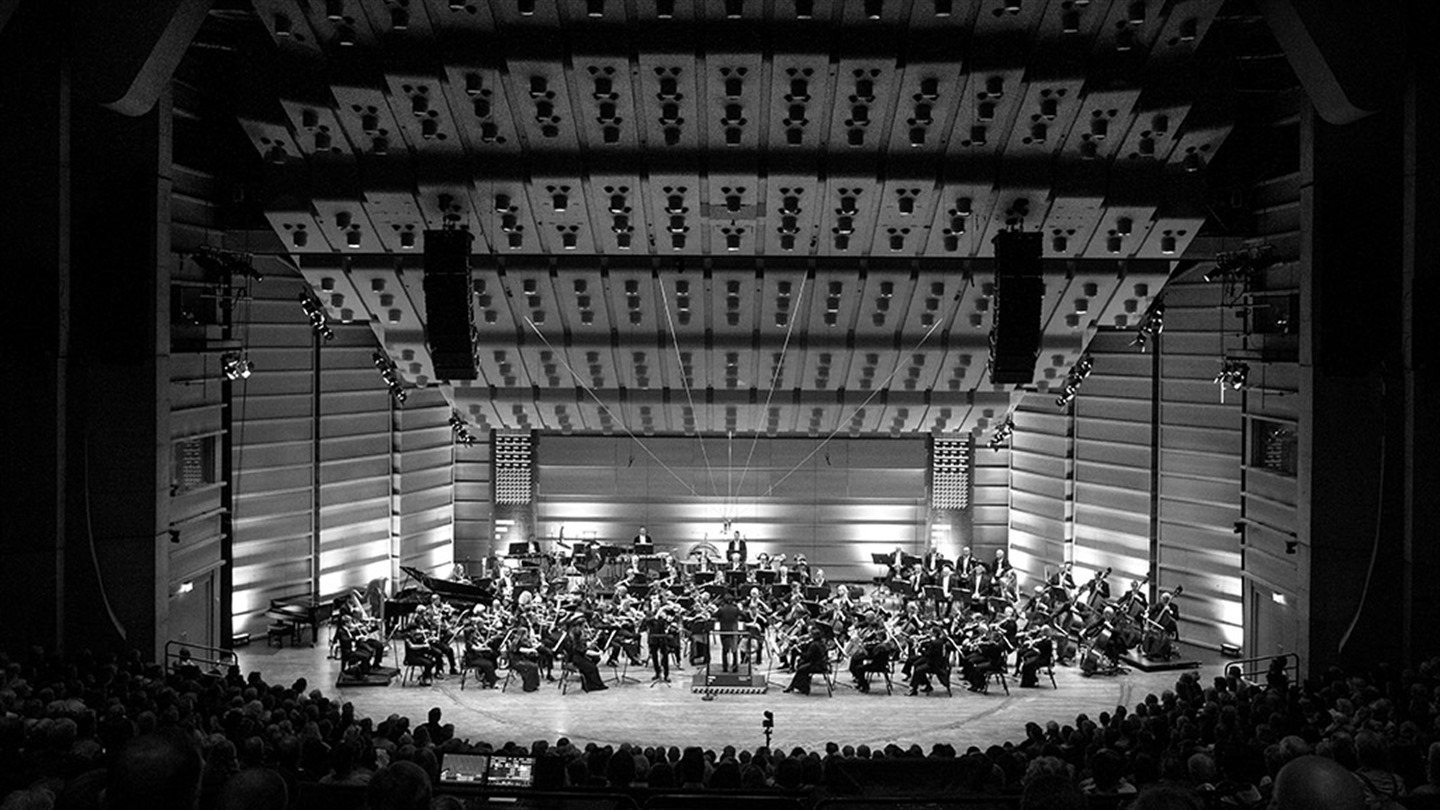
In concert – Mary Bevan, CBSO / Edward Gardner: Schubert – Symphony no.9 & Songs

Mary Bevan (soprano), City of Birmingham Symphony Orchestra / Edward Gardner

Schubert
Rosamunde D797 – No. 3b, Romanze (1823)
Der Erlkönig D328 (1815, orch. Berlioz 1860)
Die Forelle D550 (1816, orch. Britten 1942)
Im Abendrot D799 (1825, orch. Reger 1914)
Geheimes D719 (1821, orch. Brahms, 1862)
Symphony no.9 in C major D944 ‘Great’ (1825-6, rev. 1828)

Symphony Hall, Birmingham
Wednesday 17 May 2024

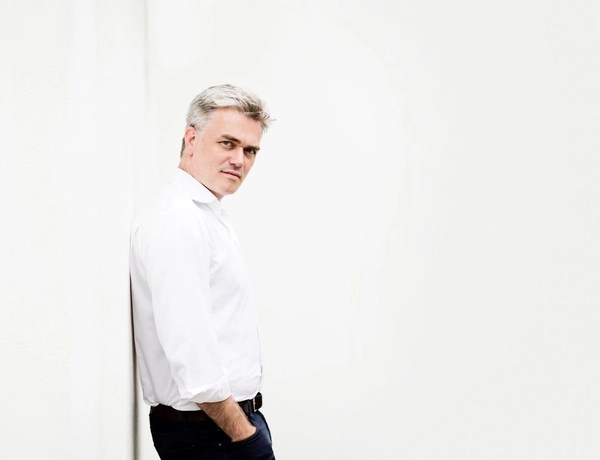
Reviewed by Richard Whitehouse Pictures by Benjamin Ealovega (Ed Gardner), Victoria Cadisch (Mary Bevan)

July concerts no longer a consistent fixture in the City of Birmingham Symphony Orchestra’s schedule, it made sense to end the current season with the intended programme for the fourth and final volume of this orchestra’s Schubert cycle with former chief guest conductor Edward Gardner.

If not his final such project, the ‘Great’ was the final symphony that Schubert finished and the culminating orchestral work of his last decade. Now, as almost two centuries ago, it is not an easy work to being off – but this account hit the ground running with a flowing yet purposeful introduction that elided seamlessly with the initial Allegro. Gardner kept momentum on a sure yet flexible rein over those impetuous and capricious themes of its exposition; underlining the subtly eddying tension of its development and a propulsive coda whose link-up with the tempo of that introduction was marred only by the too emphatic final gesture. Respectively plaintive or consoling, the Andante’s alternate episodes were brought into eloquent accord – the fanfare -riven anguish at its climax then the stark fatalism towards its close being especial highlights.

The essential link between the scherzos of Beethoven and Bruckner, the third movement had the right buoyancy but also a suavity in keeping with the Viennese character of its dance-like themes, and complemented by those of its trio whose lilting elegance were tinged by wistful regret. Launched with a commanding call-to-attention, the Finale did not lack for vigour but, unlike so many performances, Gardner was mindful not to rush either here or in the capering second theme whose relentless string accompaniment was vividly rendered. The development more than fulfilled its purpose as an extended transition into the reprise, then the coda opened with a frisson of anticipation such as underpinned the closing pages as they powered towards the decisive but never headlong close to what was a convincing and engrossing performance.

Regarding repeats, Gardner observed that of the first movement’s exposition but not those in the second half during either scherzo or trio, and that of the finale’s exposition. This at least made matters easier for the players, and left options open for their inclusion in the recording.

That forthcoming release on Chandos will hopefully find room for the five songs that formed the first half of this concert, with each of them arranged by a different composer. The pensive Romanze from Schubert’s incidental music to Rosamunde was heard in the composer’s own orchestration, with the compact psychodrama of Der Erlkōnig in a resourceful and nowadays overlooked orchestration by Berlioz. The looping but not always ingratiating playfulness of Die Forelle was expertly attended to by Britten, while the pensive soulfulness of Im Abendrot summoned an appropriate response from Reger; the sombre resignation of Geheimnis making for a welcome encore in its orchestration by Brahms. Throughout the selection, Mary Bevan’s veracity of emotional response and her clarity of enunciation were qualities worth savouring.

This programme may have concluded the Schubert cycle by Gardner and the CBSO, though hopefully it will not see of this partnership in recorded terms – the symphonies of Schumann, and maybe Brahms, being well worth considering as additions to the orchestra’s discography.

For details on the 2024-25 season A Season of Joy, head to the City of Birmingham Symphony Orchestra website. Click on the names to read more about soprano Mary Bevan and conductor Edward Gardner

Published post no.2,243 – Thursday 18 July 2024

In concert – Seong-Jin Cho, London Philharmonic Orchestra / Edward Gardner: Wagner, Beethoven & Tippett

Seong-Jin Cho (piano), London Philharmonic Orchestra / Edward Gardner

Wagner Parsifal – Prelude to Act One (1878)
Beethoven Piano Concerto no.4 in G major Op.58 (1805-6)
Tippett Symphony no. 2 (1956-7)

Symphony Hall, Birmingham
Wednesday 10 April 2024

Reviewed by Richard Whitehouse

Although the London Philharmonic Orchestra’s ongoing season might not have been among its most enterprising, this evening’s concert confirmed how Edward Gardner is influencing both this orchestra’s programmes and its approach to standard repertoire as well as modern classics.

Beginning with the Prelude from Wagner’s Parsifal is certainly playing for high stakes and, while it afforded no revelations, this performance seemed nothing if not aware of the piece’s searching grandeur where the placing of motifs and those silences between them is crucial to its overall cohesion. A pity, perhaps, that Gardner opted for the ‘concert ending’ in which the close of the first act is laminated onto what went before instead of merely allowing the music to remain in expectancy, but this detracted only slightly from the majesty of what was heard.

Beethoven’s Fourth Piano Concerto then provided a perfect foil, not least in a performance so attentive to the interplay between soloist and orchestra. It helped that Seong-Jin Cho, winner of the Chopin International Competition in 2015, had an innate feeling for that ‘give and take’ necessary in this most integrated of the cycle; his fastidious while never uninvolving pianism heard to advantage over an initial movement where gradual evolution was uppermost, though his take on Beethoven’s earlier and less capricious cadenza was not lacking virtuosity. He and Gardner were at one in conveying the elemental call-and-response of the Andante, a brief but profound entry into a final Rondo whose vivacity was judiciously balanced with a ruminative poise, where lower woodwinds and strings emerged at the fore prior to the exhilarating close.

Some 66 years following its problematic premiere (restarted after a collapse of ensemble just minutes in), Tippett’s Second Symphony now enjoys regular revival though it could hardly be said to play itself. A keen advocate of this composer (witness his acclaimed recording of The Midsummer Marriage), Gardner paced the opening Allegro unerringly – pointing up contrast between its vigorous and yielding themes, while securing the requisite impetus in its lengthy development then a surging energy in its coda. Punctuated by Paul Beniston’s superb trumpet playing, the Adagio was almost as fine even if a slower underlying tempo might have brought even more depth to some of Tippett’s most evocative and spellbinding music; not least during its central build-up in the strings to a climax whose stark curtailing feels more than prescient.

Reservations as such centred on the Presto – undeniably well articulated in terms of rhythmic precision, while lacking the swiftness or velocity for its obsessive interplay and its Dionysiac culmination really to hit home. By contrast, the final Allegro was far from the anti-climax it can seem. Gardner had its measure from the jazzy introduction, via an inventive sequence of variations then sensuously descending melody on strings against shimmering woodwinds, to those cumulative ‘gestures of farewell’ that ended this performance in ecstatic ambivalence.

If not definitive, this was certainly an absorbing and memorable account as will hopefully be made available on the LPO’s own label (the concert having been broadcast live on Radio 3): one that rounded off what proved to be a judiciously planned and finely executed programme.

Click on the link to read more on the current LPO concert season, and on the names for more on pianist Seong-Jin Cho, conductor Edward Gardner and a website devoted to composer Sir Michael Tippett. The LPO’s new recording of The Midsummer Marriage can be found here

Published post no.2,148 – Sunday 14 April 2024

In concert – CBSO / Edward Gardner: Simply Schubert – Symphonies 1 & 4

ed-gardner

Schubert

Fierrabras D796 – Overture (1823); Symphony no.1 in D major D82 (1813); Symphony no.4 in C minor D417 ‘Tragic’ (1816)

City of Birmingham Symphony Orchestra / Edward Gardner

Town Hall, Birmingham
Thursday 14 July 2022

Written by Richard Whitehouse

One of many projects left in abeyance by the pandemic, the City of Birmingham Symphony Orchestra’s Schubert cycle with its former principal guest conductor Edward Gardner duly continued this evening with a programme of that composer’s First and Fourth Symphonies.

Schubert may have been barely 16 when he essayed his First Symphony, but its confident if quirky assimilation of traits as derived from Haydn and Beethoven is more than a statement of intent – not least with an opening Allegro whose imposing introduction returns after the development to broaden the movement’s emotional scope. Gardner realized this unerringly, while drawing an incisive response from the CBSO in the first theme and winsome elegance in its successor as subsequently headed into a coda of bracing if not overly insistent finality.

For all its Mozartian gracefulness, the Andante yields an emotional ambivalence most notable in the plangent exchanges of woodwind and string towards its centre. These were enticingly conveyed, as was that contrast between rhythmic trenchancy in the Menuetto’s outer sections with its trio’s more affable demeanour. Precision of ensemble meant the final Allegro never risked seeming repetitious, Gardner steering it with assurance and not a little flexibility to a coda that emerged as never less than entertaining in its forceful reiterations of the home key.

Three years on, the Fourth Symphony confirms a greater formal and expressive breadth – not least in the first movement’s introductory Adagio whose underlying portentousness makes its contrast with an impulsive and often anxious Allegro more acute. Gardner and the CBSO had its measure, as they did the ensuing Andante in which Schubert’s woodwind writing is heard at its most felicitous. Any contrived distinction between the hymnic main theme and its more volatile alternate episodes was hardly in evidence as this movement drew to its easeful close.

For all its brevity, the Menuetto (a scherzo in all but name) can be rhythmically treacherous in its syncopation, but there was no lack of focus here or in the trio’s folk-like lyricism. Nor did the moto perpetuo underpinning the final Allegro run out of steam – Gardner sustaining   a cumulative momentum across the exposition’s repeat then into an intensive development which brought an opening-out of mood through to those decisive closing chords. Its ‘tragic’ connotations may be tangential, but the teenager’s seriousness of purpose cannot be denied.

Opening the programme was a relatively rare revival of the overture to Fierrabras, the last of Schubert’s ill-fated attempts at grand opera – even though time and subsequent stagings have largely vindicated his efforts. Gardner drew palpable expectation from its introduction, and if what ensues seemed a little stolid rhythmically, the dramatic flair of the composer’s orchestral writing was not in doubt. A pity the even less often heard Overture in E minor (1819) did not open the second half, as its abstract drama would have prefaced the Fourth Symphony ideally.

In any case, this was a welcome addendum to the CBSO’s current season and not least for an opportunity to hear the orchestra playing at its former venue of Town Hall. Hopefully another such concert, featuring Schubert’s Great Symphony, can be scheduled sometime next year.

For more information on the CBSO and their 2022-23 season, visit the dedicated page on their website. Meanwhile click here for more on conductor Edward Gardner.

In concert – Stephen Hough, CBSO / Edward Gardner: Saint-Saëns, Mazzoli & Debussy

hough-gardiner

Stephen Hough (piano), City of Birmingham Symphony Orchestra / Edward Gardner

Saint-Saëns Piano Concerto no.4 in C minor Op. 44 (1875)
Mazzoli Violent, Violent Sea (2011)
Debussy La Mer L109 (1903-05)

Symphony Hall, Birmingham
Wednesday 19 May 2pm

Written by Richard Whitehouse

It may have been almost six months since the City of Birmingham Symphony last played to live audiences, but the frisson of expectation was palpable as the orchestra gradually took the stage for this first of nine concerts that, at around an hour’s duration, are being heard at 2pm then again at 6.30. The design of Symphony Hall’s platform makes it possible, moreover, to take out the raised platforms and so accommodate a larger number of musicians than would otherwise be possible in what is (hopefully!) a transitional period out of lockdown. Current restrictions still entail the spreading out of listeners, a small price to pay given the quality of acoustic at almost any point in this auditorium, while the rapid entry and exit procedures also enabled punters to assess the remodelled catering areas in advance of their June reopening.

As conducted by Edward Gardner, this programme featured works by two French composers with more in common than either could have suspected. Saint-Saëns nearly always brings out the best in Stephen Hough, and so it proved in this regrettably rare revival of the Fourth Piano Concerto. Its four sections grouped into two movements (a design the composer returned to a decade on with greater panache if less subtlety in his Third Symphony), the piece touches on aspects of sonata, variation and rondo procedures while its plain-spun material is developed in various and intriguing ways. This plus the close integration of soloist and orchestra often makes for a sinfonia concertante than concerto per se, yet there is no lack of virtuosity such as Hough despatched with alacrity – not least the cascading passagework in the final Allegro.

Saint-Saëns and Debussy evinced no mutual esteem, but as the former integrated symphonic elements into his concerto, so did the latter in his ‘three symphonic sketches’ which comprise La Mer. Here the CBSO came into its own, not least in the purposefully contrasted sequence of From Dawn to Midday on the Sea with its crepuscular writing for solo wind and divided strings through to a climactic chorale of visceral immediacy. Perhaps interplay of timbre and texture in Games of the Waves could have been more deftly handled, but Gardner exerted a firm grip over its course then drew real pathos from the final bars. He also found a persuasive balance between the volatile and poetic aspects in Dialogue of the Wind and the Sea, while maintaining steady momentum as issued forth in the chorale on its proudly affirmative return.

Between these works, Violent, Violent Sea by the highly regarded American composer Missy Mazzoli elicited a wholly different response as to its marine concept. Here it is the constant yet rarely insistent melding of translucent harmonies and pulsating rhythms (stemming from marimba and vibraphone) as underpin this music; the sustaining of whose atmosphere is the keener for its succinct duration. The ranging of its relatively modest forces across the extent of the platform also made for rather greater impact than might otherwise have been the case. It certainly added to the attractions of a programme which launched this series of concerts in impressive fashion. The CBSO returns next Wednesday with Nicholas Collon at the helm for a sequence that ends with the uncompromising defiance of Shostakovich’s Fifth Symphony.

For further information about the CBSO’s current series of concerts, head to the orchestra’s website

For further information about Missy Mazzoli, click here

Online recommendations – Bergen International Festival 2020

How long is it since you last experienced live music?

For the vast majority of us it will be two months and counting now…the last for Arcana having been on Monday 16 March at the Wigmore Hall.

Thankfully in that time a huge number of artists, organisations and orchestras have stepped into the breach, either with archive concert footage or with online concerts and recitals. One of the biggest contributions to date, however, comes from the Bergen International Festival, which is streaming over 50 events online for free.

These are genuine live events, given without an audience and streamed across the world from the festival’s website – and there is some quality music making coming up.

The evening of Saturday 23 May will see Leif Ove Andsnes and friends giving an all-Schumann concert at 20:00 (19:00 GMT), capped by the wonderfully invigorating Piano Quintet, while Sunday 24 May (21:15, 20:15 GMT) brings the traditional festival performance of Grieg‘s evergreen Piano Concerto. The soloist will be Víkingur Ólafsson, with the Bergen Philharmonic Orchestra under chief conductor Edward Gardner. Intriguingly, the Grieg will be prefaced by VasksThe Fruit Of Silence, with the Edvard Grieg Kor.

Meanwhile Monday 25 May brings an intriguing concert from ​Leif Ove Andsnes (piano), Sonoko Miriam Welde (violin), Ludvig Gudim (violin), Eivind Ringstad (viola) and Amalie Stalheim (cello). The quintet will perform works by Schubert, Mozart and Jörg Widmann – the composer’s Idyll and Abyss and String Quartet no.3. Nicknamed the Hunt, it will follow Mozart’s quartet of the same name.

These three concerts alone give an idea of the breadth of repertoire and quality we can expect from the festival. Head here to experience it for yourself!