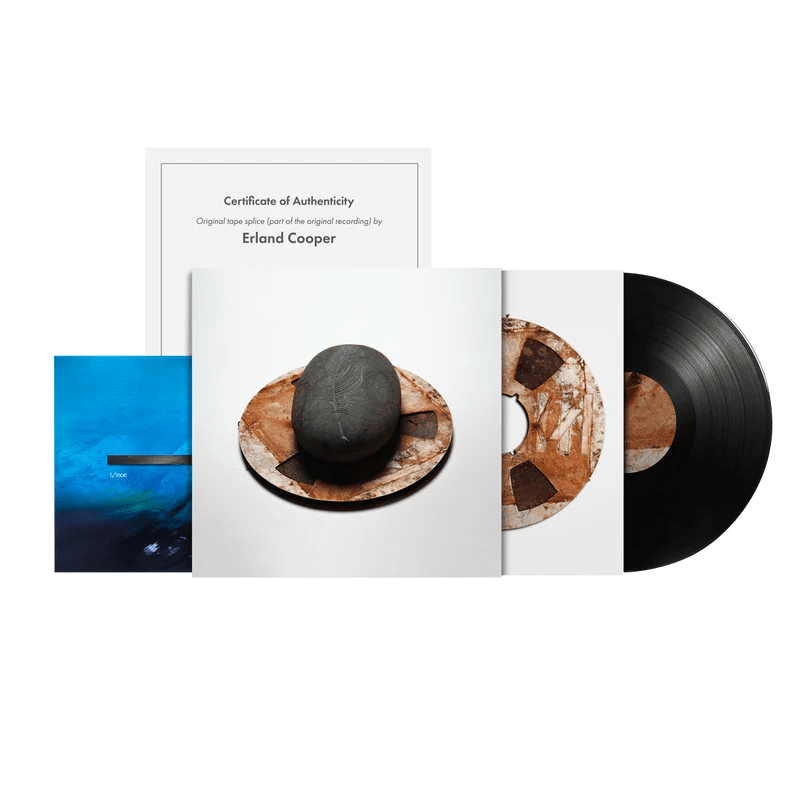
This is no ordinary album. In 2021, having made a recording of his new extended work for violin and string orchestra, Erland Cooper destroyed all digital evidence of its existence, then buried the sole surviving analogue tape in the Orkney soil. The significance of his decision to return the recording to earth lay in its subject matter, for Carve The Runes was written to mark the centenary of Orcadian poet George Mackay Brown. Cooper grew up near Brown’s house, and his voice could be heard on the new recording, giving it a keen sense of time and location.
In 2022, the surviving tape was found, exhumed and restored, the surviving recording transferred – warts and all – to digital. Bearing the indelible imprint of the Orkney soil, it was now a historical relic, and we hear the very earth on the retouched recording, carefully restored and timed for the September equinox.
What’s the music like?
Cooper’s most substantial piece yet is effectively a concerto, beautifully essayed by violinist Daniel Pioro, with support from the Studio Collective. It is bisected by timely interventions from Mackay Brown, his profound verses matched by the intensity of the writing for strings. Pioro commands the piece, which is based on small, folk-based motifs, but grows to become a work of intense meaning.
The earth makes its contribution too, though the music is actually incredibly well preserved. When there are layers of distortion, or the music becomes muffled, the effect is akin to hearing a piece of old vinyl, and creates moments of charm and ruffled appeal.
This is open air music, the violin on the wing for much of the half-hour duration, while the strings – often earthbound – provided an anchor of musical surety and poise.
Does it all work?
It does. Cooper has the measure of this work’s structure, and it peaks at just the right spot – with a phrase whose telling melodic turn burns into the consciousness. It is an ambitious piece, but one that works..
Is it recommended?
It certainly is. Carve The Runes…is a remarkable document of time and place, and with Mackay Brown’s verses it has a great deal of profound meaning within its confines. It is Erland Cooper’s finest work to date, offering further evidence of his ability to communicate through pictorial music – in the way the best classical music can.
For fans of… Max Richter, Olafur Arnalds, Hauschka, Thomas Newman
Listen and Buy
You can explore purchase options at the Mercury KX shop, and you can listen on Tidal below:
Published post no.2,310 – Monday 23 September 2024
The story behind Erland Cooper’s new work Carve The Runes Then Be Content With Silence is by no means an ordinary one – it is a deeply personal document.
On his website, Cooper himself describes the work as “a meditation on value, patience and time, as well as the often disposable nature of music. It seems fitting to me that the tape will slowly return and dry out between Orkney and London, in those safe havens of record shops that bring value to mine and my peers’ work.”
Carve the Runes Then Be Content With Silence will be released on the Autumn equinox, 20th September 2024, following its premiere live at The Barbican in London on 8th June. This first public reveal comes 3 years after the only master tape was planted deep in the soil of the Scottish Highlands and Islands of Orkney and all digital copies were deleted. It will be released exactly as it sounds from the earth. The recording is Cooper’s new three-movement work for solo violin and string ensemble.
After digitisation, the composer will complete the score for live performance as a true collaboration with the natural world. The piece was written to mark the centenary of celebrated Orcadian poet George Mackay Brown, as 2021 marked 100 years since his birth.
Inspired by natural landscapes and ruminating on time, hope, community and patience, the sole recording of the work – on ¼ inch magnetic tape, with the digital files permanently deleted – was planted, to grow and be nurtured or “recomposed” by the earth, before being exhumed and released. A treasure hunt of clues was slowly revealed by the composer every equinox period for fans and his record label alike to search for it if they so wished. In three years, if not found, the composer would return to dig it up himself.
In late 2022, the tape was found on a hunt by Victoria and Dan Rhodes. The album will now be digitised on the spring equinox in a special ceremony captured on film and released, exactly as it sounds from the earth, with nature having collaborated in the compositional process. The final score will then be completed and performed by live musicians at special concerts scheduled across the UK, Europe and America.
You can explore purchase options for the limited edition vinyl release of Carve The Runes Then Be Content With Silence on the Mercury KX website
How has 2022 been for you? It has been a difficult year for so many, and I don’t know about you, but I find music takes on an even more important part of our lives when the going gets tough. This year we have been able to rely on a consistently strong line of releases, giving us extra resolve and relief from the day-to-day.
Arcana has reviewed a lot of music this year. What we tend to do on these pages is concentrate on music and artists that we know are likely to be good – and we assemble our thoughts on them so you can then make your own investigations. Classical music is usually our starting point, but from there we travel afar to the outer reaches of electronica, dance and contemporary music.
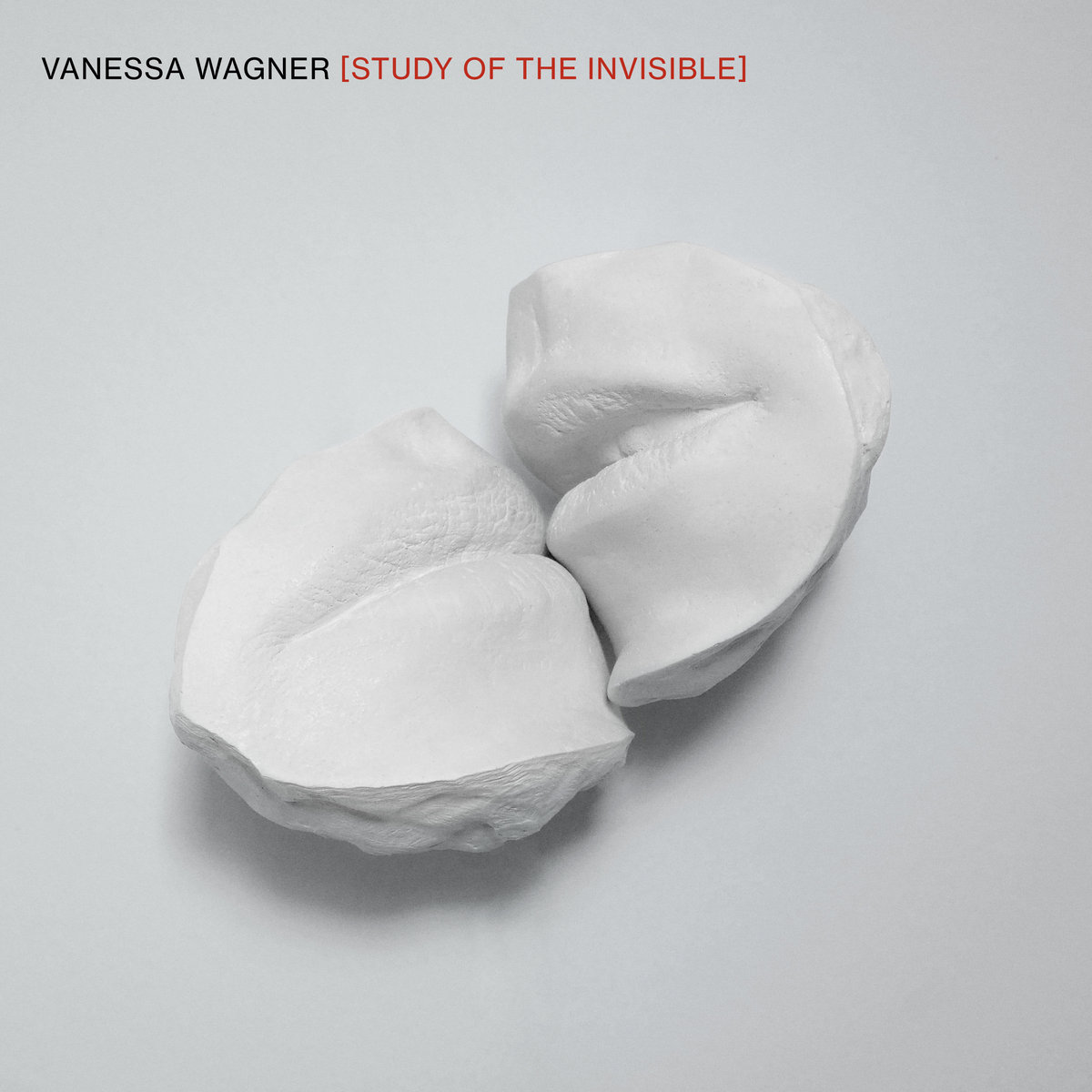
It was another strong year for electronic music of an ambient dimension. Switched On is the area of Arcana concentrating on new music in this area, and without putting too many musical names on these albums, we really enjoyed a good deal of slower stuff. Starting with a single instrument, Vanessa Wagner’s Study of the Invisible (above) made an understated but lasting impression, particularly with Caroline Shaw’s Gustave Le Grey at its heart. Vanessa plays with poise and expression, and this wonderfully curated selection worked so well.
Meanwhile long term favourite Erland Cooper charmed with his pure, still music written to soundtrack the Superbloom installation at the Tower Of London, Music For Growing Flowers (above). Speaking of earthy sounds, Sonic Cathedral gave us twilight wonders from Pye Corner Audio and, with a little more country in the mix, Sunset Dreams from Mark Peters.
At the hottest part of summer, Arthur King’s music was extremely evocative in Changing Landscapes – as was that of Deepchord, making a return to the long player from Detroit with Functional Designs. Steve Davis, meanwhile (yes, that Steve Davis!) was busy enhancing his reputation as part of the electronic trio Utopia Strong and their excellent album International Treasure
More studied electronica gems should also be shouted from the rooftops – we are lucky to have British artists of the calibre of Bibio, Gold Panda and Plaid, each returning with excellent new albums. Meanwhile Clarice Jensen took her cello as a starting point on new album Esthesis, making music of great colour and descriptive power to counter the onset of lockdown. Also facing the elements head-on was Daniel Avery, whose new albumUltra Truthwas a powerful statement indeed:
There were some very strong releases on the classical side of things, as record companies dusted themselves down and started to include orchestral recordings again on their release schedules post-pandemic. Leading the way were the Sinfonia of London under John Wilson, a throwback to the golden age of orchestral recording in their challenging schedules for Chandos. With Hollywood, British and French music all covered, one in particular stood out, with the orchestral music of John Ireland given its rightful place in the spotlight:
Speaking of French music, a charmer from the Orchestre National des Pays de la Loire and Pascal Rophé proved the ideal hot weather soundtrack as it explored orchestral versions of Debussy keyboard works. Their accounts of the Petite Suite, La boîte à joujoux and Children’s Corner were full of colour and character.
This year saw the 150th anniversary of the birth of Ralph Vaughan Williams, one of the finest British composers of the 20th century. Somm Recordings made a memorable tribute by way of the undervalued string quartets, these lovely autumnal works given vibrant performances from the Tippett Quartet.
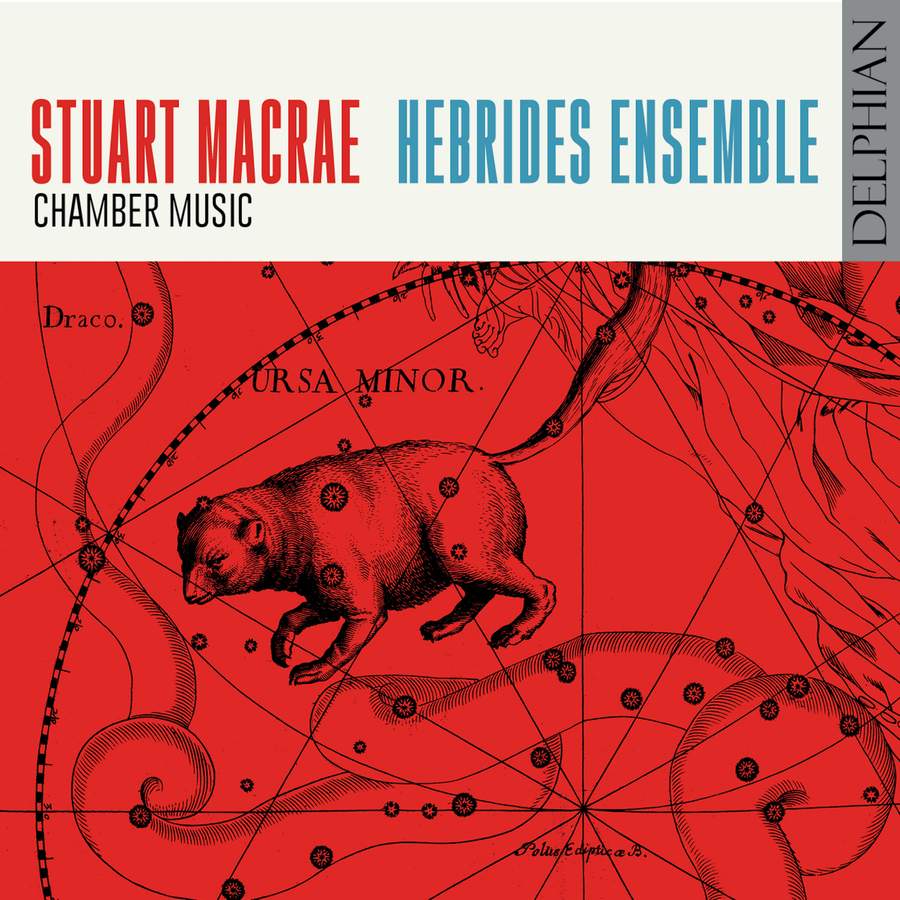
Contemporary classical music put in some very strong appearances this year, and few more than Stuart Macrae, showing off the quality of his chamber music on an album from the Hebrides Ensemble on the excellent Delphian label. We enjoyed a number of online and in-person concerts from the English Symphony Orchestra and Kenneth Woods, which were capped by an outstanding recording of Adrian Williams’ Symphony no.1, a commendable raising of the flag for new British music
On the dancier side of things, Heavenly Recordings excelled themselves this year with no fewer than six collections of remixes! We loved the first two instalments, which acted as a prelude to the utterly essential third and fourth volumes which brought together remixes from the much missed Andrew Weatherall.
With all that said and done, what would an Arcana album of the year look like? Something like this…the most listened to long player of the year in these parts, Fleeting Future – a vibrant offering from Akusmi which channelled all sorts of intriguing influences into something wonderfully original:
We will have a few more reviews to come over this week – but for now, we thank all our readers for your visits and wish you a happy, peaceful and regenerative Christmas holiday season. Oh, and a Happy New Year for 2023!
Once again the Tower of London has played host to a major project honouring Queen Elizabeth II. This one, entitled Superbloom, is an installation running from June to September. It is named after a rare phenomenon that occurs only once every few decades, where whole landscapes can become carpeted with flowers thanks to favourable weather and the activation of previously dormant seeds.
Twenty million seeds were sown at the Tower in spring, and are expected to flower through until September, with colours and patterns set to change each day as you would anticipate in the wild. Accompanying this gradual change will be the music of Erland Cooper, who releases the first ‘side’ of Music For Growing Flowers to coincide with the Jubilee itself. The second ‘side’ – and complete LP – will be released in August.
What’s the music like?
As everything above implies, the music is deeply ambient, thoughtful and incredibly restful. It is ideal when experienced either end of the day or in the middle of a particularly busy pattern of events, where it is most effective as it would be at the Tower, right in the middle of the City of London.
Set in a pure C major, it begins with warm drones that act as a supportive bed to the more primitive evocations of bloom, which evolve slowly but sure. When the third part of four is reached the flowering is depicted through warm cello (Clare O’Connell), bright violin (Daniel Pioro), sonorous harp (Olivia Jageurs) and otherworldly voice (Josephine Stephenson)
The last of the four parts hangs on the air beautifully, pinned on a pure harmony, and the cello line takes hold again, its breathy tones lovingly sculpted by O’Connell.
Does it all work?
Yes – Cooper has a gift for stopping time in even the busiest scenario, so do put this on when you’re at the busiest point of the day. I guarantee your wears and cares will be realigned!
Is it recommended?
Without hesitation. A beautiful and timeless piece of music, providing surprisingly sharp perspective from its slow-moving ambience.
Listen
Buy
There are several options for purchasing and streaming Music for Growing Flowers, which you can explore here
It has been an extremely productive and musically enriching year for Erland Cooper. This four-track EP is his second collaboration with Shards, the vocal ensemble with whom he worked on a festive release last year. Once again it has a visual accompaniment, with regular collaborator Alex Kozobolis.
What’s the music like?
Beautiful. Once again we are transported to Orkney, but each time we go we either learn something new about the place or are placed in a different context. Egilsay is one of the small isles to the north of the archipelago, and the compositions here are intended as meditations on shifting time and light. The song titles are Orcadian words associated with these phenomena.
This is immediately evident in the swooping vocal lines of Glimro and Lisbealad. The deeply moving first track shows how well Cooper writes for voices nearer the extremes of their range, with an angular line beautifully sung. The second has an even wider range, with soprano soaring and a bass down low, feeling the elemental qualities of the Orkney coastline. Tullimentan has a timeless quality, like an old Mediaeval incantation set against the steadily falling rain and flowing water. It is very emotive.
There is a second take on Glimro, reclothing the song and including a John Keats poem to mark the poet’s bicentenary. Its sotto voce words are read to the accompaniment of string arrangements from Uèle Lamore and Kathryn Joseph that put the piece in a new light, looking back to the previous EP Never Pass Into Nothingness.
Does it all work?
Yes. Once again this is music transporting its listener far away from their environment and directly into the place it reflects. Egilsay has a harsh, striking beauty that feels fully reflected in these concentrated portraits.
Is it recommended?
Absolutely, as another compelling chapter in Erland Cooper’s musical evolution. The voices make for an even more complete human experience.







 Arcana.fm