
In concert – Quatuor Danel: Shostakovich & Weinberg #9 with François-Frédéric Guy @ Wigmore Hall

François-Frédéric Guy (piano), Quatuor Danel [Marc Danel & Gilles Millet (violins), Vlad Bogdanas (viola), Yovan Markovitch (cello)]

Weinberg String Quartet no.13 Op.118 (1977)
Shostakovich String Quartet no.13 in B flat minor Op.138 (1970)
Shostakovich Piano Quintet in G minor Op.57 (1940)

Wigmore Hall, London
Thursday 6 March 2025

by Richard Whitehouse Photos (c) Marco Borggreve (Quatuor Danel), Lyodoh Kaneko (François-Frédéric Guy)

Quatuor Danel’s cycle at Wigmore Hall focussing on the string quartets of Shostakovich and Weinberg continued this evening with the Thirteenth Quartets by both composers, alongside the Piano Quintet that has long been among the former’s most representative chamber works.

After his exploratory (while not a little disconcerting) Twelfth Quartet, Weinberg avoided the medium for several years before penning four such pieces in relatively swift succession. Cast in a single movement of barely 15 minutes the Thirteenth Quartet, the shortest of his cycle, is influenced as much by Shostakovich’s late quartets as Weinberg’s own precedents. Facets of sonata form underpin its reticent progress from uncertain inwardness to unwilling animation – a vein of equivocation pervading the whole so that its eventual culmination does little more than lead back towards the initial stasis. Its progress enroute is similarly reticent, though this was hardly the fault of the Danel who unfolded the overall design with unforced conviction. Nor did they underplay the plangency of the ending, with its anguished crying into the void.

Seven years earlier, Shostakovich had essayed an altogether more radical take on the single-movement format with his own Thirteenth Quartet. It is dedicated to Vadim Borisovsky, then violist of the Beethoven Quartet, and the viola is audibly ‘first among equals’ over almost its entirety. Nominally the darkest and most forbidding of this cycle, the hymnic lamentation of its outer Adagio sections is thrown into relief by the Doppio movimento central span whose jazz-inflected impetus is but its most fascinating aspect; added to which, those frequent taps onto the body of each instrument (which evoke a death-rattle or a rhythm-stick according to preference) readily accentuate a sense of time running out. Vlad Bogdanas made the most of his time in the spotlight, not least at the close as viola joins with violins to unnerving effect.
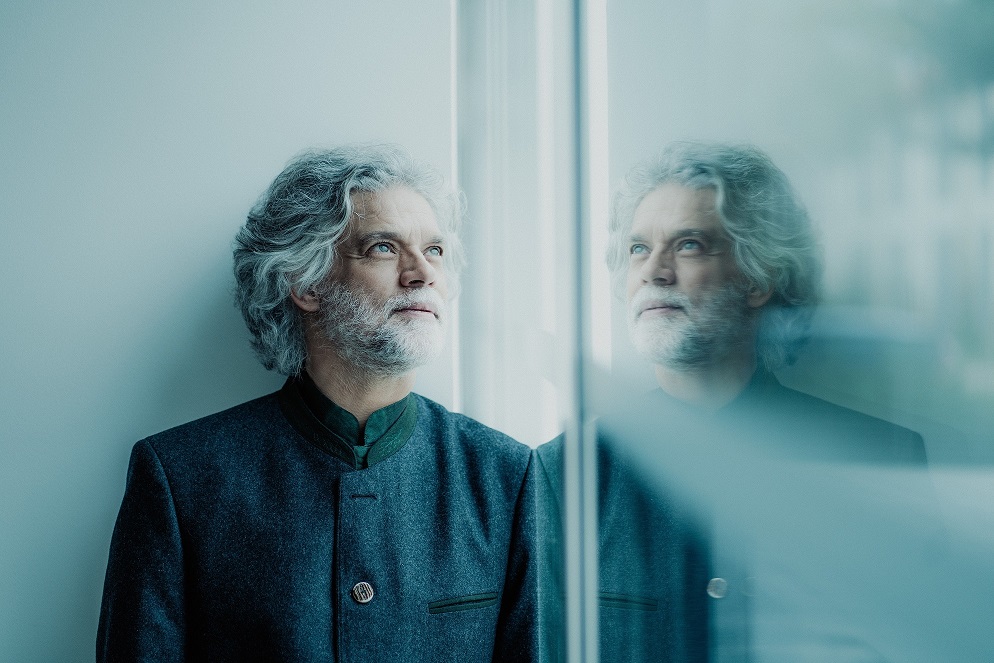
After the interval it was a relief to encounter the younger, resilient Shostakovich of his Piano Quintet. Its piano part conceived as a vehicle for himself, this marked the onset of a creative association with the Beethoven Quartet as lasted almost until the end of his life. It also finds the composer immersed in Bachian precedent – witness the powerfully rhetorical dialogue of piano and strings in its Prelude, then the severe yet never inflexible unfolding of form and texture in a Fugue whose abstraction is informed by a pathos the more acute in its restraint.

Playful and capricious by turns, the Scherzo makes for a striking centrepiece in spite (even because?) of its technical challenge. Suffice to add that François-Frédéric-Guy (above) and the Danel met this head on – after which, the Intermezzo mined a vein of soulfulness as was never less then affecting, while the Finale sounded more than unusually conclusive in the way it drew together aspects from the earlier movements towards a whimsical and even nonchalant close. At this stage, Shostakovich could still afford a measure of levity in his emotional response.

Thanks to Marc Danel’s acrobatics with a flying bow, the third movement stayed on course but it was no hardship to have this movement given even more scintillatingly as an encore. May 6th brings the penultimate recital in what has been an absorbing and revelatory series.

You can hear the music from the concert below, in recordings made by Quatuor Danel -including their most recent cycle of the Shostakovich quartets on Accentus:

For more information on the next concert in the series, visit the Wigmore Hall website. You can click on the names for more on composer Mieczysław Weinberg, Quatuor Danel and pianist François-Frédéric Guy

Published post no.2,467 – Saturday 8 March 2025

In concert – Quatuor Danel: Shostakovich & Weinberg #7 with François-Frédéric Guy @ Wigmore Hall

François-Frédéric Guy (piano), Quatuor Danel [Marc Danel & Gilles Millet (violins), Vlad Bogdanas (viola), Yovan Markovitch (cello)]

Shostakovich String Quartet no.10 in A flat major Op.118 (1964)
Weinberg String Quartet no.11 in F major Op.89 (1965-6)
Weinberg Piano Quintet in F minor Op.18 (1944)

Wigmore Hall, London
Monday 25 November 2024

by Richard Whitehouse Photo (c) Marco Borggreve

This latest instalment in Quatuor Danel’s parallel cycle of string quartets by Shostakovich and Weinberg comprised one of the former composer’s most understated pieces followed with two of the latter’s most characteristic yet, at least in terms of expression, utterly contrasted works.

Written during just 11 days, the Tenth Quartet is something of a standalone in Shostakovich’s cycle – coming as it does between the four innately personal quartets that preceded it and the four related to members of the Beethoven Quartet (who premiered all except the first and last of this cycle) that followed. Yet, as its dedication to Mieczysław Weinberg suggests, this is no less specific in intent – hence the musing ambivalence of its initial Andante and visceral force of its scherzo. The Danel savoured their respective essence, cellist Yovan Markovich coming into his own in the ensuing Adagio with its emotionally restrained variations. The link to the finale was seamlessly effected, then the movement built methodically towards a heightened restatement of the passacaglia theme before tentatively retracing its steps to a wistful close.

Written months later, Weinberg’s Eleventh Quartet is by no means lesser by design or intent. Its fugitive opening Allegro exudes a scurrying motion such as resurfaces at key moments in the overall design, akin to that of the Shostakovich in equivocation, and if the scherzo could hardly be more different in its fleeting delicacy (the original such movement it replaced was likely much more demonstrative), the solemn alternation of ensemble and solo writing in its Adagio conjures up a similarly processional aura. Contrast is again pronounced in the finale where, instead of channelling the musical loose-ends towards a formal and expressive unity, Weinberg leaves matters in abeyance; despite (or because of) the most tentative recollection of that scurrying motion which flits across the already fragmented texture at the very close.

If the Danel had long mastered Weinberg at his most refractory, it proved equally adept with the communicative power of his Piano Quintet. At almost 45 minutes this is also his largest chamber work, its five movements unfolding as a discursive if never random sequence such that the furtive questioning of its opening Moderato finds accord with the unsettled humour of its ensuing Allegretto – an intermezzo next to the scherzo-like energy of its central Presto, in which the interplay between François-Frédéric Guy and the Danel was at its most incisive.

Much the longest movement, the Largo accumulates intensity through juxtaposing passages in rhythmic unison with those during which piano and strings predominate. Its impassioned culmination is exceeded by that of a final Allegro whose impetuous main ideas bring about    a climactic return to the work’s opening theme. Even more remarkable is what follows: the intensity soon subsiding prior to this movement’s initial idea returning, quietly transformed, as though to suggest its composer having been reborn as a sentient being and creative artist.

Hearing this work, performances of which have fortunately become more frequent these past two decades, is an experience like few others in the chamber domain; suffice to add that Guy and the Danel were as one in their realizing the scale and impact of this modern masterpiece.

You can hear the music from the concert below, in recordings made by Quatuor Danel -including their most recent cycle of the Shostakovich quartets on Accentus:

For more information on the next concert in the series, visit the Wigmore Hall website. You can click on the names for more on composer Mieczysław Weinberg, Quatuor Danel and pianist François-Frédéric Guy

Published post no.2,378 – Saturday 30 November 2024

Wigmore Mondays – François-Frédéric Guy plays Debussy, Tristan Murail & Brahms

François-Frédéric Guy (piano)

Debussy Préludes, Book 2 (1912-13): Brouillards (1:27-4:25 on the broadcast link below); La puerta del vino (4:31-7:41); Les fées sont d’exquises danseuses (7:46-10:37); La terrasse des audiences du clair de lune (10:42-15:00; Feux d’artifice (15:03-19:07)
Debussy Images, Set 1 (1901-05): Reflets dans l’eau (20:47-25:37)
Tristan Murail Cailloux dans l’eau (2018, UK premiere) (25:40-32:30)
Brahms 4 Piano Pieces, Op.119 (1893) (34:35-48:23)

Wigmore Hall, London
Monday 11 February 2019

To hear the BBC broadcast through BBC Sounds, please follow this link

Commentary and Review by Ben Hogwood

If last year saw a surfeit of Debussy’s music in the composer’s centenary year, it was for a good reason. The composer is rightly revered as one of the leading lights of early 20th century music, and brought with him new approaches to melody and harmony, not to mention sound worlds and textures unlike anything that had been heard before.

His writing for the piano is indispensable and of a consistently high and original quality, whether taking inspiration from older forms or creating new ones. In his Préludes for the piano he builds on an approach perfected by Chopin, who used each key to create 24 such works. Debussy, however, made 24 character pieces, painting portraits either of specific or deliberately vague imagery.

In this lunchtime recital François-Frédéric Guy fully immersed himself in this revolutionary writing, showing a clear affinity with five of the Préludes from the later Book 2. The swirling mists of Brouillards (Mists) (from 1:27 on the broadcast link) are vividly portrayed, with a notable attention to detail on the weighting of the notes. The swagger of the Habanera inhabits La puerta del vino (The wine door) (4:31), with its exotic harmonies matched to a free rhythmic approach.

The parallel chords of Les fées sont d’exquises danseuses (Fairies are exquisite dancers) (7:46) are also beautifully weighted, while La terrasse des audiences du clair de lune (The terrace of moonlit audiences) (10:42) grows from its introduction with a masterful crescendo. Finally Feux d’artifice (Fireworks), 15:03) is captivating, and during it you can practically see sparklers being waved around, thanks to the twinkling figurations in Guy’s right hand.

Reflets dans l’eau, taken from Debussy’s Images Set 1, is another watery wonder (from 20:47), played here with exquisite control from both fingers and feet – the use of the sustain pedal being of great importance in Debussy’s music. The rippling sounds act as the inspiration for Tristan Murail’s tribute to the composer, Cailloux dans l’eau (25:40)

His response begins at a more measured tempo than Debussy’s, savouring the colours for longer and effectively making his water slower moving. Soon, however, the ripplies become much more pronounced and twist upwards to the higher pitches on the piano (c30:00), with frothy trills that gradually subside towards silence. Guy played this with absolute control, fully immersed in Murail’s writing.

To finish, the final works for piano by Brahms. These four pieces were written as the composer reached his 60s, and mark the end of a late creative flowering including a number of chamber works for clarinet and intimate pieces for the piano. Three of Op.119 are classed as Intermezzos, a title essentially giving the composer free rein.

No.1 feels the most free of all, with a soaring right hand line beautifully floated by Guy in this performance. A real song without words, it carries deep emotional impact here. Guy moves straight on to the second piece (38:20), a flowing piece with greater urgency and a sunnier theme in the centre.

Then at 42:27, the short third piece, with repeated notes using the ‘classic’ Brahms triplet rhythms. Guy missed a couple of notes here but gauged the piece just right leading to the heroic Rhapsody (43:51) This piece is a triumphant way to end any concert, but does finish on a darker note. Until then, Brahms develops the theme, moving by 46:30 to a mood that recalls the previous Intermezzo. Then the main tune returns with great force (47:37), and just as it looks like a sunny ending Brahms plunges us into the minor key, signing off with great fire and brimstone.

To calm the waters after this, Guy returned to Debussy, and the first book of Préludes – with the most famous excerpt of all, Clair de lune (49:52-53:55).

Further listening

François-Frédéric Guy has not yet recorded any of the music heard in this concert – however the below Spotify playlist includes some leading versions of the repertoire heard:

Unfortunately the Tristan Murail is not available anywhere yet; however his complete piano music up until 2013 can be heard here in recordings made by Marilyn Nonken:

For more Debussy, Mitsuko Uchida’s album of the Études, another extension of a form pioneered by Chopin, can be heard here in an award-laden disc:

Late Brahms is one of the pinnacles of the Romantic piano repertoire, and few recorded it with the authority of Steven Kovacevich, heard here in a wonderful album for Philips: