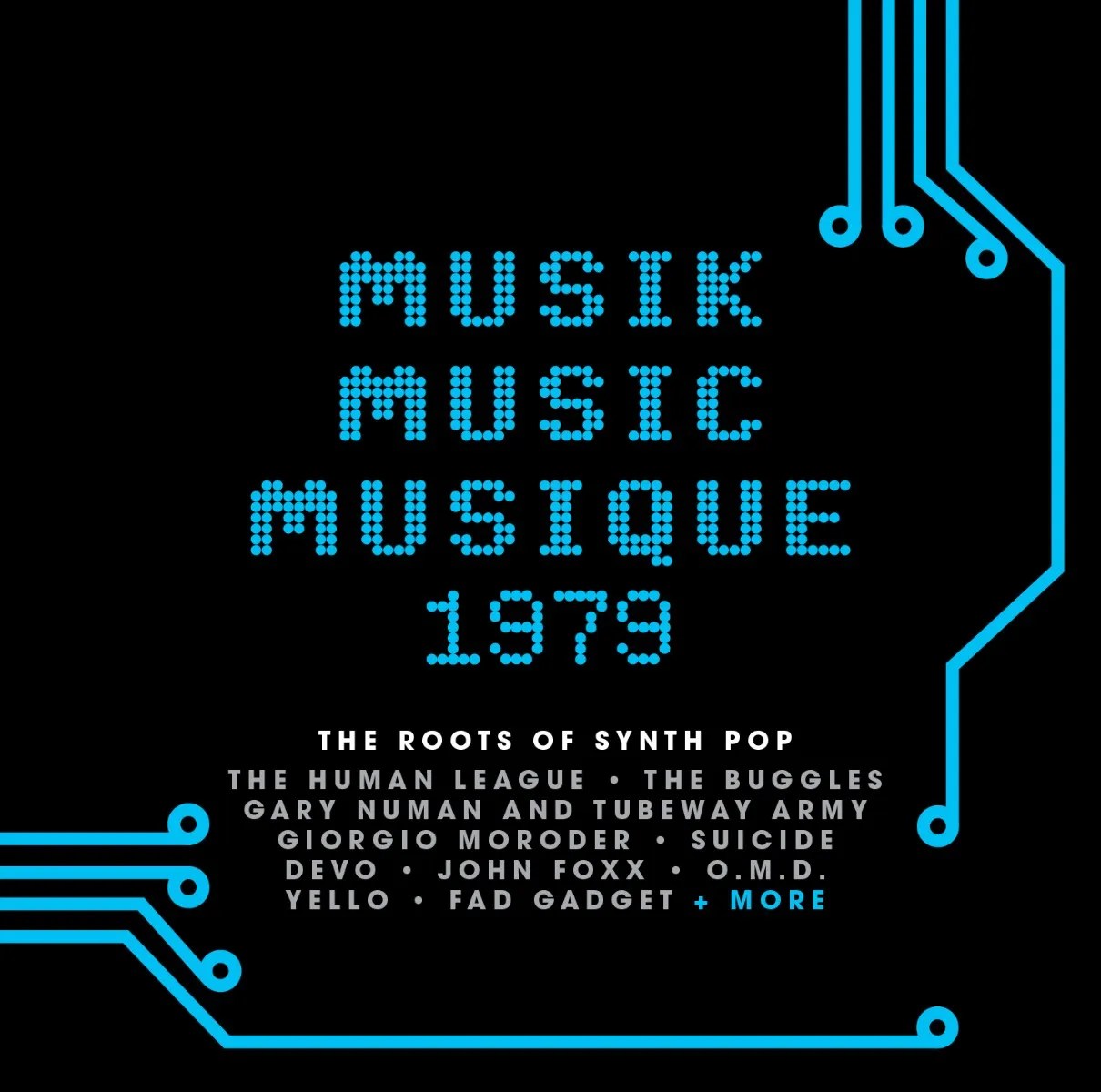
Switched On – Various Artists: Musik Music Musique 1979: The Roots Of Synth Pop (Cherry Red)

Reviewed by Ben Hogwood

What’s the story?

The fourth in Cherry Red’s Musik Music Musique series, this edition from 1979 acts as a prequel, an anticipation of a decade where electronic music moved decisively into the mainstream of pop music once and for all.

Between them Richard Anderson and John Reed have assembled 60 tracks spanning a wide range of styles and sounds, some of them heard on our radios to this minute, others that have almost disappeared. The combination makes for over three hours of very intriguing and instructive listening.

What’s the music like?

When I say, “Of its time”, that is a compliment – and in all honesty, a lot of the music on this collection could have dated from this year. Such is the reflection of how often a good deal of new music looks back to the pioneering spirits of 1979 for its inspiration.

There are so many highlights that it would be impossible to include them all, but safe to say the big hitters from Gary Numan (both Are ‘Friends’ Electric? and Cars) continue to hit the spot in spite of the regular presence on radio, while electro royalty The Human League, Moebius, John Foxx, Steve Hillage, Yello, Japan and Devo all impress, the latter with the fantastically grubby beat of Strange Pursuit. Suicide’s Dream Baby Dream is sublime, too.

More rewarding, surely, to find the outliers that have aged really well, and whose story is so well told by Mat Smith in the generous booklet accompanying the release. We get to learn about Fad Gadget, whose stately Back To Nature is a highlight of CD3. The perky M inclusion Made In Munich is fun, while Metal VoicesAt The Banks Of The River shows that electronic music can be graceful too. The storytelling of Quantum Jump‘s The Lone Ranger is memorable, Karel Fialka’s Armband pre-dated his only big hit Hey Matthew by some eight years, and Jude’s Mirror Mirror contains some brilliant soundbites.

Giorgio Moroder’s E = MC2 still sounds fresh off the page, while Telex offer an excellent cover of Rock Around The Clock. The BugglesTechnopop is breezy pop perfection, while Visage’s Frequency 7 is a deadpan vocoder-fest. The brightly voiced Hammer (named after Jan) contribute a treat in Forever Tonight, as do the brilliant After The Fire with One Rule For You. A word also for The Men, whose I Don’t Depend On You struts its stuff to funky effect.

Does it all work?

There are some less successful tracks, but to be honest they are of benefit to the collection, as it means the year is presented warts and all, and is all the more realistic for the inclusion of the tunes that haven’t aged as well. Be warned that the earworm of Black Rod’s Going To The Country will stay all day, while there really isn’t a category to describe Fashion’s Technofascist, with its uptight vocal and odd marching beat.

Is it recommended?

Yes, enthusiastically. MMM is the most fun you’ll ever have in a history lesson!

Listen / Buy

You can explore purchase options at the Cherry Red website

Published post no.2,817 – Monday 2 March 2026

Introducing…Our Friends Electric!

Today is known as Blue Monday, the day where New Year’s resolutions have traditionally worn off…and people have had enough of January. It happens also to be the name of one of the best electronic music songs ever made…so it seems right to make it the launch day for Our Friends Electric!

This will be Arcana’s celebration of electronic music in all its forms, where I will be listening to and writing about electronic music across the spectrum. It will be an expedition from early ventures in the 1920s to the most recent tracks from present day technology. Along the way there will be interviews, playlists, thoughts and music – so much music.

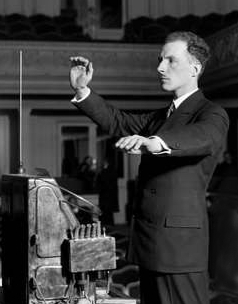
Lev Termen demonstrating the theremin, December 1927 by Bettmann, Corbis

It would be great to think we could cover all the electronic music there is, but that’s clearly impossible – so the focus will be on key works and albums, listening chronologically from early on in the 20th century. We will move from Varèse to Kraftwerk, from Delia Derbyshire to Kelly Lee Owens, taking in classical and pop pioneers side by side. We will also moving off-piste here and there, to take in all manner of successful – and failed – experiments with early computer music. There will be interviews, too!

To start, I plan to take a look at the music of Erik Satie and his influence, a composer who opened his mind to using mechanics and technology in music, and who looked to embrace new inventions. I will try to do the same.

My perspective is a Western one, so viewpoints from across the globe will be especially welcome. Please do contribute as much as you would like, from listening along on the playlists provided, to commenting on the findings and sharing in the delights we uncover. It promises to be a huge amount of fun.

So let’s switch on, power up and get listening!

Ben Hogwood, editor Arcana.fm

P.S.…for those of you following the Beethoven project – thank you! – I can promise you it hasn’t been cancelled but will resume in the composer’s ‘other’ anniversary year, 2027.

Published post no.2,772 – Monday 19 January 2026

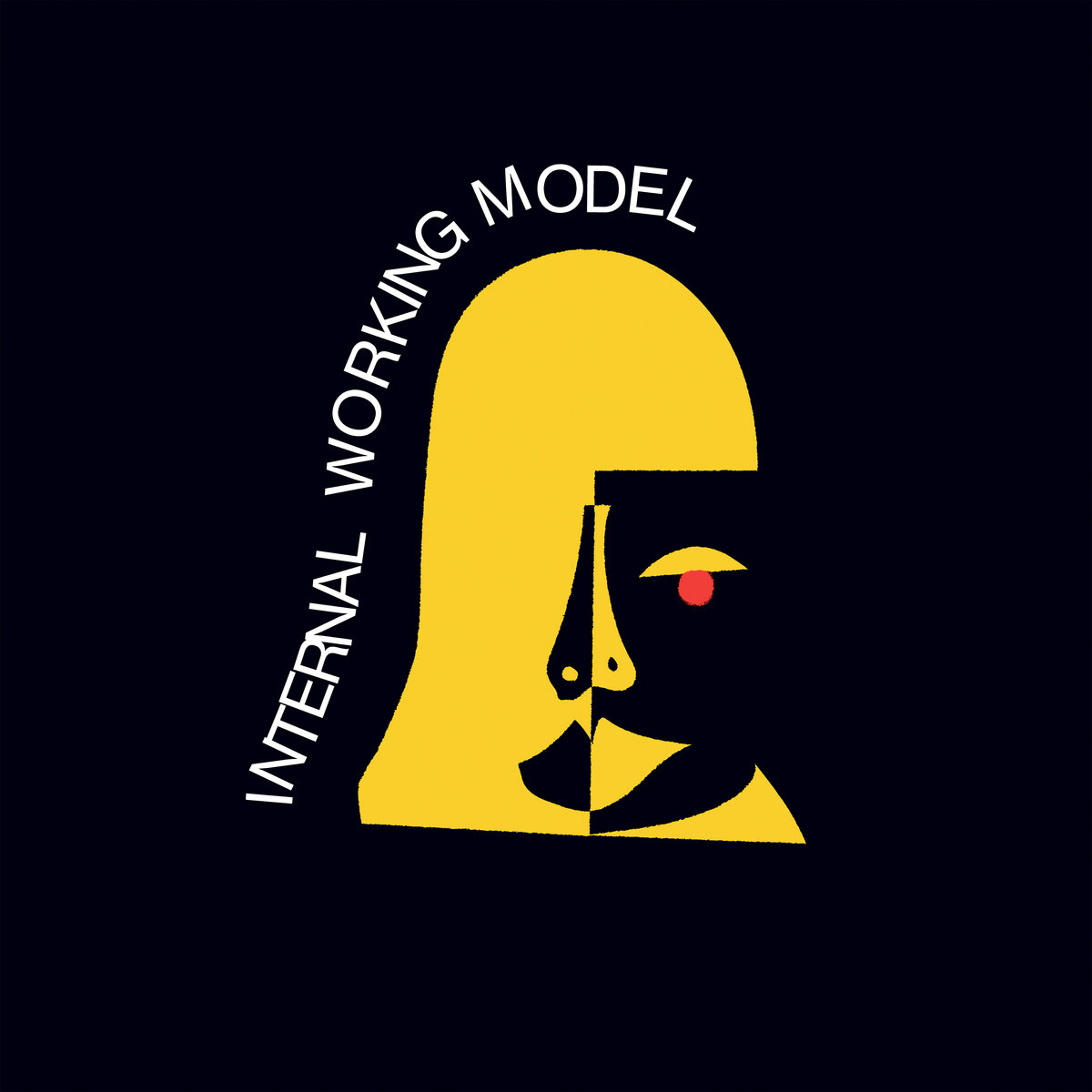
Switched On – Liela Moss: Internal Working Model (Bella Union)

by Ben Hogwood

What’s the story?

Former Duke Spirit vocalist Liela Moss has big plans for her third solo album. Co-written with her partner Toby Butler, Internal Working Model sees her ‘imagining a tribe, navigating away from our very centralized culture, dismantling it and revising the way I think things work’.

Central to her principles are the idea of cooperation rather than competition, and the idea that we should be speaking out more against global manipulators, greed and corruption. To that end, her and Butler chose a more upfront, electronic sound than she has used previously, and also some notable guests – Gary Numan, The Savages’ Jehnny Beth and Dhani Harrison.

What’s the music like?

Sticking to its brief, Internal Working Model presents a bold musical language. Moss is a compelling vocalist, taking charge from the outset and making her points with poise and conviction.

Empathy Files is a very strong opener, both musically and lyrically, with a sinister undertone as the chorus notes, “We’ve got data for miles on you”. Another standout song is Vanishing Shadows, where Moss and Gary Numan have a compelling frisson between the voices, not to mention a standout chorus. Ache In The Middle presents stronger tones of regret (“I could have been so happy, there would have been peace”), while the preceding The Wall From The Floor also speaks with anguished tones. “I can’t tell the wall from the floor any more”, she sings.

The drums play a bit part on Internal Working Model, adding power to Come And Find Me and ballast to the final call to arms, Love As Hard As You Can. With guest Dhani Harrison, Moss signs off on a high, looking to the future with renewed optimism and a steely gaze.

Does it all work?

Largely. Moss has a powerful message to bring, and delivers it with wholly convincing vocals. The electro production has bags of attitude too. On occasion more distinctive melodies would be welcome in the songs, to match the fine production.

Is it recommended?

Yes. As a statement of intent, and a rousing call for the start of a new year, Internal Working Model is a resolute piece of work. Moss is a compelling singer, a voice pushing to be heard.

Listen

Buy