New music – Frieder Nagel & Daniel Brandt: Who Knows (InFiné Music)

adapted from the press release by Ben Hogwood

Frieder Nagel continues his new series with Who Knows, featuring Daniel Brandt — composer, drummer, and co-founder of the acclaimed Brandt Brauer Frick.

A dark and menacing track unfolds under severe rhythmic tension. While constantly building, its long elegiac melodies slowly evolve and dissolve within majestic string arrangements and Nagel’s signature Moog sound. The single is accompanied by two additional versions: a shorter, more condensed radio edit, and a beatless ambient version that brings the meticulously crafted sound design to the forefront.

Nagel and Brandt first met in 2019, when Nagel directed Brandt’s music video Flamingo for Erased Tapes. A year later, they collaborated on a dance opera with Japanese choreographer Fukiko Takase at Uferstudios Berlin, which premiered at the Gluck Festspiele. Who Knows finally captures on tape the unique creative chemistry that sparks whenever the two artists meet.

Frieder expands on the track. “In the end, we are total opposites. Daniel is literally just back from touring Asia — he’s constantly on the move with his band, his solo project, or his work as a producer and director in London. Drums are, in a way, extroverted — expressive and primarily rhythmic. I, on the other hand, live a much calmer life in the woods, focusing on introspective works like audiovisual sound art, installations, or score production, where melody and synthesis take the lead.”

It is precisely this contrast that makes Who Knows so captivating: Nagel’s calm, melodic sensibility colliding with Brandt’s impulsive, almost restless energy. The result is a striking duality — a tension that is hard to define but impossible to ignore.

Where Do As I Please (above), released earlier this year, explored the theme of overcoming creative struggle, Who Knows feels like a blueprint for Nagel’s new artistic direction — moving further away from his downtempo and electronica beginnings toward new shores and inspirations, offering raw, unpredictable music that leaves the listener wondering what comes next.

Published post no.2,700 – Monday 27 October 2025

New music – Bruce Brubaker: Eno Piano 2.0 (InFiné Music)

by Ben Hogwood

One of the standout piano albums of last year was Bruce Brubaker’s Eno Piano, a reduction of some of the ambient master’s work for solo keyboard – about which Brubaker and Arcana had a very enjoyable conversation last year.

Now we bring news of a sequel later in the year, with Eno Piano 2 due to be released on 25 October. It is prefaced by a radio version of 1-1 from Music for Airports, which will no doubt be made available soon. In the meantime, you can enjoy being reacquainted with the full version below:

Published post no.2,216 – Monday 1 July 2024

On Record: Bruce Brubaker – Eno Piano (InFiné)

by Ben Hogwood

What’s the story?

To read the full story behind Eno Piano, you can read Arcana’s recently published interview with Bruce Brubaker. In it he sets out his quest to recreate Brian Eno’s ambient masterpiece Music For Airports, made through tape loops and studio techniques, for a living and breathing musician to play on the piano.

To get the necessary sustain Brubaker has employed a number of intriguing techniques, not least the use of electro-magnetic bows over the piano, enabled by Florent Colautti.

While Music For Airports is the main act, Brubaker places it in the context of shorter works by Eno that have a more descriptive edge – The Chill Air, a collaboration with the late Harold Budd, By This River, co-written with Dieter Moebius and Hans-Joachim Rodelius, and Emerald and Stone, where his collaborators are Jon Hopkins and Leo Abrahams, with whom he still works a great deal.

What’s the music like?

Incredibly restful – which of course is a description you could level at the original Music For Airports. Job done, you would think, but the reproduction of this music in human hands does reveal a slight and unexpected intensity, the performer having to maintain a very high degree of concentration and control to get close to honouring Eno’s original music.

Brubaker certainly does that, and the electro-magnetic bows help the sustain very subtly at the start of Music For Airports 2/1. The whole thing is so carefully thought through that each note feels researched but also instinctive, especially in 2/2 where the angular lines create an extraordinary sense of space.

While Music For Airports is indoors, the other three pieces are very much outside, and have a refreshing clarity. The Chill Air and By This River are bracing, wintry piano music.

Does it all work?

It does. When Bang On A Can released their chamber ensemble version of Music For Airports in 1998 it gave a new dimension to Brian Eno’s thinking. This piano work will have a similar effect, and is even more intimate in its confines.

Is it recommended?

Yes. Any Eno fan will want to hear this, and Bruce Brubaker shows just how imaginatively and thoughtfully he can attend to the music of others. This is a quiet revelation.

Listen & Buy

Published post no.2,046 – Thursday 21 December 2023

On Record – Vanessa Wagner: Mirrored (InFiné)

by Ben Hogwood

What’s the story?

Vanessa Wagner has been quick to follow up her March release, Study Of The Invisible, where she thoughtfully compiled an album of modern piano music that might be described as ‘minimal’ but which led to a series of inventive and rewarding compositions, imaginatively sequenced.

Mirrored is a collection of studies for solo piano, largely contemplative spaces that leave plenty of room for meditation and a get-out clause from today’s fast-moving world. Normally a listener might associate piano studies with application of technique; functional pieces rather than emotive; but this collection is very much studies in the form of moods and mental images.

What’s the music like?

Introspective, yet wholly rewarding. Particularly engaging is Wagner’s selection of music by Philip Glass, well-chosen and beautifully played. The Poet Acts is a sombre, thoughtful piece, opening out like an uneasy berceuse. Etude 4 is very different, a turbulent and agitated piece generating a large amount of nervous energy. By contrast Etude 2 is a thoughtful contemplation with a hint of darkness, led as it is by the low left hand, before building to a forceful conclusion.

Ryuichi Sakamoto’s Solitude has a similar profile, though its plaintive right hand melody leads the way. Plaintive is also the word that could be used for Nico Muhly’s Quiet Music, though this has an inner power generated through a soft but meaningful chorale, which makes it sound like a deeply spiritual statement. Melaine Dalibert’s Six + Six has gentle undulations that go on their way in watery figurations, while Sylvain Chauveau adopts a still profile for the simple and meaningful Mineral.

Moondog’s Sea Horses is short but descriptive, an active piece flitting this way and that. A similar freedom is afforded to the right hand in Léo Ferré’s Opus X, where the melody is free to travel up and down in the treble as it wishes.

Does it all work?

It does. Once again Vanessa Wagner has chosen a logical and rewarding sequence of pieces, and her affinity with the music of Philip Glass in particular makes these compelling recordings. She has an unusual and vivid sensitivity for this music, creating many different keyboard colours in the course of the collection.

Is it recommended?

Yes – provided you also have Study Of The Invisible, which is the ideal complement to these pieces.

Listen

Buy

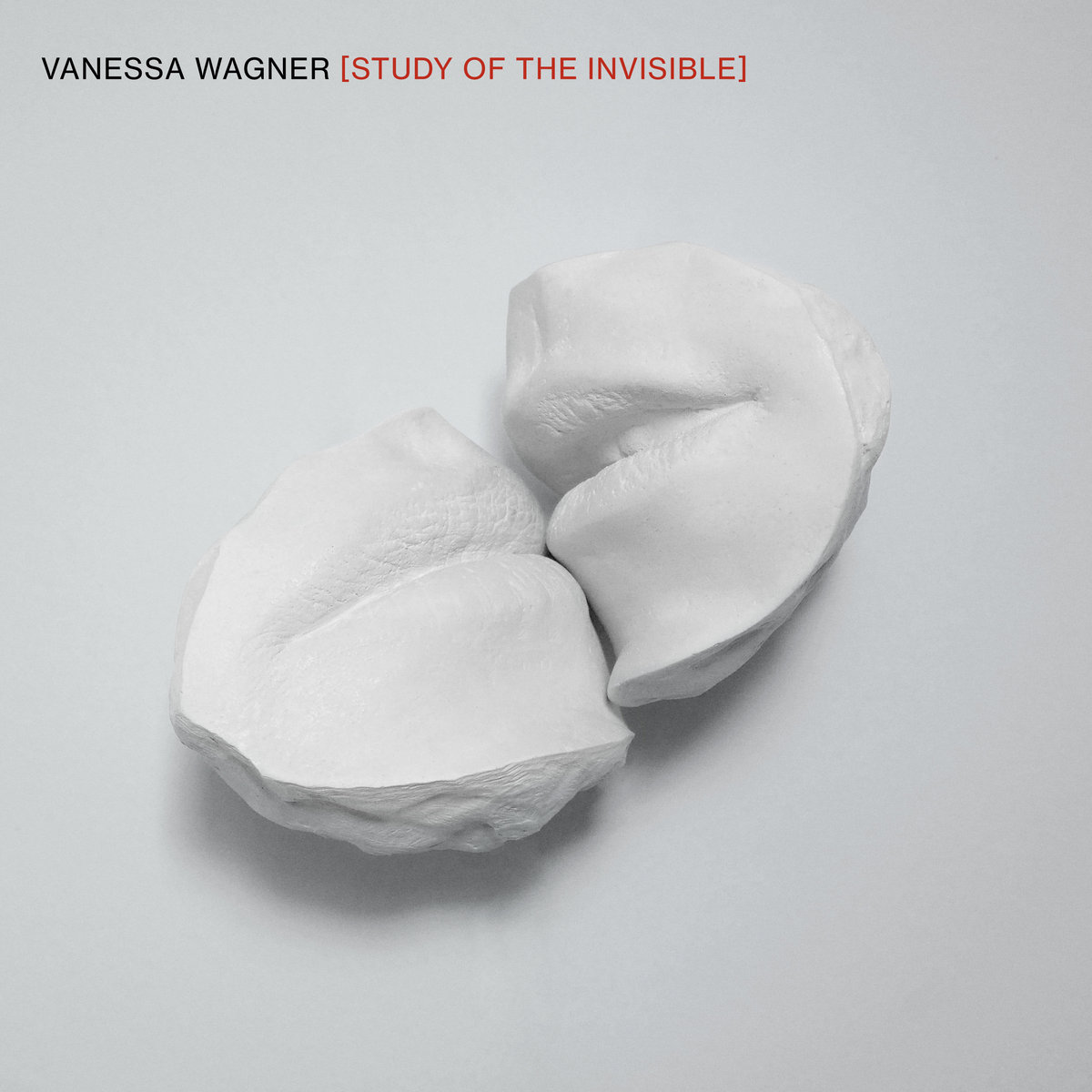
On Record – Vanessa Wagner: Study Of The Invisible (InFiné Music)

vanessa-wagner-2

written by Ben Hogwood

What’s the story?

Vanessa Wagner returns with a thoughtfully compiled album bringing together a selection of modern piano music that might be described as ‘minimal’. Her concept is to show how new music can still explore the instrument afresh, using the barest of melodic or harmonic material as its stimulus but finding something substantial within.

The selection here includes works by 14 composers, many of them rare and unpublished.

What’s the music like?

This is a really inspired compilation, logically ordered and with a natural rise and fall. In the process of the anthology, Vanessa Wagner shows off a wide range of approaches to the piano, from flowing, watery pieces to more percussive interludes. The music might be predominantly slow but Wagner finds its pressure points and releases its emotional energy in full, showcasing some fine compositions in the process.

The rippling surfaces of Suzanne Ciani’s Rain, first in the collection, are a kind of homage to a Debussy Arabesque. Harold Budd’s La Casa Bruja has a slower, more reflective beauty, as does the Brian and Roger Eno collaboration Celeste. Contrast these with the gently twinkling ivories of Bryce Dessner’s Lullaby (Song for Octave), and the thicker brush strokes of David Lang’s Spartan Arcs.

The two Philip Glass selections range from a sombre, deeply felt Etude no.16 to a staccato Etude no.6 that sounds a bit more like a fly buzzing against the insides of a jam jar. Wagner really gets Glass’s phrasing, and the powerful refrain that the piece returns to is forcefully and brilliantly played. Even more dazzling is the following Etude no.3, ‘Running’, by Nico Muhly, its thrilling discourse brilliantly distilled.

Elsewhere Moondog’s flowing Prelude no.1 in A minor casts its eyes towards the past, while Julia Wolfe’s Earring finds striking sounds in the piano’s upper register. Ezio Bosso’s Before 6 complements the activity of the Glass and Muhly Etudes with almost complete stillness, the effect both meditative and moving.

The most striking of the compositions, however, is the album’s centrepiece. Caroline Shaw’s Gustave Le Grey, based on a Chopin Mazurka, starts with clumps of chords and a solemn, slow bass. From these beginnings the piece progresses to contemplation, lost in thought in its centre before a searing expression of feeling, the piano cutting through in Wagner’s intense interpretation. A sense of pathos is evident at the end, a satisfying resolution.

Does it all work?

Yes, on many levels. What this compilation also does is somehow highlight the importance of the music of Erik Satie, without including any. Much of the music here is both minimal, interesting and emotional, mirroring the older composer’s achievements in his Gnossiennes and Gymnopédies. Wagner plays this music with great feeling and panache.

Is it recommended?

Without hesitation. This is a fine creative project, brilliantly scoped and realised. If you want to discover new piano music, here is a whole album’s worth on which to reflect and enjoy.

Stream

Buy