Wigmore Mondays – Benjamin Appl & Graham Johnson

benjamin-appl-graham-johnson

Benjamin Appl (baritone) and Graham Johnson (piano) perform settings of the poetry of Joseph von Eichendorff

Wigmore Hall, London

Monday, 4 January 2016

Audio (open in a new window)

http://www.bbc.co.uk/programmes/b06tkp3w

Available until 3 February

What’s the music?

Schumann (1810-1856): Frühlingsfahrt Op.45/2 (1840); Der Einsiedler Op.83/3 (1850; Der frohe Wandersmann Op.77/1 (1840)

Mendelssohn (1809-1847): Pagenlied (1832); Nachtlied Op.71/6 (1847); Wanderlied Op.57/6 (1841)

Brahms (1833-1897): In der Fremde Op.3/5; Mondnacht; Parole Op.7/2; Anklänge Op.7/3 (all 1852-1853)

Pfitzner (1869-1949): In Danzig Op.22/1 (1907); Der Gärtner Op.9/1 (1888-9); Zum Abschied meiner Tochter Op.10/3 (1901)

Wolf (1860-1903): Nachruf (1880); Das Ständchen; Der Musikant; Der Scholar; Der Freund (all 1888)

Spotify

Benjamin Appl has not yet recorded any of this repertoire, but a reproduction of his program using available versions can be accessed below, for listeners who cannot hear the BBC broadcast. Where possible I have used recordings made by Appl’s mentor, Dietrich Fischer-Dieskau:

About the music

Joseph_Eichendorff

Joseph von Eichendorff (picture used courtesy of Wikipedia)

With around 5,000 song settings of Joseph von Eichendorff’s poetry from the 19th century alone – with thanks to BBC Radio 3 announcer Sara Mohr-Pietsch for the info! – Benjamin Appl and Graham Johnson had no trouble making up a concert of 18 ‘lieder’ for the first Wigmore Hall lunchtime concert of the year.

Their choice gives an intriguing insight into different approaches to the poet. Broadly speaking, Schumann ranges from love-laden to thoughtful and a little morose (though his selection comprises three prayers), Mendelssohn is either forthright or reflective in his three songs; the youthful Brahms is surprisingly relaxed, while Pfitzner emerges as an inventive painter. Perhaps the most striking examples here come from Hugo Wolf, who wanted to focus on the ‘comparatively unknown humourously and robustly sensual side’ of von Eichendorff’s poetry.

Performance verdict

A slightly downbeat return for the WIgmore Hall in 2016, but a concert that was beautifully performed. The pairing of an incredibly experienced pair of hands in Graham Johnson and a singer starting out on his artistic voyage in Benjamin Appl was a good match and yielded many rewards.

Several songs left lasting impressions from the program, among them two from Brahms, with Appl’s control throughout Mondnacht and the picture painting from Johnson in Parole especially notable.

It was good to hear some rarely-sung lieder of Hans Pfitzner, whose use of the piano’s lowest end brought a wholly new texture to In Danzig, while the Wolf selection reminded us how original he could be in his song settings, the piano cast in a prominent role of scene setting, one that Johnson relished and used to his great advantage.

What should I listen out for?

Schumann

2:06 – Frühlingsfahrt (A spring journey) – the initial optimism of this march is quite bracing, but it soon subsides as the poet thinks of old age.

5:31 – Der Einsiedler (The hermit) – quite a sad song, solemn and lost in thought. Again old age is a preoccupation, the piano supporting the vocal melody as a walking stick might support the physical frame.

9:02 – Der frohe Wandersmann (The happy wanderer) – a much more positive, open-air march that talks of streams ‘rushing down the mountains’ and larks that ‘soar heavenwards’. More spring than winter!

Mendelssohn

11:03 – Pagenlied (Page’s song) – a tentative detached figure in the piano part adds to the tension of this song, which is relatively subdued and distracted.

13:11 – Nachtlied (Night song) – there is a withdrawn feel to this song also, until the Nightingale is encouraged to sing out at 14:39.

16:12 – Wanderlied (Song of travel) – a typically busy piano part from Mendelssohn gives the impression of rapid movement, the traveller set on his way with the minimum of fuss – and happily so!

Brahms

20:49 – In der Fremde (In a foreign land) – a rather downcast setting in a minor key, the poet in reflective mood. The piano hints at a major key near the end but such thoughts are quickly forgotten.

22:12 – Mondnacht (Moonlight) – dappled piano lines suggest moonlight in the branches, and there is a more romantic mood, with yearning vocal lines.

25:03 – Parole (Password) – again Brahms thinks privately, using vivid picture painting from the piano that depicts the huntsman through distant calls but also the ‘one last shot’ (26:44), where Johnson adds extra emphasis.

28:02 – Anklänge (Echoes) – a short but evocative song of two halves, the first depicting a lonely house in a forest, the second greeting the maiden inside.

Pfitzner

30:07 – In Danzig – the mood changes dramatically in this darkly coloured song exploiting the lower range of both piano and singer. The mysterious and faintly menacing mood is aided by elusive harmonic movements.

34:38 – Der Gärtner (The Gardener)­ – this song is more conventional in its language, looking back to Schumann and Brahms. The mood is positive and quite dreamy, but reaches a very impressive climax at the end with the words ‘Viel schöne, hohe Fraue, Grüss ich dich tausendmal’ (‘I, lovely gracious lady, greet you a thousand times’)

38:08 – Zum Abschied meiner Tochter (Farewell to my daughter) – a positive farewell, and an expansive setting that reaches another impressive climax at 40:07.

Wolf

42:58 – Nachruf (In memoriam) – the piano imitates the lute in this song as Appl sings a gentle lament

47:06 Das Ständchen (The serenade) – a watery piano introduces an adventurous setting that contains the tune of a serenade but some unconventional dissonances between voice and piano. There is a great deal of sadness in this song.

50:27 – Der Musikant (The minstrel) – the choice of music over marriage is made here by the singer! As if to emphasise his decision there is a rather lovely piano introduction that proves to be the bedrock of the song.

52:14 – Der Scholar (The scholar) – there are a number of examples of picture painting in the piano part for this song, depicting the ‘little birds’ and the rain that ‘rattles on the leaves’. Again the singer extols the virtues of making music but occasionally with a few too many wines! (53:40)

54:55 – Der Freund (The friend) – The joy of friendship is celebrated here, though not without travelling through a storm or two (55:30) where the crushing piano and loud voice descend into brief turmoil before emerging triumphant.

Encore (not heard on the broadcast)

Verschwiegene Liebe (Silent Love) The twinkling piano introduction was followed here by a sensitive and grateful rendition from Appl.

Further listening

As a complement to the concert, how about a recital based on poems by Heinrich Heine? Anothre great influence on 19th century vocal music, Heine’s music was set by a number of composers – and here the great tenor Christoph Prégardien and fortepianist Andreas Staier look at songs by Schubert, Schumann and Mendelssohn:

Under the surface – Kuula Orchestral Music

kuula

Composer: Toivo Kuula (1883-1918)

Nationality: Finnish

What did he write? Kuula is not well known outside of Finland, but in his home country his reputation rests largely on his vocal music, the record company Ondine describing him as ‘a colourful and passionate portrayer of Finnish nature and people’. His catalogue includes numerous works for male choir.

What are the works on this new recording? For this disc of some of his orchestral music, Leif Segerstam has chosen the most popular works in the two South Ostrobothnian Suites­ – the Finnish region where Kuula lived. They led to him being dubbed as a successor to Sibelius. Complementing these are the Festive March and the Prelude and Fugue. All the works date from the last decade of the composer’s short life.

What is the music like? Much of it is attractive, if a little undemanding. The Prelude and Fugue feels as though it is trying a little too hard to impress, but the Festive March is a natural and spontaneous composition that sounds like Brahms on holiday.

Perhaps because they describe the Finnish country, the South Ostrobothnian Suites are the most colourful music here. The first suite is especially notable for the graceful, silvery Folk Song, where the strings taking the lead, while there is a surprisingly rustic feel to the Devil’s Dance. Meanwhile in the second suite a clean orchestral picture emerges for The Bride Arrives, while Kuula shows a gift for picture painting in the evocative woodwind calls towards the end of Rain in the forest. Perhaps the most memorable picture painting occurs in the gamelan figuration of Will-o-the-wisp, the last number in the second suite – which is beautifully played by the Turku Philharmonic Orchestra and their conductor Leif Segerstam.

What’s the verdict? If you like classical music to be slightly in the background then this is ideal, music that doesn’t make too many demands on the listener but is nonetheless rewarding when painting a picture of Finland. It is true the attractive cover draws you in, but on many occasions here there is music to match.

Give this a try if you like… Dvořák, Grieg or lighter Brahms

Spotify Playlist

You can listen to excerpts from the disc at the Presto website (be sure to click on the ‘Listen’ tab)

Meanwhile you can hear the composer’s complete songs for male voice choir on Spotify here:

Wigmore Mondays – Artemis Quartet and Markus Groh: In Memoriam Friedemann Weigle

artemis-quartet

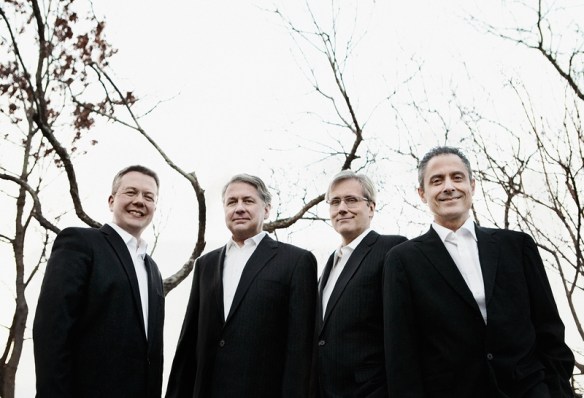
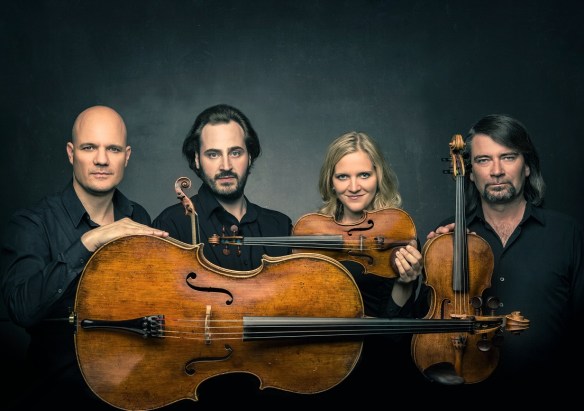
Artemis Quartet – with Friedemann Weigle (viola) on the far right.

Markus Groh (piano), Members of the Artemis Quartet – Vineta Sareika (violin), Gregor Sigl (viola), Eckart Runge (cello) – Wigmore Hall, London, live on BBC Radio 3, 30 November 2015

Listening link (open in a new window):

http://www.bbc.co.uk/programmes/b06qjz7t

on the iPlayer until 30 December

Spotify

In case you cannot hear the broadcast, here is a Spotify playlist of the Brahms played in this concert, from available versions on Spotify:

What’s the music?

Bach/Piazzolla, arr. Eckart Runge: Partita for StringTrioIn Memoriam Friedemann Weigle (18 minutes)

Brahms: Piano Quartet No. 3 in C minor, Op. 60 (1875) (35 minutes)

What about the music?

This concert was a tribute to the violist Friedemann Weigle, a member of the Artemis Quartet who sadly died at the age of 53 earlier this year. The quartet write this about the Bach / Piazzolla suite with which they begin, arranged by their cellist Eckart Runge:

“Featuring excerpts from Bach‘s Goldberg Variations, the English Suite BWV808 and the Sinfonia BWV795, as well as two fragments from Piazzolla‘s Oblivion and Fuga 9, the Partita for Trio spans the lifetime of Friedemann, from his beginnings as a church musician’s son to his time as a member of the Artemis Quartett. In 2012, when we were conceptualising our Bach-Piazzolla suite, Friedemann was devoted to arranging the works of Johann Sebastian Bach. He had a special affinity for the music of Bach, music that had accompanied him since his childhood. At the same time, he had been fascinated by pop music – from rock to jazz – since his youth. Indeed, he often proudly said that his first public musical performance was as a drummer in a rock band. Friedemann’s curiosity for new musical forms once again became apparent when he learned – and learned to love – Piazzolla’s Tango Nuevo through the Artemis Quartett.

We performed the Aria from the Goldberg Variations at Friedemann’s funeral. The idea then came about for us to honour Friedemann through the arrangement of a Partita, which would bring together these two aspects of his musical interests and, as a trio, to show the absence of a beloved friend.”

Performance verdict

Sometimes in a concert it almost does not matter what the standard of performing is like, and this was one such occasion. Unfortunately Arcana was unable to attend but I am sure you will be able to gauge the depth of feeling immediately from the sensitive Bach arrangements, which are arranged into a very effective suite.

The BBC Radio 3 announcer Sara Mohr-Pietsch tells us that the last recording at which Friedemann was present was of Brahms String Quartets – and so the group have been performing Brahms with guest pianists on their tour. There is an extra poignancy and potency to their performance of the C minor Piano Quartet No.3, with a depth of feeling that even over the radio is very intense. The resilience and power of the outer movements is most impressive, the rhythms are sharply defined and the slow movement is the soft, beautifully played centre of the performance.

What should I listen out for?

Bach / Piazzolla

1:40 – a solemn opening passage of music, where the held notes on the string trio could be mistaken for the sonorities of the bandoneon – an instrument Piazzolla often used.

5:54 – a fugue – presumably from Bach’s English Suite BWV808 – begins, the players using next to no vibrato and keeping their bows near the bridge of their instruments by the sound of things, to secure quite a coarse sound – but then there is much more of Piazzolla appearing as the music moves into a characterful dance at 7:30. Then at 8:06 the mood changes abruptly again, returning to sorrowful memories.

17:18 – the Aria from the Goldberg Variations signals a switch from the sorrowful minor key to a much more optimistic major. With it the instruments bring more vibrato. The versatility of Bach’s music is very clear in this arrangement, the parts beautifully even in their distribution.

Brahms

markus-groh

Markus Groh (piano)

23:23 – the piece begins with a slow introduction, where a single unison from the piano brings in the strings with their theme. This call and response is repeated. At 24:22 the first movement proper begins, and is notable for its full texture and big musical statement. The music then subsides a little to softer, undulating thoughts and a second theme at 25:30 from the piano. Brahms continues with some powerful statements from both forces. At 31:42 the music is more graceful, led by the piano, but soon the fraught atmosphere returns, and at 32:57 the mood of the slow introduction returns, and the first movement finishes.

33:52 – the Scherzo, which as so often with Brahms features nervy crossrhythms and the feeling of piano versus strings. At 35:12 there is a flowing passage but still the nervousness is present – and at 36:34 the main theme returns, with razor sharp accuracy from the players, before an emphatic finish moves the music from C minor to C major.

38:21 – the slow movement begins with the cello softly playing, an elegiac line that is beautifully rendered here by Eckart Runge over a quiet piano accompaniment. Soon he is joined by the violin and the pattern for this deeply felt piece of music is set, the instruments sticking closely together but playing music of great tenderness and feeling. The movement ends quietly and thoughtfully at 47:45.

47:58 – the finale begins with a sense of nervousness again, the piano figuration dancing around the violin theme, before the music really cuts loose with all four instruments, Brahms unleashing the power at his disposal. In this performance the group take the repeat at 50:00. Then the music moves farther afield, in terms of its distance from the harmonies Brahms uses for the main key – before returning around the 53:35 mark – where we hear another account of the main melody on a lower part of the violin. The work as a whole leaves a strong impression, with a thoroughly convincing finish.

Further listening

Brahms enjoyed writing for the piano with stringed instruments, and his other two Piano Quartets are massive works but ones that repay repeated listening. The more popular of the two is the Piano Quartet No.1 in G minor, a really impressive structure that is one of the composer’s earliest large scale chamber works. The Piano Quartet No.2 in A major followed soon after…and both are given excellent performances on this album from pianist Nicholas Angelich, string playing brothers Renaud and Gautier Capuçon (violin and cello respectively) and Gérald Caussé (viola):

Wigmore Mondays – Emerson String Quartet in Bartók and Brahms

emerson-quartet-2

Emerson String Quartet – Eugene Drucker & Philip Setzer (violins), Lawrence Dutton (viola), Paul Watkins (cello) – Wigmore Hall, London, live on BBC Radio 3, 16 November 2015

Listening link (open in a new window):

http://www.bbc.co.uk/programmes/b06p50ql

on the iPlayer until 16 December

Spotify

In case you cannot hear the broadcast, here is a Spotify playlist of the music in this concert, as recorded by the Emerson String Quartet themselves:

What’s the music?

Brahms: String Quartet No.2 in A minor, Op.51/2 (1873) (32 minutes)

Bartók: String Quartet No.4 (1928) (26 minutes)

What about the music?

It is odd to think of Brahms suffering from any lack of conviction, given the consistently high quality of his output – but the shadow of Beethoven and Schubert was so long that he waited a long time before issuing any symphonies or string quartets. On the symphony front he waited until the age of 43 before publishing his first work in the form. The string quartets arrived a little earlier, the pair of works issued as Op.51 completed around his fortieth birthday.

They are extremely accomplished works, and as is the case with much of Brahms’s writing there is a lot going on in each part. Because of that it often sounds as though more than four stringed instruments are playing, and in the A minor work the Emersons perform here there is consistent melodic interest, Brahms often referring to several recurring ideas. This piece flows beautifully, and is clearly the work of an organised mind! Despite that there is clear emotion too.

The same could be said for Bartók, who achieves an incredible balance of structure in his String Quartet no.4 of 1928, while at the same time writing music of remarkable poise and power. This work is in five movements and is written like a mirror. Movements one and five are fast-ish sections carrying similar material, the instruments often working together. The second and fourth are ‘scherzos’ – fast music with a humourous side – though the humour here comes across as more devilish. The second movement is played with the mutes, while the second is wholly pizzicato (plucked). The third movement, the emotional centre, is a famous example of the composer’s night music, where a heady atmosphere is set by the other three instruments against a folk-inspired melody on the cello – which eventually transfers to violins and back.

Bartók’s Hungarian roots are very much on his sleeve here – but like Brahms he writes with his head as well as his heart, with not a note wasted.

Performance verdict

Electricity is in the air when the Emersons play Bartók, and something about the recent personnel change with Paul Watkins coming in seems to have fired the quartet afresh. It helps also that first violinist Eugene Drucker appears to be in much better health – back-wise at least – and these elements appear to have fired a new-found enthusiasm.

Watkins was a focal point in the third movement of what proved to be a stunning performance of the Bartók. When the Emersons recorded the six quartets of the Hungarian master in 1988 they laid down what for me were standard bearing feats of technical prowess. Here, at the Wigmore, they showed those were emphatically no fluke, and some of the sounds issuing from the four instruments I can genuinely say I have not heard from a string quartet before. The scratchy sound from Lawrence Dutton’s viola at the end of the second movement Scherzo, the weird, accordion-like chords halfway through the third – both were eyeopening moments.

The Brahms was inevitably a more sober performance but here too there was characterisation and much warmth, especially in the fast part of the scherzo and in the finale. Some of the composer’s quartet writing is extremely busy in this quartet, but under the Emersons we got clarity if perhaps an over-rich sound at times in the slow movement.

What should I listen out for?

Brahms

1:53 – the quartet begins with a smooth theme but with a certain amount of anxiety too. There are a lot of different melodic threads here but Brahms keeps them closely united. A lilting theme at 3:16 is a little more relaxed, but still with a lot of nervous energy going on elsewhere. When this theme comes back, at 8:05, the mood is a little sunnier – but elsewhere the anxiety seems to remain.

12:09 – the slow movement of the quartet, marked Andante moderato (which means ‘moderately, at a walking pace). This has a lyrical feel to it, and is given in a tender mood. Again Brahms works very smoothly, with little to no join between the different sections. The key of A major (as opposed to the overall key of the work, A minor) presents a much sunnier outlook too.

21:54 – a movement marked as a Minuet, which seems to acknowledge the historical use of this dance in the string quartet by Haydn and Mozart. Yet this is classic Brahms, with a slight syncopation running through the tunes and an elegance to the quartet writing. At 23:33 the mood changes with a much faster ‘trio’ section, the main material returning again at 24:51.

27:18 – a forceful tune begins this movement from the first violin, and is then taken up on the viola. A sweeter second theme then makes itself known at 28:07, but the work ends forcefully – almost defiantly – at 34:06.

Bartók

36:31 – Immediately the power of this work is set loose as the four instruments play closely together. There are jarring dissonances but also bittersweet folk melodies, passed between the instruments. Bartók often pairs the instruments in melody, as he does with the first violin and cello at 38:59. Then he explores contrasts between loud, jarring statements and really quiet answers, until a bruising passage brings the movement to an end at 42:33.

43:06 – the second movement is marked Prestissimo, con sordino­ – which means ‘very fast, with the mute’ – the small contraption each string player fits over their bridge to dull the sound. It gives an eerie effect, especially with the writing Bartók uses here, where the instruments sound like moths circling around a flame. The effect is that of night-time music – as it is also for the following:

46:50 – Bartók gets some really striking sonorities in his writing for strings here, with some held chords from the three upper instruments before a soliloquy from the cello at 47:11. The atmosphere is heady, and to get the most effect you are advised to listen in a quiet room or on headphones! Further solos from the violin follow, and the music becomes more animated, before the cello takes over again at 50:54.

52:59 – the fourth movement, a mirror of the second – only this time the instruments are required to use pizzicato – which is plucking the string. Sometimes Bartók asks them to twang against the fingerboard, which produces a snappy sound (53:45 for example). Even here there are striking melodies.

56:26 – a savage Hungarian dance begins, in a similar profile to the first movement, all players close together in range. The power of the unison playing is something to behold, especially as a lot of the time the players have been using double stopping (more than one string at a time). The frequent use of open strings leads to a coarse sound. The finish at 1:01:56 is particularly emphatic.

Encore

As an encore, not on the radio, the Emersons gave the Cypress No.3, a song by Dvořák which he arranged for string quartet. It is a beautifully warm piece of music.

Further listening

The Emersons’ Bartók recordings of 1988 were a landmark for the quartet, and it is well worth revisiting them. All six quartets are superbly performed, though one recommendation on its own would be the String Quartet no.2 – whose second movement Scherzo (the second track on Disc 2) has incredible forward drive.

Vilde Frang, Royal Scottish National Orchestra and Peter Oundjian – Viennese classics in Dundee

rsno
Ben Hogwood visits Dundee’s magnificent Caird Hall for an trio of Viennese works given by violinist Vilde Frang, the Royal Scottish National Orchestra and principal conductor Peter Oundjian
Caird Hall, Dundee, Thursday 12 November

Webern Langsamer Satz (1905), arr for string orchestra by Gerard Schwarz

Brahms Violin Concerto (1878)

Mozart Symphony no.41 in C, ‘Jupiter’ (1788)

What a magnificent setting for a concert. Dundee’s Caird Hall will be well known as an attraction by the locals but it bears repeating that the venue is an excellent acoustic for classical music, as the Royal Scottish National Orchestra conductor Peter Oundjian observed in his brief talk to the audience before the concert.

The high ceiling was perfect for the burnished ardour of Webern’s Langsamer Satz, written while the composer was still in a tonal way of thinking and in thrall to his hero Mahler. Although normally heard through the intimate medium of the string quartet, this arrangement, made by the conductor Gerard Schwarz for string orchestra, worked extremely well, and the RSNO strings made a beautiful and clean sound that left us in no doubt as to the composer’s feelings towards his cousin – who was later to become his wife.

The Norwegian violinist Vilde Frang then joined the enhanced orchestra for another Viennese piece, Brahms’s Violin Concerto­ – and in the process she built on a relationship already established with the erte concerto last year. Frang is not a player prone to exaggerated gestures or one-upmanship on the orchestra and this was the ideal approach for the Brahms, where the two forces work together and where the orchestra often have the better tunes. Oboist Adrian Wilson, acknowledged by Frang at the end, was superb in his slow movement solo, and while this was perhaps a more ‘classical’ reading looking back towards Schubert, Frang took the difficult and extended solo passages, particularly the cadenzas, by the scruff of the neck and refused to let them go.

Completing the Viennese trio was Mozart’s Jupiter symphony, his last – with Oundjian sensibly reducing the forces in the name of clarity. This was an extremely fine performance where the rapport between the RSNO and their conductor was abundantly clear, and where he ensured that Mozart’s deceptively simple themes were beautifully communicated and developed. A graceful minuet was notable for the floated violin delivery, though in the trio the minor key harmonies sowed the seeds of disquiet.

These were emphatically blown away by the finale, one of Mozart’s greatest achievements as a composer in his successful dovetailing of all five themes in a brilliantly worked fugue. Oundjian took this at a daringly fast tempo but we never lost sight of the tunes, the orchestra working incredibly hard to keep their lines clear and crisp. The enjoyment of all – players and audience – was clear, for this was music to banish even the squalliest of November nights.