News – Broadcast: On the occasion of the 70th birthday of Jorge E. López, Sunday 30 November

published by Ben Hogwood and Richard Whitehouse

On the occasion of the 70th birthday of Jorge E. López

The singular tonal language of an Austrian composer of Cuban origin

Sunday 30th November 2025 @ 19:45 [NB: 18:45 UK time] on Austrian Radio Station Ö1

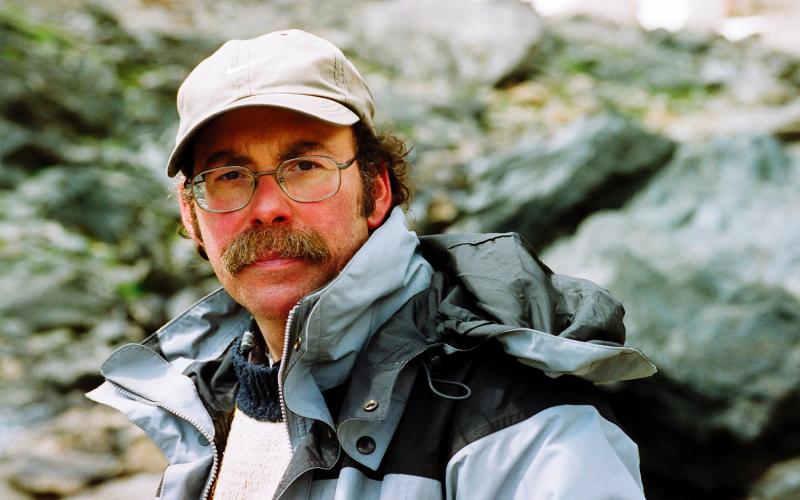
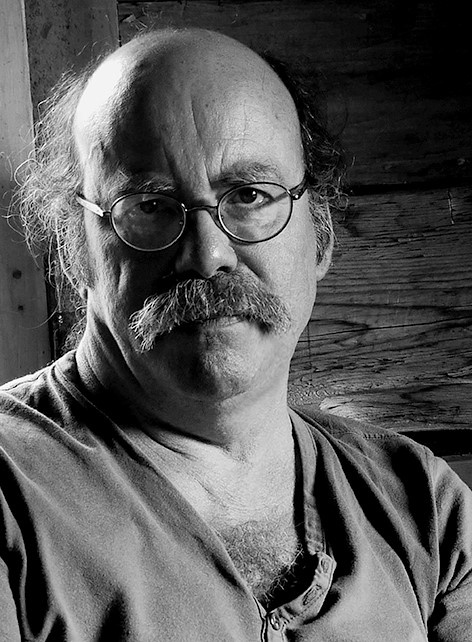
Jorge E. López, one of the most distinctive and original composers currently living in Austria, celebrates his seventieth birthday next Sunday. He has never identified with the conventions of New Music: ‘‘Instead, I was convinced from the beginning that it was more about making the ancient present’’. He does not look for the new but ‘‘rather the repressed’’, as emphasized in an extended interview with the radio journalist and regular Ö1 broadcaster Peter Kislinger.

López was born on 30 November 1955 in Havana. In 1960 he came to the United States with his family, where he lived in New York and Chicago. In 1970 he began to compose – inspired by such figures as Mahler, Berg, Ives, Messiaen, Stockhausen and Xenakis – then studied at California Institute of the Arts during 1971-76. In 1987, after notable orchestral performances in Donaueschingen, the focus of his life shifted to Europe and the German-speaking world.

He draws inspiration for his often timeless works from an intense experience of nature, most especially in Lapland, Iceland and the American North-West. His works defy current trends in contemporary music and demonstrate an affinity for the music at the turn of the 20th century as well as proximity to the aesthetics of Surrealism. In recent years, he has resided alternately between Mölltal in Upper Carinthia and Vienna. This latest edition of the Supernova series (produced by Rainer Elstner) features several large-scale orchestral works by the composer.

The programme can be accessed from the UK by clicking on the link below:

On the occasion of the 70th birthday of Jorge E. López | SUN | 30 11 2025 | 19:45 – oe1.ORF.at

Published post no.2,728 – Monday 24 November 2025

Online concert – Members of Klangforum Wien @ Agrigento 2025 – Jorge E. López: String Quartet

by Richard Whitehouse

Members of Klangforum Wien ([Annette Bik and Judith Fliedl (violins), Paul Beckett (viola), Andreas Lindenbaum (cello)]

Long synonymous with the Valley of the Temples, among the glories of Classical civilization, Agrigento is a city of the present and not least with Teatro dell’Efebo – a venue appropriate to a programme such as Symposion, presented by Klangforum Wien as part of Agrigento 2025.

According to Klangforum’s website, ‘‘The Symposion project takes up the theme of cultural intoxication which goes back to antiquity. This ancient social practice has inspired an evening with music of our time, perceived in the slowly changing conditions of collective and relaxed inebriation…’’. The actual programme was highly wide-ranging as to content and aesthetic (a full listing can be accessed via the link below), taking in pieces by European composers from the mid- or later twentieth century and concluding with Terry Riley’s (over?) influential In C.

Before that, however, came a second hearing (following its premiere in Salzburg last January by the Oesterreichisches Ensemble für Neue Musik) of the String Quartet by Jorge E. López. Written during the winter of 2022-23, this piece follows on from his radiophonic composition Im Innersten: János Bolyai stirbt (previously reviewed on Arcana) while drawing on elements from his Fifth Symphony which, completed in 2023 after a five-year gestation, still awaits its first performance. Each of the Quartet’s two movements duly picks up on elements from either of those in the larger work, though this is not a case of reworking or even paraphrasing earlier material but rather the oblique evoking of it in terms of that creative application of Surrealism which has proved a mainstay of López’s compositional ethos throughout the past half century.

The first movement is prefaced by the title ‘‘Wie man wird, was man is’’ (How one becomes, what one is), which the composer feels appropriate for music that pivots constantly and with increasing desperation between rhetorical aggression and a wrenching eloquence – its motivic elements altering constantly though with a tangible sense of evolution as dynamic as it seems unpredictable. Towards its close this process mutates into a more sustained expression which might have become a ‘slow movement’, had it not opted to close in a becalmed ambivalence.

Barely a third of its predecessor’s length, the second movement is prefaced by the title ‘‘Was denach kommt’’ (What then follows) and picks up on a lengthy fugato such as rounds off the corresponding movement of the composer’s Fifth Symphony. Its musical subject is none other than the nursery rhyme Three Blind Mice – source for orchestral works by Joseph Holbrooke and Havergal Brian – which here unfolds erratically while never haphazardly across the four instruments and on to an unequivocal conclusion the more affecting through its very inanity.

This account from the members of Klangforum Wien was as impressive as it was committed, evidently subtler and more sombre than that by OENM in Salzburg but with an undeniable grasp of the oblique yet always vital logic which is a hallmark of López’s music in ensuring its fascination and overall conviction. One hopes more performances will follow (the highly regarded Chaos Quartet of Vienna has expressed interest) and that the composer, who has recently finished his Variations for Orchestra, will embark on a successor before too long.

Published post no.2,545 – Monday 26 May 2025

Online Concert – Ensemble Apparat @ Ultraschall 2024

Poppe Zug (2007)
Bailie Night Scenes I & II (2023) [World Premiere]
May Multiplayer Instrument (2023) [World Premiere]
López Brass Quintet (2003-04)

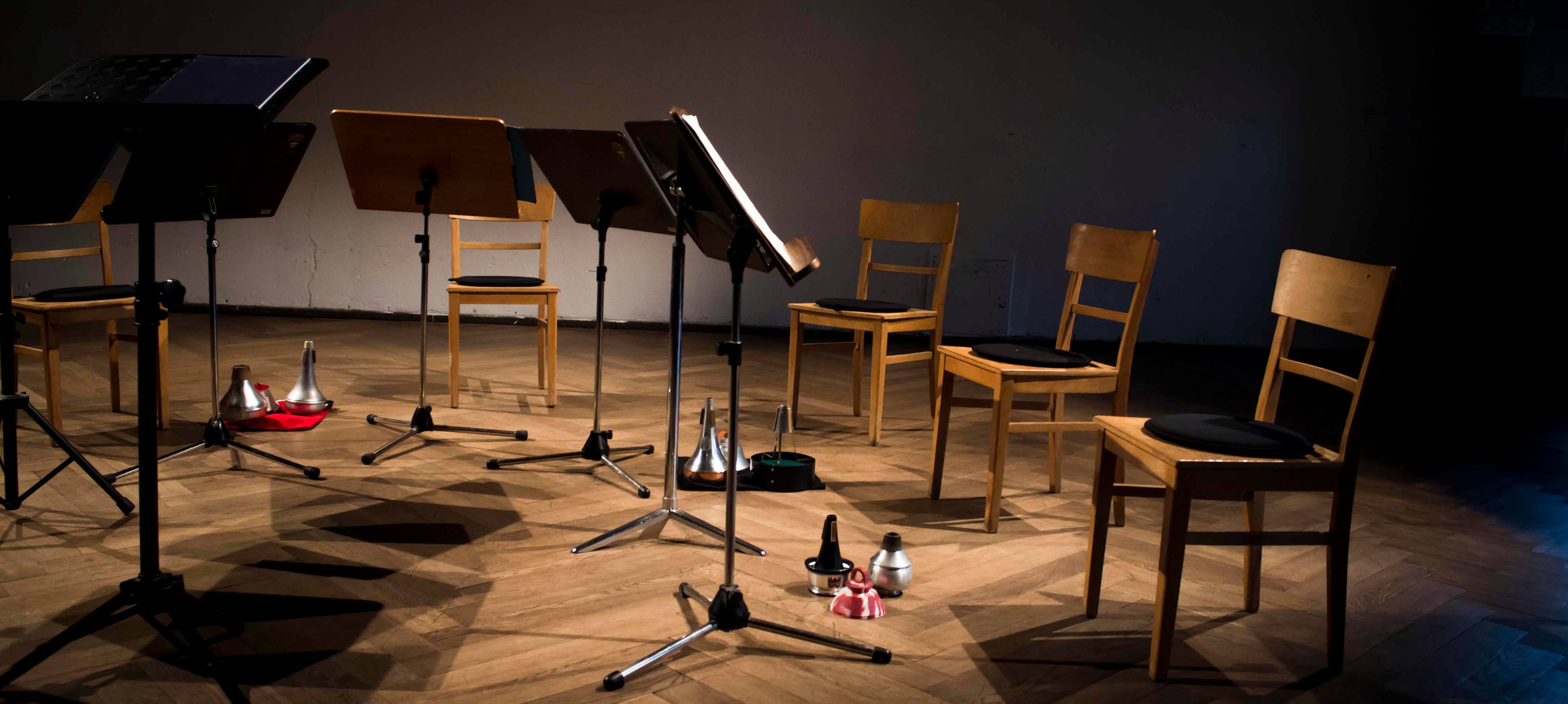
Ensemble Apparat (Mathilde Conley and Rike Huy (trumpets), Samuel Stoll, Morris Kliphuis and Elena Kakaliagou (horns), Weston Olencki and Wojciech Jeliński (trombones), Eliot Duschmann (tuba)] / Max Murray

Radialsystem V, Berlin
Sunday 21 January 2024

by Richard Whitehouse

Heading into its second quarter-century, Berlin’s annual Ultraschall festival put together some typically wide-ranging programmes – not least this Sunday afternoon concert, which featured Ensemble Apparat in a sequence of diverse pieces for various ensembles of brass instruments.

Among the leading German composers of his generation, Enno Poppe (1969-) has now built a sizable catalogue – from which Zug, whether it refers primarily to a train or a procession (or the capital of a Swiss canton), continually diverts and intrigues with its interplay for brass septet. Unfolding as three intensifying waves of activity, the music elides between sometimes playful and at other times ominous moods. While the expressive outcome is left in the balance, there can be no doubting the formal cohesion of a work whose technical dexterity never draws undue attention to itself.

Its comparable number of players aside, there could scarcely have been greater contrast than with Night Scenes by Joanna Bailey (1973-). Much of her recent output features audio-visual or installation elements, the present diptych setting its instrumental component in the context of a soundtrack whose incrementally changing ambience likely reflects those places specified. Hence the luminous if distanced activity of Geneva and atmospheric if never claustrophobic confines of Schwarzwald, with these two complementing each other in an evocative totality.

From here to installation pure if not so simple. Visual artist Ragnhild May (1988-) has made a feature of human and mechanical amalgams, with Multiplayer Instrument her most ambitious such project yet by fusing the ensemble into a ‘meta-brass instrument’ whose sonic and even constructional qualities are in a constant state of change. While its overall impact inevitably depends on being seen as well as heard (see the photographs on the Ultraschall website), the stark and even hieratic nature of this undertaking is undeniable even to those ‘just’ listening.

The combining of sound-sources was heard at its most graphic in the Brass Quintet by Jorge E. López (1955-). Here the instrumental music is interpolated with concrète episodes such as evoke respectively the sonic overlap between an alpine crevice and industrial powerplant, the tortuous process of mountain rescue down a vertical cliff-face, then its effortful continuation over a field of scree. In each case, the contextual emergence and resolution of these episodes has been provided by the music for brass out of which they come then into which they return.

That brass writing has all the visceral immediacy associated with this composer, not least in its emphasis on those lower sonorities of Wagner tuba and contrabass tuba. The preludial first section vividly contrasts its contrasting musical-types, while the second is an incisive toccata and the third a plangent threnody, then the fourth section resembles an introduction and fugue in which a lively jig earlier insinuated by trumpet rapidly comes to the fore – dominating the closing stages as it draws all five instruments into a recessional of jocular yet wanton inanity.

Such was the impression made by this performance, superbly rendered by the musicians of Ensemble Apparat under the astute direction of Max Murray. It set the seal on a programme of engrossing music and music-making – these being characteristic of Ultraschall at its best.

You can watch this concert via the Ultraschall website Click on the names to read more about Ensemble Apparat and Max Murray – and for the composers Enno Poppe, Joanna Bailie, Ragnhild May and Jorge E López, whose 65th birthday tribute can be read on Arcana

Online concert / Switched On – Jorge E. López: Im Innersten: János Bolyai stirbt

lopez

López Im Innersten: János Bolyai stirbt, Op. 30

5.1 Radiophonic Composition

Broadcast via station ORF1 on Sunday 8th May 2022 [11.00pm]

by Richard Whitehouse

Radiophonic compositions are less often encountered nowadays than their heyday during the third quarter from last century, but the impact of a piece such as Xenakis’s La Légende d”Eer (which is being revived as part of Birmingham Contemporary Music Group’s programme to mark this composer’s centenary on May 29th) remains comparable to that achieved with any medium, and Austrian Radio’s recent broadcast of Im Innersten: János Bolyai stirbt by Jorge E. López confirms a necessary addition to this select though distinctive and influential genre.

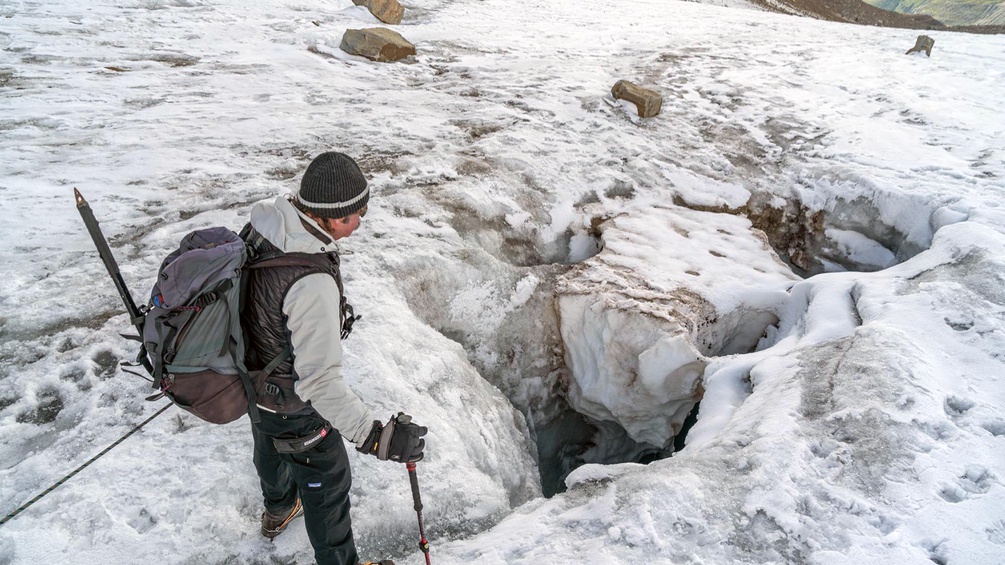
Although he has utilized electronics in previous works, this work is López’s first specifically for the radiophonic medium. The source material stems largely from field recordings, made inside ice caves and glaciers of the Grosser Burgstall in Austria’s region of Carinthia during August 2021.  López draws attention to the ‘‘decay and disintegration’’ that has affected this area; what was once pristine now abounds in the blackness of cliff-faces, earth and stones as testament to the effect of climate change. Not a little of this is conveyed by his composition.

With its duration of just under 17 minutes, the work unfolds a polyphonic and multi-layered trajectory in which these environs are firstly evoked before being explored and opened-out   in increasingly graphic terms. Beginning with a gently percolating sound of water, the sonic outlook diversifies before intensifying considerably; notably around the seven-minute mark, when the hitherto accumulated textures assume an ominous and even threatening aura that doubtless reflects those physical conditions from which the initial recordings had emerged.

Near the 12-minute mark a likely climax, even catharsis, is reached with the declamation by male then female voices of words whose translation might be ‘‘Just one short line at the end, (there being) nothing else to say: Mr Captain is no more’’ and then ‘‘As I wrote this letter, he died, and therefore there is nothing more to say than: the Captain has left’’. After which, the composer can be heard reciting the closing paragraph from Zsolt Láng’s novel Bolyai before the music gradually retreats – as might the figure having apprehended this disturbing vision.

The broadcast was (to use the currently much abused term) an ‘immersive’ one, such as even those without access to 5.1 encoding could perceive with decent headphones. Absorbing on its own terms, this ‘‘symphonic etude’ should be no less so as the final interlude of the opera Bolyai – that recounts the last hours of the Hungarian mathematician and geometrist – López is currently planning. Note too that the composer has reached an agreement with the publisher Doblinger to disseminate his recent works, details of which will be announced in due course.

For further information on this performance, you can head to the ORF player here. Meanwhile Richard’s 65th birthday tribute to Jorge E. López can be found here on the Arcana website

Jorge E. López (XXX-XI-MCMLV) – A 65th Birthday Tribute

by Richard Whitehouse

Early in 2002, anyone who acquired Hänssler Classic’s collection marking the 75th birthday of Michael Gielen (now mostly incorporated into SWR Music’s multi-volume archival series) might have been surprised to read about this conductor’s ‘‘view of the works of music history from Johann Sebastian Bach to George Lopez’’. Could this statement merely be identifying a convenient endpoint, at the turn of the new millennium, from which retrospectively to survey the 250-year heyday of Western musical culture, or is it something more closely akin to fact?

Jorge E. López (he now prefers the original Spanish version of his name), whose 65th birthday falls this Monday, can look back over four decades of creativity which has resulted in a select catalogue of mainly large-scale works which has provoked and intrigued listeners throughout Western Europe. A composer, then, who has taken the path less trod to recognition, yet whose music has few equals among that of his contemporaries in the scope of its ambition and range of expression. Not that López was an early starter. Born in Havana, he emigrated to the United States in 1960, growing up in New York and Chicago prior to studying at California Institute for the Arts. Of greatest benefit here was his exploration of the Second Viennese School with Leonard Stein, while the distinctive surrealist aesthetic of the Australian artist and film-maker Don Levy was to have decisive consequences. López sketched without completing any major works when living at Portland and Seattle in the later 1970s, while his frequent and extensive excursions into the nearby mountain ranges were in themselves a potent source of inspiration.

It was one of those pieces López went on to write that established him as a composer. In the autumn of 1981, he sent several pages from the still-unfinished Landscape with Martyrdom to Michael Gielen, then principal conductor of the Cincinnati Symphony Orchestra – whose positive response encouraged him to proceed with its realization. Having taken on the SWR Symphony Orchestra in Baden, Gielen oversaw its premiere in Donaueschingen in October 1987: a performance that, commercially issued five years later, gained widespread attention.

For composers nearing thirty can have produced an Opus 1 as represents a creative blueprint for all that followed, but Landscape is one such piece. Its title taken from a canvas by Pieter Breughel, these 35 minutes unfold a narrative engendered by, in López’s words, ‘‘the stream of sound which is in a state of incessant transformation’’. That such an eventful and intricate process is realized at what might be termed an ‘aural remove’ is just the most striking aspect of music whose emotional intensity operates as if in inverse proportion to its dynamic impact. Close listening, however, confirms an evolution at least methodical and at most symphonic in its highly personal mode of developing variation; one which subsumes what López terms the ‘‘three poles … of inanimate nature, of the individual and of the individual in violent conflict with society’’. Multiple parallels could be drawn across various art-forms – though, at least in musical terms, a synthesis drawn from the idioms of Ives, Varèse and Schoenberg is brought to a fruition that others in the later twentieth century had often attempted but seldom attained.

The outcome of this premiere was twofold: López remained in Europe (first in Germany and, since 1992, in Austria) where subsequent performances have almost all taken place; while the association with Gielen was continued with first hearings for the large-scale orchestral works Breath-Hammer-Lightening in its revised version, and Dome Peak in its original and revised versions. These both build on the potential of ‘Landscape’, albeit with a more visceral impact and, in the latter piece, a spatial element built into the discourse as was to take on increasing significance over the next decade. There were also intricately wrought ensemble pieces such as Blue Cliffs and Das Auge des Schweigens (its title taken from Max Ernst, whose art-work has been a recurring point of reference), and Tagebucheintragungen 1975-79 – whose rather matter-of-fact title, while accurate in indicating the use of material from that time, belies the intense power and pathos as well as sheer sense of emotional space in what ranks among the most poetic and also affecting orchestral statements from the final quarter of the last century.

The remainder of the 1990s saw several works as confront the conventions and artificialities of concert presentation head-on. Chief among these are Schatten vergessener Ahnen, with a scenic element of primal oppression and its apparent overcoming, or Strada degli Eroi where conductor and organist are locked in a remorseless conflict for supremacy over the orchestra. That neither piece risks indulgence or hubris says much about López’s control of long-term formal and expressive tension; with a serious point made as to listeners’ essentially passive expectations. Nor is this seriousness at the expense of a certain sardonic humour – hence the earthy onomatopoeia of the William Burroughs-inspired Gonzales the Earth Eater with its distinctive use of Wagner Tuba, increasingly a key component of López’s musical armoury.

The culmination of this phase is Gebirgskriegsprojekt, where the natural environment of the Austrian Alps finds contrast with activities of the Italian army on the Alpine front. Archival footage, the filming of which during the First World War itself constituted an act of heroism, is duly integrated with a pre-recorded ensemble such that sound and visuals are brought into inextricable accord; natural and human phenomena imbued with an awe both inspiring and alarming. Comparable interplay of opposing sources is evident in the earlier ensemble work Kampfhandlungen/Traumhandlungen, which yet adopts a more systematic trajectory akin to Xenakis’s arborescence processes, while also anticipating the personal accommodation with symphonic thinking which has become predominant in López’s output over the past 15 years.
Following the orchestral Disparates, with its evocation of Goya’s ‘black’ canvasses as well as allusions to Beethoven’s contemporaneous Op. 126 Bagatelles for a sequence that exudes unnervingly ominous humour, came Symphonie Fleuve whose two movements constitute a horn concerto like no other. Here, soloist and orchestra are drawn into a musical flow where confrontational and dreamlike aspects undergo evolution itself rationalized by development and reprise, albeit with no sense of a coming together in those darkly annihilistic final stages.

That López was directed thus comes as no surprise for one who, from his earliest years, was drawn to the radical avant-garde but also the alternative symphonism exemplified by such as Havergal Brian and Allan Pettersson. As he himself hears it, ‘‘symphonic composition is for me honesty and self-realization’’, and there could have been no more explicit demonstration of this than in the four so-designated works which followed. That the initial two of these are scored for relatively modest ensembles does not detract in any sense from their overall scope.

In four continuous movements, the First (Chamber) Symphony finds its motivic components in a continual state of flux – an underlying momentum emerging in spite (or maybe because) of those sharply defined ideas whose mutability overrides sectional divisions before reaching fulfilment, albeit oblique, in the final movement (which the composer has since extended, this yet un-heard definitive version likely proving more conclusive). Its subtitle ‘The Last Spring’ derived from Hungarian poet Endre Ady, the Second (Chamber) Symphony unfolds over five movements that might suggest a Mahlerian trajectory – though, once again, it is the long-term potential of seemingly casual motifs which afford continuity and cohesion in the face of more disjunct gestures; with a conclusion the more inevitable for seeming to emerge out of nothing.

López’s subsequent symphonies both project their formal and expressive concerns onto larger orchestral canvases. Beethoven’s final piano sonata has been cited as precedent, to which the Third Symphony’s trajectory is not beholden in any overt sense; rather – several other pieces resonate to a greater or lesser degree for what becomes a process of transformation from one movement to the other, so that the persistence of memory plays a more than usually decisive role in determining the ultimate outcome. Such is also true of the Fourth Symphony, but here the three movements proceed as a 45-minute continuity which has been likened to ‘morphed Bruckner’ in its overall scale and grandeur. If this also suggests a reaching across musical or cultural epochs, any such desire towards integration hardly equates with that ‘going back’ in much recent symphonic writing. It is still tempting to recall Elliott Carter as saying the most provocative act a living composer could make would be to write a Brahms Fourth Symphony for the present. Whether or not this were López’s intention, it might just be his achievement.

Since the premiere of that latter work, López has composed a Concerto for Bass Trumpet and written most of a First Orchestral Set which will incorporate orchestrations of Alkan and Ives along with original material. He is currently finishing a Fifth Symphony, the second of its two movements featuring extracts from the novel Juliette by Marquis de Sade, as well as planning a stage-work on the last evening in the life of the Transylvanian mathematician János Bolyai – a visionary whose musical successors have had a major role in determining López’s outlook.

Meanwhile, López’s works continue to be championed by such conductors as Peter Eötvös, Ilan Volkov or Marin Alsop; and by organizations as the Vienna Radio Symphony Orchestra or Klangforum Wien. The presentation of his works in the UK, however, remains an ongoing concern: music of this overarching ambition and unequivocal impact might seem logistically problematic and, more to the point, aesthetically unfashionable, though this does not lessen the need for first-hand and authoritative appraisal such as only live performance can provide.

Select Discography

Landscape with Martyrdom – Intercord INT860.918

Gebirgskriegsprojekt – Wergo DVD WER2061-5

Symphonie Fleuve / Symphony No. 3 – NEOS 11425

Gonzales the Earth Eater – Wergo WER6864-2

Kampfhandlungen/Traumhandlungen / (Chamber) Symphony No. 2 – NEOS 11912

Numerous other compositions can be heard online:

https://www.youtube.com/playlist?list=PLAQZOrY73zxWSsgtMBsjBQkKBbnBZZF-v

Further information about Jorge E. López can be found at the following websites:

https://db.musicaustria.at/en/node/59294

https://www.ricordi.com/en-US/Composers/L/Lopez-Jorge-E.aspx

https://www.baerenreiter.com/en/catalogue/20th21st-century-music/jorge-e-lopez/biography/

https://en.schott-music.com/shop/autoren/jorge-e-lopez

https://neos-music.com/?language=english&page=output.php%3Fcontent%3DKuenstler/ Lopez_Jorge_E.php