

Prom 47 – Sheléa (vocals), Vula’s Chorale, Jules Buckley Orchestra / Jules Buckley
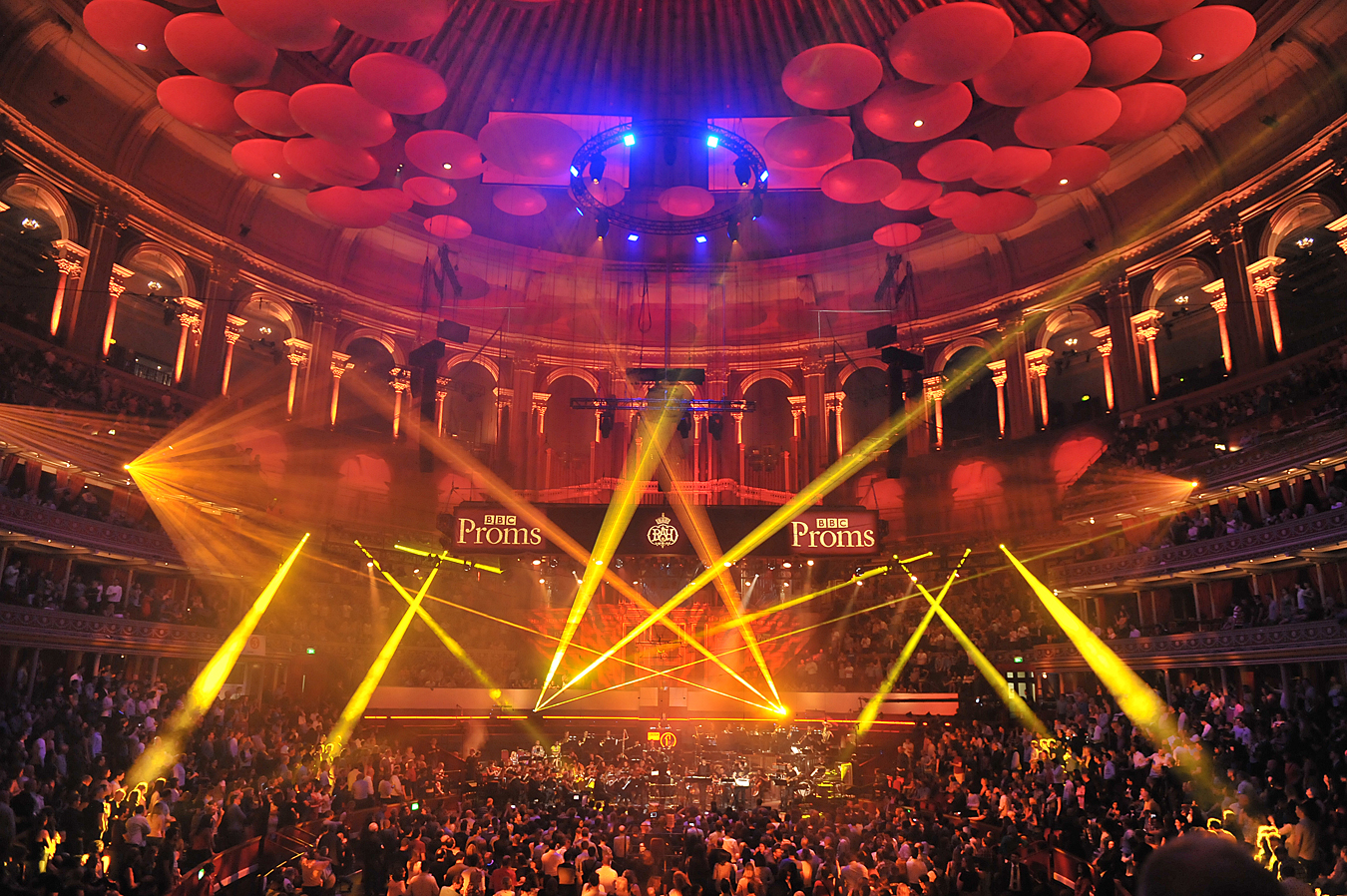
Royal Albert Hall, London
Monday 22 August 2022
Reviewed by Richard Whitehouse Photos (c) Mark Allan
The year during which she would have celebrated her 80th birthday made this celebration of Aretha Franklin a shoo-in for the Proms. Jules Buckley was on hand with his newly formed eponymous orchestra for an evening that surveyed the Queen of Soul’s considerable stylistic range, as surely as it introduced a much-heralded American singer, songwriter, and pianist to the wider UK public. After her performance tonight, indeed, it would be more then surprising were Sheléa (Frazier) not to have found an appreciably higher profile this side of the Atlantic.
If not strictly chronological, the programme began with an obvious homage to Aretha’s roots in John Wright’s Precious Memories and gospel as its most soulful – astutely balanced by the Broadnax/Paul/Wonder Until You Come Back to Me (That’s What I’m Gonna Do) and soul at its most pop. The pathos of Hoagy Carmichael’s Skylark was enhanced with a flute-drenched arrangement, then Sheléa took to the piano for the emotional build-up of the Nelson/Ertegun Don’t Play That Song (You Lied) with the sax section bracingly to the fore. Next came two co-writes from Franklin and her one-time husband Ted White – the smouldering blues of Dr Feelgood (no pub-rock connotations here) followed by the up-tempo Think with its rousing call-and-response between Sheléa and Vula Malinga’s gospel choir. Expressively mannered though her take on Leonard Bernstein’s Somewhere might have been, the evocative quality of the arrangement by Quincy Jones could hardly be doubted. The raunchy r&b of Dan Covay’s Chain of Fools, keyboards much in evidence, saw this first half through to its full-on close.

An interval costume-change and Sheléa got the insouciance of Burt Bacharach’s I Say a Little Prayer down to a tee, thanks in part to an atmospheric orchestral introduction, as she did the plaintive soul-pop of Curtis Mayfield’s Sparkle. A member of the choir audibly enjoyed his ‘George Michael’ cameo with the Climie/Morgan duet I Knew You Were Waiting (for Me), complemented by the punchy afro-beat of Franklin’s own Rock Steady. The choir came into its own first via the Leiber/Spector Spanish Harlem with its effective interplay of solos and ensemble, followed by Franklin’s Day Dreaming with its sensuous contribution from flutes and vibes. A second costume-change – and Sheléa returned for a suitably though sincerely histrionic rendition of John Newton’s Amazing Grace, before launching into a take on the Goffin/King (You Make Me Feel Like) A Natural Woman that oozed pulsating energy. This, in turn, segued into the inevitable closing number – Otis Redding’s Respect, its incitement to the attaining then maintaining of freedom surely as relevant today as it was 57 years ago.
Throughout this programme, Sheléa’s commitment to the Aretha cause was underpinned in no uncertain terms by Buckley, who rightly took a moment to pay tribute to those arrangers – two of whom, tenor saxophonist Tom Richards and the trumpeter Tom Walsh, were active members of his orchestra – whose input had made this evening the success it proved to be. Singer and conductor met the applause from a capacity Albert Hall with a version of Paul Simon’s Bridge over Troubled Water finding Sheléa and her piano in intimate communion.
Click on the artist names for more information on Sheléa, Vula Malinga and Jules Buckley – and for a site dedicated to Aretha Franklin, click here

 As also would be one from Icelandic singer Susanne Sundfør (above), whose often brittle yet always focussed delivery teased out the deadpan humour from On Your Own Again then stripped Angels of Ashes of undue preciousness. Best of all was the edgy irony she brought to The Amorous Humphrey Plugg, another highpoint of Walker’s song-writing, while Hero of the War aligned anger and compassion to a telling degree. A slight pity that Long About Now, Walker’s one number intended for a female vocalist, was not featured. Maybe another time?
 A fine guitarist and distinctive crooner, Richard Hawley proved as attentive to the tangible atmospherics of It’s Raining Today as to the warm evocation (so easy to sentimentalize) of Two Ragged Soldiers. Neither was there any dilution of that yearning for domestic bliss in Montague Terrace (in Blue) or sardonic humour in The Old Man’s Back Again (Dedicated to the Neo-Stalinist Regime) – a song which underlines Walker’s awareness of the political realities during this period, as has surfaced more obliquely in much of his more recent music.


 Arcana.fm