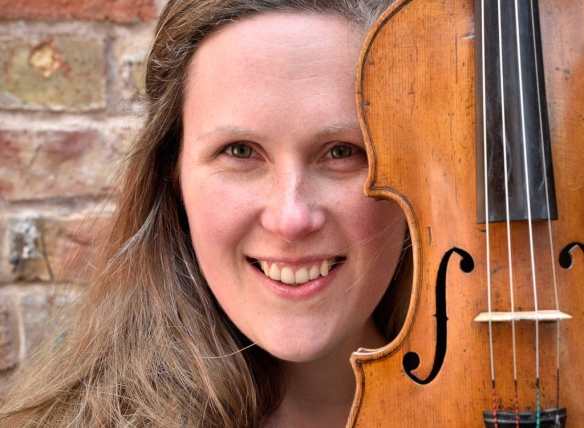
Raphael Wallfisch (cello), English Symphony Orchestra / Kenneth Woods
Elgar, arr. Fraser Miniatures for cello and strings
Chanson de Matin, Op.15 No.2 (1899)
Chanson de Nuit, Op.15 No.1 (1899)
The Wild Bears, Op, 1b No. 6 (1908)
Nimrod, Op.36 No. 9 (1899)
Romance in D minor, Op.62 (1910)
Sospiri, Op.70 (1914)
Mazurka, Op.10 No.1 (1899)
Pleading, Op.48 (1908)
In Moonlight (1904)
Salut d’Amour, Op.12 (1888)
Adieu (1933)
Wyastone Concert Hall, Monmouth
Recorded October 9 2020 for online broadcast from Wednesday 19 March 2021
Written by Richard Whitehouse
This latest in the English Symphony Orchestra’s online concerts focussed on Elgar – namely a series of miniatures for cello and strings arranged by Donald Fraser and played by Raphael Wallfisch, whose commitment to and conviction in this music hardly needs reiterating here.
Chanson de Matin launched proceedings in mellifluous fashion, and if the cello’s assuming of the melodic line was slightly to the detriment of the original scoring, that could hardly be said of Chanson de Nuit whose more sombre contours and ruminative character were ideally realized. Nor did The Wild Bears lose out on vivacity, and if this arrangement brought it into the orbit of Saint-Saëns, that served to underline the significance of ‘Second Empire’ French music on Elgar’s own thinking. In Nimrod, the cello’s dominance rather detracted from the subtlety of the original instrumentation; conversely, Fraser’s take on the Romance brought soloist and strings into even closer accord than the composer’s own version with orchestra.
Nevertheless, the undoubted highlight here was Sospiri – the cello’s subsuming of the harp’s crucial contribution just one aspect of an arrangement which presented one of Elgar’s finest inspirations (miniature or otherwise) in a striking new light. Lighter fare next with the robust tread of the Mazurka, proceeded by a rendering of the song Pleading of unforced eloquence. The evergreen In Moonlight (adapted from the overture In the South) responded well to this suitably limpid treatment, as did Salut d’Amour to one that underlined its wholly un-cloying essence. A wistful take on the piano piece Adieu saw this programme to an affecting close.
Throughout, the idiomatic feel of Wallfisch’s playing was complemented by that of the ESO under Kenneth Woods, as discreet or understated as the music requited. Forty minutes came and went effortlessly – the ‘Part 1’ designation happily meaning there will be more to come.
You can watch the concert on the English Symphony Orchestra website here
For more information on the English Symphony Orchestra you can visit their website here
Wyastone Concert Hall, Monmouth
Recorded in 2020 for online broadcast, Wednesday 26 February 2021
Written by Richard Whitehouse
The English Symphony Orchestra’s online (hopefully not too much longer!) season continued tonight with this portrait of American composer Steven R. Gerber (1948-2015). Little heard in the UK (but extensively in Russia during the immediate post-Soviet era), his output follows a not unusual trajectory for someone of his generation – that from serialism to a rapprochement with tonality, though his evident success over these nominally opposing aesthetics is far rarer and confirms a creative zeal as was underlined by the works featured in this ESO programme.
Although he essayed a sizable number of orchestral works (including two symphonies), those pieces heard here were arrangements of chamber pieces. Not that they were at all unidiomatic or lacking impact – witness that of his Piano Quintet by Daron Hagen as the First Sinfonietta, whose five movements evolve in opposition between a pungent incisiveness and an emotional plangency which finds its culmination in the powerfully sustained fourth movement. Kenneth Woods secured a trenchant response from an ESO likely at or near its socially distanced limit.
The other arrangements were all undertaken by Adrian Williams, himself a notable composer of whom the ESO will be playing more in due course. Derived from Gerber’s Fourth Quartet, the First String Sinfonietta is notable for the comparable intensity of its central movements – a Lento then a Maestoso which might have functioned as a finale had not the composer opted, effectively as it turned out, to let such emotions subside over the curse of a brief yet affecting Postlude. It was astute programming to follow this with the Two Lyric Pieces for violin and strings, the only item played in its original guise and one whose mingling of wistfulness and eloquence finds the composer at his most approachable; not least when Emily Davis rendered the solo part with such fluency and poise. These pieces could yet enjoy a widespread success.
As derived from Gerber’s Sixth Quartet, the Second String Sinfonia appears to be among his more quizzical works – the angular while not a little ambivalent opening movement making way for a quizzical Intermezzo, then a closing set of variations that does not so much reach a climax as wind down into an uncertain repose. A more elaborate and methodical take on the Variations template is pursued by the second and final movement of Gerber’s Fifth Quartet, here arranged as the Second Sinfonietta which again has recourse to a fuller instrumentation and more charged expression. Notably the opening Fantasy, whose stark contrasts of mood make for a disjunctive overall trajectory as is subsequently countered, if not wholly resolved, through a steady and always inevitable build-up of the finale towards its forceful apotheosis.
Intriguing and engaging music which, if tending to an unrelieved earnestness, could hardly be faulted for emotional immediacy. It certainly found worthy exponents in the musicians of the ESO, directed by Woods with his customary conviction, while hopefully the tendency of the sound to distort in louder or more fully scored passages – what used to be termed ‘flutter’ in recorded parlance – was a factor of the online broadcast and not of the actual session. Those coming anew to Steven R. Gerber will doubtless have responded to his unwavering sincerity.
You can watch the concert on the English Symphony Orchestra website here
For more information on the English Symphony Orchestra you can visit their website here For more on Steven R. Gerber, visit his website
April Fredrick (soprano, above), Zoë Beyers (violin), English Symphony Orchestra / Kenneth Woods
Mahler (arr. Stein) Das irdische Leben (1892/1900) Weinberg Concertino for Violin and Strings, Op. 42 (1948) Schulhoff Suite for Chamber Orchestra, Op. 37 (1921) Ullmann (arr. Woods) Chamber Symphony op 46a (1943/1999)
Wyastone Concert Hall, Monmouth
Recorded in 2020 for online broadcast, Wednesday 27 January 2021
Written by Richard Whitehouse
The Holocaust Memorial Day is a timely opportunity to hear music anticipatory of, inspired by or stemming from events that have defaced human history on all too many occasions, and which provided the basis for this latest online concert from the English Symphony Orchestra.
The underlying tone for this programme was set by Mahler, with one of his settings of texts from the folk collection Des knaben Wunderhorn. In pivoting between the child’s supplication and his mother’s entreaties, over the fateful strains of a ceaseless ‘treadmill’ accompaniment, The Earthly Life is one of the composer’s most evocative songs – not least its portrayal of the child’s existence running out as though this were grains of sand. April Fredrick accordingly invested the vocal part with just the right combination of ominous dread and lingering pathos.
ESO leader Zoë Beyers then took centre-stage for Weinberg‘s Violin Concertino, the product of late-1940s Soviet culture when accessibility was not just desired but prescribed. Modest in expressive scope next to those chamber works that preceded it, this work is highly appealing – not least in the deftness and subtlety with which the composer unfolds his ideas across an ingratiating Allegretto, ruminative Adagio (whose cadenza-like introduction brings the most arresting music in the whole work), then a final Allegro whose thematic interplay is nothing if not resourceful. Beyers rendered it with unfailing eloquence, making it clear just why this attractive piece – which had to wait almost half a century for a first public hearing – should now have established itself among the most often performed of Weinberg’s orchestral works.
In telling contrast, Erwin Schulhoff’s Suite for Chamber Orchestra was a pert reminder of the composer’s usage of jazz as part of a lifelong and tragically curtailed stylistic odyssey. While the faster numbers recall the wit of Poulenc’s earlier chamber music and irony of Stravinsky’s suites for theatre orchestra, the Valse Boston (its soulful violin solos hauntingly rendered by David Juritz) and Tango admit of a searching introspection to the fore in those works from Schulhoff’s last years. Qualities which are pointedly side-lined by the uproarious final Jazz.
The final work provided the culmination in every respect. Written during internment at the transit camp of Terezin (aka Theresienstadt), the Third String Quartet is Viktor Ullmann’s likely instrumental masterpiece – in terms both of its formal unity and expressive diversity – and whose transcription onto the larger canvas has been persuasively achieved by Kenneth Woods. Chamber Symphony makes a not inappropriate title, this single span drawing the contrasted movements into a seamless and finely-balanced whole – the initial theme acting as a soulful refrain between the angular scherzo with its waltz-like undertow then, after the terse development, a fugal Largo whose accrued intensity carries over into the final Rondo with its striving towards a fervent restatement of the ultimately transfigured ‘motto’ theme’.
An imposing work, given a committed reading by this orchestra under its arranger in what was an appropriate tribute for the day. The ESO’s online series is scheduled to continue on the 26th of February, with a portrait concert of the American composer Steven R. Gerber.
You can watch the concert on the English Symphony Orchestra website from 7.30pm on Wednesday 27 January 2021here
For more information on the English Symphony Orchestra you can visit their website here
Zoë Beyers (violin), English Symphony Orchestra / Kenneth Woods
Blake (arr. Schuller) Charleston Rag (1915) Schulhoff Suite for Chamber Orchestra, Op. 37 (1921) Morton (arr. Schuller) Black Bottom Stomp (1926) Krenek (arr. Bauer) Fantasie on ‘Jonny spielt auf’ (1927/8) Milhaud Le boeuf sur le toit, Op. 58b (1920/1)
Wyastone Concert Hall, Monmouth
Recorded 9-10 November, broadcast Thursday 31 December 2020 (online)
Written by Richard Whitehouse
The English Symphony Orchestra certainly saw in the New Year with style in this attractive and enterprising programme centred on the prevalence but also the range of jazz idioms either side of the Atlantic throughout the 1920s. Its stylistic roots were acknowledged in the panache of Charleston Rag by the long-lived Eubie Blake, then the irresistible verve of Black Bottom Stomp by the lived-dangerously Jelly Roll Morton – both heard in distinctive arrangements by Gunther Schuller, whose own jazz innovations warrant revival as his centenary approaches.
Between these pieces, Erwin Schulhoff’s Suite for Chamber Orchestra was a reminder of this composer’s usage of jazz as part of a lifelong and tragically curtailed stylistic odyssey. While the faster numbers recall the wit of Poulenc’s early chamber music and irony of Stravinsky’s suites for theatre orchestra, the Valse Boston – its moody violin solos hauntingly rendered by David Juritz – and Tango admit of an introspection and pathos to the fore in those works from Schulhoff’s last years. Qualities which are here side-lined by the uproarious final Jazz.
It is almost 94 years since Ernst Krenek’s Jonny spielt auf took the German-speaking world by storm, and though its highly Viennese take on jazz lacks the satirical edge as achieved by Weill, the present Fantasie devised by Emil Bauer gives a fine overview of this opera in all its attendant strengths and weaknesses. Abetted by diaphanous orchestration (with its oddly hymnic role for harmonium), the slower sections conjure no mean expressive fervour, while the closing pages exude an affirmation which never feels brittle or forced in its demeanour.
Darius Milhaud had also fastened on to the exuberance of jazz, here with Brazilian overtones, in his ballet Le boeuf sur le toit – as heard in the rarely revived ‘cinéma-fantaisie’ version for violin and orchestra. Perhaps the often equivocal nature of the solo part has mitigated against wider acceptance, but Zoë Beyers took its technical demands confidently in her stride while remaining aware of its ‘first among equals’ status – notwithstanding the strategically placed cadenza (by no less than Arthur Honegger) that brings the soloist unashamedly centre-stage. Credit, too, to the members of the ESO (suitably attired throughout) for having rendered this music’s teasing rhythmic inflections with unfailing poise, and to Kenneth Woods for teasing the maximum finesse from out of Milhaud’s entertaining while not a little provocative score.
It was, indeed, a fine showing all round and would have been ideal before that ‘end of year’ party which circumstances have regrettably made impossible. This event was still a highly positive means of seeing out the old year and welcoming in a much to be anticipated 2021.
You can watch the concert on the English Symphony Orchestra website from 7.30pm on Thursday 31 December 2020here
For more information on the English Symphony Orchestra you can visit their website here
Before finishing for Christmas and New Year celebrations, I wanted to offer some thoughts on the musical year that has been 2020. And what a year. I doubt we will experience its like again, that’s for sure – and those of you reading this will no doubt have had some incredible challenges to overcome, or have been instrumental in helping other with their challenges. Everything is firmly in perspective, that is for sure.
In the year of a global pandemic, as in all times of strife, music has been there offering a consoling shoulder to lean on. Much of my listening this year has been of the ambient kind, a place of retreat when all has been too frenetic / inhuman / scary. Music has really shown us its true colours again this year, offering the required escape route along with some real inspiration.
Live music, of course, has suffered greatly, and my thoughts are with all those musicians and people working behind the scenes in the arts, their lives irrevocably affected by COVID. As listeners we thank them for their remarkable resilience and inventiveness, bringing live-streamed concerts of such quality they have been the best possible substitute for the real thing. Wigmore Hall set the scene in June, and many others have followed. The orchestras and choirs should be held in the highest regard for their efforts.
Needless to say I did not attend many concerts in 2020, but two of great note were from soprano Louise Alder (above) and pianist Joseph Middleton, showcasing their exceptional album Lines written during a sleepless night at Wigmore Hall in January, and the Orchestra of the Age of Enlightenment under Iván Fischer performing the last three Mozart symphonies at the Royal Festival Hallin February.
I wanted to share with you my favourite music on record this year. It was of course Beethoven 250, and my aim was to listen to the composer’s entire works. That aim continues, but the deadline has been extended massively! It is proving a thoroughly enjoyable experience but circumstances mean it has taken much longer than expected. To enjoy the listening project to its full potential, I look forward to reconvening with the first Sonatas for cello and piano in 2021, and taking it over the finishing line later in the year.
This year’s new releases have been extremely fine – and I have eight to share with you here, beginning with Steven Osborne’s remarkable disc of three Prokofiev piano sonatas on Hyperion. This appeared at the same time as the Coronavirus and felt like a direct response to it. Prokofiev was writing these works during the Second World War, in part a reaction to intense world and personal strife, and what a performance they get from the Hyperion pianist. You can read about them here
On the orchestral front, John Wilson and his Sinfonia of London came out with a simply outstanding program of French music. Escales did the wonderful job of blending seasoned favourites such as Chabrier’s España with gems that benefited from a dusting off – Duruflé’s Trois Danses and Ibert’s Escales among them. My thoughts on the disc are here
One of the most striking contemporary releases this year capped a fine showing from KennethWoods, both with the English Symphony Orchestra and–ashere–withthe BBCNationalOrchestraofWales. Philip Sawyers’Symphony no.4 and Hommage to Kandinsky are captured by Richard Whitehouse in this review of two exceptional pieces of new music, given great performances under conductor Kenneth Woods.
Of the electronica that I mentioned, there are some rather special examples. First among them is Kaitlyn Aurelia Smith’s The Mosaic Of Transformation, an enchanting journey of vividly coloured musical motifs. I attempted to describe them and their impact here
For something closer to home, Erland Cooper’s Hether Blether signed off his Orcadian trilogy with deeply emotive recollections and portraits of home. Complementing the previous instalments Solan Goose and Sule Skerry, it was a life affirming, communal piece of work uniting thoughts at just the right time. You can read Arcana’s interview with Erland here
Meanwhile Bruce Brubaker & Max Cooper took a minimalist composer as their inspiration for Glassforms, a set of electronic reworkings of the music of Philip Glass. Rather than simply dress up the originals, it is an imaginative and very well thought-out set of recastings, detailed here
Also taking inspiration from similarly minimal sources were New York’s Bing & Ruth, through the excellent Species long player. You can read about ithere – and the background to the album in an emotive interview with leader David Moorehere
On the other end of the scale sit Rick Wakeman and the English Rock Ensemble. After a series of stripped back piano albums this is Wakeman at his progressive best, in the company of some exceptional musicians, creating some dramatic and involving music. You can read Arcana’s review here – and an extensive interview with the keyboard wizard here
For music of great verve and positivity, drummer Tony Allen’s collaboration with trumpeter Hugh Masekela, posthumously published, took some beating. The recordings were made in 2010, but were unfinished at the time of Masekela’s death. The passing of Allen himself this year lent their completion extra poignancy. It was the closest I could find to pure musical joy in 2020, as documented here!
Meanwhile, returning after a long break was Charles Webster, making Decision Time – an album of very fine, futuristic soul and deep house. Much has changed since we last heard from Webster in this way, but his musical values remain the same, as reported here
It is not too much of a stylistic shift from Webster to Róisín Murphy, where we find my personal album of the year. Róisín Machine is a brilliant combination of Murphy’s effervescent, spiky personality and some really fine future disco, created with the help of Crooked Man (aka Richard Barratt). As noted here, it has the resilience and strength in the face of adversity we all needed in 2020, but crucially the sense of fun we will still need – and will surely get back – in 2021. Happy Christmas!