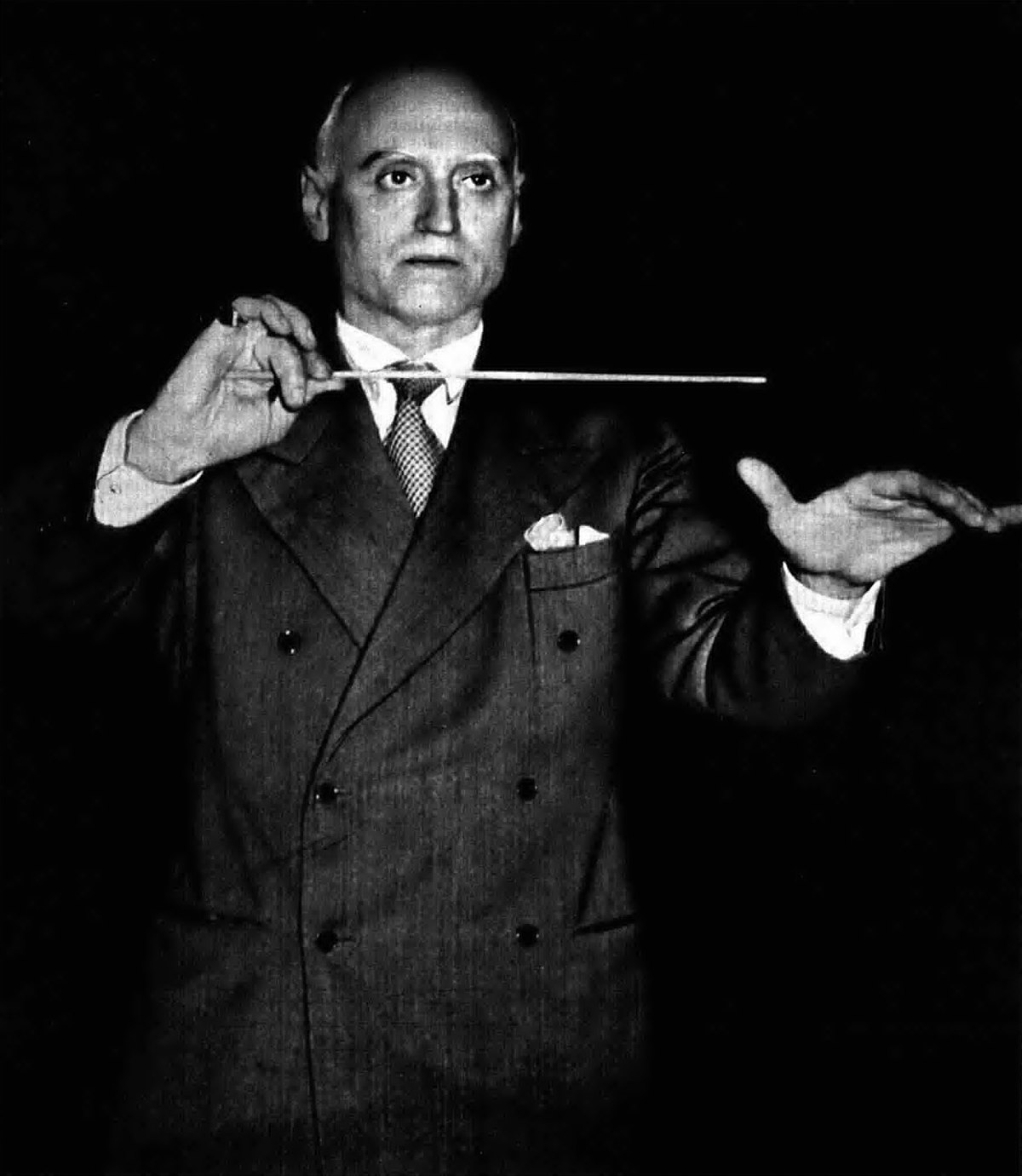
Yesterday was a particularly sad day in the world of classical music, and over the next few days Arcana will be paying tribute to three musical figures.
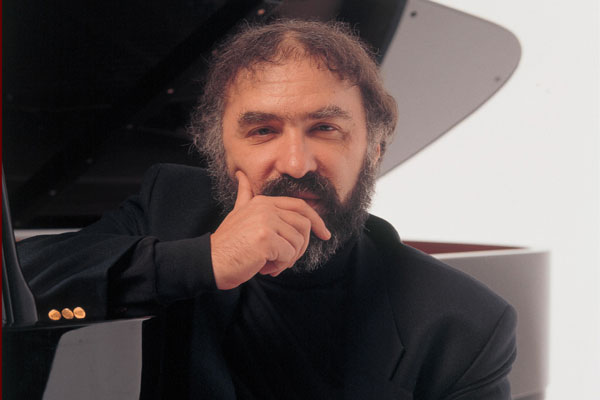
Sadly the death of Romanian pianist Radu Lupu (above) was announced, at the age of 76. A full tribute can be found on the Gramophone magazine website, where Lupu’s standing as an artist of great repute and dignity can be fully appreciated.
I did not see him perform live, sadly, but have looked back over Lupu’s relatively small and perfectly formed discography to choose a few personal favourites. I have chosen purely solo piano music, as this is where I have encountered his wonderful storytelling most often – and include music by Schubert, Schumann and Brahms. Here the extent of his storytelling ability can be witnessed – not to mention his instinctive musical phrasing.
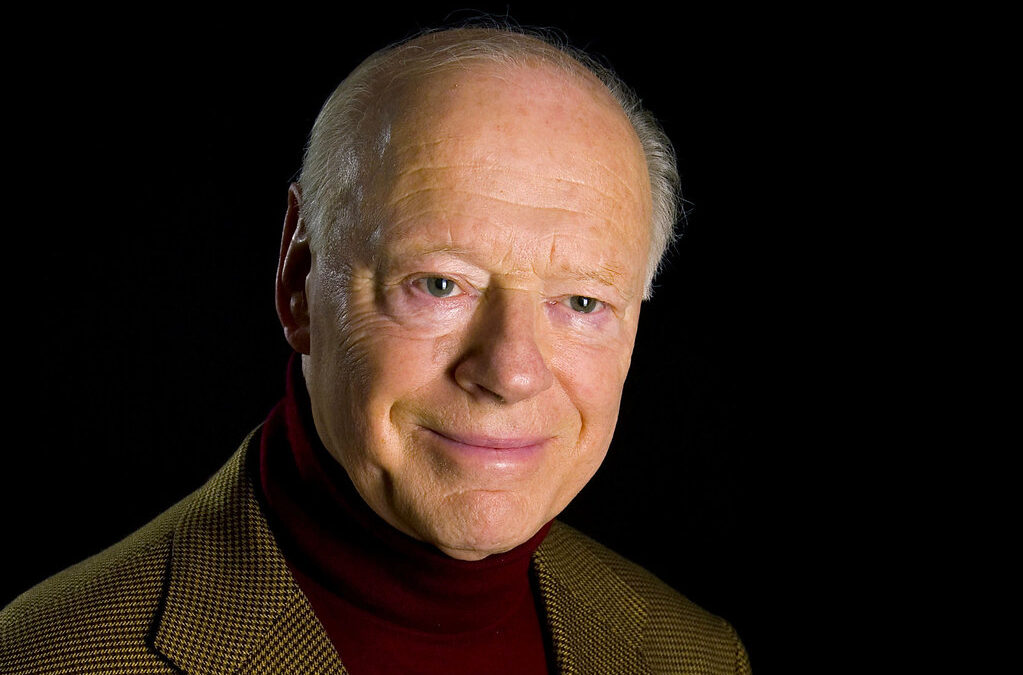
Last week we heard the sad news of the death of Dutch conductor Bernard Haitink at the ripe old age of 92.
Haitink was a special man indeed, seen by many as the last in a long line of ‘old school’ conductors. He was an artist of great craftsmanship and elegance, who earned the respect of his peers through an incredibly long career that only ended in 2019.
The tributes flooding in from ensembles the conductor worked with say everything about Haitink as a man. The Salzburg Festival declared, “The music world has lost one of its very greatest. His aim was never to triumph; probably that is why his interpretations became such triumphs.” The Berliner Philharmoniker praised how “He always impressed and inspired us with his qualities – his great craftsmanship, his perfect knowledge of the score, his warm, noble bearing.” From Sir Simon Rattle, an insight borne of personal experience: “He was one of the rare giants of our time, and even rarer and more precious, a giant full of humility. My dear Bernard, we keep you deep in our hearts.”
Like many people I have had the pleasure of listening to Haitink’s recordings for many years, but my first live memories go back to the first ever BBC Proms concert I attended in September 1997. There he conducted the European Union Youth Orchestra in Bruckner’s Symphony no.7, following a sensitive account of Beethoven’s Piano Concerto no.4 where the soloist was Emanuel Ax. By coincidence the same works and soloist featured at Haitink’s last Prom in 2019, this time with the Vienna Philharmonic.
I also saw Haitink at the Proms in 2005, conducting the London Symphony Orchestra as soloist Hélène Grimaud performed the Ravel Piano Concerto. After the interval, Haitink gave a characteristically poised account of Shostakovich’s Eighth Symphony, which left its mark on this particular listener for days:
I remember too a very special pair of Proms in 2011, Haitink and Ax united once again for Brahms with the Chamber Orchestra of Europe, one of several ensembles with which the conductor forged a special relationship.
As a recording artist, Haitink gave us a vast array of special symphony, concerto and opera recordings. He recorded multiple symphony cycles of Mahler, Bruckner, Beethoven, Brahms and Schumann, not to mention landmark collections of Shostakovich and Vaughan Williams symphonies with the Concertgebouw and London Philharmonic Orchestras, and fine cycles of Rachmaninov and Beethoven piano concertos with Vladimir Ashkenazy and Alfred Brendel respectively. That’s before we even get to opera! There he delivered much-loved recordings of Mozart, Wagner, Richard Strauss and Britten to highlight just a few.
I have delved into the discography for a set of recordings with personal significance – which can be accessed on the Spotify playlist below. They include Mahler, Bruckner, Shostakovich and begin with Vaughan Williams’ Symphony no.5, with the London Philharmonic Orchestra.
It is safe to say that Bernard Haitink will occupy a special place in the heart of many a musician and listener, and this gives just a small number of reasons why:
This is the second cross-genre collaboration for the London Symphony Orchestra to be released in as many months, following on from their successful work with Floating Points and Pharoah Sanders, already getting plaudits as an album of the year contender. However this issue of a concert with Malian Toumani Diabaté and his ensemble dates from 2008, another of the kora player’s efforts to bring African music to new audiences.
With arrangements from Nico Muhly and Ian Gardiner, the 21-string kora is set alongside contributions from other Malian musicians and the fulsome presence of the London Symphony Orchestra, bringing forward music that, as Diabaté says, has a tradition stretching back beyond the music of Bach. Ultimately his vision is that we ‘look at African music in a new way’.
What’s the music like?
Rather wonderful. The early exchanges of Haïnamady Town establish the sound world of the kora and orchestra, with an opening solo from Diabaté showing off his fluid and sensitive playing. The serene strings provide colour around the edges, dressing the material rather than dominating it, but as the suite progresses the orchestra takes a more prominent role.
Balafonist Lassana Diabaté comes to the fore for Mama Souraka, a response to the kora that brings fresh, outdoor energy to the music. Attractive woodwind colours are the feature of Elyne Road, which segue to an attractive round that develops. Cantelowes Dream is a longer sequence, where Diabaté takes longer phrases, spinning them above held strings and gently undulating balafon. The music pauses in the middle, giving room for dialogue with the flute.
Moon Kaira has extra propulsion with a recurring bass motif and solos from kora and marimba, and is ultimately taken over by joyful string motifs. Mamadou Kanda Keita provides a fitting climax, beautifully sung by Kasse Mady Diabaté in the first vocal of the album, rapturously received by the Barbican audience.
Does it all work?
In every way. Many collaborations between electronics, jazz and / or symphony orchestra miss the mark because of balance issues, with everything turned up too loud or with too many notes given to too many instruments, or because one or more of the musical parties are not on the same wavelength. This makes Promises all the more remarkable, for even the LSO strings, adding their contribution a year hence, are fully in the moment.
The ‘less is more’ approach of this collaboration pays off in every way. Sure, the music is slow moving, but that is an essential part of its appeal, a meditation for large forces securing the most intimate of responses.
Is it recommended?
Yes, provided the piece is experienced as one. Gardiner and Muhly’s arrangements are nicely weighted, giving the right amount of balance with the African instruments and only occasionally threatening their clarity. The brightness of the wind instruments and softness of the strings complements the studied, picked timbres of the kora. Conductor Clark Rundell gives the music all the room it needs, lending the exchanges an instinctive, almost improvised quality.
Stream
Buy
You can find out more about the release and purchase from the World Circuit website
Promises may have only just been released, but it is a high-level collaboration five years in the making. Floating Points, the electronic alias for Sam Shepherd, teamed up with senior jazz royalty Pharoah Sanders to record their parts for the album in Los Angeles in 2019, while the orchestral parts, arranged by Shepherd, were set down by the London Symphony Orchestra at Air Studios in the summer of 2020.
What’s the music like?
The album is essentially one span of music lasting three-quarters of an hour, divided into nine sections. Everything germinates from a deceptively simple seven-note motif given out by the keyboards at the start, and from this minimal and seemingly unremarkable start a gradual climb of intensity begins.
Sanders is used sparingly, which makes his saxophone contributions all the more meaningful. The statement in Movement 1 has a spiritual air. Shepherd, too, operates well within himself as far as density of musical notes is concerned, supplying dappled colours in response to the saxophonist’s chant-like figures. This is notable because anyone who is familiar with the rich, luminous colours of Floating Points’ previous album Crush will know the energy and rapid movement his music can generate.
The influence of Ravel remains as part of the orchestral style, especially at the start of Movement 2, where everything is written in thrall to the saxophone, giving Sanders the room he needs to work his magic. Promises develops as a meditation, the seven-note motif underpinning almost everything. Movements 3 and 4 develop a vocalise, the addition of a glockenspiel giving a sound that glitters at the edges. Sanders returns with greater urgency, then pulls back to a magical and breathy Movement 6, where the long lines of a solo cello shine. This ushers in the strings’ big moment, and with a swell of intensity the musical waves crash on to the shore.
From here the tide pulls back, giving room for more thoughts from Sanders. This time the build is towards a more dissonant but similarly exultant climax, reaching for the skies in a musical murmuration of upper strings and electronics. From here everything subsides to a peaceful close, the seven-note motif murmuring for one last time.
Does it all work?
In every way. Many collaborations between electronics, jazz and / or symphony orchestra miss the mark because of balance issues, with everything turned up too loud or with too many notes given to too many instruments, or because one or more of the musical parties are not on the same wavelength. This makes Promises all the more remarkable, for even the LSO strings, adding their contribution a year hence, are fully in the moment.
The ‘less is more’ approach of this collaboration pays off in every way. Sure, the music is slow moving, but that is an essential part of its appeal, a meditation for large forces securing the most intimate of responses.
Is it recommended?
Without question. Promises is an enchanting album, spanning its magic across the 45 minutes – after which the listener will simply wish to repeat the experience. It crosses genres effortlessly, appealing to fans of jazz, classical and electronica without becoming rooted in any of those areas. It is simply wonderful music for meditative thought.
Intriguingly we are told to ‘stay tuned for the next chapter of Promises, which will be announced soon’. If that proves capable of following up what is already one of the best albums of the year, we will be well and truly spoilt!
With the continued restrictions on live performance preventing orchestras from performing in the conventional sense, ensembles have been giving concerts and subscriptions online. Two of the biggest London orchestras have been running series through the summer which are highly recommended.
The London Symphony Orchestra have been giving a series of Summer Shorts at LSO St. Luke’s through July and August, and is set to conclude in thrilling fashion with a concert from the LSO Percussion Ensemble on Friday 21 August at 1pm. You can watch it on the LSO website here
The programme begins with Chick Corea’s Duet Suite, arranged by Simon Carrington, before two pieces from Gwilym Simcock – his Quintet, which the ensemble have already recorded, and the shorter piece Barber Blues.
Also available to watch is the concert from the Friday just gone, given by the piano trio Belinda McFarlane (violin), Jennifer Brown (cello) and pianist Elizabeth Burley. Their intriguing hour of music begins with Judith Lang Zaimont’s Nocturne, before A Winged Spirit, the new piece from Hannah Kendall. Wrapping things up is Rachmaninov’s passionate but seldom heard Trio élégiaque no.1:
Across town in the Henry Wood Hall, the different sections of the London Philharmonic Orchestra have been giving concerts for reduced forces. Their Summer Sessions began on July 15 with a rather lovely set for strings, including the ElgarSerenade for Strings, the first Concerto Grosso of the Op.6 set by Corelli and Grieg’s sunny Holberg Suite:
Then the winds stepped up on two weeks later, playing Rossini’s Sonata no.1, Mozart’s wonderful Serenade in E flat major K375 and Janáček’s Mládí:
Brass and percussion were next, with a program of fanfares and divertimenti featuring works by Sir Malcolm Arnold, Richard Bissill, Leonard Salzedo, Stanley Woods and Simon Carrington:
Finally the orchestra will celebrate the 250th anniversary of Beethoven’s birth with a vibrant program including the Septet in E flat major, the Quintet for piano and wind and the lesser known Trio for piano, flute and bassoon. You can catch that concert on the London Philharmonic Orchestra’s YouTube channel here