In concert – Raphael Wallfisch, BBC Concert Orchestra / Martin Yates: English Music Festival opening concert – A Night of Bliss

Raphael Wallfisch (cello), BBC Concert Orchestra / Martin Yates

Alwyn The Innumerable Dance – An English Overture (1933)
Delius ed. Beecham A Village Romeo and Juliet – The Walk to the Paradise Garden (1907)
Bliss Cello Concerto F107 (1969-70)
Vaughan Williams Heroic Elegy and Triumphal Epilogue (1901 rev. 1902)
Bate Symphony no.2, Op.20 (1937-39) [World Premiere]

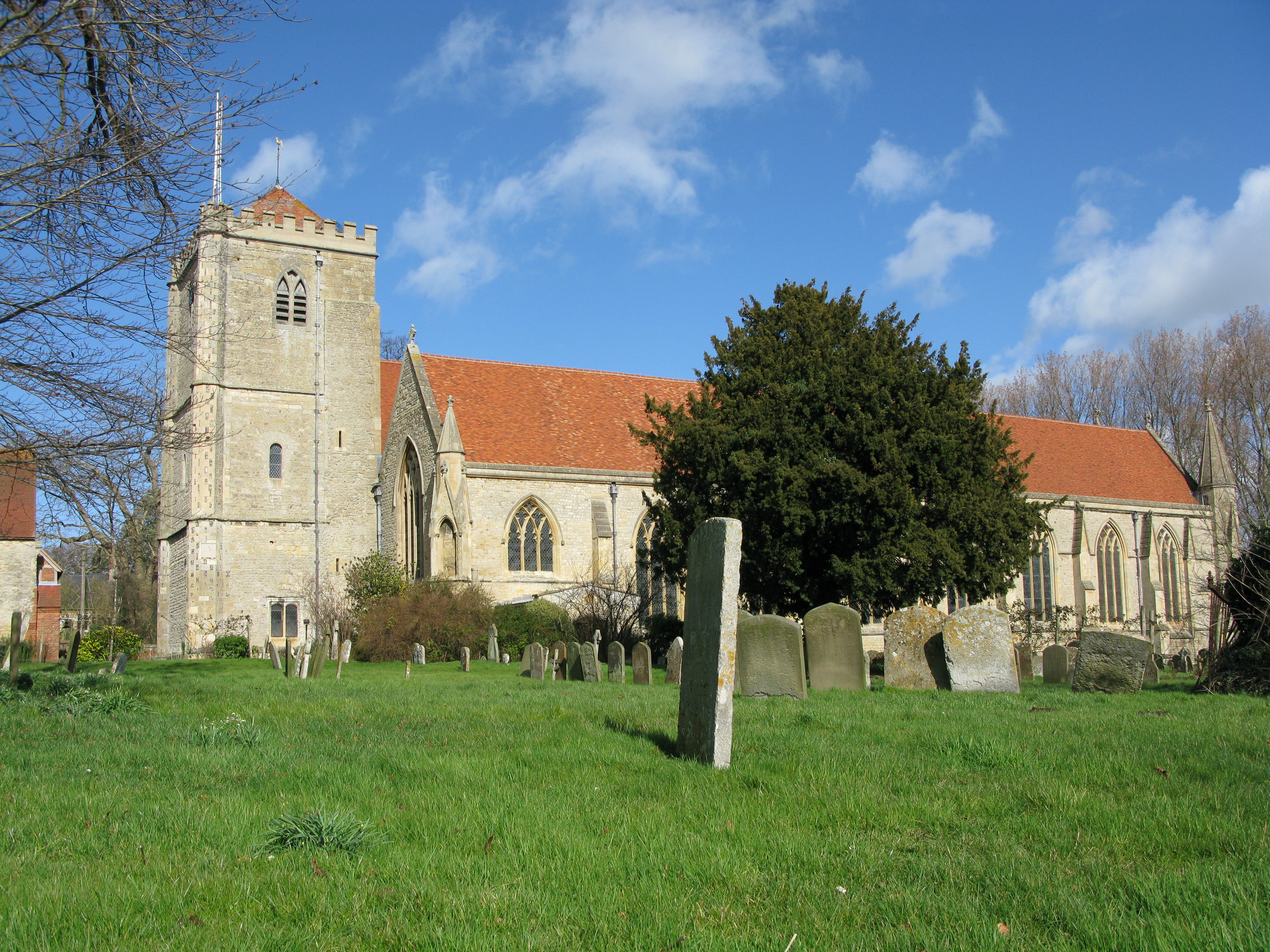
Dorchester Abbey, Dorchester-on- Thames
Friday 24 May 2025

Reviewed by Richard Whitehouse Photos (c) John Francis

The Walk to the Paradise Garden’s filling the expanse of Dorchester Abbey can only mean the English Music festival was again underway, Martin Yates drawing a response from the BBC Concert Orchestra that exquisitely conveyed the acute pathos of Delius’s operatic interlude.

This opening concert had begun with another reclamation from William Alwyn’s early output. Offshoot of his early fascination with William Blake, The Innumerable Dance is more a tone poem than overture – ‘English’ or otherwise. Its initial phase crescendos in a potent evocation of sunrise, and if the livelier music that follows sounds comparatively anodyne, its finesse of instrumentation (with harp and celesta much in evidence) and its formal deftness made for a welcome revival. How about including Alwyn’s Second or Fifth Symphonies at a future EMF?
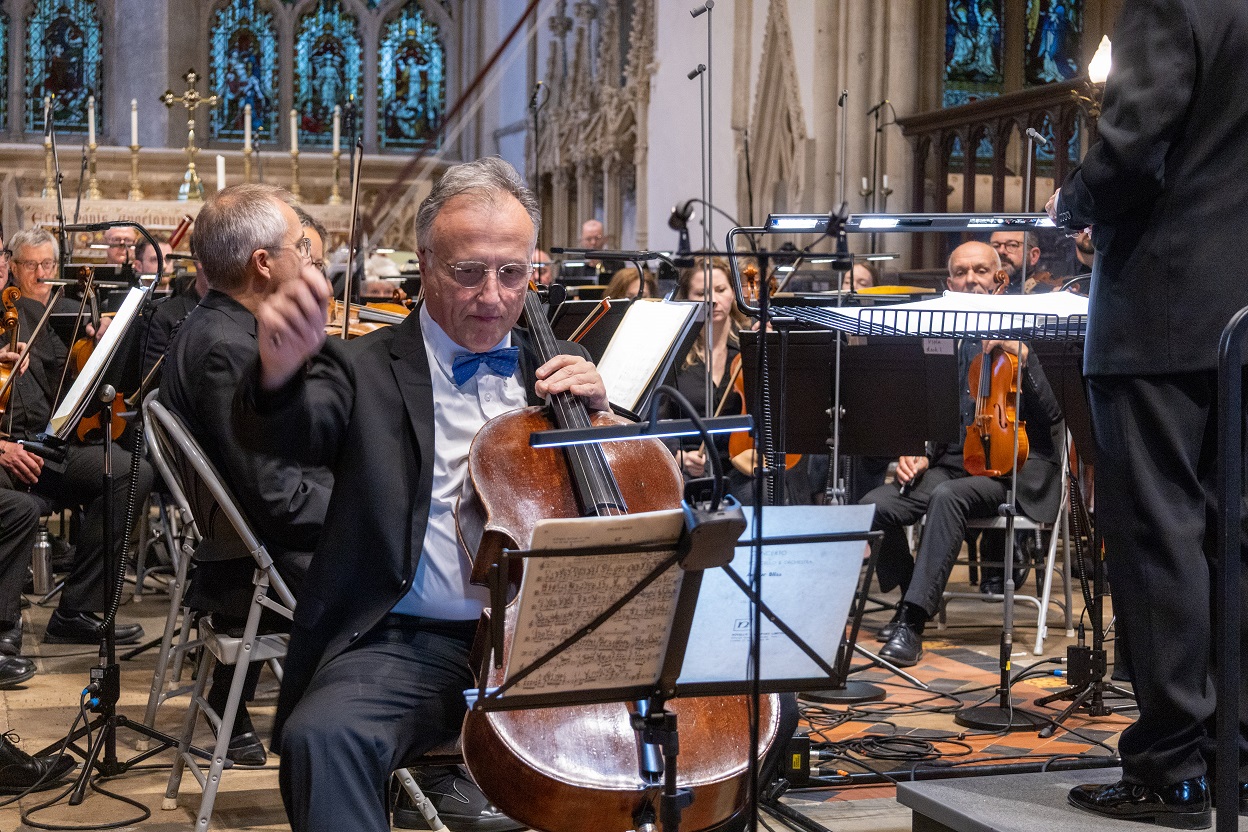
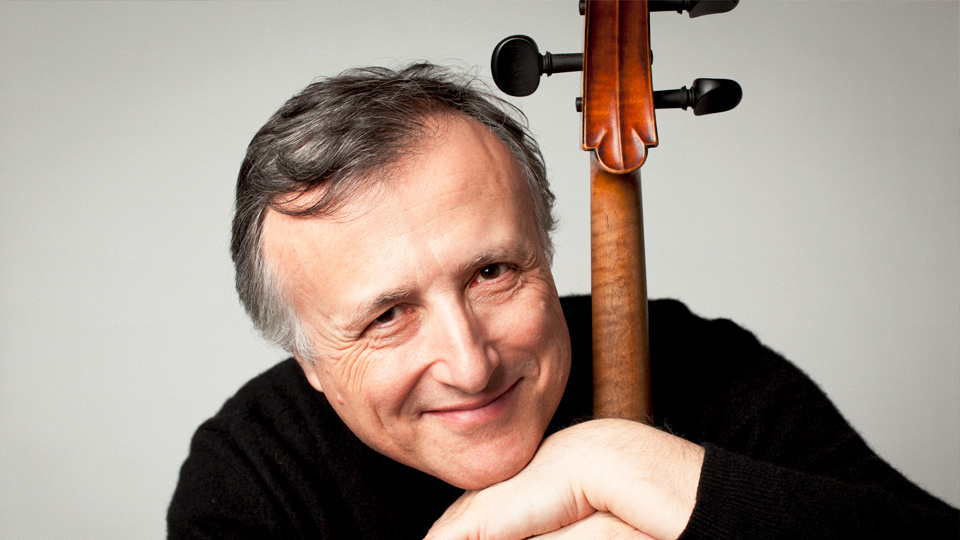
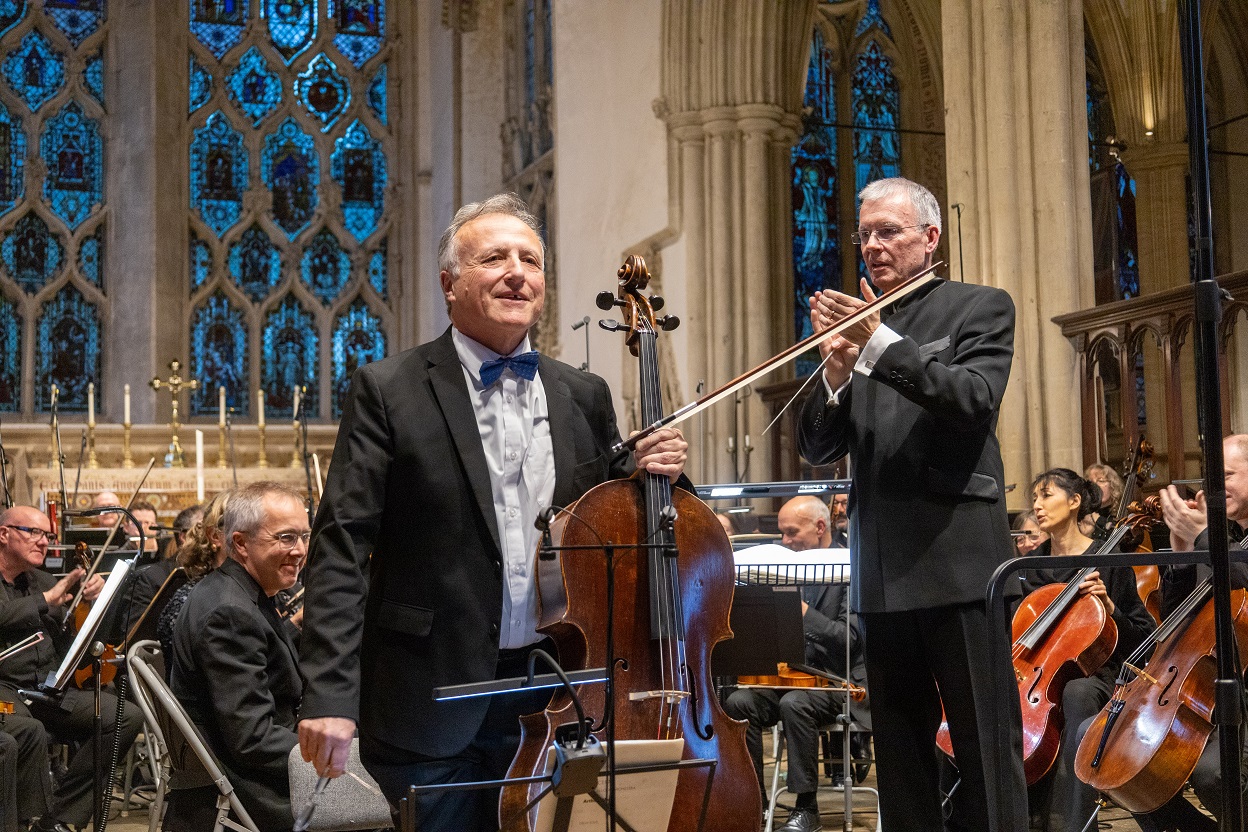
Arthur Bliss has enjoyed a veritable upsurge of performances in this 50th anniversary of his death, with his Cello Concerto among the finest works from that creative Indian Summer of his last decade. Compared with those for piano and violin before it, it eschews Romantic-era trappings in favour of Classical lucidity and proportion; its initial Allegro as much impulsive as decisive in its unfolding, with a semi-accompanied cadenza for its development in which Raphael Wallfisch (above) dovetailed effortlessly with orchestra. Subdued and poignant, the central Larghetto doubtless draws on the distant past in its heartfelt rumination, and while the final Allegro seems to dispel such memories, its progress is shot through with an ambivalence as makes the closing exchanges less than conclusive. Not least in this persuasive performance.

After the interval, another worthwhile revival in Heroic Elegy and Triumphal Epilogue with which Vaughan Williams, then in his late twenties, sought eminence among his peers. Only the first part, its fatalistic tread underpinning an eloquent theme on horns, was played at the time – the composer likely unsure if those episodic build-ups and rhetorical overkill of what follows were justified. Thanks to Yates’s assured direction, this music sustained itself up to a fervent apotheosis presaging the first movement from Sinfonia Antarctica half a century on.
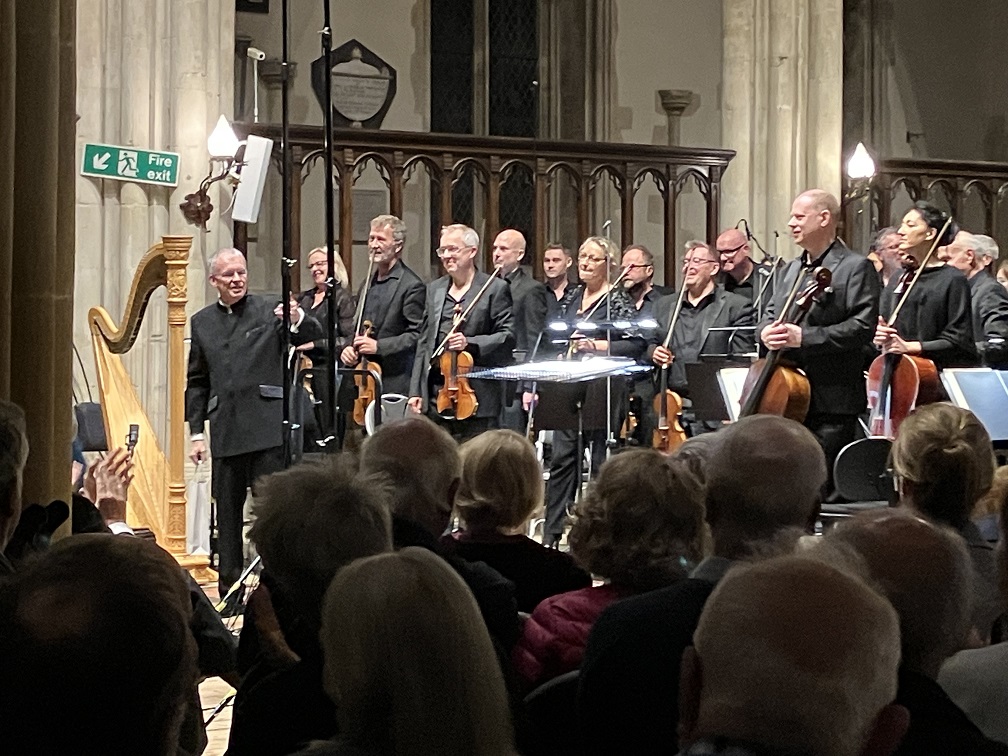
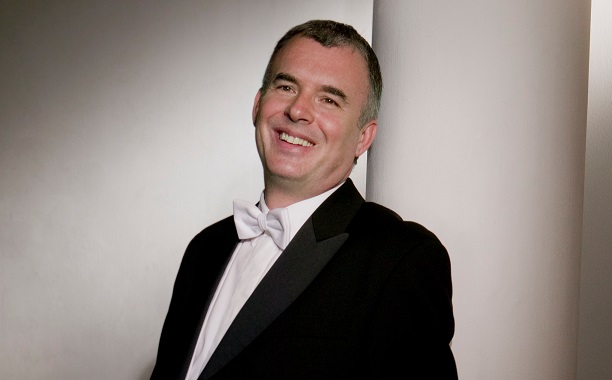
Yates has always sought to include a world premiere in his EMF concerts and tonight saw that of Stanley Bate’s Second Symphony. A composer who rather snatched defeat from the jaws of victory, he doubtless had high hopes for a piece written in Paris and London but not accepted (if indeed it was ever put forward) for performance. Shostakovich’s Fifth has been suggested as precursor but a more likely precedent is VW’s Fourth, not least with the fractious progress of an Allegro whose starkly contrasted themes build towards a combative development then resigned coda. Sombre and fatalistic with a powerfully wrought culmination, the Andante is its highlight and the ensuing Scherzo puts the rhythmic syncopation of that in Walton’s First to very different if hardly less effective ends (which have been even more so placed second).

If it fails to clinch the whole, the finale’s alternately baleful expression and propulsive motion secures a rousing peroration then a coda which, if its serenity is borne out of exhaustion rather than affirmation, fittingly ends a work whose motto might well be that of ‘travelling in hope’.

Published post no.2,544 – Sunday 25 May 2025
English Music Festival – Opening concert on 23 May 2025, with world premiere of Stanley Bate’s Symphony no.2

From the official press release:

There have been many significant first performances at the English Music Festival’s opening concert over the years and this year sees the BBC Concert Orchestra give the much-anticipated World Première of the Symphony no.2 by Stanley Bate (1911-1959); another outstanding student from the Royal College of Music, whose teachers included Ralph Vaughan Williams, R.O. Morris, Gordon Jacob, and Arthur Benjamin.
 
Stanley Bate’s prolific but vastly neglected output is overdue for re-evaluation and his works although being gradually recorded have yet to find a place in the concert hall. Symphony no.2 op.20 was completed in the spring of 1939, but the work appears to have been withdrawn by the composer without ever having achieved a performance.
 
Bate’s wife and fellow-composer, Peggy Glanville-Hicks, claimed her husband wrote a dozen or more symphonies and thirty or so piano sonatas. Often writing ‘en voyage’, Bate’s idiom can be dramatic and turbulent contrasting with interludes of exuberance, beauty and lyricism.

Anyone who knows Martin Yates’ recordings for Dutton will be familiar with the composer’s work. “Stanley Bate’s Symphony no.2 is, I think, going to be a revelation”, says Martin Yates. “He clearly was influenced by other composers working at the time, but he really did achieve something remarkable and individual with some of his works including this symphony. From the opening it explodes with tension. It is going to be incredible to hear it for the first time as it bursts into the world!”
 
Dedicated “To Mstislav Rostropovich with admiration and gratitude”, Arthur Bliss’ Cello Concerto is scored for small orchestra with the addition of harp and celesta. Heroic in character with ‘Quixotic’ flourishes and a soulful slow movement; according to Bliss, “There are no problems for the listener – only for the soloist!”
 
“The Arthur Bliss Cello Concerto is the most wonderfully crafted work, and I can’t understand its neglect”, says Martin Yates. “I know there is a lot of music that one could say that about, but Bliss really was a consummate musician and this concerto, written very late in his life, has a real lightness, yet depth that is utterly captivating and profound. It has a devastatingly difficult solo part with beautifully balanced orchestrations for a Mozart sized orchestras with the addition of a Celeste.”
 
The two works are performed alongside Ralph Vaughan Williams’ ‘trombone piece’, his Heroic Elegy and Triumphal Epilogue; a student work dating from 1901, which drew praise from his teacher Stanford who, according to the composer’s wife Adeline, chose the title for the piece. It remained unheard until a revival by the recording label, Dutton. Works by Delius and Alwyn complete the programme.

FURTHER INFORMATION AND HOW TO BOOK
 
Tickets are on sale from the website and by means of a postal booking form. Tickets for individual concerts will also be available at the door, subject to availability. Full Festival and Day Passes are also available. Programme and booking information is available on the EMF website

Dorchester Abbey (above) is the venue for the duration of the long weekend with talks taking place in the Village Hall as well as a Festival Lunch (pre-booking required). A dedicated mini-bus shuttle operates to/from Didcot Parkway rail station – bookings should be made via the website on publication of the timetable.

FRIDAY 23 MAY 2025
19:30 Dorchester Abbey, Oxfordshire
ENGLISH MUSIC FESTIVAL OPENING CONCERT
William Alwyn: The Innumerable Dance: An English Overture
Frederick Delius: The Walk to the Paradise Garden
Sir Arthur Bliss: Cello Concerto
Ralph Vaughan Williams: Heroic Elegy and Triumphal Epilogue
Stanley Bate: Symphony no.2 (World Premiere)
BBC Concert Orchestra
Martin Yates (conductor)
Raphael Wallfisch (cello)

Published post no.2,524 – Tuesday 6 May 2025

In concert – Michael Collins, BBC Concert Orchestra / Martin Yates – The 17th English Music Festival @ Dorchester Abbey

Michael Collins (clarinet), BBC Concert Orchestra / Martin Yates

Carwithen Suffolk Suite (1964)
Delius Idyll de Printemps, RTVI/5 (1889)
Stanford Clarinet Concerto in A minor Op.80 (1902)
Vaughan Williams Richard II: A Concert Fantasy (1944) [World Premiere Performance]
Holst Symphony in F major H47 ‘The Cotswolds’ (1899-1900)

The Abbey, Dorchester-on-Thames
Friday 25 May 2024

Reviewed by Richard Whitehouse

This latest edition of the English Music Festival, also the first to take place entirely within the spacious ambience of the Abbey at Dorchester-on-Thames, began with the customary concert from the BBC Concert Orchestra and Martin Yates. As conceived for amateur players, Suffolk Suite by Doreen Carwithen feels nothing if not resourceful – whether in the regal opulence of Prelude, evocative poise of Orford Ness then the alternately rumbustious or genial humour of Suffolk Morris; the martial tread of Framlingham Castle bringing about a resolute close.

Recent years have seen renewed interest in Delius’ early orchestral work, Idylle de Primtemps an appealing instance of the composer harnessing Nordic influences to the impressionist style then emerging in his adopted home of Paris – resulting in this short yet atmospheric tone poem.

It was enticingly given by the BBCCO, which then partnered Michael Collins (above) for a revival of the Clarinet Concerto by Stanford. As with numerous concertante works from the period, this is a three-movements-in-one design. The preludial Allegro introduces two main themes, their development continued (albeit understatedly) in a central Andante that unfolds with mounting eloquence, before the final Allegro brings a transformed reprise of the initial themes on route to its decisive ending. As with the First Cello Concerto of Saint-Saëns or the Violin Concerto of Glazunov, this is a piece the accessibility of whose idiom belies the ingenuity of its formal thinking or appeal of its ideas, and Collins (who evidently last played the piece four decades ago) brought subtlety and insight to music which ultimately delivers more than it promises.

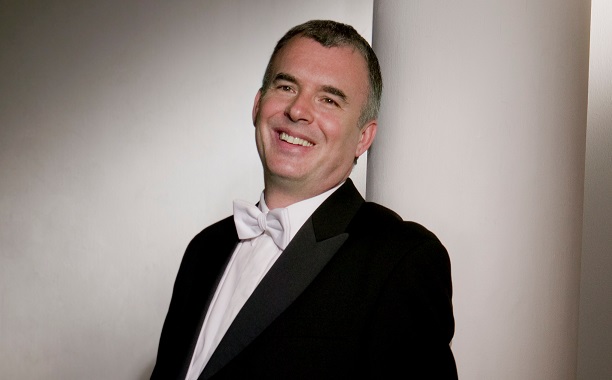
These EMF opening concerts regularly feature first performances, and this evening brought that of the ‘Concert Fantasy’ as adapted by Yates (above) from Vaughan Williams’ incidental music to a production of Richard II for a BBC radio production and subsequently shelved. As might be expected, this abounds in allusions to earlier VW works from the period (notably Job and the Fifth Symphony), but the skill by which the composer reflects salient events in Shakespeare’s play and ease with which these fuse into a relatively continuous whole is its own justification.

It made sense to feature a major work by Holst in this, the 150th anniversary-year of his birth as well as the 90th of his death, with his Cotswolds Symphony certainly a welcome inclusion. If the weight and intensity of its second movement, Elegy (In Memoriam William Morris), rather dwarfs those other three, this is less an issue when the overall sequence was as astutely balanced as here. Yates secured a keen response in the opening Allegro, the personality of its ideas here outweighing any short-windedness, while there was no lack of verve and grace in the Scherzo or of animation in the Finale. That Elegy, though, is the real highpoint and the BBCCO did not disappoint with the sustained plangency of its playing. Numerous of Holst’s early pieces qualify as his primary achievement pre-Planets and this is arguably the greatest.

It duly rounded-off a fine opening to this year’s EMF. Maybe a future such occasion could see the revival of Stanford’s once popular Third ‘Irish’ Symphony or, even more pressingly, the first hearing for over a century of Holst’s doubtless unfairly derided suite Phantastes?

Click to read more about the English Music Festival 2024 – and on the names for more on the artists Michael Collins, Martin Yates and the BBC Concert Orchestra. For more detail on the composers, click on the names to read more about Carwithen, Delius, Stanford, Vaughan Williams and Holst

Published post no.2,186 – Wednesday 22 May 2024

In concert – Raphael Wallfisch, BBC Concert Orchestra / Martin Yates: English Music Festival opening concert

Raphael Wallfisch (cello, below), BBC Concert Orchestra / Martin Yates

Lewis A Celebratory Overture (2023) [EMF commission: World premiere]
Lloyd Webber (orch. Yates) Scenes from Childhood (c1950) [World premiere]
Moeran Cello Concerto in B minor (1945)
Alwyn Serenade for Orchestra (1932) [World premiere]
Delius Two Pieces for Small Orchestra (1911-12)
Vaughan Williams (arr. Adrian Williams) A Road All Paved with Stars (1929/2016) [Public premiere]

Dorchester Abbey, Dorchester-on-Thames
Friday 26 May 2023

Reviewed by Richard Whitehouse

The breezy ebullience of Paul Lewis’s A Celebratory Overture (redolent of Malcolm Arnold without any risk of expressive ambiguity) launched this latest English Music Festival in fine style, with its crisp and precise playing from the BBC Concert Orchestra under Martin Yates.

As so often in these concerts, world premieres were not lacking and the first brought hitherto unknown partsongs by William Lloyd Webber arranged into suite-form then orchestrated by the conductor. If the resultant Scenes from Childhood adds but little to the reputation of this not inconsiderable figure, the Prelude yields appealing poise while Serenade is a waltz of no mean suavity, then the Finale nimbly combines elements of fugue and waltz on its way to a rousing close. Worth hearing, and not least when rendered with such obvious enjoyment.

The emotional weight of this first half inevitably fell upon the Cello Concerto by E.J. Moeran. Completed in the aftermath of the Second World War, it was the composer’s first large-scale piece for his wife Peers Coetmore; her belated and often approximate recording likely having deterred others from taking it up. Not so Raphael Wallfisch (above), his belief evident from the outset of a Moderato whose confiding eloquence is not without undercurrents of unease. These latter are made explicit at the start of the Adagio, otherwise centred on one of the composer’s most affecting melodies and building with due inevitability to a cadenza whose growing animation carries over to the final Allegretto. Here a jig-like main theme denotes an Irish influence that offsets any tendency to introspection as it guides this engaging movement to a decisive close.

Quite a performance, then, which was complemented after the interval by a first hearing for the early(ish) Serenade by William Alwyn. Written while on examination duties in Australia, this undemanding piece moves from a (mostly!) tranquil Prelude, through a stealthy and by no means uninhibited Bacchanale then a serene Air which could yet find favour as a radio staple, to a Finale that, as Andrew Knowles rightly indicated in his programme note, betrays more than a hint of Czech folk-music across its insouciant and ultimately boisterous course.

Hardly an interlude, the brace of pieces by Delius fairly encapsulate the inward rapture of his maturity. Yates (above) brought just the right lilt to the dancing gait of On Hearing the First Cuckoo in Spring, while the subtle eddying of Summer Night on the River was effortlessly conveyed.

The final premiere tonight came in the guise of A Road All Paved with Stars – the ‘symphonic fantasy’ as arranged by Adrian Williams (a notable composer in his own right) from Vaughan Williams’ comic opera The Poisoned Kiss. Occasionally revived, its dramatic prolixity rather obscures its musical highpoints – emphasized here in what is both a chronological overview and cumulative paraphrase that also adds a non-symphonic orchestral work to its composer’s output. The surging emotion of those final stages could hardly leave an audience unmoved. This vivid reading concluded a memorable concert in which the Moeran was dedicated to the memory of Michal Kaznowski – who, as cellist of the Maggini Quartet and formerly section-leader at the City of Birmingham Symphony Orchestra, has left a legacy worth remembering.

To read more about the festival, visit the English Music Festival website. For information on the performers, click on the links to read more about cellist Raphael Wallfisch, conductor Martin Yates and the BBC Concert Orchestra, and for more information on composer and arranger Adrian Williams and composer Paul Lewis

In concert – Caroline Sheen, Louise Dearman, Nadim Naaman, Jeremy Secomb, CBSO / Martin Yates – Sondheim: Broadway Baby

Follies Overture
Company Company; Being Alive
Anyone Can Whistle Anyone Can Whistle
Follies Could I Leave You; Broadway Baby
Sondheim Three Sondheim Waltzes
Sweeney Todd A Little Priest; Johanna
Gypsy Some People
Merrily We Roll Along Old Friends

A Funny Thing Happened On The Way To The Forum Overture
Company The Little Things You Do Together
West Side Story Something’s Coming; Balcony Scene; A Boy Like That
Passion Loving You
A Little Night Music Send In The Clowns
Into The Woods Giants In The Sky; Agony
Company Getting Married Today
A Funny Thing Happened On The Way To The Forum Comedy Tonight

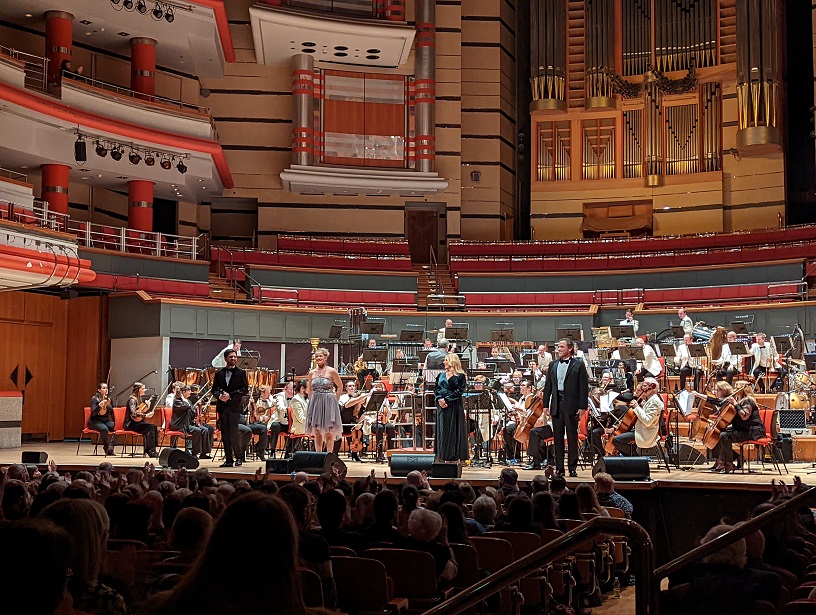
Louise Dearman, Nadim Naaman, Jeremy Secomb and Caroline Sheen (vocalists), City of Birmingham Symphony Orchestra / Martin Yates

Symphony Hall, Birmingham
Friday 14 January 2022

Written by Richard Whitehouse photos (c) Beki Smith (above) and Florian Wende (below)

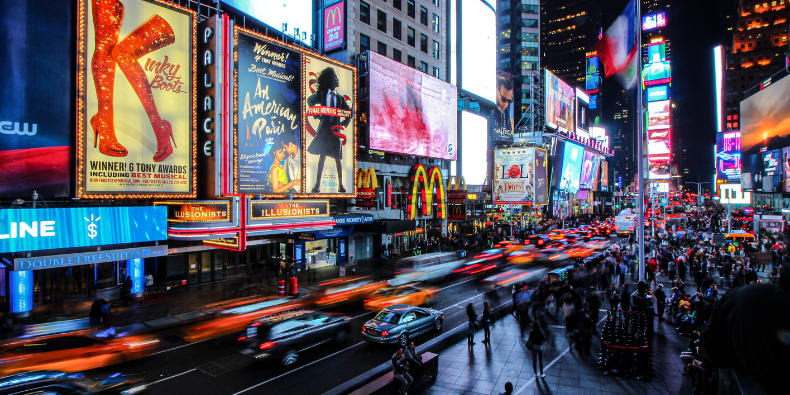
This overview of Stephen Sondheim was inevitably leant poignancy by the composer’s death in November but this, in turn, only served to emphasize the extent of his achievement across more than half a century and at least 16 stage-works; across the course of which, he brought the American musical to a new level of sophistication. The present selection further provided a reminder of that additional depth and richness made possible when the instrumental writing is allotted to full orchestra, of which the City of Birmingham Symphony Orchestra was a keen advocate.

A versatile conductor, Martin Yates launched the evening via a bustling take on the Overture to Follies, Sondheim’s double-edged homage to Broadway’s ‘golden age’, before all four of tonight’s vocalists took the stage for the title-song from Company – its edgy expectancy offset by the fervency of that musical’s ‘Being Alive’ rendered by Nadim Naaman. Jeremy Secomb brought real poise to the title-song of initially ill-fated Anyone Can Whistle; Louise Dearman was defiance itself in ‘Could I Leave You?’, while Caroline Sheen teased out the insouciance of a further Follies song ‘Broadway Baby’. The CBSO duly gave its all in the lively and not-a little sardonic waltzes as taken from Anyone Can Whistle, then Dearman and Secomb proved well complemented as scheming barber and piemaker in ‘A Little Priest’ from Sweeney Todd; Naaman’s pathos in ‘Johanna’ a reminder of this musical’s compassionate side. Sheen sassily projected Sondheim’s lyrics to Jule Styne’s music in ‘Some People’ from Gypsy, then all four singers rounded-off the first half with the barbed ‘Old Friends’ from Merrily We Roll Along.

broadway-baby

A lively traversal of the Overture to A Funny Thing Happened On The Way To The Forum set up the second half in suitably racy fashion, with Dearman and Secomb bringing real piquancy to Company’s edgy duet ‘The Little Things You Do Together’. Three numbers from West Side Story reminded one of Sondheim’s peerless lyrics to Leonard Bernstein’s music – Naaman’s inquiring take on ‘Something’s Coming’ followed by his and Sheen’s rapturous showing for the ‘Balcony Scene’ (a.k.a. ‘Tonight’), the latter joining Dearman for the searing medley ‘A Boy Like That / I Have A Love’ as forms this musical’s emotional apex. Not that Secomb’s unforced eloquence in ‘Loving You’ from Passion proved an emotional come-down; neither did Dearman in conveying the bittersweet soul of ‘Send In The Clowns’ from A Little Night Music – Sondheim’s most recognizable melody. Two numbers now from multi-layered Into The Woods – Naaman suitably astounded in ‘Giants In The Sky’; he and Secomb pointing up the fanciful imagery of ‘Agony’. Dearman and Sheen joined him for the heady triple-take of ‘Getting Married’ from Company, then the advertised programme concluded with the quartet in the uproarious ‘Comedy Tonight’ such as unerringly sets the tone for Forum as a whole.

Those who might have been bemoaning the absence of Sunday In The Park With George (its first act arguably Sondheim’s most perfect achievement) would have been reassured with the ecstatic ‘Sunday’ that brought the evening to its close; one in which the contribution from the CBSO played no small part in conveying the sheer range of Sondheim’s enduring creativity.

For more information on this concert you can visit the CBSO website. Meanwhile click on the artist names for information on Martin Yates, Louise Dearman, Nadim Naaman, Jeremy Secomb and Caroline Sheen. To read more about Stephen Sondheim himself, visit the Stephen Sondheim Society