In concert – Mary Bevan, CBSO / Edward Gardner: Schubert – Symphony no.9 & Songs

Mary Bevan (soprano), City of Birmingham Symphony Orchestra / Edward Gardner

Schubert
Rosamunde D797 – No. 3b, Romanze (1823)
Der Erlkönig D328 (1815, orch. Berlioz 1860)
Die Forelle D550 (1816, orch. Britten 1942)
Im Abendrot D799 (1825, orch. Reger 1914)
Geheimes D719 (1821, orch. Brahms, 1862)
Symphony no.9 in C major D944 ‘Great’ (1825-6, rev. 1828)

Symphony Hall, Birmingham
Wednesday 17 May 2024

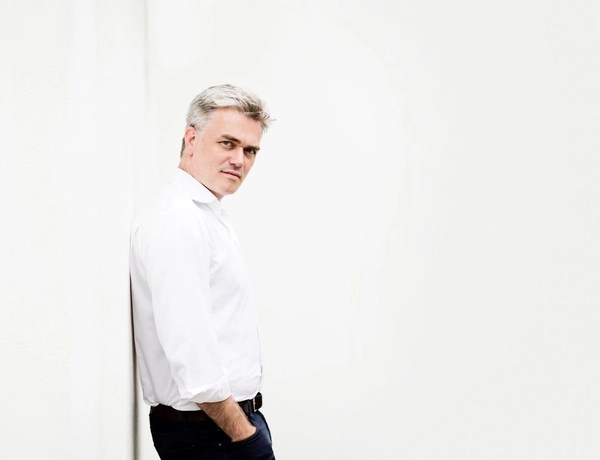
Reviewed by Richard Whitehouse Pictures by Benjamin Ealovega (Ed Gardner), Victoria Cadisch (Mary Bevan)

July concerts no longer a consistent fixture in the City of Birmingham Symphony Orchestra’s schedule, it made sense to end the current season with the intended programme for the fourth and final volume of this orchestra’s Schubert cycle with former chief guest conductor Edward Gardner.

If not his final such project, the ‘Great’ was the final symphony that Schubert finished and the culminating orchestral work of his last decade. Now, as almost two centuries ago, it is not an easy work to being off – but this account hit the ground running with a flowing yet purposeful introduction that elided seamlessly with the initial Allegro. Gardner kept momentum on a sure yet flexible rein over those impetuous and capricious themes of its exposition; underlining the subtly eddying tension of its development and a propulsive coda whose link-up with the tempo of that introduction was marred only by the too emphatic final gesture. Respectively plaintive or consoling, the Andante’s alternate episodes were brought into eloquent accord – the fanfare -riven anguish at its climax then the stark fatalism towards its close being especial highlights.

The essential link between the scherzos of Beethoven and Bruckner, the third movement had the right buoyancy but also a suavity in keeping with the Viennese character of its dance-like themes, and complemented by those of its trio whose lilting elegance were tinged by wistful regret. Launched with a commanding call-to-attention, the Finale did not lack for vigour but, unlike so many performances, Gardner was mindful not to rush either here or in the capering second theme whose relentless string accompaniment was vividly rendered. The development more than fulfilled its purpose as an extended transition into the reprise, then the coda opened with a frisson of anticipation such as underpinned the closing pages as they powered towards the decisive but never headlong close to what was a convincing and engrossing performance.

Regarding repeats, Gardner observed that of the first movement’s exposition but not those in the second half during either scherzo or trio, and that of the finale’s exposition. This at least made matters easier for the players, and left options open for their inclusion in the recording.

That forthcoming release on Chandos will hopefully find room for the five songs that formed the first half of this concert, with each of them arranged by a different composer. The pensive Romanze from Schubert’s incidental music to Rosamunde was heard in the composer’s own orchestration, with the compact psychodrama of Der Erlkōnig in a resourceful and nowadays overlooked orchestration by Berlioz. The looping but not always ingratiating playfulness of Die Forelle was expertly attended to by Britten, while the pensive soulfulness of Im Abendrot summoned an appropriate response from Reger; the sombre resignation of Geheimnis making for a welcome encore in its orchestration by Brahms. Throughout the selection, Mary Bevan’s veracity of emotional response and her clarity of enunciation were qualities worth savouring.

This programme may have concluded the Schubert cycle by Gardner and the CBSO, though hopefully it will not see of this partnership in recorded terms – the symphonies of Schumann, and maybe Brahms, being well worth considering as additions to the orchestra’s discography.

For details on the 2024-25 season A Season of Joy, head to the City of Birmingham Symphony Orchestra website. Click on the names to read more about soprano Mary Bevan and conductor Edward Gardner

Published post no.2,243 – Thursday 18 July 2024

Wigmore Mondays – Marnis Petersen & Camillo Radicke: Anderswelt (The Otherworld)

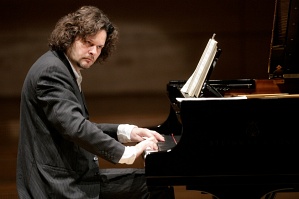
Marnis Petersen (soprano, above), Camillo Radicke (piano, below)

Wigmore Hall, Monday 23 September 2019 (lunchtime)

You can listen to this concert on the BBC Sounds app here

Review and guide by Ben Hogwood

A song recital that was truly out of this world.

German coloratura soprano Marnis Petersen and pianist Camillo Radicke brought the concept of their most recent recording, Dimensionen: Anderswelt, to the Wigmore Hall for an hour of 20 songs by no fewer than 18 composers.

The description ‘coloratura soprano’ depicts a singer that specialises in an operatic style, often high in the register – and that fits the music in this extraordinary collection. Most of the songs – and a couple of the composers – will surely have been new even to the most devoted Wigmore Hall attendee, and as Petersen and Radicke threaded the links cleverly through sections entitled The Otherworld, Elves, Mermaids and Mermen and Northern Lights, they plotted a course from deepest Germany to northern Iceland.

To begin Petersen read a short passage before the first group of five songs. Hans Pfitzner’s Lockung (Temptation) (2:25), with its twinkling piano and entreating mermaids, beckoned us in to the first of the Elves sections. Here we found Reger depicting a ‘pert and wanton’ elf, to a suitably heady vocal from Petersen, then the first of three settings of Eichendorff’s Elfe poem from Bruno Walter (7:28).

Camillo Radicke was superb here, with the insistent trills high up in the piano’s register, over which Petersen floated beautifully. Julius Weismann’s setting of the same text (9:43) again opted for the high register, this time in an attractive triple time dance. Though written in the same year as the Walter, it felt considerably older – and transitioned nicely to Brahms, setting Heine’s seductive water nymph in Sommerabend (Summer evening) (11:21), which found Petersen’s vocal control in very fine shape.

The Mermaids and Mermen section, again five songs in length, had an intriguing juxtaposition of composers. Hans Sommer’s Lore im Nachen (Lore in the skiff) found Radicke catching the ‘shimmer in the evening gold’ on a tranquil lake, as Petersen again soared high in the register. Grieg’s Med en Vandlilje (With a water lily) (18:09) introduced a wary atmosphere with the lurking water sprite (18:09) before Carl Loewe, heard to such great effect in Benjamin Appl and Kristian Bezuidenhout’s recital the previous week, was at it again with the boldly descriptive Der Nöck (The nix) (20:46). The nix (Petersen) and its harp (Radicke) were both strikingly portrayed, and Petersen’s vocal was superb. Sinding’s Ich fürcht’ nit Gespenster (I fear no ghosts) (29:18) was also a striking song, appropriately ghoulish in its coda from Radicke after Petersen had confidently confronted her spectres. Finally we heard a pupil of Hindemith, Harald Genzmer, and the agitated Stimmen im Strom (Voices in the river) (31:32)

To another quintet of songs on Elves, beginning with the cheeky Elfenlied, Wolf’s subject humourously caught by Petersen, who sang into the piano as her subject staggered about having banged his head. Friedrich Gulda’s setting of Elfe – the third of the concert – was a collector’s item (37:34), the 16-year old intriguingly matching the other two in the high treble area for an impish setting. Carl Loewe’s second appearance was with the operatic Die Sylphide (39:20), Petersen’s voice again reaching sparkling heights. Franz Schreker’s Spuk (Spook) (41:42) felt like some of the most modern music here, flitting about with uncertainty and tension, while in a rare outing for the music of conductor-composer Hermann Zumpe, Liederseelen (Song-Souls) (43:58) was affectionately sung.

Petersen and Radicke saved the most adventurous part of their concert until last, with four songs from Scandinavia and Iceland. Ariels Sang (48:06) was a rapturous contribution from Nielsen, boldly delivered, before Sinding reappeared with Majnat (May night) (50:26), a more thoughtful affair. Swedish composer Stenhammar’s Fylgia (53:25) was fulsome and florid in its praise of the spirit, but Sigvaldi KaldalónsHamraborgin (Castle crags) (55:46) painted its subject with uncanny atmosphere, depicting the rarefied atmosphere of the Northern Lights. Petersen capped her vocal performance here with a stunning top ‘B’ at the end.

It was a great way to finish – though after Radio 3 had departed there was another gem in store courtesy of the Finnish composer Yrjö Kilpinen, and an encore of his song Berggeist.

This was a recital of great imagination and technical brilliance. As an introduction to the classical song it would present some challenges to the casual listener, but with the enchantment offered by Petersen and Radicke’s partnership it would prove difficult to resist. Those familiar with the world – or otherworld in this case – should dive right in, as there will definitely be something new!

Repertoire

Marnis Petersen and Camillo Radicke performed the following songs (with timings on the BBC Sounds broadcast in brackets):

The Otherworld

Pfitzner Lockung Op.7/4 (1888-9) (2:25)

Elves I

Reger Maiennacht Op.76/15 (1903-4) (5:23)
Walter Elfe (1910) (7:28)
Weismann Elfe Op.43/4 (1909-10) (9:43)
Brahms Sommerabend Op.85/1 (1878) (11:21)

Mermaids and Mermen

Sommer Lore im Nachen Op.13/1 (publ. 1891) (15:25)
Grieg Med en Vandlilje Op.25/4 (1876) (18:09)
Loewe Der Nöck Op.129/2 (1857) (20:46)
Sinding Ich fürcht’ nit Gespenster (1885) (25:42)
Genzmer Stimmen im Strom (1941) (31:32)

Elves II

Wolf Elfenlied (1888) (35:24)
Gulda Elfe (1946) (37:34)
Loewe Die Sylphide Op.9 (1837) (39:20)
Schreker Spuk Op.7/4 (1898-1900) (41:42)
Zumpe Liederseelen (publ. 1895) (43:58)

Northern Lights

Nielsen Ariels Sang (1916) (48:06)
Sinding Majnat Op.22/3 (1893) (50:26)
Stenhammar Fylgia Op.16/4 (1893-7) (53:25)
Kaldalóns Hamraborgin (c. 1910) (55:46)

Encore – Kilpinen Berggeist Op.99/3

Further listening

All the songs in this concert can be heard from Petersen and Radicke’s recording on the Spotify playlist below:

One of many possible further steps is Wings In The Night, a collection of Swedish songs from mezzo-soprano Anne Sofie von Otter and pianist Bengt Forsberg:

There are so many songs by Carl Loewe that it is difficult to know where you could start. Given his artistry, tenor Christoph Prégardien would seem to be a good bet, this album of songs recorded with pianist Cord Graben: