On Record: Sam Hayden: Solos/Duos (Métier)

Sam Hayden
Picking up the Pieces (1991, rev. 2019) – Darragh Morgan (violin)
AXE[S] (1997, rev. 2009/19/21) – Mats Scheidegger (guitar)
Frammenti di divenire (2018) – Gianpaolo Antongirolami (soprano saxophone); Michele Selva (baritone saxophone)
Attente (2018-19) – Carla Rees (flute)
Remnants I (2018-19) – Richard Haynes (contrabass clarinet)
Remnants III (2021) – Karoline Öhman (cello), Tamriko Kordzaia (piano)

Métier MSV28622 [two discs, 84’51’’]
Producers/Engineers Mikey Parsons (Picking up the Pieces), Mats Scheidegger (AXE[S]), Francesco Sardella (Frammenti di divenire), Simon Paterson (Attente), Fabio Oehrli (Remnants I), Marcel Babazadeh (Remnants III)
Editing/Mixing Sam Hayden
Recorded 11 July 2019 at King Charles Court, London (Picking up the Pieces), 21 September 2021 at SRF Studio, Zurich (Remnants III), 7 January 2022 at Nottingham University (Attente), 25 February – 8 May 2022 at Home Studio, Zurich (AXE[S]), 13 May 2022 at Helvetiaplatz, Bern (Remnants I), 29 June 2022 at Pinkhouse Studio, Ancona (Frammenti di divenire)

written by Richard Whitehouse

What’s the story?

Métier continues its coverage of Sam Hayden (following that of his piano music Becomings) with this collection of solo and duo pieces drawn from either end of his composing career.

What’s the music like?

As one would expect from Hayden, his music brooks no compromises and takes no prisoners. Heard in the running sequence specified here, the works run chronologically with those most recent pieces coming first. The Italian saxophone duo makes the most of the volatile textural layering and fractured spectral harmony in Frammenti di divenire, then Carla Rees is no less inside the tensely expressive idiom of Attente with its multi-section discourse (whether those designated ‘IIIa’ and ‘IIIb’ are intended to be heard continuously or as alternatives is unclear).

Next come the first and third items in the Remnants series (the worklist at Hayden’s website does not yet extend after 2018, but the second is for bass trombone). The first of these finds Richard Haynes forcefully ejecting sounds and sequences that are the ‘composed’ remains of an elaborate computer-generated process, while the third pursues a more flexible though still rebarbative dialogue between cello and piano, where a variation-like evolution can be sensed as part of an ongoing and combative interplay between microtonal and conventional tunings.

The second half of this set features two large-scale works from earlier in Hayden’s output, and his involvement with the ‘new complexity’ movement then at its most potent in the UK. Despite (even because of) its title, Picking Up the Pieces unfolds as a tautly focussed entity – made more so by its initial ‘motto’ phrase that remains detectible throughout all manner of transformation on the harmonic, rhythmic and textural levels. Superbly realized by Darragh Morgan, it is among the most impressive instances of cohesion wrested from fragmentation.

If the epic which is AXE[S] does not quite achieve such an overall unity, this is likely a result of the work’s overall scale (virtually half an hour of uninterrupted music) and its tendency to discursiveness evident in those numerous types of material that are continuously crosscut in what becomes an odyssey for the instrument and its performer as much as the actual content. Having commissioned, premiered and worked towards its realization this past 25 years, Mats Scheidegger embraces the challenge of presenting this piece in all its uncompromising glory.

Does it all work?

Yes, if each listener wishes it so. As has frequently been remarked, Hayden’s work has never made any concessions to those performing or hearing it; nor has his recent involvement with spectral techniques brought any lessening of the technical rigour or expressive vehemence as has characterized his thinking for over three decades. To do so would not have necessitated a response of such unwavering commitment from its exponents, who ensure that the demands made on them become integral to the overall experience of coming to terms with this music.

Is it recommended?

Yes. The all-round excellence of these performances is matched by the focus and immediacy of the sound in each instance, together with detailed while not unduly abstruse notes from the composer. Those coming to his music afresh are not likely to remain emotionally uninvolved.

Listen

Buy

You can explore purchase options for this album at the Divine Art website. You can find out more on Mats Scheidegger at his Bandcamp page, and click here for more on composer Sam Hayden

Published post no.1,982 – Wednesday 18 October 2023
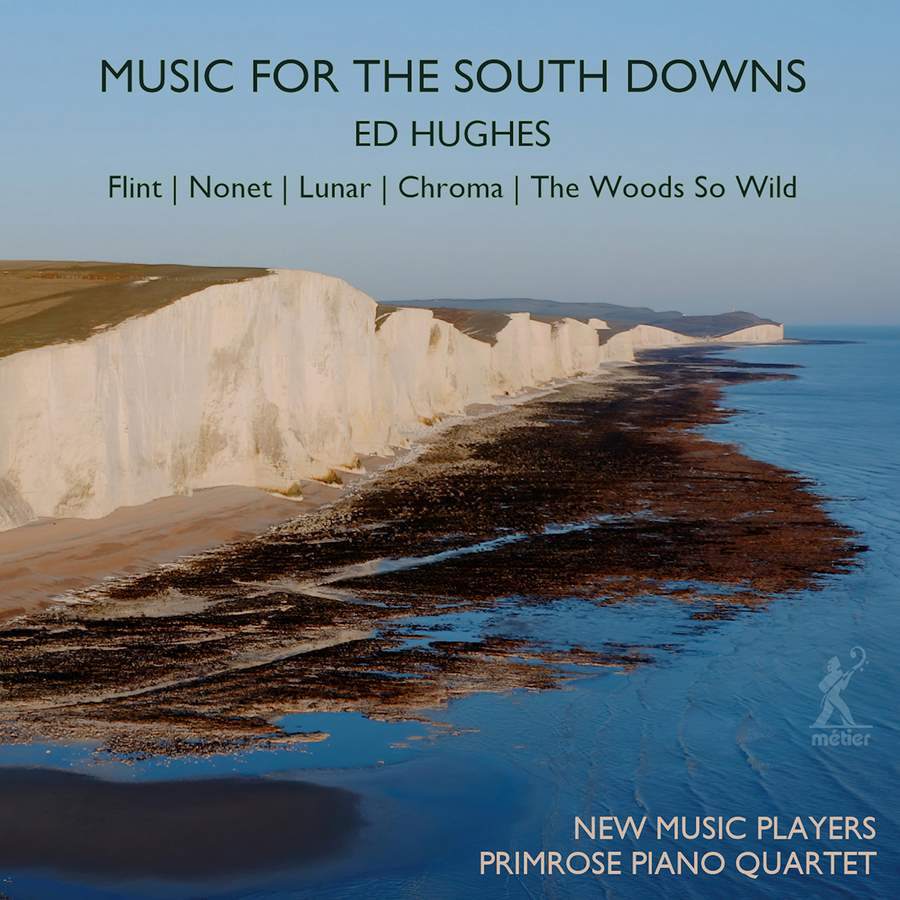
On Record – Primrose Piano Quartet, New Music Players – Ed Hughes: Music for the South Downs (Métier)

Primrose Piano Quartet [Susanne Stanzeleit (violin), Dorothea Vogel (viola) Andrew Fuller (cello) John Thwaites (piano)]; New Music Players / Ed Hughes

Ed Hughes
Chroma (1997)
Flint (2019)
Nonet (2020)
Lunar (2021)
The Woods So Wild (2020-21)

Métier msv28623 [68’32”]
Producer / Engineer David Marshalsea

Recorded 18 March 2021 at St John’s Smith Square, 28 October and 4 December 2021 at Attenborough Centre for Creative Arts, University of Sussex

Reviewed by Richard Whitehouse

What’s the story?

Métier continues its coverage of music by Ed Hughes (b1968) with a release of works partly inspired by and even permeated with the qualities of the South Downs, making for a cohesive selection whose five constituents are tellingly thrown into relief by having been so arranged.

What’s the music like?

Ed (formally Edward Dudley) Hughes has been an enriching presence on the UK new music scene since the BBC broadcast of his orchestral piece Crimson Flames marked him out as a name to watch over three decades ago. He has assembled a sizable as well as diverse body of work across a broad range of genres, one which reveals a notable awareness of the evolution of Western music not just over this past century but across what might reasonably be termed the ‘humanist’ tradition which stretches back through the Enlightenment to the Renaissance.

The present sequence opens with Flint that evokes the Sussex landscape in terms of natural cliff formations and man-made quarries. The three movements are pointedly distinct – often angular gestures of the first being contrasted with the restrained fervour of its successor (in which a local song once collected by George Butterworth threads it way across the content), before the third highlights solo violin for a texture whose shifting emphases add appreciably to its expressive impetus. Although written to complement a film by Sam Moore (which can be seen via Hughes’s website), Nonet is musically self-sufficient – whether in the undulating variety of incident in its initial ‘Con moto’, the sense of being side-tracked and even waylaid in the central ‘Tranquil’, or a gradual feeling of emergence then arrival in the final ‘Flowing’.

Very different in its concept is the Lunar diptych – inspired by Isamu Noguchi sculptures and juxtaposing the darkly translucent harmonies of ‘Lunar 1’ with the agile luminescent gestures of ‘Lunar 2’. The earliest work here, Chroma is also the most abstract in terms of content that derives meaning from its interplay of outward volatility with underlying calm; a process made manifest in the distinction between string quartet and string ensemble over much of its course. Finally, The Woods So Wild turns to the medium of piano quartet and a song from the Tudor era whose plangent modality is brought to bear on the animated melodic weave of its opening movement as on the harmonic eloquence of its central intermezzo – duly heading into a finale whose rhythmic intricacy does not prevent the song coming through affirmatively at the close.

Does it all work?

It does indeed. Without drawing attention to itself in technical terms, Hughes’s music has an understated virtuosity such as adds greatly to the attraction of those pieces featured here. The performances are audibly attuned to this music, whether those by the Primrose Piano Quartet (arguably the finest such ensemble in the UK) or New Music Players which Hughes founded over three decades ago. Nor does the sound, recorded at two different venues, leave anything to be desired in clarity and perspective. The composer has provided informative annotations.

Is it recommended?

Very much so. There are four earlier releases of Ed Hughes from Métier and those who have acquired some or all of these will want this new one too. Those new to his music will find the latest selection an appealing way into this composer and, as such, to be warmly recommended.

For further information on this release, and to purchase, visit the Divine Art website, and for more on Ed Hughes click here. Click on the artist names for more on the Primrose Piano Quartet and the New Music Players, and click here for the South Downs National Park website.

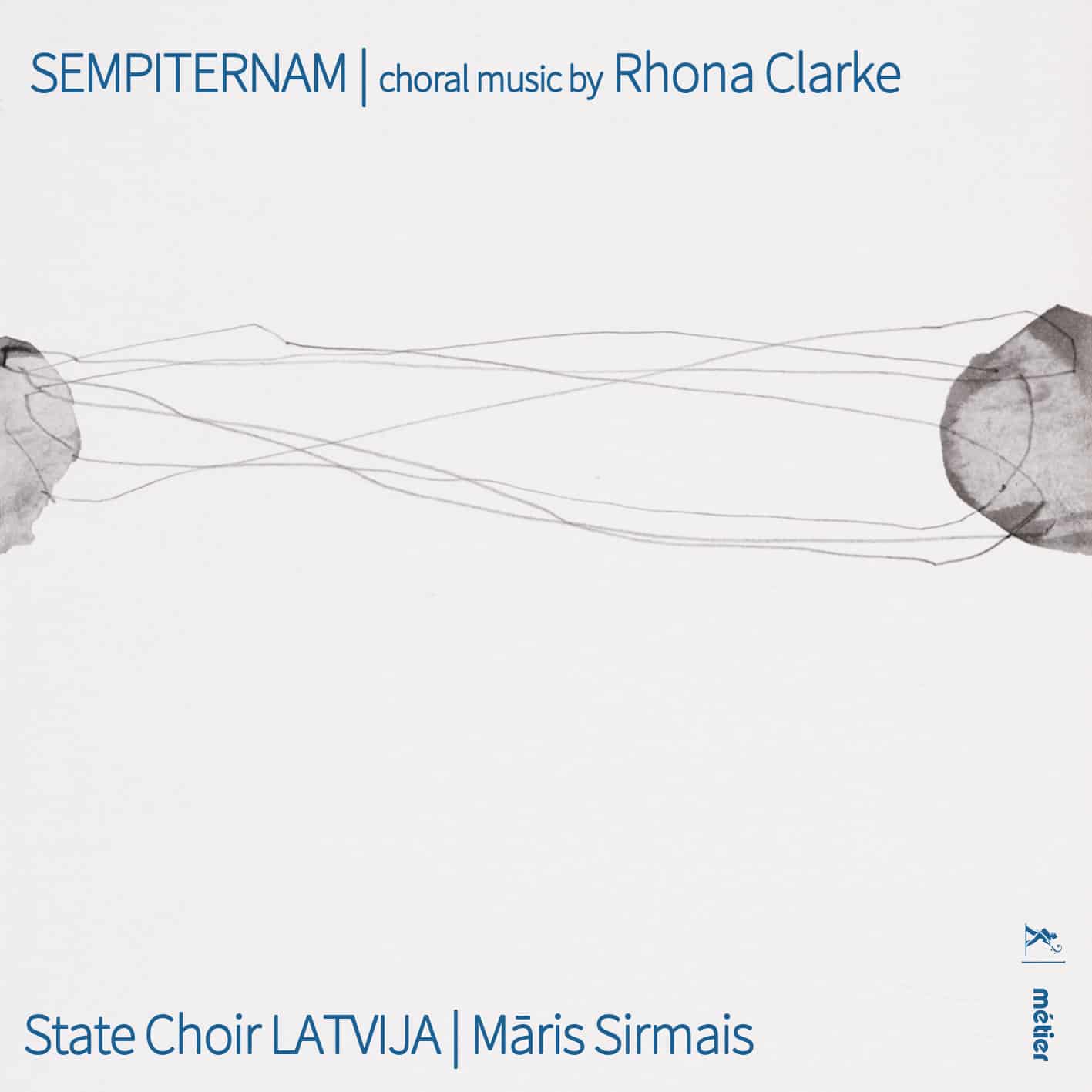
On record – State Choir LATVIJA / Māris Sirmais – Sempiternam: Choral music by Rhona Clarke (Métier)

rhona-clarke

Rhona Clarke
O Vis Aeternitatis (2020)
Two Marian Anthems (2007)
Three Carols on Medieval Texts (2014)
Requiem (2020)
The Kiss (2008)
A Song for St Cecilia’s Day (1991)
Do Not Stand at my Grave and Weep (2006)
The Old Woman (2016)
Rorate Caeli (1994)

State Choir LATVIJA / Māris Sirmais

Métier MSV28614 [72’36”] English/Latin texts and English translations included

Producer & Engineer Varis Kutmiņš

Recorded July 2021, St John’s Church, Riga

Written by Richard Whitehouse

What’s the story?

Métier continues its coverage of Rhona Clarke with this collection of choral works that spans three decades and comprises settings in English and Latin, underlining the stylistic extent of her music as well as its versatility over a range of texts from the Medieval to the present era.

What’s the music like?

Now in her mid-sixties and a prominent figure in the cultural life of her native Dublin, Clarke has amassed a sizable output as takes in almost all the major genres with particular emphasis on chamber, choral and electro-acoustic music. A previous Métier release of her four piano trios from the Fidelio Trio (MSV28561) confirmed her astute handling of what is among the more recalcitrant of chamber media, with such fluency being no less evident in her writing for chorus that can easily be described as inclusive in terms of its subjects and sympathies.

The Latin pieces are almost all religious texts, of which the gradual Rorate Caeli is energetic and intricate with particularly adroit usage of modes. The stylistic trajectory Clarke has taken is evident in the motet O Vis Aeternitatis, whose text by Hildegard of Bingen duly inspires a setting of great contrapuntal skill with arresting interplay of sung and spoken passages. Two Marian Anthems comprise a fluid take on Regina Caeli then a Salve Regina whose fusing of chordal and melismatic elements results in music of translucent beauty. Most extensive is the Requiem whose four sections – a sombre ‘Introit’, an ethereal ‘Lux Aeterna’, an intimate ‘Pie Jesu’ then a soulful ‘In Paradisum’ – focus on the overtly cathartic aspects. Very different is Ave Atque Vale, a setting of Catullus where pathos and indignation are forcefully intertwined.

The English pieces underline Clarke’s literary sympathies even more directly. The relatively early A Song for St Cecilia’s Day evinces an inventive approach to Dryden’s verse in which order is wrested out of (relative) chaos towards a climactic statement around ‘diapason’. Do Not Stand at my Grave and Weep sets the poem generally attributed to Mary Elizabeth Frye with a melting eloquence as ought to make it a staple of the modern repertoire. After which, the grim humour summoned from the anonymous text The Old Woman is the more pungent. Clarke’s questing harmonic approach helps clarify the sentiment of Ulick O’Connor’s poem The Kiss, but its directness in Three Carols on Medieval Texts yields an engaging humour in Glad and Blithe and Make We Merry to complement the rapt intimacy of Lullay My Liking.

Does it all work?

Almost always thanks to the technical finesse of Clarke’s choral writing and, as previously noted, her ability to ‘home in’ on the expressive essence of the text(s) at hand makes for an emotional empathy which communicates directly to listeners. It helps when the contribution of the State Choir LATVIJA, under Māris Sirmais, is so attuned to this music, not least given its audible command of several by no means idiomatic (to modern ears) English texts. Choral societies looking for new pieces to enrich their repertoire could do worse than to investigate what is on offer here.

Is it recommended?

Indeed. The acoustic of St John’s, Riga is ideally suited to the frequent textural density of this music and the composer provides detailed annotations. Hopefully there will be more releases from this source, not least of the electro-acoustic works that form a notable part of her output.

Listen

Buy

For further information on this disc and to view purchase options, visit the Divine Art Records website. To read more about Rhona Clarke, visit this dedicated composer website, and for more on the performers, click on the names of State Choir LATVIJA and Māris Sirmais.

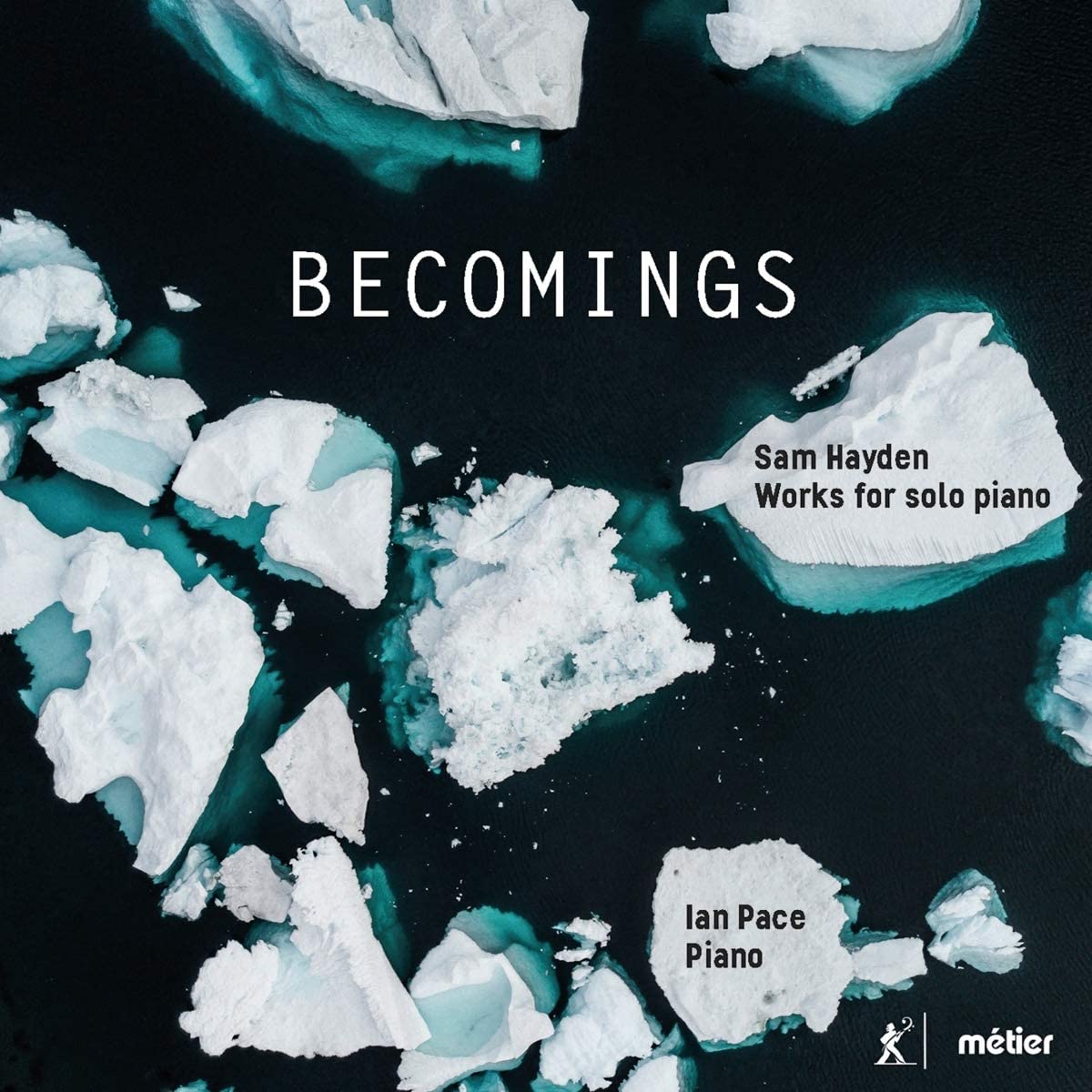
On record – Becomings: Sam Hayden Works for solo piano (Ian Pace) (Métier)

hayden-pace

Sam Hayden
Becomings (Das Werden) I-VII (2016-18)
Fragment (After Losses) (2003)
…still time… (1990)
Piano Moves (1990)

Ian Pace (piano)

Métier MSV28611 [two discs, 89’31”]

Producers / Engineers Will Goring, Sophie Nicole Ellison, Sam Hayden

Recorded August & September 2020 at City University, London

Written by Richard Whitehouse

What’s the story?

A major release of music from Sam Hayden (b1968), currently Professor of Composition at Trinity Laban Conservatoire of Music and Dance – the extent (thus far) of whose output for piano is featured here, and which makes for listening as engrossing as it can seem daunting.

What’s the music like?

It may be significant that, as if mindful of the reception that is nowadays accorded the more radical of today’s music, the composer’s own annotations seem intent on observing his music from the outside – as if to encourage objectivity on the part of those listening. This is by no means an unreasonable gambit for approaching his sometimes intricate, frequently oblique, and always provocative music which is made more so through the constant tension between the systematic and the spontaneous in his thinking. Not least with Becomings (Das Werden), whose notion – as has preoccupied philosophers from Heraclitus to Wittgenstein and beyond – of the state of ‘becoming’, as opposed to ‘being’, pervades the seven pieces at conceptual and semantic as well as musical levels; any tangible sense of finality remaining out of reach.

‘I’ functions as a prelude, but its textural dexterity and hectic passagework plunge straight in. ‘II’ takes this harmonic and polyphonic interplay much further as the intensifying waves of activity culminate in music of assaultive impact, whereas ‘III’ adopts a more improvisatory approach to formal elaboration. ‘IV’ assumes the guise of a central slow movement with its leisurely evolution and trill-permeated texture almost claustrophobic in its intricacy, while ‘V’ finds the superimposition of chromatic and spectral harmonic cycles at its most clearly defined. ‘VI’ unfolds as though a toccata of jagged expressive contrasts before it subsides into simmering anticipation, then ‘VII’ brings this sequence full-circle with its allusions to the opening piece as if a coda whose finality is pointedly offset by the desire to begin anew.

Of the other items, Fragment (After Losses) takes its material from an earlier orchestral piece as the basis for a short while eventful study in disjunct alternations of rhythm and timbre. As his earliest acknowledged work for solo piano, …still time… is audibly a statement of intent with its abrupt if methodical contrasts across the spectrum of pianistic facets; one whose debt to earlier composers (notably Stockhausen) is discharged via the constant pivoting between stasis and dynamism. Larger in overall conception, Piano Moves utilizes an amplified piano in music whose encroaching resonance and polyrhythmic intricacy gradually and inexorably saturate the sound-space; an extended ‘coda’ reducing previously dense textures to a hieratic succession of repeated chords such as sets the primary material at a vastly different remove.

Does it all work?

It does, not least through the unwavering focus of Ian Pace (who gave the complete premiere of Becomings two years back) in clarifying and articulating music whose complex textures never feel merely abstruse – thereby making for an experience seldom less than intelligible.

Is it recommended?

Indeed. These are fiercely committed readings, recorded with clarity and presence, making for a release worthy of attention from all adventurous and inquiring listeners for its dedicated and impressive music-making. Hayden’s chamber music (NMCD168) is also worth investigation.

Listen

Buy

You can discover more about this release at the Divine Arts website, where you can also purchase the recording. For the composer’s website, click here, and for more information on Ian Pace click here

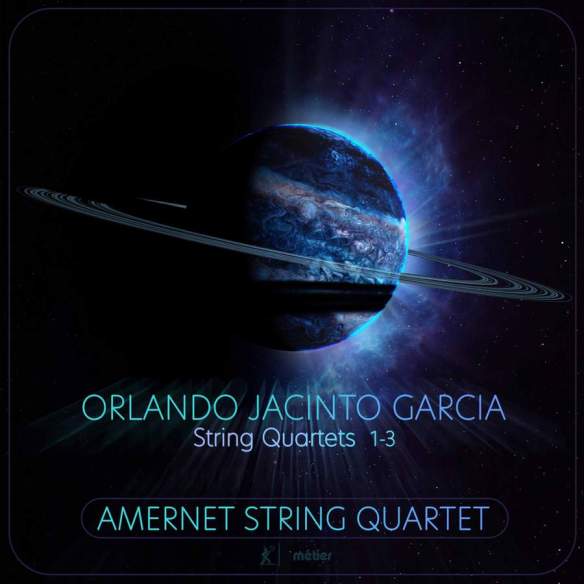
On record – Orlando Jacinto Garcia : String Quartets – Amernet String Quartet (Métier)

Orlando Jacinto Garcia
String Quartet no.1 (1986)
String Quartet no.2 (1998)
String Quartet no.3 (2018)

Amernet String Quartet [Misha Vitenson, Avi Nagin (violins), Michael Klotz (viola), Jason Calloway (cello)]

Métier MSV28613 [65’39”]

Producer Orlando Jacinto Garcia
Engineer Jacob Sudol

Recorded 27 August 2019 at Concert Hall of Wertheim Performing Arts Centre, Miami

Written by Richard Whitehouse

What’s the story?

The highly enterprising Amernet Quartet latest releases comprises the three string quartets by Orlando Jacinto Garcia (b1954), the Cuban-born American composer for whom these works underscore the gradual and incremental changes in idiom across his now substantial output.

What’s the music like?

Although its subtitle Rendering Counterpoint may suggest music which is beholden to such luminaries of post-war complexity as Milton Babbitt, the First Quartet is aesthetically much closer to Morton Feldman (with whom Garcia had undergone an intensive while productive period of study) in its content. Put another way, the very concrete shapes and textures do not so much develop as metamorphose across the course of its almost 26 minutes – with lengthy silences not so much interrupting as motivating the discourse through to an ending the more conclusive for its sparseness. Those daunted by the imposing duration of Feldman’s quartets should find this piece an excellent primer, as well as an engrossing listen on its own terms.

Its subtitle Cuatro might seem straightforward in context, but the Second Quartet predicates the number ‘four’ at conceptual, structural, or expressive levels. Hence four instruments and (continuous) sections, alongside evocations of an eponymous Cuban guitar with four sets of strings, then four composers whose work is alluded to literally yet obliquely. Beyond these, there is the interplay of registers, timbres, textures, and dynamics such as make the resultant piece a varied and involving listen despite (or even because of) its more consonant harmonic sense. Nor is there anything unmotivated about music whose ultimate destination is one of a repose is deeper for its unwavering concentration on the most elemental motifs and gestures.

And so to I Never Saw Another Butterfly, the subtitle of a Third Quartet with inspiration in the art and poetry of children from Terezin (aka Theresienstadt), the transit camp just outside Prague where many artists or composers and their families were interned prior to being sent to concentration camps. Numerous pieces have been written over recent decades in tribute or commemoration, with Garcia’s surely among the most affecting in its absence of extraneous emotion or superfluous rhetoric – opting instead for a contemplative inwardness where solo and ensemble passages are freely alternated, even superimposed over the course of a journey whose 24 minutes proceed eventfully towards a conclusion eloquent in its deft quizzicality.

Does it all work?

Yes, though anyone expecting to encounter radical or seismic changes along the way might be disappointed. More approachable and immediate as Garcia’s idiom has become, there is never any sense of his music courting easy appeal or popular acclaim. Rather, these quartets maintain a steady and methodical course akin to a thawing out or loosening up of emotions audible from the outset. It helps that the Amernet Quartet (who previously recorded quartets by Steven R. Gerber for the Albany label) is so attuned to this music’s understated intensity.

Is it recommended?

Indeed. The sound is well-nigh ideal in its balance and focus, while cellist Jason Calloway’s booklet notes are the more pertinent given his involvement in the actual recording. Garcia’s discography is not yet sizable, but this release should help pave the way to greater coverage.

Listen

Buy

You can discover more about this release at the Divine Arts website, where you can also purchase the recording. For the composer’s website, click here, and for more information on the Amernet String Quartet click target=”_blank”>here