
Arcana at the opera: Hansel and Gretel @ Opera Holland Park (Young Artists Performance)

Hansel and Gretel (1893)
Opera in Three Acts – music by Engelbert Humperdinck; Libretto by Adelheid Wette
Sung in German with English surtitles. Orchestral reduction by Tony Burke

Hansel – Shakira Tsindos (mezzo-soprano), Gretel – Emily Christine Loftus (soprano), Peter – Edward Kim (baritone), Gertrud – Madeline Boreham (mezzo-soprano), The Gingerbread Witch – Ella de Jongh (mezzo-soprano), The Sandman – Claudia Haussmann (soprano), The Dew Fairy – Eleanor Broomfield (soprano)

Bence Kalo (director), Avishka Edrisinghe (repetiteur), Lily Wieland (deputy stage manager)

Opera Holland Park Chorus, Choir of Cardinal Vaughan Memorial School, City of London Sinfonia / Charlotte Corderoy

Holland Park, London
Friday 16 June 2023

review by Richard Whitehouse Photos by (c) Ali Wright

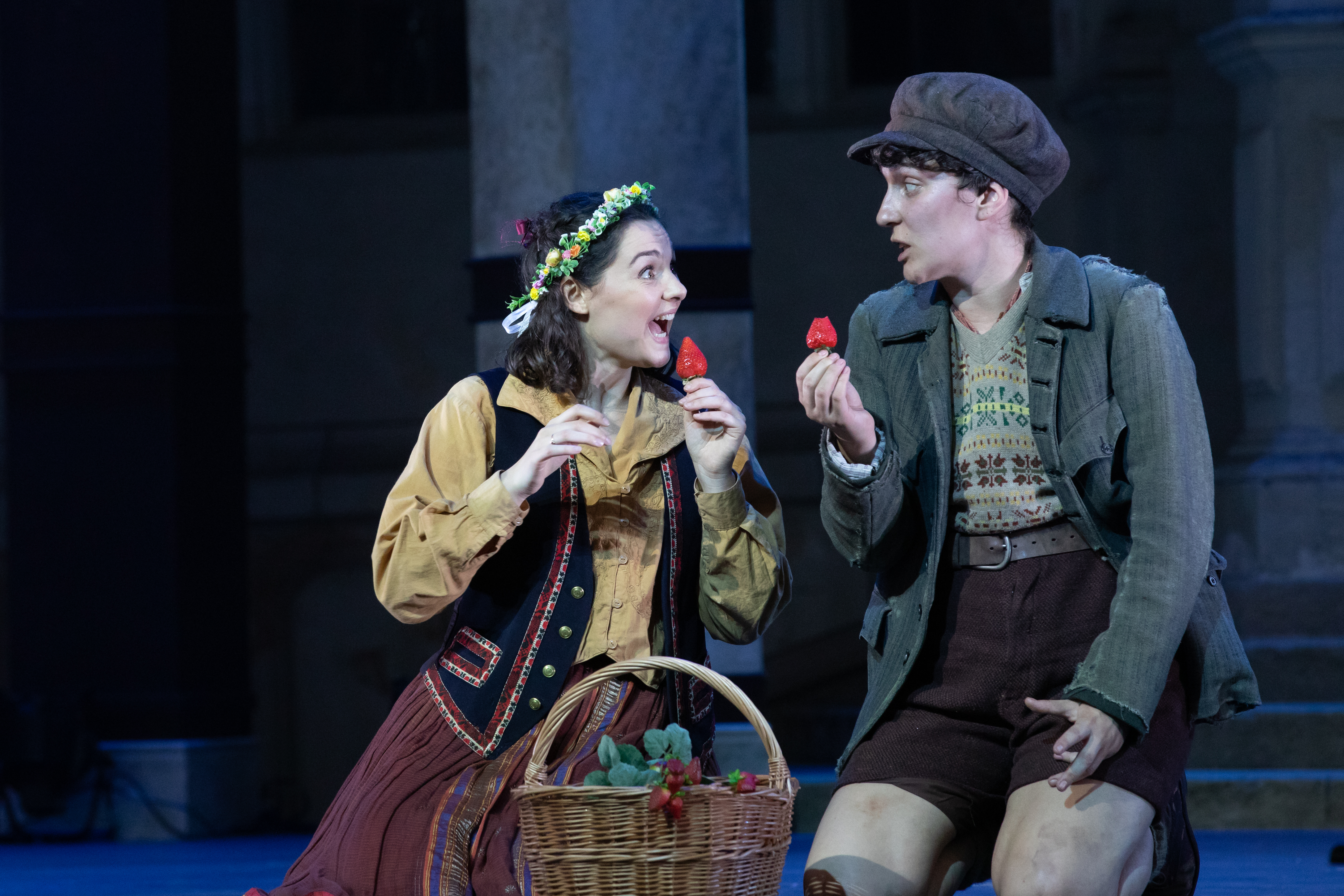
Performances by The Young Artists have been a welcome feature of Opera Holland Park this past decade – none more so than this staging of Hansel and Gretel, Humperdinck’s fairy-tale opera with its ‘rites of passage’ scenario ideally suited to singers at the outset of their careers.

An object lesson in less is more, Bence Kalo’s astute direction worked convincingly through conveying the essence of the siblings’ nocturnal journey – maybe more imagined then real, as was implied by the overture’s becoming a pantomime where a host of comedic and woodland characters assumed the spotlight. Neither was the subsequent element of danger played down, with the confrontation with the Witch taking on ominous overtones as cut across the farce and so made the latter’s demise then the freeing of her victims the more affecting in consequence.

The eponymous figures were as well matched vocally as visually. Shakira Tsindos proved a Hansel likable for all his (sic) gaucheness and gullibility – projecting the character with flair and immediacy, if marginally overdoing the slapstick in the third act. Emily Christina Loftus was a Gretel near ideal in her unforced eloquence, all the while exuding an awareness of the ‘outside world’ as made her the dramatic and musical focus during their sylvan wonderings. As an empathetic portrayal, it could hardly have been bettered technically or interpretively.

Absent throughout much of the opera, the roles of the parents are none the less crucial to its dramatic trajectory. Edward Kim was adept in channelling the warmth and guilelessness of Peter with no risk of sentimentality, making him a dependable figure whatever his failings. Madeline Boreham was forceful but never mean-spirited as Gertrud, her overt exasperation leavened by the anguish through which she lamented her family’s poverty, and recognizing the degree to which Humperdinck humanizes her character compared to the Grimm original.
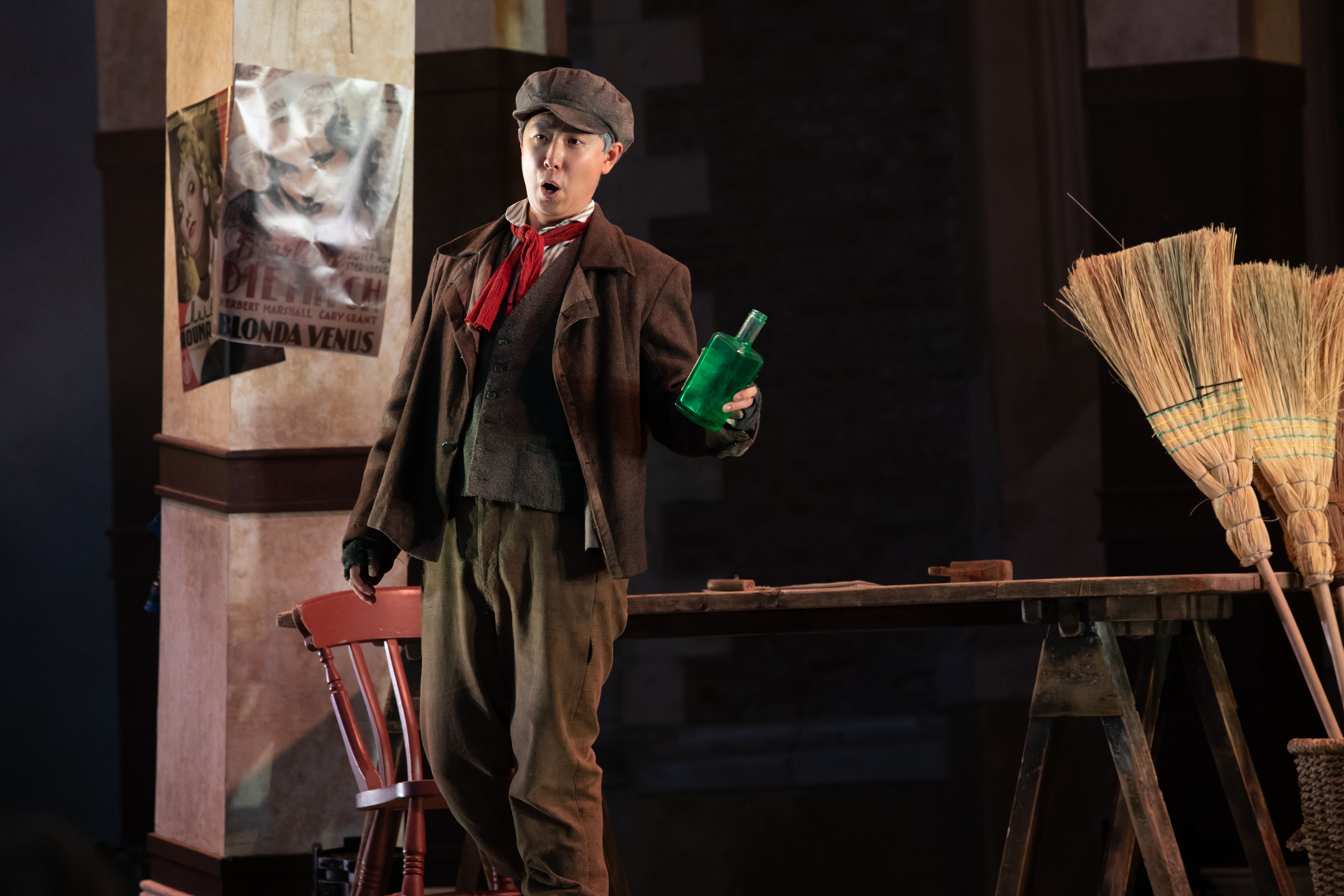
The remaining roles were ably taken – not least the Witch of Ella de Jongh, who brought off the vocal as well as scenic change from pantomime dame to small-time dictator with aplomb. Claudia Haussmann was magnetic though a little edgy in tone as the Sandman, while Eleanor Broomfield conveyed real enchantment without unnecessary whimsy as the Dew Fairy. The choral contribution had the requisite poise and finesse, not least in those evocative moments when the shades of children vanished into the witch’s domain emerged out of the tonal ether.

The orchestra (City of London Sinfonia in its familiar summer guise) was its usual dependable self, the scaled-down complement of strings not lacking for presence situated at the centre of the platform. It helped that Charlotte Corderoy (above) was so evidently attuned to this score, pacing the unfolding drama with subtlety and purpose, while drawing instrumental felicities aplenty from such as the animated prelude and magical ‘dream-pantomime’ which frame the second act. In its mingled pathos and effervescence, the closing scene provided a fitting denouement.

A victim of its own success for much of the 130 years since its premiere, Hansel and Gretel remains an opera not just for Christmas and not just for children: a work in which innocence and experience are meaningfully conjoined, as was confirmed by this admirable production.

For information on further performances, visit the Opera Holland Park website – and you can meet the OHP Young Artists here. Click on the names for more information on Bence Kalo and Charlotte Corderoy

Arcana at the opera: Margot la Rouge & Le Villi @ Opera Holland Park

Margot la Rouge (1902)
Lyric Drama in One Act – music by Frederick Delius; Libretto by Rosenval
Sung in French with English surtitles

Margot – Anne Sophie Duprels (soprano), Sergeant Thibaud – Samuel Sakker (tenor), L’Artiste – Paul Carey Jones (bass-baritone), Lili Béguin – Sarah Minns (soprano), Nini – Laura Lolita Perešivana (soprano), La Patronne – Laura Woods (mezzo-soprano), Totor – David Woloszko (bass)

Le Villi (1883)
Opera-Ballet in Two Acts – music by Giacomo Puccini, Libretto by Ferdinando Fontana
Sung in Italian with English surtitles

Anna – Anne Sophie Duprels (soprano), Roberto – Peter Auty (tenor), Guglielmo – Stephen Gadd (baritone)

Martin Lloyd-Evans (director), takis (designer), Jake Wiltshire (lighting), Jami Read-Quarrel (movement)
Opera Holland Park Chorus, City of London Sinfonia / Francesco Cilluffo

Opera Holland Park, London
Thursday 21st July 2022 [7.30pm]

review by Richard Whitehouse Photos (c) Ali Wright

Delius and Puccini are unlikely operatic bedfellows (as anyone who recalls a near-disastrous ENO staging of Fennimore and Gerda with Gianni Schicchi three decades back will surely concur), but this double-bill by Opera Holland Park has an undeniable logic given both works started out as entries in the competition for one-act operas held on four occasions by Edoardo Sonzogno to encourage young talent (so gaining the upper hand against his established rival Ricordi). That neither proved successful at the time need not detract from the merits of either and if the concept of the one is, with hindsight, as uncharacteristic as that of the other appears immature, both contain more than enough worthwhile music along with arresting stagecraft to vindicate their revival in an imaginative production such as they receive on this occasion.

At the time he finished Margot la Rouge, Delius already had four operas behind him so was hardly unequipped for the task at hand. The challenge lay rather in adapting his increasingly personal, even metaphysical approach to the hard-hitting realism – not abetted by a libretto (written pseudonymously by Berthe Gaston-Danville) which reduces its characterization to stereotypes throughout. Yet the best of Delius’s music rises well above any one-dimensional sordidness – the plaintiveness of its prelude and mounting eloquence of its love scene (both refashioned as the Prelude and Idyll which was the composer’s final collaboration with Eric Fenby) equal to anything from his maturity. Had one or another of those earlier operas been acclaimed, the chances for Margot to reach the stage would have been appreciably greater.

The simple but effective revolving set favoured by Martin Lloyd-Evans presents this drama the more effectively for its unfussiness, enhanced by takis’s set designs and Jake Wiltshire’s resourceful lighting. Casting-wise the stage is dominated, as it needs to be, by Anne Sophie Duprels’s assumption of the title-role – emotionally guarded in its earlier sullenness, before ascending to heights of rapture once her identity becomes known. Samuel Sakker evinces the necessary ardency as Thibault and though Paul Carey Jones is a little too suave to convey the viciousness of The Artist, his commanding presence is never in doubt. Sarah Minns has just the right coquettishness as Lili, while there are telling cameos from Laura Lolita Perešvana, Laura Woods and, especially, David Woloszko among those (too?) numerous smaller roles.

Whereas Delius’s opera had to wait 82 years for its premiere, Puccini’s Le Villi hit the stage within a year of completion then was revived twice before the end of the decade – by which time, this ‘opera-ballet’ had expanded to two acts. Therein lies the problem, as Ferdinando Fontana’s modish libretto seems stretched beyond its effectiveness as drama, the threadbare nature in much of the latter scenario requiring a narrative element merely to hold it together. That said, there are various opportunities for characterizing the three protagonists of which Puccini made the most, with the central symphonic intermezzo L’abbandono e La tregenda (the latter still heard as an encore) confirming a new orchestral sophistication in Italian opera. Theatrically flawed as it may be, Le Villi is an auspicious and undeniable statement of intent.

Here, too, the Lloyd-Evans-takis-Wiltshire staging works to the advantage of this drama, yet without over-egging the supernatural shenanigans; credit, also, to Jami Reid-Quarrell for his utilizing the relatively restricted stage-space such that the dance element seems both alluring and more than compensates for the flailing narrative. Vocally, Anne Sophie Duprels has the measure of Anna as she traverses the gamut of emotions from diffidence, through heartbreak to revenge, with a continuity of expression not to be taken for granted. Peter Auty has made a speciality of high tenor roles, but his Roberto needs greater fervency and warmth to offset its shrillness. Not so Stephen Gadd, whose Guglielmo has a burnished humanity that commands attention on his (too few?) appearances and a clarity ideally suited to delivering the narrative.

The latter opera also gains from a typically lusty contribution by Opera Holland Park Chorus – and, in both works, the City of London Sinfonia responds with commitment to the dynamic direction of Francesco Cilluffo, who teases out the many dramatic nuances with alacrity. The orchestral reductions by Andreas Luca Beraldo have been judiciously gauged in both cases -that for Margot ironically closer to the orchestration undertaken by Eric Fenby in the absence of Delius’s score and which was soon mothballed once the original had been relocated. The relative unfamiliarity of these operas is a coup such as OHP has regularly delivered over the years, and one which is well worth the attention of more than just those drawn to rare opera.

Further performances take place on 29 July, 31 July [2pm], 2, 4 and 6 August. For more information visit the Opera Holland Park website