
Summer music – Bridge: Summer

With another sweltering day promised in the UK, here is a rather wonderful tone poem from the pen of underrated English composer Frank Bridge – one to revel in this Sunday!

Published post no.2,594 – Sunday 13 July 2025

Summer music – Barber: Summer Music

With the hot weather continuing in the UK, here is a delightful few minutes spent in the company of Samuel Barber – his only work for wind quintet:

Published post no.2,572 – Sunday 22 June 2025

Summer serenades: Barber

If you search for Barber‘s Serenade for Strings on YouTube, the search facility thinks you want to hear the Adagio. This is not a surprise, given the popularity of Barber’s most famous music – but there is indeed a Serenade for Strings, the first published material from the American composer.

Like the Adagio, it was originally written for string quartet but transcribes effortlessly for bigger forces – as here, with the Royal Scottish National Orchestra under Marin Alsop. Lasting just over 10 minutes, it is in three movements:

Published post no.2,274 – Sunday 18 August 2024

In concert – English Symphony Orchestra / Kenneth Woods – American & Canadian Sounds 2

Roman Kosyakov (piano), Rebecca Wood (cor anglais), Stuart Essenhigh (trumpet), English String Orchestra / Kenneth Woods

Barber Adagio for strings Op.11a (1936)
Still (arr. Zur) Dismal Swamp (1935)
Gershwin (arr. Farrington) Rhapsody in Blue (1924)
Copland Quiet City (1941); Appalachian Spring (1945)

Kings Place, London
Sunday 19 February 2022

Reviewed by Richard Whitehouse

London appearances by the English Symphony Orchestra being so infrequent, it was good to see an (understandably) scaled-down orchestra returning to Kings Place for the series American & Canadian Sounds that is taking place under the auspices of London Chamber Music Society.

The ubiquitous Adagio that Samuel Barber arranged from his only string quartet almost had to feature here, but that was no hardship given the excellence of the ESO’s playing – the silence after its climax rightly made the focal-point around which this whole performance revolved.

Although his music never entirely went away, the extent of William Grant Still’s output has barely been explored so all credit to Kenneth Woods for championing Dismal Swamp (heard here in an effective reduction by Noam Zur). Taking its cue from a short yet intense poem by playwright Verna Arvey (Still’s second wife), this 15-minute tone poem evokes the no-man’s land between Virginia and North Carolina across which escaped slaves once fled to freedom. Its concertante role for piano subtly embedded into the orchestral texture, the music charts a progression from sombre desperation to outward elation through a subtly extended tonality (Still having studied with composers as distinct as Chadwick and Varèse) whose apotheosis elides resolve and equivocation with a fervency which was tangibly in evidence.

Roman Kosyakov was the admirable pianist here as in George Gershwin’s Rhapsody in Blue. This also was heard in reduction, Iain Farrington’s arrangement combining the immediacy of Ferde Grofé’s original scoring with the Europeanized grandeur of his later orchestration. Placing the piano rear-centre of the platform likely accounted for any occasional failings of coordination, but Kosyakov’s characterful playing – not least in the lengthy developmental cadenza and ensuing ‘big tune’ – held one’s attention through to the indelible closing bars.

The play by Irwin Shaw for which he wrote incidental music might have passed into history, but Quiet City is among Aaron Copland’s most effective shorter pieces – its halting dialogue between cor anglais (Rebecca Wood) and trumpet (Stuart Essenhigh) given context by the modal plangency of its string writing.

The programme ended with Copland’s Appalachian Spring – heard here in the familiar suite but in the original orchestration with its prominent part for piano, along with solo woodwind contributions that stand out more clearly against the string nonet. Familiar as this music may be, its understated harmonic shadings and keen rhythmic ingenuity are never easily realized in performance, and it was testament to the ESO’s playing that the piece emerged as vividly and as cohesively as it did. In particular, the penultimate sequence of variations on ‘Simple Gifts’ had an unforced eloquence (the last statement of the Shaker hymn eschewing any hint of bathos) which carried through into the coda – its evocation of community no less affecting for being so idealized, and in music such as more than warrants that misused term ‘iconic’.

A rewarding programme and a welcome London appearance by the ESO, which will be back in action next month with (inter alia) a concert at Oxford’s Sheldonian Theatre that features a major new work by Robert Saxton as part of the orchestra’s ‘21st Century Symphony Project’

For more information on the artists in this concert, click on the links to read about Roman Kosyakov, Kenneth Woods and the English Symphony Orchestra. For more on the London Chamber Music Society, click here – and for more on composer William Grant Still, click here

In concert – April Fredrick, English Symphony Orchestra / Kenneth Woods – The Journey Home: Haydn, David Matthews, Barber & Mozart

Haydn Symphony No. 45 in F sharp minor, Hob.I:45 ‘Farewell’ (1772)
David Matthews Le Lac Op.146 (2018)
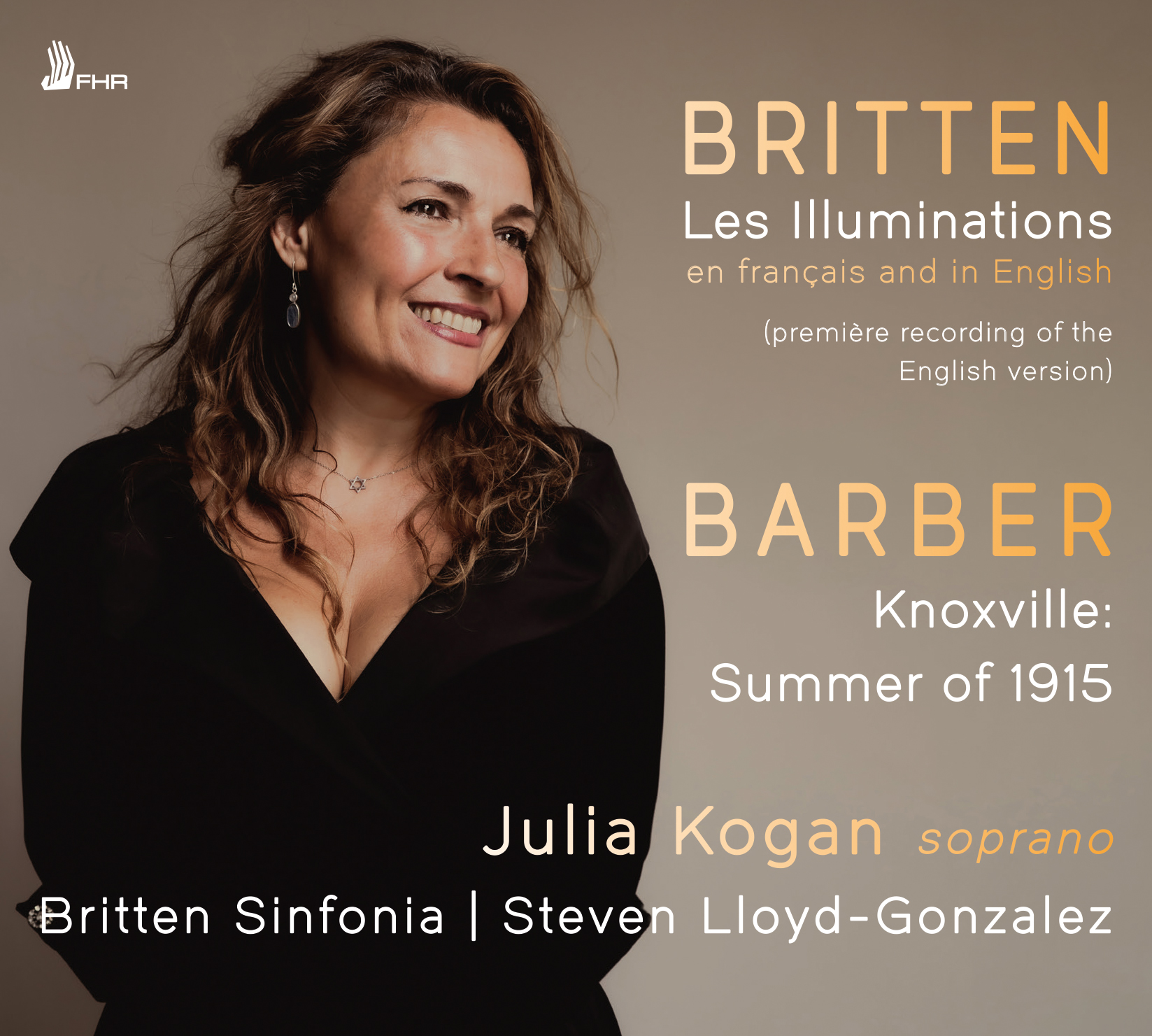
Barber Knoxville: Summer of 1915 Op.24 (1947)
Mozart Symphony no.36 in C major K425 ‘Linz’

April Fredrick (soprano), English Symphony Orchestra / Kenneth Woods

Great Malvern Priory, Malvern
Wednesday 23 November 2022

Reviewed by Richard Whitehouse

The English Symphony Orchestra’s season really hit its stride this evening with a programme featuring two major vocal works of the 20th and 21st centuries, heard alongside two notable while very different symphonies from near the start and towards the end of the Classical era.

As Kenneth Woods indicated, Haydn’s ‘Farewell’ Symphony would have been determinedly avant-garde to early listeners, and much of that innovative quality came over here. Not least in the initial Allegro, its jagged course and disjunctive tonal shifts only nominally countered by the Adagio’s increasingly fraught introspection. With its stark alternations in motion and phrasing, the Menuetto proved a telling foil to a finale where a turbulent Presto precedes an Adagio whose eloquence was sustained as the music subsides and musicians vacate the stage.

Whether or not this symphony would have been better placed at the end of this concert, it set up productive contrast with David Matthews’s Le Lac. Remembered more as statesman than poet, Alphonse de Lamartine was a crucial figure in French literature of the early Romantic period – his lengthy 1820 poem a remembrance of lost love comparable to verse by Shelley and Heine, and one whose slowly intensifying rapture is to the fore in this evocative scena. Two orchestral interludes aside, its formal and emotional progress is essentially determined by the vocal line; with which April Fredrick was at one in conveying the wistfulness but also anguish inherent of this music. The fastidious textures were no less finely delineated by the ESO, Woods sustaining a cohesive overall trajectory from earlier promise to ultimate loss.

Evidently it was Fredrick who had suggested juxtaposing this piece with Barber’s Knoxville: Summer of 1915, which pairing succeeded admirably in terms of underlining conceptual and expressive links between them. Its sense of loss may be psychological rather than personal, but an emotional force comes over tangibly for all this music’s overt restraint: James Agee’s poetic reportage summoning a response the more affecting for its restraint and in whose vocal part Fredrick was never less than attuned. Woods brought no mean sensitivity or character to orchestral writing such as eschews the rhetoric found in many of Barber’s earlier scores and so foreshadows the subtlety of those two decades hence. This is a work with few significant precursors or successors, and the present reading made the most of its singular atmosphere.

The evening concluded with the relative extroversion of Mozart’s ‘Linz’ Symphony – a piece whose having been written in four days doubtless occasioned its technical brilliance, yet also a formulaic quality to its actual substance. Not, however, in an Andante whose gentle pathos was to the fore, or a Menuetto whose brevity belies its resourceful use of woodwind. Woods found a winning effervescence in the initial Allegro, and if the second-half repeat in the final Presto may be one such too far, this music’s Haydnesque wit was never less than appealing.

It set the seal on a well-conceived and finely executed concert that, in pivoting between the established and unfamiliar (not only between but also within works) typifies thr resourceful approach to programming with which Woods and the ESO have now become synonymous.

For more information on the artists in this concert, click on the links to read about April Fredrick, Kenneth Woods and the English Symphony Orchestra. For more on composer David Matthews, click here