Switched On – Primitive Motion: Portrait Of An Atmosphere (A Guide To Saints)

by Ben Hogwood

What’s the story?

Brisbane duo Primitive Motion present a new album of unique sound worlds through Lawrence English’s A Guide To Saints imprint.

One look at the credits on their Bandcamp site reveals just how many instruments, colours and textures the two sonic creators have at their disposal. Sandra Selig is credited with contributions through voice, handclap, flute, cymbals, melodica, radio, saxophone, glass bowl, drums, marble in bamboo, zither, wind chimes and bowed cymbal. Meanwhile Leighton Craig contributes on the acoustic guitar, reed organ, cymbals, field recordings (Kyoto Japan), tremolo guitar, miniature saxophone, voice, piano, metal stool, bird call, synthesiser, wind chimes, shaker and timber box.

Between them, Primitive Motion have made a four-part Portrait Suite, bolstered by a fifth track, Trenches Of Time.

What’s the music like?

Intensely descriptive. Although all the instruments above are used, they are of course employed sparingly, and it is immediately clear how much thought has gone into the resultant colours and textures. Yet to their enormous credit Primitive Motion never make anything sound forced. They create their sonic visions with a healthy degree of musical instinct, allowing their material plenty of room to live and breathe.

Portrait is without question an outdoor suite, using field recordings as well as some deeply evocative percussion and instruments where the textures are very clearly thought out. The woozy reed organ with which Portrait II ends is a case in point, and so are Sandra Selig’s vocals, which have a unforced yet primal beauty in the first of the four movements, lost in thought as they are. The mournful and muffled saxophone at the start of Portrait III is striking, its line taken up by Selig’s vocalise. Her mysterious vocal drone on Portrait IV is also a prominent feature, fading in and out over a distracted piano line.

Trenches Of Time sits outside the four-part suite but is more than a coda. Instead it presents what, to this listener at least, feels like a heat-soaked tundra, with distant structures shimmering in the hot sun. Drones reinforce the intense musical humidity.

Does it all work?

It does – though the listening conditions have an important part to play here. This is definitely not an album to experience on the move, as much of the shading and detail will be lost.

Is it recommended?

It is. The name Primitive Motion is well chosen, for Selig and Craig strip music back to its basic elements in order to create pictures and meditations that leave a lasting impression.

Listen

Buy
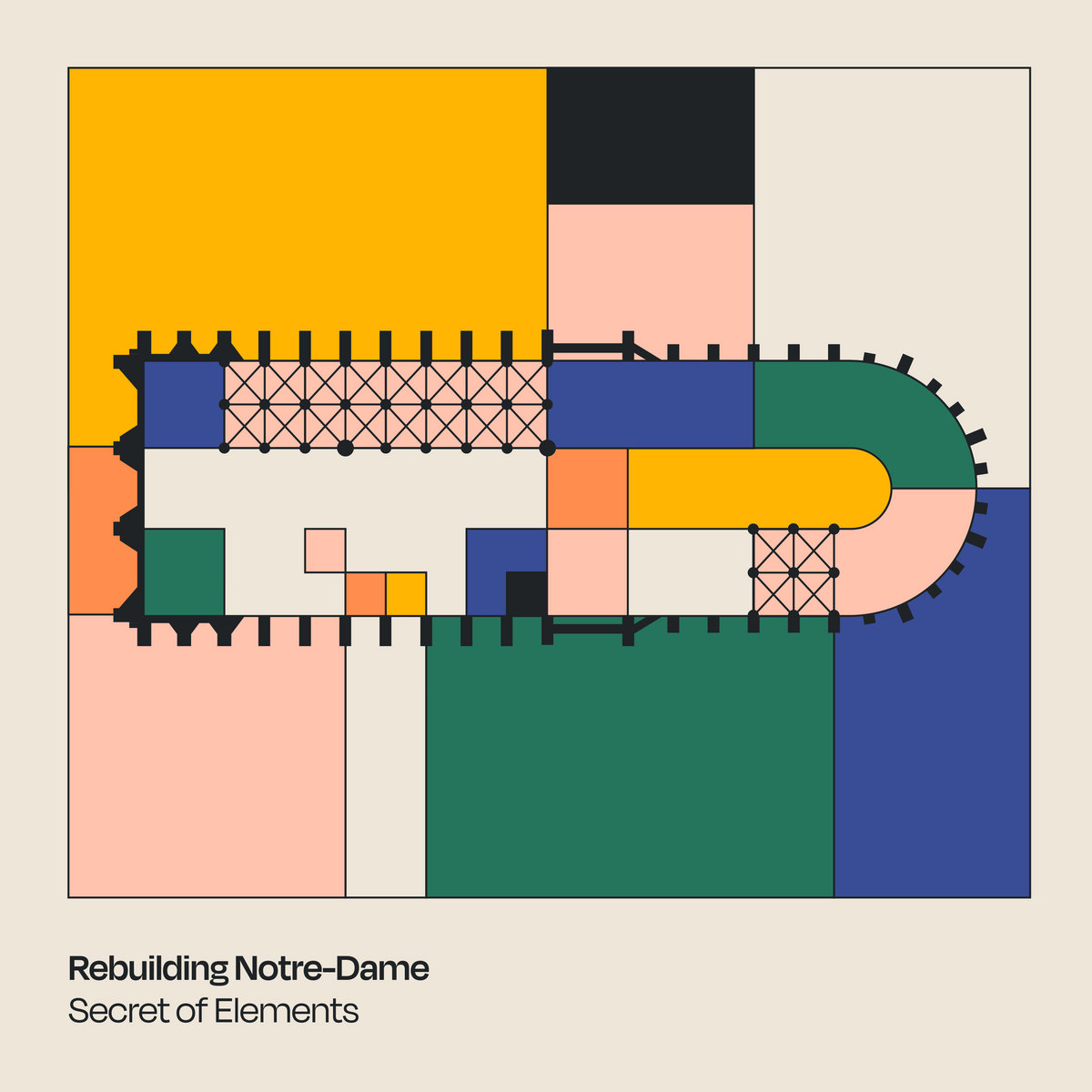
Switched On – Secret of Elements: Rebuilding Notre Dame OST (InFiné)

by Ben Hogwood

What’s the story?

What a daunting prospect it must have been for Rostock composer and multi-instrumentalist Johann Pätzold, when he was approached to write the music for a documentary on the recovery of the great Notre-Dame cathedral in Paris. With well over 1,000 years of musical tradition inside its walls, where would a composer start?

Pätzold – who records under the name Secret of Elements – stripped the ideas back to the elements themselves, with each of the documentary’s three episodes focused on wood, glass and stone. Building on these three fundamentals, he added aspects of spirituality and mechanics, including on the way musical references to the cathedral’s organ and choir.

What’s the music like?

Rebuilding Notre-Dame leaves a lasting and powerful reflection, and for Johann Pätzold it can be counted as a job very well done. He successfully evokes the distant past and the future within a sound framework that conveys the massive spaces in which the workers are restoring the cathedral. There is an air of reverence for sure, but also one of barely concealed horror at the plight in which the building finds itself.

The root of the music is the Adagio for Notre-Dame, composed first, and from this all the other ideas spring. It is a true lament, music of powerful regret and sorrow but also with an undercurrent of hope in its rising from the depths. Ruins also proves a moving utterance, an evocation of the choir, soaring to the heights over the support of the organ.

Born Again ends with a powerful and brilliant chord from the organ, the climactic notes of a surge of movement suggesting strong new beginnings. A New Chapter capitalises on this but with a rhythmic drive.

Shattered Glass is especially effective, while Stones generates urgency, suggesting many hands at work. The figurations in darker lower strings for Holy Grounds could be borne of Philip Glass, also with the organ towards the end, while Wood and Forest draws an exciting combination of scurrying orchestral figures and voices.

The final Resurrection is a suitably majestic way to bow out, restoring the cathedral to its former glory in music of power and splendour, great drums pounding in response to choral and orchestral might.

Does it all work?

Yes. Pätzold makes great use of audio perspective to convey the vast, empty spaces, while also bringing through a potted history of the music heard in the cathedral in the preceding years.

Is it recommended?

It is. This is a deeply impressive achievement from Secret of Elements, who has somehow captured all the emotions at play in the task of restoring one of the world’s most famous sacred buildings to its former glories. The fitting soundtrack suggests they will indeed be restored.

Listen

Buy