In concert – Yuja Wang, Czech Philharmonic Orchestra / Semyon Bychkov: Rachmaninoff Piano Concerto no.1 & Smetana Má Vlast

yuja-wang

Rachmaninoff Piano Concerto no.1 in F sharp minor Op.1 (1891, rev.1917)
Smetana Má Vlast (1874-82)

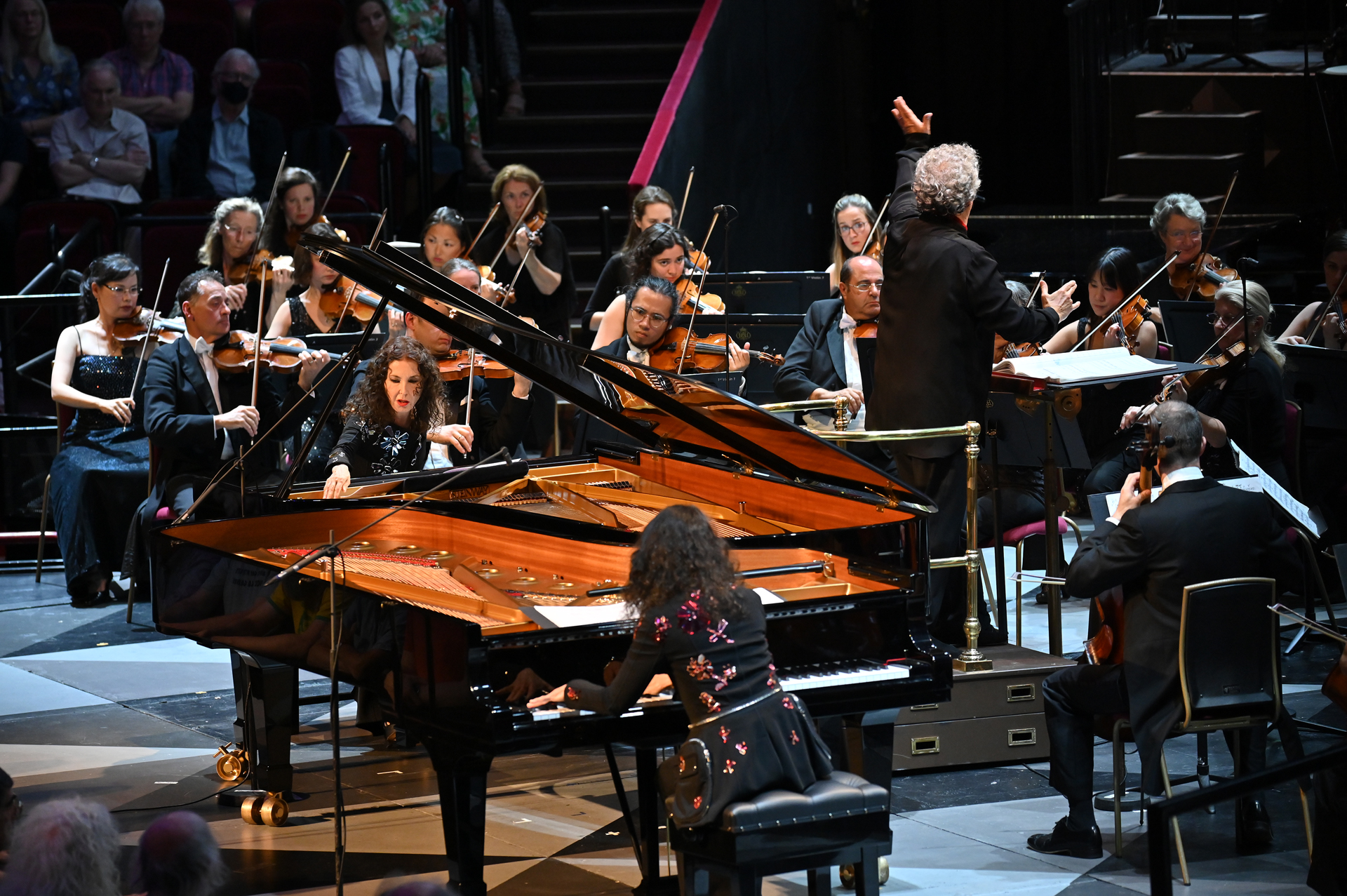
Yuja Wang (piano, above), Czech Philharmonic Orchestra / Semyon Bychkov

Barbican Hall, London
Tuesday 15 March 2022

Written by Ben Hogwood Photo credits Petr Kadlec

This was the first visit by an overseas orchestra to the Barbican since the coronavirus pandemic began, one of many reasons for the buzz of anticipation accompanying the arrival of the Czech Philharmonic Orchestra and their principal conductor Semyon Bychkov.

Their two-night residency began with the first published notes from Rachmaninoff, a call to arms signalling intent at the start of his Piano Concerto no.1. With the athletic piano playing of Yuja Wang, this was a sure way of getting the concert off to a high octane start. Hers was a virtuoso performance, seizing the music by the scruff of the neck early on but also bringing impressive clarity to her melodic phrasing, so that among even the more congested orchestral writing her line could be clearly heard.

The balance between soloist and orchestra was ideal throughout and proved especially satisfying in the Andante cantabile second movement, where the volume dipped to a mere whisper. Is it too fanciful to suggest that audience coughing is now much less since we returned to live music? Certainly, the Barbican was almost completely silent in response to Wang’s absorbing and feather-light playing, and her dovetailing with the eloquent bassoon of Ondřej Šindelář was a delight.

The finale returned us to the raw power of the first movement, but both Wang and Bychkov ensured the melodies still held sway, the latter marshalling the orchestra with effortless command but keeping a tight ensemble. Wang’s fingers and hands were a blur at times, as she somehow brought the most complicated passagework under her wings without missing a beat or a phrase. Her dedication was wholehearted and her love for the piece was clearly shared by the orchestra, who were smiling readily. Rachmaninov’s first and underplayed utterance was well served indeed.

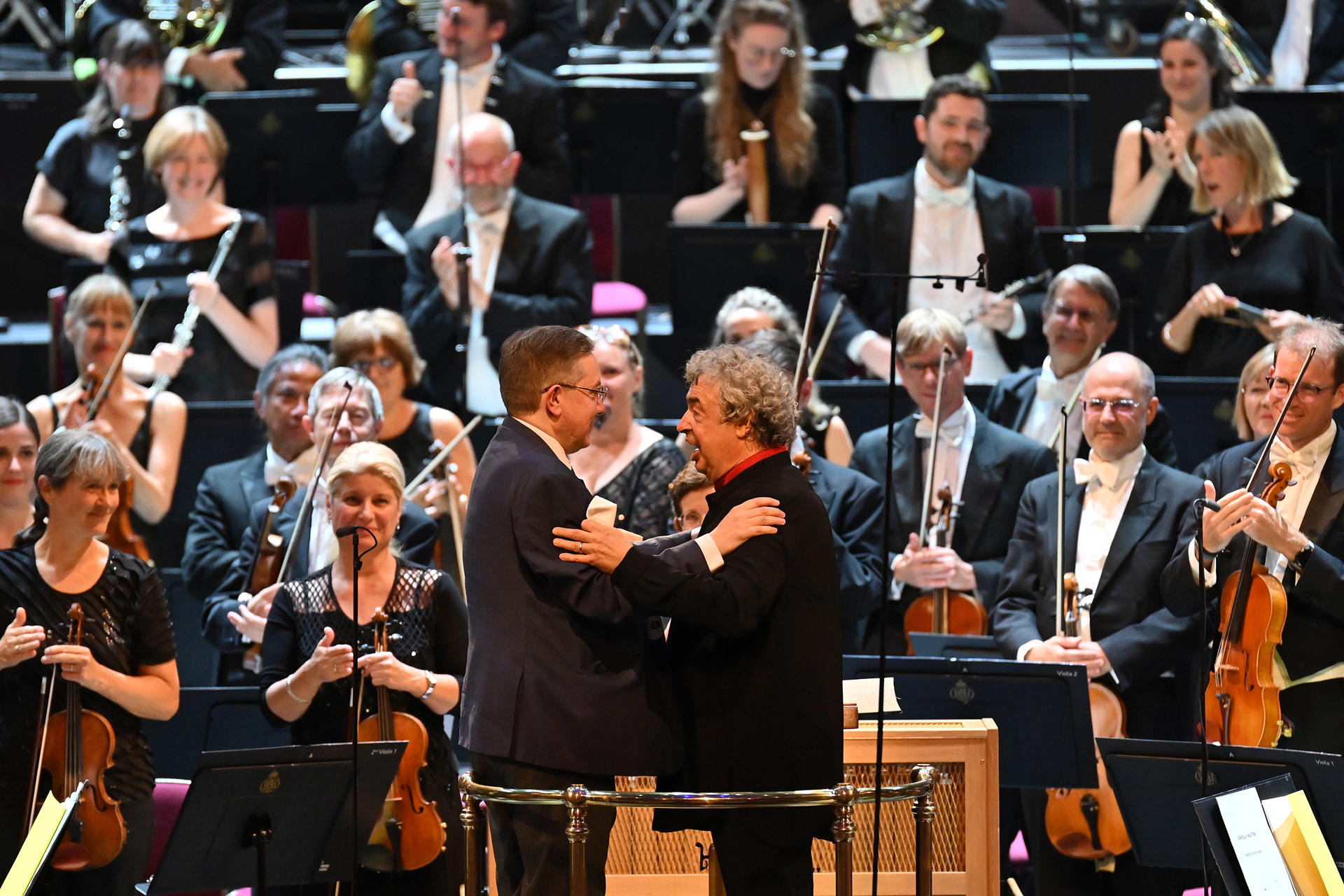
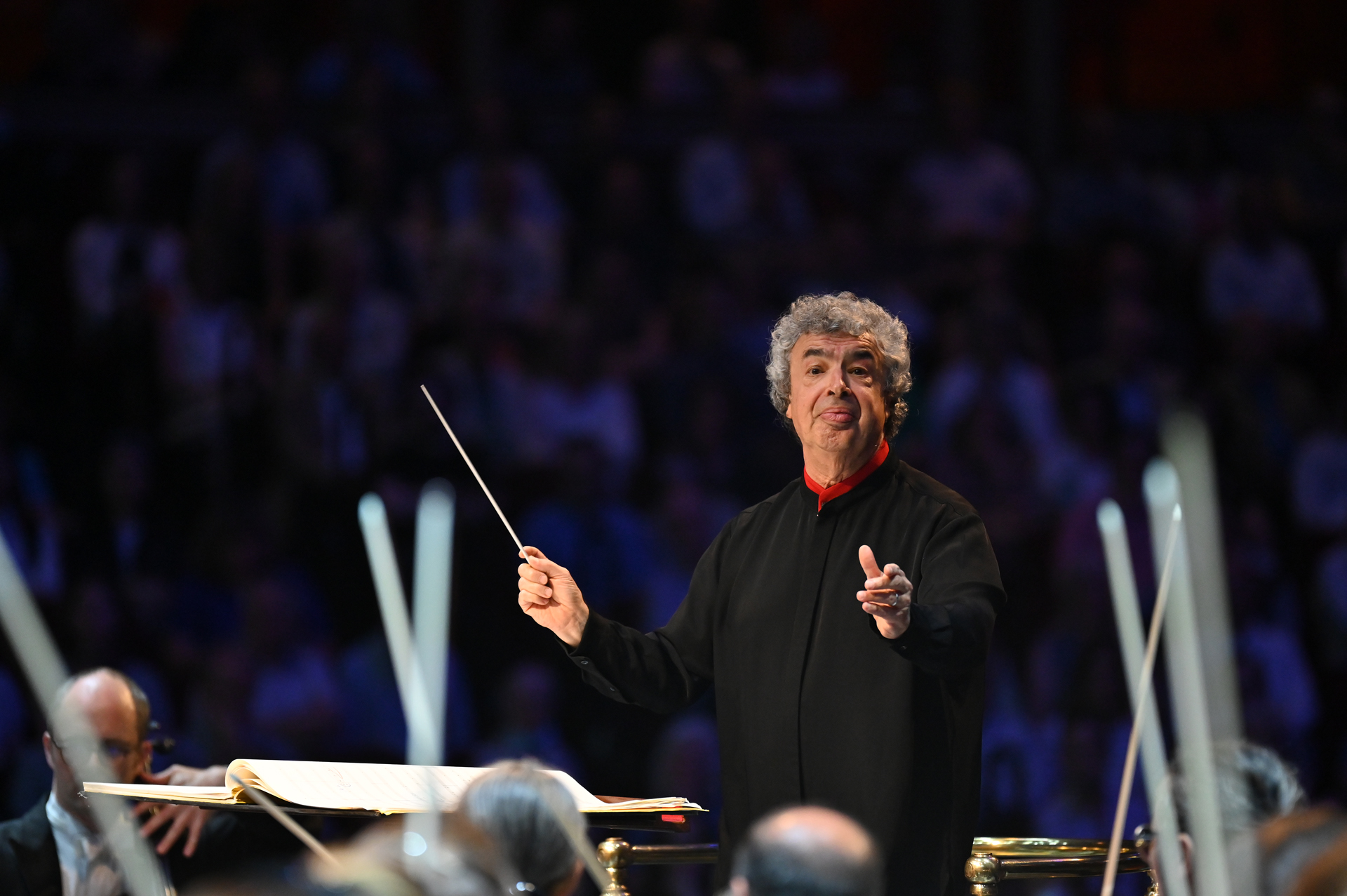
After the interval Bychkov (above), born in Russia, spoke eloquently about the current situation with his home country, dedicating the performance of Smetana’s Má Vlast to the people of Ukraine. He noted the unplanned but happy coincidence brought by programming one of Romantic music’s most heartfelt patriotic statements on this night. Written to bring pride and inspiration to the Czech people, Smetana’s rousing set of six symphonic poems could not have wished for a more fitting performance here.

The lofty construction of Vyšehrad was led off with expansive harps tracing the building’s lofty lines, the music growing in stature as the rest of the orchestra joined. Bychkov’s pacing in this noble movement was ideal, a powerfully wrought performance with tasteful phrasing. The same could certainly be said for Vltava, whose depiction of the river bubbling up was wonderfully exuberant. The wind section clearly enjoyed their vivid profile of the waters and their surrounds, with no obvious pause for breath as the current gained in power. There was a persuasive lilt to the rhythmic profile of the music too. This was felt especially in the peasant dance section, Bychkov encouraging the strings to dig their bows in, dragging the beat tastefully. It was glorious fun.

If anything, this performance grew stronger and leaner as it progressed. Šárka drew sharp parallels with Liszt, whose symphonic poems Smetana was looking to emulate, telling the story of the female warrior with sharp rhythmic snaps and the tightest possible ensemble. From Bohemia’s Woods and Fields, by contrast, was a glorious celebration of the countryside, its fugal episodes bouncing off each other before the colourful village festival took hold. By this point the orchestra had unexpectedly carried out a series of substitutions, the wind section effectively replaced halfway through. It says so much for their function as a team that the overall sound was not affected.

Both wind sections stood out in this performance, stylish and authentic, but the finer details to this interpretation impressed greatly. The percussion, for instance, took such great care with their cymbal and triangle contributions, the shading just right and complementing Smetana’s fulsome melodic writing, made all the remarkable with the reminder that he had lost his hearing by this point.

The final pairing of Tábor and Blaník proved every bit as dramatic as Šárka, the orchestral sound given a renewed heft through powerful strings, rolling timpani and fulsome brass. There was a stern countenance to Tábor’s opening pages, and the Hussite tune dominating these two poems had a lasting resolve which carried unmistakable parallels to the current situation. The final pages of Blaník were thrilling, recalling Vyšehrad in blazing colour before Bychkov signed off emphatically.

There were no encores in the concert, and nor were they needed, for this was a wholly memorable occasion, a true privilege to say, ‘I was there’.

You can listen to the repertoire in this concert by using the Spotify playlist below, which includes the Czech Philharmonic Orchestra‘s recent recording of Má vlast, made with their previous and sadly missed principal conductor Jiří Bělohlávek:

In concert – Jong-Gyung Park, Tonbridge Philharmonic Orchestra / Naomi Butcher – Tailleferre, Prokofiev & Rachmaninoff

tonbridge-philharmonic

Tailleferre Ouverture (1931)
Prokofiev
Romeo & Juliet Suite no.2 Op.64b (1936)
Rachmaninov
Piano Concerto no.2 in C minor Op.18 (1900-01)

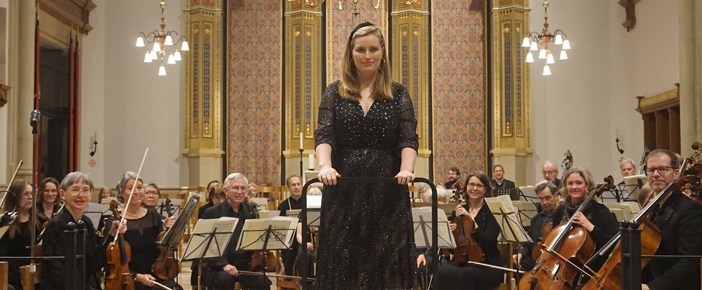
Jong-Gyung Park (piano), Tonbridge Philharmonic Orchestra / Naomi Butcher

Chapel of St Augustine, Tonbridge School, Tonbridge
Saturday 19 February 2022

Written by Ben Hogwood

For the first concert of their 2022 season, the Tonbridge Philharmonic Orchestra and conductor Naomi Butcher focused on Russian Romantics, with red-blooded works from Prokofiev and Rachmaninov drawing a capacity audience to the Chapel of St Augustine.

They began with a rarity, the Ouverture of 1931 from Germaine Tailleferre, the only female member of the celebrated group of French composers known as Les Six. This attractive piece proved the ideal concert opener, a bustling five minutes of music with compact melodies and busy exchanges between the orchestral groups. Tailleferre’s skilful writing has echoes of contemporaries Ravel and Satie, even drawing a line back to Chabrier. There was plenty to admire and enjoy in the piece and in this bracing performance.

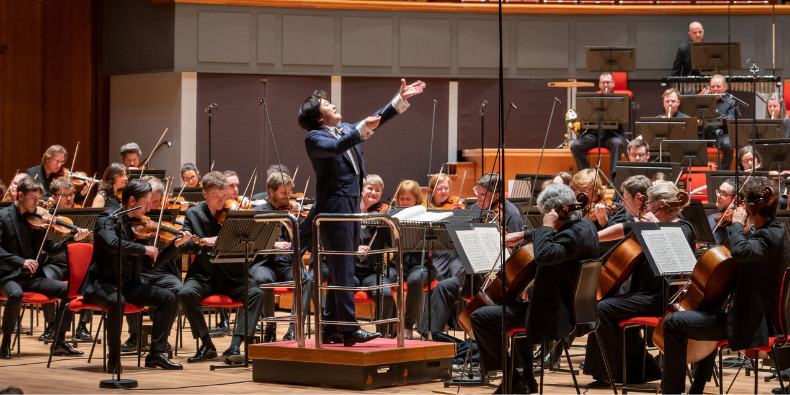
Prokofiev made three concert suites of his successful ballet Romeo & Juliet, the second of which is the most often performed. Containing six movements, it opens with the famous Dance of the Knights (known as The Montagues & Capulets in the suite) – and how refreshing to hear this in its proper context, rather than cueing up another episode of the BBC TV programme The Apprentice! The lower end of the orchestra was on fine form here, driving the music forward but never over-reaching, and Naomi Butcher (above) found just the right tempo. It was also heartening to hear the rich tones of Nicholas Hann’s tenor saxophone when the theme returned. Juliet as a Young Girl was next, taxing the strings with Prokofiev’s fiendishly difficult writing but drawing affectionate phrasing and a light touch nonetheless.

The heart of this performance lay in the two slow movements. Romeo and Juliet before parting featured a poignant flute solo from Lucy Freeman, before revealing Prokofiev’s rich orchestral palette. Ideally paced again by Butcher, the emotive phrasing brought out the best from the woodwind and brass, as well as the composer’s unique string colours. Romeo at Juliet’s grave, which closed out the suite, had an appropriately tragic undercurrent, deeply felt and lovingly phrased by the strings.

After the interval the Tonbridge Philharmonic Choir’s rehearsal pianist, Jong-Gyung Park (above), took a solo role for Rachmaninoff’s Piano Concerto no.2. As the detailed programme notes revealed, she has an illustrious background of worldwide musical experience, belying the modesty with which she took to the stage. This however was a commanding performance, Park taking the piece in her grip from those famous nine solo chords at the beginning. These were deliberately paced for dramatic effect, building the tension inexorably until the arrival of the strings who were ardent in their phrasing, the music surging forwards.

Technically Park was superb, but she was careful not to apply too much weight to her part or use the concerto as a vehicle for display, which so many pianists fall into the trap of doing. This ensured the passion essential to Rachmaninoff’s writing was always near the surface. Pianist and orchestra had a strong rapport, thanks to Naomi Butcher’s keen ear, and in the slow movement this yielded a soft-hearted performance that was not afraid to linger, making the most of the rich colours and some exquisitely phrased melodies from the pianist.

The transition to the finale was nicely done, rhythms stretched for a little while but settling into a punchy account that Park once again led from the front. This time a little acceleration went a long way, with pianist and orchestra quickly aligned. This was a tour de force performance from Jong-Gyung Park, whose love for this music shone through in an account of high class and fresh dexterity.

The Tonbridge Philharmonic will return to Tonbridge Parish Church for another imaginative program on Saturday 21 May, where music from Nielsen and Sibelius will be complemented by a rare performance of Nino Rota’s Double Bass Concerto. It promises to be an equally memorable night if the orchestra’s current form continues!

For further information on the Tonbridge Philharmonic Society click here

In concert – Sunwook Kim, CBSO Youth Chorus, CBSO / Mihhail Gerts: Kodály, Rachmaninoff, Debussy & Stravinsky

Mihhail-Gerts

Kodály Dances of Galánta (1933)
Rachmaninoff
Rhapsody on a Theme of Paganini, Op. 43 (1934)
Debussy
Nocturnes – Sirènes (1899)
Stravinsky
The Firebird – Suite (1919)

Sunwook Kim (piano, below), CBSO Youth Chorus, City of Birmingham Symphony Orchestra / Mihhail Gerts

Symphony Hall, Birmingham
Thursday 17 February 2022

Written by Richard Whitehouse

As Mihhail Gerts (taking over at short notice from Lionel Bringuier) said in his initial remarks, all four pieces in this concert by the City of Birmingham Symphony Orchestra were written by composers born within 20 years of each other and made for some intriguing interconnections.

Youngest of these composers, Kodály’s piece was on one level the most traditional – Dances of Galánta looking back to the Hungarian Rhapsodies of Liszt with its bringing together folk melodies in a free flowing fantasia whose larger paragraphs were judiciously shaped by Gerts so that a cumulative overall structure was always evident. The CBSO responded with alacrity to Kodály’s vivid if sometimes workaday orchestration, Oliver Janes making the most of the clarinet solo as stealthily sets the course for all that follows through to a teasing final pay-off.

By the time of Rhapsody on a Theme of Paganini, Rachmaninoff’s music had all but shed its earlier opulence for a tensile, even sardonic quality pointing up expressive contrasts between the 24 variations which fall naturally while ingeniously into a three-movement continuity. It helped that Sunwook Kim constantly brought out those subtle changes of emphasis to which the theme is put, not least when combined with the Dies irae plainchant as if to underline the darker ambivalence at work in this music. That said, the 16th and 17th variations might have been probed even more deeply, so making the famous 18th more affecting in its catharsis, but the six variations of the ‘finale’ headed with unfailing panache to the suitably deadpan close – Kim responding to the enthusiastic applause with a limpid take on Brahms’s Intermezzo in A.

Whether or not it was the earliest piece to use wordless voices as a facet of the orchestration, Debussy’s Sirènes provided a template for numerous comparably innovative works across the next quarter-century and beyond. Gerts was scrupulous as to his enfolding of the textural strands into a cohesive and diaphanous whole; one to which the CBSO Youth Chorus made a suitably ethereal contribution. Nor was this too passive a reading as it moved with notably restive intent toward a culmination which brought a necessary measure of emotional repose.

But (and to misquote Ronald Reagan’s immortal words) ‘where was the rest of it’? Debussy’s Nocturnes being as integrated a triptych as his later La Mer or Ibéria, it seemed unfortunate to jettison Nuages and Fêtes – especially as they would have added no more than 15 minutes to a relatively short programme rounded off with Stravinsky’s The Firebird. This was heard in its 1919 suite, currently returning to favour given the over-exposure of the complete ballet over recent decades. Gerts duly encouraged the CBSO to give its all – whether in the sombre Introduction and a dextrous Dance of the Firebird, the affecting poise of The Princesses’ Khorovod or animated virtuosity of Kashchei’s Infernal Dance, then a Berceuse of real pathos as merged seamlessly into a Finale which conveyed the necessary emotional frisson.

A fine showing for Gerts who, as artistic director of the TubIN Festival, ought to be invited to schedule the Estonian’s Sixth Symphony on a future appearance. The CBSO returns next week in a concert featuring a UK premiere for R. Nathaniel Dett’s oratorio The Ordering of Moses.

For more information on the next CBSO concert, visit their website. Meanwhile click on the links for information on conductor Mihhail Gerts and Sunwook Kim.

In concert – Ning Feng, CBSO / John Wilson: Rachmaninoff Symphony no.3, Glazunov Violin Concerto & Gershwin’s symphonic Porgy & Bess

rachmaninoff-wilson

Gershwin (arr. Bennett) Porgy and Bess: A Symphonic Picture (1942)
Glazunov Violin Concerto in A minor Op.82 (1904)
Rachmaninoff Symphony no.3 in A minor Op.44 (1935-6)

Ning Feng (violin), City of Birmingham Symphony Orchestra / John Wilson

Symphony Hall, Birmingham
Wednesday 1 December 2021 (2.15pm)

Written by Richard Whitehouse. Photo of Ning Feng (c) Felix Broede

John Wilson may have been taken by surprise when asked to introduce this afternoon concert from the City of Birmingham Symphony Orchestra, but there was nothing left to chance as to the performances in what proved to be a judiciously planned and finely realized programme.

Gershwin’s Porgy and Bess is now well-established as an opera as much as a musical (hybrid or otherwise), not least through Wilson’s advocacy at English National Opera’s staging three seasons ago, but there is still a place for the ‘Symphonic Picture’ as posthumously realized by Robert Russell Bennett. The pre-eminent arranger and orchestrator from Broadway’s ‘golden age’, Bennett may have regarded Gershwin’s masterpiece as essentially a sequence of classy showtunes, but the finesse with which these were fashioned into a cumulative overview of the drama cannot be gainsaid. Wilson drew sumptuous playing from the CBSO in an arrangement by no means dismissive of Gershwin’s orchestration. Perhaps another time he could schedule the far more arresting Catfish Row suite, but so fine a reading of the Bennett was no hardship.

If Glazunov refused Gershwin’s request for tuition, he surely realized no amount of technique could compensate for – in the former’s case – limited or erratic inspiration. Not that his Violin Concerto is an unalloyed masterpiece, but its expressive elegance allied to a formal ingenuity have deservedly kept it in the repertoire and Ning Feng (above) audibly believed in every bar. Maybe the presentation of its main themes in the brief opening section was a little too matter-of-fact, but the central ‘slow movement’ then ensuing development and scherzo were rendered with the right deftness and incisiveness; nor did a relatively lengthy cadenza hang fire on the way to a ‘finale’ that ensured a scintillating close. A sympathetic accompanist, Wilson judged the orchestra’s contribution to a nicety, with some especially felicitous playing from woodwind.

It was Glazunov’s disastrous conducting that had sunk Rachmaninoff’s First Symphony but, four decades later, the Third Symphony finds the latter near the height of his creative powers – its pithy melodic content harnessed to an orchestral astringency that underlines the exiled composer’s confrontation with though not embracing of the musical present. Right from its haunting ‘motto’, through its contrasted themes (with exposition repeat) then a development that culminates in graphic anguish, Wilson had the measure of this masterly first movement.

What ensued was almost as fine, not least the seamlessness with which the slow movement’s scherzo emerged out of then back into the main Adagio – the playing off the acerbic against the bittersweet its own justification. If the finale felt a little too sectional in overall unfolding, there was no lack of characterization – not least the strings’ superb articulation in the central fugato as this headed towards the reprise, though a more continuous acceleration might have imbued the coda with even greater conclusiveness in what is a QED of unequivocal defiance.

Even so, this was a confident and, for the most part, insightful performance of a work whose true emotions are barely concealed beneath the enticing surface. The CBSO, which gave its all, will be back at Symphony Hall next Thursday in a major new work from Jonathan Dove.

For more information on the CBSO’s autumn season visit the orchestra’s website. For more on the artists, click here for John Wilson and here for Ning Feng