BBC Proms 2023 – Felix Klieser, Bournemouth Symphony Orchestra / Kirill Karabits – Karabits, Mozart & Rachmaninoff

Prom 24 – Felix Klieser (horn), Bournemouth Symphony Orchestra / Kirill Karabits

Karabits Concerto for Orchestra no.1 ‘A Musical Gift to Kyiv’ (1980-81) [UK premiere]
Mozart Horn Concerto no.4 in E flat major K495 (1786)
Rachmaninoff Symphony no.2 in E minor Op.27 (1906-08)

Royal Albert Hall, London
Wednesday 2 August 2023

by Richard Whitehouse photos by Mark Allan / BBC

While not exactly a ‘best kept secret’, Kirill Karabits’ tenure at the helm of the Bournemouth Symphony Orchestra (soon to enter its 16th season) might have attracted even greater national attention than has been the case, with this evening’s Prom offering various pointers as to why.

One of Karabits’ concerns has been promotion of music from Eastern Europe in general and in particular Ukraine, where the role played by his father Ivan (1945-2002) was considerable. Written across the 1980s, the latter’s three Concertos for Orchestra follow on from those by his Russian forebear Rodion Shchedrin by homing in on facets of post-war music in a direct and accessible fashion. As its title indicates, his first such piece commemorates the Ukrainian capital – here the 1500th anniversary of its founding – over the course of a single movement whose monumental if never impersonal introduction leads into a series of evocatively scored episodes that culminate in a shimmering climax replete with the pealing of bells. The ending, as atmospheric as it proves unexpected, is just the most striking aspect of this engaging work.

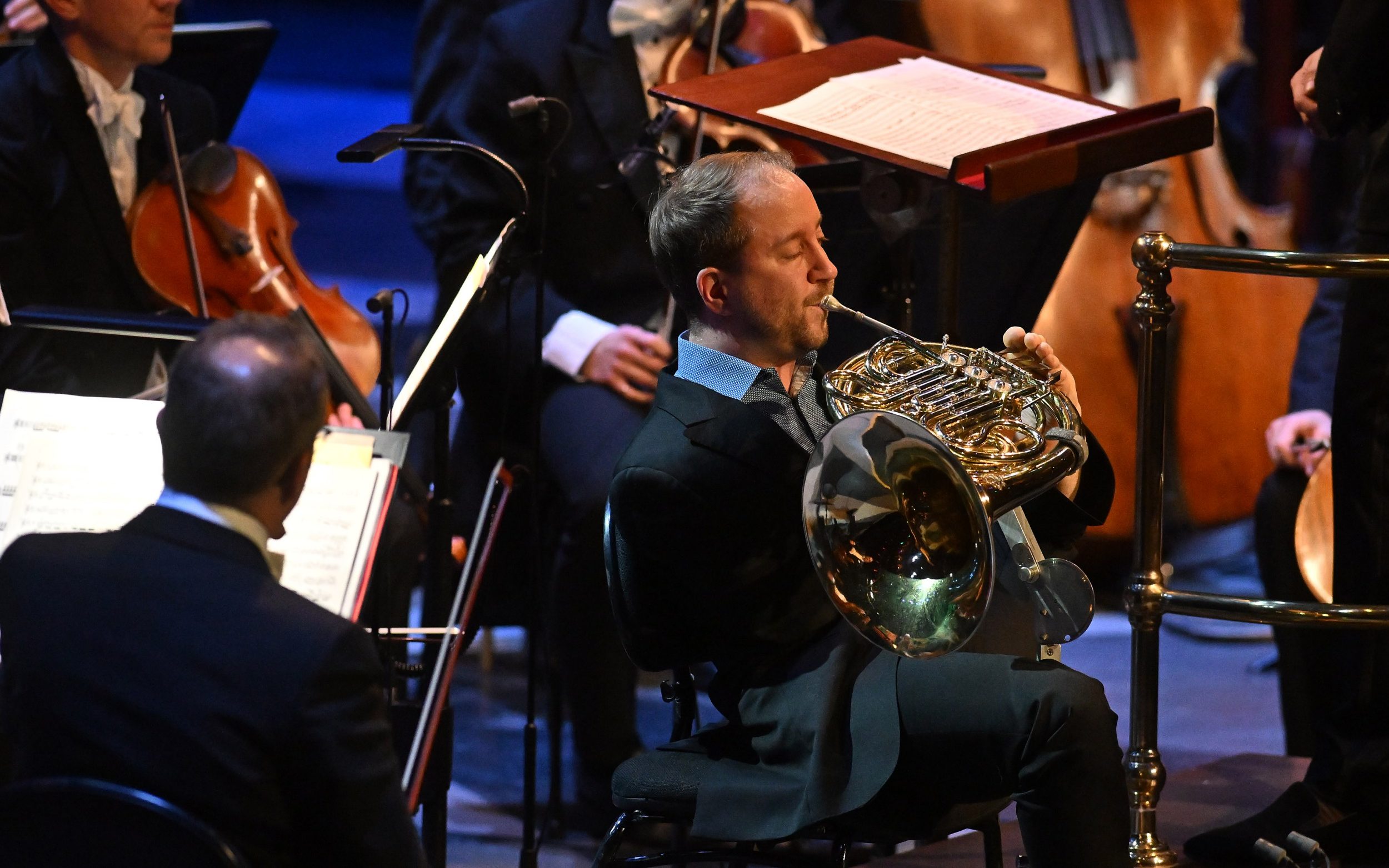
Equally unexpected, for those previously unaware, was the emergence of Felix Klieser on the Albert Hall platform to play Mozart’s Fourth Horn Concerto with his left foot. Not that those listening on the radio would have sensed anything unusual about this performance, Klieser’s warm and rounded tone a throwback to an earlier generation though melding seamlessly into the reduced orchestral forces. Most popular of its composer’s four such pieces (but not heard complete at the Proms for 34 years), its opening Allegro unfolded with an admirable balance between energy and grace; the Romanza exuding a charm that was never cloying and the final Rondo a pert humour. Clearly having enjoyed his appearance on this stage, Klieser returned for the finale of Mozart’s Third Horn Concerto with its even more overt hunting associations.

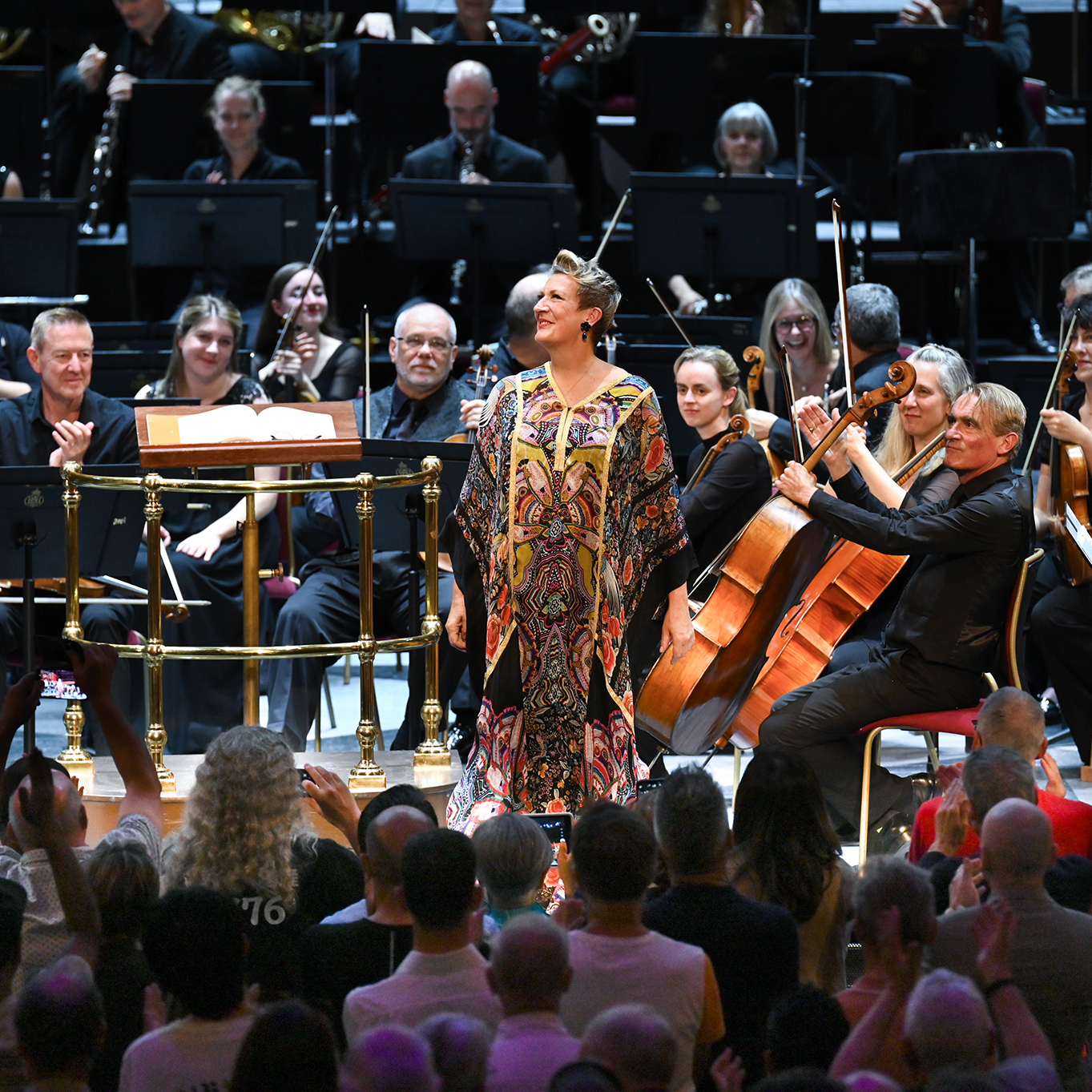
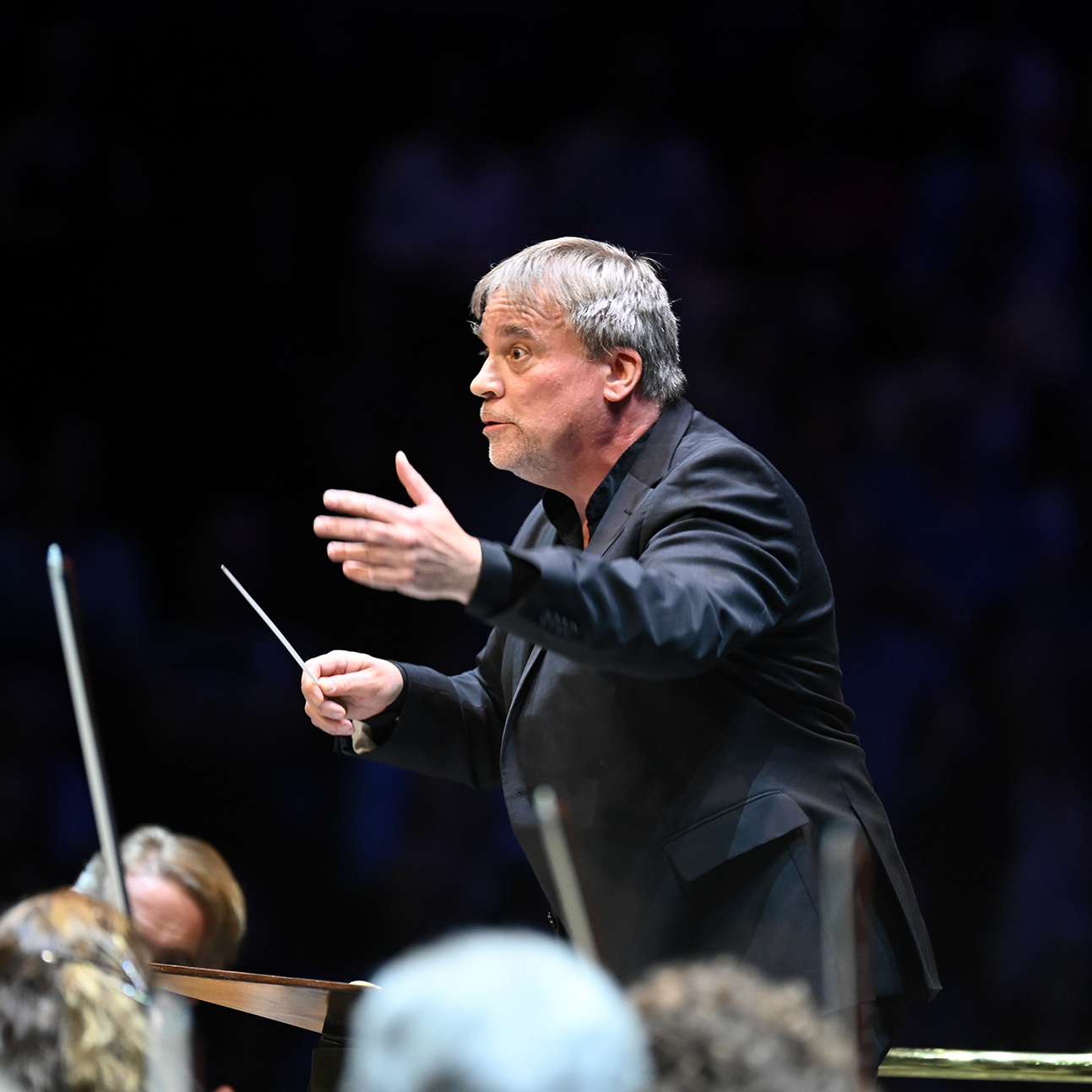
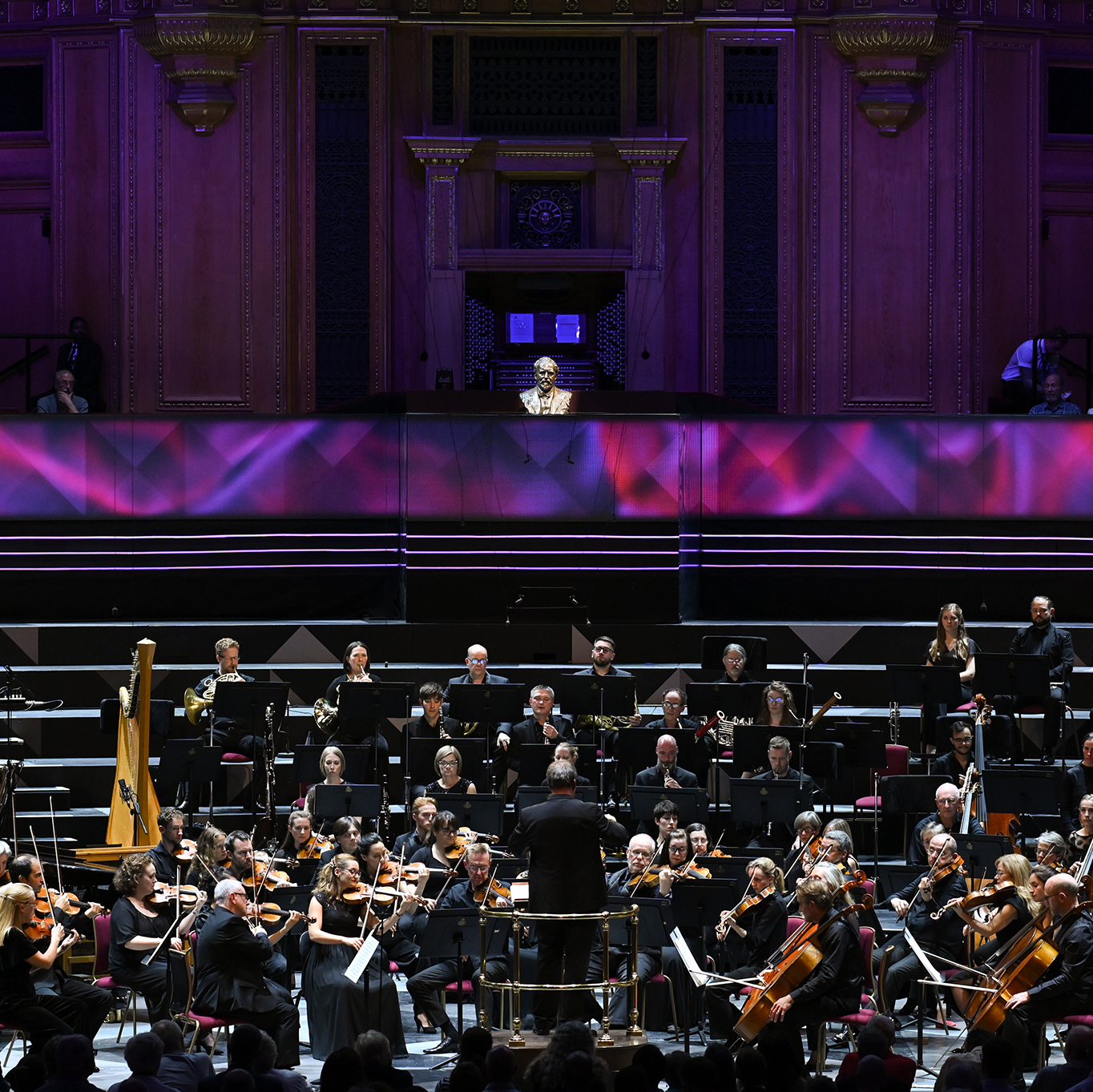
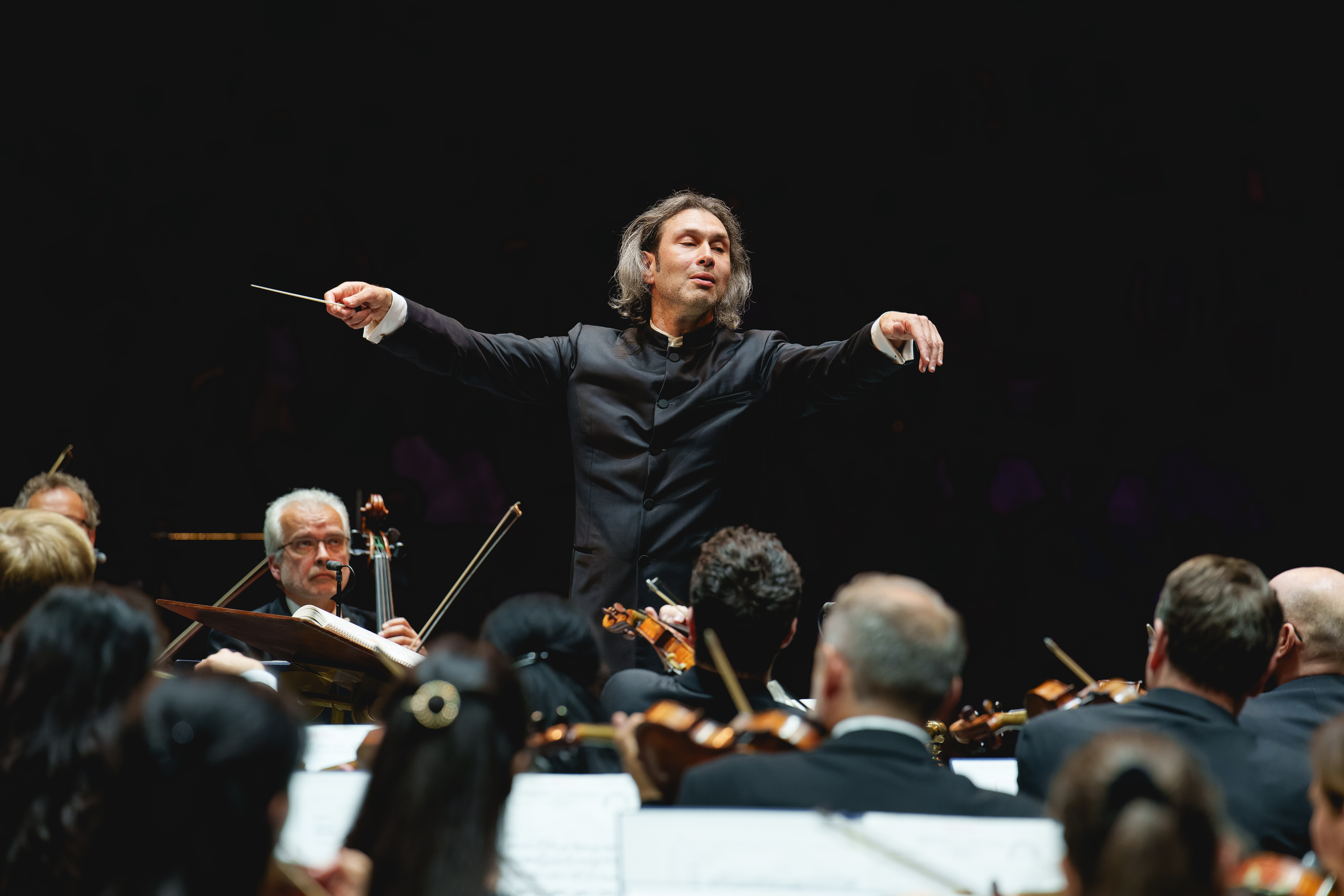
Prom 24 – The Bournemouth Symphony Orchestra conducted by Kiril Karabits (Felix Klieser horn) perform Ivan Karabits: Concerto for Orchestra No. 1, ‘A Musical Gift to Kyiv’ UK premiere, Wolfgang Amadeus Mozart: Horn Concerto No. 4 in E flat major and Sergey Rachmaninov: Symphony No. 2 in E minor at the Royal Albert Hall on Wednesday 2 August 2023 Photo by Mark Allan

Karabits (above) has not yet added Rachmaninoff to his Bournemouth discography, but his account of the Second Symphony suggests he should do so. A sombre yet alert introductory Largo set the course for an opening movement whose eschewal of histrionics did not preclude a powerfully cumulative response to its lengthy development or decisive take on its brief coda. The scherzo then had the requisite incisiveness, and if Karabits slightly over-indulged the ‘big tune’, there was no lack of impetus across its headily contrapuntal trio or glinting irony in its closing bars.

Almost over-familiar now, the slow movement demonstrably gained from a flowing and even lilting tempo such as encompassed its rapturous central section as securely as its serene main melody – with Barry Deacon the eloquent clarinettist on its first appearance. Uncut or not the finale can outstay its welcome, but Karabits duly had the measure of its festive progress – his headlong tempo making for a slightly jarring transition into the secondary theme, but with the gradual subsiding of activity at the centre then its stealthy re-accumulation assuredly handled.

Nor was the focus of his approach to this movement’s culmination in doubt, the return of the work’s ‘motto’ setting the seal on an engrossing and unusually cohesive reading which augurs well for this partnership even after Karabits relinquishes his post at the close of next season.

For more on the 2023 BBC Proms, visit the festival’s website at the BBC. Click on the names for more information on Felix Klieser, Kirill Karabits and the Bournemouth Symphony Orchestra – and composer Ivan Karabits

BBC Proms 2023 – Elena Urioste, BBC NoW / Tadaaki Otaka – Rachmaninoff / Respighi, Coleridge-Taylor & Beethoven

Prom 7 – Elena Urioste (violin), BBC National Orchestra of Wales / Tadaaki Otaka

Rachmaninoff (orch. Respighi) Five Études-tableaux (1911-17, orch 1930) [Proms premiere]
Coleridge-Taylor Violin Concerto in G minor Op.80 (1911-12)
Beethoven Symphony no.5 in C minor Op.67 (1807-08)

Royal Albert Hall, London
Wednesday 19th July 2023 [7pm]

by Richard Whitehouse photos by Andy Paradise / BBC

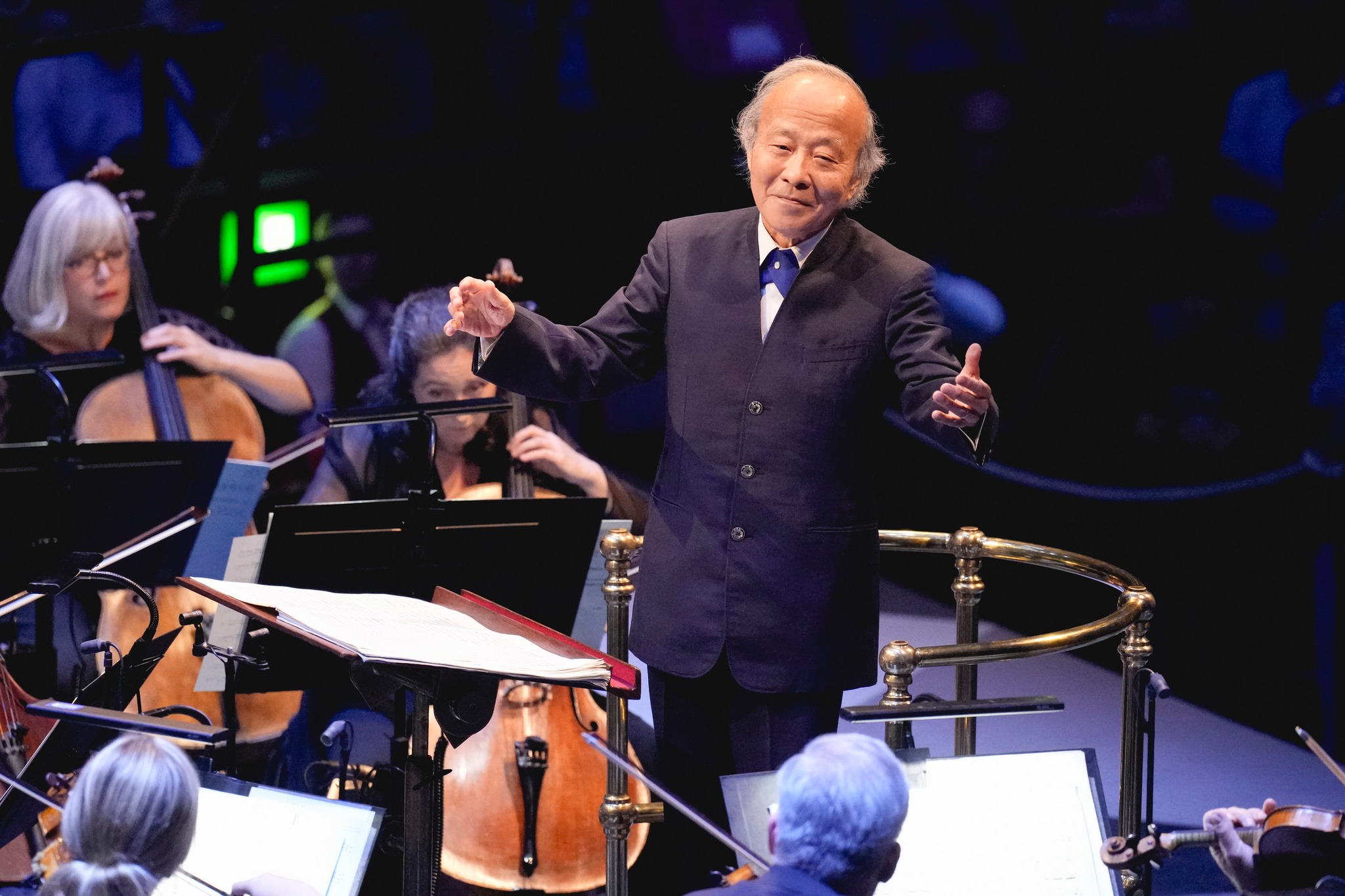
Tadaaki Otaka’s years at the helm of the BBC National Orchestra of Wales (1987-95) were a highpoint of the latter’s history, and it was good to see and hear the rapport between them now that he is Conductor Laureate being maintained throughout this evening’s programme.

Surprising that Respighi’s orchestration of five from Rachmaninoff’s sets of Études-tableaux had not been given at the Proms, but the respective 150th and 80th anniversaries of his birth and death provided an ideal opportunity. Otaka brought out the listless calm of The Sea and the Seagulls with its death-haunted aura, then conveyed the scintillating energy of The Fair. With its evocations of Orthodox chant and heady pealing of bells towards the close, Funeral March is the most imposing and Otaka gave it its due – not least by pointing up the deadpan humour of Little Red Riding Hood and the Wolf which provides greatest possible contrast. The sheer effervescence of March made a fitting conclusion to a sequence that, while other orderings are possible (not least 2-1-4-3-5), is a viable and a cohesive entity in its own right.

The resurgence of interest in Samuel Coleridge-Taylor continued apace with a revival of his Violin Concerto, 111 years after its UK public premiere at these concerts. Its composer’s last major work, this is a work audibly in the Romantic tradition and while the initial Allegro gets off to a less than promising start with its blousy and over-emphatic first theme, the resource with which the soloist elaborates both this and the insouciant idea that follows is as engaging as the cadenza underpinned by drum-roll is arresting. The central Andante is the undoubted highlight, its warmly confiding main melody capable of unexpected plangency as it unfolds, then the final Allegro draws on the Afro-American inflections of Coleridge-Taylor’s heritage in a spirited discourse whose climax sees an opulent restatement of the work’s opening theme.

A testing assignment such as Elena Urioste (after last year’s Proms debut with Ethel Smyth’s Double Concerto) gave with no little panache, her vivid while modest tone heard to advantage in Tom Poster’s eloquent take on Harold Arlen’s Over the Rainbow that was given as encore.

A staple of the Proms since its very first season 128 years ago, Beethoven’s Fifth Symphony comes so weighted with expectation as to make any performance in itself a provocative act. Eschewing astringency and portentousness, Otaka (rightly) rendered the initial movement as an elemental though unpredictable play on its indelible opening motif; the ensuing Andante pursuing an equally eventful course as its main theme evolves via a process of developing variation, the heroic and inquisitive held in unforced accord through to the decisive ending.

A pity that Otaka opted not to take the repeat in the Scherzo (rather than that of the finale) – its interplay between the ominous and the impetuous abetted by a transition of speculative intent. Here too there was never any risk of pomposity or overkill, Otaka steering this most visceral of symphonic finales through a development of bracing immediacy then on to a coda whose insistent C major reiterations were the outcome – no more and no less – of this movement’s innate potential. The undiminished relevance of this music was never for a moment in doubt.

For more on the 2023 BBC Proms, visit the festival’s website at the BBC. Click on the names for more information on the BBC National Orchestra of Wales, Tadaaki Otaka and Elena Urioste

Online Concert: Tom Borrow @ Wigmore Hall – J.S. Bach, Franck & Rachmaninoff

Tom Borrow (piano)

J.S. Bach Italian Concerto in F major BWV971 (pub. 1735)
Franck Prélude, choral et fugue (1884)
Rachmaninoff Variations on a theme of Corelli Op.42 (1931)

Wigmore Hall, Monday 1 May 2023 1pm

by Ben Hogwood

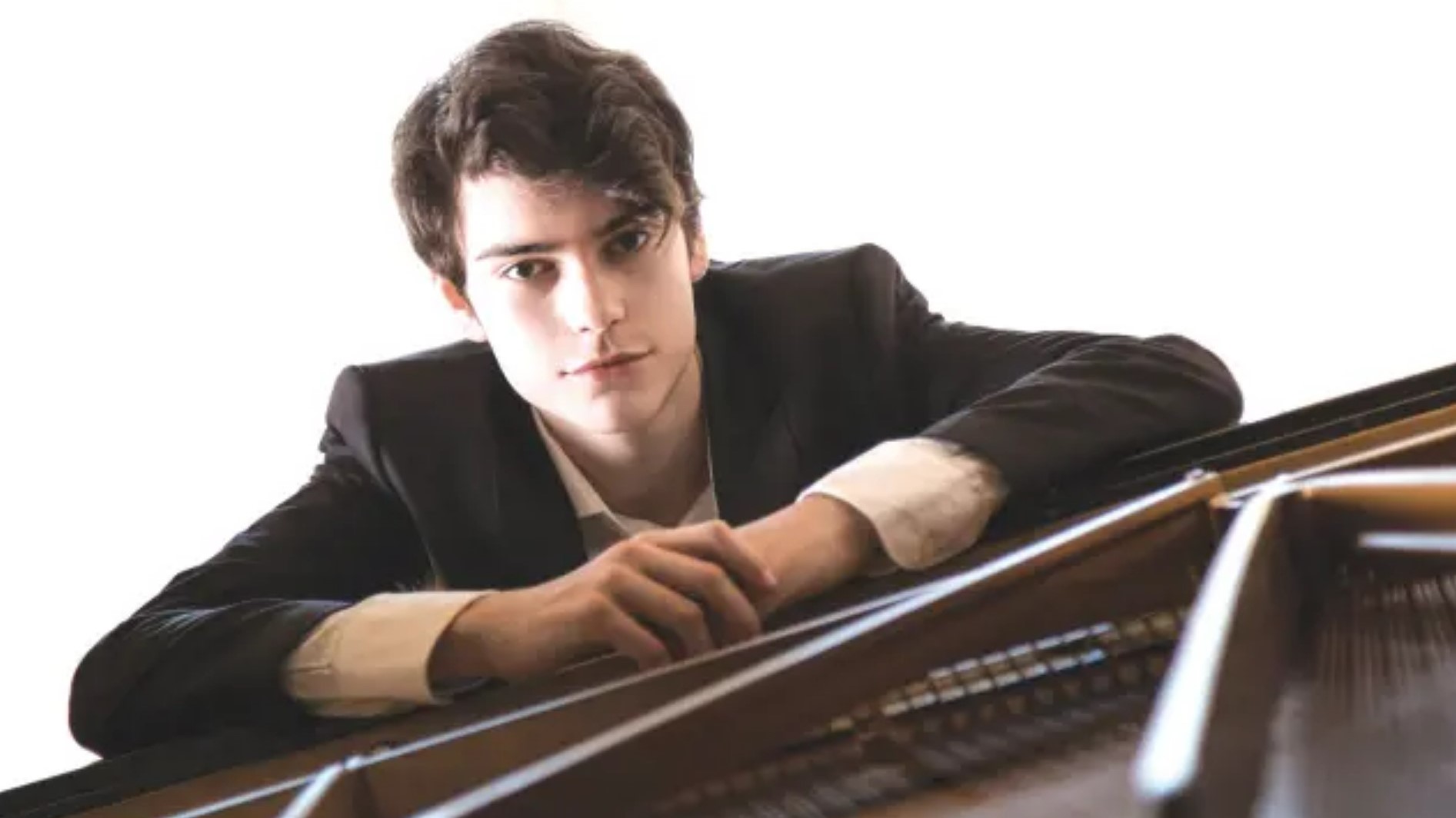
This BBC Radio 3 Lunchtime Concert featured the New Generation pianist Tom Borrow, making his debut at the Wigmore Hall with a very well-judged trio of works casting their eyes back to the past. The Israeli-born performer was notably comfortable in the environment, responding to the intimate atmosphere of the hall with compelling music-making.

Bach’s Italian Concerto was first, a work that is particularly successful on the piano. Borrow’s articulation in a crisp Allegro was very pleasing to the ear, his enjoyment of the counterpoint evident. The Andante was particularly beautiful, and completely unhurried – the pianist not afraid to give the right hand plenty of room to expand Bach’s melodies, the left hand hushed but responsive too. The bustling Presto had plenty of musical activity, the energetic profile maintained throughout but again the shapely melodic phrasing winning through.

Franck’s Prélude, choral et fugue is the best known of his works for solo piano. Its form looks back to the organ works of Bach, inserting a ‘chorale’ section in between the more conventional pair of ‘prelude’ and ‘fugue’. Here the Prélude began softly, Borrow’s light touch bringing delicacy to the decorative arpeggios around the theme, while also bringing the parallels with Brahms into focus. The choral started softy but grew in stature, moving from darkness to bright light, Borrow crossing hands to play the theme with apparent ease. The flowing discourse here was notable, maybe not as loud as some pianists but finding the heart of Franck’s expression nonetheless. The fugue was stately but also mysterious to begin with, the pianist bringing forward its chromatic profile, but then taking full command of the intense exchanges and achieving a most impressive performance in the process. The closing peal of bells was brilliantly played.

Rachmaninoff’s Variations on a theme of Corelli completed the trio of retrospective works, this one another remarkably concentrated piece offering plenty of opportunity for virtuosity and interpretative skill. This was again taken up by Borrow, once again setting a reverent atmosphere with the slow exposition of the theme. The lilting second variation in triple time was persuasively delivered, while a commanding fifth variation and sweeping seventh carried all before them. This only heightened the mysterious eighth and ninth variations, lost in thought.

The dynamic contrasts of the twelfth variation were very well observed, then the anxious syncopations of the thirteenth. The following Intermezzo had the requisite elements of fantasy, followed by a yearning chorale for Variation 14. Borrow’s technical command was impressive throughout, notably in the twists and turns of Variation 16 and the jagged edges of the eighteenth variation onwards. The clarity here was notable, in spite of the volume – and the thunderous finish was complemented by a radiant coda.

Borrow’s encore choice was well-suited – a flowing account of Rachmaninoff’s Prelude in G# minor Op.32/12, with notes that twinkled in the upper right hand at the end.

For more livestreamed concerts from the Wigmore Hall, click here

In concert – Behzod Abduraimov, CBSO / François Leleux – Rachmaninoff: Piano Concerto no.2; Brahms: Serenade no.1 & Academic Festival Overture

Behzod Abduraimov (piano, above), City of Birmingham Symphony Orchestra / François Leleux (below)

Brahms Academic Festival Overture Op. 80 (1880)
Rachmaninoff Piano Concerto no.2 in C minor Op.18 (1900-1901)
Brahms Serenade no.1 in D major Op.11 (1858-9)

Symphony Hall, Birmingham
Thursday 13 April 2023

Reviewed by Richard Whitehouse

Its first concert since returning from a European tour saw the City of Birmingham Symphony Orchestra in a programme which tellingly placed Rachmaninoff’s most famous composition within the context of less often heard or uncharacteristically (?) humorous pieces by Brahms.

Cinematic and other extra-musical associations often obscure the purely musical qualities of Rachmaninoff’s Second Piano Concerto, so credit to the Uzbek pianist Behzod Abduraimov for duly underlining these in a reading full of incident and unfailingly cohesive. Among the former might be mentioned the limpid elegance of the first movement’s second theme and its improvisatory continuation before the coda, bewitching transition from the Adagio’s central scherzo back to the main melody, and those evocative interludes after the finale’s ‘big tune’ – this latter returning to cap the whole work in unforced ardour. Integration between piano and orchestra was unfailing, as too the emotional immediacy of the CBSO’s response, and who could question Abduraimov’s decision not to provide an encore after so fine a performance.

Rachmaninoff and Brahms seldom complement each other in concert, though the Academic Festival Overture provided an ideal curtain-raiser. Typically more than a potpourri of student songs (drinking or otherwise), the cunningly fashioned sonata design was deftly unfolded by François Leleux so that its portentous and uproarious elements were held in perfect accord. The percussion audibly relished its rare outing in a Brahms score, not least at the close when the hymn-like ‘Gaudeamus igitur’ emerges to see this piece through to its exhilarating close.

Following the interval, a relatively infrequent hearing for Brahms’s First Serenade. Originally planned for chamber ensemble and later rescored for late-Classical forces (with four horns), its equivocally symphonic ambitions and proportions were inevitably overshadowed by what Brahms went on to achieve, but its musical attractions are many and Leleux had its measure. Not least during an initial Allegro, its dextrous horn theme setting the tone for a movement whose impetus was engagingly maintained through to the touching insouciance of its coda.

Omitting repeats in this movement’s exposition and the first half of the Scherzo – which latter anticipates Brahms’s intermezzos in its speculative aura and understated progress – ensured a viable balance with the Adagio. A pre-echo of slow movements to come, the observance of its ‘non troppo’ marking prevented any loss of expressive focus across the methodically evolving whole. If the remaining movements are closer conceptually to serenade rather than symphony, Leleux gave them their due – whether the twin Menuettos with their enticing contrast between woodwind and strings, a second and more rhythmic Scherzo with rustic horn writing here and in the trio, then the final Rondo in which Brahms looks back to those comparable movements from early Beethoven and Schubert with a lack of inhibition he was only rarely to recapture.

Such was the effect of an account that received an enthusiastic response from the near-capacity house. The CBSO strings take the stage next Saturday for a coupling of Schubert arranged by Mahler and Vivaldi interspersed with Piazolla, directed by their leader Eugene Tzikindelean.

You can read all about the 2022/23 season and book tickets at the CBSO website. Click on the artist names for more on Behzod Abduraimov and François Leleux

In concert – Oliver Janes, CBSO / Ryan Bancroft: Adams, Mozart & Rachmaninoff

Adams The Chairman Dances (1985)
Mozart Clarinet Concerto in A major K622 (1791)
Rachmaninoff Symphonic Dances Op.45 (1940)

Oliver Janes (clarinet), City of Birmingham Symphony Orchestra / Ryan Bancroft

Symphony Hall, Birmingham
Wednesday 2 November 2022 [2.15pm]

Reviewed by Richard Whitehouse

Back from its successful US tour (the first such in almost a quarter of a century), the City of Birmingham Symphony Orchestra this afternoon returned to Symphony Hall for what was a programme of contrasts in which an element of dance seldom lurked far beneath the surface.

Although it is often considered emblematic of his opera Nixon in China, John Adams wrote The Chairman Dances well before completing the larger work – this ‘Foxtrot for Orchestra’ encapsulating much of its atmosphere without being intrinsic to its content. Capricious while shot through with a tellingly distanced nostalgia, this remains among Adams’s most effective concert pieces and Ryan Bancroft secured a fine account whose meticulous attention to detail was not without corresponding panache – down to its percussive ‘winding down’ at the close.

It is (nearly) always welcome when an orchestra’s section leader takes the platform as soloist, as was proven with Oliver Janes in Mozart’s Clarinet Concerto – easily the most popular such piece in its repertoire yet one that can easily seem bland or even characterless in performance. There was little chance of that here – not least with a swift and purposeful take on the opening Allegro that left relatively little room for lingering over incidental detail, even if something of its underlying elegance was sacrificed with Janes’s powers of articulation pressed to the limit.

This approach paid dividends in the remaining movements, not least an Adagio whose limpid eloquence was conveyed without trace of indulgence or wanton sentiment. The final Allegro, too, had a winning buoyancy – Janes evincing a deftness and spontaneity to which the CBSO responded in kind, and with a surge of energy towards the closing chords. It set the seal on an appealing rendition which, perhaps surprisingly, Janes will not repeat at tomorrow evening’s concert from Warwick Arts Centre – when that by Gerald Finzi will be the concerto on offer.

Soon to take the reins at the Royal Stockholm Philharmonic, Bancroft is evidently a conductor on a roll as was confirmed by his take on Rachmaninoff’s Symphonic Dances. A triptych that abounds in felicitous detail (as is often belied, if not actually concealed, by the score’s lack of expression markings), it needs flexible direction for each movement to cohere, and Bancroft had their measure. The first exuded a suspenseful energy that, in its central section, took on a winsome pathos embodied by its alto saxophone melody (affectingly played by Kyle Horch).

Even more persuasive was the sardonic central dance, its waltz motion underpinning some of the composer’s most astringent harmonies as were pointedly emphasized here. If the charged outer sections of the final dance lacked the ultimate in exhilaration, the quality of the CBSO’s response was never in doubt. In the slower middle episode, moreover, Bancroft’s deliberation ideally clarified those frequently dense textures whose expressive poise is achieved, uniquely for Rachmaninoff, without recourse to an actual melody. A sign of things to come, perhaps?

Bancroft will hopefully be returning next season, but the present one continues with events to mark the 150th anniversary of Vaughan Williams’s birth – including two of his symphonies and the film Scott of the Antarctic, for which the CBSO is contributing live accompaniment.

You can read all about the 2022/23 season and book tickets at the CBSO website. For more information on the artists, click on the names of Ryan Bancroft and Oliver Janes