Last week the British conductor Sir Simon Rattle celebrated his 70th birthday. Since the 1980s Rattle has played a hugely important part in classical music in the UK, with important conducting posts at the City of Birmingham Symphony Orchestra, Berliner Philharmoniker and London Symphony Orchestra. In 2023 he returned once more to Germany, as principal conductor for the Bavarian Radio Symphony Orchestra.
In that time, Rattle has made a huge range of recordings, from Haydn to Adès via Beethoven, Grainger and Schoenberg. Resisting temptation to compile a playlist of snippets, I have opted for a small number of heavyweight recordings, including Adès‘ Asyla, Schoenberg‘s Chamber Symphony no.1 and Stravinsky‘s Le Sacre du Printemps, his first recording on starting with the LSO in 2017. Topping the bill, however, is his CBSO recording of Mahler‘s Second Symphony, the Resurrection, the piece with which he opened Birmingham’s Symphony Hall in 1991. You can listen to the playlist on Tidal below:
Bavarian Radio Symphony Orchestra / Sir Simon Rattle
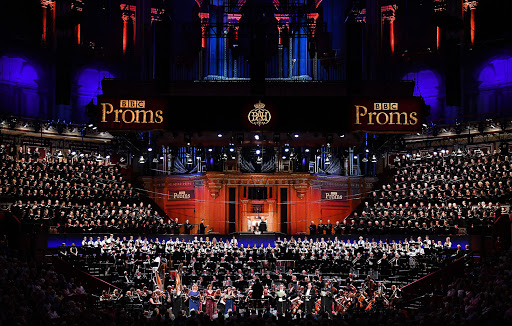
Royal Albert Hall, London Friday 6 September 2024
reviewed by Ben Hogwood Photos (c) Chris Christodoulou (taken from the previous night’s Prom)
This was Sir Simon Rattle‘s fifteenth encounter with the music of Gustav Mahler at the BBC Proms – and a third outing under his baton for the Sixth Symphony, which he first conducted in charge of the National Youth Orchestra of Great Britain 40 years ago.
This time he was visiting, having returned to Germany to take charge of the Bavarian Radio Symphony Orchestra, a feeling for the concertgoers akin to welcoming a distant relative and hearing about their latest job. The Munich ensemble have formidable Mahler credentials, no doubt introduced by Eugen Jochum from their founding in 1949 but notably honed by Rafael Kubelík, with whom they recorded all the symphonies for Deutsche Grammophon. This account of the Sixth proved them to be the ideal foil for Rattle, the Liverpudlian welcomed with great cheers around the hall.
Sir Simon knows his Mahler better than arguably any other living conductor, and the breadth and depth he brought to his interpretation was breathtaking. So too was the sheer audible spectrum, for which we have to thank Mahler, for this is one of those works that has simply everything, from the tiniest murmur from bass strings to the thunderous hammer strokes of the finale. Some way between that lies the tender theme he wrote for his wife Alma, a glowing light in the first movement under the tender caress of its beautiful wind choir. Around this and in the last movement were fleeting glimmers of sunshine from the cowbells, an unusual addition to the percussion section that charmed from their offstage position, evoking the open meadows but with shivers of cold wind from the rest of the orchestra, outlines icily drawn by strings and brass.
These moments were welcome respite from the tumult of Mahler’s marching music, obsessively hammered home in the fast movements, the orchestra turning this way and that at quick speed. The marching music, so virulent in the first movement, quickly develops a sour taste, and Rattle was alive to that in the scherzo – placed third. This is a time-honoured practice for him, in accordance with Mahler’s order of performance when conducting but not his initial order of composition. The controversy continues to follow the work around, and although many (this author included) prefer the scherzo placed second – ratcheting up the tension – Rattle’s shaping of the piece overall made his own choice a convincing one.
The orchestra were simply stunning. The strings – rarely given due credit in big symphonic performances such as this – were united beyond criticism, the violins in remarkable unison – and particularly beautiful in the serene opening to a magical slow movement. Brass were also as one in their clarion calls, but turned vulgar when they needed to. The wind section was beautifully shaped and coloured, with an appropriately plaintive oboe solo in the trio section of the scherzo. Underpinning the performance were the rolling timpani, the thunder to the lightning strikes of the percussion, whose power was simply brutal at times, The hammer blows, struck twice in the finale, were terrifying strokes of fate and delivered with appropriately cold theatre.
This was a performance that will stick in the memory for years, one from which my ears are still ringing. Mahler’s ghastly premonitions of later existence were brought to life in shocking technicolour, though Rattle revelled at the same time in its beautiful evocations of nature. These were ultimately swept aside, with red-blooded highs and cold-blooded lows, all blended into the same intoxicating musical cocktail. For sheer emotional power, this symphony – and this performance – had it all.
You can listen to the Bavarian Radio Symphony Orchestra and Sir Simon Rattle in their recent live recording of the Sixth symphony below:
Published post no.2,294 – Saturday 7 September 2024
Prom 49 – Louise Alder, Dame Sarah Connolly, CBSO Chorus, London Symphony Chorus, London Symphony Orchestra / Sir Simon Rattle
Birtwistle Donum Simoni MMXVIII (2018) Mahler Symphony no.2 in C minor ‘Resurrection’ (1888-1894)
Royal Albert Hall, London Wednesday 24 August 2022
Reviewed by Ben Hogwood Photos (c) Chris Christodoulou
“A symphony must be like the world. It must contain everything.”
The words of Gustav Mahler were never more appropriate than in the context of this exceptional BBC Proms concert, as Sir Simon Rattle and assembled forces from London and Birmingham threw body and soul into a spectacular performance of the composer’s Symphony no.2.
This, Mahler’s ‘Resurrection’ symphony, puts its listener through the emotional wringer on a journey inhabiting life and death itself. The work has become a calling card for Rattle, too – he marked the opening of Birmingham’s Symphony Hall with a memorable performance in 1991, and took his leave of the CBSO with the same piece. Here, as he prepares to step down as Music Director of the London Symphony Orchestra, he was marking the turning of a page through a move to pastures new in Bavaria, where he will become Chief Conductor of the Symphonieorchester des Bayerischen Rundfunks and the Bavarian Radio Chorus.
The pastures were a standout feature of this performance – but we began in turmoil, the huge first movement funeral march rumbling into gear with lines hewn from granite in the lower strings. Rattle pushes this movement forward much more than he once did, keeping a firm hand on the tiller, but with immediate and full immersion in Mahler’s thoughts. As the first movement took shape the horrors of death revealed themselves – along with hopes of sunnier climes through some beautifully shaded rustic scenes. Yet the chill winds kept returning, ultimately sweeping these away as the movement closed in their bleak acceptance.
Many accounts of the ‘Resurrection’ lose their focus at this point, but not this one. Instead we had a balletic triple time Ländler, danced with grace as the feather-light strings had their charming way. The main theme swelled like a newly budding flower, and although ghoulish reminders of the first movement persisted, this was the abiding impression. As Rattle pressed on without a break, however, the reveries were abruptly quashed by the hammer and tongs of the third movement Scherzo. Here the music twisted and turned sharply, the LSO responding to its conductor with peerless virtuosity in music of fire and brimstone. Percussion, wind and brass were superb.
Then, as the music teetered on the point of collapse, it was time to be borne away with the consoling tones of Dame Sarah Connolly (above, right). A consummate Mahlerian, she sang with compelling strength and grace, a powerful stage presence in league with Rattle, who presided over accompaniment of the greatest clarity. Connolly’s Urlicht was beautifully judged, taking us ever nearer to the wondrous entry of the choir.
Now time stood still. The audience, especially in the arena, were rooted to the spot at the massed choirs of the CBSO Chorus and London Symphony Chorus, singing as one in magically hushed tones. As the finale took shape it was by turns earth-moving and tender. Scenes flashed before the eyes, and an especially vivid episode from brass and percussion in the gallery observed a village-band intimacy. Here the Royal Albert Hall was utilised to its full potential, managing the wide scope of Mahler’s vision to perfection.
At the centre of this apocalyptic finale, percussion depicted the rising of the dead and the release of their chains, Rattle intentionally dragging his feet here to heighten the seismic impact. And then we were free, the resurrection itself met with blazing colours all around as the choirs sang Friedrich Klopstock’s text ‘Aufersteh’n, ja aufersteh’n wirst di’ (‘Rise again, yea rise again, shalt thou’) as though their lives depended on it. Was it fanciful to suggest three years’ worth of pent-up emotion being released at this point? Probably not, when you consider the day-to-day roles of the choral singers themselves – carers, key workers, parents and children alike – with all finding the time and the need to bring us this music of the utmost quality.
Great credit should go to chorus director Simon Halsey for securing such discipline and humanity in the texts, and to soprano Louise Alder (both above with Dame Sarah Connolly and Sir Simon Rattle). Alder sang above the masses with perfectly judged dynamics and phrasing, like Connolly fully aware of the scope of her role. Organist Richard Gowers added the icing on the cake, underpinning the throng with ideally judged balance.
This was a performance to talk about for years to come, a throwing-open of the doors to proclaim that music can – really – triumph over pretty much anything, the ‘Resurrection’ symphony, clearing everything in its path.
As an upbeat to the symphony we heard a short gift to Rattle from Sir Harrison Birtwistle, to whose memory the Prom was dedicated. Donum Simoni MMXVIII was typical of its composer, a spiky and even snarky postcard firing out missives from the (superb) percussion section against barbed comments from wind and brass. Lasting barely four minutes, it served its function well – but for tonight, as Mahler would have wished, the symphony was everything.
You can listen to Sir Simon Rattle’s recording of Mahler’s ‘Resurrection’ symphony on Spotify below, where the CBSO Chorus and Symphony Orchestra are joined by soloists Arleen Auger and Dame Janet Baker:
The Coronavirus pandemic has hit the arts hard, and only recently have we seen tentative shoots of recovery where live music is concerned. The great choral epics are still some way off, it would seem – which leads John Earls to ponder when he might complete his personal Mahler symphony cycle…
Mahler’s Eighth is the only one of his symphonies I haven’t seen performed live. It’s not because I haven’t wanted to. The sheer scale of the piece (it includes eight soloists, two choirs, children’s chorus and full orchestra including concert organ) means it is the least performed of his symphonies. It is also regarded by some as too grand, incoherent, and even kitsch, in comparison to the others – Part 1 is a setting of the Latin Hymn Veni Creator Spiritus and Part 2 a setting of the final part of Goethe’s Faust.
The last two times it was performed in my home city of London personal commitments (a friend’s wedding and my son’s birthday) prevented me from attending and completing my personal ‘live Mahler cycle’ (although with due respect to my son he said he wouldn’t mind too much if I went).
The Eighth has been on my mind again recently. Firstly, Stephen Johnson has just published a book on the symphony, The Eighth: Mahler and the World in 1910. I’ve not read it yet, but very much look forward to doing so (I loved his essay on Shostakovich). But Johnson’s book is about the time of the symphony’s premiere. My thoughts have been about the symphony in the present and the future. More specifically, in the context of the coronavirus pandemic and coming out of COVID-19.
It’s been well documented how seriously live music, and the arts generally, have been hit by the pandemic. The recent government announcement of support is welcome, but much work still needs to be done and many organisations continue to face an existential crisis.
With lock down and social distancing I realised (perhaps rather selfishly) that I wouldn’t be seeing the Eighth, nicknamed the Symphony of a Thousand (although not a term Mahler himself used), any time soon. But then I started thinking about the piece itself and what it gives to us in this extraordinary time and as we start to come out of COVID-19. To be honest, the Eighth isn’t even my favourite Mahler symphony. However, its themes of enlightenment, redemption, and the power of love, whilst being somewhat perennial, may have a particular resonance at this moment.
Much of the classical music I have been listening to since lock down has tended to be subdued, dare I say austere. This has particularly been the case in respect of recently streamed concerts such as the wonderful June series put on by the Wigmore Hall in association with BBC Radio 3, beautifully bookended by Stephen Hough’s playing of solo piano pieces by Bach and Schumann, and Mark Padmore and Mitsuko Uchida’s performance of Schubert’s Winterreise.
So, at first, there was something quite disconcerting and then ultimately uplifting about the sheer force of listening to the Eighth again, not least when orchestra and choirs combine to such powerful effect right from the off, including the organ. There are some wonderfully delicate moments in its hour and a half too.
Which version to listen to? Two recordings often cited are those by Georg Solti and the Chicago Symphony Orchestra (Decca, 1971) and Klaus Tennstedt and the London Philharmonic Orchestra’s performance at the Royal Festival Hall in 1991 (EMI, 2011). Both are excellent (although Tennstedt probably just shades it for me). I also have a soft spot for Sir Simon Rattle’s 2004 live performance with the City of Birmingham Symphony Orchestra (EMI, 2005).
It is notable that two of these are live recordings and, of course, much of what is said about Mahler’s Eighth is about it being seen or heard live. Which brings me back to my point about performance. There is something about the combination of the mass assembled forces performing together and being joined by an audience in an even bigger collective. Stephen Johnson (again) put it well in a recent episode of Radio 3’s Music Matters with Tom Service: “A great deal about the ecstasy of this piece is about unity and many, many voices being combined together”. True that. And not just in the context of COVID-19.
I’m still disappointed that I probably won’t get to see a performance of Mahler’s Eighth (at least as we traditionally know it) any time soon. However, I do know that when I do eventually see it, in whatever form, it will have a very particular significance and will, no doubt, be incredibly moving. And not just because I will have completed the cycle.
John Earls is Director of Research at Unite the Union and tweets at @john_earls
You can watch Sir Simon Rattle conducting the National Youth Orchestra of Great Britain, massed choirs and soloists (including Christine Brewer, Soile Isokoski and David Wilson-Johnson) in a 2002 performance of Mahler’s Symphony no.8 as part of this year’s BBC Proms TV coverage. The broadcast will take place on BBC Four on Sunday 9 August.
Photo credit: Thomas Søndergård conducts massed Proms forces and the BBC National Orchestra of Wales in Mahler’s Eighth Symphony at the BBC Proms in 2018. (Chris Christodoulou / BBC)
There is an enticing potpourri of 20th and 21st century music from the London Symphony Orchestra on tonight’s installment of the LSO’s online series ‘Always Playing’.
Sir Simon Rattle conducts the orchestra in the Hungarian Peasant Songs from Bartók before they are joined by tenor Edgaras Montvidas for Szymanowski‘s seldom heard but exotic ballet Harnasie. Then clarinetist Chris Richards steps up as the soloist for works composed by Stravinsky and Bernstein for the great Woody Herman</strong).
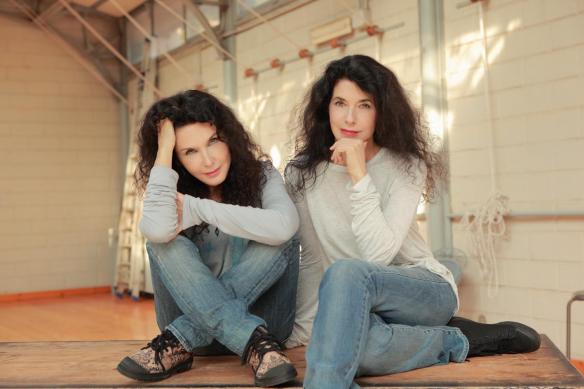
However the main work of the evening's concert is a big, half-hour concerto for two pianos, percussion and orchestra from Osvaldo Golijov. Nazareno, completed in 2009, is based on themes from La Pasión según San Marcos, and is fronted by the Labèque sisters, with percussionists Gonzalo Grau and Raphaël Séguinier.
The performance, from Thursday 13 December 2018, can be seen on the orchestra’s YouTube channel from 7pm tonight here:



 Arcana.fm