
BBC Proms 2023 – Elena Urioste, BBC NoW / Tadaaki Otaka – Rachmaninoff / Respighi, Coleridge-Taylor & Beethoven

Prom 7 – Elena Urioste (violin), BBC National Orchestra of Wales / Tadaaki Otaka

Rachmaninoff (orch. Respighi) Five Études-tableaux (1911-17, orch 1930) [Proms premiere]
Coleridge-Taylor Violin Concerto in G minor Op.80 (1911-12)
Beethoven Symphony no.5 in C minor Op.67 (1807-08)

Royal Albert Hall, London
Wednesday 19th July 2023 [7pm]

by Richard Whitehouse photos by Andy Paradise / BBC

Tadaaki Otaka’s years at the helm of the BBC National Orchestra of Wales (1987-95) were a highpoint of the latter’s history, and it was good to see and hear the rapport between them now that he is Conductor Laureate being maintained throughout this evening’s programme.

Surprising that Respighi’s orchestration of five from Rachmaninoff’s sets of Études-tableaux had not been given at the Proms, but the respective 150th and 80th anniversaries of his birth and death provided an ideal opportunity. Otaka brought out the listless calm of The Sea and the Seagulls with its death-haunted aura, then conveyed the scintillating energy of The Fair. With its evocations of Orthodox chant and heady pealing of bells towards the close, Funeral March is the most imposing and Otaka gave it its due – not least by pointing up the deadpan humour of Little Red Riding Hood and the Wolf which provides greatest possible contrast. The sheer effervescence of March made a fitting conclusion to a sequence that, while other orderings are possible (not least 2-1-4-3-5), is a viable and a cohesive entity in its own right.

The resurgence of interest in Samuel Coleridge-Taylor continued apace with a revival of his Violin Concerto, 111 years after its UK public premiere at these concerts. Its composer’s last major work, this is a work audibly in the Romantic tradition and while the initial Allegro gets off to a less than promising start with its blousy and over-emphatic first theme, the resource with which the soloist elaborates both this and the insouciant idea that follows is as engaging as the cadenza underpinned by drum-roll is arresting. The central Andante is the undoubted highlight, its warmly confiding main melody capable of unexpected plangency as it unfolds, then the final Allegro draws on the Afro-American inflections of Coleridge-Taylor’s heritage in a spirited discourse whose climax sees an opulent restatement of the work’s opening theme.

A testing assignment such as Elena Urioste (after last year’s Proms debut with Ethel Smyth’s Double Concerto) gave with no little panache, her vivid while modest tone heard to advantage in Tom Poster’s eloquent take on Harold Arlen’s Over the Rainbow that was given as encore.
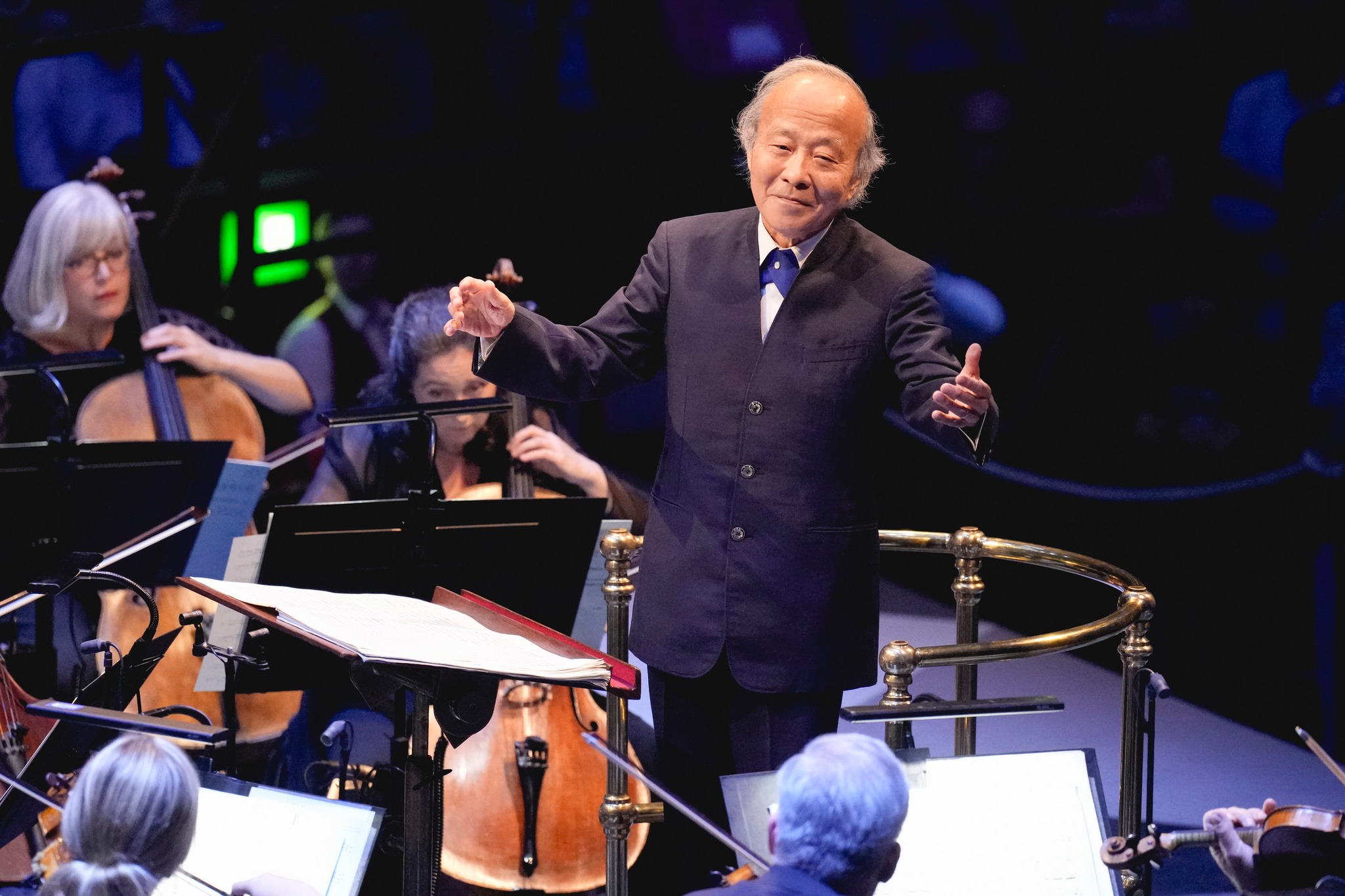
A staple of the Proms since its very first season 128 years ago, Beethoven’s Fifth Symphony comes so weighted with expectation as to make any performance in itself a provocative act. Eschewing astringency and portentousness, Otaka (rightly) rendered the initial movement as an elemental though unpredictable play on its indelible opening motif; the ensuing Andante pursuing an equally eventful course as its main theme evolves via a process of developing variation, the heroic and inquisitive held in unforced accord through to the decisive ending.

A pity that Otaka opted not to take the repeat in the Scherzo (rather than that of the finale) – its interplay between the ominous and the impetuous abetted by a transition of speculative intent. Here too there was never any risk of pomposity or overkill, Otaka steering this most visceral of symphonic finales through a development of bracing immediacy then on to a coda whose insistent C major reiterations were the outcome – no more and no less – of this movement’s innate potential. The undiminished relevance of this music was never for a moment in doubt.

For more on the 2023 BBC Proms, visit the festival’s website at the BBC. Click on the names for more information on the BBC National Orchestra of Wales, Tadaaki Otaka and Elena Urioste
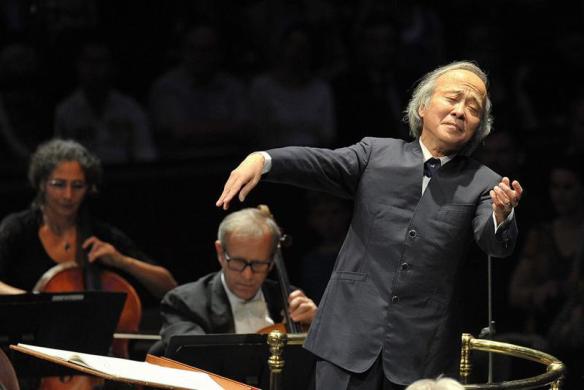

Arcana at the Proms – Prom 28: Tadaaki Otaka conducts the BBC National Orchestra of Wales in Rachmaninov & Huw Watkins

Prom 28: Iurii Samoilov (baritone), Natalya Romaniw (soprano, below), Oleg Dolgov (tenor), BBC National Chorus of Wales, Philharmonia Chorus, BBC National Orchestra of Wales / Tadaaki Otaka (above)

Takemitsu Twill by Twilight (1988)
Huw Watkins The Moon (2018-19) (BBC commission: world premiere)
Rachmaninov The Bells (1912-13)
Borodin Prince Igor – Polovtsian Dances (1869-87)

Royal Albert Hall, Thursday 8 August 2019

Reviewed by Ben Hogwood
Photo credit (Tadaaki Otaka) Chris Christodoulou

You can watch this Prom on the BBC iPlayer here

Given his commission brief, to write a choral piece celebrating the 50th anniversary of the first Moon landing, Huw Watkins must have been tempted to set Neil Armstrong’s immortal ‘one giant leap’ quote to music. Instead however he opted to ‘capture our experience of viewing the moon from Earth’. In doing so he set four intriguing texts pre-dating the first manned visit to our original satellite – two from Percy Bysshe Shelley, and one each from Philip Larkin and Wilfred Owen.

The four were stitched together like phases of the moon in a continuously running 20 minutes, with plenty of opportunity for the orchestra to have their say in between. Watkins has an interesting musical language, always rooted in tonality but using evocative colours and harmonies hinted at in works for chorus and orchestra by Holst, Vaughan Williams or even Hugh Wood.

The Moon had a very satisfactory flow to it, and was passionately delivered by the 130-strong BBC National Chorus of Wales, who clearly enjoyed the experience. Given its length it makes a tricky piece to programme or to appraise on one listen, but it is to be hoped in this anniversary year we get more chances to acquaint ourselves with a composer who writes in a very human voice, and found the ‘definite and bright’ description of Larkin’s verse. That may sound like an obvious statement to make, but surprisingly few composers form a connection with their audience as pronounced as Watkins did here, and even less make the words as clear as he did.

He was of course helped by his ‘home’ orchestra, conducted by a returning prodigal in Conductor Laureate Tadaaki Otaka. Making his first visit to the Proms since 2015. Otaka opened with a piece by his dear friend Toru Takemitsu. Twill By Twilight, in memory of Morton Feldman, was in clear thrall to the Debussy of Nocturnes, creating a dreamy atmosphere. The piece is typical of Takemitsu’s compositions in its dealing with orchestral colour, melody and harmony on equal standing, and it runs slowly if inevitably. In this performance it panned out beautifully, the expansive orchestral sound guided by Otaka’s steady yet relaxed direction.

Otaka has a special place for the works of Rachmaninov, having recorded the symphonies and piano concertos for Nimbus back in the early 1990s. Yet the Russian composer’s choral symphony The Bells was absent from this project, and it was great to hear it in such full-bodied form here. The BBC National Chorus of Wales were boosted still further by the 100-strong Philharmonia Chorus, making a terrific bank of sound that carried all before it – and yet which, thanks to Otaka’s careful balancing, was complemented by the orchestra.


Loud Alarm Bells, the third movement, was suitably terrifying especially at the end, Otaka driving at a quick tempo, and this balanced out the relative joy felt in the first movement, Silver Sleigh Bells, where tenor Oleg Dolgov was a fulsome presence. Soprano Natalya Romaniw sang beautifully in Mellow Wedding Bells, the second movement, her voice effortlessly soaring up to a top B flat without a hint of effort, while baritone Iurii Samoilov offered a darker hue for the depths of Mournful Iron Bells, whose late shift from darkness to light was beautifully done. Rachmaninov’s choral epic has been well served by the Proms in recent years – I remember a terrific outing directed by Vladimir Jurowski – and this was another fine advocacy.

Finishing with Borodin’s Polovtsian Dances was a masterstroke, sending the audience home with several tunes in the locker that simply refused to leave for the rest of the evening! What a gifted melodist Borodin was, and how frustrating that because of his day job – a chemist – he did not leave more for us to enjoy. What he did leave still gives much pleasure, however, and the Polovtsian Dances benefited from such a big choir at their disposal.

The women floated the tune of the Young Girls’ Dance beautifully, while the men – while not quite hitting the passion of Russian voices in this music – were still fulsome and bold. Several orchestral solos stood out, not least from clarinetist Robert Plane, while Otaka’s pacing and linking of the sections was ideal. At 71 the conductor still looks in fine fettle, and his ‘sleep’ gesture at the end was borne more of mischief than genuine fatigue. It seems he, like the rest of us, was fired anew by the passionate Russian music of the concert’s second half.