In concert – Anne-Sophie Mutter, London Symphony Orchestra / Thomas Adès: Myth and Magic @ Barbican Hall

Anne-Sophie Mutter (violin), London Symphony Orchestra / Thomas Adès

Stravinsky Orpheus (1947)
Lutosławski Partita (for Violin and Orchestra) (1988)
Adès Air – Homage to Sibelius (Violin Concerto) (UK premiere) (2021-22)
Stravinsky Agon (1953-57)

Barbican Hall, London
Thursday 31 May 2024

Reviewed by Ben Hogwood Pictures (c) Mark Allan

This rewarding concert featured the imaginative programming of four works looking simultaneously backwards and forwards, with two great Stravinsky ballets framing shorter works for violin and orchestra.

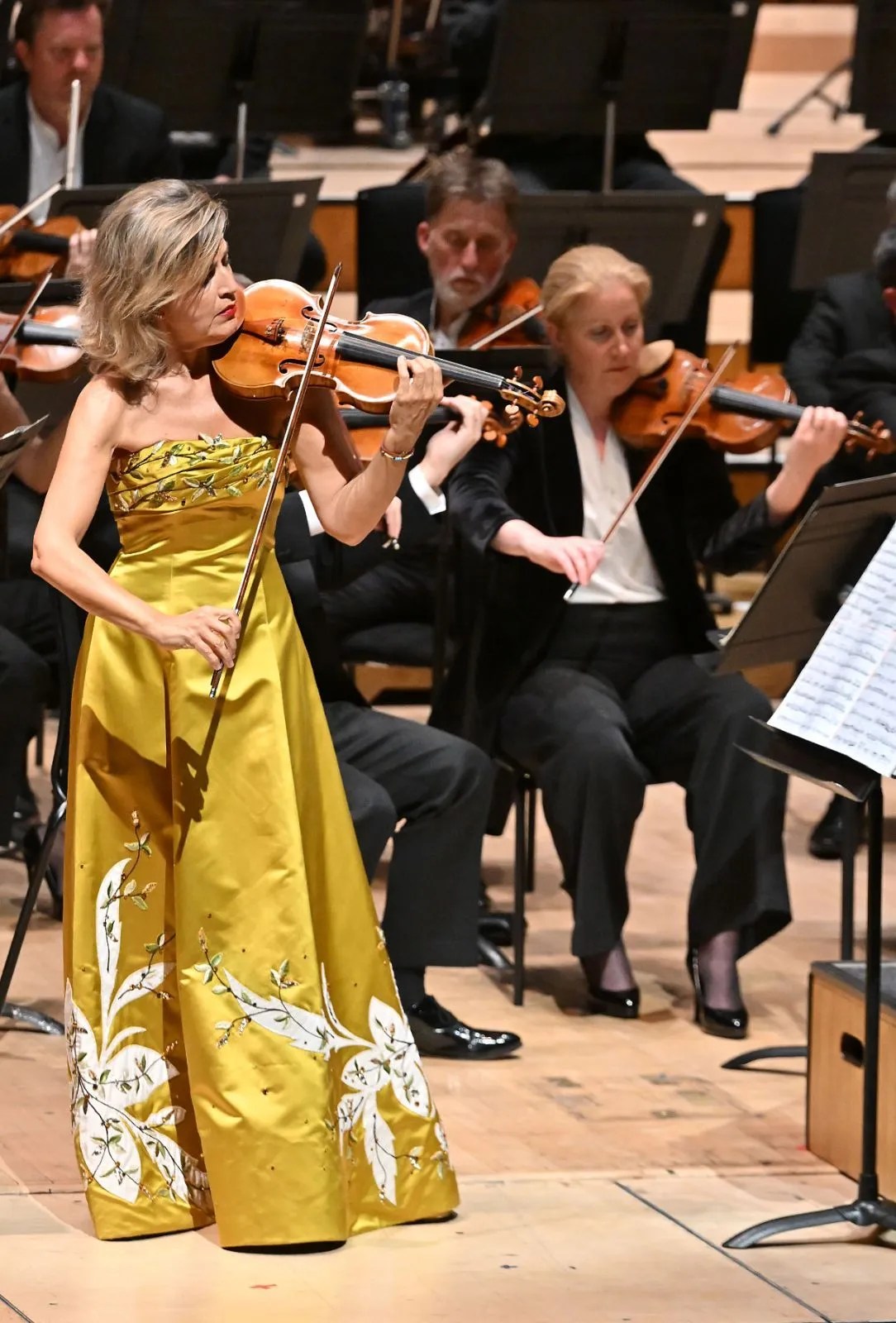
Anne-Sophie Mutter (below) has forged a pioneering path for contemporary music throughout her career, and added another dedication to an illustrious list that includes Lutosławski, Penderecki, Sir André Previn and Unsuk Chin. Air – Homage to Sibelius was written in the light of her admiration for Adès’ Concentric Paths, his Violin Concerto of 2005. It is a very different work indeed, an extended meditation based on a single melody written in the slow days of lockdown in 2021. In the execution Adès brought his music unexpectedly close to that of John Tavener or Arvo Pärt, the latter’s Cantus in memoriam Benjamin Britten recalled by the solemnly descending melody. Beginning on high with the orchestral violins, this was soon joined by Mutter’s silky-smooth tones. Now the piece developed with the soloist in charge, its serene progress tinged with longing. With no brass in the orchestra the textures were light, with tuned gongs suggesting a soft breeze, before the music gained weight on the gradual descent as though nearing the bottom of a mountain. The Sibelius homage could be determined in the line and structure of the piece, and also the rarefied light that it cast adrift.

Before the interval we heard Lutosławski’s Partita, written initially for violin and piano in 1984 but orchestrated for Mutter four years later. The word ‘partita’ is interpreted by Lutosławski in its 18th century form, and this work begins with a stern Allegro giusto that comes adrift when the soloist starts to use portamento, the melody travelling through microtones. Mutter’s control here was masterful, yet the feeling of dislocation was compounded. The central Largo was powerful indeed, the violin singing a darker song, before the closing Presto brought a terrific burst of energy, the colourful orchestration prompting and cajoling. Mutter’s voice, though, spoke the loudest.

The concert had begun with a relatively rare live account of Orpheus, the second of Stravinsky’s three Greek ballets. Thomas Adès directed a compelling performance of a work whose dynamic levels remain quiet for almost the entire half hour – yet contain music of acute description and poignancy. There is dread too, which Adès brought out in the scenes where Orpheus is surrounded by the Furies, then where he met his untimely demise at the hands of the Bacchantes. With the harp of Bryn Lewis treading a solitary, elegant line, Orpheus’ lyre remained as a ghostly presence right through to the end – in spite of the efforts of the Angel of Death, brilliantly voiced by violinist and orchestra leader Benjamin Gilmore.

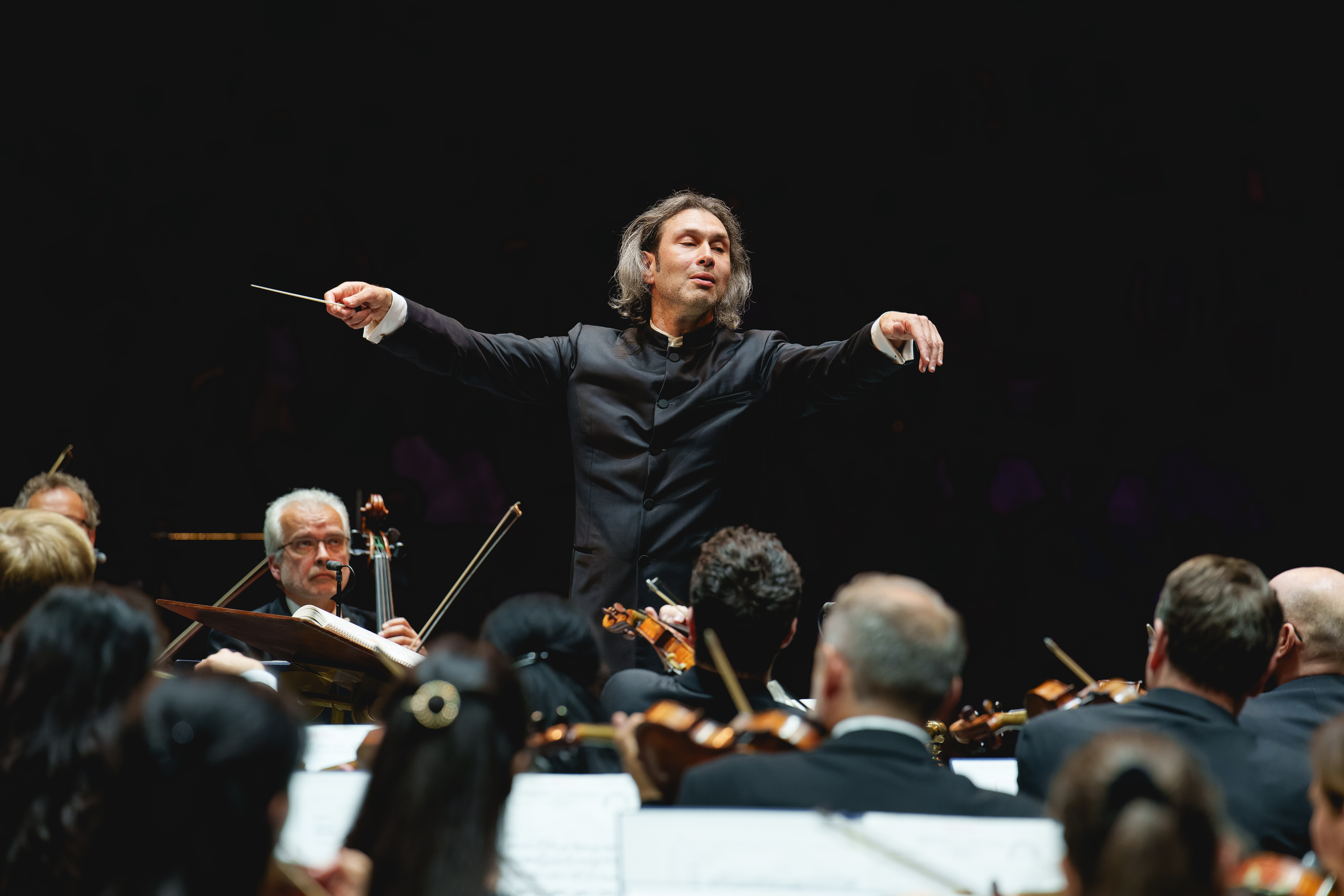
The concert finished with the remarkable Agon, with which Stravinsky completed his Greek trilogy and indeed entire ballet output when premiered in New York in 1957. Even in his mid-70s the composer was pushing boundaries, this time in the direction of Schoenberg’s serial technique, without compromising his dramatic instincts. With no plot, Agon is essentially a celebration of movement, Stravinsky free to explore old dance forms through the prism of twentieth century harmony and melody, with remarkably imaginative instrumentation. This performance fully revealed its genius, the Renaissance and Baroque dances given a new lease of life with orchestration turned on its head. The colours were enhanced by mandolin (Huw Davies), harp (Bryn Lewis) and percussion (Neil Percy and Tom Edwards), not to mention the superb LSO brass, wind and string sections. Double basses got in on the act, playing high in the register, the weird and wonderful sounds given gruff harmonies and comedic punctuation as the ballet unfolded. Light and shade were exquisitely explored, the advantage of having a composer-conductor such as Thomas Adès at the helm meaning no stone was left unturned. This was a memorable interpretation, capping a wholly stimulating evening of music making.

You can find more information on further 2023/24 concerts at the London Symphony Orchestra website

Published post no.2,195 – Friday 31 May 2024

BBC Proms 2023 – Kirill Gerstein, Rundfunk-Sinfonieorchester Berlin / Vladimir Jurowski: Weill, Adès & Rachmaninoff

Prom 60 – Kirill Gerstein (piano), Berlin Radio Symphony Orchestra / Vladimir Jurowski

Weill Kleine Dreigroschenmusik (1928, arr. 1929)
Adès Piano Concerto (2018) [Proms premiere]
Rachmaninoff Symphony no.3 in A minor Op.44 (1935-6, rev. 1938)

Royal Albert Hall, London
Thursday 31 August 2023

by Richard Whitehouse photos by Andy Paradise / BBC

Marking its centenary this October, the Berlin Radio Symphony Orchestra may be less known abroad than other Berlin orchestras but this Proms debut under chief conductor Vladimir Jurowski confirmed an ensemble at home across the broad range of modern and contemporary music.

Not least in Little Threepenny Music, a ‘selection’ Kurt Weill arranged from his and Bertold Brecht’s reworking of The Beggar’s Opera which takes in several of that show’s best-known numbers while also affording a demonstrable overview of its satirical concerns. The BRSO responded with vigour and not a little pathos – above all, in the Threepenny Finale and its juxtaposing pensive ambivalence with a glowering decisiveness: that final chorale making plain its damning inditement of German cultural failings in the era of the Weimar Republic.

A spirited participant, Kirill Gerstein took centre-stage for the first hearing at these concerts of the Piano Concerto written for him by Thomas Adès. Now as before, Gerstein’s dexterity in negotiating this score’s pert amalgam of intricacy and bravura warranted respect: whether in what might be called the ‘Self-Portrait with Gershwin and Ligeti (though Prokofiev is also there)’ of the first movement, Stravinskian cortège of the central Andante, or the interplay of vivacity and uncertainty in the final Allegro. An attentive accompanist, Jurowski summoned playing as tensile and supple as the orchestral writing demands – though abetting the overall impression (his recent works in particular) that even as consummate a conceptualist as Adès needs to instil those ideas, often arresting in themselves, with comparable musical substance.

Gerstein’s transcription of Rachmaninoff’s In the Silence of the Secret Night (Op.4/3) duly prepared for the latter’s Third Symphony. First given at the Proms 85 years ago, it still attracts dislike from those who find it a self-conscious update of the composer’s inherently Romantic idiom as well as those who dislike such an idiom in any case. Not that Jurowski’s account brooked any compromise in marrying consistent technical precision to a powerfully shaped conception of music often appealing, frequently intriguing and not a little unsettling.

The stark rendering of its introduction – spectral ‘motto’ then surging tutti – set the course for an initial movement where contrast between expectancy and eloquence came to a head in the development with its anguished fusion between heart and brain. The Adagio unfolded with an almost Sibelian inevitability, not least in the seamlessness by which its outer sections flowed into then out of a central scherzo abounding in that sardonic humour as became a mainstay of Rachmaninoff’s later years. Nor was there anything blandly predictable about a finale whose opening exuberance was ably maintained through a consoling but never wantonly languorous secondary theme, eventually resolving into a coda whose unfolding as a crescendo of activity brought the whole work – and the present reading – animatedly and satisfyingly full circle.

Impressive music-making on all levels and Jurowski further cemented the Proms connection, specifically that between Rachmaninoff and Henry Wood, with the latter’s transcription of the former’s Prelude in C sharp minor Op.3/2) – as tempestuous as it proved exhilarating.

For more on the 2023 BBC Proms, visit the festival’s website at the BBC. Meanwhile click on the names for more information on artists Kirill Gerstein, the Berlin Radio SO and conductor Vladimir Jurowski – and finally composer Thomas Adès

In concert – CBSO / Mirga Gražinytė-Tyla: The Sea – Britten, Adès, Weinberg & Debussy

Britten Four Sea Interludes from Peter Grimes, Op. 33a (1945)
Adès The Exterminating Angel Symphony (2020)
Weinberg Jewish Rhapsody, Op. 36 No. 2 (1947) [First public performance]
Debussy La mer (1905)

City of Birmingham Symphony Orchestra / Mirga Gražinytė-Tyla

Symphony Hall, Birmingham
Wednesday 28 September 2022

Reviewed by Richard Whitehouse

This afternoon concert by the City of Birmingham Symphony Orchestra found Mirga Gražinytė-Tyla at the helm for her first concert as the orchestra’s principal guest conductor in what was a varied programme featuring music of (more or less) Jewish emphasis framed by evocations of the sea.

The Four Sea Interludes that Britten extracted from his opera Peter Grimes invariably makes a worthwhile concert-opener, not least with Dawn as hauntingly poised as this. MG-T drove Sunday Morning hard, so that the cross-rhythmic interplay between wind and strings came close to decoupling, but there was no lack of atmosphere either here or in Moonlight where a sense of emotional disintegration was almost tangible. Storm was as relentless and, in its latter stages, imploring as the music requires – hurtling forth toward a close of brutal finality.

Next, a revival of The Exterminating Angel Symphony as derived from the eponymous opera by Thomas Adès, commissioned and premiered by the CBSO last August. As previously, its four sections feel more a symphonic suite than symphony per se – the whole still amounting to more than the sum of its constituent parts. MG-T secured a virtuoso response – whether in the encroaching expressive ambivalence of Entrances, or relentless build-up and malevolent aura of March. Berceuse remains uninvolving in emotional content despite the allure of its scoring, while Waltzes provides a suavely ingenious finale in its inexorable motion towards catastrophe. It would be hard to imagine a more committed or convincing account, such that the composer – making one of his rare appearances as a non-performer – looked well pleased.

After the interval, MG-T continued her advocacy of Mieczysław Weinberg in what was billed as a ‘first public performance’ for his Jewish Rhapsody. One of various pieces at a time when Soviet composers attempted (inevitably unsuccessfully) to placate officialdom with music of an outwardly populist nature, it forms the middle part of a Festive Scenes trilogy only recently located in its entirety. Beginning with an affecting melody for flutes it proceeds, via solos for clarinet and violin, to sombrely eloquent music (a little akin to that of Kodály’s folk-inspired works from the 1930s) which gains in energy until breaking out in dance-music of decidedly manic cast – a recall of the initial melody on flute then oboe leading to the headlong pay-off. Superbly rendered by the CBSO, this is no mean discovery and warrants repeated hearings.

Finally, to La mer – a piece of which this orchestra has given many memorable performances over the decades, and which did not disappoint here. If the opening stages of From Dawn to Midday on the Sea were a little tentative, the theme for divided cellos was finely articulated and the apotheosis powerfully wrought. Play of the Waves had no lack of capriciousness or delicacy, while Dialogue of the Wind and the Sea duly contrasted those visceral and poetic elements towards a peroration that never lost sight of the essential pathos within its triumph. An impressive close, then, to a concert such as gave notice of the continued rapport between orchestra and conductor. MG-T returns next week for an equally diverse selection with Sheku Kanneh-Mason in Haydn and the CBSO’s own Marie-Christine Zupancic in more Weinberg.

You can read all about the 2022/23 season and book tickets at the CBSO website. You can visit Mirga Gražinyte-Tyla‘s website here – and for further information on Weinberg or Adès, click on the composer names

In concert – City of Birmingham Symphony Orchestra: A Covid Requiem

mirga-grazinyte-tyla

Adès O Albion (1994, arr. 2019)
Pärt
Fratres (1977, arr. 1991)
Purcell (arr. Britten)
Chacony in G minor Z730 (c1680, arr. 1948)
Barber
Adagio in B flat minor Op.11 (1935, arr. 1936)
interspersed with poetry readings by Casey Bailey
Fauré
Requiem in D minor Op.48 (1887-90, rev. 1893)

James Platt (bass), Casey Bailey (poet), CBSO Children’s Chorus, CBSO Youth Chorus, CBSO Chorus, City of Birmingham Symphony Orchestra / Tomo Keller (violin/director), Mirga Gražinytė-Tyla (conductor)

Symphony Hall, Birmingham
Saturday 6 November 2021

Written by Richard Whitehouse

Even if live music-making has gradually been returning to how it was, the (ongoing) legacy of Coronavirus could hardly be overlooked, thus a concert such as that given this evening by the City of Birmingham Symphony Orchestra was a necessary act of remembrance for all the many concertgoers to have been affected by the pandemic. As befitted such an occasion, no speeches or prefatory remarks were needed, with the darkening of the auditorium during the performance a simple but effective gesture which helped focus musicians and listeners alike.

Strings only were onstage in the first half – Tomo Keller directing a sequence as began with O Albion, Thomas Adès’s arrangement of the sixth movement from his quartet Arcadiana, whose gentle pathos made for the ideal entrée. Arvo Pärt has written numerous memorials and while Cantus might have been more appropriate in this context than Fratres, the latter’s sparing deployment of percussion as to underline its ritualistic emergence then withdrawal conveyed no mean eloquence. Surprising, perhaps, that Britten’s arrangement of Purcell’s Chacony is not heard more frequently on such occasions, its expressive intensification here informed by an acute rhythmic clarity. Barber’s Adagio is, of course, a staple at these times – the visceral emotion of its climax and subdued fatalism that ensues audibly conveyed here.

Interspersed between these pieces were poems by Casey Bailey, currently Birmingham Poet Laureate and whose readings were undeniably affecting in their sincerity – whether the heady reportage of 23.03.21 (a date no-one in the UK could hope to forget), the intimate evocation of Weight or graphic remembrance of Once. His appearances on stage were precisely judged as to segue into then out of the music either side and it was a pity when he did not take a call at the end of this first half, alongside the CBSO strings, given his contribution to proceedings.

Tomo Keller remained for the second half – adding ethereal counter-melodies to two of the sections in Fauré’s Requiem, whose 1893 version is without violins but with divided violas and cellos along with reduced woodwind and brass to make for a reading closer to the initial conception and certainly more apposite tonight. Her credentials in the choral repertoire well established, Mirga Gražinytė-Tyla conducted with a real sense of this work’s essential poise but without neglecting any deeper emotions. James Platt brought a ruminative warmth to the Hostias and Libera me, and it was an inspired touch to have the Pie Jesu sung in unison by the Children’s Chorus; its plaintiveness offsetting those richer tones of the Youth Chorus and CBSO Chorus, while opening-out the music’s textural and expressive range accordingly.

In one sense it would have been better had this concert not had to take place, given the legacy it commemorated (as was witnessed by the personal recollections occupying five pages of the programme) and yet, as those ethereal strains of the In Paradisum receded beyond earshot, a feeling of the Covid crisis having been recognized then overcome was palpable on the part of those present. Moreover, the CBSO’s next event is a performance of Janáček’s The Cunning Little Vixen – surely as transcendent and life-affirming an experience as could be hoped for.

Further information on the CBSO’s current season can be found at the orchestra’s website. For more on Casey Bailey, click here, for James Platt click here, and for Tomo Kellner here

In concert – CBSO / Mirga Gražinytė-Tyla: Ruth Gipps, Adès & Brahms

City of Birmingham Symphony Orchestra / Mirga Gražinytė-Tyla

Gipps Symphony no.2 Op.30 (1945)
Adès
: The Exterminating Angel Symphony (2020) [CBSO Centenary Commission: World premiere]

Brahms Symphony no.3 in F major Op.90 (1883)

Symphony Hall, Birmingham
Wednesday 4 August 2021

Written by Richard Whitehouse

This unexpected yet worthwhile addition to the City of Birmingham Symphony Orchestra’s season saw the revival of two works recently heard along with a belated premiere – twice postponed – for one of the most notable among the orchestra’s impressive roster of Centenary Commissions.

Its UK premiere guardedly received four years ago, Thomas Adès’s third opera felt limited as to provocative intent by the difficulty of transferring its theme of Spanish religious fascism to a different era. What was undeniable is the suitability of its numerous orchestral passages to being rendered in a more abstract context, hence The Exterminating Angel Symphony heard tonight. Its four sections arguably amount to a symphonic suite rather than symphony per se, yet their formal follow-through undoubtedly makes for a cohesive and finely balanced entity.

Mirga Gražinytė-Tyla evidently thought so – obtaining an incisive response in the ‘Entrances’ music whose expressive ambivalence intensifies second time around, then a virtuosic one in ‘March’; its malevolence building over a remorseless side-drum tattoo in a vivid foretaste of what lies ahead. Although it draws on one of the opera’s love-duets, ‘Berceuse’ seems a little unyielding in its emotional content despite the allure of scoring as was always apparent here.  It remains for ‘Waltzes’ (following without pause) to provide a suitable finale and, while this extended and ingeniously organized sequence of fragments from across the opera undeniably evokes a notable precedent in terms of its inexorable motion toward ultimate catastrophe, the animation and sheer panache of the CBSO’s playing brought about a suitably emphatic close.

Before this MGT again made a persuasive case for the Second Symphony by the orchestra’s one-time oboist Ruth Gipps, the contrasted sections of its single movement – a martial scherzo and eloquent Adagio framed by an ambivalent Moderato and cumulatively energetic Allegro – audibly unfolding as variations on an evocative theme heard at the start. An autobiographical aspect, concerning personal aspirations near the end of war, explains this piece’s confessional nature. Whether or not it will undergo several further decades of neglect remains to be seen.

After the interval came Brahms’s Third Symphony, which orchestra and conductor had given before the lockdown last December. Tonight, however, the first movement (exposition repeat taken) was purposefully controlled with real cumulative thrust, a less than decisive transition into the reprise affording the only lapse in momentum prior to a coda of unfettered eloquence. The Andante was once again unerringly shaped in terms of its ruminative contrasts, and if the third movement had now become a little torpid, this hardly affected its unforced pathos. MGT rightly made the finale the culmination in every sense, her tautening of tension at the apex of its development yielding as tangible an expressive frisson as did the coda – where the work’s main motif descends as if from afar to secure the most transfigured of emotional touchdowns.

A memorable addition to an inevitably truncated yet memorable (and for all the right reasons) season, which the CBSO repeated at the Proms the following night. Beyond that, the autumn portion of its 2021/22 season has just been announced.

You can find information on the CBSO’s new season here.